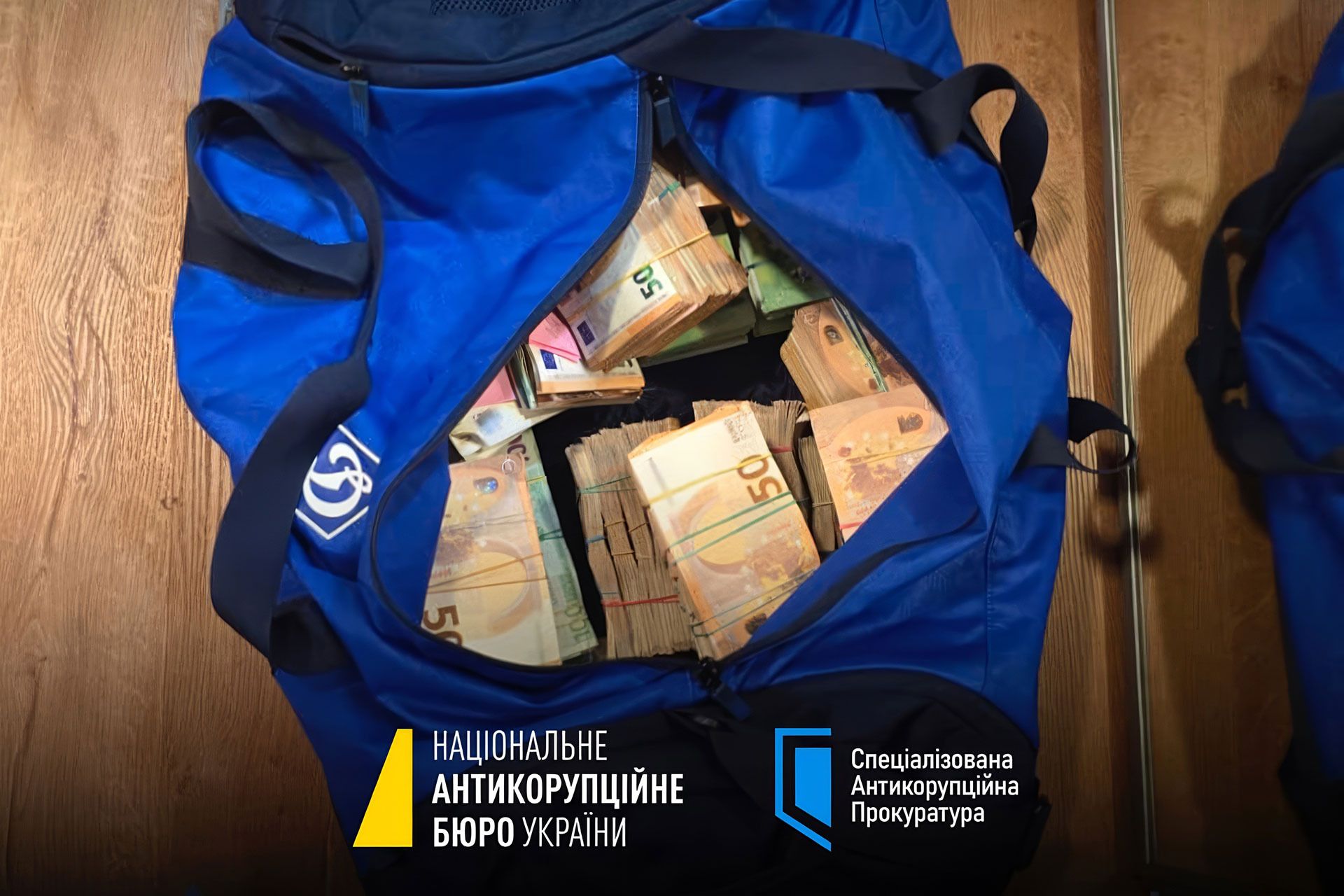
“15 months of work and a thousand hours of audio recordings. The activities of a high-level criminal organization have been documented. Its members built a large-scale corruption scheme influencing strategic state-sector enterprises, particularly JSC ”National Nuclear Energy Generating Company “Energoatom”.“ Last week, this press release from Ukraine’s National Anti-Corruption Bureau (NABU) about the results of Operation ”Midas“ was quoted worldwide. Tomorrow, the Verkhovna Rada of Ukraine is scheduled to vote on the dismissal of Justice Minister Herman Halushchenko and Energy Minister Svetlana Hrynchuk, who were involved in corruption schemes. Investigators from NABU also proved that a close friend of Ukraine’s president, Timur Mindich, participated in these schemes. How they managed this is explained by anti-money laundering expert and board member of Transparency International Russia, Ilya Shumanov.
Photo: telegram.org / @nab_ukraine
What do corruption in Ukraine and Russia have in common?
Corruption in Ukraine and corruption in Russia share the same roots – the Soviet Union and the Soviet model of economy and governance. But more than 30 years after the USSR’s collapse, there is, of course, a noticeable difference between corruption manifestations, anti-corruption institutions, and the state systems themselves in the two countries. In Russia, the state apparatus has degenerated, while in Ukraine it is, at least somewhat, developing.
Until 2014, these were two interconnected and interdependent economies, and their state governance systems overlapped and were friendly to each other. The political regimes of Yanukovych and Putin were strongly supportive of one another. The occupation of Crimea was a turning point, and since then these systems have diverged in different directions.
Of course, this does not mean that one system is entirely free of corruption and the other is completely corrupt.The Corruption Perceptions Index shows that corruption in both Russia and Ukraine is significant and visible to experts. Both state governance systems can be called corrupt, and the level of corruption in Ukraine and Russia remains quite high. In the Corruption Perceptions Index, both countries rank low: Russia is 154th, Ukraine much better at 105th, but still not enough to be called a country effectively fighting corruption.
However, in the last 10 years, the situation in Ukraine has started to improve thanks to the creation of independent institutions such as NABU (National Anti-Corruption Bureau), the High Anti-Corruption Court, and the work of independent media and NGOs – even during the war with Russia, when military censorship is often the most obvious solution for the authorities.
In Russia, during this time, anti-corruption structures were abolished. The Open Government and the State Duma’s Commission for Income and Property Checks simply ceased to exist. Publication of officials’ income and property information stopped with the start of the full-scale invasion. Anti-corruption activism by civil society has come to be seen in the Kremlin as anti-state activity. International legislation is ignored in Russia – the authorities are no longer interested in dealing with it. In recent years, Russia has withdrawn from almost all possible international treaties and conventions dedicated to fighting corruption. Only UN institutions remain.
For Russian citizens, fighting corruption has become dangerous, and those who monitor it mostly rely on news stories about officials’ arrests, understanding that citizens and businesses no longer have a mandate to counter corruption in Russia: this is the job of law enforcement agencies.
In Ukraine, however, media, NGOs, and citizens remain actively engaged in this issue, with significant interest and opportunity for participation – these are two fundamentally different systems.
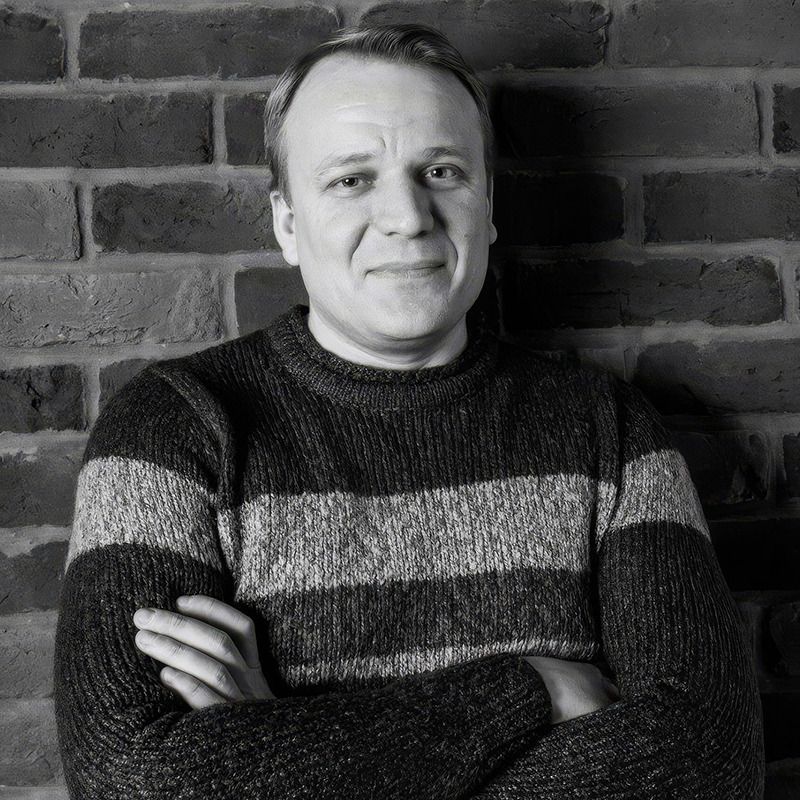
Ilya Shumanov. Photo: Ilya Shumanov’s social media
How has the war affected the corruption situation in Ukraine and Russia?
War, of course, changes the balance of power within the state apparatus, and the fight against corruption is no exception. In Russia, as we see, the war became one of the reasons for the decline of anti-corruption discourse as a priority in the public sphere.At the state level, the fight against corruption became a tool for other, more interesting processes: for example, nationalization of assets. The anti-corruption banner is used by law enforcement officials to persecute disloyal people or those whose property they decided to seize.
There are no independent anti-corruption institutions in Russia. It is a tool of state coercion. In Ukraine, it’s more complicated.
The National Anti-Corruption Bureau is not subordinate to the president and is formed by an independent commission of electors.That’s why, by the way, in summer 2025, Zelensky tried to take control of the anti-corruption bodies.He saw that NABU and the anti-corruption prosecutor’s office were paying close attention to his inner circle and to him personally. This prevented him from feeling secure and managing the state during a difficult time for the country.But under pressure from European and American authorities, he backtracked and canceled his decision.
As a result, we see a real investigation against a close ally of Zelensky. NABU completed and published an investigation regarding the president’s close circle. The key figure is Timur Mindich, founder of “Kvartal-95,” from which Zelensky himself emerged. During the election campaign, Mindich provided him with armored cars; Zelensky held some meetings in Mindich’s offices, and Mindich himself visited the president’s office uninvited.
The main question: did Zelensky know that Mindich organized an entire corruption project to extract illegal profits from Ukraine’s energy sector? I suppose not. Because figures of that scale involved in the scheme were probably not connected to Zelensky. It’s unlikely he was ready to participate in this project for political or economic reasons – the sums are quite modest by the standards of a country’s president.
How are Ukrainian and Russian corrupt officials connected?
The office NABU calls the “laundry” – the place where participants of the “Shlagbaum” scheme held negotiations and distributed funds – previously belonged to the family of Andriy Derkach. He is a former Ukrainian MP who fled to Russia and became a senator from the Astrakhan region. The SBU calls him an agent of the Federal Security Service and the Main Intelligence Directorate. Essentially, he is a state traitor in Ukraine.
His right-hand man is Ihor Mironyuk, assistant to the head of the Ukrainian Property Fund, who after 2014 did not sever ties with Russia; I personally saw documentary evidence of his trips to Russia. Mironyuk was the informal curator of the “Shlagbaum” corruption scheme. It consisted of contractors of the state company “Energoatom” being forced to pay a 15% kickback on every contract. If they didn’t pay, they were blacklisted and excluded from receiving contracts without payment.
Wiretaps published by NABU show that Mindich and his company effectively decided on the need to finance specific projects in Ukraine’s energy sector, including construction or restoration of various facilities. Their logic was quite cynical: there is a war, these facilities get blown up, restoring them makes no rational sense, and we can’t profit from it anyway. For example, in one recording, they complained that from a multi-billion hryvnia contract, they only received $90,000. They didn’t like that such large projects didn’t bring them any extra illegal income. Part of this money was transferred to Moscow.
The investigation documents contain at least two mentions of Moscow. In one case, someone nicknamed “Ryoshik” – all scheme participants had nicknames: Karlson, Tenor, Rocket, Ryoshik – says that “the two million” will be sent to Moscow next week. NABU says this likely refers to two million dollars. Another document has the note “200, Moscow.”
So, Kyiv is under Russian bombings, half the country is without power, and Ukrainian corrupt officials are transferring money to Moscow.
Mindich himself had a company registered in St. Petersburg, New Diamond Technology, which until 2024 was involved in diamond distribution. All Russian diamonds are mined by the state company “Alrosa” – so Mindich had ties to the Russian state sector. And the cherry on top: during NABU searches, a new branded notebook of the Russian Federation Presidential Security Service was found. Why was it in the office of these gentlemen? Not every Russian entrepreneur has an FSO notebook.How it ended up with people fighting against Russia is unclear.
In general, there is a Russian trace in this story. Mindich and other people from “Kvartal 95” after 2014 actively spoke in favor of maintaining ties with Russia – saying art is beyond politics, or “it’s business, nothing personal.”The Russian and Ukrainian state systems had contacts on a personal level, business level, and family ties. You can’t just tear them apart. Mindich had family ties with Russia, as NABU points out [Timur Mindich is married to the daughter of Alla Gerber – the late vice-president of “Mercury” company and fashion director of TSUM].
The scandal around “Energoatom” could extend beyond one state company. If such a scheme existed, it could have existed in other Ukrainian state companies, not just one.
What’s good about Ukraine’s anti-corruption system today?
Since 2014, the fight against corruption in Ukraine has not stopped. Every year there is some high-profile case. For example, former MP Oleksandr Onyshchenko created shell companies to siphon profits from the state company “Ukrgazvydobuvannya.” There was a land case involving Hennadiy Trukhanov, former mayor of Odesa.
After the Russian invasion, a corruption scheme in the Ministry of Defense during Oleksiy Reznikov’s time was uncovered, where officialsoverpriced contracts for food procurement. Before the invasion, there was the “Avakov backpacks” case, where the son of Interior Minister Arsen Avakov supplied low-quality backpacks to Ukrainian military at inflated prices.
Overall, the “Energoatom” story is not unique; there have been many such cases.
Corruption has been a concern for Ukrainians for a long time. Not only journalists but also state bodies – the National Anti-Corruption Bureau and the special anti-corruption prosecutor’s office – actively work on it.
NABU works only on corruption at the highest levels of power, opening cases against MPs, judges, security officials, and the president’s office. They have FBI-like staff – so-called detectives who conduct investigations and gather evidence. Of course, there are lawyers and people responsible for international cooperation because many corrupt officials flee abroad, and their activities need analytical investigation.
NABU also has its own YouTube channel with very well-produced videos. Such publicity is not very popular with the President’s office because criminal cases against high-ranking officials naturally undermine trust in Ukrainian authorities.
But the main reason NABU is such an important body in Ukraine’s governance system is that its head is chosen by a competitive commission, making it impossible to install a loyalist. Of the six commission members, three are foreigners: from the USA, the World Bank, and the UN.
In essence, without international community approval, you cannot choose NABU’s head. He must be well-known and understood by the international community.
Any Ukrainian citizen without a criminal record, ties to criminal groups, or previous authorities can apply for this position. Of course, there is an age limit, an interview, and a polygraph test. A simple majority – four out of six – must vote for the candidate. After this procedure, the director of NABU is formally appointed.This complex procedure limits pressure from the president, oligarchs, and political forces and guarantees NABU’s independence. Such a system is basically impossible in Russia today, and no special anti-corruption agency, like in several other post-Soviet countries, has appeared there. But in Ukraine, it has appeared and functions quite effectively. Even the country’s president is a bit upset about it.
If you enjoyed this article, consider making a donation — one-time or, even better, monthly. Your support helps us motivate our authors and become better with every article.
Our organization is recognized by the Internal Revenue Service (IRS) as a 501(c)(3) tax-exempt, charitable organization, which means that all contributions made to us are tax-deductible to the fullest extent permitted by U.S. law. Individuals may generally deduct charitable contributions of up to 60% of their Adjusted Gross Income (AGI) for cash donations made to qualifying 501(c)(3) organizations. For donations of appreciated assets (such as stocks or other long-term capital assets), the deduction is typically limited to 30% of AGI, based on the fair market value of the asset. C-corporations may deduct charitable contributions of up to 10% of their taxable income for donations made to eligible charitable organizations.
By submitting a donation, you confirm that you have read and accept the following documents: Privacy Policy and User Agreement, and also give consent to the processing of your personal data.
If you would like to unsubscribe from a monthly donation, please email us at: [email protected]