Last week, the “Russian Volunteer Corps” finally published its program and ideological doctrine. “Finally”—because this nationalist formation, which switched sides to Ukraine in February 2022, has long called on the Russian opposition to unite. Of course, by default—under the banners of the RVC. In short, hopes for a proper evolution of Russian nationalists have not come true.
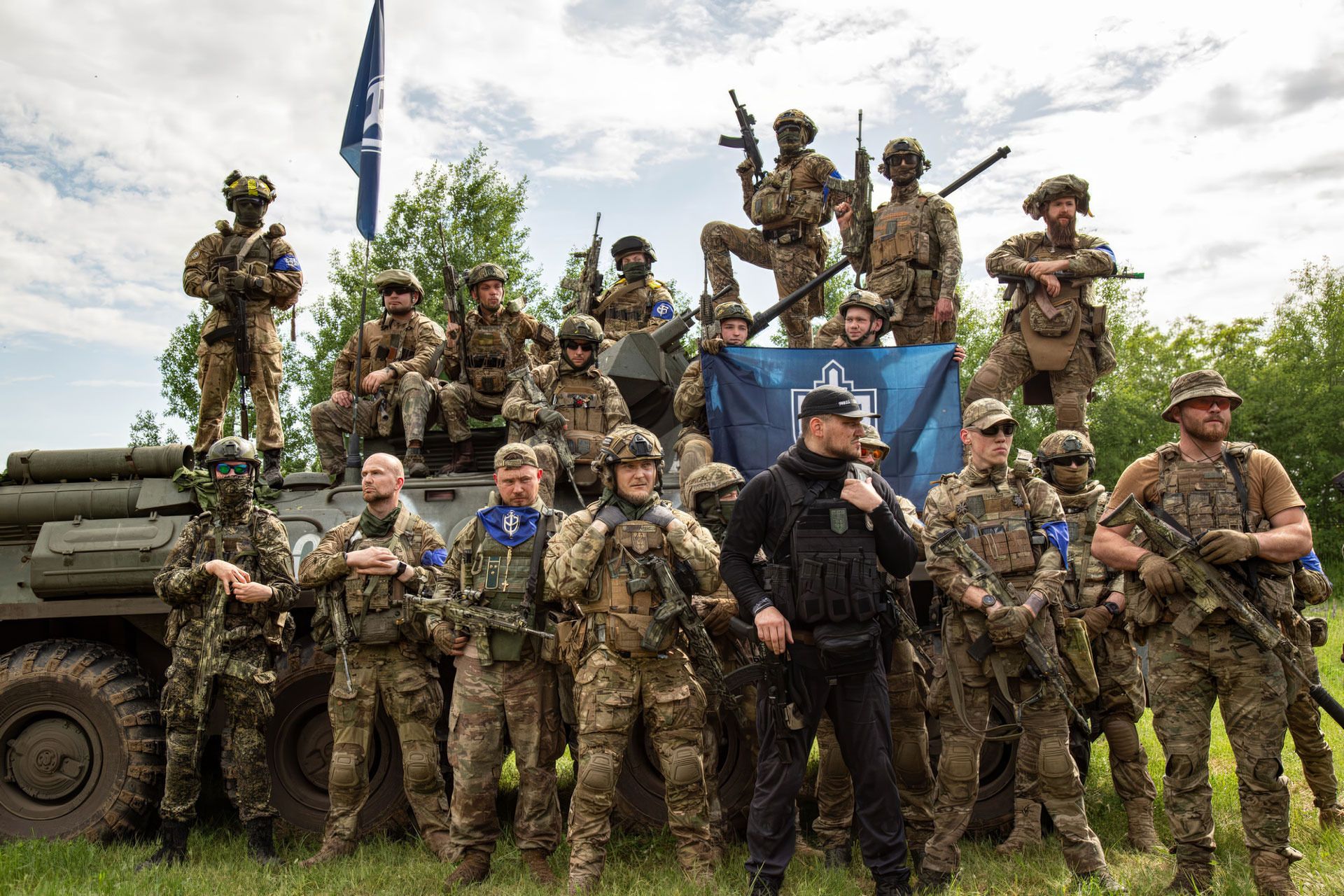
RVC after conducting a military operation in Russia's Belgorod region on May 24, 2023. Photo: armyinform.com.ua / Wikipedia / CC BY 4.0
To be fair: the RVC program does contain reasonable, correct points. I think none of the opponents of Putin's autocracy would object to the clause about punishing war criminals, declaring the punitive organs of the current Russian regime criminal organizations, and lustrating all those who worked in them. Nor would there be objections to the reintegration of Russia into Europe—this is also mentioned in the RVC program. Democratically minded Russians will surely support a complete reboot of the political system through the convening of a Constitutional or Constituent Assembly. And it is hard to argue with the proposal for Russia to renounce all Ukrainian territories annexed by Putin, as well as other post-Soviet annexations (these territories are not named, but most likely refer to South Ossetia, Abkhazia, and Transnistria).
However, the ideology adhered to by Russian nationalists is not defined by these provisions.
In point I of its Ideological Doctrine, the movement tackles the issue head-on: “Enemy: Anti-national RF Regime.” All capitalized, including the word “regime” (apparently, Russian nationalists take a creative approach to spelling rules). Unfortunately, the content is even worse.
No one disputes that Putin's regime is anti-national. But why is it so? According to the nationalists, the main sin of the current Russian regime is that it is “guilty of 1. Destroying identity.“ As the direct heir of totalitarian regimes of the past, the regime pursues a consistent policy of blurring and destroying any national identity: Russian national identity, as well as the national identities of other indigenous peoples of Russia, are systematically dismantled and replaced with a 'Russian' one.“
In reality, in the Russian Federation, it's almost the exact opposite.
Both in Yeltsin's and Putin's Russia, Russianness began to be emphasized and promoted everywhere, even where, without loss of meaning, “Russian” could have been replaced with “Rossiyanin” (citizen of Russia).
Back on April 17, 2014, during a “Direct Line,” Putin declared that the Russian people possess an “exceptionally powerful genetic code... And this genetic code of ours, probably, maybe, almost certainly is one of our main competitive advantages in today's world.” Where is the “dismantling of Russian national identity” in all this? On the contrary, it is exalted to the genetic level. Straight in the spirit of the RVC's beloved fighters for Aryan racial purity from the Third Reich era.
The RVC's slight nod toward “the other indigenous peoples of Russia“ is most likely political. In a country where 30% of the population are “non-Russian,” not mentioning them would be a mistake. But whom do the authors of the RVC's programmatic documents consider “indigenous peoples”? Those who were incorporated (usually against their will) into the current RF, USSR, Russian Empire? Or the Moscow Tsardom?
From the RVC's point of view, are the Tuvans, who were annexed to the USSR in 1944, considered an “indigenous people of Russia”? Do the authors of the RVC program consider Chechens, Circassians, and other North Caucasian peoples who became part of the Russian Empire relatively recently—in 1867, after the genocidal Caucasian War for many of them—indigenous peoples of the Russian Federation?
In the Omsk region, which borders Kazakhstan, Kazakhs have lived for centuries and are the second largest ethnic group after Russians. Do these anti-Kremlin Russian nationalists consider these Kazakhs “indigenous people of Russia”?
But suppose Russian nationalists have come to terms with the “indigenous peoples” and are ready to tolerate them in their “beautiful Russia of the future.” What do they intend to do with the “non-indigenous” ones?
According to the latest Russian Census of 2020–2021, almost 16.6 million people in Russia did not indicate their nationality. And another 323,000 Uzbeks (especially “loved” by Russian Nazis), 350,000 Tajiks, about 140,000 Kyrgyz, approximately 475,000 Azerbaijanis, 113,000 Georgians, and almost 950,000 Armenians.
What do our kind Russian nationalists intend to do with them when they come to power? Mass and violent deportation? Or do they have their own ways of a “final solution” to the migration issue?
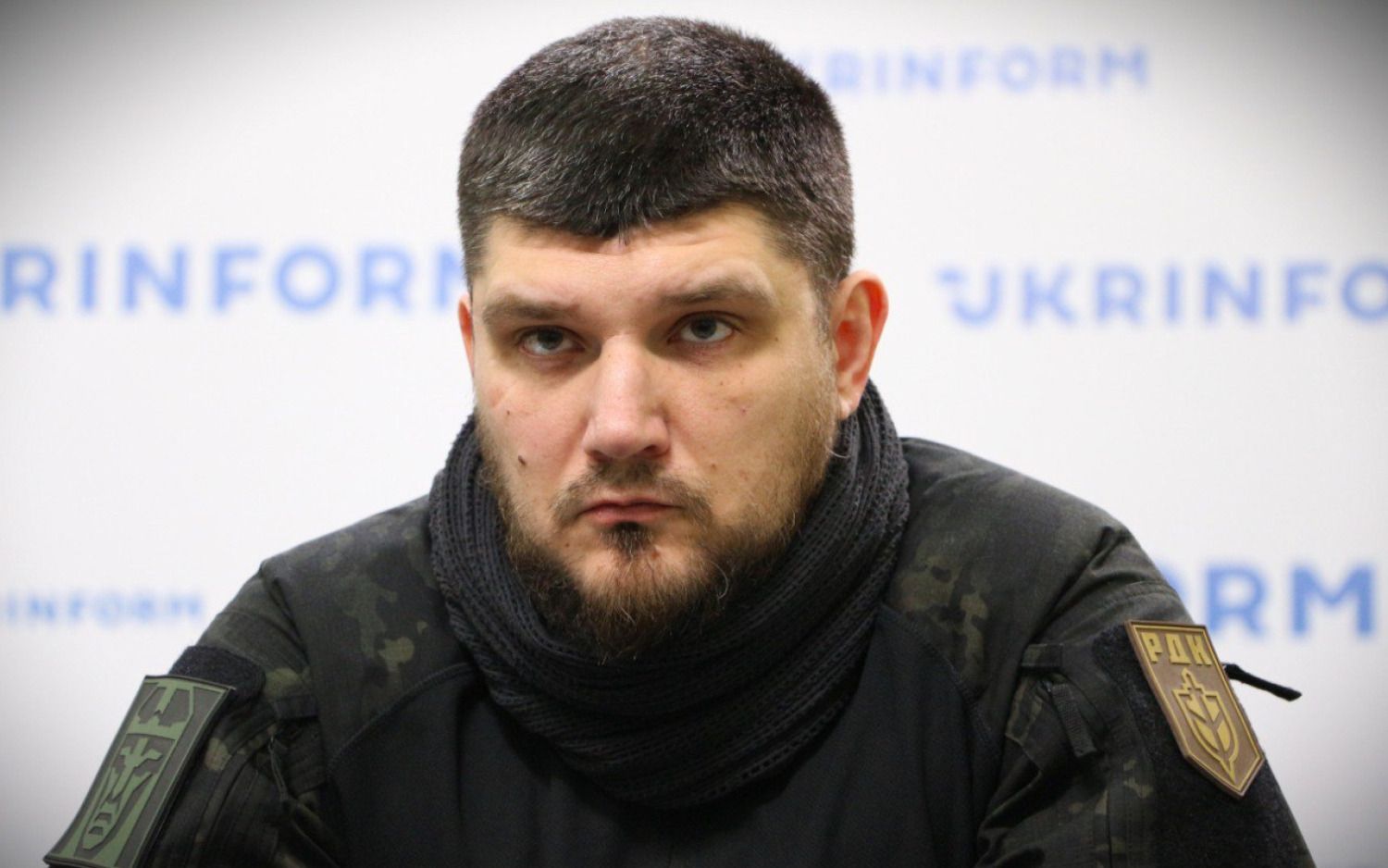
Denis Nikitin (Kapustin), also known by the pseudonym “White Rex,” founder and commander of the RVC, in March 2024. Photo: Svitlana Kyrhan / Wikipedia / CC BY 4.0
Some of the representatives of the “non-indigenous” peoples listed above have Russian citizenship, others have a residence permit or temporary residence permit. But from the point of view of Russian nationalists, this doesn't matter. They have a special word for “non-indigenous”: “diasporas.” And according to RVC members, these diasporas must be closely monitored regardless of whether their representatives have Russian passports or not. Monitored solely based on their national origin. How does this fit with the grand statements about personal freedom in the RVC program? That's a rhetorical question.
But let's move on. The fact that in Putin's Russia the “national identity” of non-Russian peoples is being dismantled step by step is obvious. This can be proven at least by the example of the amendments to the law “On Education in the Russian Federation” from 03.08.2018 (No. 317-FZ). According to this law, all representatives of non-“titular” peoples in the national republics of Russia may choose not to study the languages of the indigenous peoples of these republics, replacing them with their native (Russian) language. In practice, this will lead to a reduction in the teaching of indigenous languages and the publication of literature and media in national languages in such republics as Bashkortostan, Mari El, Mordovia, and other national autonomies of Russia, where Russians and Russian-speakers are the majority. As a result, these languages and cultures will be doomed to a slow death.
Is anything similar being done to the Russian language in modern Russia? Is Russian culture being infringed upon in the RF? Obviously not. So what is the “systematic dismantling of Russian identity” mentioned in the RVC's programmatic documents? Another rhetorical question.
“We believe in the Nation. We believe in the Russian nation as a community of free citizens united by common laws and institutions and capable of collectively defending their rights,” proclaims the RVC.
But the Russians who are killing our Ukrainian brothers today, against whom the RVC is fighting, are also part of the Russian nation. As are the millions of Russians who serve in the repressive organs of the anti-national Putin regime. They are all also representatives of the Russian nation.
In reality, the term “nation” since the days of the Roman Empire has meant a group of people who are citizens of a particular state regardless of their ethnic origin. The same is true for belonging to a nation or nationality in modern Europe, with which the RVC verbally calls for unity.
“We will be focused on internal development and the integration of the Russian nation into the family of European peoples” — sounds good, of course. But do the authors of the program know that such integration today implies certain values—such as anti-racism, internationalism, and tolerance? All these are rejected by Russian nationalists.
The RVC program also mentions two of their favorite topics: “genocide of Russians“ and “replacement” through “uncontrolled migration.” “Genocide of Russians” is one of the markers by which Russian neo-Nazis distinguish “us vs. them.” If you acknowledge the “genocide,” you're one of them. If not, you're the enemy. They don't need to prove the existence of a genocide against Russians, as for them it's a matter of faith, not evidence.
What is the reality? According to official Rosstat data, the naturaldecline in Russia's population over 32 years from 1992 to 2024 inclusive amounted to 17,405,140 people. At the same time, the population of Russia within its internationally recognized borders decreased less dramatically: from 147 million in 1989 to about 143 million in 2024.
Meanwhile, the number of Russians since the last USSR Census in 1989 to 2021 (the last Census in Russia) fell from 119 million to 105 million, that is, by 14 million or about 12%. And that's certainly bad. But the numbers of many other peoples in Russia have declined much more. For example, the numbers of some Finno-Ugric peoples have decreased by 40 percent or more.
If the share of the titular nation (Russians) in the RSFSR in 1989 was 81.5%, by 2021 in the Russian Federation it had dropped to 71.4%. Accordingly, the number of “non-Russians” increased. Mainly due to population growth in the North Caucasus and foreign workers, mainly from former Soviet countries. But only ignorant conspiracy theorists can explain these demographic changes as “genocide.” Genocide means deliberate mass killings or certain actions by governments or groups that lead to mass deaths.
The “classic” example of genocide is the mass extermination of Jews by German Nazis and their collaborators during World War II in Germany and in countries occupied by the Third Reich. Forced deportations of peoples almost always led to mass civilian deaths, as happened during the Armenian genocide in Turkey in the early 20th century or the deportations of peoples in Stalin's USSR. For example, as a result of the deportation of Chechens in 1944, their numbers fell by about a quarter in a year.
Nothing like this has been carried out against Russians in Russia or in other former USSR countries. Therefore, it is incorrect to call this dramatic decline in Russia's population, including Russians, genocide. The mass population loss in Russia that began in the 1990s can only be explained by sharply deteriorating socio-economic conditions.
Both the economic reforms and the ruthless methods of their implementation, the 1993 military coup, and the two Chechen wars caused by all this could not but affect the two main components of population demographics—birth rates and mortality. The former fell by about half a million people per year, and the latter in some years exceeded Soviet figures by 800,000 people or more. The reforms of the 1990s also led to the collapse of the entire social sphere—healthcare, education, culture. All this combined led to the demographic catastrophe that began in the 1990s and continued into the 2000s, despite rising oil prices at that time.
But let's return to the RVC's programmatic documents. An important emphasis in them is placed on the establishment of meritocracy. This is the power of a few “worthy,” “the best,” as they see themselves. There is no sign of democracy here. But this doesn't bother Russian nationalists. The word “democracy” is almost never found in their documents. The meritocratic principle they adhere to is essentially a somewhat modernized version of aristocratic rule. Nothing new here. The Hitler party was also, in essence, meritocratic. German Nazis of the 1930s–40s also considered themselves worthy and strong. And they too had armed militants, just like the RVC.
“We believe in tradition”, write Russian nationalists. Well, Putin and his propaganda also harp on “tradition.” What's the difference?
The RVC recognizes the right of peoples to self-determination. This is undoubtedly progress compared to Putin's Russia, where this right can only be mentioned when it's necessary to undermine another country from within, which the Kremlin intends to capture. However, the RVC program immediately makes a reservation that the right to self-determination is only possible “provided that the people have formed responsible nationally oriented elites.”
The question is, who will determine whether “responsible nationally oriented elites” have formed among a particular people or not? The answer is obvious: the same RVC representatives.
One of the main goals named by the RVC is the restoration of “Russian national identity,” which they believe was destroyed by the Soviet and Putin eras. What do they mean by this—it's a mystery. Will they force all men to wear kosovorotkas and women to wear kokoshniks?
“We are convinced that the state is the highest form of the nation's political subjectivity, as well as a platform for implementing global projects and goals.” Essentially, this is a slightly reworked formula proclaimed by Mussolini: everything for the state, everything in the name of the state, nothing outside the state. The state as the highest value. Classic statism—a mandatory part of all Nazi, fascist, and other authoritarian regimes.
By the way, roughly the same attitude to the state—as the holy of holies, as the “highest form of political subjectivity”—prevails in Putin's Russia. So the question arises again: what's the difference?
Another quote from the RVC program:“Restoring national economic sovereigntyand national entrepreneurship will create access to well-paid jobs.“
It should be noted that the RVC program devotes a lot of space to the economy. But in fact, this part of their documents is almost indistinguishable from the economic development programs in Putin's Russia. It's a fairly standard set of liberal clichés about encouraging investment, transparency, protecting private property, and so on.
The RVC also promises that its government will restore “national entrepreneurship.” How exactly is not specified. Will only ethnic Russians be allowed to do business, while all sorts of dangerous “non-Russians” are pushed aside?
It is assumed that these ethnically correct businessmen will create “access to well-paid jobs.“ And if they don't? If entrepreneurs, pursuing their own economic interests, decide to cut workers' wages, then what?
Such questions do not seem to interest the national liberals of the RVC much, nor do they care about the fate of the vast majority of the country's population who work for hire. Employees are not mentioned even once in their program. Perhaps because, as is obvious from their program, Russian Nazis are representatives and spokesmen for capital, not for hired workers.
“Social protection: ensuring dignity for the poor through quality medical care, free access to basic medicine, and access to qualified care through insurance and subsidy mechanisms”. What's new here? Free access to basic medicine and access to qualified care through insurance and subsidies have existed in Russia since the 1990s.
Thus, in neither the economy nor the social sphere can the RVC offer anything beyond what has already been created in Russia over the past three decades.
In fact, in the socio-economic sphere, the RVC program is much more right-wing than even Hitler's NSDAP. In Hitler's Germany, at least, mass public works for the unemployed were organized and a very good Labor Code was adopted, which seriously protected hired workers. The RVC doesn't even have this—only classic liberal slogans about creating market conditions for business development.
One could say that we are looking at a somewhat veiled program of classic fascism. However, there is nothing new in this either. The NSDAP, after all, didn't write anything about gas chambers and the final solution to the Jewish question in its program.
If you enjoyed this article, consider making a donation — one-time or, even better, monthly. Your support helps us motivate our authors and become better with every article.
Our organization is recognized by the Internal Revenue Service (IRS) as a 501(c)(3) tax-exempt, charitable organization, which means that all contributions made to us are tax-deductible to the fullest extent permitted by U.S. law. Individuals may generally deduct charitable contributions of up to 60% of their Adjusted Gross Income (AGI) for cash donations made to qualifying 501(c)(3) organizations. For donations of appreciated assets (such as stocks or other long-term capital assets), the deduction is typically limited to 30% of AGI, based on the fair market value of the asset. C-corporations may deduct charitable contributions of up to 10% of their taxable income for donations made to eligible charitable organizations.
By submitting a donation, you confirm that you have read and accept the following documents: Privacy Policy and User Agreement, and also give consent to the processing of your personal data.
If you would like to unsubscribe from a monthly donation, please email us at: [email protected]