For almost a year, Russia was engaged in selling the Serbian oil and gas company NIS, which is controlled by Gazprom. During this time, the actions of the Russian side brought Serbia to the brink of a fuel crisis. This story could completely change Russia’s role in the Balkans.
Photo: nis.rs
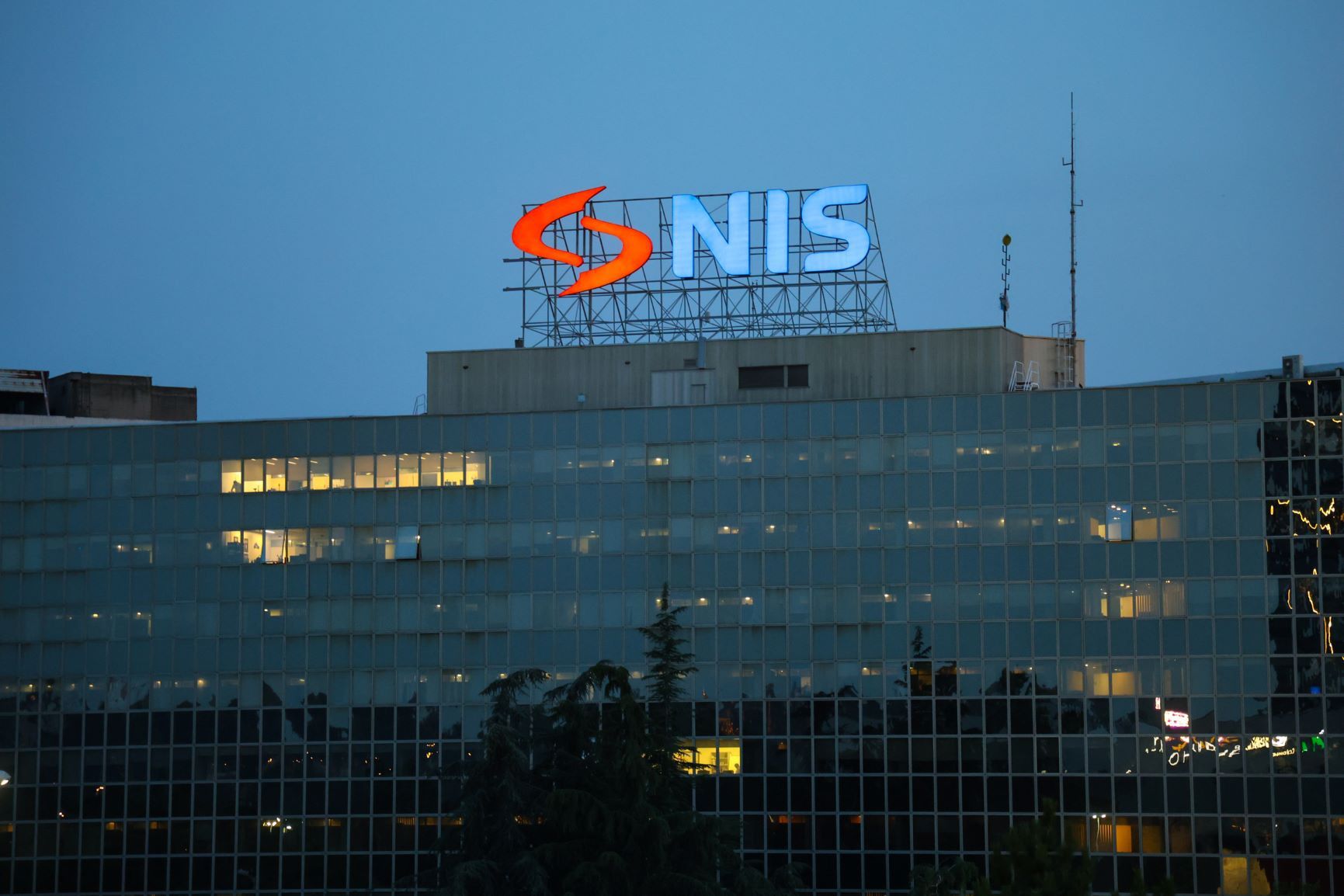
The oil and gas company NIS (“Naftna Industrija Srbije”) has been sold to the Hungarian company MOL, with the deal expected to be completed by mid-March, announced Serbia’s First Deputy Prime Minister and Minister of Finance, Siniša Mali. NIS, whose controlling stake belonged to Gazprom Neft and its parent company Gazprom, was forced to stop purchasing and refining oil due to US Treasury sanctions. Thus, the sale of NIS, ongoing since January 2025, is coming to an end. But the consequences it triggered are only beginning to be felt.
How NIS Came Under Russian Control
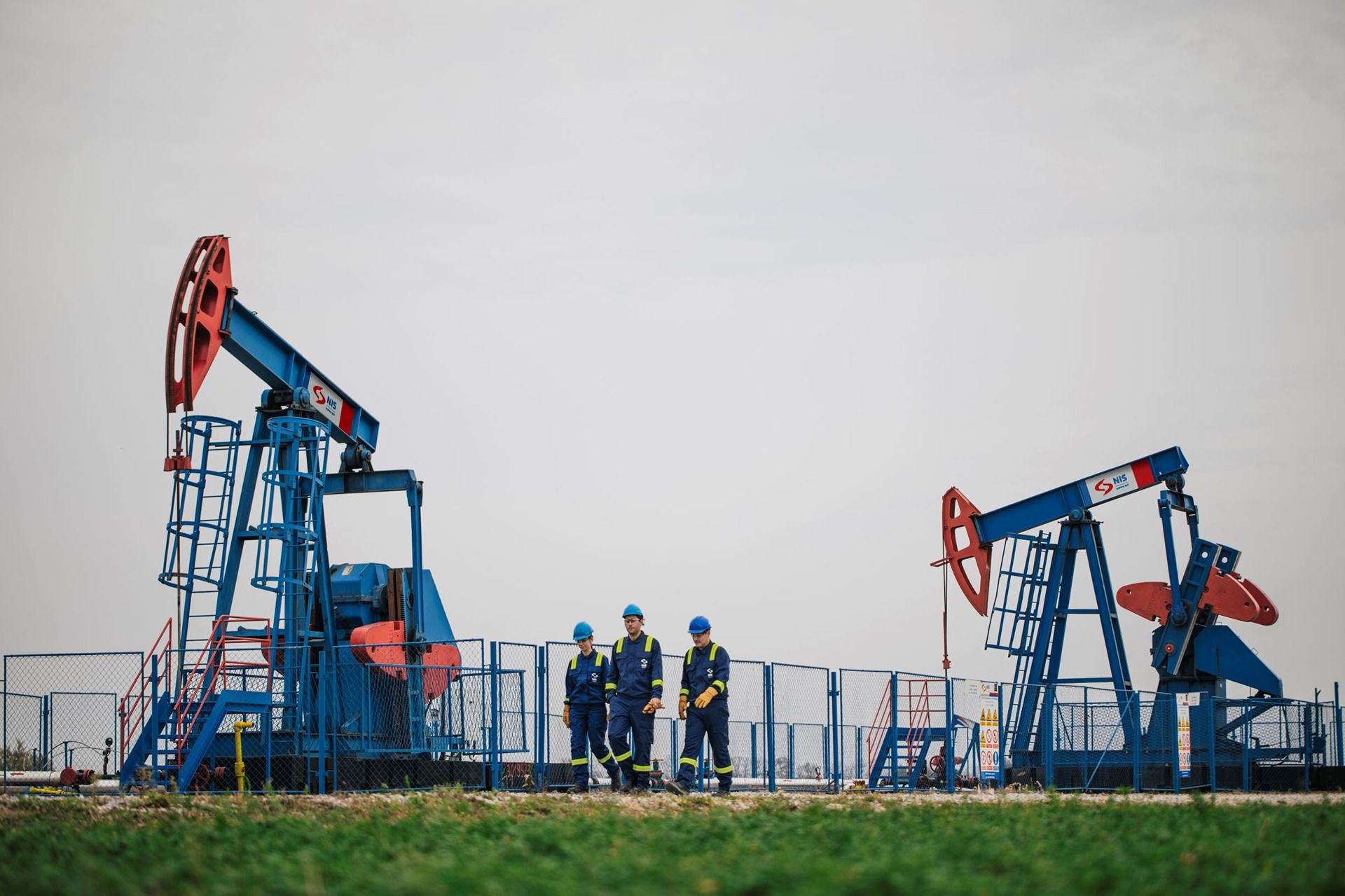
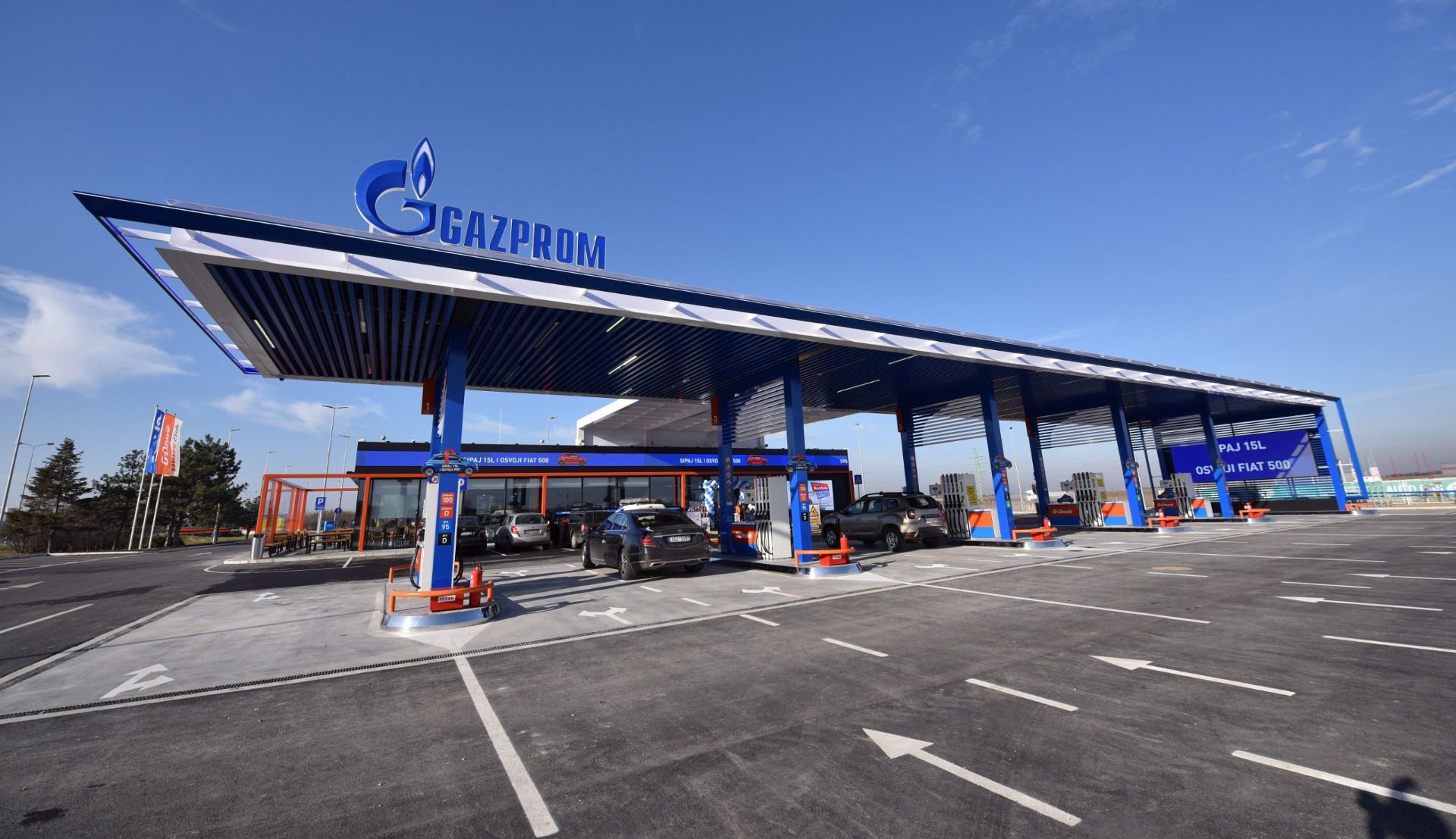
NIS is a monopoly in Serbia in the field of oil and gas extraction, purchase, transportation, and refining. The company owns the country’s only oil refinery in Pančevo, which supplies petroleum products to neighboring countries, small oil and gas fields in the South Banat district, the only gas storage facility (also located there), and the largest chain of gas stations in Serbia. NIS gas stations are also present in neighboring countries—Hungary, Montenegro, Bosnia and Herzegovina, North Macedonia, and Romania.
The company is among the largest exporters and a key source of funding for Serbia’s social programs. In short, it is one of the leading players both economically and socio-politically in the country. And this player was under Russian control.
Since 1991, NIS was a state-owned company. It became a joint-stock company in 2005. Four years later, 51% of its shares were bought by Gazprom’s subsidiary, Gazprom Neft. Later, part of this stake, 5.15%, went to Gazprom (which was later increased to 11.3%, while Gazprom Neft retained 44.85%). The Serbian government owns about 29.9% of the shares, with the rest freely traded.
It’s worth noting that the controlling stake in NIS went to the Russian side for 400 million euros—a very low price even for a company in crisis due to post-war devastation. In Serbia, there are regular investigations into why Gazprom Neft gained control over NIS at such a discount.
The Reason: Sanctions
On January 10, 2025, the US imposed blocking sanctions on NIS because the controlling stake was held by Russian companies, which themselves were under US and EU sanctions. From the start, US authorities demanded that Russian companies completely withdraw from the company’s structure—and threatened that otherwise it would have to stop operations. “NIS is a valuable national resource for Serbia, valued at more than two billion dollars in 2008, when Gazprom bought more than half of its shares for a small fraction of their market value. Now it is the most profitable company in Serbia. The Russian owners of NIS use their share of the profits to finance brutal aggression against Ukraine and threaten stability in the Balkans and all of Europe, rather than investing in Serbia’s future,” stated the US Embassy in Serbia after the decision was made.
The first reaction of the Serbian authorities was panic. Minister of Energy Dubravka Đedović-Handanović immediately stated that Serbia could be left without oil and gas: pipelines to Serbia run through EU countries—Hungary, Croatia, and Bulgaria—and the country’s own production is insufficient. Moreover, the US sanctions made it impossible to pay for energy purchases and carry out other financial operations. At one point, NIS gas stations stopped accepting international payment cards. Most importantly, the refinery in Pančevo could be shut down, threatening the country with a fuel crisis.
Photo: nis.rs
The threat of a fuel crisis is very painful for Serbs. During the Yugoslav conflict, the refinery was not working, and locals still remember having to buy gasoline from speculators: people stood along the road with two-liter Coca-Cola bottles filled with fuel. Unsurprisingly, after the authorities’ panic statements, queues formed at gas stations. Residents of Vojvodina—the northern province of Serbia—were also anxious: it is the country’s only fully gasified region. Many people stockpiled stoves and firewood in panic, expecting gas supplies to be cut off.
The Reason for Stubbornness
Only the Russian side remained calm. After the sanctions were introduced, the company limited itself to a statement that it was operating as usual, although it immediately put up its Romanian gas station network for sale. Subsequently, information about negotiations between the Serbian government and Russian owners mostly came from President Aleksandar Vučić—he regularly predicted catastrophic scenarios if Russia did not agree to sell NIS.
Russia refused even to sell NIS to Serbia itself, citing that no sanctions should interfere with existing agreements—though it did not explain how to ensure the company’s operations under those circumstances. Moreover, it tried to keep the company in its hands. First, Gazprom Neft sold a 5% stake to Gazprom to stop being the controlling shareholder, then Gazprom sold its stake to St. Petersburg-based JSC “Intelligence”, managed by Gazprom Capital. Until that point, the Trump administration had, without question (albeit at the last moment), extended the moratorium on sanctions at Serbia’s request, saying more time was needed to find a buyer. But after the deal with “Intelligence”, patience apparently ran out. The US directly demanded that Russia fully exit the company’s capital, after which they stopped delaying sanctions: at the end of November, the Pančevo refinery was forced to shut down.
The long saga of selling the Russian stake in NIS seems especially surprising given that Serbia has a right of first refusal to buy out the Russian stake in NIS.
The Russian side is obliged to offer its stake to Serbia first before seeking another buyer. The Serbian opposition has repeatedly raised this issue, to which Vučić replied that he “does not want to nationalize the company.” This justification is rather strange, so there was a theory that Serbia simply could not pay the price Russia demanded for its stake.
Sources in the Serbian government said that initially Serbia offered 700 million euros for the Russian stake, then the amount was raised to 1.4 billion. Russia, according to rumors, valued its stake at 3 billion. Recall that the controlling stake in NIS was bought by Russia for 400 million euros. The book value of the company as of December 31, 2024 was 3.2 billion euros, but its market value after the sanctions fell to 1 billion euros. Now, analysts estimate the Russian stake at 1.5 billion euros on average—meaning Serbia’s last offer was quite fair.
However, recently Aleksandar Vučić admitted that MOL bought the stake for 900 million euros, though Serbia was ready to pay “almost twice as much.” It seems the issue was not about money after all.
Some insight into Russia’s motives can be found in an interview with Aleksandar Vulin, former Deputy Prime Minister of Serbia and ex-head of the national security service (BIA). It was during his tenure as BIA head that the wiretapping of a meeting of Russian opposition figures in Belgrade occurred—the tapes were handed over to Russian intelligence and used in the case against Vladimir Kara-Murza.
Vulin has never hidden his pro-Russian stance, and now, after resigning as deputy prime minister, he actually lives in Moscow. Therefore, his words can be seen as a signal to the Serbian side. And what he said in mid-December 2025, when the Pančevo refinery had already stopped and Serbia was living on fuel reserves, was literally this: the fate of NIS should be decided only with Russia and in its interests, regardless of US pressure.
In simpler terms: Serbs were being asked to confront the US and suffer for Russian interests. Or, in Vulin’s version, to “show pride.”
Photo: nis.rs
NIS is essentially a Russian “wallet” for advancing Russian interests in Serbia. In its 2024 annual report, NIS mentions numerous sponsorship and charity projects: from supporting the Partizan basketball club to a Bolshoi Theatre gala concert—a total of almost 500 million dinars (about 4.5 million euros), including ownership of the football club Crvena Zvezda.
Almost all pro-Russian NGOs received grants from NIS: it was enough to fill out an application on the company’s website. This opportunity was used, among others, by the “Immortal Regiment” campaign, regularly held in Serbia’s largest cities.
There is also information about NIS supporting pro-Putin Serbian activists, who at the start of the Russian invasion organized a massive rally in support of Russia in Belgrade—with flares and flags of the DNR and Russia. According to Serbian experts, NIS was Russia’s most important instrument of political and economic influence not only in Serbia, but throughout the Balkan region.
A Change of Fate
In the second half of November 2025, it became known that Russia had agreed to sell its stake in NIS, but the buyer’s name was unknown: Serbia’s Energy Minister Dubravka Đedović-Handanović said negotiations were ongoing. By January 1, 2026, information emerged that the buyer would be the Hungarian oil and gas company MOL—hinted at by Aleksandar Vučić during the New Year holidays. Finally, on January 18, the purchase was confirmed by MOL itself, noting the possibility of partnership with UAE company ADNOC.
The exact amount for which Hungarian MOL bought the Russian stake in NIS has not been disclosed: there are only Vučić’s words that the purchase cost the Hungarians between 900 million and 1 billion euros. But it is absolutely clear that the purchase was approved by the US—Hungarian Prime Minister Viktor Orbán has repeatedly stated that the Trump administration makes an exception for him from US sanctions on Russian energy. It seems this is the case—at least, after preliminary agreement on the deal was reached, the Pančevo refinery was allowed to resume operations, and before that, Serbia was allowed to receive oil through the Croatian JANAF pipeline.
MOL is not the worst option for either Serbia or Russia. On the one hand, the company has had its own gas station network in Serbia for quite some time; on the other, Orbán has permission from the US and EU to supply Russian oil. True, this permission will expire next year—along with Orbán’s mandate: next year, elections will be held in Hungary, and it is possible that Orbán’s party will lose its majority. If the opposition comes to power, it is unclear whether they will seek a new license from the US for Russian oil supplies.
However, there are what are called reputational losses—Serbs, frightened by Vučić’s regular panic statements that if the sanctions moratorium is not extended, the country will be left without fuel and gas, now believe: Russia not only cannot, but does not want to defend Serbia.
The myth of the “Russian brothers” who will surely return Kosovo, protect Serbs from NATO, and generally do everything brothers are supposed to do—a myth that has existed since the Yugoslav wars of the 1990s—has collapsed and is unlikely to be revived.
As for funding pro-Russian activities, there remains some intrigue—Orbán himself does not hide his pro-Russian views. However, there are doubts that NIS will continue to fund them on the same scale: after all, Orbán is much more interested in spending money on promoting himself and his country, as well as on supporting Hungarians in the Serbian region of Vojvodina.
Serbia is still in an unstable position between the West and Russia, which the Center for European Policy Analysis (CEPA) called “a state of limbo.” But the Serbian authorities are already voicing criticism of Russia. So far—regarding the drawn-out sale of NIS, though on social media, Serbs are much more outspoken: saying that Russia turned out to be just as self-interested as the West, and that it was Vučić’s pro-Russian policy that led to the current situation. “Russia let us down,” I have often heard in personal conversations. The changing Serbian attitude toward Russia is also evident in local media polls.
However, Vučić, who has so far been accused of sitting on four chairs (Russia, EU, US, China), seems to have chosen a direction: Serbia declined to participate in Trump’s Peace Council, and Vučić’s remarks at the Davos forum show that Serbia will stick with Europe. “Serbia is in Europe,” explained the Serbian president, responding to a call by US presidential envoy Richard Grenell to follow the American rather than the European path.
One can assume that such statements by Vučić are linked to the fact that the EU, on the one hand, allocated Serbia a record aid package for the Balkans of 2.2 billion euros, and on the other hand, quite firmly demanded that Serbia clarify its policy. Meanwhile, Trump, whom many Serbs hoped would defend their interests in Kosovo, is currently ignoring the Balkans. However, if he turns his attention there and completes the agreement between Serbia and Kosovo on the creation of Serbian municipalities in the unrecognized republic, Vučić may change his policy. But what’s important is that Vučić no longer talks about a path with Russia.
If you enjoyed this article, consider making a donation — one-time or, even better, monthly. Your support helps us motivate our authors and become better with every article.
Our organization is recognized by the Internal Revenue Service (IRS) as a 501(c)(3) tax-exempt, charitable organization, which means that all contributions made to us are tax-deductible to the fullest extent permitted by U.S. law. Individuals may generally deduct charitable contributions of up to 60% of their Adjusted Gross Income (AGI) for cash donations made to qualifying 501(c)(3) organizations. For donations of appreciated assets (such as stocks or other long-term capital assets), the deduction is typically limited to 30% of AGI, based on the fair market value of the asset. C-corporations may deduct charitable contributions of up to 10% of their taxable income for donations made to eligible charitable organizations.
By submitting a donation, you confirm that you have read and accept the following documents: Privacy Policy and User Agreement, and also give consent to the processing of your personal data.
If you would like to unsubscribe from a monthly donation, please email us at: [email protected]