The forested Sandarmokh tract seems to threaten the Russian authorities by its very existence. From their point of view, since people do not forget about it, their memory must be reformatted—by any means and at any cost.
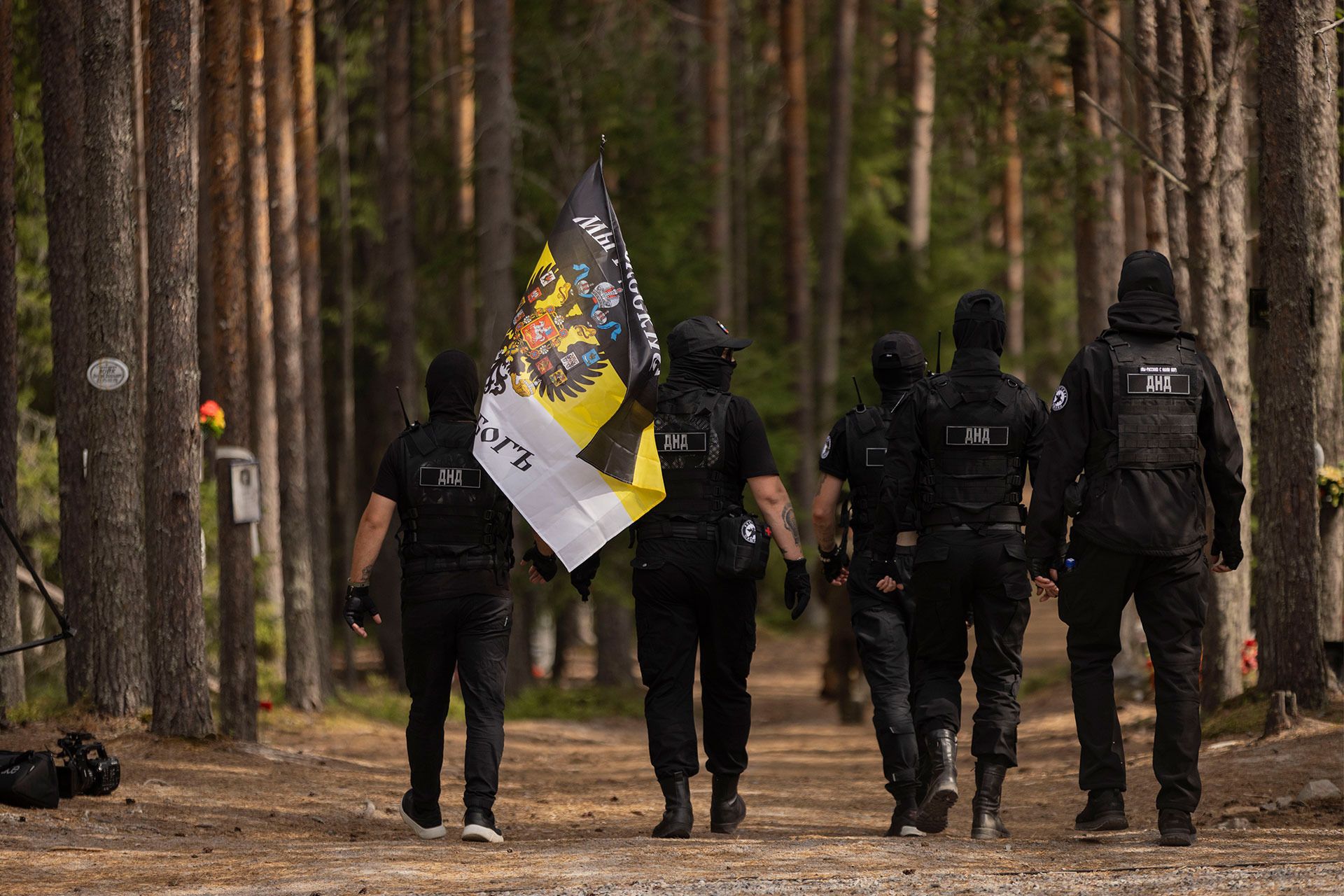
Far-right activists in Sandarmokh, August 5, 2025. Photo: Mediazona
Last week, news worthy of the world of “Day of the Oprichnik” came from Karelia. In the Sandarmokh tract near the town of Medvezhyegorsk, activists of pro-government organizations—the “Russian Community,” the “Young Guard of United Russia,” and Cossack societies—attempted to disrupt a memorial event commemorating the 88th anniversary of the start of the Great Terror in the USSR. In the late 1930s, Stalin’s dictatorship used Sandarmokh as an execution ground. According to the lists established by name alone, the NKVD killed no fewer than 6,241 people here.
Judging by reports from reporters of “Bumaga” and “Mediazona”, far-right activists and their associates hung photos of foreign Ukrainian Armed Forces volunteers on trees, harassed foreign diplomats visiting Sandarmokh, doused participants with water, and loudly sang “Katyusha” during the laying of flowers. One would think that the Kremlin and its fervent supporters have enough concerns beyond the war to deal with victims of mass repressions in the Karelian wilderness. However, the topic of Sandarmokh evidently still haunts the Russian leadership.
Satisfaction Behind the Pines
Let’s stay in the same place but rewind eleven years back—to August 5, 2014. That fateful year in modern Russian history, marked by “Crimea is ours,” the Malaysian Boeing tragedy, a presidential approval rating near 90%, and the first sanctions that were not supposed to make “Iskanders” laugh.
In Sandarmokh, they marked another anniversary of the start of the Great Terror. However, the discussions then were not only, nor even mostly, about Stalinist times. A video remains: a wall of trees, between them characteristic Karelian memorial pillars with roofs (“golubtsy”). Before the audience stands a not young but strong and vigorous man in light clothing.
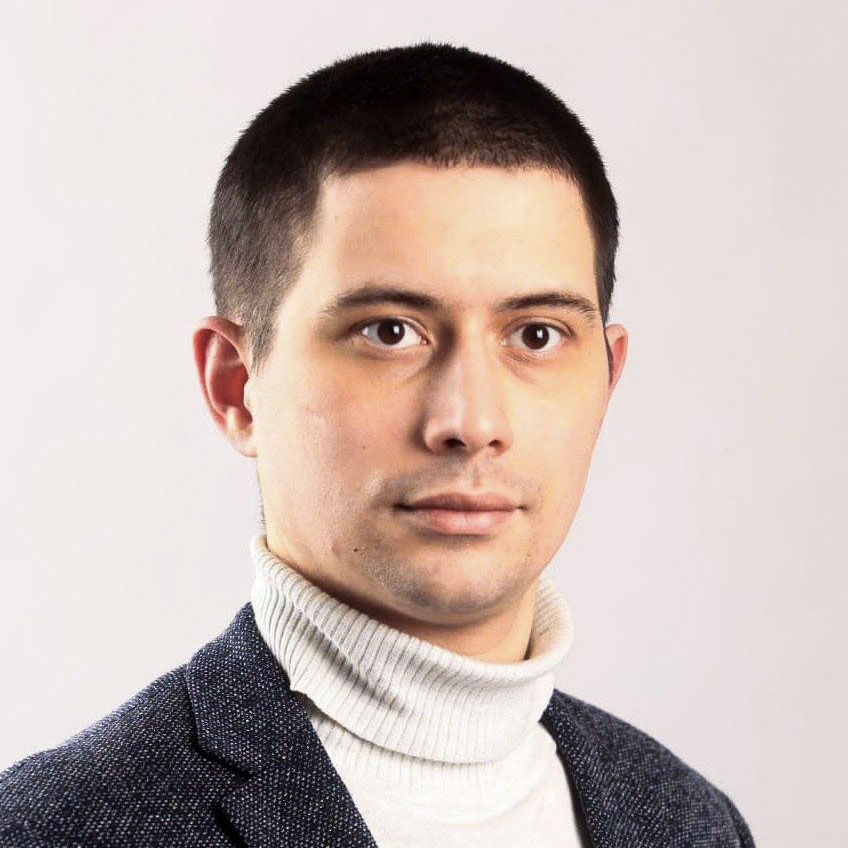
Yuri Dmitriev at a memorial rally in Sandarmokh, August 5, 2013. Photo: Wikipedia
At first, the speaker somewhat elaborately reflects on the current Russian authorities and their double standards. Then he directly moves to the most pressing topic of summer 2014—the conflict in Donbas. Officially, at that time Russians were supposed to believe that everything happening in eastern Ukraine was a spontaneous uprising of local residents against the “Kiev junta.” However, more and more people acknowledged the unpleasant truth:
“The whole world recognizes that in Donetsk, on one side, are simply Yanukovych’s bandits fighting with our taxpayers’ money, our weapons. On the other side, the legitimate Ukrainian authorities are trying to suppress them somehow. And ours shout that this is not the government, but punitive forces.”
Then the speaker urged listeners not to fear the current Russian leadership (“The most they [the authorities] can do to you is kill you”). Many in the crowd were clearly taken aback at that moment; a male voice shouted, as if this was already “off track”, but the orator calmly retorted: “You can get your satisfaction behind the pines.”
You have surely recognized the truth-teller in light clothing—it is the former chairman of the Karelian “Memorial,” Yuri Dmitriev. In 1997, with his active participation, a group of local and St. Petersburg members of the society found mass graves in the tract. It was then that human rights activists gave it its name after the once-standing village here (from Karelian “Sandarmokh” translates as “Alexandrov farmstead”). And in 2016 Dmitriev became the accused in a notorious case of “committing violent sexual acts.” In 2020, the Petrozavodsk court—on the second attempt and on dubious grounds—found the publicist and local historian guilty and sentenced him to 13 years in prison.
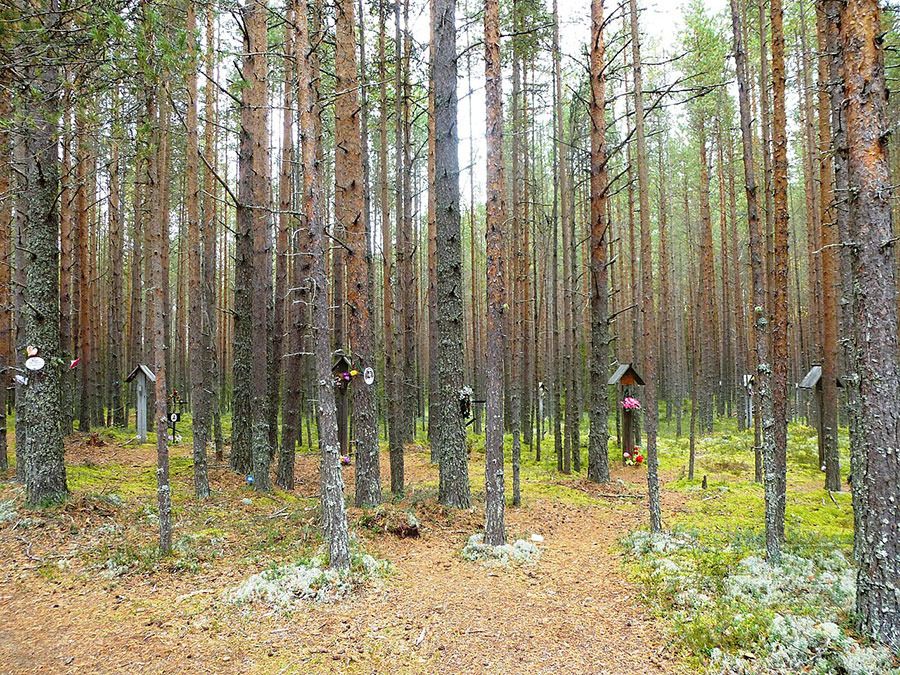
“Golubtsy” at the site of mass graves in the tract, 2013. Photo: Wikipedia / Semenov.m7
For that time, this seemed like nonsense. After all, Dmitriev was neither an oligarch, nor a high-ranking security official, nor a political activist. Most commentators had no doubt: Yuri Alekseevich’s real guilt was that he dug up too much—both in Sandarmokh and its surroundings (although it still remains unclear exactly whose anger Dmitriev aroused and why). The place discovered by the local historian gained a new life with its own meanings—each year increasingly perpendicular to what the official authorities called for.
A Forest for Unwanted People
The first thing to remember about Sandarmokh is that it is one of the few studied places in the former USSR where death sentences were carried out in the late 1930s. Moreover, not only locals died here but also many hundreds of people who had no connection to Karelia until the last days of their lives. These included Russians from various parts of the Union, Ukrainians, Jews, Tatars and Bashkirs, Poles, and representatives of more than 50 other peoples. How did such an international mix come about?
In the summer of 1937, the machinery of the Great Terror was gaining momentum throughout Stalin’s state. A key role was played by NKVD Order No. 00447. Formally, People’s Commissar of Internal Affairs Nikolai Yezhov signed the act on July 30, but the start of the “operation” in most USSR subjects was dated August 5. Parallel orders were also in effect, secretly condemning hundreds and thousands of people to death. On August 16, the same Yezhov signed Order No. 59190 “On the completion of the operation for repressing the most active counter-revolutionary elements among those held in GUGB prisons.” The third point of the document stipulated the execution of 1,200 prisoners of the Solovki prison—the flagship of the GULAG. These were prisoners whose terms were ending, and whose release the Stalinist regime considered a potential threat—primarily political prisoners.
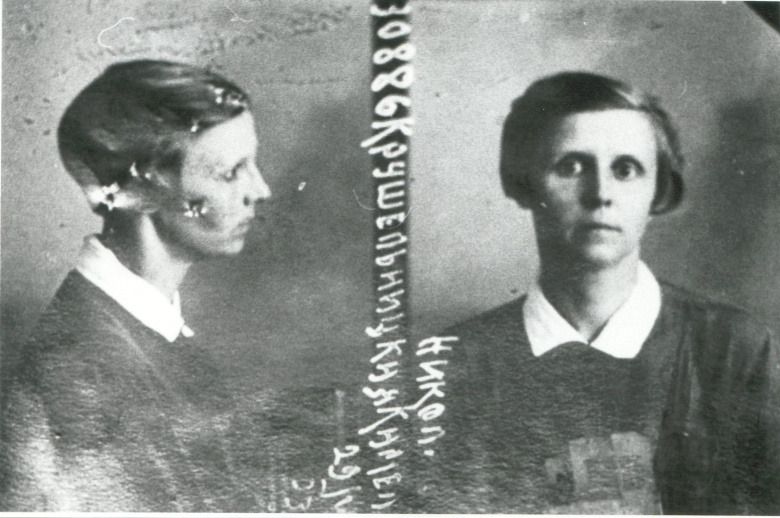
Kamilla Krushelnitskaya—a Polish woman from Moscow. In 1934 she received a 10-year sentence for participating in a secret Catholic circle. Three years later, she died among the prisoners of the Solovki stage. Photo: Wikipedia
The Chekists decided that it was impossible to secretly kill such a number of people on the islands themselves, which cover less than 400 km2. Therefore, the state security chose a place on the mainland for the execution ground—the surroundings of the Karelian Medvezhya Gora, the “capital” of the Belomorsko-Baltiysky camp (Belbaltlag). The Solovki administration, headed by Ivan Apeter, was supposed to open cases, hastily simulate investigations, approve sentences, and bring the re-sentenced prisoners to the mass execution site in Karelia. The capital’s leadership considered two months sufficient for this work.
However, Apeter’s team was overwhelmed by the volume of “creativity.” They had to select the required number of prisoners, prepare a dossier for each, and invent alleged crimes committed already in prison. For some, these could be counter-revolutionary statements; for others, escape attempts; for others, other violations. Then the execution cases were sent for approval to special tribunals (“troikas”), which also took time.
The precious weeks were fought for by the Solovki administration by systematically fabricating group cases. For example, 134 prisoners linked to Ukraine were combined into the “All-Ukrainian Central Bloc”—a non-existent “national-terrorist” organization.
Not all in the “AUC Bloc” were Ukrainians. For example, investigators included meteorologist Alexey Vangengheim. His only Ukrainian connection was that in 1881 the future scientist was born near Konotop. His family moved from Chernihiv region to Central Russia a few years later, and Vangengheim had no further ties to Ukraine. However, such details did not bother the Solovki Chekists. The bloc also included several prisoners born in Ukrainian regions, with relatives there or who knew the Ukrainian language.
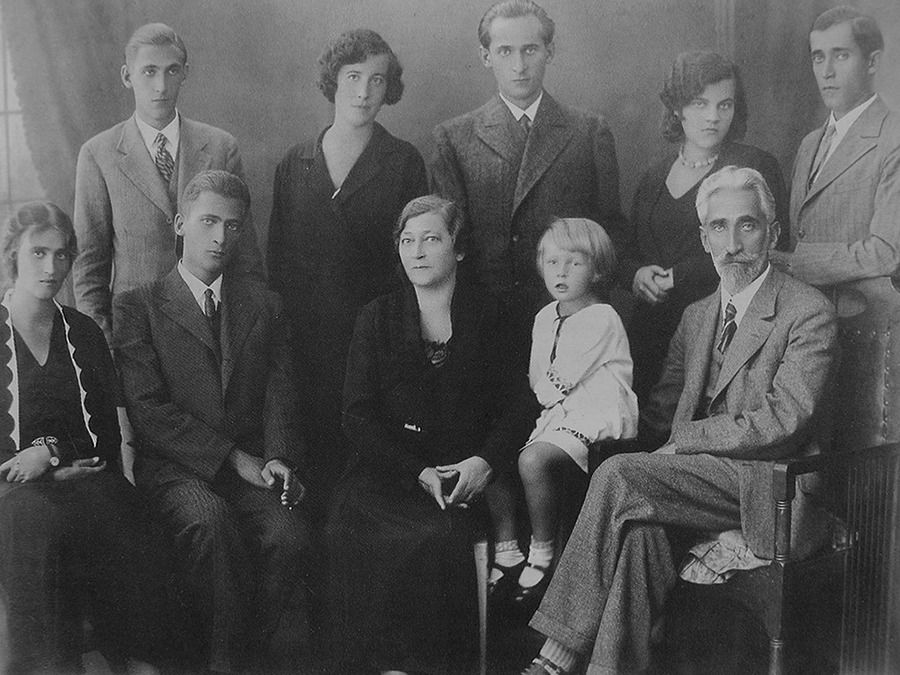
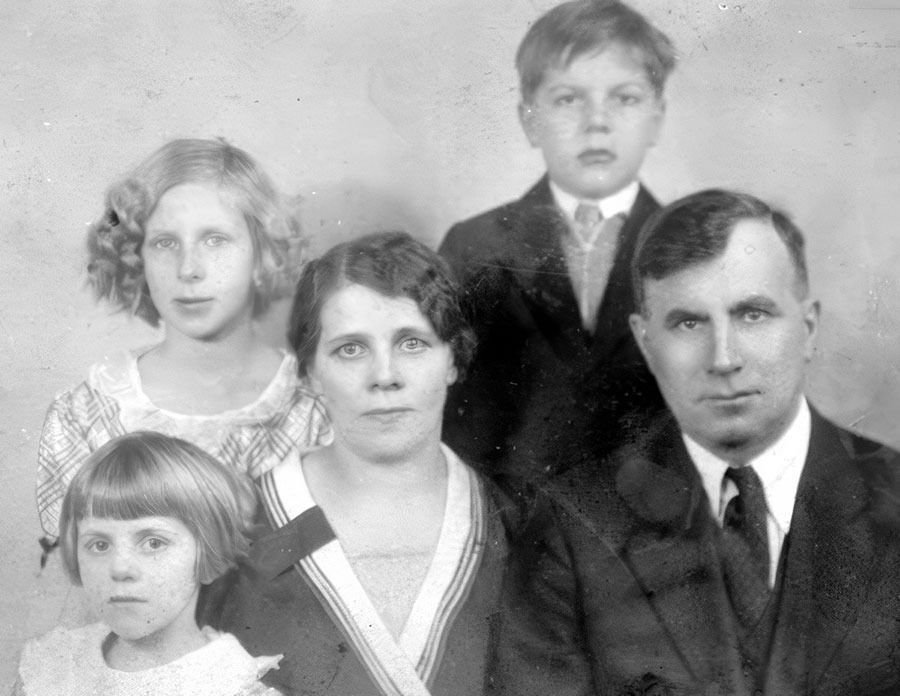
The family of other Krushelnitskys—the former Minister of Education of independent Ukraine Anton Vladislavovich (sitting bottom right), who voluntarily came to the USSR after emigration. Almost all adults died during the Great Terror. Photo: Wikipedia
However, the core of the “organization” consisted of real Ukrainians such as director Les Kurbas, playwright Nikolai Kulish, historian Matvey Yavorsky, and writers Anton Krushelnitsky and Valerian Pidmohylny. Therefore, in Ukrainian history, the Solovki stage of autumn 1937 (also called the “Great” or “Missing” stage) is considered the deadly finale for the Executed Renaissance—a term referring to cultural figures of the Ukrainian SSR who created works in the national language and were repressed in the 1930s despite their unequivocal loyalty to the Soviet regime. With the Bolsheviks’ abandonment of the earlier policy of “korenizatsiya,” Ukrainian-speaking intellectuals first became undesirable in freedom and then dangerous by their very existence.
This grim pattern in the late 1930s affected not only Ukrainians. Another national group was listed in the “Missing stage” in the case of Mirsaid Sultan-Galiev. He was a prominent Tatar Bolshevik who had once been fascinated by the idea of Islamic socialism, which ended his political career. Before his execution in 1940, Sultan-Galiev changed several places of detention but never visited Solovki. Yet his name became a convenient umbrella under which the Chekists gathered about 30 intellectuals from various Turkic peoples—from Uzbeks to Crimean Tatars—who ended up on the northern archipelago. All were labeled “Sultangalievtsy” and sentenced to death equally.
Conspiracy Above All
By mid-October 1937, Apeter’s team had largely fulfilled Yezhov’s task. The Solovki Chekists fell slightly short of the target—1,116 cases were completed instead of the required 1,200. Due to internal confusion, five prisoners “got lost”: one died before the stage, and four were mistakenly transferred to other camps. Later, all were found and executed at their actual locations (as was Apeter himself—in 1938).
Thus, a group of 1,111 doomed people was formed. They could only guess their imminent fate. According to a special order from the deputy NKVD commissar Mikhail Frinovsky (who would be executed in 1940), citizens sentenced in absentia by “troikas” to execution were not informed of their sentence. Guards lied to their victims, saying transfers to other prisons and camps awaited them. Using this simple trick, Chekists hoped to dull prisoners’ vigilance and prevent possible resistance.
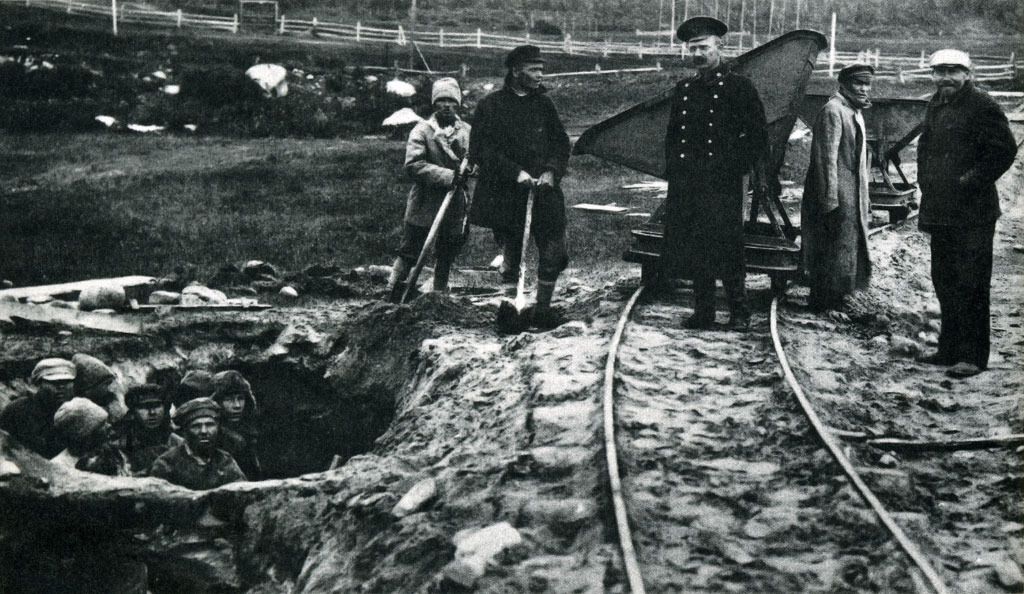
Solovki prisoners at work, mid-1920s. Photo: Wikipedia
On October 16, 1937, the Solovki stage prisoners were taken by state security captain Mikhail Matveev, deputy head of the administrative-economic department of the NKVD for the Leningrad region. His seemingly harmless position should not be misleading. Typically, the executors of death sentences in Stalin’s secret police were precisely from the administrative-economic department. Matveev was a consummate executioner who had carried out death sentences since the Civil War.
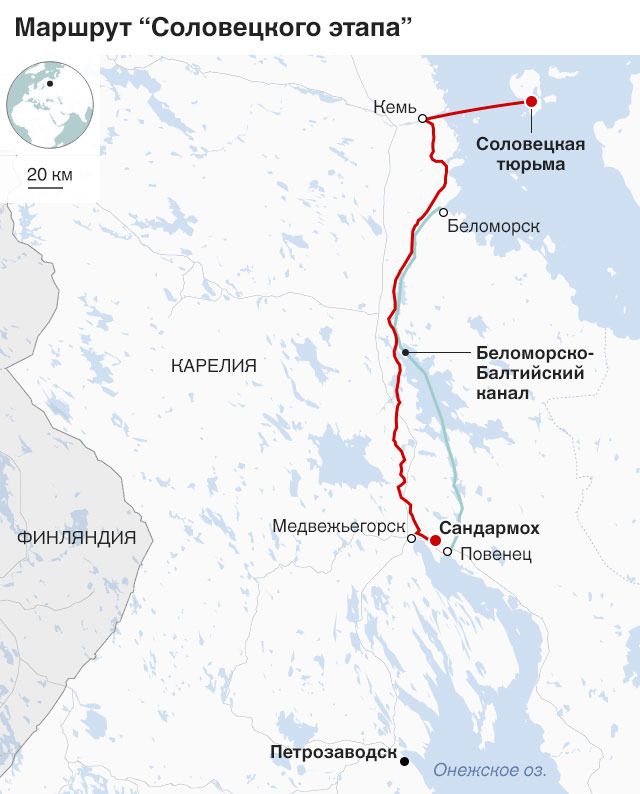
On October 21, the prisoners arrived by sea at a transit camp near Kemi. From there, they were transported by rail to the vicinity of the settlement Medvezhya Gora—to an unnamed place now known as Sandarmokh.
Matveev personally chose the execution site. Initially, he was offered to kill people on the outskirts of the future town, but the experienced Chekist’s trained eye determined that the place “categorically did not meet the requirements of execution grounds.” Above all, he feared the risk of “exposure”—the executions had to be carried out in secret.
In Sandarmokh, Matveev was assisted by junior lieutenant of the NKVD Georgy Alaafer (also sent from Leningrad) and several local Chekists. By October 27, 1937, the small group seemed to have overcome all obstacles and began the long-awaited slaughter. But on the very first execution night, an emergency occurred. The doomed were brought to Sandarmokh tied hand and foot in cargo trucks. However, someone from the first batch managed to smuggle in a knife. Realizing his fate, he cut the ropes, attacked the Chekists, and even managed to wound one of his killers. The executioners quickly suppressed the uprising, killing both the desperate man with the knife and his companions.
Paranoid Matveev then insisted on a four-day break to ensure that the feared “exposure” did not happen. But new prisoners kept arriving from Kemi to Medvezhya Gora all this time. There was not enough space for them in the cramped Belbaltlag isolation ward—three small barracks. So on November 1, the executioners resumed killing according to an openly sadistic regimen.
As a precaution, victims were now stripped naked, tied until immobilized, and those potentially dangerous were beaten unconscious with clubs. The stunned were thrown into pits where Matveev himself usually killed them with a shot to the back of the head.
Route of the Great Solovki (“Missing”) stage in autumn 1937. Map: bbc.com
On November 4, 1937, Matveev’s team finished executions at Sandarmokh. On November 10, the Leningrader handed over the execution ground to colleagues from Belbaltlag and succinctly reported to superiors on the completed work: “The sentence against those condemned to death […] has been carried out by me on 1,111 people.” The Chekist was surely proud—he had prevented “exposure” despite all difficulties. It would be tempting to say that a few months later the executioner himself took the place of his victims, but reality was different.
In 1940, Matveev was indeed caught during a Chekist shift change when Lavrentiy Beria’s new team purged Yezhov’s people. The Sandarmokh executioner was sentenced to ten years for abuse of power but actually served only two. Matveev’s case was unexpectedly reviewed, and the prisoner was not only released but also reinstated with a promotion.
After the war, the executioner enjoyed an honorable pension and lived a happy 22 years at the state’s expense. He died only in 1971.
Matveev’s close comrade in the Sandarmokh executions, Georgy Alaafer, outlived him by a couple of years. He never faced any accusations. However, such a happy ending for an NKVD officer was more of an exception than the rule.
Chekists Racing Against Death
In the winter of 1938, Sandarmokh received several new execution stages from camps, this time not from Solovki but from Belbaltlag institutions. During the Great Terror, several purges were carried out there under various orders and directives. Altogether, they cost the lives of no fewer than 2,643 prisoners, and the vast majority of sentences were carried out near Medvezhya Gora.
However, Yezhov’s department in those black months was clearing not only prisons and camps. The Great Terror engulfed people on the other side of the barbed wire, and in Karelia, the repressions were especially ruthless. From January 1, 1937, to November 17, 1938, in the republic with half a million people, between 11,300 and 13,000 were sentenced under political charges, and no fewer than 9,800 received the death penalty. In other words, for every resident sent to camps, there were about five executed compatriots—a monstrous disproportion even by Soviet standards of 1937-1938.
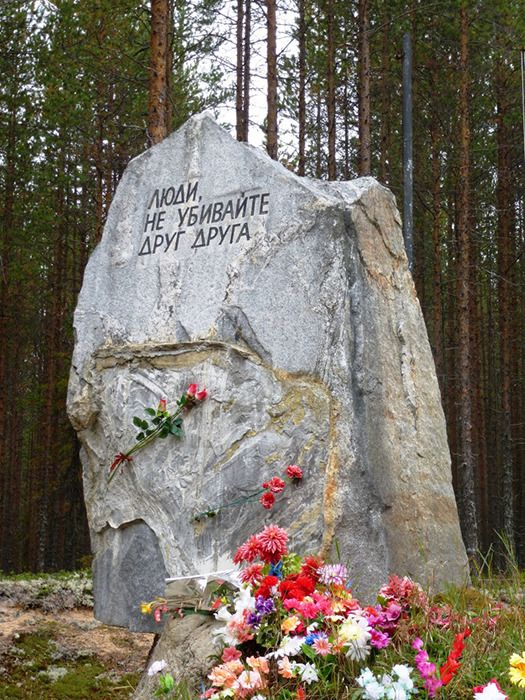
Memorial sign in Sandarmokh, 2013. Originally, the lower part of the monument featured a bas-relief “Executed Angel,” but it was destroyed by vandals in 1999. Photo: Wikipedia
At that time, Karelia had at least nine execution grounds, but the Chekists carried out more than 50% of sentences in Sandarmokh. The execution team leaders, Alexander Shondysh and Ivan Bondarenko, killed relentlessly. In the peak repression month of January 1938, executioners sometimes performed 300 or more murders in one night. Their zeal was not appreciated by the leadership: both were executed for abuse of power before the end of 1939.
The brutality of the purges was due to the specifics of the border region, multiplied by recent “korenizatsiya.” In the 1920s, Moscow tried to make Karelia something like an alternative Finland. Key positions were held by Finnish communists who fled to the USSR after losing their civil war. Moreover, the Bolsheviks arranged for about 15,000 to 20,000 ethnic Finns, Karelians, and related peoples from various countries to move to the republic. This included:
“Karbezhentsy”—Karelians who participated in the anti-Soviet uprising of 1921-1922: initially fled to Finland but later decided to return after amnesty promised by the Bolsheviks;
“Finnish defectors”, Finnish citizens who embraced communist propaganda and decided to build a new life in the USSR;
“American Finns”, initial emigrants to the USA and Canada who failed to settle and were influenced by leftist sentiments.
With the onset of the Great Terror, the Chekists saw these trusting people as ready material for political cases. The state security was not bothered that the core of “Finnish defectors” and “Americans” were convinced Marxists. For example, among many repressed was Oskar Korgan—a former editor of a workers’ newspaper in Michigan who urged compatriots to move to the USSR and himself relocated there with his family.
“Late at night on November 4, 1937, they [NKVD officers] knocked on the door, waking my family. They told my father he was arrested and had to go with them. They did not answer any questions. […] I remember my father told [my mother] everything would be settled, and he would return before she could realize it.”
– Meimi Sevander, Korgan’s daughter
In September 1937, the NKVD chief in Karelia, Latvian Karl Tenison, synthesized Chekist conspiracy theories into a single narrative. Allegedly, the old Finnish leadership of the republic, initially working for Helsinki, deliberately gathered spies, fascists, and saboteurs. This fifth column was waiting for the moment to strike the USSR in the back and annex Karelian lands to Finland. Therefore, it is unsurprising that the Great Terror in the republic resembled ethnic cleansing. According to contemporary historian Irina Takala, Finns, making up less than 4% of the population, accounted for more than 40% of repression victims.
The family of Oskar Korgan—one of many “American Finns” caught up in the Great Terror in Karelia. Photo: severreal.org
However, the higher authorities repaid Tenison’s vigilance in their own way. In spring 1938, the spy and fascist turned out to be the Chekist himself, who failed to avoid the destruction of the Latvian diaspora in the NKVD. On September 10 of that year, Tenison died—apparently beaten badly during interrogation. The fight against Finnish nationalism was taken up by his successor, Stepan Matuzenko, who also failed to succeed—he outlived Tenison by less than a year and a half.
The civilian leadership of Karelia is not even worth mentioning here. From July 1937 to June 1938, the first secretaries of the VKP(b) regional committee changed four times, and three of these bureaucrats lost their lives along with their positions.
The Execution Ground of Experiments
In the history of Sandarmokh, it would have been easier and more pleasant to put a full stop in 1997. That year, “Memorial” employees, after long searches (including the miraculously found testimony of Matveev), found the former execution ground.
“[At the first memorial ceremony on October 27, 1997], there were still many children of the executed who remembered the moment of their fathers’ and mothers’ arrest. For them, it was like postponed funerals of loved ones that finally took place. Delegations came from Udmurtia, Tatarstan, other republics, and, of course, from Ukraine, which lost many here. The Catholic Church was very active because among the victims of the Great Solovki stage were 30 Catholic priests. The Russian Orthodox Church also participated in the general process at that time.”
– Irina Flige, director of the scientific-information center “Memorial”
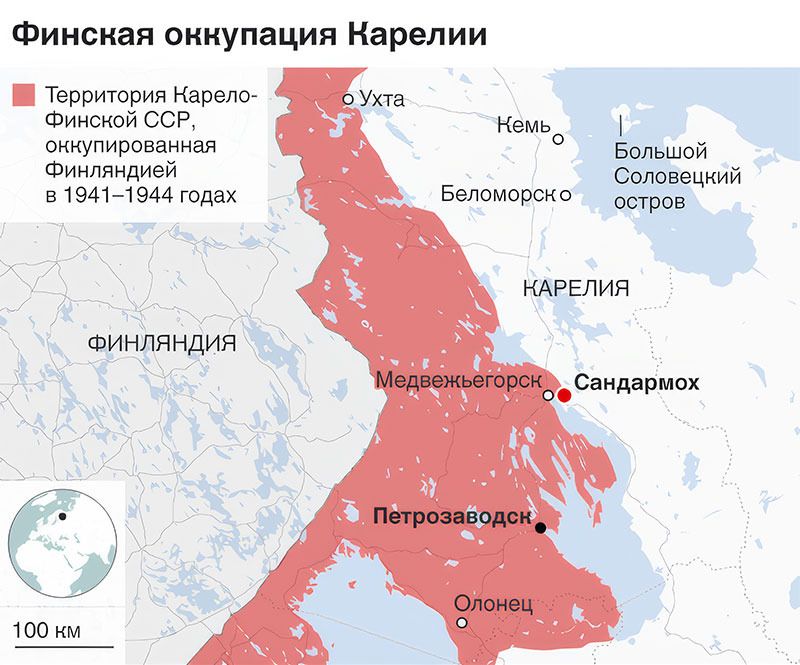
But this ending turned out to be, if not false, then intermediate. In the mid-2010s in Karelia—right after the opening of cases against Yuri Dmitriev and Medvezhyegorsk city museum director Sergey Koltyrin (unfortunately, now deceased)—an attack on the very tract began. First, a book by historian Sergey Verigin and journalist Armas Mashin “Mysteries of Sandarmokh” was published in the press. Its authors hypothesized that the site might contain remains not only of repressed citizens but also of Red Army soldiers who died in World War II. Allegedly, the Finnish army, during its occupation of Karelia in 1941-1944, found mass graves in Sandarmokh and used them to bury executed Soviet prisoners of war.
Finnish occupation of Karelia in 1941-1944: as can be seen, Sandarmokh was a frontline zone, hardly suitable for prisoner-of-war camps. Map: bbc.com
The Finnish occupation was indeed harsh. Official Helsinki at the time openly declared a course toward annexing Karelia with subsequent cleansing of “foreign nationals” (roughly, everyone who could not prove belonging to Finns, Karelians, and related peoples). The captured Red Army soldiers were treated brutally after the recent Winter War. Of approximately 64,000 POWs of the Red Army, at least 18,000 died under the Finns, including up to 1,200 executed for real and imagined offenses.
However, in Finland itself, it has long been established where their ancestors held and executed Soviet prisoners. Such places exist relatively near Medvezhyegorsk, but Sandarmokh is not among them. The tract stood at the front edge in 1941-1944, and executions there would have been deadly for the executioners themselves. Finally, the claim that the Finns, having allegedly discovered NKVD graves, quietly added new corpses there does not hold up. In the conditions of a world war, Helsinki would have loudly broadcast propaganda and announced the Bolsheviks’ atrocities to the whole world—just as the Germans did in spring 1943 upon finding the graves of Polish officers in Katyn.
Nevertheless, in 2018-2019, the pro-government Russian Military Historical Society undertook a series of excavations in Sandarmokh to prove the “Finnish theory.” The dubious event yielded very modest results. As the director of the International “Memorial” museum Irina Galkova aptly noted, the RMHS did not find a single item older than 1937 in the tract. The searchers also made outright blunders. For example, after excavating another burial, they assured journalists that prisoners of war were buried there, not GULAG inmates—claiming prisoners could not have had homemade galoshes made from car tires. In reality, such footwear (“chuni,” “surrogates,” “ChTZ,” etc.) is mentioned in the memoirs of almost everyone who sat in Stalin’s camps.
The republican and federal authorities acted peculiarly in this situation. For some time, there was silence on the Sandarmokh front. And in the military year 2023, a stele was quietly erected there “To the Victims of the Finnish Occupation”—although not a single name of a Red Army soldier allegedly executed in the tract has been established. Meanwhile, pro-government activists, annually disrupting ceremonies on August 5, gained one more tricky question: why do you not commemorate the victims of the Finnish Nazis?
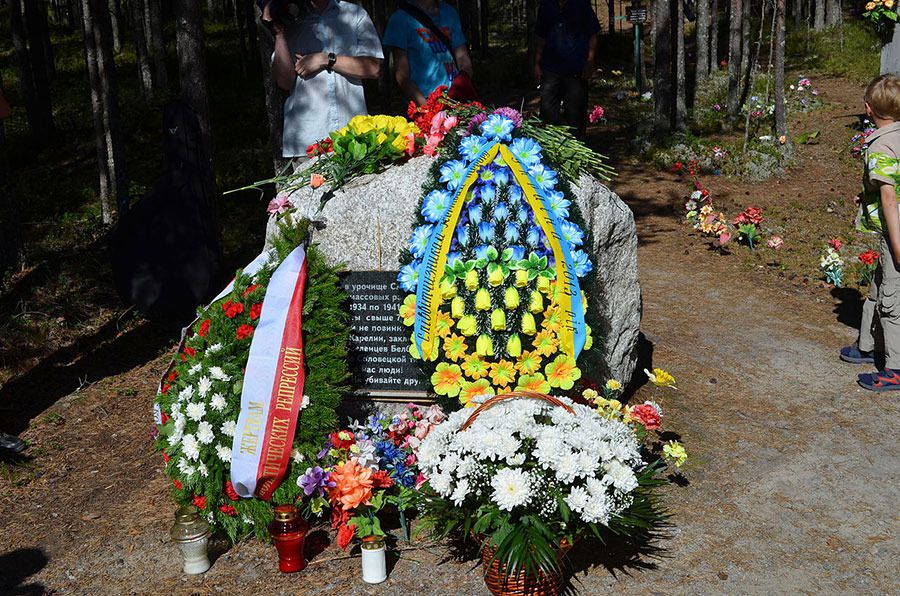
Wreaths from Ukrainian and Polish delegations laid at the Solovki stone in Sandarmokh, August 5, 2013. Photo: Wikipedia
But it would be far more useful for these people to remember that open dissenters among Sandarmokh victims are not just a minority but a statistical anomaly. However, those who sincerely believed in their regime, diligently served it, or simply tried to coexist with it number in the hundreds and thousands in the Karelian forests. Is this the kind of future those who direct dubious activists to cause a scene at mourning events dream of for themselves?
If you enjoyed this article, consider making a donation — one-time or, even better, monthly. Your support helps us motivate our authors and become better with every article.
Our organization is recognized by the Internal Revenue Service (IRS) as a 501(c)(3) tax-exempt, charitable organization, which means that all contributions made to us are tax-deductible to the fullest extent permitted by U.S. law. Individuals may generally deduct charitable contributions of up to 60% of their Adjusted Gross Income (AGI) for cash donations made to qualifying 501(c)(3) organizations. For donations of appreciated assets (such as stocks or other long-term capital assets), the deduction is typically limited to 30% of AGI, based on the fair market value of the asset. C-corporations may deduct charitable contributions of up to 10% of their taxable income for donations made to eligible charitable organizations.
By submitting a donation, you confirm that you have read and accept the following documents: Privacy Policy and User Agreement, and also give consent to the processing of your personal data.
If you would like to unsubscribe from a monthly donation, please email us at: [email protected]