Rosneft has made significant investments in India and does not want to lose them. ExxonMobil has invested just as heavily in Sakhalin-1 and is equally unwilling to lose its stake. India has stakes in Sakhalin-1 and also earns good profits from Rosneft’s investments in the country, and it too is reluctant to lose all this. The only ones spoiling the situation are two people: Trump, who wants to end the war by any means, and Putin, who does not want to stop it. And who better than Sechin to try to solve this puzzle?
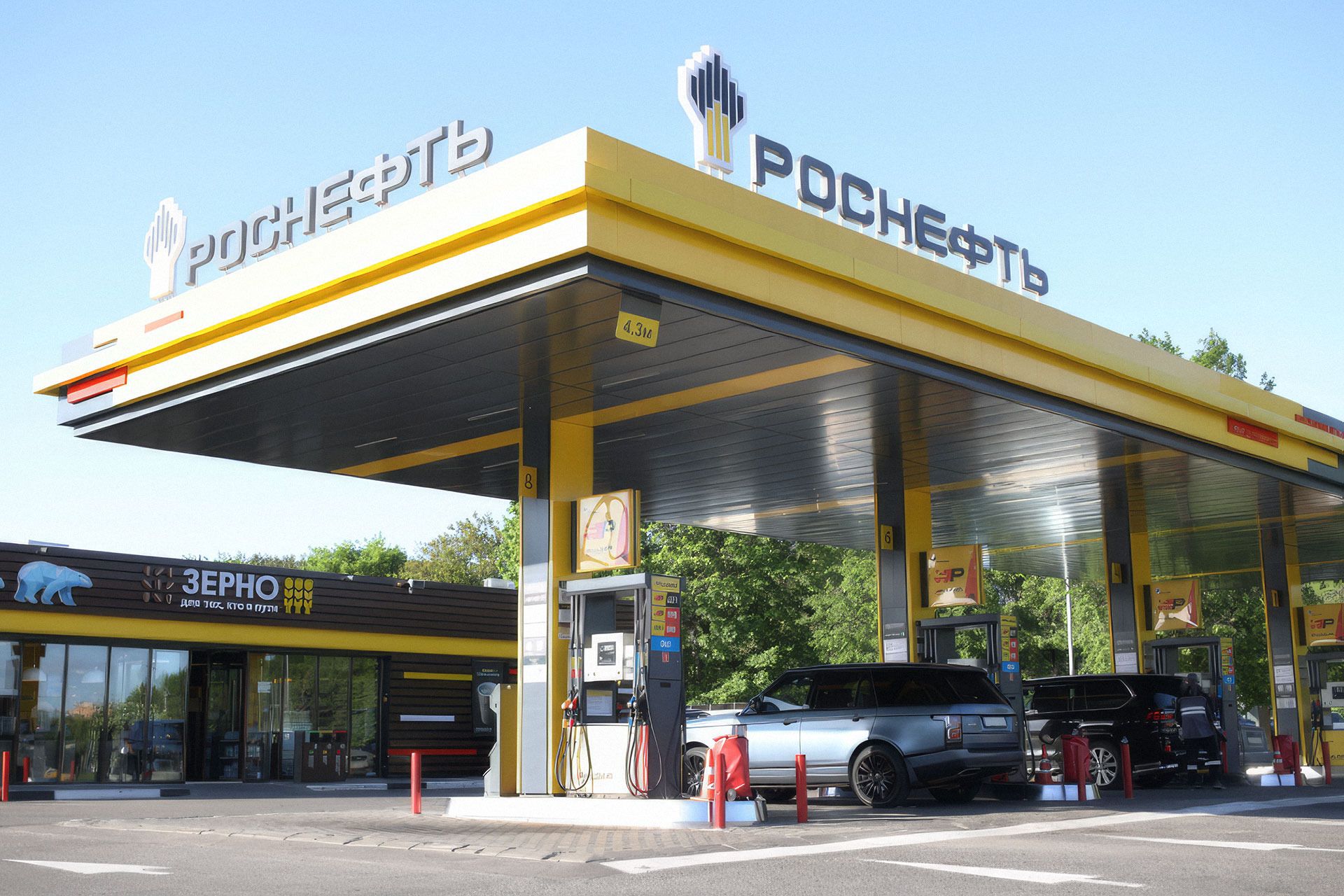
Photo: Rosneft website
Recently, Rosneft’s CEO Igor Sechin stated that rising tariffs of natural monopolies are hindering the Central Bank’s efforts to lower the key interest rate. This is essentially an open secret, but until now, speakers of such stature preferred not to discuss it publicly. On one hand, it’s clear: for Rosneft as an exporter, a strong ruble means pure losses. And the ruble is strong because the interest rate is high. The rate is high because inflation remains persistent. And inflation is largely driven by rising tariffs (which are actually higher than inflation). On the other hand, these monopolies are also state-owned (or rather, under the state’s control) companies, and criticizing their policies means either being in a desperate position or, conversely, being confident in one’s own strength. In Sechin’s case, it seems more like the latter.
Don’t mistake Sechin’s absence from the public eye for a decline in his influence. His influence remains strong, as confirmed by two recent news items.
First: The Wall Street Journal, citing its sources, reported that secret talks took place in Qatar between ExxonMobil Vice President Neil Chapman and Rosneft’s CEO Igor Sechin. To recall, before the war, Rosneft and ExxonMobil were partners in the Sakhalin-1 offshore oil project. The project began back in 1995 under a Production Sharing Agreement (PSA), a type of contract with the state that was quite favorable for foreign investors. In the project, Americans owned 30%, Japanese SODECO another 30%, and Rosneft and the Indian state company ONGC each held 20%.
After Russia’s invasion of Ukraine, ExxonMobil, the project operator, announced its exit from Russia. However, it was unable to sell its stake: initially, its share was transferred to the state pending a deal with a “Russian legal entity,” then the deadline for the deal kept being extended and is now postponed until 2026. Meanwhile, the “Russian legal entity” was already created—by Rosneft. In fact, Rosneft now manages the project, but ExxonMobil has yet to receive any payment for its share.
Strictly speaking, Rosneft’s talks with Exxon began at the end of 2022, after the Americans left, but over time they stalled (or at least no information about them leaked). And now there was a personal meeting of the company heads, for which Neil Chapman even had to get special permission from the White House to contact Sechin, who is under sanctions.
What was discussed at this meeting is no secret: very soon after the news broke, Vladimir Putinsigned a decree clarifying the conditions for the return of foreign stakes in the Sakhalin-1 project. It’s hard to doubt which foreigners are meant here. It’s unlikely ExxonMobil will return to the project before any peace agreement is reached. But the very fact that Sechin negotiated the specific terms of the return, some of which are enshrined in Putin’s decree (including supporting the lifting of sanctions against Russia, signing contracts for equipment supply, and transferring funds to the project’s accounts), suggests that rumors about the fall from grace of Rosneft’s head are greatly exaggerated.
The second news may seem unrelated: India, whose products US President Donald Trump slapped an additional 25% tariff on for refusing to stop buying Russian oil, persistently continues to purchase Russian oil for refining, even though the total tariff on its export to the US now stands at 50% (the first 25% tariff was imposed during Trump’s trade war). This primarily hurts India’s IT sector, which is closely tied to American companies. The “tariff hawk,” senior US trade advisor Peter Navarro, even publicly expressed bewilderment at such an unwise move. “[Prime Minister Narendra] Modi is a great leader, India is a mature democracy, smart people lead the country, but looking us straight in the eye, they say: we are not going to stop buying Russian oil,” he said in an interview with Bloomberg TV. Moreover, American media report that Trump tried to call Modi four times, but no one answered on the other end.
Everyone is guessing what is more beneficial for India — to lose part of its exports to the US or to lose income from refining Russian oil, to quarrel with Trump or to befriend China (which, by the way, will host not only Putin but also India’s prime minister at the parade in early September marking the 80th anniversary of the end of World War II after Japan’s surrender). But maybe it’s much simpler? Remember that the Indian state company ONGC holds 20% in the Sakhalin-1 project—just as much as Rosneft. By the way, Japanese SODECO has not left the project despite allies’ dissatisfaction. Combine this with the information about the meeting between Sechin and Chapman.
An interesting picture emerges: while Trump punishes and Navarro is puzzled, behind the scenes quiet talks are underway about reviving international cooperation on the Sakhalin project.
But that’s not all—Rosneft owns 49.13% of the Indian company Nayara Energy, which in turn operates a large refinery in Vadinar, a deep-water port, and a network of gas stations. Rosneft also supplies oil to Indian companies, including the country’s largest exporter, the holding Reliance Industries Limited headquartered in a Mumbai suburb. Last year, Rosneft signed a ten-year agreement with Reliance Industries to supply oil, and it’s clear that if they refuse Russian oil, Sechin will face an unpleasant choice: either find replacements for the lost volume in other countries or pay a hefty penalty. Add to this Rosneft’s large investments in modernizing Nayara Energy’s assets and plans to build a new refinery jointly with Indian Oil.
In short, Rosneft has heavily invested in India and does not want to lose those investments. ExxonMobil has similarly invested heavily in Sakhalin-1 and is equally unwilling to lose its stake. India has invested in Sakhalin-1 and also receives good profits from Rosneft’s investments in the country and likewise does not want to lose everything. The only ones spoiling the situation are two people: Trump, who wants to end the war by any means, and Putin, who does not want to stop it. And who better than Putin’s longtime comrade-in-arms to try to solve this puzzle? And who better than ExxonMobil’s vice president to speak with him, especially since, according to the WSJ, the company CEO Darren Woods has already preliminarily discussed returning to the Sakhalin-1 project with Trump and apparently even got his approval? Now it’s just a matter of persuading Rockefeller—that is, Putin.
So why should India now give up the excellent opportunity to become one of the major exporters of petroleum products (which are also purchased by Ukraine), even if it means enduring some losses for a while? Especially since the monsoon season started in India in July, during which the country schedules refinery maintenance, and purchases of Russian oil have decreased. Of course, Trump could continue the tariff war, and then the 19th EU sanctions package will come into effect, which will include secondary sanctions against those cooperating with Russia. However, it seems that buying energy resources will not be punished by sanctions. Or maybe it will, who knows. But for now—why rush? “No need to rush,” as a character in a famous comedy film once said.
Meanwhile, while the Indian government is not ready to give up Russian oil, Igor Sechin is much busier behind the scenes than official publications suggest. What can you do: Rosneft’s profit for the first half of this year fell by 70%. In such a situation, it’s all or nothing.
If you enjoyed this article, consider making a donation — one-time or, even better, monthly. Your support helps us motivate our authors and become better with every article.
Our organization is recognized by the Internal Revenue Service (IRS) as a 501(c)(3) tax-exempt, charitable organization, which means that all contributions made to us are tax-deductible to the fullest extent permitted by U.S. law. Individuals may generally deduct charitable contributions of up to 60% of their Adjusted Gross Income (AGI) for cash donations made to qualifying 501(c)(3) organizations. For donations of appreciated assets (such as stocks or other long-term capital assets), the deduction is typically limited to 30% of AGI, based on the fair market value of the asset. C-corporations may deduct charitable contributions of up to 10% of their taxable income for donations made to eligible charitable organizations.
By submitting a donation, you confirm that you have read and accept the following documents: Privacy Policy and User Agreement, and also give consent to the processing of your personal data.
If you would like to unsubscribe from a monthly donation, please email us at: [email protected]