After traveling through Russia in 1839, the French aristocrat Astolphe de Custine wrote a book that still shapes Western politicians’ views of the country. But beyond criticism of Russian customs, it also contains an unexpected political theory.
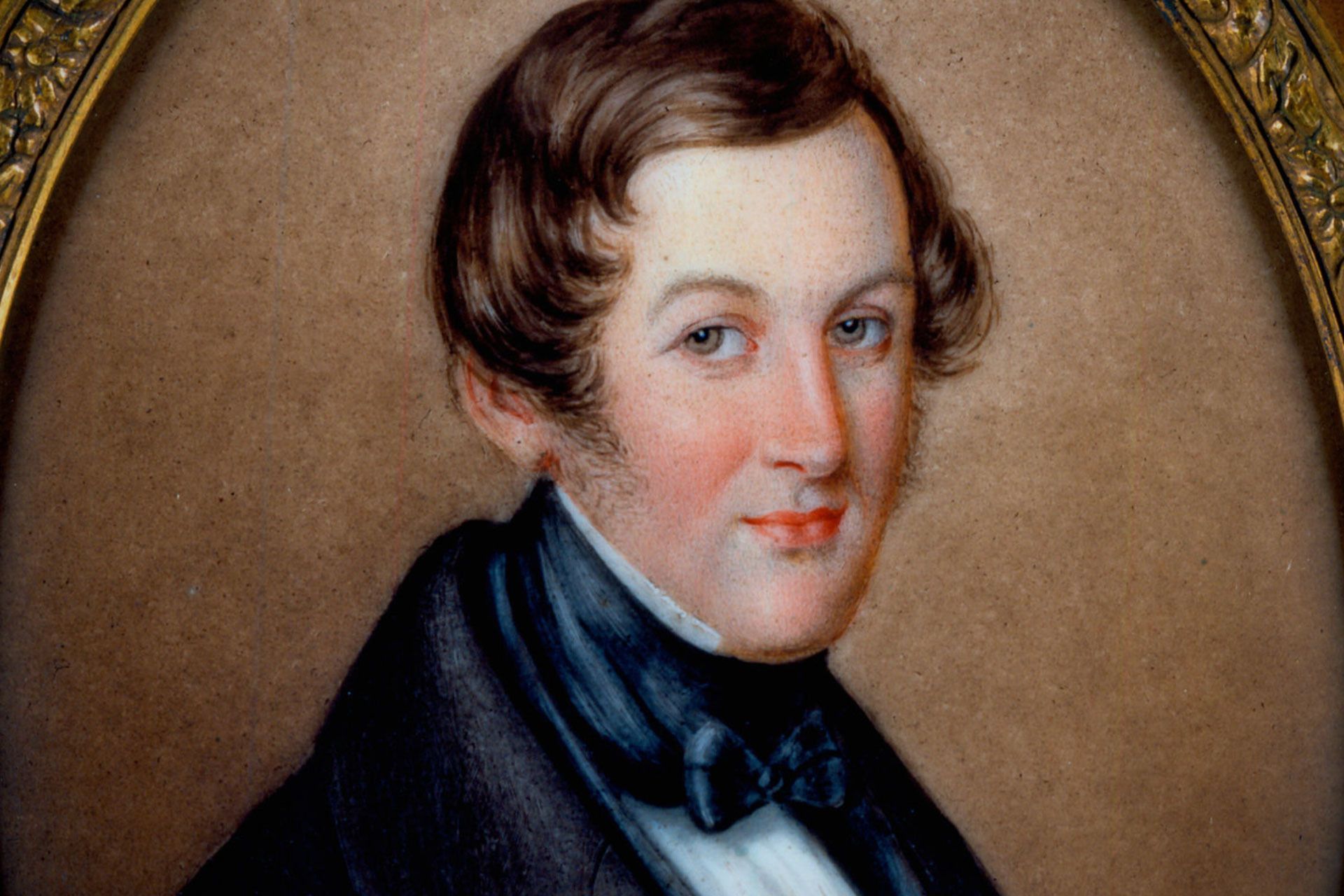
Astolphe de Custine. Image: amisdecustine.com
Speaking in Berlin on February 23, German Chancellor Friedrich Merz quoted from the book “Russia in 1839” by French writer Astolphe de Custine: “Today, Russia is the strangest country for an observer, because the deepest barbarism exists side by side with the highest civilization.” He added that “no one should have any doubts about the kind of regime, the kind of barbarism emanating from Russia, that we are dealing with these years.” However, the Federal Chancellor may be interpreting one of the most complex texts about the Russian Empire too unambiguously.
“Russia in 1839,” first published in Paris in 1843, influenced European attitudes toward Russia in the 19th century like no other book. It was reprinted many times and quickly became an international bestseller. Writing a popular book and making a name for himself was Custine’s main goal in traveling to Russia—everything else was secondary. Previously, he had tried his hand at novels, plays, and dramas without much success, so travel notes remained his last chance at success. It’s fair to say he poured all his considerable storytelling talent, previously undiscovered, into these notes.
The Marquis was a devout Catholic and had many friends in the Hôtel Lambert in Paris—a center of Polish émigrés in the city. The stepsister of one of the émigrés served at the Russian court, and through her, Custine gained access to St. Petersburg’s high society and even an audience with the Tsar, which guaranteed Western attention for his book.
Custine’s sympathies for the Poles set him against Russia from the start. In St. Petersburg and Moscow, he spent much time among liberal aristocrats and intellectuals who were deeply disappointed with the reactionary policies of Nicholas I. Among them were also converts to Catholicism. Here, one can draw a connection to Catholicism as a form of political opposition in the Russian Empire; it’s no coincidence that one of its representatives was Pyotr Chaadayev—the prototype for the dissident Chatsky in “Woe from Wit.” In any case, Custine noted in his writings the phenomenon of liberal opposition to Nicholas I—a rare and therefore especially valuable testimony among others.
It can be assumed that after the suppression of the Polish uprising of 1830–1831 (and the Decembrist revolt six years earlier), much of the empire’s intellectual elite lost faith that their country would ever follow a Western constitutional path.
Their pessimism, without a doubt, played a role in shaping the bleak impression Custine took away from contemporary Russia. Everything associated with it filled the Frenchman with fear and contempt: the Tsar’s despotism, the servility of the aristocrats—essentially, slaves themselves—their pretentious European manners (a thin veneer of civilization hiding their Asian barbarism from the West), universal hypocrisy, and contempt for the truth.
Interestingly, Custine also often appealed to his personal feelings in the spirit of sentimental literature: during his time in Russia, he—speaking in modern terms—almost fell into depression. Incidentally, it was precisely this “veneer” of Western civilization that made dialogue with Russia possible for a European traveler. At the same time, Custine himself seems to overlook the fact that, despite all the differences, such a dialogue is possible in principle—otherwise, he would not have achieved any, even “negative,” understanding of Russia. It would seem that this “veneer” could have continued to grow, but Custine clearly limits his account to a single year and prefers not to look into the future.
Like many before him who visited Russia, the Marquis was struck by the immense size of all the government buildings. St. Petersburg itself seemed to him “a monument to Russia’s arrival in the world.” In this grandeur, he saw signs of Russia’s intentions to crush and enslave the West: “In the heart of the Russian people boils a strong, unbridled passion for conquest—one of those passions that grow only in the souls of the oppressed and are fed solely by national calamity. This nation, predatory by nature, greedy from its hardships, atones in advance for its dream of tyrannical power over other peoples by abject submission at home; the expectation of glory and wealth distracts it from its disgrace; the kneeling slave dreams of world domination, hoping to wash away the shameful stigma of having renounced all social and personal liberty.” (Translation by Sergey Zenkin.) An unusual train of thought: one’s own oppressed position does not lead to a desire for change but to an “unbridled passion for conquest,” and one’s own dictatorship is transferred to other countries. Still, Russia has its own lofty—providential—mission. What is it?
Custine believes that Russia is sent to earth by Providence “to purify corrupt European civilization through a new invasion.” It serves as a warning and lesson to the West: Europe may fall into similar barbarism if “through our follies and lawlessness we deserve this punishment.”
“Follies and lawlessness” mean European liberalism and revolutions. In the Marquis’s view, only conservative tendencies can keep Europe from following the “Russian path.”
In the infamous ending of his book, Custine writes: “Only after living in this desert, where there is no peace, in this prison, where there is no leisure, does one begin to feel how free life is in other countries, no matter what government they have... If your son is dissatisfied with France, follow my advice—tell him: ‘Go to Russia.’ Such a journey will benefit every European; after seeing this country with his own eyes, anyone will be content with life anywhere else. It is always useful to know that there is a state in the world where there is no room for happiness—for by the law of his nature, man cannot be happy without freedom.”
Within a few years, “Russia in 1839” was reprinted at least six times in France; pirated and released by several publishers in Brussels; translated into German, Danish, and English. A shortened version in pamphlet form appeared in several other European languages. Several hundred thousand copies were sold in total, making it the most popular and influential foreign book about Russia in the first half of the 19th century—a true political bestseller. It gave voice to all the fears and prejudices of contemporary Europe regarding Russia, which was the key to its success. But soon enough, the book was viewed differently—suffice to say that careful readers included Herzen and Ogaryov, Turgenev and Tolstoy. Today, attitudes toward it are even more complicated.
The author’s political logic is surprising. He concludes that it’s better to be content with what you have, not to strive for major changes—reforms, let alone revolution. And, in general, to be grateful that your own state does not repress you. This is the bare minimum of conservatism, “conservatism on the cheap.”
Meanwhile, historians have long noted that Custine offered no positive program—and it seems this was not his goal. Everything that distinguished France from Russia was, for him, a “plus.” Clearly, he exaggerated many aspects of political (and other) life in Russia to make it the antithesis of France. What he left unsaid was as important as what he stated. For example, the Marquis was not at all attracted to Russia’s imperial nature: perhaps even feeling nostalgia for Napoleon’s empire, he was ready to sacrifice national greatness—just so that France would not resemble Russia.
Almost without realizing it, Custine described Russia drawing on an important tradition of 18th-century French political literature. This tradition criticized the existing state order, often likening it to Eastern despotism. Thus, in the Marquis’s view, Russia was now in much the same situation as France before the Revolution. This is one of the few—and remarkable—deep insights of Custine: he was convinced that if change were possible in Russia, it would only come through revolution.
By genre, Custine’s book is a classic “foreigner’s notes.” This genre was hugely popular in Russia in the early 19th century—except usually, the notes were written by Russians abroad. Custine, however, writes about Russia. But what is the peculiarity of this genre, which led many readers of “Russia in 1839” to miss the point, feeling what they thought was righteous indignation at the author? On the one hand, the author of such notes was presented as a disinterested observer—after all, he was traveling for his personal reasons and collecting impressions for himself. But the opposite was also true: such detachment implied that the author could not be tied to a particular political or ideological group. Since he was supposedly representing only his own opinion, there could be no claims against him. Thus, from the very beginning, Marquis de Custine was in a favorable writer’s position.
There was another feature of the Frenchman’s journey through Russia. Politically, he was a moderate conservative, which was reflected in his text. In Russia, he saw above all imperial conservatism, which did not allow other countries to gain independence and dictated its will to almost all of Europe. Russian Orthodoxy also did not meet the expectations of a Catholic who wanted to see a focus on personal piety. As a result, he saw the Russian Empire as even more conservative than it actually was. Custine deliberately—arguing polemically—emphasized many of his characterizations, but his contemporaries took them much more seriously than the text itself required.
Another of Custine’s ideas proved very persistent: the opposition between Russia and Europe. As one might guess, Russia for him is not Europe in a cultural and historical sense.
It is no coincidence that his text repeatedly features the dichotomy of “civilization versus barbarism.” Obviously, “civilized” Europe, led by France, stands in opposition to “barbaric” Russia—even if not always directly. Over time, this opposition became deeply rooted in Western European political discourse. However, to be fair, the French aristocrat never advocates isolating Russia. On the contrary: his passage about the desirability of traveling through the Russian Empire for all the discontented can even be read as an encouragement to better understand Europe’s “Other.”
And one last thing. Reflecting on Russia’s “otherness,” Marquis Astolphe de Custine still does not write about it as an enemy. Unfortunately, this feature of his text does not receive as much attention as it should. The fact that Russia is “different” for Europe does not necessarily mean hostile relations. At least, from the point of view of a French aristocrat of the first third of the 19th century.
If you enjoyed this article, consider making a donation — one-time or, even better, monthly. Your support helps us motivate our authors and become better with every article.
Our organization is recognized by the Internal Revenue Service (IRS) as a 501(c)(3) tax-exempt, charitable organization, which means that all contributions made to us are tax-deductible to the fullest extent permitted by U.S. law. Individuals may generally deduct charitable contributions of up to 60% of their Adjusted Gross Income (AGI) for cash donations made to qualifying 501(c)(3) organizations. For donations of appreciated assets (such as stocks or other long-term capital assets), the deduction is typically limited to 30% of AGI, based on the fair market value of the asset. C-corporations may deduct charitable contributions of up to 10% of their taxable income for donations made to eligible charitable organizations.
By submitting a donation, you confirm that you have read and accept the following documents: Privacy Policy and User Agreement, and also give consent to the processing of your personal data.
If you would like to unsubscribe from a monthly donation, please email us at: [email protected]