Two European thinkers of the 20th century provide timely keys to understanding Russia’s ideological evolution
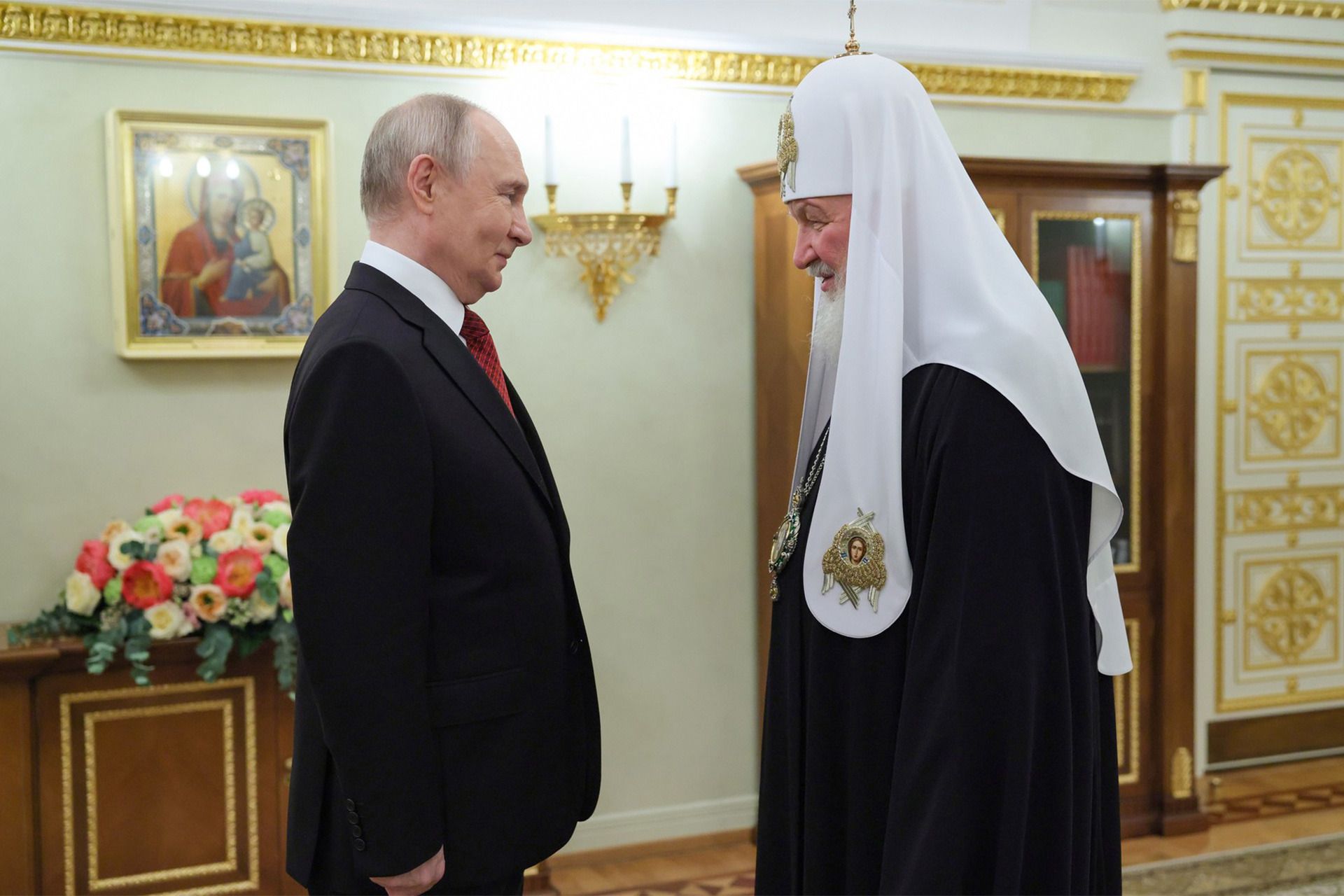
Vladimir Putin congratulates Patriarch Kirill on his name day, May 24, 2026. Photo: kremlin.ru
Many believe that Putin’s Russia is some kind of “repeat” or even “continuation” of the USSR. But among perceptive readers, a sharper feeling sometimes arises: Russia has in essence become even “worse than the Soviet system”. Of course, Putin’s repressions do not approach Stalin’s in scale. But it is useful to remember that the USSR over the course of its 70-year history was quite different at different times. For example, Lenin introduced the NEP, and Khrushchev closed the Gulag. Under Brezhnev, dissidents were persecuted, but there was no concept of “foreign agents”, who are designated weekly in Putin’s Russia. Not to mention “terrorists and extremists”, into whose register, moreover, the author of these lines ended up — for merely participating in international online conferences.
Writers Solzhenitsyn, Aksyonov, Voinovich, and many others who were exiled or left the USSR were regarded there as a “cut-off slice”. In other words, write whatever you want over there — we’ve forgotten about you. But in Putin’s Russia, writer Boris Akunin was sentenced to 15 years in a high-security penal colony! Fortunately, in absentia. The Brezhnev Politburo in 1979 unleashed a ridiculous and senseless war in Afghanistan. But when Gorbachev was told 10 years later that the Soviet army had lost 15,000 men there, he grabbed his head and ordered the troops to be withdrawn immediately.
And to imagine millions of losses, as in Russia’s current war against Ukraine, was impossible for anyone in the USSR after World War II. Indeed, the very idea of a war between Russia and Ukraine would have seemed absolutely impossible in late Soviet times.
And of course, we must recall the times of Perestroika — with its civic awakening, free elections to Soviets at all levels, the sovereignty of all union and autonomous republics, and the 1990 Press Law, which abolished all media censorship. And yet this was still historically the Soviet era. But no one could have imagined today’s Russian dictatorship then. Here is another interesting historical contrast. The right of republics to freely leave the USSR was enshrined in all Soviet constitutions — the Stalin constitution of 1936 and the Brezhnev constitution of 1977. Of course, it was completely formal then, but still — it was a legally enshrined right. And in the constitution of post-Soviet Russia there is no right for regions to leave the Russian Federation. And in general — any discussions on this topic, even not political but academic ones, risk falling under the criminal article on “calls for violating territorial integrity”. Unlike the Soviet ideology of “progress and internationalism”, post-Soviet Russia made “traditional values”, “spiritual bonds”, and the “Russian world” its basic principles. Of course, Russians are demographically predominant in the Russian Federation, but the country is still home to dozens of peoples with quite different cultures, and such ethnic homogenization looks rather humiliating and offensive. And by the way, the “Russian” cultures of different regions — from the Baltic to the Urals, Siberia, and the Far East — also differ significantly.
Today, traditional values are being interpreted too literally. But that is precisely what looks absurdly caricatured. Like yesterday’s Komsomol members who have grown long Orthodox beards.
To assess this situation on a historical scale, one must recall two ideologues of “integral traditionalism” — the philosophical movement that emerged in Europe at the beginning of the 20th century. Namely, René Guénon and Julius Evola.
Louis Pauwels and Jacques Bergier, who wrote the 1960 book The Morning of the Magicians, accused both of providing a conceptual justification for fascism. But such an assessment seems too generalized, exaggerated, and therefore inaccurate.
Guénon did not write anything on political topics at all. Although there was one exception — in one of his 1930s articles he sharply criticized the German Nazis for “distorting the ancient symbol of the swastika”. And in general — in 1930 he moved from Paris to Cairo and became a Sufi sheikh there. But at the same time he wrote about Hindu doctrines. A kind of traditionalist “cosmopolitan”. The Italian Evola came to traditionalism from Futurism and Dadaism. But he was never a member of the Fascist Party, and in the Third Reich he was even forbidden to give lectures.
In my view, these two thinkers provide timely keys to understanding Russia’s ideological evolutions.
In The Reign of Quantity and the Signs of the Times (1945), Guénon argues that humanity today lives in an age of “anti-tradition”. But that is not yet the most dangerous stage. After it will come the age of “counter-tradition”, which will become “the great parody”. Then people will begin to formally perform “traditional rituals” while being completely inwardly detached from their meanings. He drew a parallel with the kingdom of the Antichrist, who, according to scripture, does not oppose Christ but imitates him.
This observation fits the portrait of Patriarch Kirill perfectly, who, disregarding all Christian commandments, calls for a “holy war” against Ukraine and has even severed ties with the Ecumenical Patriarchate. And he has not condemned the barbaric Russian bombing of the Kyiv-Pechersk Lavra in any way.
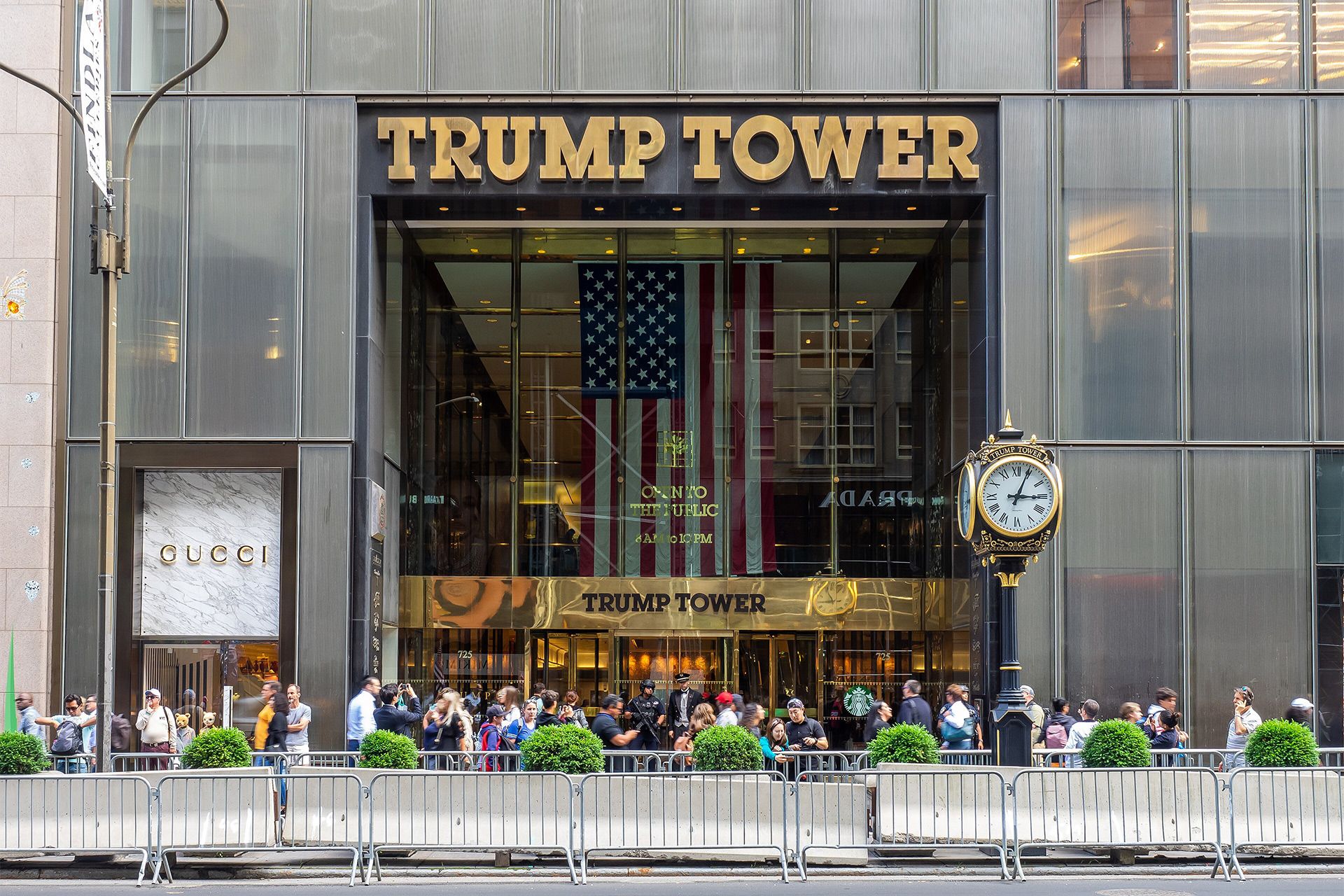
Professor Nina Khrushcheva also writes about this “great parody” — as a “counter-traditional parallel” that unites Putin’s Russia and Trump’s United States.
Julius Evola wrote a small but very radical work titled The Coming of the Fifth Estate. In his worldview, the proletariat was considered the “fourth”. Before that came the first, second, and third — the clergy, the military aristocracy, and the urban bourgeoisie. The proletariat, of course, broke the traditional social system. But it still remained a human estate. And after the “proletarian era”, in Evola’s view, some entirely “infernal and demonic” beings come to power.
You know, as a child I watched the Soviet TV program International Panorama. Its hosts were of course tiresome with their propaganda, but they still behaved decently. None of them threatened Europe with nuclear war — unlike today’s Russian hysterical TV shows with the fixed idea of “Come on, let’s hit them!” So integral traditionalism, when interpreted properly, can provide unexpected and profound answers to many key questions of our time.
If you enjoyed this article, consider making a donation — one-time or, even better, monthly. Your support helps us motivate our authors and become better with every article.
Our organization is recognized by the Internal Revenue Service (IRS) as a 501(c)(3) tax-exempt, charitable organization, which means that all contributions made to us are tax-deductible to the fullest extent permitted by U.S. law. Individuals may generally deduct charitable contributions of up to 60% of their Adjusted Gross Income (AGI) for cash donations made to qualifying 501(c)(3) organizations. For donations of appreciated assets (such as stocks or other long-term capital assets), the deduction is typically limited to 30% of AGI, based on the fair market value of the asset. C-corporations may deduct charitable contributions of up to 10% of their taxable income for donations made to eligible charitable organizations.
By submitting a donation, you confirm that you have read and accept the following documents: Privacy Policy and User Agreement, and also give consent to the processing of your personal data.
If you would like to unsubscribe from a monthly donation, please email us at: [email protected]