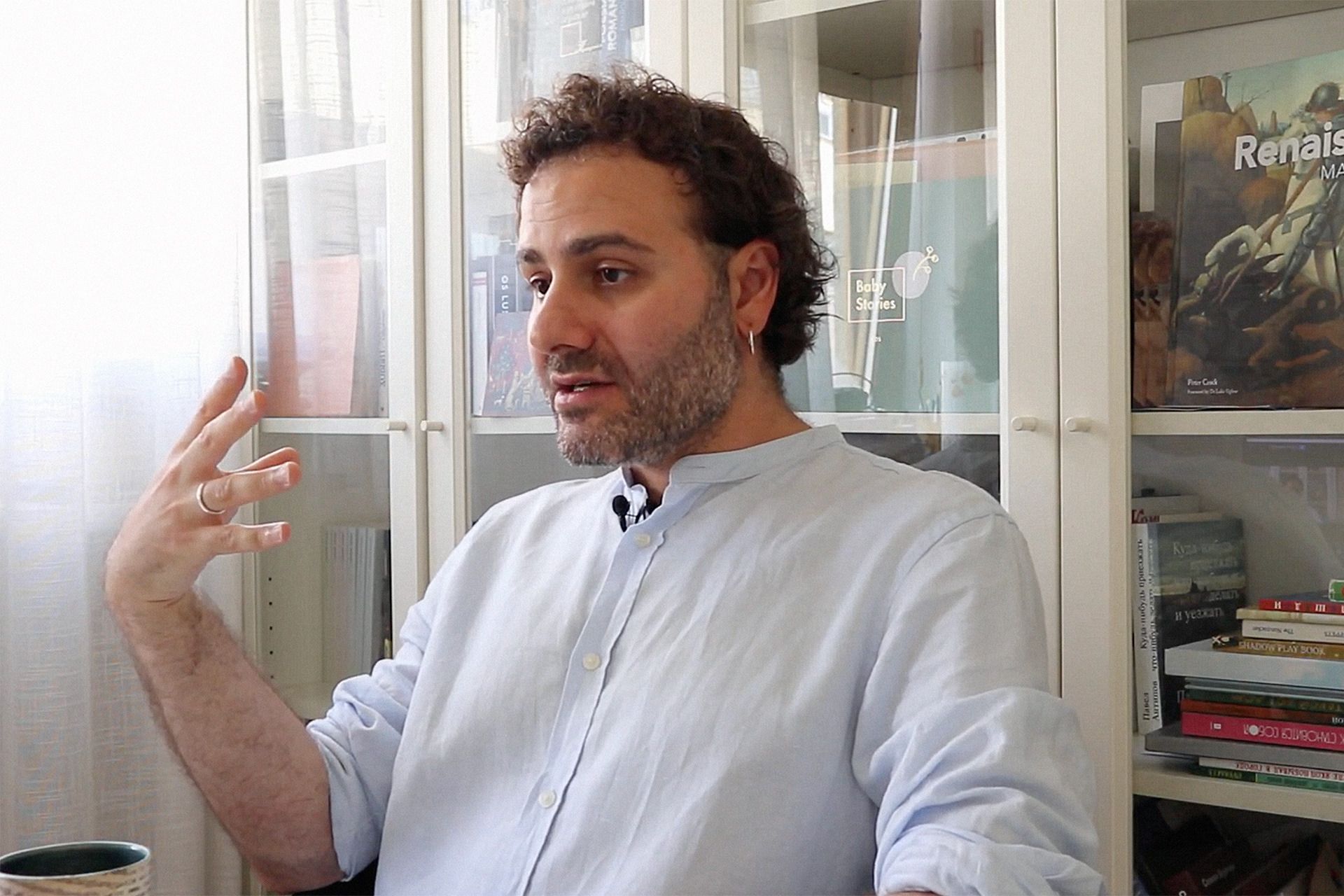
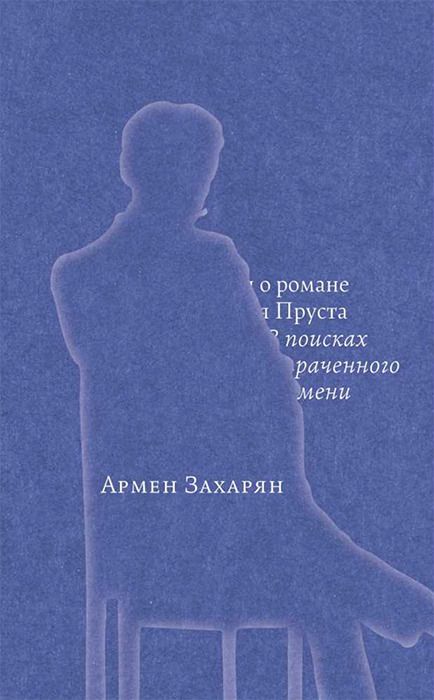
Today marks the 155th anniversary of the birth of the great French writer Marcel Proust. On this day, literary scholar Armen Zakaryan (YouTube channel “Armen and Fyodor”) is publishing, with the Parisian publishing house Éditions Tourgueneff, the book “Conversations About Marcel Proust’s Novel ‘In Search of Lost Time.’” The closest analogue to this work is Vladimir Nabokov’s “Lectures on Foreign Literature”: they are even more interesting to read than the books Nabokov was telling American students about. Zakharyan’s guide to the universe of Proust also grew out of a series of his video lectures. They were prepared for publication by producer Roma Liberov, for whom they served as “great consolation in those dark years into which, like cold murky water, we all stepped”. We spoke with Armen Zakharyan about what Proustian prose can console us with today.
Armen Zakharyan
- Let’s start with why one should even read Proust now. What can he give us today?
- You know, when James Joyce’s novel “Ulysses” was published and his supporters and friends promoted the book, they said that all humanity should abandon its affairs and read Joyce. In the 100 years that have passed since that rather aggressive advertising campaign, the situation has changed — and now Joyce does not really need us to read him. It is first and foremost necessary for us. It seems to me that the same is true of Marcel Proust.
Although Proust, unlike Joyce, never engaged in such aggressive marketing of his novels — a significant part of his novel was not even published during his lifetime: the fifth, sixth, and seventh volumes of “In Search of Lost Time” appear only posthumously, and their editing was unfinished.Nevertheless, he devoted the last 15 years of his life to a book that is his key creative legacy.
How can it be useful to us today? Useful, perhaps, not at all. But it can be lifesaving for us, because this novel and its author raise the most fundamental questions that each of us will have to confront.These are questions of life and death, questions of finding oneself in this life, questions of aging and the transition from aging to dying, questions of one’s connection with one’s own childhood, of one’s relationship with oneself in the past.
What I admire most in Proust is how he works with the different stages of his hero’s life, how he lays out this path from a little boy in the French provincial town of Combray to a man shut up in a cork-lined room, who, suffering from asthma attacks, works on the novel we read today. The hero and the author are very much identical here.
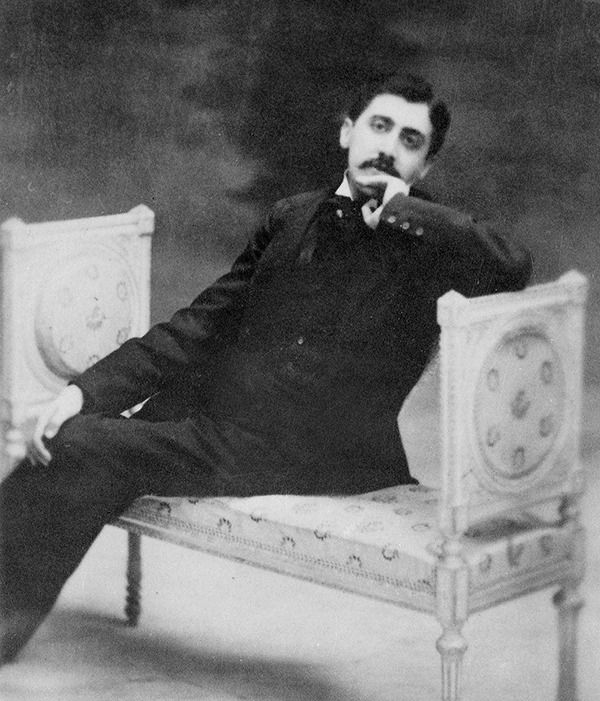
Marcel Proust, ca. 1895. Photo by Otto Wegener. Source: Wikipedia
In other words, this book makes us turn to those pages within ourselves that we forget amid the bustle and noise of the news, amid some daily obligations, tasks, residence permit renewals, and utility bill payments. We do not notice them, and yet they are the most important thing — and they pass us by. Proust brings us back to what matters most.
Proust forces us to break away from the routine that absorbs us, whether it is utterly ordinary routine or our routine terrible everyday life, in which so many people have lived — if not physically, then psychologically — throughout the last several years. Proust makes us look intently into ourselves, in search of the most important questions concerning our fate, our life, and our search for ourselves, our attempt to know ourselves.
- But is it possible for today’s person, accustomed to shorts and reels and generally unaccustomed to reading closely, to make their way through Proust’s language, which even in the best French translations is far from simple? Can one do it alone, or do you need a guide?
- Of course it is possible, but it is not easy.Perhaps Dante himself could have passed through all the circles of hell. But with Virgil he was able to pass through them, emerge into purgatory, and continue on his way. I think the same is true when speaking about Proust.
Of course, this journey can be made alone. But Proust’s language, his style of writing, which is full of repetitions, with many leaps in time, the hero’s reflections seemingly going in circles — many unprepared readers find it hard to get through this. At the same time, the experience they gain when they follow this path is unquestionably existential and even, I am not afraid to say it, soul-saving. And the presence of a guide who helps you make your way through the wandering rocks that threaten you, as they threatened Odysseus’s ship, seems to me necessary for most readers. Our book of conversations about Marcel Proust with Roma Liberov becomes precisely such a companion for the reader, because, as it seems to me, it allows a person to set out into this world without fear of drowning or simply becoming disillusioned with it.
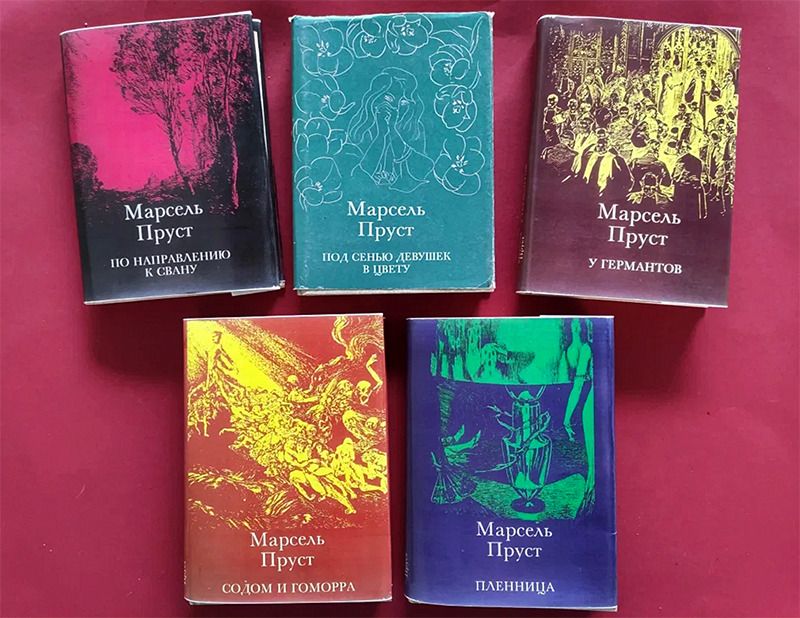
1992 edition in Russian Photo: DR
- I can share my own experience of immersing myself in Proust. The thing is, throughout the 2010s I lived between Moscow and Cabourg — a Norman town that appears in Proust’s epic under the name Balbec. I settled in Cabourg without yet knowing this backstory, but when I found myself there, of course I learned it — and brought several volumes of “In Search of Lost Time” in Nikolai Lyubimov’s translation from Russia (these were, by the way, books I bought with my first journalistic fee in the early 1990s, a kind of personal relic). And then I developed a kind of ritual, very Proustian in essence. Every night I would take up this text in bed — and every time I would fall asleep. Proust wonderfully lulled me to sleep for 10 years. I would sink into sleep with him — and wake up in the reality of the French provinces, which in spirit has not changed all that much compared with the time of the novel.
- A book that can safely let you fall asleep for 10 years is, of course, absolute luxury. I wish each of us had such a book. A place on the bedside table is an honorable place. And in general, what we fall asleep with is one of the motifs of the novel. The novel also begins with this — with an episode in the hero’s bedroom, when he wakes up and cannot understand where he is. Then he begins to go through all the bedrooms in which he ever slept: in Combray, where he slept as a boy, in that very Cabourg, which in the novel appears under the name Balbec — in the Grand Hotel, where even with the curtains drawn you could sense the sea outside your window. Or perhaps it is the bedroom in Doncières? He goes through these bedrooms — and then his body suddenly gives him the right answer, while his mind puts everything in its place. With the things we fall asleep and wake up with, we form a special bond.
The Grand Hotel in Cabourg. Photo: hotelsone.com
- I’m currently rereading “Anna Karenina” after a long break, where dreamlike experience and dreams in general play a very important role. And I’m seeing in a new way how ironic Tolstoy really is as a writer.He really trolls readers with his famous repetitions of the same thought at the beginning of almost every chapter. So, returning to Proust: what will make him interesting if we look at him through today’s lens?
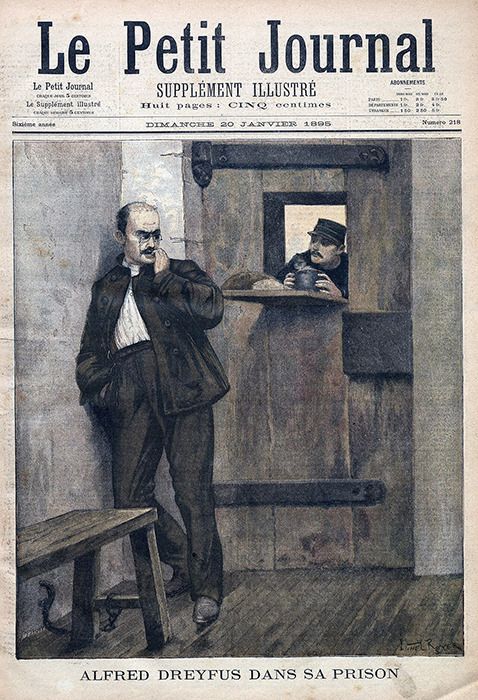
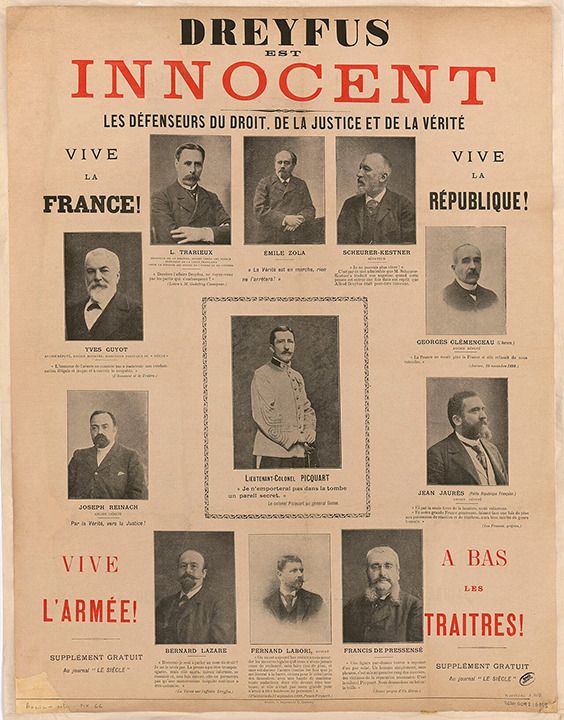
- The first thing that comes to mind right now is the great third volume, “The Guermantes Way”, one of whose key сюжет lines is the Dreyfus affair, the case of a French officer of Jewish origin who was accused of espionage.This verdict was fabricated. In essence, he was tried for being Jewish and not a properly French Frenchman.And the Dreyfus affair, despite the obvious fact that the accusations against him were very shaky, split French society almost in half.
“Alfred Dreyfus in His Prison”, cover of the illustrated supplement to Petit Journal, January 20, 1895. Source: Wikipedia
The divide we see in the world today is, in a very curious way, reflected in this split in French society along the lines of the Dreyfus affair. Recently there were presidential elections in Peru, where one of the candidates won by less than 1%. Here in Poland, where I live, there were presidential elections last year, and one of the candidates won by less than 1%. And we see this everywhere. It is as if both politics and social media — all of it — work toward polarization and divisioninto the blunt-headed and the sharp-headed.
But Marcel Proust shows this through the Dreyfus affair, where one side also has objective truth, since Dreyfus really is innocent. This is not a matter of political views.But even this aspect becomes politicized. And many accuse Dreyfus simply because they consider themselves patriots and “must stand with our army”.If the army says Dreyfus is guilty, then Dreyfus is guilty.
After the affair becomes public, a monstrous antisemitic campaign unfolds in French society. And the Duchess of Guermantes, who moves in high society, says that she of course finds Dreyfus completely unsympathetic, but she finds all those Durands and Dubois even less sympathetic, people who began to be accepted in high society only because they were anti-Dreyfusards — that is, against Dreyfus, do not buy anything in Jewish shops and walk around with umbrellas bearing the inscription “Death to the Jews”.
Dreyfus is innocent: defenders of rights, justice, and truth — poster of Dreyfus supporters, 1899. Poster depicting some prominent Dreyfus supporters who fought for recognition of Alfred Dreyfus’s innocence. Source: Wikipedia
This is Marcel Proust of the early 20th century. Read the third volume.Nothing more relevant today, it seems to me, could be written.
Or the seventh volume — about how people experience war.Here Proust tells us what rumors circulate in French society, which at that moment is at war with Germany: the French are convinced that Kaiser Wilhelm is gravely ill and about to die. And someone interrupts the speaker and says: no, he is already dead — I have acquaintances close to the Paris stock exchange, and they know for sure that Kaiser Wilhelm is already dead, the Germans are just afraid to announce it, but soon it will become known. And, naturally, Kaiser Wilhelm will live another 25 years after this conversation.
So Proust is not only a writer who philosophizes about truly important questions, but also a writer who is very close to us today.
- To the readers of your guide, you offer a list of ten books that it would be good to read before diving into Proust.And here an interesting point arises — the intersection of our reading experience with the way Proust was read by other writers, his contemporaries. Virginia Woolf, for example, writes to someone in a letter that she was foolish to have thought so highly of herself as an author — because there is Proust, whom she is reading now. Or Pasternak, who began reading Proust shortly before his death — and yet in “Doctor Zhivago” there are completely Proustian passages.
- It would be interesting here to look at the chronology, because Pasternak began reading Proust’s early volumes while still young, but then took a break for several decades. In one of his letters he admits that he began reading Proust — and gave him up, because he is so contagious that he fears he will start copying the style completely. And this is a trait that unites many writers of that generation.
Bunin, for example, said with surprise: I now find many very Proustian passages in my own work — although by the time he wrote this, he had not yet read Proust. Nabokov, of course, has a lot that is Proustian, but here it is more conscious, because Nabokov was an extremely attentive reader.
In other words, there are many such echoes, but the most valuable thing here, it seems to me, is what you mentioned: when Pasternak, perhaps already sensing his death, literally a year before it, returns to Proust. This is one of the last books he turns to in his life. And after a long break he takes up the last volume of the novel, “The Past Recaptured” — and reads it closely in search of an answer to the question of our mortality.
- A characteristic sign of recent years in Russian social media is complaints by university professors about applicants who have lost the ability to read and, as a result, to formulate their thoughts clearly in writing. But in fact, if one looks at the spread of the habit of reading itself, it is not all that old in historical terms.There was the Age of Enlightenment in France, thanks to which all of Europe began to read and write. And now, perhaps, a turning point is taking place — and reading will soon become an elite pastime?
- Yes, indeed, the habit of reading is relatively young. In many ways it begins to take shape in modern European culture with the development of printing. And we know for sure, for example, that on the ships of the conquistadors who set out for the New World there were chests with chivalric romances — by that time the habit of reading apparently already existed. I think in most cases this was reading aloud. At least if we are talking about a slightly earlier era, the 15th century, the Italian Renaissance, court reading was common there — when someone writes a text and then reads it aloud at the court to the Duke of Urbino and all the poets, scholars, and so on present at his court.
- That’s like YouTube today!
- Absolutely, yes, yes, yes. The idea that a text is written so that someone can read it silently to themselves is a habit that is relatively recent by the standards of our civilization and tiny by the standards of historical time.
As for those applicants you mentioned who find writing difficult. It would be fair to say the following: if it is hard for them, then they were not taught. If the same methods and the same means were used to teach them as before, and they did not learn — perhaps the problem is not with them, but with the fact that the methods and means have become outdated. Which means new means and methods are now needed.
It seems to me that transforming literature into audio format is an opportunity to significantly extend literature’s life and reduce the risk that it will become an elite pastime for narrow groups of people. Many people today who find it hard to sit with a book in their hands for a long time could вполне listen to audiobooks.And I categorically reject the argument that this will be a different process. For most of history, reading looked exactly like listening. In this sense, when we open Homer’s book today — that is precisely the modern invention. The original Homer is Homer perceived by ear and transmitted in retellings. I am, of course, being a little ironic here, but Homer as an audiobook is a far more authentic Homer.
In other words, it seems to me that we need to look for new means that will help new generations discover a love of literature within themselves. It is obvious that young people — teenagers, people who are 20 or 22 years old — may find all this uninteresting, since the questions of who they are dating today, who they will be dating tomorrow, and what their relationships with friends are matter much more to them right now than the question of what Marcel Proust said about immortality. But let us give these people time and our love; let us not reject them and let us not place them in conditions where they must feel unsuccessful.
- A friend of mine of Russian origin in France tried to get a job in a hotel and did not pass the probationary period because the staff did not accept her. The staff consisted mostly of French village girls who, during breaks, sat staring at their phones — while she, horror of horrors, was reading a book. A paper book, of course. This was seen as a threat; they told her bluntly and indignantly: “What do you mean, you’re reading books?!” So the question is: should literature even be popularized these days? This is not only a Russian problem.
- I agree, of course, that this is not only a Russian problem and not only a French problem. It seems to me that there are no purely French, German, Armenian problems at all, only human problems.
Because if there is one thing the experience of previous centuries has taught us, it is that people are identical to themselves in different eras, in different countries, of different nationalities, different cultures, and so on. We tend to perform the same actions, we tend to perform similar feats. For those who want to be convinced of this, I recommend reading, for example, the Roman historians, Titus Livius, whose work is nearly 2000 years old, if not already exactly that.And they read as if we were opening a news bulletin, so recognizable all of this is. That is first.
Second, as for the popularization of literature as such.It seems to me that literature does not need popularization, does not need reading to be stylish, trendy, youthful. After all, literature is ultimately just a search for answers. Literature helps you find a conversation partner — most often within yourself, but also in the book, in the author, in his ideas. To find a way to pose a certain question, to reflect on it, and at least seek that answer, and in the end arrive at it.
It seems to me that what needs popularizing is the very idea that we, as human beings, need certain metaphysical values. That we are beings for whom some existential search is natural. When we do not allow ourselves this existential search, we can wall ourselves off from it endlessly with a smartphone, which will always show us a new reel in the feed. In fact, one can live one’s whole life like that — and never once ask this question.
But it will inevitably break through. When you shout at your child, when you spend 10 years going to a job you dislike — the emptiness that exists inside you will break through here. In other words, you can shut yourself off from existential and metaphysical questions, but they will reach you anyway.And what happens to you, one way or another, will still show you this, as it seems to me, hole with which we all live.
This is a concept that the Armenian poet Grigor Narekatsi expressed in another form — a monk who, at the beginning of the 11th century, wrote “The Book of Lamentations”. And Grigor Narekatsi’s concept was that we are all wounded. Every person is born wounded by nature, born injured.
And I feel very close to this concept. It seems to me that each of us lives with this hole inside ourselves. Narekatsi called it the wound each person bears.And how to heal this wound, how to see this wound, how not to grow angry and not to cover it over with a layer of — okay, say, reels? Although I am not such a big enemy of reels; there is nothing bad about reels.
It seems to me that awareness of one’s own vulnerability, awareness that we are wounded, vulnerable, and very often unhappy human beings — this is the first step toward healing that wound, toward seeing it. Culture is unquestionably medicine, but it will not work until a person recognizes this vulnerability within themselves, until they stop shutting themselves off from it.
- Varlam Shalamov has a story called “Sentence”, in which, in Kolyma after several years already served doing some camp labor, he suddenly experiences catharsis simply because one single word from his former life comes to mind. “Sentence”, a word from a completely different set of circumstances, returns him, at that point a camp wreck, to himself. It seems to me that what you are talking about is exactly this kind of experience. When in our time, against the backdrop of all the threats we face — though what time can be called easy? — the voices of Tolstoy, Joyce, Proust are able to return us to ourselves.
- Yes, to awaken all that is most vulnerable, human, and good in us, which can help resist the darkness that surrounds us. You quite rightly said — and what times were not dark, in what times were there no great wars, catastrophes, and so on. Nevertheless, it seems to me that we are now going through a truly very dark, difficult moment.
Having recently read a great many works from the 14th, 15th, and 16th centuries, I observe how plague and war accompanied the people of that time. Everywhere from the middle of the 14th century, from the Great Black Death onward, plague epidemics returned regularly to all European cities for 200 to 300 years, especially often in Italy.
At the same time, people, even living against the backdrop of plague and war, at certain moments felt some optimism about the future. This is visible in the works of humanists of the second half of the 15th century and from the very beginning of the 16th century, when Marsilio Ficino says that if any century can be called Golden, it is our century.When Ulrich von Hutten writes: “How the sciences flourish, how art blossoms! Away with barbarism and ignorance! Having received your reward, go into exile forever”. When François Rabelais writes that the sun of enlightenment and science rises from the Cimmerian darkness. All of this happens in roughly the same period — 20 to 25 years. The late 15th and early 16th centuries are an era of optimism accompanied by constant wars, plague epidemics, great catastrophes. But there is a sense that we will get through it and everything will be fine.
And then comes the dark era of reaction. And, for example, the second half of the 16th century is marked by a very bitter and tragic tone. And we look at how people write about their time literally 50 years after the statements I just cited — and there is much more bitterness in those statements.
And it seems to me that we are now in that very period of bitterness. It seems to me that in the late 1990s and early 2000s, when the book “The End of History” was being created, there really was, despite all the wars and catastrophes that continued to happen, a certain sense of optimism.The further we go, the more this sense of optimism seems today absolutely absurd, groundless, and ridiculous. And the further we go, the more it seems that we have entered a period of some great, prolonged catastrophe that is only just beginning.
And a similar pattern — forgive me for such a long answer — existed at the beginning of the 20th century too, since before the First World War there were many voices insisting on the coming century of progress.That the 20th century would be a century without wars, that in the 20th century technology would finally allow people to rid themselves of hunger and disease. And Proust has a truly brilliant line on this subject. Having already lived through the First World War, having already seen this nightmare and hell, when hundreds of thousands of people are ground up by this machine in the trenches, in this new trench warfare, he puts the following line into the mouth of one of his heroes, a hero who is destined to die in the First World War: “Just think what nonsense modern war is. Given how much weapons have developed now, what powerful and terrible cannons and artillery pieces there are now, the next war will be over a week after it is declared”.
Yes, we are living in an especially dark time now, because there is a sense that a bright future does not await us just around the corner. And this feeling unites us. And it seems to me it should become an additional reason for us to look into this pain inside ourselves and begin by healing it.
If you enjoyed this article, consider making a donation — one-time or, even better, monthly. Your support helps us motivate our authors and become better with every article.
Our organization is recognized by the Internal Revenue Service (IRS) as a 501(c)(3) tax-exempt, charitable organization, which means that all contributions made to us are tax-deductible to the fullest extent permitted by U.S. law. Individuals may generally deduct charitable contributions of up to 60% of their Adjusted Gross Income (AGI) for cash donations made to qualifying 501(c)(3) organizations. For donations of appreciated assets (such as stocks or other long-term capital assets), the deduction is typically limited to 30% of AGI, based on the fair market value of the asset. C-corporations may deduct charitable contributions of up to 10% of their taxable income for donations made to eligible charitable organizations.
By submitting a donation, you confirm that you have read and accept the following documents: Privacy Policy and User Agreement, and also give consent to the processing of your personal data.
If you would like to unsubscribe from a monthly donation, please email us at: [email protected]