Foreign agents, extremists, individuals cooperating with “undesirable organizations,” and other types of “enemies of the people.” In Russia, these labels are imposed weekly on writers, poets, journalists, scientists, civil activists, human rights defenders, and simply people with a conscience—along with criminal and administrative cases, inclusion in various lists, and outrageous legislative demands. Some call these statuses a “recognition of merit” and a special title to be proud of. I will try to explain why this is not the case.
Many holders of the “foreign agent” status treat it with humor and deliberately ignore the rules imposed on them by repressive laws. However, most often these people live in safe Western countries or even hold passports other than Russian. For the rest, the situation looks somewhat different.
Legal aspect
I won’t even talk about what it’s like to carry such a status while living in Russia, where the step from the “foreign agent” stigma to a prison cell is literally just one. But not all Russians living abroad can afford to ignore the machinations their homeland is directing at them. There are many countries from which extradition to Russia is possible upon request, or at least serious difficulties with documents arise if legal problems occur at home. And not all of these countries take into account the fact that the persecution is political in nature.
Often, this is not only about post-Soviet countries. It can happen even in countries considered safe and democratic. Most often, in such cases, extradition is disguised and appears as a standard-looking deportation. For example, in January of this year, the USA deported Russian citizen Evgeny Mashinin, who is persecuted in Russia for his anti-war stance. According to Evgeny himself, the judge reviewing his case previously told a person who had a criminal case opened against him in Russia: “You will be imprisoned, but not killed” — and refused him asylum on that basis. Upon returning home, the police immediately came for Evgeny.
A similar fate nearly befell a Russian scientist, Harvard Medical School employee Ksenia Petrova. In the US, she was accused of smuggling for bringing frog embryo samples from France for scientific purposes. Petrova was offered deportation to Russia, but she stated that she faced persecution there, having previously been detained at anti-war protests. After that, the Russian woman was detained, her visa was canceled, and she was placed in a deportation jail—first in Vermont, then in Louisiana. After several months, Ksenia was released on bail, but seemingly in retaliation, American law enforcement accused her after her release of giving false testimony and withholding information from the investigation.
Some Russians later recognized as foreign agents were in other countries not on political asylum grounds but for other reasons, which at the same time prevent them from applying for asylum. In such cases, like any other foreigners, they may be required to provide a certificate of no criminal record or other documents from Russia.
A separate problem is property in Russia. Recently, the state has prohibited foreign agents from managing their own property.
And if you have relatives in Russia, they too may be affected by the shadow of your stigma.
In short, even while abroad, people persecuted in Russia are often forced to comply with the repressive demands of Russian legislation not because they consider them fair, but because it becomes a basic matter of survival. One could say that in this case, the bureaucratic systems of other states are unwitting (and in some cases quite conscious) accomplices in the repression, since it depends on them whether persecution in Russia can ruin a person’s life beyond its borders.
Psychological aspect
The “foreign agent” stigma that a person is forced to put on themselves really looks like a sign of decency in the eyes of reasonably minded Russians. Paradoxically, the Russian authorities, by labeling their opponents with such tags, achieve exactly the opposite goal—they do not reduce their Russian-speaking audience, but rather attract increased attention to these people. If a person actively wants to attract a like-minded audience, the foreign agent label can even help with that.
However, the paradox is that, based on court practice, a person is forced to mark not only political but also everyday content with this vile label (even though formally the law does not require it). This includes vacation photos, pictures of children, kind fairy tales, or philosophical reflections—it doesn’t matter. Any content disseminated in Russian is now stained, desecrated, infected with a vile and slanderous label by its very nature.
Again, in this case, the Russian authorities achieve the completely opposite effect by bringing non-political content into the political sphere, thereby provoking their victims to write dissident posts even when they did not intend to do so. People who tried to live at least part of their lives as ordinary citizens are literally turned into round-the-clock fighters, forced either never to forget about politics for a second or to abandon their native language and write posts in another language.
In my view, this intrusion of the state into a person’s life, soul, personal space, language, the most precious and intimate to them, is one of the most severe consequences of such repression—even if the person is physically in relative safety.
Now, when a significant part of most of our lives takes place on social networks, influence over them is a blow to normal life and a constant reminder that someone is trying to destroy your life, moreover, forcing you to do it with your own hands.
And now a little about why I dislike phrases like “recognition of merit” or “a reason for pride.” With regard to the foreign agent status, these words mean that we place the current Russian authorities in the position of those whose opinion matters to us—that which psychology calls the “reference group.” So, those who put such a label on us should not be our reference group. They are not the people whose opinion matters to us or who have the moral right to evaluate or not evaluate our merits. Simply put, their evaluations should not matter to us, because by taking pride in them, we with our own hands let these people into our lives and put them in a place they do not deserve. The foreign agent label is not a medal, if only because, if it were up to me, I would never accept any medals from these people.
This does not mean we have nothing to be proud of. We have the right to be proud of the good deeds we have done in life, especially considering the price we have to pay for them. We have the right to be proud of the gratitude from those we have helped and to tirelessly thank those who help us. We have the right to be proud that we have earned their help and the honor of calling these people our friends.
We can be proud that repression did not break our beliefs and our friendship, even if it seriously disrupted our usual life. But we should not give this repression a status that trivializes its essence. I believe things should be called by their proper names. Repression is not recognition of merit but harassment of innocent people. And those involved will sooner or later have to answer for their actions.
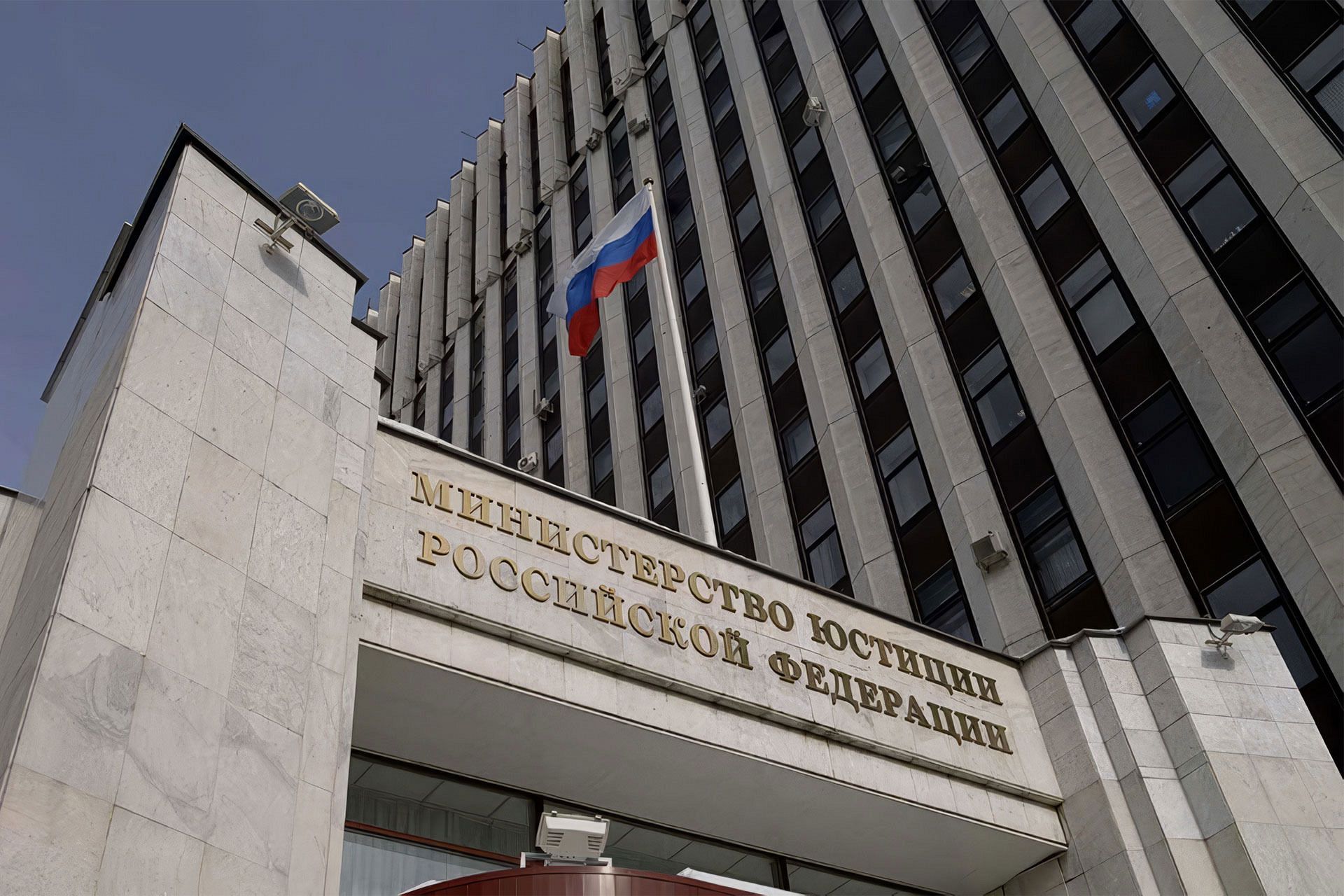
In the main photo – the building of the Russian Ministry of Justice. Source: Wikipedia / https://d-russia.ru / CC BY-SA 4.0
If you enjoyed this article, consider making a donation — one-time or, even better, monthly. Your support helps us motivate our authors and become better with every article.
Our organization is recognized by the Internal Revenue Service (IRS) as a 501(c)(3) tax-exempt, charitable organization, which means that all contributions made to us are tax-deductible to the fullest extent permitted by U.S. law. Individuals may generally deduct charitable contributions of up to 60% of their Adjusted Gross Income (AGI) for cash donations made to qualifying 501(c)(3) organizations. For donations of appreciated assets (such as stocks or other long-term capital assets), the deduction is typically limited to 30% of AGI, based on the fair market value of the asset. C-corporations may deduct charitable contributions of up to 10% of their taxable income for donations made to eligible charitable organizations.
By submitting a donation, you confirm that you have read and accept the following documents: Privacy Policy and User Agreement, and also give consent to the processing of your personal data.
If you would like to unsubscribe from a monthly donation, please email us at: [email protected]