Today's Germany is a country of migrants. In some ways, even more so than the USA. From politics to culture, it has long relied on people with a migration background.
Photo: Daniel Lloyd Blunk-Fernández via Unsplash
Contrary to popular belief, people go crazy collectively. EVERYONE suddenly sees flying saucers. EVERYONE suddenly sees the evil of the world in emigration, especially illegal emigration. “Because of them—the overload of the social system, crime, and the destruction of the cultural code! Europe will have to cover its women with burqas!” On this point, both U.S. Vice President JD Vance and a Russian deep-dweller without even a passport agree.
Even though an illegal, unregistered migrant cannot receive social benefits, in cases of mass hysteria, contradictions don't matter.
I don't hope to calm the anti-migrant hysteria. But I can't ignore it either. Simply because I live (and most likely will die) in Germany. So why did “Merkel lose her mind,” letting a million Syrians—these “savages and Islamists”—into Germany in 2015? Is the EU's social system, which they have “latched onto,” collapsing under the pressure of outsiders? How much longer can we tolerate crime, when it's scary to let daughters out on the street (as recently stated by German politician Özdemir, himself the son of Turkish Circassian migrants)? And isn't it obvious that all these Turks, Circassians, and Syrians are destroying the cultural code?
I have some thoughts, though they may not please those who ask all these questions with a tone that expects no answer.
But what can you do. Here I stand, I can do no other.
Let's start with how foreign (in the hundreds of thousands) migration really is to Europe and specifically to Germany.
“Merkel lost her mind, letting in a million <…>” — here, a sharp word often follows from Russians (both those who left and those who stayed). That’s a common assessment of the events of 2015, when the German chancellor granted temporary protection to about 900,000 Syrian refugees fleeing war. By then, cities like Aleppo had been reduced to about the same state as Warsaw after Hitler, Mariupol after Putin, or Gaza after Netanyahu. In reality, among these “hundreds of thousands of Syrians” were also Afghans and Iraqis, but still, everyone from the Middle East gets lumped together as “savages” by anti-migrant policy supporters.
Almost a million is indeed a lot for Germany's then-82-million population. However, such flows were nothing new for postwar West Germany.
I live in Augsburg, the administrative center of Bavarian Swabia. 50.7% of Augsburg residents have migrant roots. The same background, according to Destatis, is found in about a quarter of modern Germans.
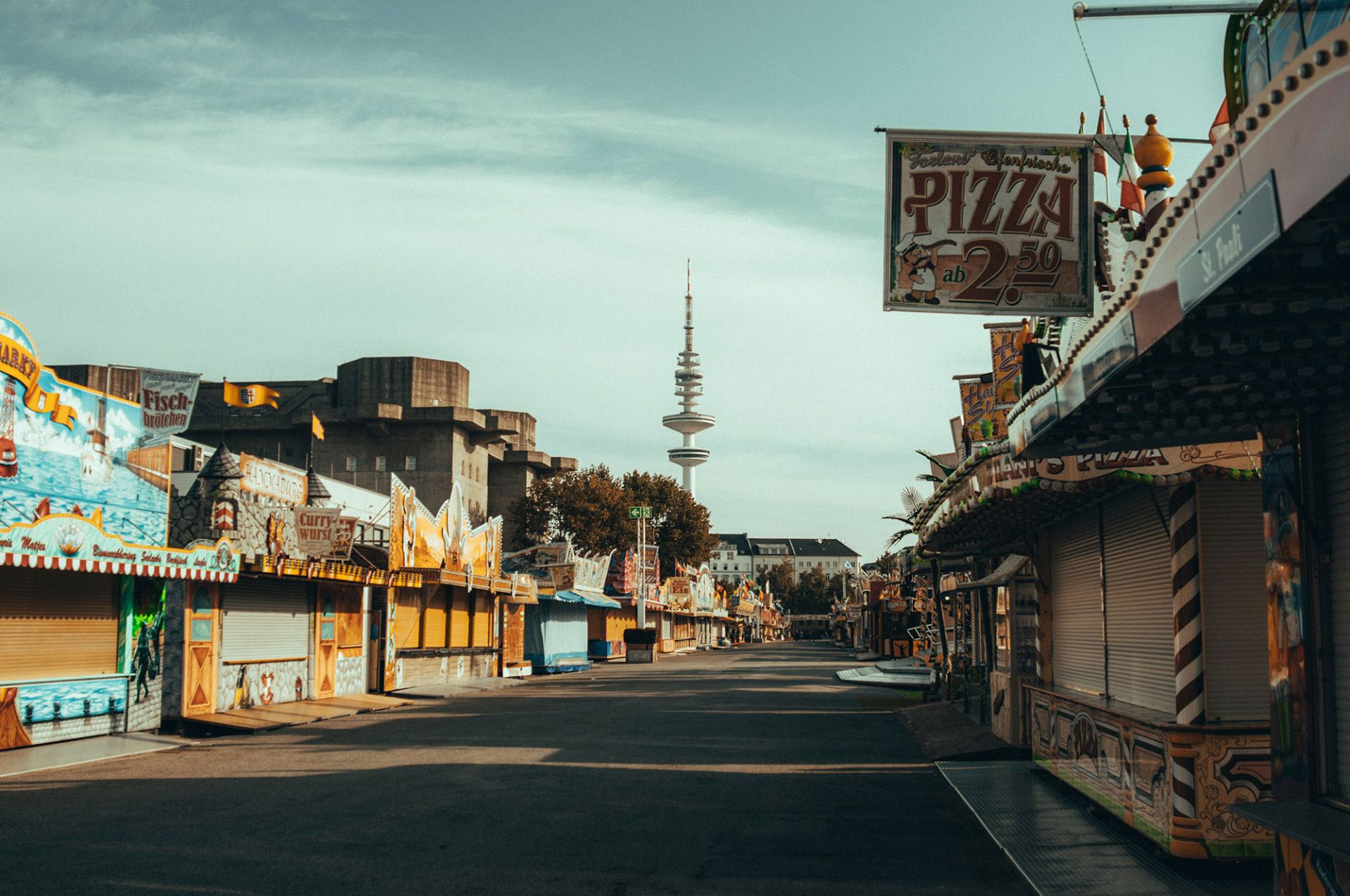
The first mass migration to Germany was Italian labor migration. By various estimates, between 1956 and 1972, from 900,000 to 2 million Italian men came to West Germany. Merkel was a girl or young woman back then, and the chancellors were Adenauer, Erhard, Kiesinger, Brandt. Postwar Italy was poor, while Germany was experiencing its “economic miracle.” Formally, Italians came to Germany temporarily—they were even discouraged from marrying—but was that really a barrier? As a result, today Germany is a country of excellent Italian pizzerias with wood-fired ovens, and pizza is the second most popular German street food, surpassed only by döner: Turkish shawarma. And, by the way, here in Augsburg, when you go to a pizzeria, it’s considered polite to switch, however clumsily, to Italian: “Buongiorno! Una Margarita e mezzo litro di vino rosso, per favore!” Both the bakers and the waiters are likely to be Italian.
Photo: Lasse Diercks via Unsplash
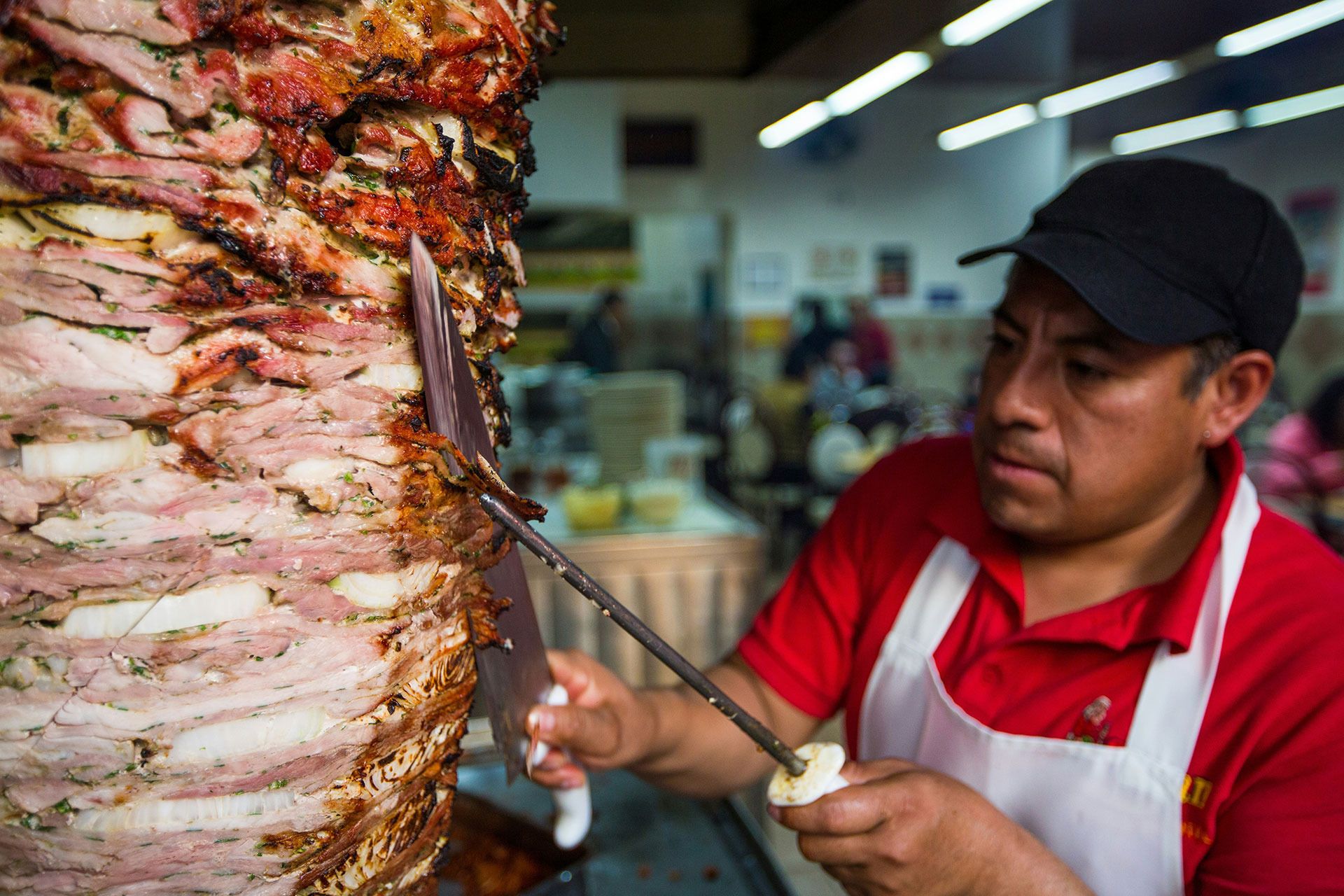
Mass migration to Germany did not stop with the Italians. From 1960 to 1973, at least a million Turks moved to the country, and including family reunifications, there are now between 2 and 3.5 million Turks in Germany. Naturally, Turks brought their culture. Döner shops are the main salvation from hunger during German nights, and Turkish supermarkets are the main suppliers of perfect lamb, olives with pits, and incredible baklava to the German market. Incidentally, former member of a Hamburg Turkish youth gang, acclaimed director Fatih Akin, has had no less influence on German culture. In his most famous film, “Tschick” (“Goodbye Berlin” in the Russian release), one of the two main characters is a Russian teenage migrant, car thief Andrey Chikhachev, whose last name no German can pronounce, so everyone just calls him “Chick.” Chick is a deeply positive character who helps his well-behaved German friend grow up.
Russians (or more precisely, post-Soviet migrants) were the third wave to pour into the already-united Germany of the 1990s. This wave included more than a million Spätaussiedler (“late repatriates,” i.e., ethnic Germans from the USSR) and about 120-150 thousand Soviet Jews. Today’s supermarket chains like MixMarkt and Ledo, with their pelmeni, vareniki, zucchini caviar, and “doctor’s sausage,” are the legacy of this invasion. So are the underground home haircut and manicure services: legal salons in Germany are notoriously schwach. The path for these “barbarians from the east,” so alien to the German spirit, was opened by Chancellor Helmut Kohl, at a time when Angela Merkel, then a young East German theoretical chemist, could not even dream of becoming chancellor.
And everyone somehow forgets about the main migration wave of 18,000,000 (!) people that swept the country after the fall of the Berlin Wall in 1990.
This refers to the “Ossis”: East Germans shaped by life under socialism and the Stasi. The unification of West Germany with East Germany was, in reality, an absorption of East Germany by the West. It was Western banks and stores that entered the former GDR, not the other way around. It was Western officials who vetted Eastern judges, bureaucrats, and teachers, and the Western trust Treuhand decided the fate of Eastern state enterprises (sentencing most to death). In unified Germany, the “Ossis” essentially became complete foreigners in their own country. They knew German? Well, so do Algerians, Tunisians, and Moroccans who flee to France know French.
Against these 18 million, even the million-plus Ukrainian refugees pale in comparison. As do the million already mentioned Syrians and other migrants from the Middle East. And the tens of thousands of so-called “contingent” migrants: Vietnamese guest workers once brought to the GDR. Plus Filipinos, Chinese, Indians, Koreans… Spaniards, Portuguese, Poles, Albanians, Croats…
I’m telling all this for a simple reason. Today's Germany is, in fact, a country of migrants. In some ways, maybe even more so than America. To pull migrants out of Germany, stripping citizenship from those who didn’t have it by birth, and resorting to mass Remigration, as AfD party supporters dream, would be to amputate a quarter or a third of the German body. Because even prominent AfD member Markus Frohnmaier, who ran against “the Turk” Özdemir in the Baden-Württemberg elections, is not a pure-blooded German at all, but of Romanian origin.
All of Germany—from politics to culture—has long relied on migrants.
In the opera troupe of the Augsburg theater, there is currently only one native German. The chief conductor is Hungarian. The first Kapellmeister is Russian. Thanks to the ability to select the best musicians from around the world, the Augsburg opera theater is roughly on par with the Mariinsky and definitely better than the Mikhailovsky. If you remove the foreign migrants from it, it would instantly turn into a run-of-the-mill provincial theater. And this is true all over Germany, including the Bavarian Opera with Vladimir Jurowski at the helm, or the Berlin Philharmonic with Kirill Petrenko.
I’ll put a comma here, I suppose. Next time, I’ll continue with a discussion about migrants and crime.
If you enjoyed this article, consider making a donation — one-time or, even better, monthly. Your support helps us motivate our authors and become better with every article.
Our organization is recognized by the Internal Revenue Service (IRS) as a 501(c)(3) tax-exempt, charitable organization, which means that all contributions made to us are tax-deductible to the fullest extent permitted by U.S. law. Individuals may generally deduct charitable contributions of up to 60% of their Adjusted Gross Income (AGI) for cash donations made to qualifying 501(c)(3) organizations. For donations of appreciated assets (such as stocks or other long-term capital assets), the deduction is typically limited to 30% of AGI, based on the fair market value of the asset. C-corporations may deduct charitable contributions of up to 10% of their taxable income for donations made to eligible charitable organizations.
By submitting a donation, you confirm that you have read and accept the following documents: Privacy Policy and User Agreement, and also give consent to the processing of your personal data.
If you would like to unsubscribe from a monthly donation, please email us at: [email protected]