«We thought we could wait out the war ‘under the Russians,’ but ended up in Stalinist Bolshevism.» On the 85th anniversary of the Soviet annexation of the Baltics
In recent years, some in the Russian public have been strongly tempted to engage in victim-blaming regarding the events of 1939-1940. The idea goes that the Baltic peoples chose their own fate: they signed the treaties, let the Red Army in, and voted for pro-Soviet candidates in elections. Who else can they blame for this but their own short-sighted and cowardly governments? Indeed, formally the Stalinist regime at the time did nothing that the authorities of Lithuania, Latvia, and Estonia did not allow. But in reality, the Soviet leadership fully understood the true meaning of these documents and procedures.
To what extent is history determined by objective laws, and to what extent by the will of individuals? It seems scholars will never arrive at a universal formula clearly explaining the relationship between the two. The harsh truth is that sometimes great (and tragic!) events began with seemingly harmless actions by quite ordinary people.
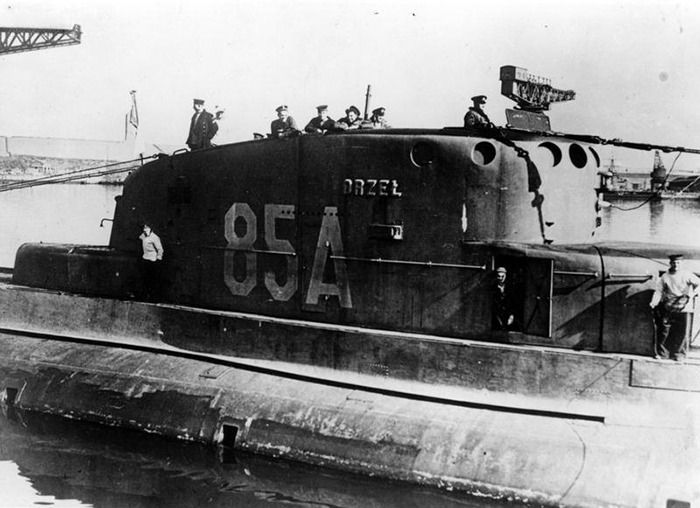
In the case of the Soviet annexation of the Baltics, such an “Annushka” was Polish Navy Commander-Lieutenant (Captain 3rd Rank) Heinrich Kłoczkowski. He “spilled his oil” by docking in Tallinn on September 15, 1939. At that time, Estonia still hoped to quietly sit out the great war with a neutral status, while World War II had already been underway for Poland for two weeks. Kłoczkowski commanded the submarine Orzeł (“Eagle”)— arguably the most modern and well-equipped submarine in his fleet. But in September 1939, he persistently avoided engaging in combat actions against the German Kriegsmarine.
The submarine “Orzeł,” already incorporated into the British fleet. Before its demise, it managed to torpedo at least one German ship. Photo: Wikipedia / Polish government in Exile
Kłoczkowski acted strangely: he cited severe stomach pains but did not transfer command to anyone else. Finally, on September 13, he informed his superiors and subordinates that he would take the “Orzeł” to Tallinn. Perhaps, as someone born in the Russian Empire and native of Saint Petersburg, the place seemed almost like home. Kłoczkowski intended to see doctors there while his crew could replace the submarine’s faulty electric compressor. On the night of September 15, after brief hesitation, the Estonian military allowed the Polish crew into Tallinn harbor.
The hosts gave the guests two days in total. Kłoczkowski went to the hospital, and the old electric compressor of the “Orzeł” was sent ashore. But in those early hours, the Third Reich pressured Tallinn, and the Estonians gave in. Before noon on the same September 15, local officers informed the temporary submarine commander, Captain (equivalent to a naval lieutenant in Russian tradition) Jan Grudziński that his men, as representatives of a belligerent country, were interned by neutral Estonia. All armaments were to be removed from the “Orzeł”; the Estonians decided to use the arrested crew for this work and therefore did not remove the foreigners from their submarine.
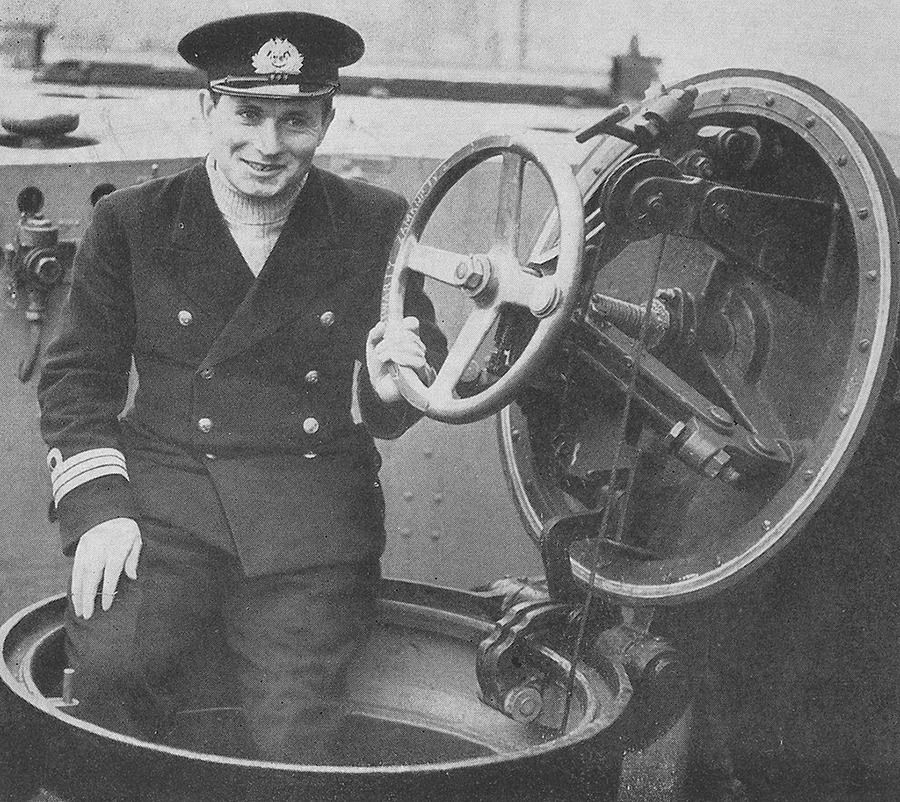
The Estonians’ oversight was exploited by the energetic Grudziński—who, like his superior, was also from the Russian Empire, though a native of Kyiv rather than Saint Petersburg. On the night of September 18, the Poles overpowered the posted guards, cut the moorings, and set out to sea. The startled Estonians fired machine guns at the “Orzeł” and dropped depth charges. The submarine panicked and even ran aground on a breakwater but nevertheless escaped its pursuers.
Captain Jan Grudziński, 1940. Photo: Wikipedia / Eryk K S Sopoćk
Near Sweden, the Poles gallantly put two captured guards ashore. Each was given $50 for the return journey—a decent sum by the standards of the time. Several weeks later, despite lacking maps (which the Estonians had confiscated during the stop), Grudziński managed to bring the “Orzeł” to the United Kingdom. The British incorporated the allied submarine into the Royal Navy. Unfortunately, the combat career of the Polish submariners was short. Before the end of 1940, the “Orzeł” and its entire crew, including the new commander, perished under German bombs somewhere on the bottom of the North Sea.
But what does this Polish adventure have to do with the Soviet annexation of the Baltics? The most direct connection. At the end of September 1939, Moscow used the “flight of the Orzeł” as a pretext to pressure Tallinn. The Estonian Foreign Minister Karl Selter was either invited or summoned to the Kremlin. On September 24, the politician faced an unpleasant conversation with his Soviet counterpart Vyacheslav Molotov: gentlemen, you have hostile armed ships docking and fleeing — this will not do. Our Kronstadt and Leningrad are within arm’s reach, so the USSR needs security guarantees.
Three days later, Selter reluctantly signed a “mutual assistance treaty” with the eastern neighbor. Within two weeks, the politicians of the other two Baltic states followed suit. Less than a year later, all three republics would disappear from the political map of the world.
A country with a lost capital
Latvia, Lithuania, and Estonia are often mentioned together—both in historical chronicles and modern news reports. Of course, this can seem unfair, as each has its own language, culture, and traditions. However, these three coastal countries have too often been swept by the same winds of history.
Between 1918 and 1920, the Baltic peoples almost simultaneously achieved independence following wars on the ruins of the Russian Empire. The Bolsheviks quickly recognized these three young non-Soviet nation-states. Already in 1920, RSFSR diplomats signed corresponding peace treaties in Moscow (with Lithuania), Riga (with Latvia), and Tartu (with Estonia). Between 1926 and 1932, these documents were supplemented by a series of non-aggression pacts between the Baltic countries and the united Soviet Union.
All three republics lived and developed as well as the troubled Interbellum years allowed. However, it must be noted that pre-war Lithuania, unlike its two northern sisters, had two territorial problems (both of which would erupt in 1939!).
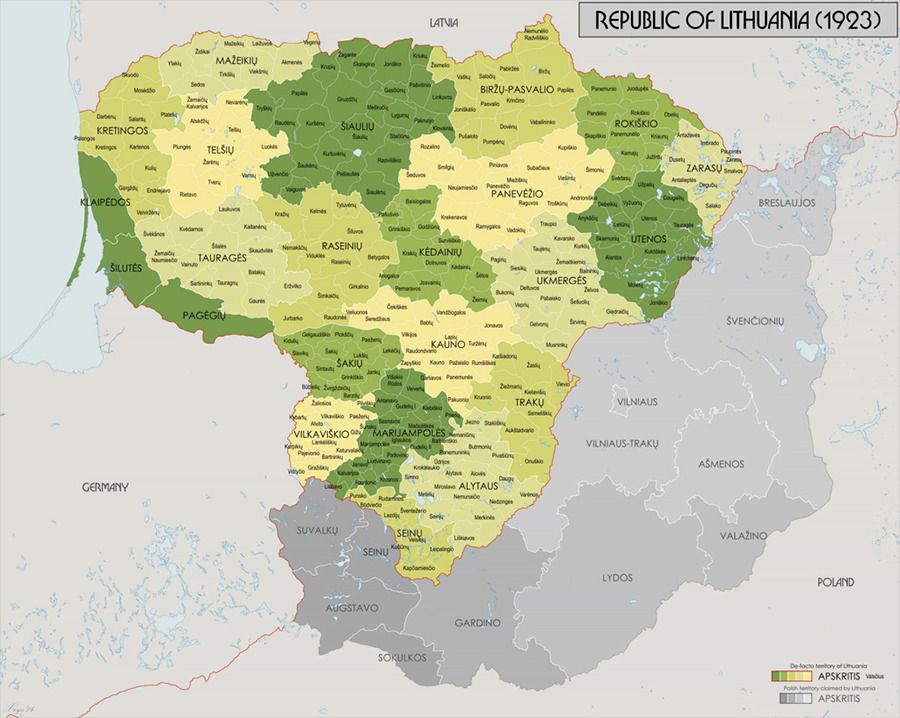
First, Lithuanian authorities did not control nearly half of the territory listed in their constitution. This referred to a vast arc from Polish Suwałki to modern Belarusian Braslaw—lands annexed by the reborn Poland between 1920 and 1922. Moreover, the unfriendly neighbors also seized Vilnius, the declared Lithuanian capital. The Baltic country’s authorities had no choice but to move government institutions to Kaunas, and the loss of the ancient city became a leitmotif of Lithuanian politics.
Actual (green) and claimed (gray) territory of the First Lithuanian Republic. Map: Wikipedia / XrysD
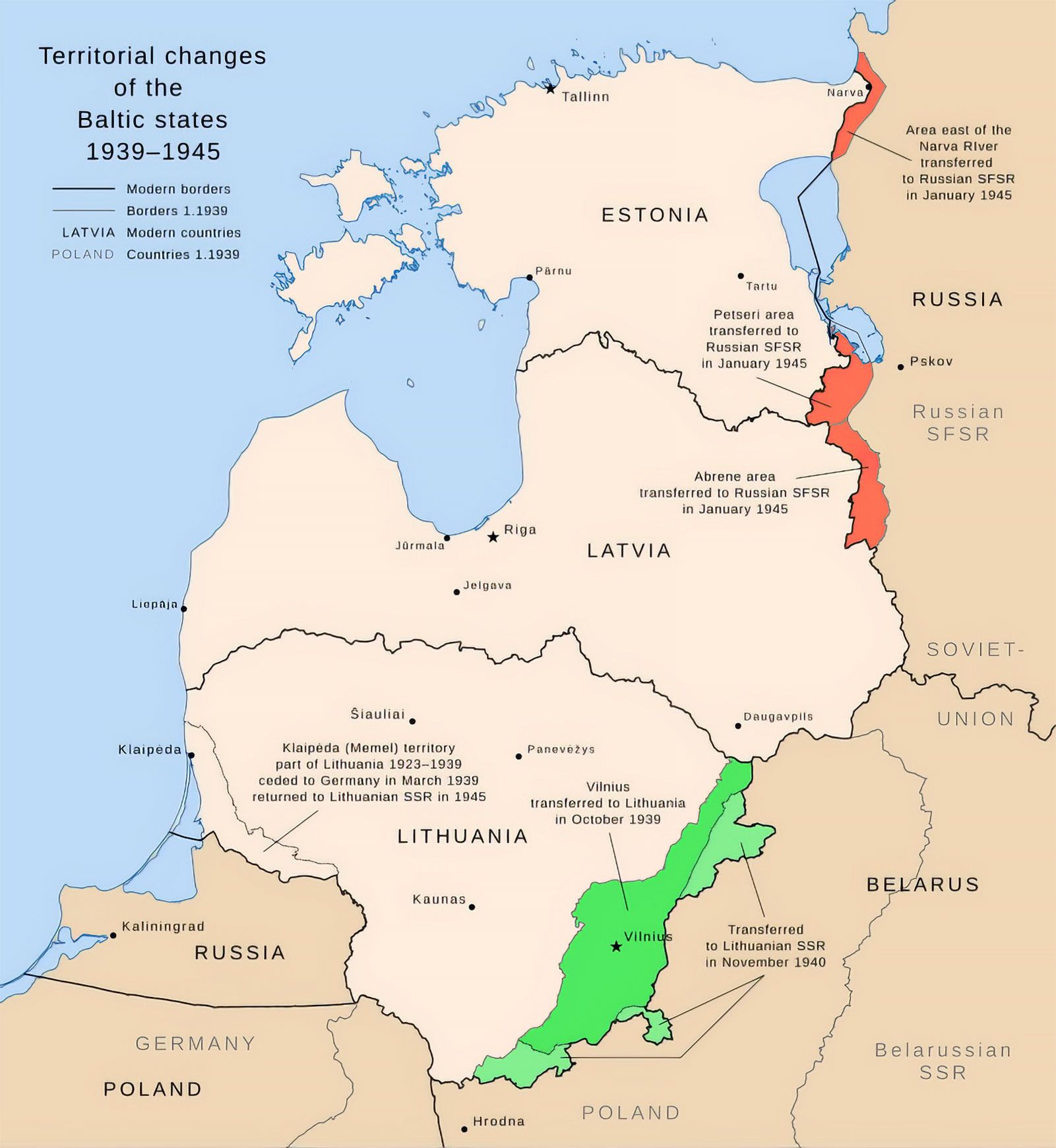
Second, Lithuania itself acted aggressively across the unstable borders drawn in Europe after World War I. In 1923, local nationalists annexed the Memel (Klaipėda) region with its mixed German-Lithuanian population; before World War I, this area belonged to the German Empire. Originally, Memelland was supposed to exist as a League of Nations mandate territory, but the local French administration effectively handed it over to the hated “Bosch” Lithuanians. Defeated Germany could only protest impotently.
At the turn of the 1920s and 1930s, the three Baltic countries fell into a sad pan-European trend of the time. Unstable young democracies gave way to nationalist dictatorships. Lithuania led the way in 1926; eight years later, Latvia and Estonia followed almost simultaneously. Military coups brought to power independence heroes: Lithuanian Antanas Smetona, Latvian Kārlis Ulmanis, and Estonian Konstantin Päts. Soviet and modern Russian literature label their regimes as (proto-)fascist, but this is mostly propaganda cliché.
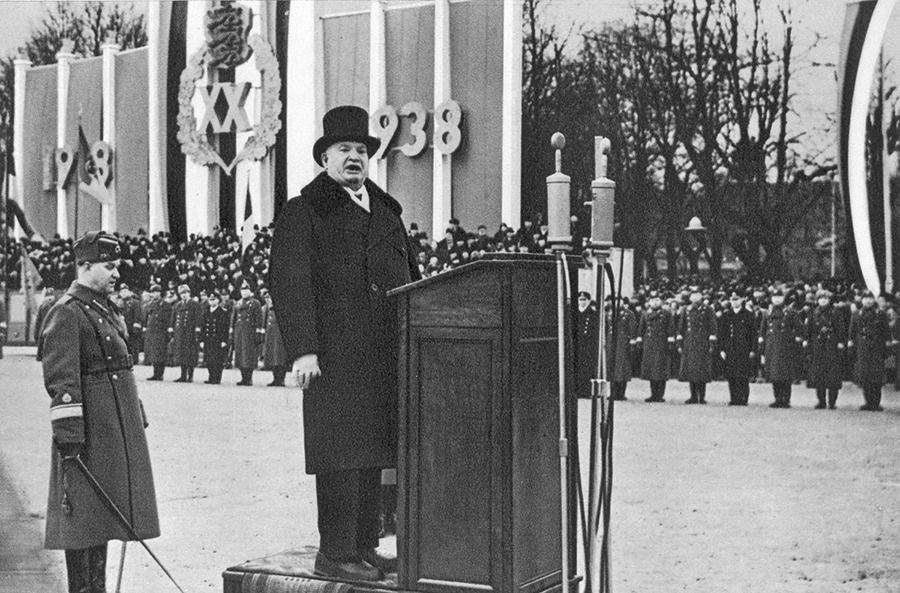
President (“State Elder”) of Estonia Konstantin Päts speaking at the celebrations of the 20th anniversary of his republic, 1938. Photo: Wikipedia / Vaba Eesti Sõna
Even the most toxic Baltic autocracy—the personalist rule of Ulmanis in Latvia—was at worst comparable in monstrosity to Salazar’s Portugal. Smetona and Päts were even milder. Under their rule, alternative elections were held, independent press functioned, Jewish communities faced no discrimination, and local secret police targeted only Comintern underground groups. It is important to emphasize that the large Russian minorities in Latvia and Estonia (about 8-10% of the population) faced no discrimination and remained absolutely loyal to their governments.
Ineffective management
From 1934, the three geographically and historically close countries were members of a common military-political alliance—the so-called “Baltic Entente.” The local elites’ calculation was clear: strengthen ties with neighbors, stay away from great powers, and avoid foreign adventures.
Between 1936 and 1939, the regimes of Ulmanis, Päts, and Smetona underscored their commitment to these principles through special neutrality laws. In early 1939, Latvia and Estonia—on top of existing non-aggression pacts with the USSR—signed similar agreements with Germany. It seemed they were now truly protected against aggression from the two main troublemakers in Europe. But what about Lithuania? At the same time, the government in Kaunas had to enter a very different, much less pleasant diplomatic contact with the Third Reich.
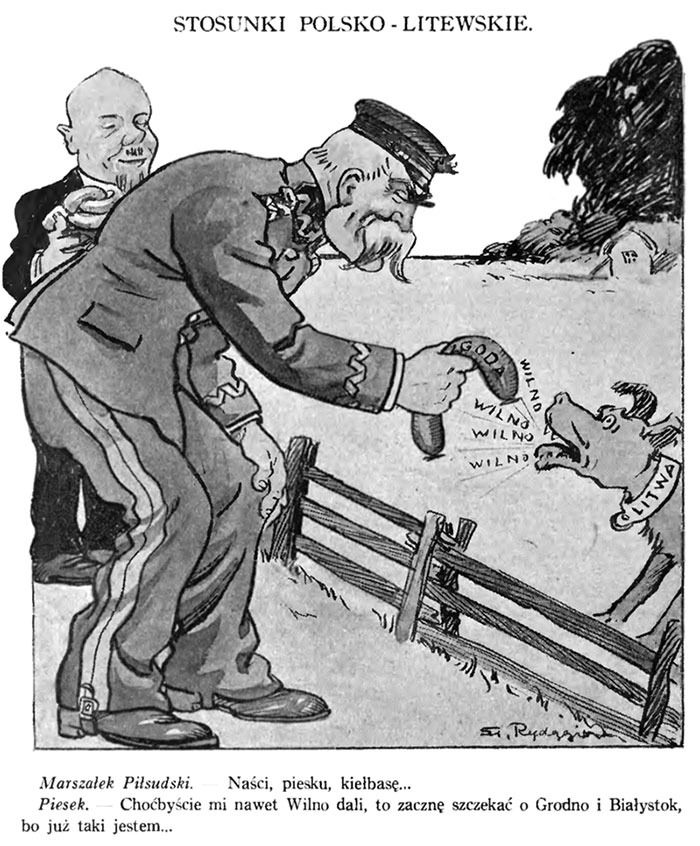
Polish caricature mocking neighbors’ stubbornness over Vilnius: in response to all proposals from Polish leader Józef Piłsudski, the Lithuanian dog barks “Vilnius! Vilnius!” Image: Wikipedia / Stanisław Rydygier. Mucha (Warsaw) 66 (1934)
The fact is that after the remilitarization of the Rhineland, the Anschluss of Austria, and the liquidation of Czechoslovakia, Berlin finally remembered the Germans of Klaipėda-Memel. On March 20, 1939, Hitler’s Foreign Minister Joachim von Ribbentrop issued an ultimatum demanding that Lithuanian authorities hand over the historically German Memelland to the Reich. Smetona’s regime had no choice but to obey the Nazis. Lithuania instantly lost its largest seaport and over 25% of its national industrial production.
“The fate of Czechoslovakia was enough to convince the Lithuanians to agree, and on March 23 the parties signed documents transferring [the Klaipėda region]. German troops entered Memel territory the same day, and that afternoon Hitler personally arrived by warship to greet the jubilant local Germans.”
- Richard Evans, British historian
“Memelland” highlighted the weakness of the Baltic states: in a major crisis, none could expect more than moral support from neighbors. Britain and France were uninterested in the region, while Germany and the USSR were ready to play here beyond the political map’s lines. Moreover, this game had already begun, and its first major act is well known. On August 23, 1939, in Moscow, Molotov and Ribbentrop signed the infamous pact with a secret protocol dividing Eastern Europe into “spheres of mutual interest.”
Initially, the Baltics were not fully assigned to the USSR: Lithuania was placed in the German “sphere” by two foreign ministers. But negotiations continued, and the confidential protocol to the Soviet-German treaty on friendship and borders of September 28, 1939, assigned Lithuania to Stalin’s zone. In exchange, Moscow renounced claims to the Polish Lublin and Warsaw voivodeships. Clearly, the Kremlin valued control over all the Baltics more than penetrating the already destroyed Polish state.
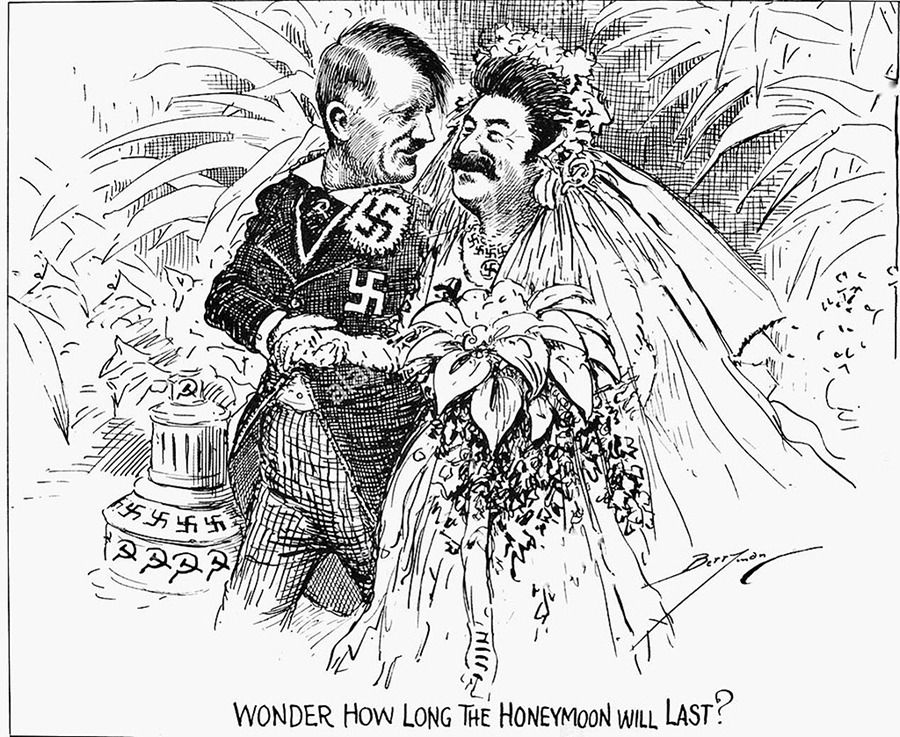
American caricature on Soviet-German cooperation: “How long will their honeymoon last?” Image: Wikipedia / Clifford Berryman. (“The Washington Star,” October 1939)
The Soviet NKID (People’s Commissariat for Foreign Affairs) continued assembling the Baltic mosaic for another year and a half. It is known that the Mariampol district—southwest Lithuania, part of the already mentioned “gray zone” controlled by Poland during the Interbellum—was bought by Moscow from Berlin in January 1941 for $7.5 million in gold. Yes, the great statesman Stalin paid the Germans over $160 million in today’s terms for territory that the Wehrmacht would capture within the first hours of aggression against the Soviet Union five months later.
You want it to be like Poland?
At the time of the Mariampol deal, the Baltic countries were already Soviet republics. But how exactly did the Kremlin bring them under its control? While Hitler bulldozed through such cases, Stalin played more legally subtle games. Even after 85 years, neo-Stalinists have formal grounds to talk about the “voluntary entry” of Lithuania, Latvia, and Estonia into the USSR.
The process began on September 18, 1939, with the aforementioned “flight of the Orzeł.” After the Polish submariners escaped from Tallinn, Estonian Foreign Minister Selter was called to Moscow, while Stalinist agitprop simultaneously spread news that around the same time an unidentified submarine torpedoed the peaceful Soviet steamer “Metallist” in the Gulf of Finland. The nature of the “Metallist” incident remains a mystery. Either the shipwreck was entirely fabricated, or Soviet sailors staged the sinking of their own ship.
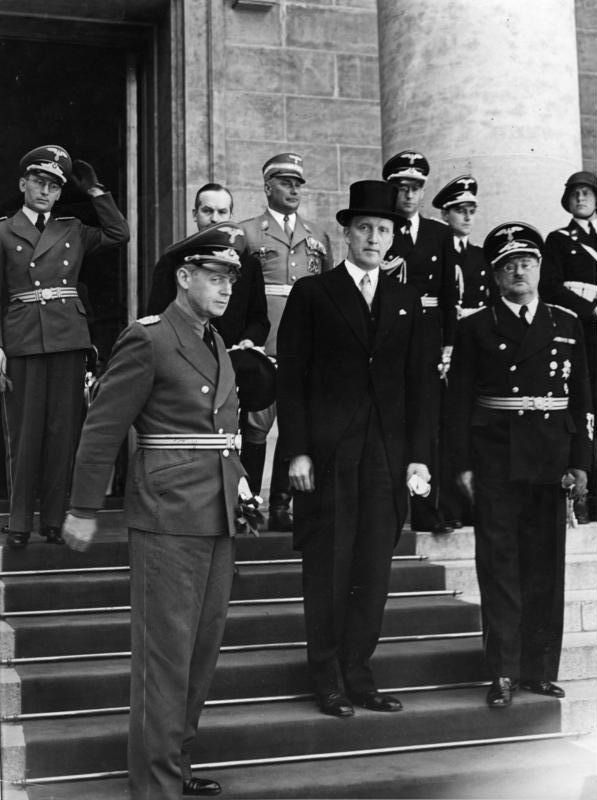
Karl Selter (center, in a top hat and civilian suit) during a visit to Berlin, June 1939. Photo: Bundesarchiv, Bild 183-E07268 / CC-BY-SA 3.0
In any case, Stalin and Molotov found a pretext to pressure the Estonians. Even if the “Metallist” was not hit by Poles, there was no guarantee Tallinn wouldn’t again allow potentially hostile Soviet military vessels. Selter assured that his country had drawn the necessary organizational conclusions after the “Orzeł” incident—and he was telling the truth: both the Navy commander and his chief of staff resigned. But Soviet interlocutors responded that they expected a more substantial concession—the signing of a mutual assistance treaty.
Figuratively speaking, the Soviets put a gun to the Estonian head. Units of the 8th Red Army were already deploying in Pskov and Belarus. Soviet warships appeared off northern Baltic shores. Tallinn resigned itself to the inevitable, and on September 28 Selter signed the imposed document. As with the Soviet-German treaties, the most interesting part was the secret protocol.
Estonia “for the duration of the war in Europe” undertook to host bases for Soviet land forces, navy, and air force with a total strength of up to 25,000 troops—one and a half times the size of its own army. In other words, the Estonian government, with its hands twisted, invited the Red Army to occupy its own country.
It was said that Stalin was very pleased with himself at the signing and threw a line to the already defeated Selter in the style of a Hollywood villain:
“You acted wisely. With Estonia, it could have been like Poland. Poland was a great power. And where is it now?”
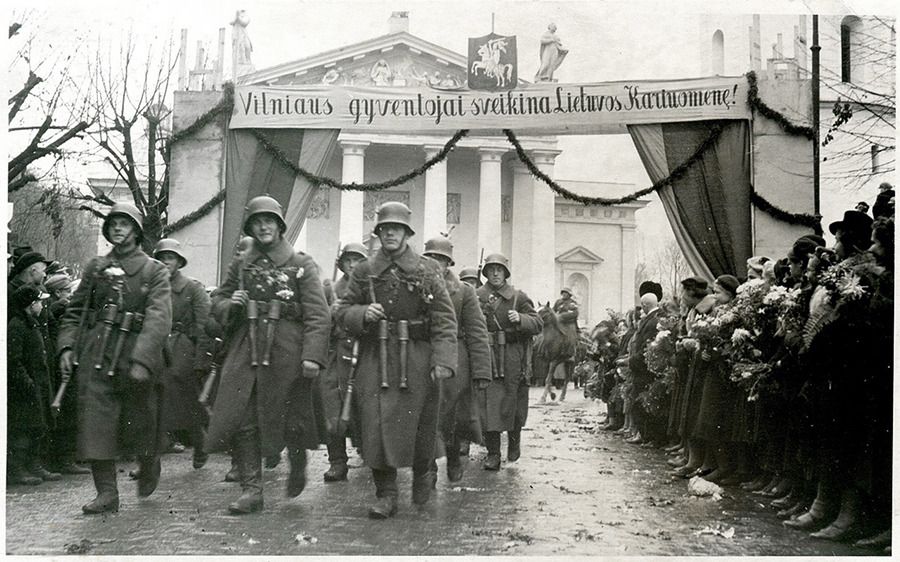
Then Molotov’s department, using Estonian compliance as a precedent, imposed similar pacts on Latvia and Lithuania (October 5 and 10, respectively). The latter even received a bonus: the Soviets handed the Smetona government the coveted Vilnius and surroundings, left over after Poland’s partition. However, the gift was a trap—the short Soviet occupation of the city saw the Red Army strip everything valuable, from industrial equipment to goods from shop windows.
Lithuanian troops entering Vilnius, handed over by the Soviets. October 28, 1939. Photo: Wikipedia
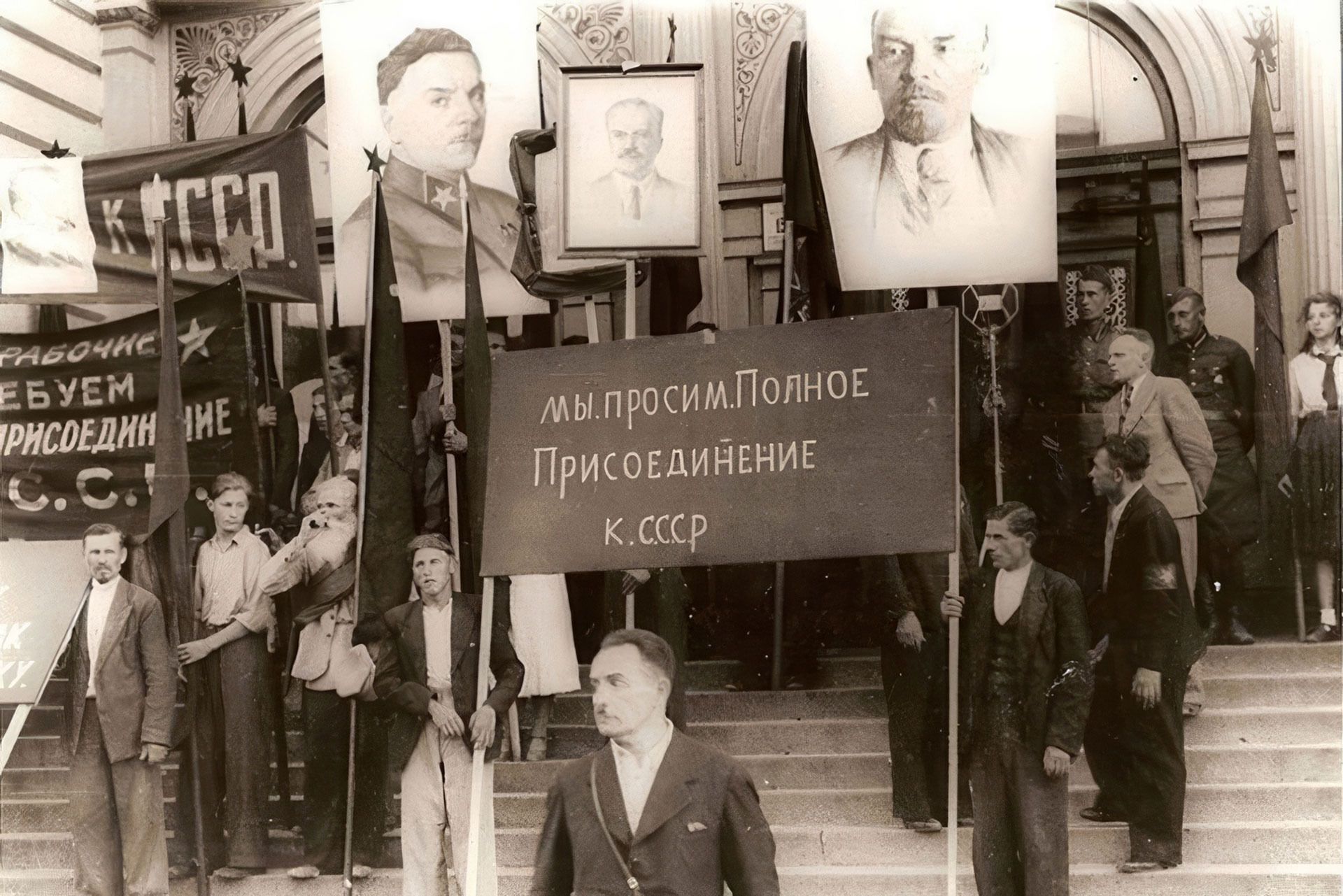
In autumn 1939, the three Baltic countries were fully receiving Soviet military transports. Formally, this hardly resembled a “normal” occupation. The first Red Army contingents were everywhere greeted with honor guards and restrained public approval. The fading autocracies of Päts, Smetona, and Ulmanis did their utmost to pretend everything was going according to plan.
Both demography and democracy
The agreements of autumn 1939 were not followed by immediate annexation. The Kremlin graciously allowed Lithuania, Latvia, and Estonia to exist as independent states for a full eight months.
“Some [Lithuanian] opposition welcomed the changes. Optimists still hoped that, having avoided bloodshed, the Soviet Union would at worst leave Lithuania the status of a satellite like Mongolia. […] The prospect of being ‘under the Russians’ and thus weathering the war was understood as a temporary return to Russia of the Nicholas II era, while the totalitarian nature of the Bolshevik regime was not realized at all.”
- Alfonsas Eidintas, Lithuanian historian
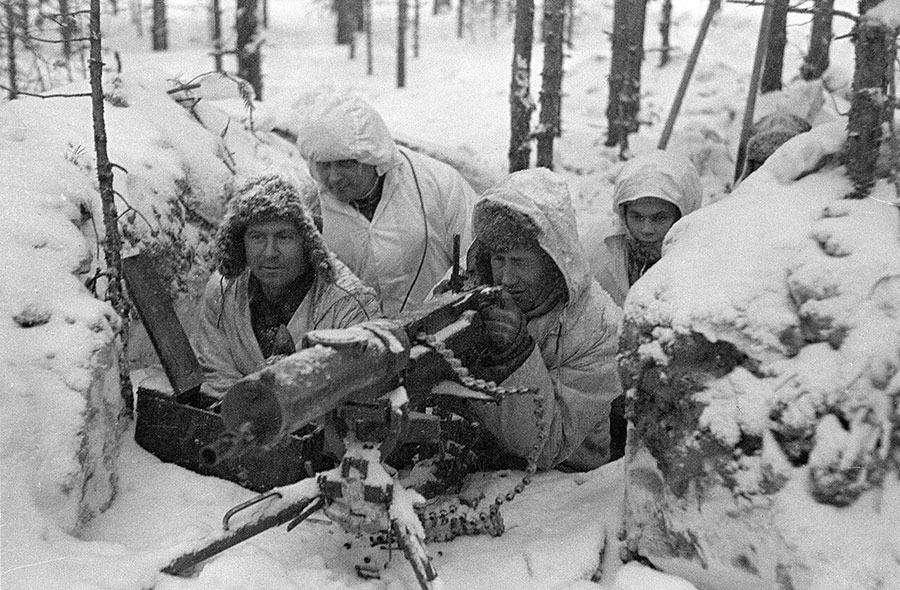
Apparently, the agony of the three states was slightly delayed by the persistence of the government across the Gulf of Finland—in Helsinki. That same autumn of 1939, the Bolsheviks tried to impose an unequal treaty “On Mutual Assistance and Friendship” on Finland. The northerners were offered to host Soviet troops and cede part of their territory. But the government of Aimo Kaarlo Cajander viewed Stalin’s demands as a threat to national sovereignty. Eventually, the Soviets lost patience and attacked their neighbors, but the Finns, at the cost of a fierce 105-day Winter War, defended their independence. Until spring 1940, Baltic questions remained secondary for the Kremlin.
Finnish army machine gun crew in combat against the Red Army. Near the Lemetti tract (Karelia), February 1940. Photo: Wikipedia
Could the Finnish example have inspired the Baltic peoples to resist the Soviet Union? Unlikely. First, Finland’s area was twice as large as Lithuania, Latvia, and Estonia combined. The Finns could afford the luxury of first allowing the Red Army in, then fighting a series of battles, and finally buying peace by ceding 10% of their pre-war territory. None of the Baltic countries could do this—the territory lost by Finland (about 40,000 km2) was nearly the size of Estonia itself.
Second, Finland had a much larger population—about 4 million people—several times more than the Lithuanians, Estonians, or Latvians individually. Therefore, Helsinki could mobilize many more young men than their Baltic counterparts. Third, Finland was protected from behind by neutral Sweden, which allowed Western arms and foreign volunteers to pass through to its neighbor. By late 1939, the Baltics were surrounded on all sides by the Third Reich and the Soviet Union.
And finally, last but not least: interwar Finland was a democracy, not an autocracy. Its government could not, as in the Baltics, sweep under the rug questions of war preparedness and Soviet claims. Yes, the ruling center-left coalition did not emphasize these issues, but the right-wing opposition constantly kept the government, army, and people alert. Thus, in autumn 1939, the failed negotiations in Moscow were met by the Finns not with despair but with determination to fight. In the Baltic countries, by contrast, the dominant mood promoted by the ruling regimes was “just let there be no war.”
Sovietization at Stakhanovite pace
But war did not actually break out. By early summer 1940, the NKVD had infiltrated Lithuania, Latvia, and Estonia with its agents, who built bridges with useful people. As Latvian historians note, during the Latvian SSR period, veteran Chekists sometimes explicitly listed in pension applications “feats” such as: “In May 1940, as part of an operational group, was sent to Latvia for illegal intelligence activities to establish Soviet power.”
At the end of May 1940, the Soviets began final annexation. But this time, the Bolsheviks started not with Estonia but Lithuania, baselessly accusing the local government of kidnapping two Red Army soldiers, secret ties with Germany, and mobilizing ultra-right militants. On June 7, Prime Minister Antanas Merkys arrived in Moscow, where Molotov subjected him to harsh pressure: the Lithuanian government was not fulfilling its obligations, so the Soviet side wanted more responsible politicians in Kaunas. Unprepared for this turn, Merkys lost heart. He was quickly replaced by the more resilient Foreign Minister Juozas Urbšys, who was immediately presented with an ultimatum: Lithuania must change its government and agree to the unlimited stationing of Soviet troops.
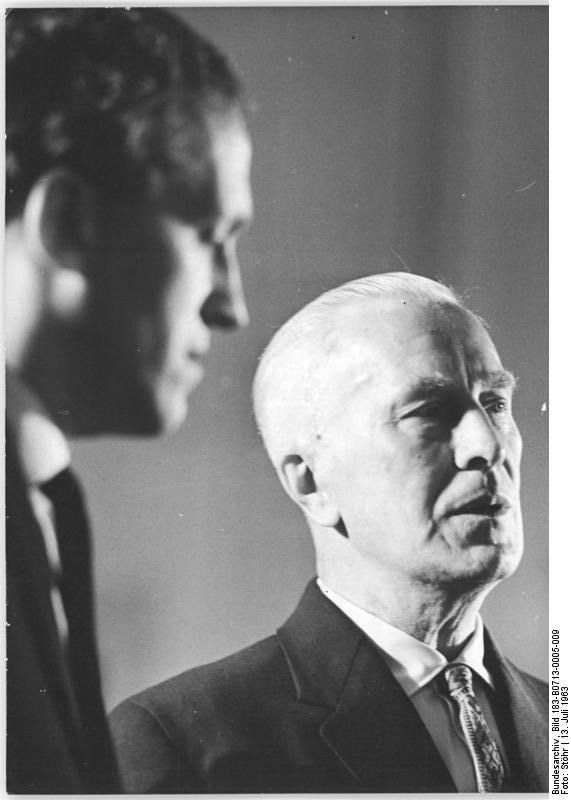
Juozas Urbšys during a visit to the GDR in 1963—as a Soviet citizen who spent 15 years in exile and prison. The former minister was lucky to live until May 2, 1991, and witness Lithuania’s restored independence. Photo: Bundesarchiv, Bild 183-B0713-0005-009 / Stöhr / CC-BY-SA 3.0
On June 14, 1940, Urbšys, having no alternatives, accepted Soviet conditions. On June 15-16, similar ultimatums were delivered to the authorities in Riga and Tallinn. Their reactions were predictably similar, although both regimes maintained a brave face despite the lost game. In one of his last radio addresses to the people, Latvian dictator Ulmanis said: “You remain in your places, and I remain in mine.” Only Smetona among the three leaders called for resistance to the Bolsheviks. But even he found no support within his government and eventually fled the country with his family and a few associates.
By mid-June, new “people’s governments” began working in the three republics. Soviet special services relied not on underground communists but on non-party intellectuals who criticized the old regimes from the left. Naturally, these pleasant figures served as a facade behind which real power was exercised by veterans of local communist parties and their Soviet handlers. Notably, Baltic Sovietization was overseen by prominent Stalinists: Vladimir Dekanozov in Lithuania, prosecutor Andrey Vyshinsky in Latvia, and Leningrad chief Andrey Zhdanov in Estonia.
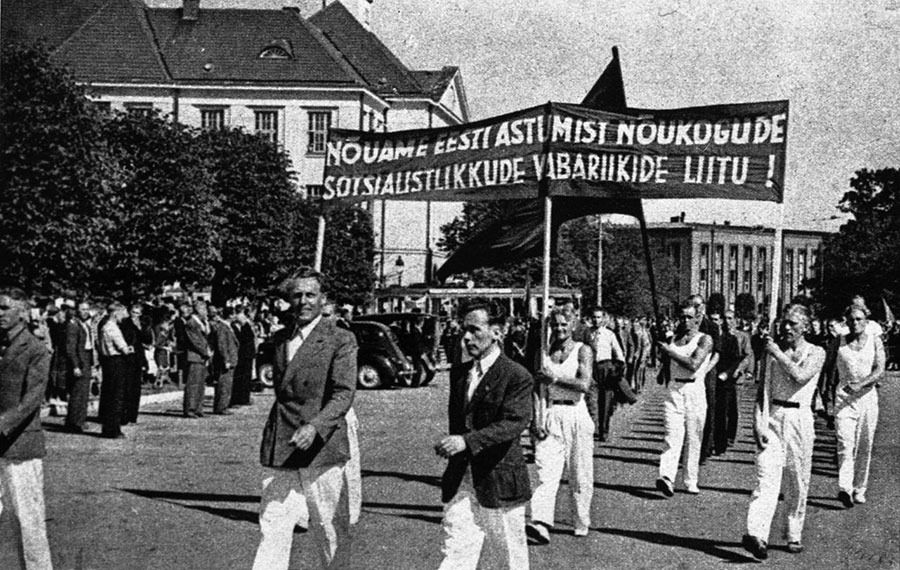
The three Bolsheviks hurriedly prepared uncompetitive elections to local parliaments, all scheduled for mid-July 1940. The electoral procedure was meant to serve as a plebiscite demonstrating the unanimous enthusiasm of the Baltic peoples for the occupation. Therefore, only candidates from pro-communist “Labor People’s Unions” were allowed on the ballots. Interestingly, during campaigning, Soviet overseers strictly forbade collaborators from any hints about imminent incorporation into the USSR.
“Voting was possible only for the single official ‘Labor People’s’ list—with identical programs in all three republics. Voting was mandatory, as each voter’s passport was stamped. Lack of a stamp meant the passport holder was an enemy of the people, avoiding elections and thereby revealing their hostile nature.”
- Czesław Miłosz, Polish-Lithuanian writer and eyewitness
As expected, the July 14-15 procedure yielded predetermined results. In Estonia, 93% voted for the “Union” with an 84% turnout; in Latvia, 97% with a 95% turnout. Lithuania surpassed these figures with 99% and 95.5%, respectively.
Pro-Soviet demonstration in Estonia. Tallinn, July 17, 1940. Photo: Wikipedia / Eesti Filmiarhiiv
On July 21-22, 1940, the three newly elected “parliaments” declared their republics socialist and adopted declarations of entry into the Soviet Union. On August 3-6, the Supreme Soviet of the USSR approved their requests. Meanwhile, full-scale Sovietization was underway in the Baltics: strict censorship in media and culture, massive nationalization of the economy, anti-religious campaigns, and purges of all potential enemies—believers, landowners, shopkeepers, members of anti-communist groups, and others.
The climax was the June 1941 deportations—the exile of more than 40,000 residents of Lithuania, Latvia, and Estonia of various nationalities to Siberia and Kazakhstan. The Chekists conducted this operation administratively using questionnaires. The “selected” people and their families were literally pulled from their beds with no chance to appeal and minimal time to gather belongings. For many in the Baltics, the memory of this event defined their attitude toward Soviet power for generations.
***
The annexation of the Baltic countries by the USSR in summer 1940 retrospectively looks like one of the worst deals in world history. Three small peoples hoped to weather difficult times behind the back of a mighty empire by limiting freedoms. The empire’s authorities expected to gain an industrially developed foothold for further expansion into Europe at no cost.
Territorial changes of the Baltic states after Soviet annexation. Lithuania regained the Vilnius region, while Latvia and Estonia transferred several eastern districts with predominantly Russian populations to the RSFSR. Map: Wikipedia / Jxxy
In the end, the first side lost its statehood entirely, while the second gained a potentially rebellious and perpetually discontent region in a strategically important border area. Under Stalin, Soviet order in the Baltics was imposed by force; his successors had to resort to “feeding” the three republics, artificially providing a higher standard of living than in the rest of the Union despite the same lack of civil rights. This policy forced most Latvians, Lithuanians, and Estonians to tolerate the USSR but never to truly consider it their own.
In recent years, some in the Russian public have been strongly tempted to engage in victim-blaming regarding the events of 1939-1940. The idea goes that the Baltic peoples chose their own fate: they signed the treaties, let the Red Army in, and voted for pro-Soviet candidates in elections. Who else can they blame for this but their own short-sighted and cowardly governments? Indeed, formally the Stalinist regime at the time did nothing that the authorities of Lithuania, Latvia, and Estonia did not allow. But in reality, the Soviet leadership fully understood the true meaning of these documents and procedures.
“I must tell you in confidence that I pursued a very tough line. The Latvian Foreign Minister [Vilhelms Munters] came to us in 1939, and I told him: ‘You won’t return until you sign annexation to us.’ From Estonia, the military (?) minister [probably an error, likely referring to Foreign Minister Karl Selter], whose name I forgot, a popular man, came to us, and we told him the same. We had to go to this extreme. And I think we did well. I presented it to you very bluntly. It was so, but all was done more delicately. […]
We had to secure ourselves somehow. [That’s why] we needed the Baltics…”
- Vyacheslav Molotov, from a series of interviews with journalist Felix Chuev in the 1970s
In the main photo: a demonstration of supporters of Latvia’s annexation to the Soviet Union. Liepāja, summer 1940. Photo: Wikipedia / Kalnroze
If you enjoyed this article, consider making a donation — one-time or, even better, monthly. Your support helps us motivate our authors and become better with every article.
Our organization is recognized by the Internal Revenue Service (IRS) as a 501(c)(3) tax-exempt, charitable organization, which means that all contributions made to us are tax-deductible to the fullest extent permitted by U.S. law. Individuals may generally deduct charitable contributions of up to 60% of their Adjusted Gross Income (AGI) for cash donations made to qualifying 501(c)(3) organizations. For donations of appreciated assets (such as stocks or other long-term capital assets), the deduction is typically limited to 30% of AGI, based on the fair market value of the asset. C-corporations may deduct charitable contributions of up to 10% of their taxable income for donations made to eligible charitable organizations.
By submitting a donation, you confirm that you have read and accept the following documents: Privacy Policy and User Agreement, and also give consent to the processing of your personal data.
If you would like to unsubscribe from a monthly donation, please email us at: [email protected]