At the Russian Antiwar Committee conference held last week in Strasbourg, former Russian Prime Minister Mikhail Kasyanov debated with columnist Tatyana Rybakova about the prospects for the Russian economy in the fifth year of the war in Ukraine. We publish the most interesting parts of their conversation
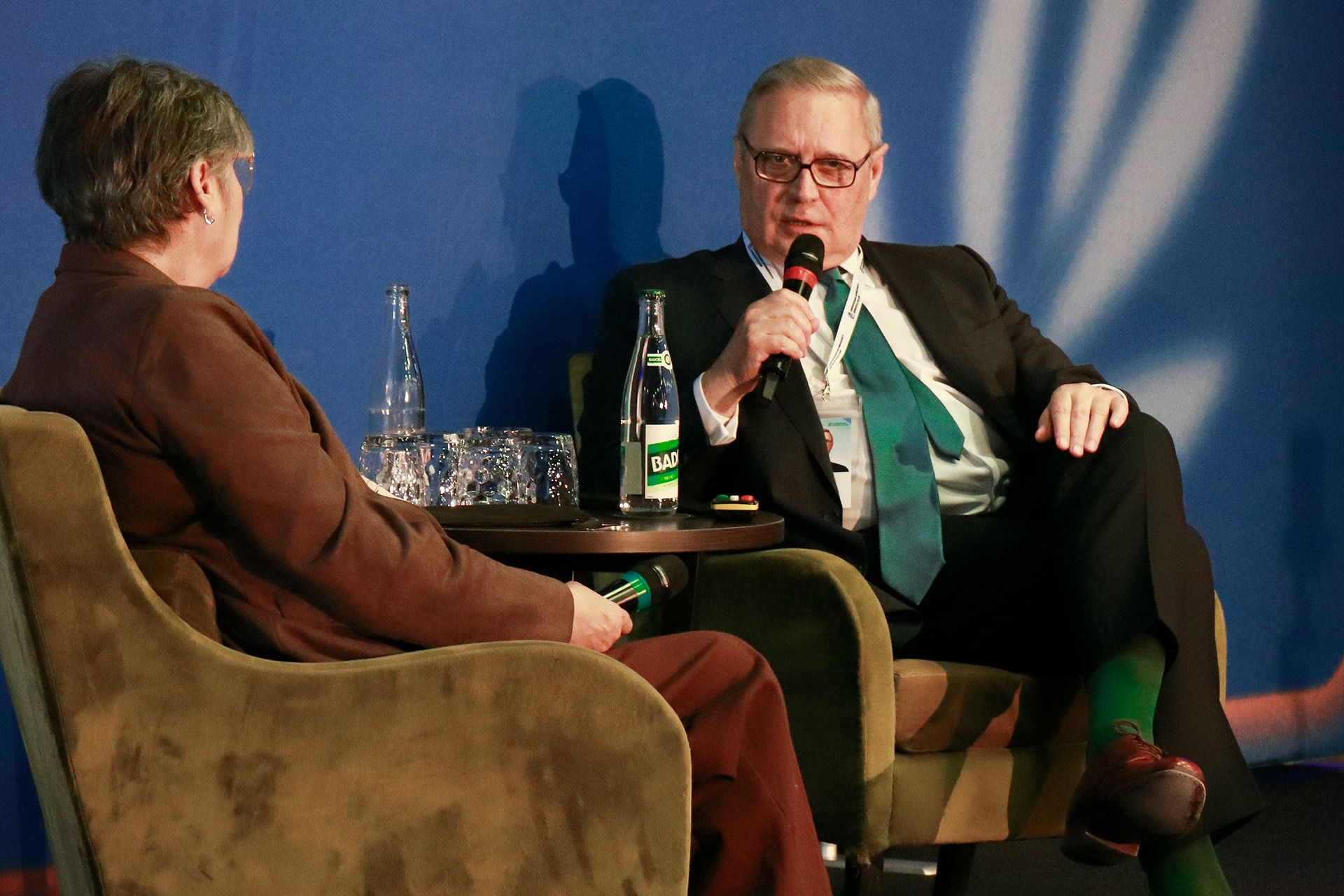
Politician Mikhail Kasyanov answers questions from economic columnist Tatyana Rybakova during the Russian Antiwar Committee conference. Strasbourg, May 21, 2026. Photo: Svetlana Denisova
- In my view, Putin’s recent visit to China was a brilliant demonstration of a lack of results. There were beautiful ceremonies and as many as 42 agreements about deepening and developing Russian-Chinese relations. But in reality, nothing was decided—the question of supplying Russian gas through “Power of Siberia-2” wasn’t even planned for discussion, and there was no military leadership in the Russian delegation, so clearly no agreements on military cooperation were reached either. What was this all about? Why did Putin suddenly need to go to China again?
- China is Russia’s only and main window for trading with the world. Despite all the problems, Russia still has a market economy. And Putin understands that this can’t be changed, otherwise there will be a collapse.That’s why China’s loyal approach to the aggressive war against Ukraine is extremely important for Putin: it allows him to demonstrate that Russia is not isolated.
In reality, this is terrible.
China and Russia have always had, let’s say, a friendship with threats. Even back when I wasin the top ranks, the national defense concept included the possibility of using nuclear weapons in case of an attack [by China].
We have a huge border with China. East of the Urals, 16 million people live in Russia. In five Chinese provinces along the border with Russia—250 million. The infiltration of Chinese citizens into the Russian Far East is very strong, including through corruption schemes. All the promises about investments in Russia are just talk. China doesn’t invest anything. It only sells what it can sell.
What actually unites the so-called Global South countries, which Russia is now turning to? Take China, India, the Middle East—they are all ancient civilizations, but completely different. The only thing uniting these countries is opposition to the US. Even Chairman Xi, after meeting with Putin, said something along the lines of, “We won’t let these Western upstarts encroach on our traditional cultural traits.” So Putin got nothing from the visit to China, he simply demonstrated that he’s not alone.
- Yes, Putin is moving toward China not because it’s a conscious civilizational choice, but because he’s not allowed in the West. I don’t think we can talk about Russian society being ready for such a turn—but do you think Putin himself and his associates are ready for this?
- No, Putin is not ready. He’s doing this out of necessity. He miscalculated, expecting to take Kyiv in three months. It all started with the de facto annexation of South Ossetia and Abkhazia: three months after Russia invaded Georgia in August 2008, the EU came to Putin to do business as usual—to build “Nord Stream 2.” America launched the reset of relations with Russia under Medvedev—remember, that was a funny topic? Even then I said it was a huge mistake. This led Putin to the annexation of Crimea, which he needed to stay in power and maintain his popularity. And here he calculated everything correctly—it worked out that way.
But now the economic situation in Russia is getting worse. That’s exactly why, at the May 9 parade, for the first time [since the war began], he said: I’m ready to negotiate with the EU.
All of Putin’s economists, these quasi-liberals, worked in my government—[Central Bank head Elvira] Nabiullina, [Finance Minister Anton] Siluanov, we all overcame the crisis together in 1998-99, and they all know how it goes.They tell themselves they’re not working for Putin, but saving the people from chaos—it’s a compromise with their conscience, of course.
If the price of Urals oil stays at $90-95 per barrel, then the huge budget deficit in the first quarter will be covered. The [Central Bank’s] printing press will provide liquidity to banks, which can then buy government bonds to finance this deficit. At the same time,inflation today is low. Let me remind you: for the last 30 years, Russians have lived with high inflation—below 10% on average never happened. Here [in France, with such inflation] people protest in the streets—but in Russia, even with 40% inflation, nothing happens. People in Russia can endure endlessly, and Putin is counting on that endurance.
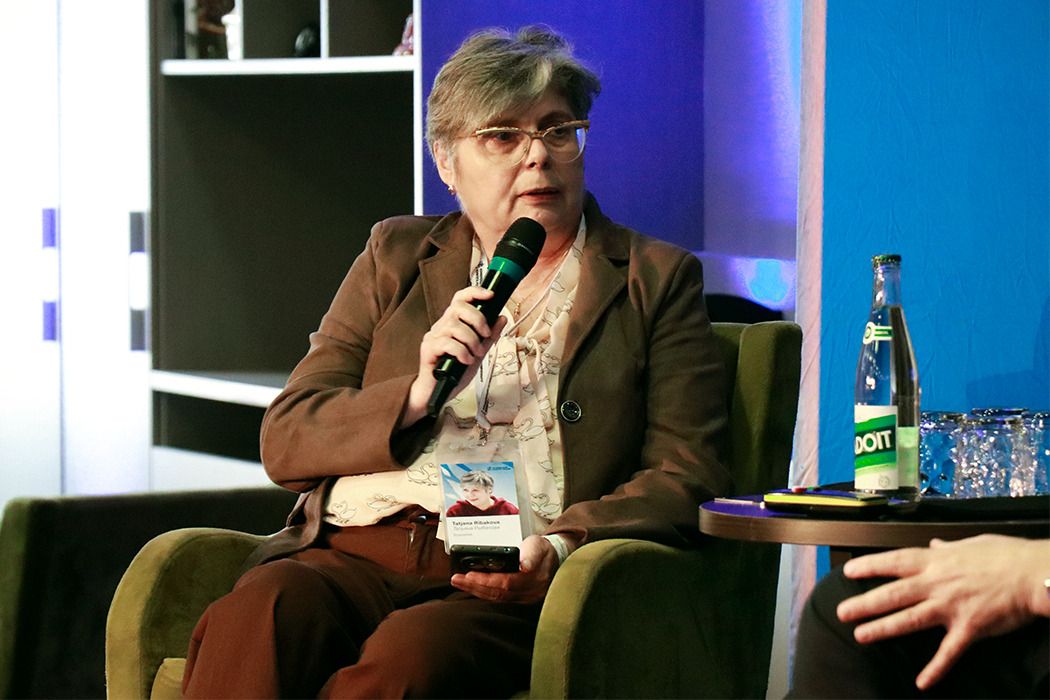
Tatyana Rybakova. Photo: Svetlana Denisova
- So here’s what we get: contrary to all the stories about love for a strong hand and paternalism, the Russian public doesn’t really need Russia’s turn to the East. For Putin himself, it’s also a forced partnership. And China isn’t all that interested in close cooperation. So, the natural way out for Russia is only one: a return to the West, to Europe. But under what conditions is this possible?
- That’s the main question, and it needs to be discussed very intensively starting tomorrow. Yesterday and today, I had individual meetings with MEPs, and that’s exactly what I talked to them about. Unfortunately, right now there’s no unity in the European Parliament about what to do next with Russia.
I mentioned Putin’s speech for a reason, where he said the war would soon end—let’s negotiate with Europe. The fact is that Putin understands what’s going to happen in the West in the coming months.
This summer, the US will celebrate Trump’s 80th birthday and the 250th anniversary of the country. But the pomp will end, and the war in the Middle East won’t. Trump is not capable of ending it. A ground operation is needed, which means casualties—he won’t go for that.
This means that now Iran has the whole world on the hook. Inflation will start rising in Europe, all reserves to keep fuel prices down have been exhausted, and the economy won’t grow. Even in Germany, GDP growth is half a percent a year—and everyone is already clapping with joy. Stagflation is inevitable.
That’s why Putin understands that in the US [parliamentary] elections in early November, the Republicans and Trump will lose—at least in one chamber they won’t get a majority. By then, Trump will withdraw from talks to end the war in Ukraine, but someone will have to hold those talks. Europe will be in crisis, while Russia has cheap resources it’s ready to sell to Europe at market prices. In my view, the danger here is precisely the lack of unity among European politicians.
Many parties in EU countries are already saying in their election campaigns: enough already, let’s look for compromises. But if you seek a compromise with Putin, it will only be at Ukraine’s expense.
This means that Putin will win again. He’ll tell the Russian people: look, I fought NATO—50 countries opposed us, and I won, I gained 4 million voters [in the Russian-occupied Ukrainian regions], I secured a corridor from Crimea to the mainland, we have the best army in the world, and so on. This scenario is quite likely, and Europe may let it happen.
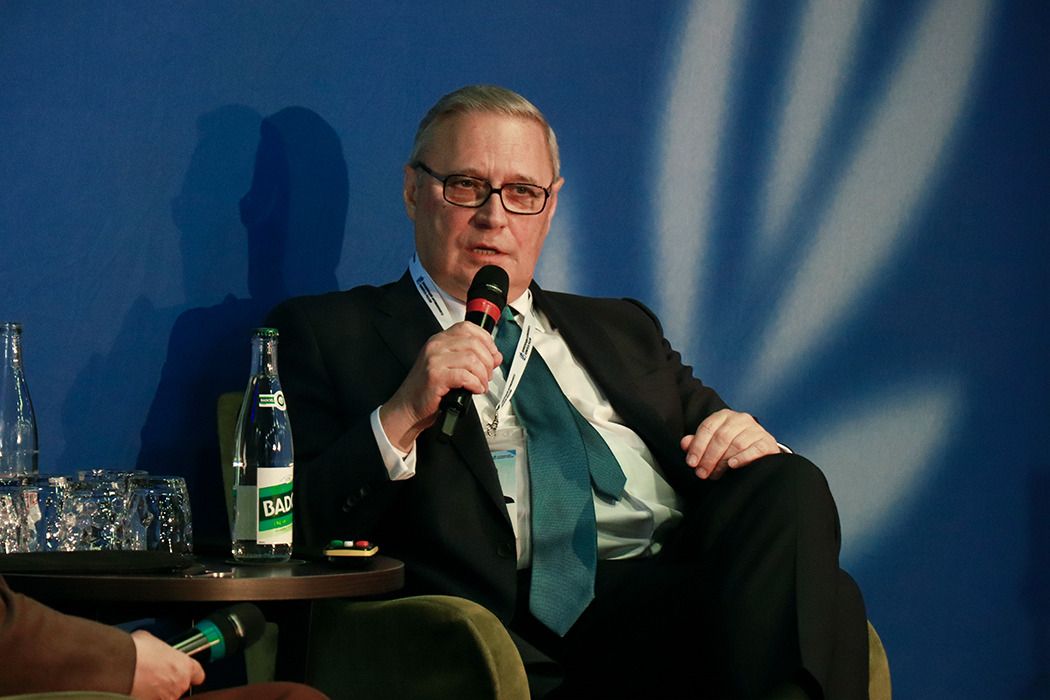
Mikhail Kasyanov. Photo: Svetlana Denisova
That’s why it’s so important for Europeans to wake up now. Political decisions to increase military spending and aid to Ukraine have been made. All this needs to be done quickly and not just at the level of promises. Ukrainians are making serious progress with drones—both long-range and medium-range, and on the battlefield. We see what’s happening in Moscow, where people sometimes can’t sleep at night anymore. The war has come to Muscovites, whom Putin hadn’t touched at all until now. With internet restrictions, he’s already affected all the big cities, which previously didn’t care about what was happening at the front. Even people loyal to Putin have started criticizing him on social media—because Putin has intruded into their private lives, into the everyday life of the Russian urban middle class. These people had lived quietly until now and couldn’t accept that their country kills peaceful Ukrainians every day. They simply shut their eyes to it, to preserve their mental peace. Now the situation is changing, and Putin is losing in this situation.
Sooner or later, after this dark, gray period, Russians will still have to realize the need to build democratic institutions somehow. Yes, there has never been democracy in Russia, but the foundations for it were laid—we started building them, now they’re destroyed. When their restoration will begin is another question.
- Yes, but for that to happen, Europe must not give in to Putin’s proposal for friendship now. The Russian elite looks to the West, not to China, and the population is quite Westernized—they don’t listen to Chinese music, don’t wear Chinese brands when they have a choice, and don’t eat with chopsticks. But if Putin now comes to the EU with the question “tell me what I need to do to trade with you again,” the Europeans might waver. Maybe the Russian opposition can do something to prevent this?
- Unfortunately, there’s no answer to that question. In Europe, there’s a significant group of influence that says: look, Putin won’t go to war with our countries—let’s end this Ukraine thing, we already have the infrastructure [for trade with Russia], and we’re used to cheap resources. If Putin declares, “I invite Europe to negotiations,” and Europeans agree, then he will dictate the terms, not them—he’ll set the demands. Russian reserves will start to be unfrozen, sanctions gradually lifted. That would be a betrayal of Ukraine. I hope it doesn’t happen. But it’s possible if EU countries don’t develop a unified position now about what they’ll discuss with Putin in the absence of Trump as a mediator.
At least here [in Europe], all leaders understand who the victim is and who the aggressor is. Trump, on the other hand, thinks it’s just two regional bosses who hate each other and are fighting—so they need to be forced to negotiate, meaning pressure on both. But how can you pressure Zelensky when his country was attacked?
In essence, a split in transatlantic unity has taken place, which Putin dreamed of, even if it happened without him.
So our task here is to help European politicians understand what Russia is. As politicians, we can’t take part in Russian elections. In fact, there are none, and many of us would simply be arrested even if we came to take part in the sham procedures that replace elections in Russia. We can’t organize demonstrations from abroad, because it’s a risk for Russian participants, and it’s wrong. All we can do is enlighten people, and that’s what we’re doing. There are about 20 million people who watch opposition channels, try to compare propaganda with the information we provide, and draw their own conclusions—that’s how the situation in Russia is being healed.
I see that, unfortunately, this is the only thing we can do. And also help MEPs formulate their opinions correctly and communicate them to their governments.
If you enjoyed this article, consider making a donation — one-time or, even better, monthly. Your support helps us motivate our authors and become better with every article.
Our organization is recognized by the Internal Revenue Service (IRS) as a 501(c)(3) tax-exempt, charitable organization, which means that all contributions made to us are tax-deductible to the fullest extent permitted by U.S. law. Individuals may generally deduct charitable contributions of up to 60% of their Adjusted Gross Income (AGI) for cash donations made to qualifying 501(c)(3) organizations. For donations of appreciated assets (such as stocks or other long-term capital assets), the deduction is typically limited to 30% of AGI, based on the fair market value of the asset. C-corporations may deduct charitable contributions of up to 10% of their taxable income for donations made to eligible charitable organizations.
By submitting a donation, you confirm that you have read and accept the following documents: Privacy Policy and User Agreement, and also give consent to the processing of your personal data.
If you would like to unsubscribe from a monthly donation, please email us at: [email protected]