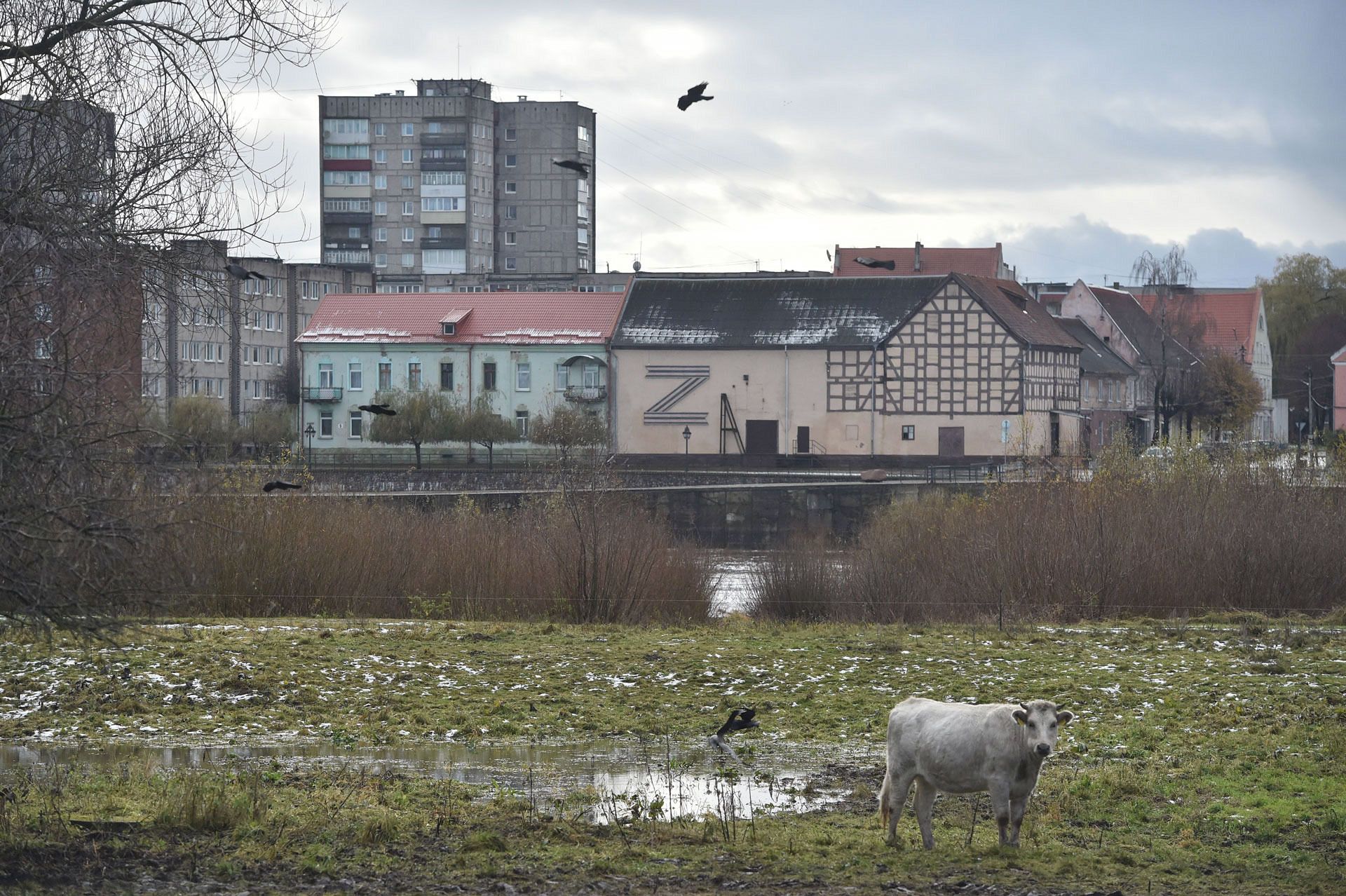
The smallest town in Lithuania, Panemune, is located in the west of the country. Across the river, the Russian town of Sovetsk is visible, where for several years a huge letter Z — the official symbol of Russia’s invasion of Ukraine — has been displayed on the facade of one of the buildings. The two towns are connected by a pedestrian bridge — one of the few functioning crossings between Russia and the EU. Every day, the residents of Panemune look at that letter and the opposite shore.
Photo: Anna Gavrilova
“Quiet life — but isn’t it before something?”
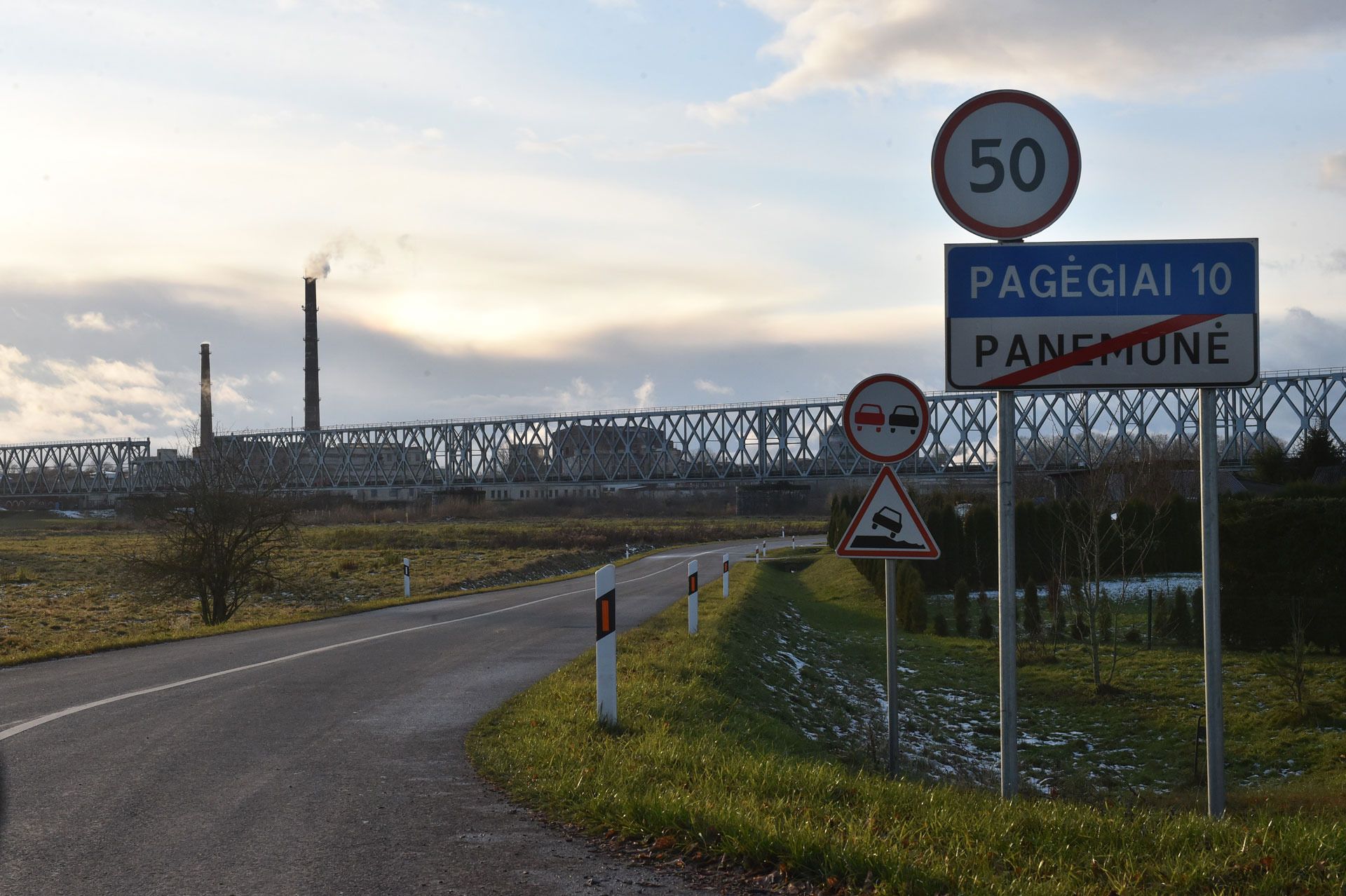
On the approach to Panemune at the end of November, snow already lies in places. Along the fields by the road, strong wind spins the blades of wind turbines. In the town itself, on a weekday, it is almost deserted. The streets are lined with one- and two-story houses, neat cottages. They look well-kept and sturdy, with some cars parked nearby. The parking lot near the center is also full.
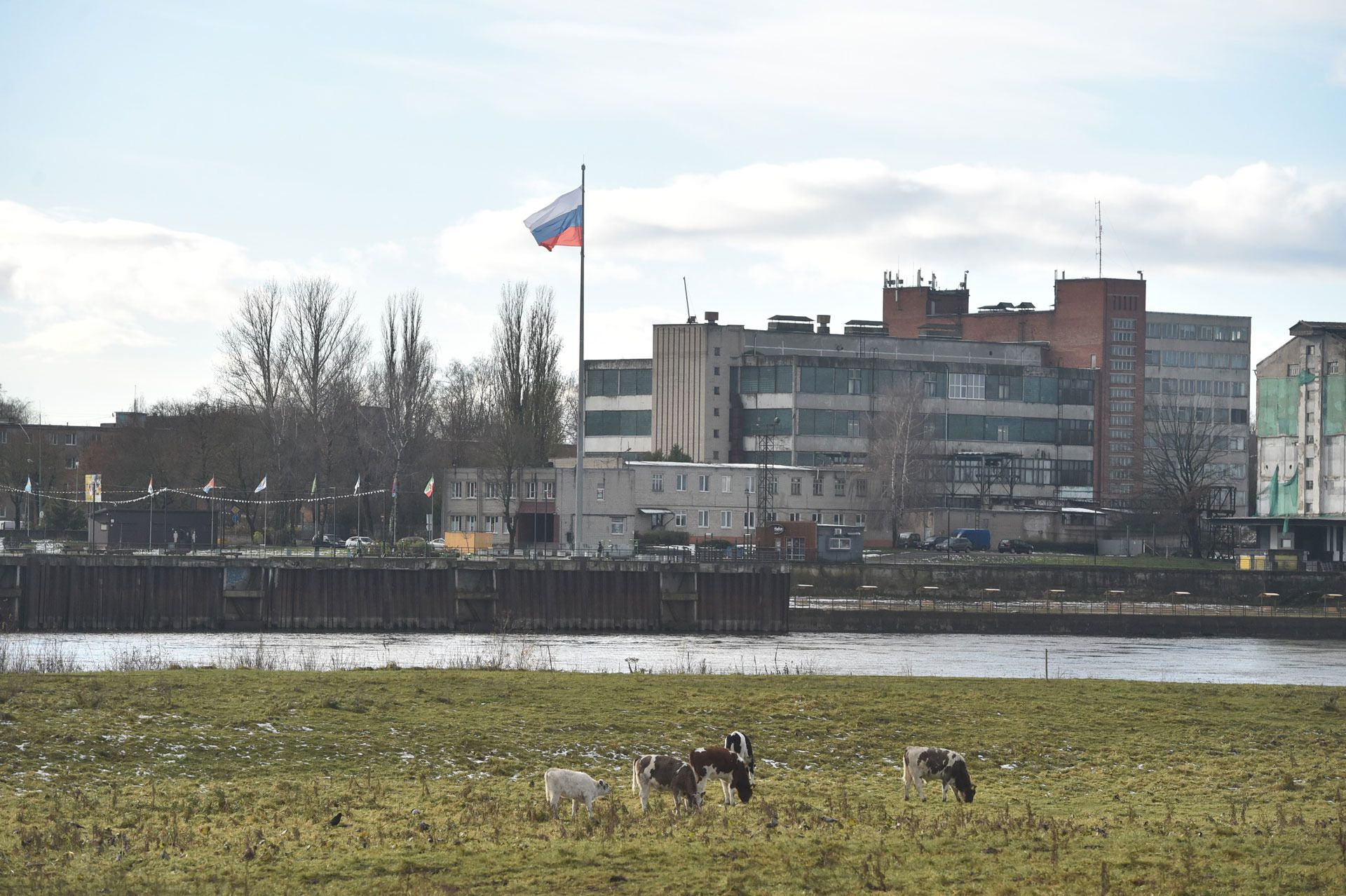
Above the Neman River on the Lithuanian side, the flags of Lithuania and Ukraine flutter from a tower. On the other side, attention is drawn by the Russian flag and a large letter Z on the wall of one of the houses — a symbol of Russian military aggression. It appeared opposite Panemune in autumn 2022.
“No, that letter doesn’t irritate me. I’m indifferent to it,” says a gray-haired man who went out for a walk by the Neman.
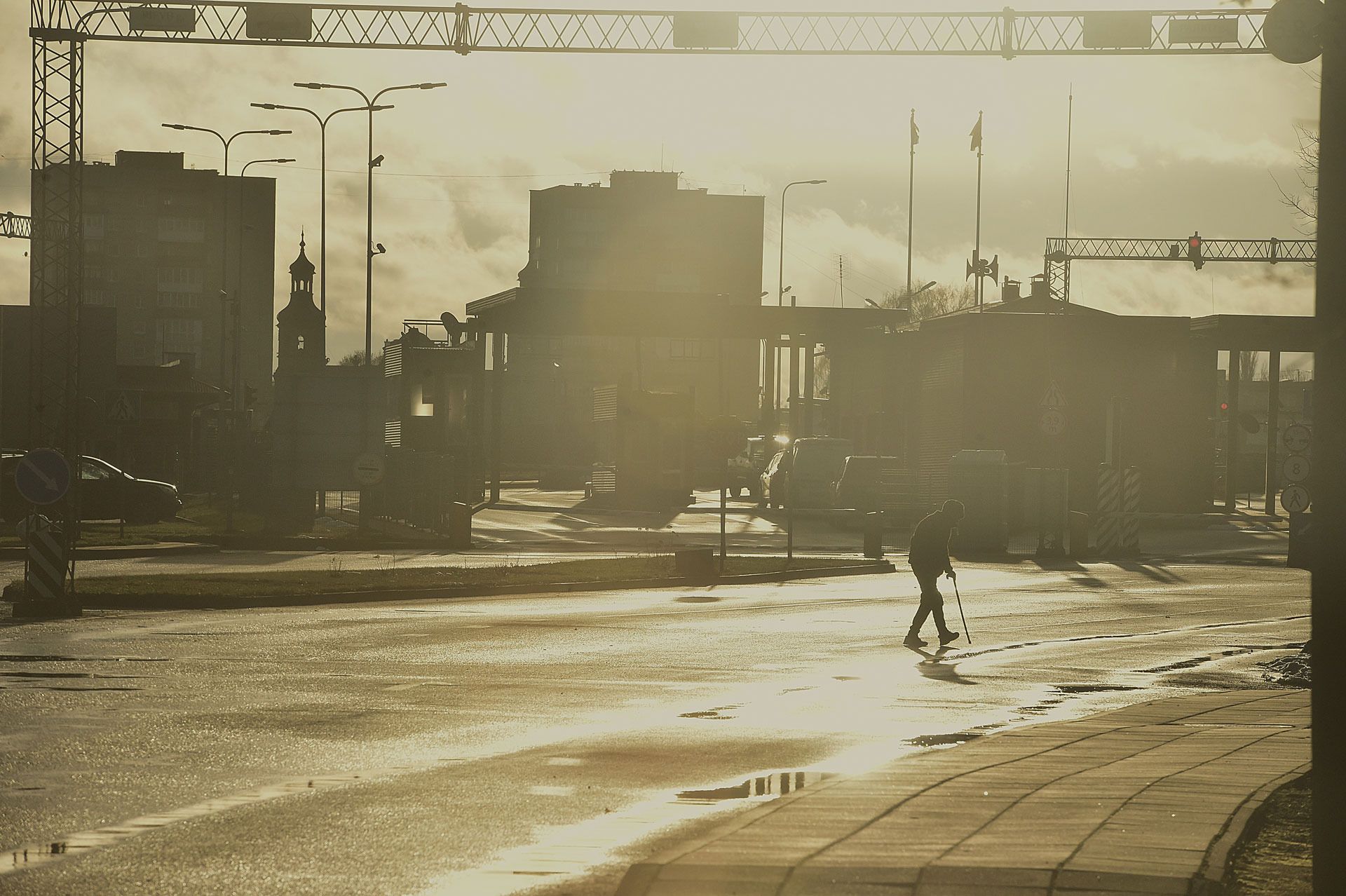
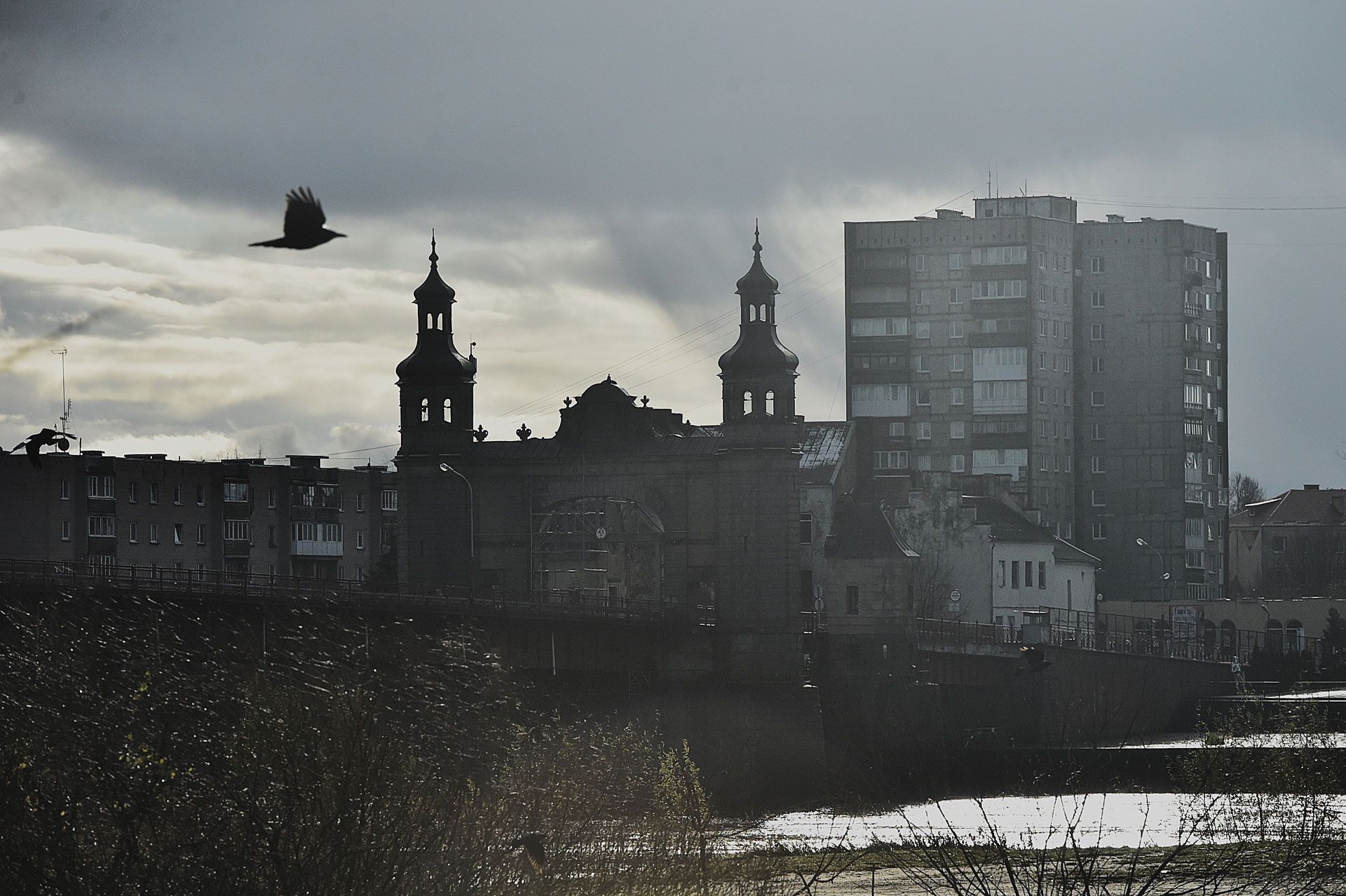
Panemune is the smallest town in Lithuania. Only a couple hundred people live there, mostly pensioners. The town’s name translates from Lithuanian as “along the Neman” or “by the Neman.” On the opposite side lies Russian territory, the town of Sovetsk in the Kaliningrad region, formerly Tilsit. Panemune used to be its right-bank part. The two towns and two countries are connected by the Queen Louise Bridge. There are no cars on the bridge. For more than three years it has been open only to pedestrians.
“We live quietly, peacefully, but life used to be more lively, people traveled back and forth,” the gray-haired man tells about life in Panemune. “But quietness — it’s always before something. I’m experienced, I feel: something will happen. War is a matter of time.”
The Lithuanian believes the threat of a Russian attack is real. In his opinion, Lithuania “has too few forces, and NATO and Europe have not been able to protect Ukraine.” The man thinks that in case of Russian aggression, Lithuania can probably expect “about the same kind of support.”
However, he believes that if an invasion happens, it won’t start right now. “I think Moscow will try to attack us in three to five years,” he says. “But the world is changing fast. They are already fighting with drones; at the beginning of the war, there were none. Later, maybe robots will fight instead of people. And we will just watch all this. And hide.”
Historically, Panemune and today’s Sovetsk were parts of one border region between Lithuania and East Prussia. Sovetsk is an old German town founded in the 14th century. In the early 19th century, Tilsit entered history due to a peace treaty signed there between Alexander I and Napoleon. After World War II, the town remained with the USSR and received a new name. The German population was deported, and new residents from different Soviet regions settled the town.
The territorial affiliation of Panemune also changed. East Prussia, the Memel region under the League of Nations, became part of Lithuania in 1923. From 1939 to 1945, this territory was occupied by Germany; after the war, it was the Lithuanian SSR, and since 1991 — independent Lithuania. After Lithuania joined the European Union and the Schengen area, Panemune became one of the external crossings between the EU and Russia. But after Russia’s attack on Ukraine, everything changed.
Today Panemune is one of two functioning crossings between Lithuania and Russia. Kybartai is the main Lithuanian checkpoint for cars and trains heading to the Kaliningrad region. In Panemune, there is only a pedestrian crossing via the Queen Louise Bridge. It operates but sometimes closes for technical breaks, as happened in September.
This entire region, including the Suwałki corridor, is considered one of NATO’s most vulnerable points against threats from Moscow. Behind the outward calm of tiny Panemune lies the tension of its residents. They say they feel threatened by Russia.
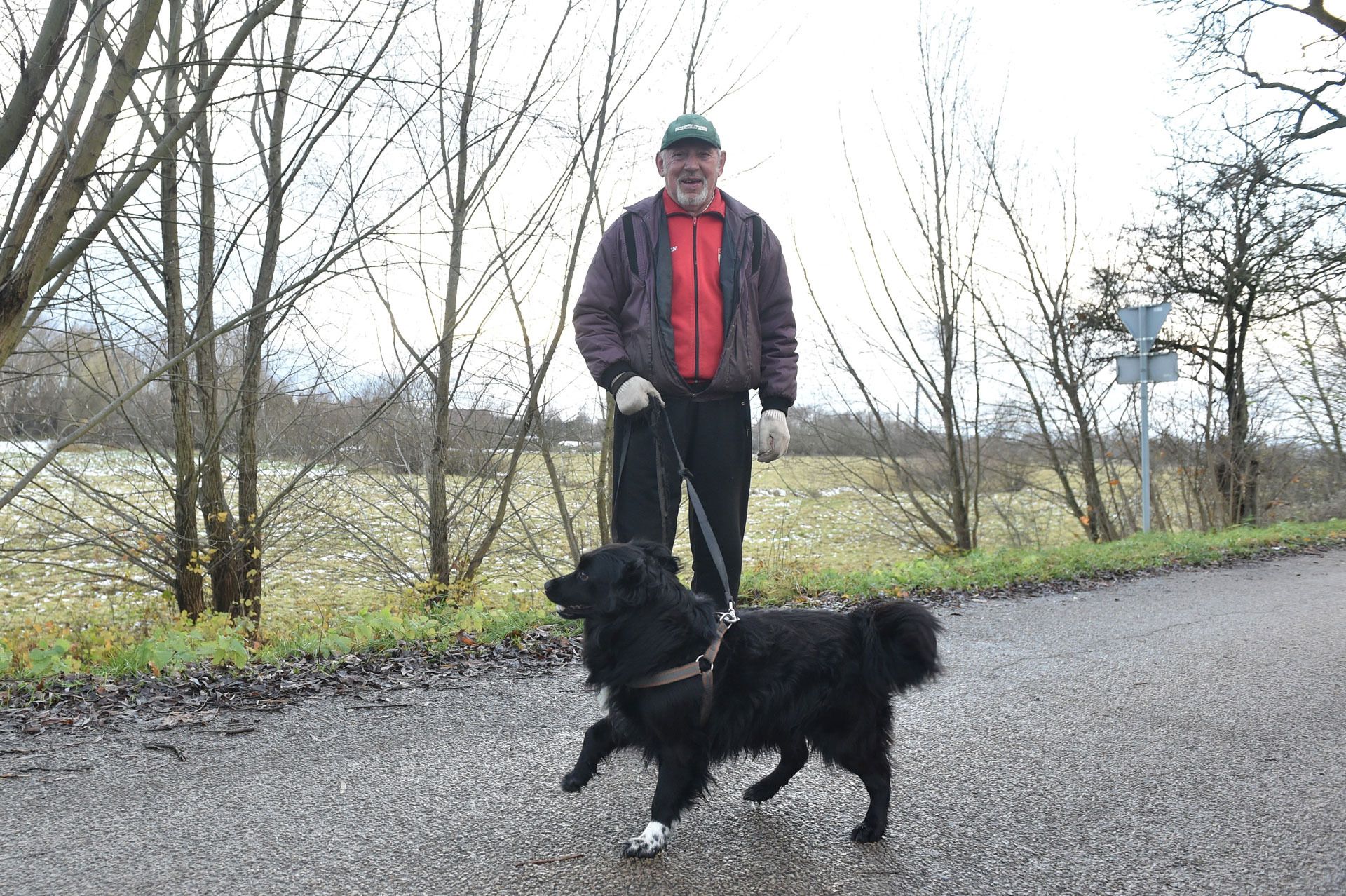
The man by the Neman River is not the only Panemune resident convinced that a Russian attack on Lithuania is real. His fellow countryman, a pensioner named Alik, who was out walking his dog, shares the same view. He predicts a shorter timeline for an attack: “I think the war will start in two or three years.”
Alik has lived in Panemune since 2012; his parents lived here too. He went to school in neighboring Pagėgiai, then moved to Tauragė, worked at a trading company. Now retired, he returned to his hometown. He says he is not afraid to live near the Russian border “while it’s quiet here.” “But who knows what Putin has in mind? It’s unclear what he’s thinking,” he sighs. Still, the man believes that in case of aggression, “NATO will protect Lithuania.”
“Living next to Russia as before is impossible now”
There are almost no jobs in Panemune; the local economy does not include large enterprises, so many commute to work in nearby Pagėgiai or Tauragė. A man about fifty years old returned home from a shift in Tauragė. Lighting a cigarette by his house, he says the residents of Panemune “have nothing to fear.” “If Putin attacks, he’ll strike Vilnius — that’s where the bases are, that’s the point. What would he do here?” he jokes. But after a couple of seconds, he irritably adds: “But what’s the use of whether I’m afraid or not? If an assault force lands here, they’ll kill everyone. No one will have time to react.”
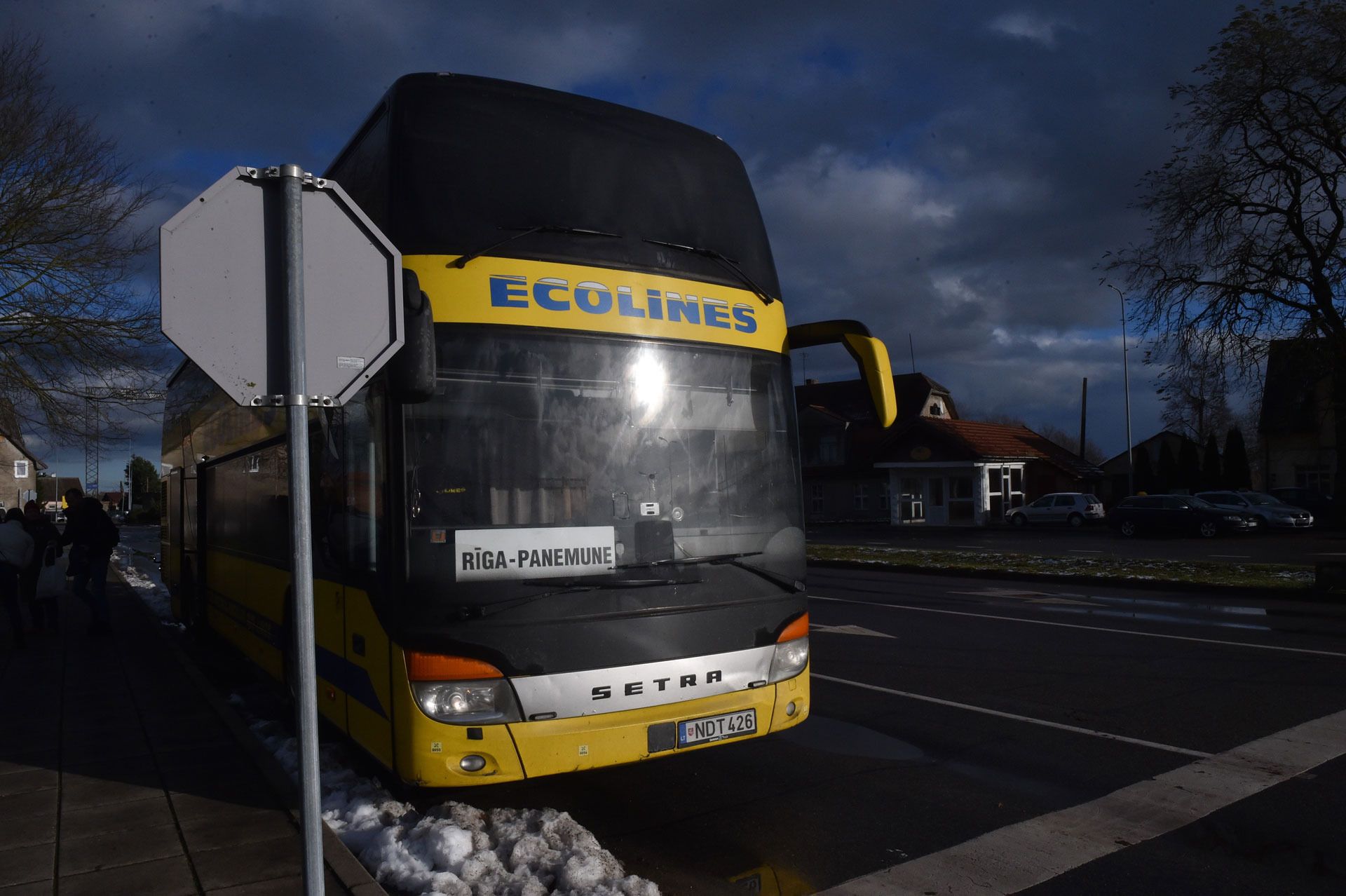
Dusk is falling when a bus from Riga to Panemune stops near the Queen Louise Bridge. Several passengers with bags get off and head to the border checkpoint on the bridge. Crossing it takes only a few minutes; there is no queue at the checkpoint.
“The Riga route runs three times a week; people use it to travel to Russia and back,” says the bus driver. “Usually, I pick up about 20 people per trip; in summer, it’s more. But before the war, the bus was always full.” According to the driver, most passengers traveling to Russia on his bus are Latvian citizens — those who have relatives in Russia or dual citizenship. Citizens of other countries also travel this way.
Taxi drivers are on duty by the bridge. Nearby is a café where border guards and travelers stop to warm up and eat. The waitress — a young woman who, unlike other “Most” interviewees, speaks little Russian but does speak English — says many in Panemune truly fear a Russian attack — and she does too.
Some people warm up in their cars, waiting for friends and relatives crossing the border. Near one car stands Laura, a housewife from Riga, greeting relatives from Russia. She says traveling to visit each other is becoming increasingly difficult and inconvenient. Laura says that stopping movement across the Panemune-Sovetsk bridge negatively affects small businesses in Lithuania. She considers the restrictions strict and understands those who are unhappy with them. But she acknowledges the necessity of the restrictions: “Because living next to Russia as before is impossible now.” According to Laura, many in Riga fear a possible war with Russia, and her family is also anxious. “We have nowhere to go. And the news with these threats from Russia is getting scarier,” says the woman from Riga.
Laura recalls how Europe debated for a long time whether Putin would attack Ukraine: “Politicians said no, no, he wouldn’t. But then he just attacked.”
The woman from Riga believes it’s impossible to predict the Kremlin’s intentions: “God knows what’s on their mind. Whether they’ll cut off the Suwałki corridor or not — no one knows. God willing, NATO will protect us.”
Laura says her family has discussed what to do if Putin attacks the Baltics: “Well… we’ll defend our home, our apartment.”
Lithuanians say they see defenses strengthening: border fortifications, development of air defense, new arms contracts. They see the power Poland is building up. Some feel more secure, others more anxious. For some, the flight of NATO fighters is a sign of safety; for others, it’s a reminder that war is closer than it seems.
There are also those who come to Panemune on foot from Russia. One of them, a middle-aged man, introduced himself as “Yura, a miner from Orenburg.” He said this was his first time in eight years visiting relatives in Lithuania on vacation. According to him, he doesn’t feel much difference between Lithuania and Russia:
“What Europe? The same houses, the same people. Look for yourself.”
He said his journey was long — first by plane from Orenburg to Moscow, then by train to Chernyakhovsk in the Kaliningrad region. Then by bus to Sovetsk, and finally he crossed the bridge on foot into Panemune.
Yura says he entered Lithuania on a tourist visa, which was granted for only two weeks. “I don’t understand why it’s so short,” he says sincerely upset. He hasn’t read recent news and is not yet aware that in November the European Union canceled multiple-entry visas for Russians.
“When Russia attacked Ukraine, Lithuania realized we could be next”
The man who was looking at the letter Z in Sovetsk from Panemune says he hasn’t been to Russia for a long time and doesn’t cross the bridge there anymore. “Now only those with privileges go there,” he says. By “privileges,” he means family ties. “If my wife lived there, that would be different. But if not, why would you go there? They’ll ask. They’ll watch where you go, why, where you’ve been. Why do I need extra problems?”
Mantas, a teacher from Vilnius, also views Baltic countries’ relations with Russia pessimistically. He is trying to sell a vacant apartment in Panemune that he inherited. He doesn’t want to leave it because of the “dangerous” Russian neighbor. According to him, Lithuanians have been worried since February 2022. “When Russia attacked Ukraine, many in Lithuania became tense. They realized we could be next. That feeling has never really left us. We have experience — we remember how Russian tanks entered Lithuania.”
Mantas says that after 2022, some Lithuanians began buying property in Klaipėda — farther from the Russian and Belarusian borders. Some look toward Spain and Germany, and some have already moved there over the past four years.
The man recalls the 1990s — a feeling of freedom and at the same time the difficulties of transitioning to a market economy. “It was very hard, everything was being rebuilt, but we survived, stood on our feet, somehow found ourselves, and began to live more confidently.” In Mantas’s opinion, most Lithuanians are ready to defend the country if necessary. At home, he discusses this topic with his wife. “She is even more determined than I am. She says: we are patriots, and we must defend our home.”
Political scientist Vytis Jurkonis explains the anxious mood among residents of Lithuanian regions bordering Russia and Belarus. According to him, many Lithuanians really feel tension because of the proximity of war, but “compared to February 2022, there is less panic and more awareness now.” “People better understand what is real and what is not, where the extreme scenarios are, and what is impossible. This knowledge allows them to prepare,” he says. Jurkonis notes that “in Lithuania, more than in any other country in the region, people clearly understand who the aggressor is and who is defending themselves.” And this understanding, he says, allows not only “preparing for the worst-case scenario” but also “sending a very clear message: any attempt to play a ‘three-day’ scenario will come at a very high cost.”
If you enjoyed this article, consider making a donation — one-time or, even better, monthly. Your support helps us motivate our authors and become better with every article.
Our organization is recognized by the Internal Revenue Service (IRS) as a 501(c)(3) tax-exempt, charitable organization, which means that all contributions made to us are tax-deductible to the fullest extent permitted by U.S. law. Individuals may generally deduct charitable contributions of up to 60% of their Adjusted Gross Income (AGI) for cash donations made to qualifying 501(c)(3) organizations. For donations of appreciated assets (such as stocks or other long-term capital assets), the deduction is typically limited to 30% of AGI, based on the fair market value of the asset. C-corporations may deduct charitable contributions of up to 10% of their taxable income for donations made to eligible charitable organizations.
By submitting a donation, you confirm that you have read and accept the following documents: Privacy Policy and User Agreement, and also give consent to the processing of your personal data.
If you would like to unsubscribe from a monthly donation, please email us at: [email protected]