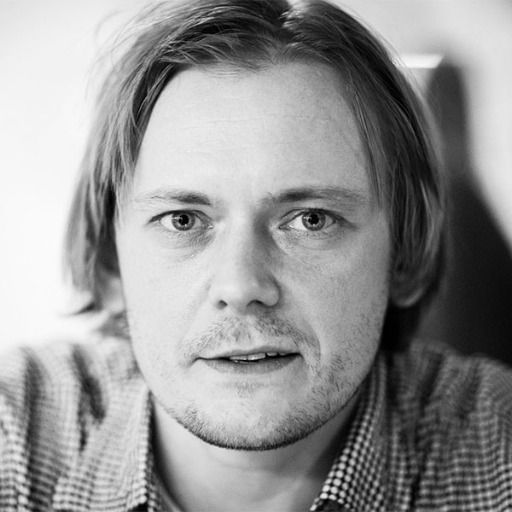
Boris Akunin has been sentenced in absentia in Russia to 14 years, Dmitry Bykov declared wanted: two of the most important Russian writers have been subjected to exemplary criminal repressions. This is a milestone and another signal, as they say, for the entire intelligentsia. Although what signals are there, everything is already clear. Rather, this is a milestone for the repressive apparatus itself, which is worth noting.
At the turn of the 1960s and 1970s,a significant shiftoccurred in Soviet mass culture. This was tantamountto the consolidationof a new ideological norm. One after another, films appeared on screens(The Adjutant of His Excellency, White Sun of the Desert, The Elusive Avengers), which not only glorified the Reds, but also complicated the images of their opponents, the Whites. “Shoulder straps,”the white officers on screen, were now, as Leonid Parfyonov put it,not weeds torn out by the roots, but lost ears of the Russian field. At that time, it became possible for the first time to say the word Russia without the prefix “Soviet,”Parfyonov notes in his “Namely.”
In these heroic-revolutionary films,the words “intellectual, intelligentsia”are repeated with remarkable frequency. The hero-intellectuals in them must resolve an internal conflict due to their complex relationship with Soviet power. In revolutionary sagas, which are hard to suspect of subversion, this plot becomes the norm:an officer or employee from the “former”, an intellectual who does not fully understand Soviet power but still serves it faithfully. In the TV film “Born by the Revolution” (1974) and the touching “Guarneri Quartet” (1978), the musicians' intellectuality atones for their ideological backwardness.
By the early 1980s,mass culture gave voice even to open enemies of Soviet power. For example, in the TV film “December 20” (1982), dedicated to the creation of the Cheka, the Socialist Revolutionary Savinkov tells General Kornilov: “You need intellectuals who have not joined the Bolsheviks. You need minds that would give the Russian people a white idea instead of the red one.” The question of the “place of the intellectual in the combat ranks”is even present in the famous “Seventeen Moments,” where two classic intellectuals are represented, formally German but in fact quite recognizable as “ours”: Pastor Schlag and Professor Pleischner.
Many of these works were created at the initiative of the KGB(recall at least “TASS is authorized to declare,” 1984).Why, where did the plot “security services and intelligentsia” suddenly arise, which repeats in Soviet culture of the 1970s and 80s with almost Freudian obsessiveness?
Obviously, at that time,the Politburo and the security apparatus were increasingly concerned with the question “what to do with the intelligentsia?”Note: not with dissidents, who were few, but with the intelligentsia as a whole.The authorities felt that they had grown on their own head a “million-legged squad,” according to Mayakovsky, which was rapidly turning into “socially alien.”This became clear already after the invasion of Czechoslovakia in 1968.
The intelligentsia no longer believed in Soviet power, but it could not be mass sent to the Gulag or executed.And this became a problem.At that time, it was customary to “work” with the intelligentsia,that is, to try to somehow convince it, pull it to their side, or at least neutralize it.This is where the “intellectual line” in Soviet Chekist cinema comes from.
Putin, who began his career in the KGB in 1975,could see that cinema and other forms of agitation “did not work,” and the state security was essentially powerless in the fight not only against dissenters but also simply thinking people.However, by the beginning of his rule in the 2000s, the problem with the intelligentsia seemed to have been brilliantly solved by changes in economic relations.The intelligentsia, greatly battered by changes, could now be bought — and not too expensively, for pennies.
For these needs, the old cumbersome cultural infrastructure was revived — libraries, museums, and theaters; the cinema sphere, the most mass of the arts, was placed under full state supervision.Private money in culture was somewhat more complicated.By 2011-12 and later, after 2014, the Kremlin became convinced that part of the cultural elite was able to earn money independently.Additionally, and most unpleasantly, they again developed some principles, ideals, and values that, frighteningly, were more important than money.
But essentially, this percentage of free thought was comparatively small, even negligible.And with individual “principled” figures, it was still possible to “work”: blackmail, limit earnings, slightly intimidate, and so on.
All this “work with the intelligentsia” dragged on weakly until February 2022, when a fundamental decision was made that canceled all the experience of the last approximately 60 years.After that, working with dissenters was no longer necessary; it became a waste of effort and time.They must be expelled, imprisoned, or at least sentenced in absentia — so they definitely cannot return.
In a remarkable work of the new era — the series “Committee” (which is practically about Putin’s youth, one of the actors even physically resembles him)the Chekist hero “works” with such an intellectual — a writer-dissident.At first, the Chekist tries to convince him, but then realizes it is useless: “People like him cannot be fixed anymore.”
This is an important signal of the new era: unlike late Soviet times, the current authorities no longer try to re-agitate or lure the intellectual to their side.In their view, the intellectual is an ideological enemy, unequivocally.Mass cinema under Putin has been saying this essentially for the last 20-25 years.
If in the 20th century it was customary to “fight for minds,” now in China, Iran, and Russia, “wrong thinkers” are either locked up or expelled.Because regimes believe this social layer no longer represents any real power or danger.Soviet power, it is remembered, always tried to figure out what a particular artist “meant” in their works.Now no one needs that: the regime simply evaluates words and images by the number of years in prison.Everything has become much simpler for the authorities.
On the other hand, the new “lepers” have no illusions either, no gray area for compromises.Now they are forced to see the regime as a direct physical threat to themselves.With repressions like those against Akunin and Bykov, the regime is forming a new layer of antagonists, leaving them no choice, as in Putin’s favorite story about a cornered rat.
Perhaps this is the mistake of the new dictators.They underestimate their opponent.And in the new historical turn that will inevitably come, this underestimation could prove fatal.
“There is no intelligentsia left” — this thesis, with some self-deprecating bravado, is repeated today both by the Chekists and by the intelligentsia themselves.But being an intellectual is not a label attached to social or property status, it does not depend on origin or nationality; it is primarily a human ethic based on universal humanistic principles, not on advantage.
In the revolutionary sagas of the 1970s, this idea, strange as it may seem, was quite clearly traced.Resisting evil with words or at least not cooperating with evil is one of the options for intellectual behavior today.The authorities still take words seriously and equate them with a crime.That means they still fear them, no matter how much they try to convince otherwise.
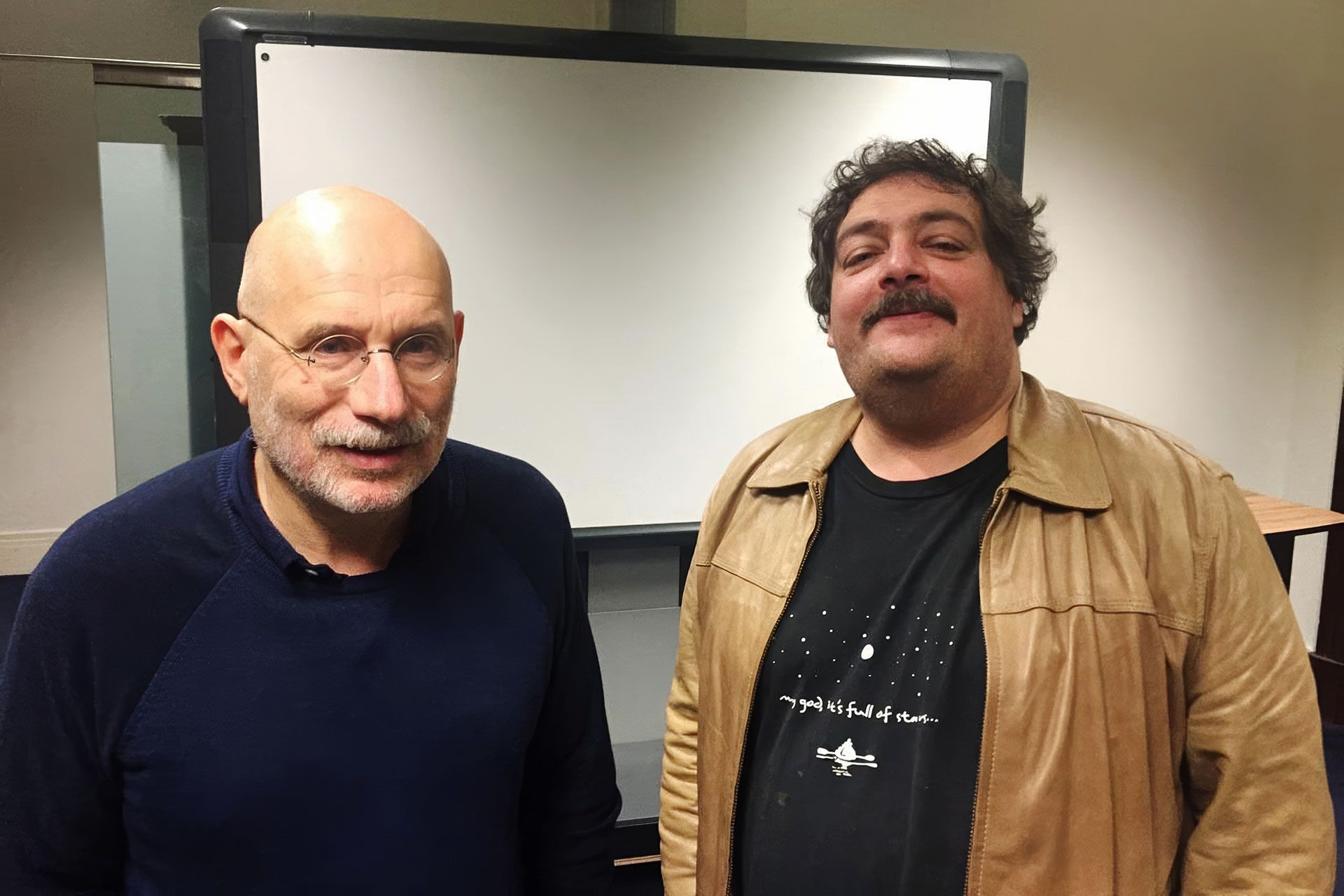
In the main photo — Grigory Chkhartishvili (Boris Akunin) and Dmitry Bykov. Source: Dmitry Bykov’s Facebook
If you enjoyed this article, consider making a donation — one-time or, even better, monthly. Your support helps us motivate our authors and become better with every article.
Our organization is recognized by the Internal Revenue Service (IRS) as a 501(c)(3) tax-exempt, charitable organization, which means that all contributions made to us are tax-deductible to the fullest extent permitted by U.S. law. Individuals may generally deduct charitable contributions of up to 60% of their Adjusted Gross Income (AGI) for cash donations made to qualifying 501(c)(3) organizations. For donations of appreciated assets (such as stocks or other long-term capital assets), the deduction is typically limited to 30% of AGI, based on the fair market value of the asset. C-corporations may deduct charitable contributions of up to 10% of their taxable income for donations made to eligible charitable organizations.
By submitting a donation, you confirm that you have read and accept the following documents: Privacy Policy and User Agreement, and also give consent to the processing of your personal data.
If you would like to unsubscribe from a monthly donation, please email us at: [email protected]