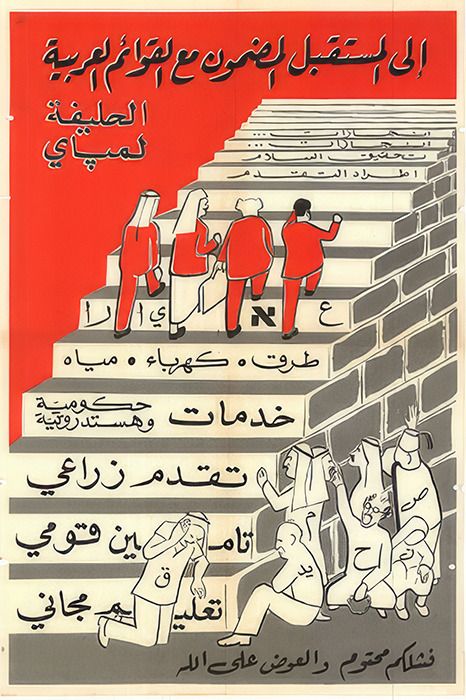
It cannot be said that before World War II, Palestinian Arabs unequivocally supported the expulsion of Jews back to Europe. Thousands of Muslims worked successfully at Jewish enterprises, rented land from Jews, traded with them, or simply coexisted peacefully with people of different faiths. The conditional point of no return can be marked as the summer of 1937.
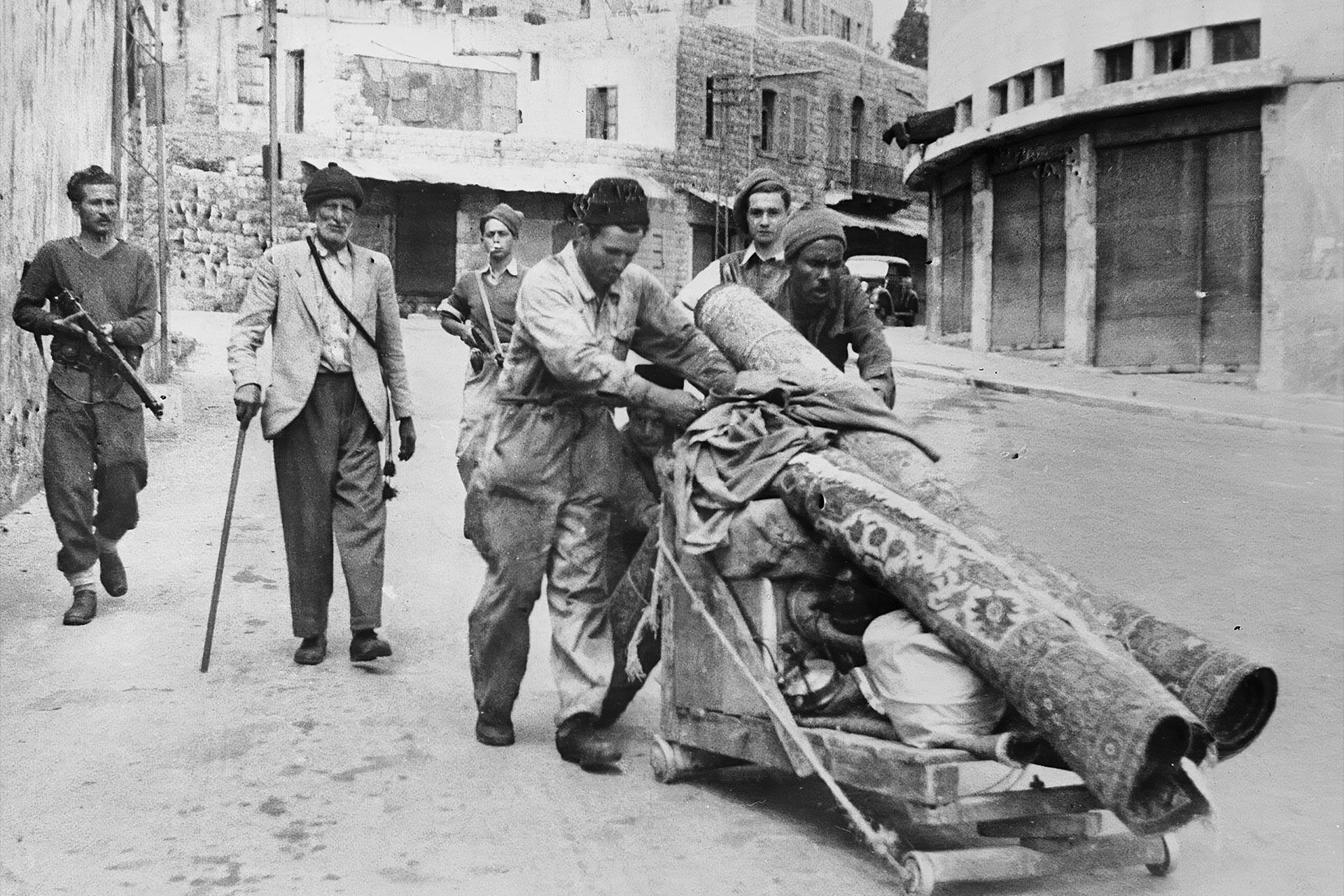
Jewish militias escorting Arabs fleeing with their belongings. Haifa, late April 1948. Photo: Wikipedia / hbvl.be
The war in Gaza, now in its second year, has triggered a massive rise in anti-Israel sentiments worldwide. Few now recall that the IDF operation in the ill-fated sector was a response to the horrific terror attack on October 7, 2023. But any fake news against Israel instantly spreads around the globe, and anyone even remotely connected to the Jewish state risks facing severe cancellation in the West.
A telling example is the scandal surrounding the Munich Philharmonic Orchestra. A few days ago, the ensemble was banned from participating in a music festival in Ghent, Belgium. The organizers explained their decision by the appointment of Israeli Lahav Shani as the new conductor of the German orchestra. He had not even taken office yet but was already known for repeated calls for peace in Gaza. However, the Belgian side stated that it was impossible to clearly understand Shani’s attitude “towards the genocidal regime in Tel Aviv”, and therefore his future colleagues in Ghent would not be welcomed.
Against this informational backdrop, old grievances against Israel are gaining new life. In the mass media, it is becoming increasingly popular to claim that the root cause of all troubles in the Middle East is not the decision by Benjamin Netanyahu’s government to launch Operation “Iron Swords” in autumn 2023, nor the imperfections of the Oslo Accords of the 1990s, nor even the occupation of Gaza and the West Bank after the Six-Day War of 1967. It is asserted that the root of the problem lies in the existence of Israel as an allegedly colonial state, created in the mid-20th century at the expense of the Nakba (“Catastrophe”) of the indigenous inhabitants of Palestinian lands.
This term refers to the expulsion of over 700,000 Palestinians from their homes, accompanied by mass killings, rapes, and looting. Let us try to understand whether Jewish formations during the 1947-1949 conflict systematically committed war crimes, what motives guided the two warring camps, what exactly prompted the exodus of Palestinian Arabs, and why the Jews also had their own “Nakba” 75 years ago, which everyone has since forgotten.
A Grim Morning in the Village
Early in the morning on April 9, 1948, the Arab village of Deir Yassin, five kilometers west of Jerusalem, was awakened by a loudspeaker. An unpleasant voice—in Arabic, of course—through crackling and noise called on the residents to surrender and leave their homes. Enemies had come to the villagers: fighters from the Jewish militias “Irgun” and “LEHI,” who believed that the village was secretly aiding Arab armed groups.
The outsiders probably expected a dramatic entrance into Deir Yassin, but their show of force went poorly. The driver of the old armored vehicle with the loudspeaker lost control and ended up in a ditch at the village entrance. As eyewitnesses later recalled, the “LEHI” militiamen couldn’t free the vehicle. For the following hours, the loudspeaker threatened the villagers with all sorts of punishments straight from the depths of hell. Under other circumstances, this might have seemed comical, but at the very same time, blood was already flowing through the narrow streets and mud-brick houses of the village.
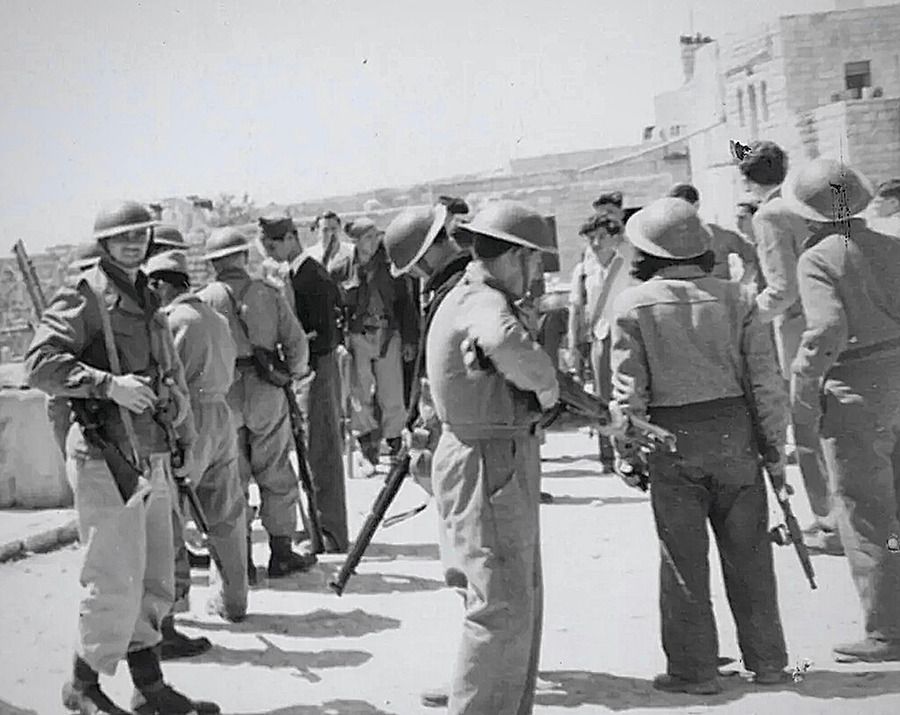
Fighters of “Irgun” and “LEHI” in captured Deir Yassin, April 1948. Photo: Wikipedia / Haaretz
Deir Yassin’s self-defense quickly assessed the situation. Snipers took positions on the roof of the local mufti’s (village head’s) house and mowed down the disorganized ranks of “Irgun” and “LEHI.” The attackers, having also lost their own commander to friendly fire, barely managed to occupy a few houses on the village outskirts. After breaking down doors, they forced captured locals to carry wounded away from the battlefield under fire. It seemed the attack had failed and the Jews had no choice but to retreat.
However, around 10 a.m., fighters from “Haganah”, the basic Jewish military organization of the time and the prototype of the future IDF, arrived to support “Irgun” and “LEHI.” The reinforcements had mortars, and a few strikes were enough to suppress the sniper positions. Triumphant Jews stormed Deir Yassin and began a brutal cleansing. Descriptions of the events in the village differ in details but agree on the essence: the victors celebrated their hard-earned triumph with a horrific massacre. Estimates vary, but between 107 and 140 Arabs died, mostly young men and adults capable of bearing arms.
The attackers mercilessly killed everyone they could find, except for a few women and children who were sent to Jerusalem by truck. The people of “Irgun” and “LEHI” did not plan this operation in advance, but after encountering fierce resistance and suffering losses, they descended into mass hysteria
- Michael Bar-Zohar, Israeli historian
The tragedy of Deir Yassin coincided with a turning point in the First Arab-Israeli War. The Jews achieved several successes and shifted from passive defense to their own offensives. Their panicked opponent needed a vivid propaganda image to inspire Arabs to resist. By spring 1948, news of “just” cleansing another village barely shocked anyone in Palestine. Therefore, local Arab authorities supplemented reports of the April 9 massacre with necessary details. Allegedly, the Zionists slaughtered not only men but also women, accompanied by mass rapes of girls, young women, and pregnant women.
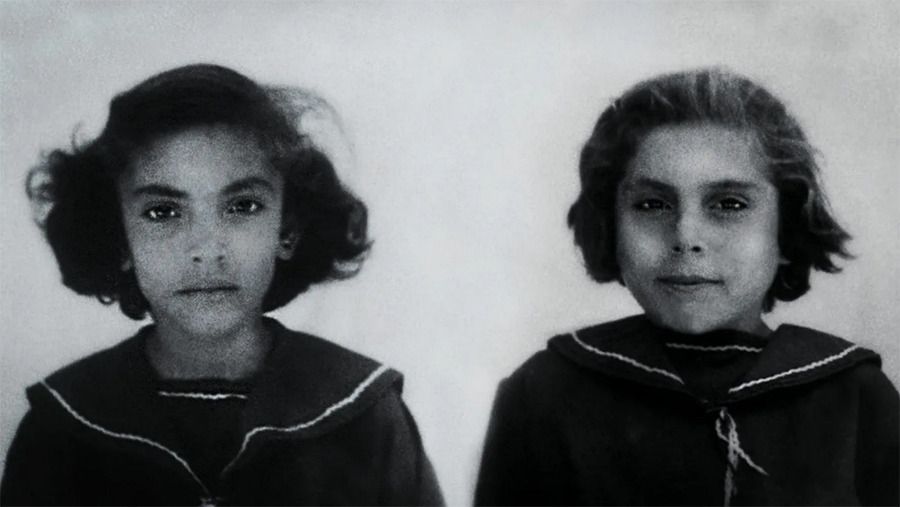
Arab sisters from Deir Yassin, presumably orphaned after the April 9 massacre. Photo: Wikipedia / IDF archive
However, the effect of this campaign was the opposite. Many Palestinian Arabs were less inflamed with a desire for revenge than decided to leave their homes facing the threat of relentless Jewish avengers; moreover, the content of radio news broadcasts greatly amplified the word-of-mouth panic. Mass panic became one of the factors that caused the Nakba, but Jewish militias provided more than enough real reasons for it.
Strangers in Their Ancestral Homeland
The brutality of “Irgun” and “LEHI” in Deir Yassin cannot be explained solely by a thirst for revenge for fallen comrades. By 1948, the former British Mandate Palestine was already tangled in a complex web of mutual misunderstandings, fears, and longstanding grievances. Let us try to unravel them.
As is known, in the late 19th century, Zionism arose among Jewish communities in various European countries. In the 2020s, this word is often perceived almost as a slur, but in the 1890s it had no negative connotation. Budapest journalist Theodor Herzl and his followers called on their people to end disunity and create a secular nation-state from scratch. It is important to emphasize: Herzl’s supporters initially saw historic Palestine (then part of the Ottoman Empire) merely as one of the possible places to begin their cherished experiment.
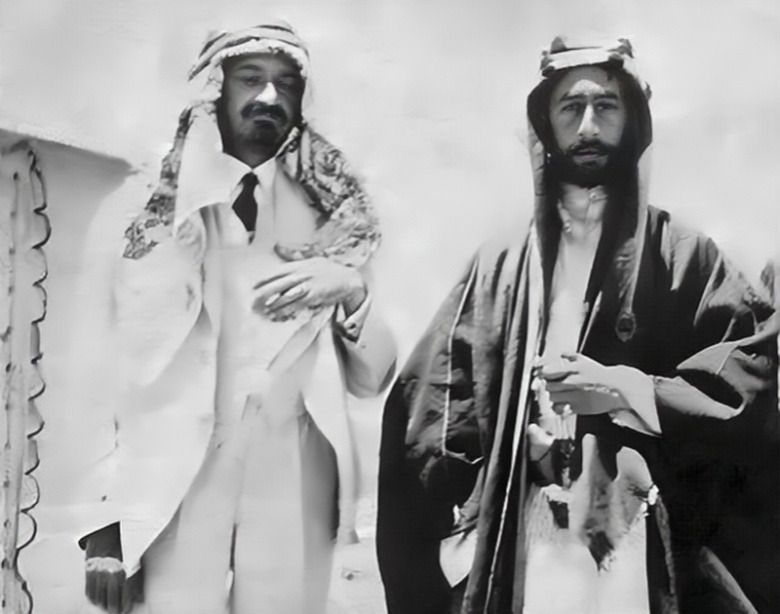
Zionist leader Chaim Weizmann (left) with future Iraqi King Faisal I, one of the few Arab leaders who supported Jewish presence in Palestine, 1918. Photo: Wikipedia
The first Zionists proposed other options alongside the Promised Land—even as far as Uganda in Africa and Patagonia in South America. In Palestine, the early Zionists were disturbed by many circumstances, including the predominantly Arabic-speaking and Muslim-faith indigenous population. Although still quite small (around 300,000 people in the 1880s) and lacking a common civic identity (ancestors of modern Palestinians lived in separate clans—hamulas). Even Herzl’s closest associates doubted whether settlers could coexist with culturally alien new neighbors.
Yes, ultimately the Zionists chose the Palestinian option. But in the early 20th century, movement leaders emphasized: we do not wish harm to the local Arabs, do not want to subjugate them, impose anything on them, or, especially, expel them from their native lands.
We do not uproot and do not want to uproot Arabs from this land. We want to show them the way to a better life. And we will continue to do so until they understand that we share a common interest in the revival of the Middle East and that this task can only be achieved on the basis of a strong Jewish Palestine
- Chaim Weizmann, leader of the Zionist movement after World War I, first president of Israel (1949-1952)
Weizmann’s and his supporters’ bright dreams could not withstand the clash with reality. Quantitative growth led to irreversible qualitative changes, and the kindest intentions of the settlers turned into fear, envy, and hatred among the long-time inhabitants of their ancient homeland.
From Settlers to Terrorists
In the early 20th century, waves of Zionist aliyah followed one after another. If in 1900 the Yishuv, the Jewish community in Palestine, numbered no more than 50,000 people (including a small number of indigenous Jews), by 1948 it had grown 13 times. The Jewish share of the region’s population rose from 8% to 32%. Energetic settlers bought land, established their settlements, drained swamps, cultivated new crops, and built enterprises. Jewish passionarity naturally disrupted the patriarchal lifestyle of the Arab population.
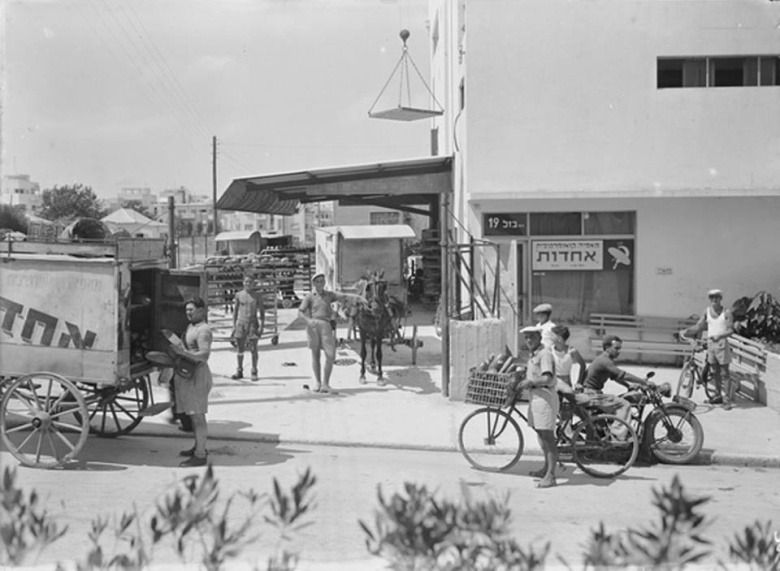
Basel Street in Tel Aviv, 1939. Photo: Wikipedia / Zoltan Kluger
Large landowners sold interesting plots to outsider settlers at exorbitant prices, and former tenants were driven off the land—of course, the unfortunate blamed not greedy fellow countrymen but foreign newcomers. Additionally, many Arabs saw the Jews arriving from Europe as collaborators with the new and not particularly welcome British administration (after World War I, Palestine came under temporary British administration by League of Nations mandate). In the 1920s and 1930s, radical Arabs staged a series of anti-British and simultaneously anti-Jewish uprisings, peaking in the 1936-1939 revolt.
Often, Arab rioters were incited by baseless rumors—for example, that Jews supposedly wanted to take the Temple Mount in Jerusalem from Muslims. After each such outbreak, the British administration tended to favor the Arabs, who were still the majority in the troubled region, and preferred not to antagonize them. Jews were consistently restricted in their rights—their immigration quotas were reduced, their land purchase areas limited, and their self-governance powers curtailed.
The Yishuv reacted predictably to these processes. Fewer and fewer people believed in the good will of the mandate authorities or in peaceful coexistence with Arabs. Zionist leaders like Weizmann or future long-serving Prime Minister David Ben-Gurion called for moderation and prudence, but not everyone listened. In the 1930s, Zionist revisionism under Ze’ev Jabotinsky gained popularity among Palestinian Jews. This politician called for dealing with both Arabs and the British from a position of strength: establishing a Jewish majority in the region, strengthening armed formations, and achieving their sovereign state.
Right-wing Zionist leader Menachem Begin before a formation of “Irgun” fighters. Photo: Wikipedia
In 1931, under Jabotinsky’s influence, the radical wing split from the original self-defense group “Haganah” (“Defense”), forming “Irgun” (also known as “Etzel” – “National Military Organization”). Its leadership allowed not only defense against Arabs but also reprisal and preemptive strikes. Yet even the militancy of “Irgun” was insufficient for some Zionists. In 1940, the most fanatical activists broke off and declared themselves “Fighters for the Freedom of Israel” (“LEHI”).
The true nature of the relations among these three organizations remains debated. They verbally competed, accused each other of renegacy, and sometimes even attacked one another. But many modern Israeli historians believe that the more respectable “Haganah” secretly cooperated with its “renegades” to keep them for dirty work—as happened in spring 1948 in Deir Yassin.
One Country for Two Peoples
It cannot be said that before World War II, Palestinian Arabs unequivocally supported expelling Jews back to Europe. Not all participated in the pogroms of the 1920s and 1930s or endorsed the harshly Judeophobic rhetoric of the Al-Husseini clan, which effectively usurped Arab self-government in the mandate territory. Thousands of Muslims worked successfully in Jewish enterprises, rented land from Jews, traded with them, or simply coexisted peacefully with people of different faiths.
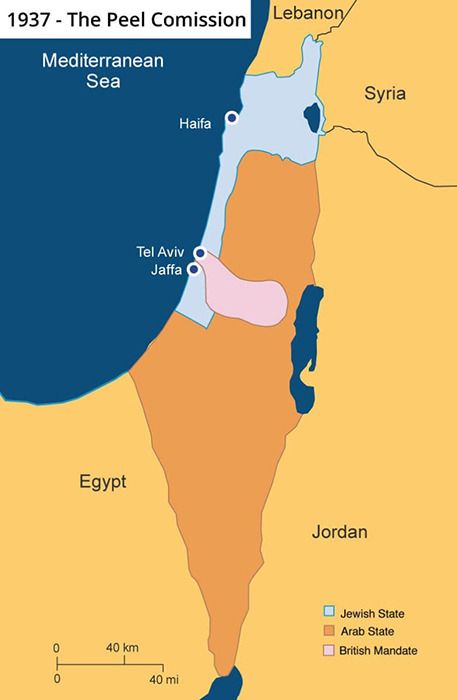
The conditional point of no return can be marked as the summer of 1937. Then British former Colonial Secretary William Peel first proposed dividing Palestine into Jewish and Arab-Muslim parts.
Peel’s plan envisaged leaving the northwest of the territory, where most Jewish settlements were then located, to the Yishuv. The remaining three-quarters of the land, mostly inhabited by Arabs, Peel proposed to transfer to the neighboring Emirate of Transjordan (the modern Hashemite Kingdom of Jordan)—another British mandate territory with a population culturally close to Palestinian Arabs.
Division of Palestine according to Peel’s plan: blue marks Jewish territory, orange — Arab. Pink highlights Jerusalem and Bethlehem, which were to be a special zone under international control due to their religious significance. Map: honestreporting.com
The idea of coming under Transjordanian rule did not frighten Palestinian Muslims. But they were angered that parts of the land they considered inherently Arab were to be given to Jews. This outrage was supported throughout the Middle East. Whitehall, where the ill-fated government of Neville Chamberlain then worked, bowed to the threat of a large Arab storm. In winter 1939, at a meeting in London’s St. James Palace, the British promised Arabs independence of a united Palestine within ten years. To placate Arabs even more, the British almost banned Palestinian Jews from buying land and cut aliyah quotas for their co-religionists to 75,000 over five years.
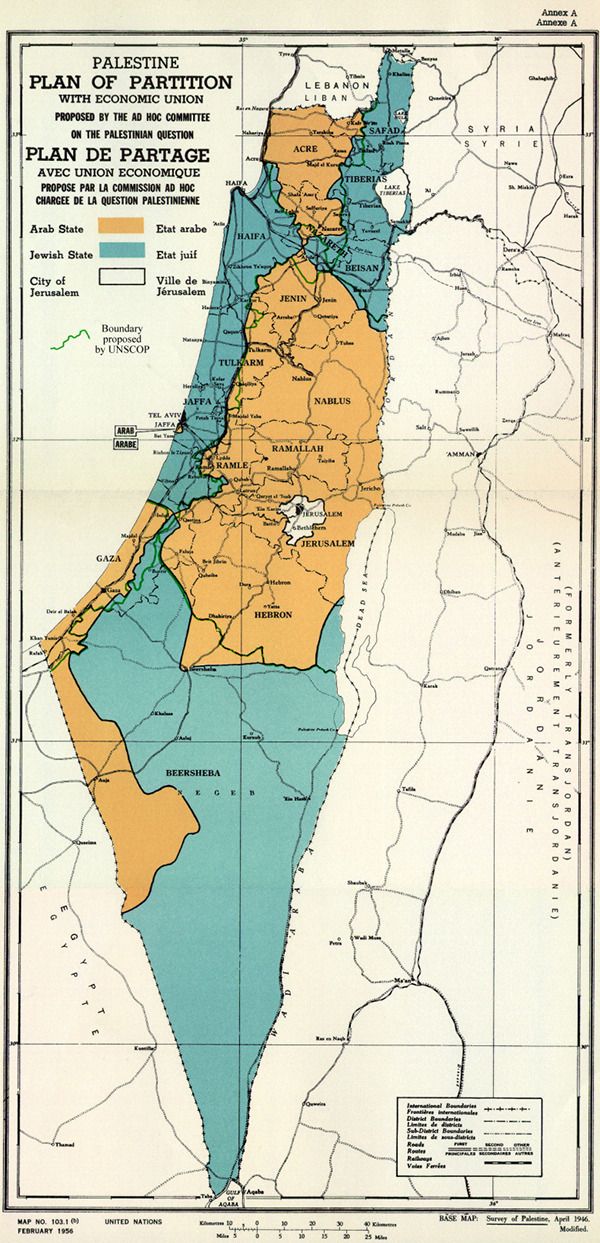
Muslims received the agreements reached at St. James with hope. But a few years later, the revealed truth about the Holocaust forced British elites to backtrack. Clement Attlee’s Labour government deemed continued presence in the troubled region unwise and announced the early termination of the mandate. Under pressure from the U.S., where the Jewish lobby had grown stronger, London handed the Palestinian question over to the newborn UN. On November 29, 1947, international diplomats approved the partition of the territory into two states for Jews and Arabs according to Resolution No. 181 (II) by 33 votes “for,” 13 “against,” and 10 abstentions.
UN plan for the partition of Palestine: as seen, both states were to consist of three mutually semi-isolated zones connected by narrow corridors. Map: Wikipedia
The UN plan was much more favorable to Jews than Peel’s project. The Yishuv was allotted 55% of the former mandate lands, where almost half the population was Muslim. But it is important to understand that what outraged Arabs at the time was not the drawing of boundaries but the very fact of their imposition. It appeared that Christians from America and Europe once again broke promises and reworked everything in favor of “their” Jews. And for what? To compensate for unknown to them concentration camps with gas chambers in distant foreign lands at the expense of Palestine’s inhabitants.
To place the main burden of this [Holocaust] on Arab Palestine is to most miserably shirk the duty that lies on the entire civilized world. Morally, it is equally outrageous. No moral code can justify the persecution of one people in an attempt to relieve another from persecution
- George Antonius, Lebanese diplomat
The UN decision of November 29, 1947, automatically meant the start of a war. A war both sides perceived as sacred: Palestinian Arabs believed they were reclaiming land taken by outsiders, while Jews considered they were defending their right to a state earned after monstrous suffering. And this war quickly took on a mutually merciless character.
“We Will Throw the Jews into the Sea”
Among pro-Palestinian authors, it is a common thesis that even before May 1948—that is, before the final British withdrawal, the official declaration of Israel, and the invasion by Arab armies—Zionists were actively carrying out the Nakba. It is claimed that in the first six months of the war they expelled from Palestine between 170,000 and 300,000 indigenous inhabitants.
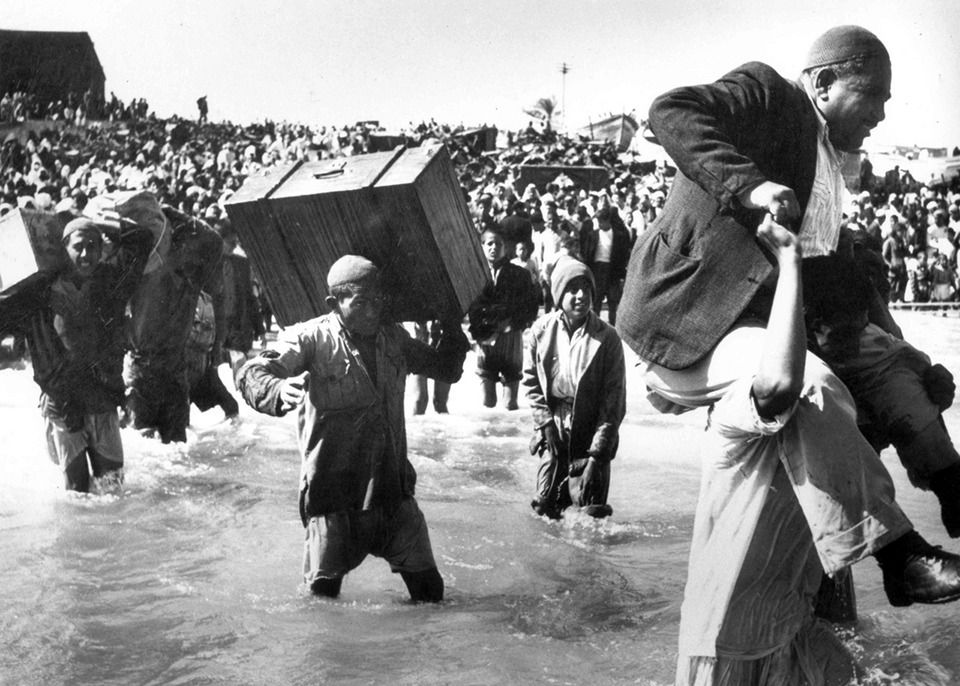
Muslim refugees rushing to a ship departing for one of the Arab countries. Photo: Wikipedia / Hrant Nakashian
This thesis greatly simplifies historical reality. Throughout the war, Palestinian Arabs left their homes for various reasons, not only due to Jewish malice. These can be grouped as follows:
Relatively voluntary departure of wealthy families: people unwilling to stay near combat zones and leaving at their own expense;
Humanitarian evacuation by various pro-Arab groups and remnants of British troops;
Flight influenced by real crimes of the “Haganah” and its allies or rumors thereof;
Direct deportations carried out by various Jewish militias.
Due to the extreme chaos reigning in the former mandate territory, it is impossible to determine exactly how many people fled under which circumstances. Conditionally, one can formulate this: in the first six months of the war, events mostly followed the first two scenarios, and only later did the third and fourth come into play.
At the same time, it is absolutely certain that in spring 1948 Zionists physically could not conduct aggressive actions. Due to the weakness of their armed forces and the scattered kibbutzim and moshavim across Palestine, they spent several months defending and trying to establish communication with surrounded enclaves. Only in exceptional cases did the “Haganah” and its radical partners carry out reprisal actions on an “eye for an eye” basis. For example, in December 1947, Jewish militias attacked the village of Al-Hisas near the Lebanese border. In retaliation for killings of unarmed Jews in the area, “Haganah” fighters killed a dozen randomly encountered Arabs.
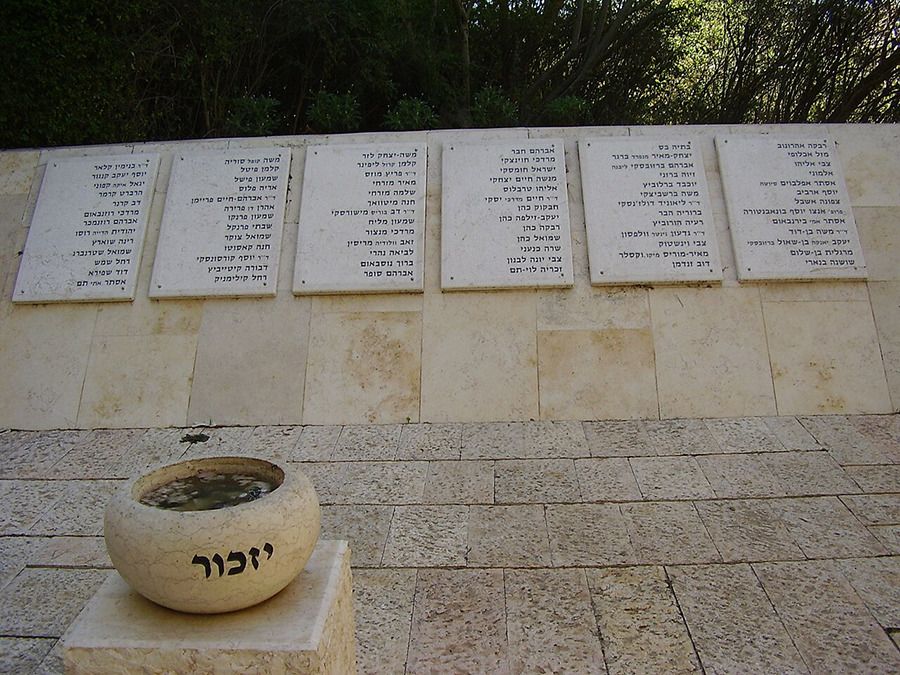
Memorial in Jerusalem in memory of 79 members of a medical convoy ambushed and burned alive by Arab militants on April 13, 1948. Photo: Wikipedia / Dr. Avishai Teicher
The Yishuv’s situation was aggravated by the fact that it faced not only Palestinian Arab units (“Army of the Holy War,” AHW). From the first days, the “Arab Liberation Army” (ALA) also fought—formations of volunteers and professional soldiers from Iraq, Syria, Egypt, Jordan, and other Middle Eastern countries (their governments feared entering the war under their own flags until the British withdrawal). The Arab world condemned the idea of “Zionist formation” even before the pivotal UN vote. Officials unequivocally promised that the Jews would pay dearly for attempting to build their state in the Middle East.
I hope the Jews will not force us to fight, otherwise it will be a war of extermination. A terrible massacre that history will remember as the Mongol conquests or the Crusades. We will throw the Jews into the sea
- Abdurrahman Azzam, Egyptian politician, Secretary-General of the Arab League, October 1947
There is no need to explain how such outbursts—just two and a half years after the fall of the Third Reich—were perceived in Jewish circles. People for whom Dachau, Auschwitz, and Buchenwald represented more than living history did not want to endure anything like that again.
Marathon of Cleansings
Jewish attitudes toward how best to resist Arabs were influenced by a series of tragic episodes early in the war. A telling example is the fate of the Lamed-Heh (Thirty-Five) unit destroyed in January 1948.
That winter, as mentioned, Zionists tried to unblock their besieged enclaves. On January 16, a unit of 35 “Haganah” volunteers under the young officer Dani Mass was sent to rescue another such “island”—the Gush Etzion settlement bloc south of Jerusalem. Outsiders were immediately spotted by Arab women from a neighboring village, who informed their men. Arab militias surrounded Mass’s men and forced them into an unequal fight. All 35 fighters died in one day, and Gush Etzion remained under siege. Four months later, the enemy captured these settlements and killed all their inhabitants.
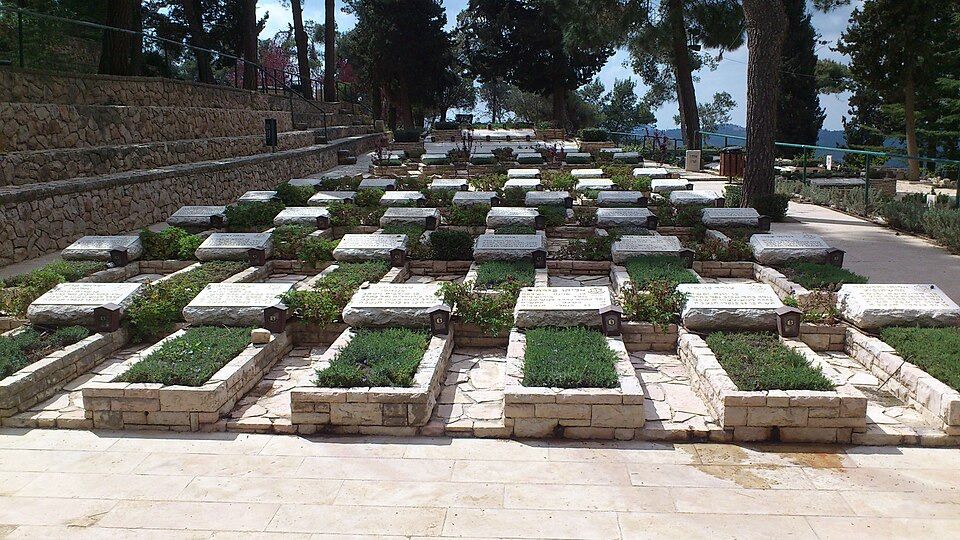
Graves of the “Lamed-Heh” unit in modern Israel. Photo: Wikipedia / Farouk
The tragedy of the Lamed-Heh unit immediately became public in the Yishuv. Politicians and officers racked their brains on how to prevent such cases in the future. The answer was simple: Arab villages must no longer threaten Jewish settlements and communication lines. On March 10, 1948, community leader and future Prime Minister Ben-Gurion adopted the plan “Dalet.” Among other things, it prescribed not only taking control of all territory allotted by the UN to Israel but also occupying foreign lands if it ensured the security of neighboring kibbutzim and moshavim. The authors of “Dalet” did not explicitly write about ethnic cleansing but allowed for the expulsion of civilians and destruction of Arab settlements as a means of war.
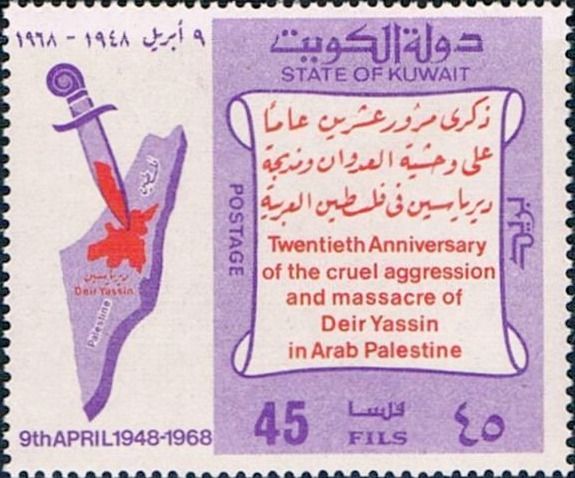
In April 1948, Jewish militias carried out the first major operation under the “Dalet” plan. They managed to unblock Jewish quarters in Jerusalem. The enemy’s unexpected success dealt a blow not only to the AHW and ALA units but also to peaceful residents of at least 13 Arab settlements. In some cases, the advancing forces forced them to flee with threats; in others, they burned, destroyed, and killed. Apparently, the worst fate befell Deir Yassin, mentioned at the beginning of the article. The local villagers were doomed by unclear rumors that they had allegedly allowed Iraqi volunteers to set up a military camp on their land.
Kuwaiti postage stamp commemorating the 20th anniversary of the Deir Yassin massacre. Image: Wikipedia
The success of unblocking Jerusalem encouraged the command of the newborn IDF (from May 1948, all Jewish units were considered a single Israel Defense Forces) to apply this experience on other fronts. On May 22-23, the elite “Alexandroni” brigade attacked the fishing village of Tantura near Haifa. Everything went as in Deir Yassin. After breaking local self-defense, Jewish soldiers killed all found men and drove women, elderly, and children away.
By morning, the shooting stopped, and the attackers surrounded everyone. Women and children were placed on one side, men on the other. Soldiers took men in separate groups, and shots were heard each time. Then I saw bodies piled on a cart pulled by men from Tantura
- Muhammad Abu Hana, witness of the May 22-23 massacre
In July 1948, the same scenario repeated during the Ten-Day Battles—one of the key operations on the Central Front. Advancing IDF brigades captured the towns of Lydda and Ramle, whose populations were considered especially hostile to Jews. By order of the young commander Yitzhak Rabin (prime minister in the 1990s), up to 70,000 Arab civilians were forcibly expelled from their homes and sent toward Transjordanian army positions. The exiles from Ramle were relatively lucky—they were taken by bus. Residents of Lydda were driven on foot through the desert heat—the deportation turned into a death march.
Jewish soldiers guard captured Arab men before their deportation. Photo: Wikipedia / Benno Rothenberg
Events in Haifa developed more ambiguously. On April 21-22, Jewish corps “Hish” and “Palmach” swiftly recaptured this crucial port from the enemy. There is no direct evidence that the victors initially sought to expel Arabs (especially since British soldiers still stood in the harbor). Muslims were only asked via loudspeakers to hand over “foreign criminals”—i.e., ALA volunteers. However, Arabs in Haifa, having heard about Deir Yassin, perceived this insistence as a prelude to a bloody cleansing.
Some Jewish officers tried to calm the population but failed. For literally at the same time, rank-and-file “Hish” and “Palmach” enthusiastically began looting the wealthy port city, which they clearly saw as a trophy. Muslim fears turned into panic, which quickly became mass flight. By the end of April, fewer than 5,000 remained of Haifa’s original 65,000-strong Arab community. The new city owners confined them to one outskirts district—essentially a ghetto. Looting also repeated in other towns and villages taken from Arabs.
This caused genuine anger among many Israeli politicians and military figures, including Prime Minister Ben-Gurion personally. How could a people who survived the Holocaust stoop to such disgraceful pogroms and robberies? But mutual prejudices between Arabs and Jews and the very nature of the 1947-1949 war clearly dulled the morals of IDF soldiers. After all, the enemy behaved no better—just recall the fate of Gush Etzion.
A Link in a Long Spiral
By autumn 1948, the IDF’s superiority in the war became evident. The alliance of its opponents—ALA, AHW, regular troops from Egypt, Transjordan, Syria, Iraq, and others—resembled the fable of the swan, the crayfish, and the pike. There was no unity among the allies on military or political issues.
Arab elites, realizing that “throwing the Jews into the sea” was impossible, cooled toward Palestinians. Between February and July 1949, all Middle Eastern powers signed armistices with Israel. By then, Israeli troops confidently controlled both their original territory per Resolution 181 (II) and a broad security belt on lands of the failed Arab state (altogether over 75% of Mandate Palestine).
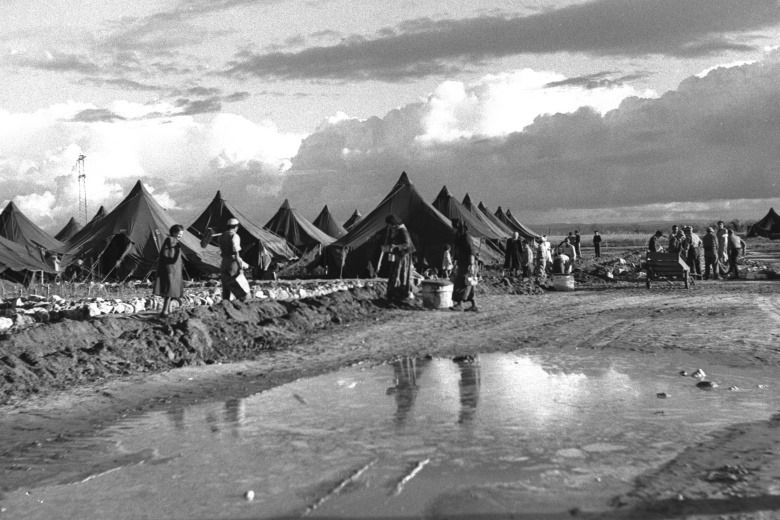
Palestinian refugee camp in Pardes Hanna-Karkur, 1950. Photo: Wikipedia / BRAUNER TEDDY
In the final stage of the war, the IDF systematically expelled “hostile elements” from captured territories, fearing local Arabs might support their kin in future conflicts. Altogether, about 720,000 Palestinians left their homes in 1947-1949. Israeli authorities—contrary to UN Resolution 194 adopted in December 1948—through a series of special laws confiscated the property of the expelled, forbade their return, and gave their settlements new Hebrew names. Today, in the Arab world, this is what is meant by the Nakba.
Interestingly, the term’s author—Syrian philosopher Constantin Zurayk—gave it a different meaning in the late 1940s. As an ideologist of Arab modernization and civic nationalism, Zurayk lamented how powerless the alliance of several Middle Eastern states was against a handful of refugees from Europe.
Arab representatives make fiery speeches at the highest international forums, threaten what Arab states and peoples will do if certain decisions are made. Statements fall like bombs from officials’ mouths at Arab League meetings. But when it comes to action, the fire goes out, and iron and steel rust
- Constantin Zurayk, “The Meaning of the Nakba,” 1948
Yes, in his book Zurayk mentioned the Palestinian Arab exodus but only in passing as a humanitarian consequence of the “real” military-political catastrophe. The reinterpretation of the Nakba in Middle Eastern society stretched over decades, and its current concept only took shape by the 1990s. Then even the most militant anti-Zionists realized that Israel could no longer be thrown into the sea and that Palestinians should present themselves to the world as innocent victims, not fanatic fighters. This approach inevitably raises uncomfortable questions for the Arab side.
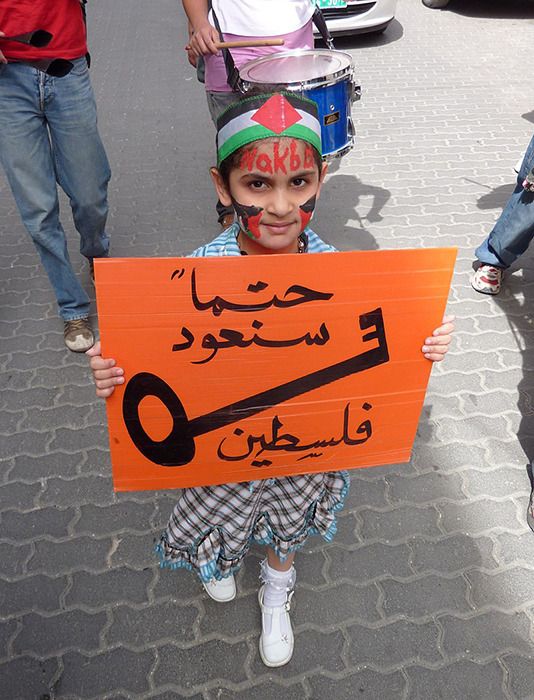
Palestinian girl holding a poster “Of course, we will return” on Nakba Day (May 15). West Bank, Hebron, 2010. Image: Wikipedia / Shy halatzi
Even if one acknowledges the criminality of Jewish authorities’ actions in 1947-1949, it is unclear why the Muslim world and the relevant UN agency UNRWA failed to resolve the refugee problem over the following half-century.
As is known, refugee status is inherited—today over 5.9 million people are considered refugees. Moreover, Jews also experienced their own “Nakba” in the mid-20th century. The proclamation of Israel led to a series of pogroms and expulsions of Jewish communities from almost all of the Middle East and North Africa. These were mainly Mizrahi—Arabized Jews, unrelated to Israel and largely alien to European Ashkenazim and Sephardim, the original bearers of Zionism.
Nevertheless, the young Jewish state managed over several generations to integrate Mizrahi Jews into its society, as well as descendants of the 160,000 Arabs who for various reasons remained in the “Zionist formation” after 1949. These successes established a silent consensus in Israel for generations regarding the Nakba: even if our founding fathers overstepped, they did nothing that our enemies did not do. And anyway, the 1947-1949 war was not started by Jews, so Arabs should only blame themselves.
If any of us had said that one day we should rise up and expel them [Arabs] all, it would have been madness. But if it happened during military upheavals, a war declared on us by the Arab people […], then it is one of those radical changes after which history does not return to the status quo ante [pre-war condition]
- Moshe Sharett, first Israeli Foreign Minister, summer 1948
In any case, the fact of Jewish war crimes in 1947-1949 is indisputable. They may have gone beyond “just” killings, deportations, and village destruction. Modern Israeli historians Benny Morris and Benjamin Kedar assert that Ben-Gurion secretly authorized biological warfare at the time. Allegedly, epidemiologists contaminated several wells with typhoid bacteria in Jaffa, Acre, and other places with concentrated Arab populations. However, these and other Jewish atrocities against their neighbors should be seen not as isolated episodes but as links in a long spiral of violence.
Palestinian girl with a poster “Of course, we will return” on Nakba Day (May 15). West Bank, Hebron, 2010. Image: Wikipedia / Shy halatzi
By the late 1940s, the Yishuv was convinced that they had already endured far too much unjustified violence from Arabs. After World War II and the Holocaust, Jews decided they had had enough—the defense of the hard-won state became an existential task. And apparently, until the Muslim world accepts the fact of Israel’s existence, no impartial conversation about the Nakba events will be possible.
Main Sources for the Article
Zhukov P. “The Foundation of Modern Israel”;
Kaplan N. “The Arab-Israeli Conflict: Irreconcilable Versions of History”;
Maryasis D. “Chronicle with an Open Ending: The History of the Palestinian-Israeli Confrontation”;Rogan Y. “History of the Arabs, 16th-21st Century”;
Finkel E. “Israel: Two Thousand Years Later”;
Shapira A. “History of Israel: From the Origins of the Zionist Movement to the Intifada”;
Epstein V. “Palestinian Refugees”: Specifics of the Concept and Difficulties of the Problem“.
If you enjoyed this article, consider making a donation — one-time or, even better, monthly. Your support helps us motivate our authors and become better with every article.
Our organization is recognized by the Internal Revenue Service (IRS) as a 501(c)(3) tax-exempt, charitable organization, which means that all contributions made to us are tax-deductible to the fullest extent permitted by U.S. law. Individuals may generally deduct charitable contributions of up to 60% of their Adjusted Gross Income (AGI) for cash donations made to qualifying 501(c)(3) organizations. For donations of appreciated assets (such as stocks or other long-term capital assets), the deduction is typically limited to 30% of AGI, based on the fair market value of the asset. C-corporations may deduct charitable contributions of up to 10% of their taxable income for donations made to eligible charitable organizations.
By submitting a donation, you confirm that you have read and accept the following documents: Privacy Policy and User Agreement, and also give consent to the processing of your personal data.
If you would like to unsubscribe from a monthly donation, please email us at: [email protected]