On the eve of socialist Zohran Mamdani’s victory in the New York mayoral election, many predicted a mass exodus of the wealthy from the city. However, two months after his inauguration, millionaires have not gone anywhere despite a proposed city tax for the ultra-rich.
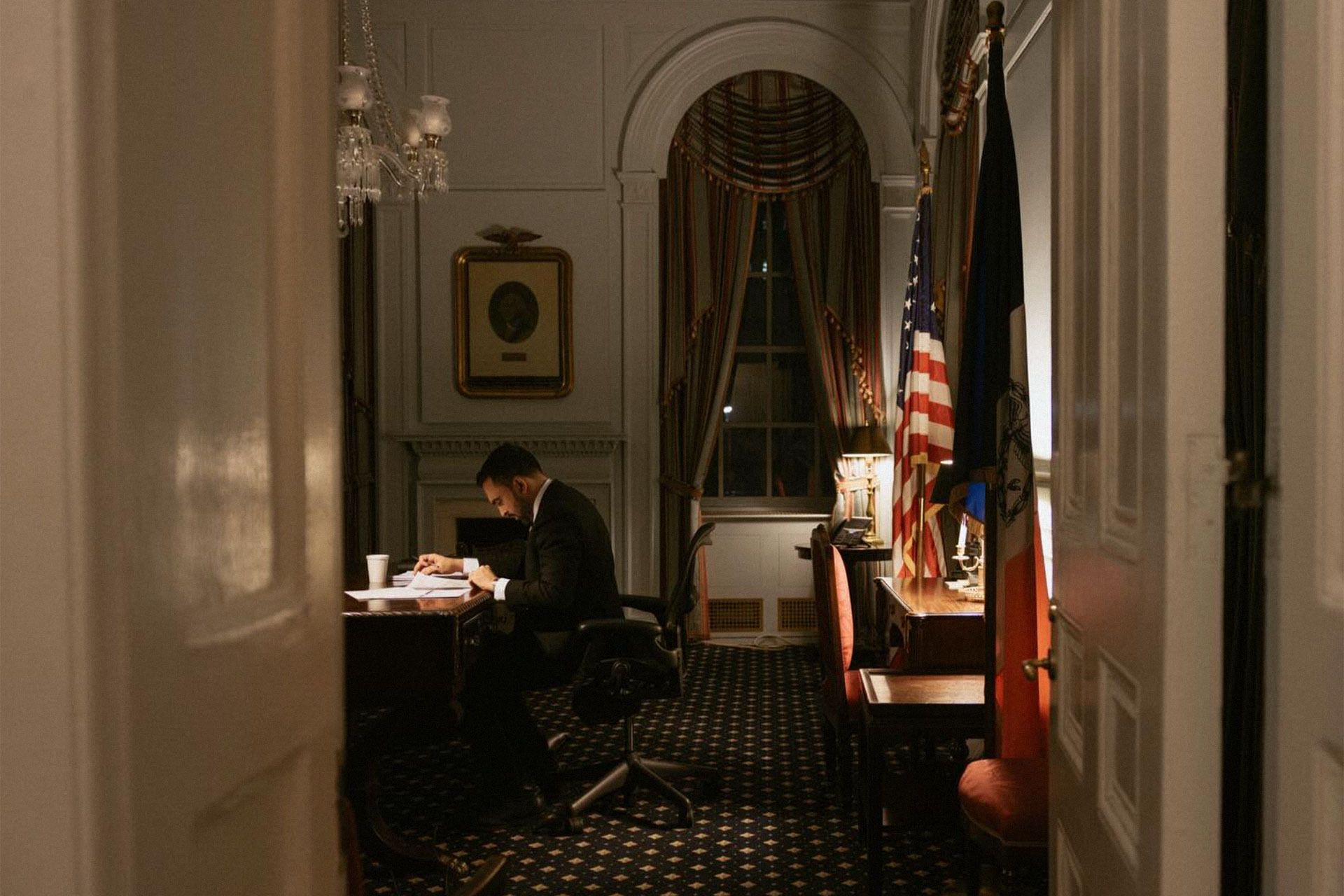
New York City Mayor Zohran Mamdani in his office. Photo: Instagram / @nycmayor
When Zohran Mamdani won the New York mayoral election, conservative commentators warned of impending disaster. The city’s wealthy residents, they said, would begin to leave en masse, Wall Street would abandon Manhattan, and the city’s tax base would collapse. Two months have passed—and none of this has happened.
The new mayor of America’s largest city took office on January 1, 2026. The election, held on November 4, 2025, was awaited by New Yorkers with mixed feelings: the wealthy with anxiety, and the rest with hope for change.
At 34, Mamdani became New York’s first Muslim mayor and the first of South Asian descent with Indian-Ugandan roots. And, quite possibly, the most left-wing mayor in the city’s history. In addition to the Democratic Party, he is a member of the Democratic Socialists of America (DSA)—an organization of the left wing of social democrats. Many of its nearly 80,000 members hold anti-capitalist and even Marxist views.
During his campaign, Mamdani himself said: “I don’t think we should have billionaires at all.”
In the coming years, the mayor proposes to raise the city income tax for residents with incomes above $1 million—from 3.876% to 5.876%. As a result, the maximum tax burden (including state taxes) could rise to 16.776%.
If you include federal taxes, the wealthiest New Yorkers will pay about 53.7% of their income to the government.
If the proposal is approved, the tax for the city’s wealthiest residents will be the highest in the United States. So it’s easy to understand the anxiety of rich New Yorkers after Mamdani’s victory.
The mayor’s office plans to direct the additional budget revenue to free bus rides, free childcare for children under five, a rent freeze for regulated housing, and the creation of a network of municipal grocery stores.
A Magnet for the Rich
New York has long been famous for its millionaires and billionaires. According to the Bloomberg Billionaires Index, 23 of the world’s 500 richest people live in the metropolis on the Hudson, and their combined wealth approaches $450 billion.
According to CNBC, in the summer of 2025, more than 33,000 people with assets over $30 million lived in New York.
The number of millionaires in the city has more than doubled over the past decade. According to Altrata, by 2024 there were already 2.4 million millionaires—about one in three city residents. Research by Altrata and REALM explains this phenomenon as follows:
“New York remains a powerful magnet for the wealthy. It offers a combination of luxury, culture, quality education, and a prestigious lifestyle. Manhattan, meanwhile, remains the epicenter of ultra-expensive real estate.”
With an annual budget of $127 billion, income tax brings New York about $18 billion, and roughly 40% of that is paid by just 1% of the city’s richest residents. In short, New York depends heavily on its wealthy citizens. That’s why conservatives’ concerns before the election were quite sincere.
The New York Post, owned by Rupert Murdoch’s media empire, warned almost daily in October that Mamdani’s victory would turn New York into a “ghost town.” The day before the vote, the paper wrote that nearly a million residents were considering moving. Renowned investor Bill Ackman warned on X that New York would go bankrupt and “turn into Chicago or something even worse.” Economist Stephen Moore of the Heritage Foundation said on Fox Business News that after Mamdani’s victory, “Wall Street may leave Manhattan.”
The Panic Didn’t Materialize
But the catastrophic predictions didn’t come true. Fortune magazine found that in November 2025—right after the election—Manhattan saw 25% more contracts signed for homes over $4 million than the previous month. Olshan Realty closed 17 deals in the last week of November, above the average for Thanksgiving week over the past ten years.
“There’s no Mamdani effect. The idea that people would flee New York is a big exaggeration,” summarized company founder Donna Olshan.
New York’s luxury market also grew in October 2025—up 16% year-over-year.
According to sociologist Cristobal Young of Cornell University, author of the book “The Myth of Millionaire Tax Flight”, migration rates among wealthy Americans are traditionally very low: “Rich people rarely pack up and move.” The reason is simple: they have more factors tying them to a place—business, professional connections, real estate, and a social environment including schools for their children. Moving often disrupts these ties, so tax savings rarely outweigh such losses.
Young studied the effects of tax hikes in New Jersey, Connecticut, California, and Massachusetts and found no evidence of a mass exodus of wealthy residents. By his estimate, even after tax increases, about 98% of affluent taxpayers stay put. Economists at Corcoran Realty Group agree: “People don’t flee cities just because the tax went up by two percent.”
EU Tax Observatory researcher Quentin Parrinello adds that the mobility of the wealthy does exist, but it is very limited. The reasons are the same: business ties, real estate, cultural environment, and social capital.
Talk of the rich fleeing New York is nothing new. The same fears were voiced at the start of the coronavirus pandemic. Some residents did indeed leave temporarily, but within two years the number of millionaires had increased by about 10,000 people.
New York’s population during COVID shrank from 8.8 million to 8.36 million, but then began to grow again. Today, about 8.5 million people live in the city.
The main nuance of Mamdani’s tax reform is that taxes in the U.S. are set by state authorities, not city administrations. So the final decision on his proposals rests with New York State Governor Kathy Hochul. She has already indicated she does not support raising personal income taxes: “I don’t want New Yorkers to keep moving to Palm Beach.”
In response, Mamdani warned that if the state does not approve the tax on the rich, the city may raise property taxes by 9.5%. This would close a budget gap of about $5.4 billion, but would affect far more city residents.
The standoff between New York City Hall and state authorities is just beginning. But one thing is already clear: predictions of a mass exodus of the wealthy were greatly exaggerated. New York remains one of the few cities in the world where even the highest taxes do not make life less attractive for the rich. At least for now, there has been no “Mamdani effect.”
If you enjoyed this article, consider making a donation — one-time or, even better, monthly. Your support helps us motivate our authors and become better with every article.
Our organization is recognized by the Internal Revenue Service (IRS) as a 501(c)(3) tax-exempt, charitable organization, which means that all contributions made to us are tax-deductible to the fullest extent permitted by U.S. law. Individuals may generally deduct charitable contributions of up to 60% of their Adjusted Gross Income (AGI) for cash donations made to qualifying 501(c)(3) organizations. For donations of appreciated assets (such as stocks or other long-term capital assets), the deduction is typically limited to 30% of AGI, based on the fair market value of the asset. C-corporations may deduct charitable contributions of up to 10% of their taxable income for donations made to eligible charitable organizations.
By submitting a donation, you confirm that you have read and accept the following documents: Privacy Policy and User Agreement, and also give consent to the processing of your personal data.
If you would like to unsubscribe from a monthly donation, please email us at: [email protected]