Last week, the Russian leader visited the Kuril Islands for the first time in the 26 years of his rule. This demonstrative trip sharply worsened Russian-Japanese relations. On the other hand, it was supposed to please the Chinese comrades
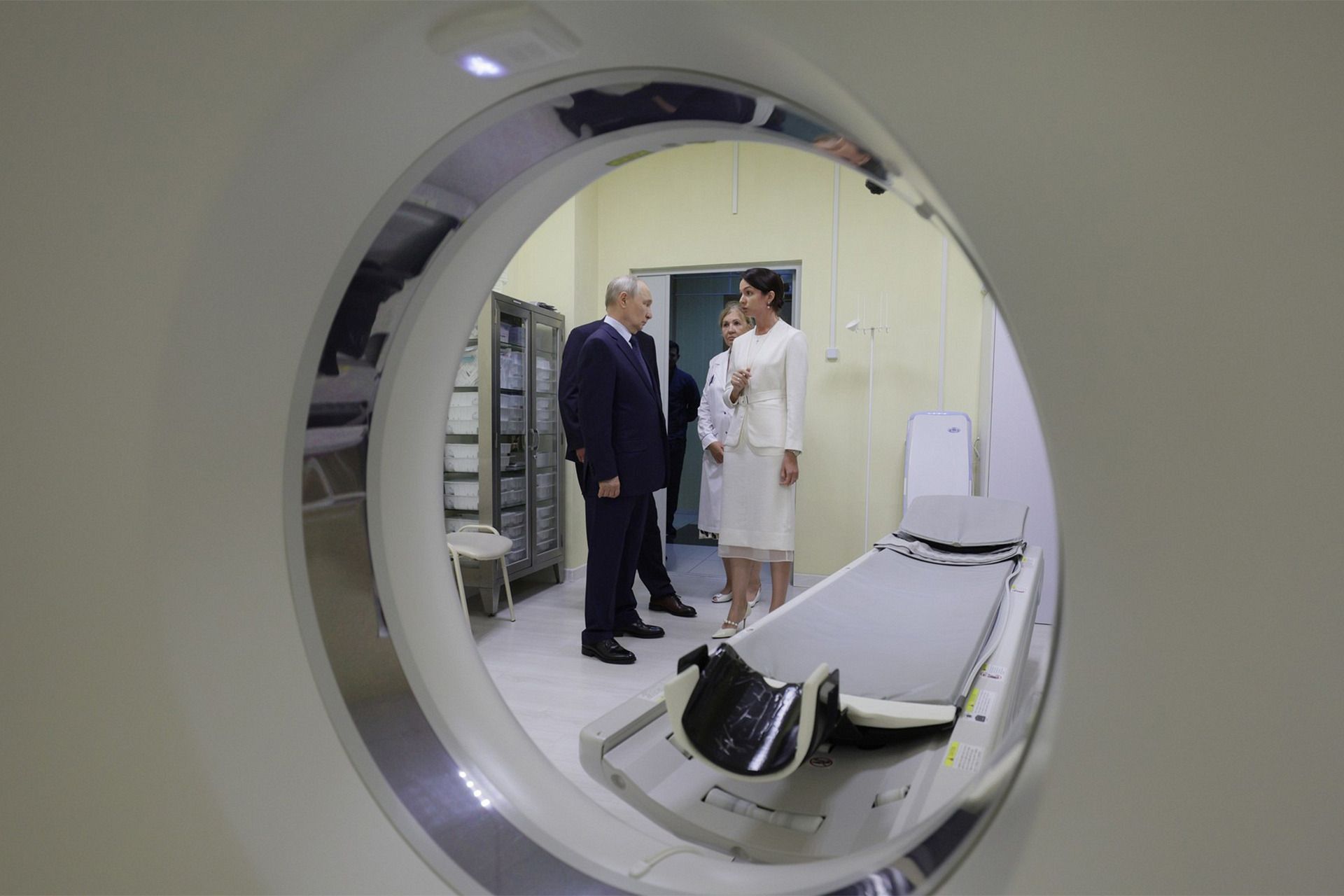
Vladimir Putin visited the Kuril Central District Hospital, August 13, 2026. Photo: kremlin.ru
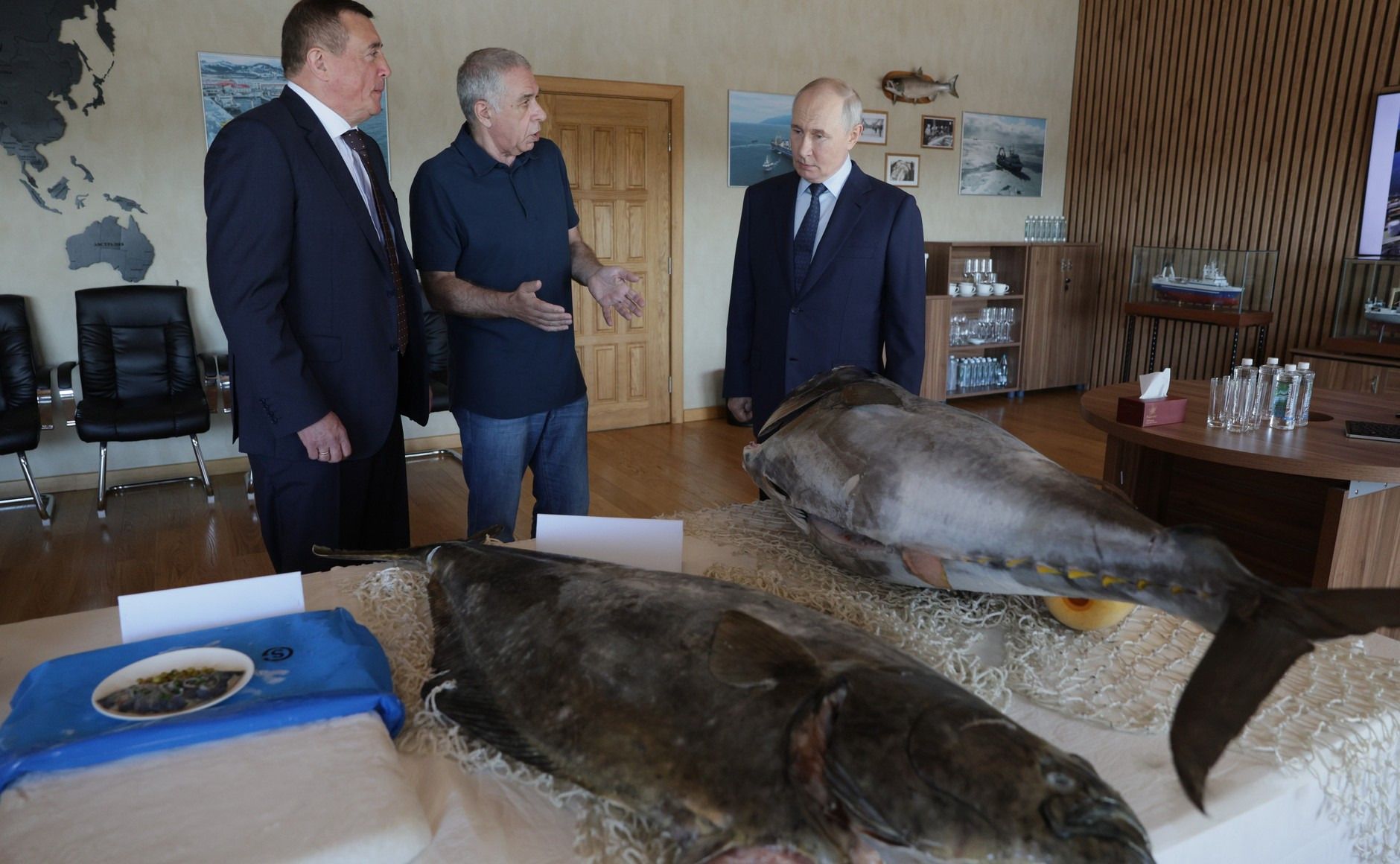
The video of Putin on Iturup, where he listens against the backdrop of two tuna carcasses to officials talking about the affairs of local fishermen, looks extremely inappropriate at first glance. Why fly literally to the other side of the world, almost 7,000 kilometers in a straight line from Moscow, in the midst of an existential war for his regime, when Ukrainian drones are striking Russian territory, to tiny islands that are, moreover, disputed territory? To finally ruin relations with Japan, which has always considered these islands its own?
The Japanese Foreign Ministry, as expected and immediately, expressed a strong protest, and the Japanese ambassador in Moscow twice ignored the Russian Foreign Ministry’s demands to appear on Smolenskaya Square.
Putin has been violating international law since the seizure of South Ossetia in 2008. However, it is obvious that his trip to the Kurils is simply not in Moscow’s interests today. The question is, why deliberately escalate Russian-Japanese relations like this and make a new, potentially dangerous enemy?
A country it is better not to quarrel with
Since 2022, Japan has made its choice and supports the restoration of Ukraine’s sovereignty over its territories occupied by Moscow. However, until now this has mainly been a diplomatic position. Japan has not supplied weapons to Ukraine and has not sent its advisers to the war.
Japan today is the fourth-largest economy in the world by nominal GDP (IMF data for 2025), after the US, China, and Germany. The population of the Land of the Rising Sun is 124 million. This is comparable to Russia’s population (approximately 140 million within the internationally recognized borders of the Russian Federation).
Japan is one of roughly a dozen countries in the world that could create its own nuclear weapons within a matter of months. It has everything needed for this: nuclear reactors, centrifuges for enriching uranium to weapons-grade plutonium levels, and other relevant technologies.
As of today, Japan adheres to the provisions of its constitution, according to which its military spending cannot exceed 1% of GDP. However, given its economic and scientific-technical potential, the country could sharply increase it if it wished.
Why the Kuril Islands are so important to Japan
The island of Iturup, together with the islands of Kunashir, Shikotan, and the tiny Habomai archipelago, are called the Southern Kurils in Russia. For Japan, they are the Northern Territories. In 1945, the islands were occupied by the Red Army and annexed to the USSR.
Japan has never recognized this seizure, since Iturup, Kunashir, Shikotan, and Habomai had never been part of either the Russian Empire or the USSR before 1945.
Throughout the history of bilateral relations between Japan and Russia, several treaties were signed:
- The Shimoda Treaty of 1855,
- The Treaty of St. Petersburg of 1875,
- The Treaty of Portsmouth of 1905 (following the Russo-Japanese War),
- The Beijing Treaty of 1925.
Under none of these treaties were Iturup, Kunashir, Shikotan, and Habomai recognized as territory of Russia or the USSR before 1945; they were always considered Japanese.
More than that. Under the Treaty of St. Petersburg, all 56 Kuril Islands passed to Japan, which in turn renounced its rights to Sakhalin in favor of Russia. And this treaty was concluded on an equal basis, without any war.
In the Cairo Declaration of December 1, 1943, in which the US, Britain, and China set out the goals of the war against Japan, it is stated that they consist in depriving Japan of all the islands in the Pacific Ocean that it occupied since the beginning of World War I, as well as depriving it of other territories it seized by force. The latter then referred to Korea and Taiwan.
The Cairo Declaration did not mention Iturup, Kunashir, Shikotan, or Habomai for the simple reason that all parties always recognized these islands as historically Japanese.
And why does Russia need the Southern Kurils?
Why Stalin decided to occupy these tiny islands is a great mystery. They had and have no strategic significance for Russia. Russian arguments for why we should not give them up are ridiculous.
For example, some “experts” seriously claim that one can... fish there. As if there were no fish on the other 52 Kuril Islands, which belong to Russia and are not disputed by Japan.
Vladimir Putin during a visit to Iturup Island, Sakhalin Oblast, August 13, 2026. Photo: kremlin.ru
Another argument of turbo-patriots: there is an ice-free strait between the Kuril Islands leading into the ocean. It is clearly aimed at people unfamiliar with the region’s geography. The Friza Strait between the disputed Iturup and the unquestionably Russian island of Urup, which Japan does not claim, also does not freeze at any time of year. Of course, if the islands were transferred to Japan, Tokyo and Moscow could easily agree on the joint use of this strait.
The “historical” arguments of Russian patriots are no less ridiculous. They are also aimed at those who have a very vague idea of the region’s history and geography.
One of the main such arguments is that the participants of the 1697 expedition led by the noble thug, murderer, and robber Vladimir Atlasov, after crossing Kamchatka from north to its southern tip, had “the opportunity to observe the previously unknown Kuril Islands”.
It is worth noting that from the southern tip of Kamchatka, which Atlasov’s expedition reached, only the northernmost island of the Kuril chain can be seen across the strait — Shumshu, which Japan today does not claim in any way.
As for Iturup, Kunashir, Shikotan, and Habomai, which are disputed with Japan, Atlasov and his men certainly could not have observed them. From the southern tip of Kamchatka and the north of the Kuril chain to the Southern Kurils is more than 1,000 kilometers. Quite far...
In 1956, Japan and the USSR adopted the Moscow Declaration, which recorded the existence of a territorial dispute between the two countries, as well as Moscow’s willingness to make concessions.
In particular, the Soviet government agreed to transfer to Japan the smallest part of the disputed territory, namely the island of Shikotan and the tiny archipelago (essentially several rocks) of Habomai. True, only after the conclusion of a peace treaty between the two countries.
By the way, the Japanese position is that Shikotan and Habomai are not even geologically part of the Kurils. In Tokyo, they are regarded as an extension of Japan’s largest northern island, Hokkaido.
According to the Russian version, Tokyo refused to sign a treaty with the USSR under pressure from the Americans, who threatened that in that case they would not return Okinawa to the Japanese, where the American military base is located. In the Japanese version of history, this point is not mentioned.
In April 1991, during his visit to Japan, the then leader of the USSR, Mikhail Gorbachev, returned to the island issue. However, at the end of that same year, the Soviet Union disappeared from the historical stage.
In 1993, the new Russia, as the USSR’s legal successor, confirmed that it was ready to fulfill the obligations undertaken by the country in the Moscow Declaration of 1956. The Tokyo Declaration was signed, recording the parties’ desire to resolve the issue of the territorial принадлежность of the four Southern Kuril Islands. However, it went no further than general words.
Why does Putin need the Kurils?
Note that Putin, during the 26 years of his de facto rule, up to August 13, 2026, when he unexpectedly appeared on Iturup, had never once traveled to the disputed islands. Medvedev, while serving as a figurehead president of the Russian Federation, visited them in November 2010, but given the peculiarities of Russian politics, he could only have done so on the orders of the country’s real ruler, that is, Putin.
Dmitry Medvedev in a church on Kunashir Island, Yuzhno-Kurilsk, November 1, 2010. Photo: kremlin.ru
By his openly provocative trip to Iturup on August 13 and the brazen remarks by Foreign Minister Lavrov and Medvedev himself directed at the Japanese Foreign Ministry, which had summoned the Russian ambassador for explanations on this issue, Putin effectively and demonstratively burned the bridges between Moscow and Tokyo.
Some colleagues, in my view mistakenly, decided that Putin was thus trying to show China who’s boss.
“Putin’s tour was meant to demonstrate: Russia remains an Asian power with its own interests. The Kremlin is trying to show the whole world, but above all Xi Jinping, that Russia is not China’s vassal. This is also a ‘signal’ to that part of the Russian bureaucracy that is unhappy with the growing dependence of the Russian Federation on the regime in Beijing: ‘No panic, everything is under control! We are still great,’“ wrote Konstantin Eggert in a DW column.
However, the reaction of the Chinese Foreign Ministry to the actions of their Japanese counterparts, who after Putin’s visit to Iturup summoned the Russian ambassador in Tokyo to the Japanese Foreign Ministry, indicates something else: the PRC authorities are on Russia’s side.
Answering a question from a Yomiuri Shimbun correspondent about Putin’s trip to Iturup, Chinese Foreign Ministry spokesperson Guo Jiakun stated:“The Chinese side has consistently advocated that the outcomes of victory in World War II be properly respected and preserved. China calls on the Japanese side to abide by the postwar international order established by international legal documents such as the Cairo Declaration and the Potsdam Declaration“.
As noted above, the Cairo and Potsdam Declarations said not a word about the four Southern Kuril Islands. So the Chinese comrades fully share the Russian position in the long-standing dispute with Japan.
Why does China need this?
Beijing is preparing for the “return to the motherland” of Taiwan. For this, it needs an ally and junior partner who knows his place. In Russia, it has such a partner.
For Xi Jinping, Putin’s demarche against Japan on Iturup is extremely important.
The fact is that in the event of a Chinese attack on Taiwan, Tokyo, apparently, does not intend to stay on the sidelines. Japan has historically viewed Taiwan as a guarantee of its security. Let us not forget that this island was under Japanese administration for 50 years, from 1895 to 1945.
The current head of the Japanese government, conservative Sanae Takaichi, on November 7, 2025, unambiguously stated that in the event of a Chinese attack on Taiwan, located 100 kilometers from Japan’s coast, her country could use military force, since this could be recognized as a “survival-threatening situation” for the state..
Note that Takaichi also supports revising Article 9 of the Japanese Constitution, which says that “...the Japanese people forever renounce war as a sovereign right of the nation and the threat or use of force as a means of settling international disputes”.
Putin, meanwhile, has evidently already grown accustomed to the role of a Chinese vassal. In exchange for military-technical support for his criminal war against Ukraine, he is ready to follow in the wake of China’s global policy. His trip to Iturup proves that as well.
If you enjoyed this article, consider making a donation — one-time or, even better, monthly. Your support helps us motivate our authors and become better with every article.
Our organization is recognized by the Internal Revenue Service (IRS) as a 501(c)(3) tax-exempt, charitable organization, which means that all contributions made to us are tax-deductible to the fullest extent permitted by U.S. law. Individuals may generally deduct charitable contributions of up to 60% of their Adjusted Gross Income (AGI) for cash donations made to qualifying 501(c)(3) organizations. For donations of appreciated assets (such as stocks or other long-term capital assets), the deduction is typically limited to 30% of AGI, based on the fair market value of the asset. C-corporations may deduct charitable contributions of up to 10% of their taxable income for donations made to eligible charitable organizations.
By submitting a donation, you confirm that you have read and accept the following documents: Privacy Policy and User Agreement, and also give consent to the processing of your personal data.
If you would like to unsubscribe from a monthly donation, please email us at: [email protected]