Today is World Autism Awareness Day. It’s a good reason to talk about a new form of discrimination against people with this diagnosis in Russia: recently, they have been banned from driving cars. The updated list of medical contraindications for driving now includes autism spectrum disorders. We spoke with ASD experts about why this ban is absurd and harmful.
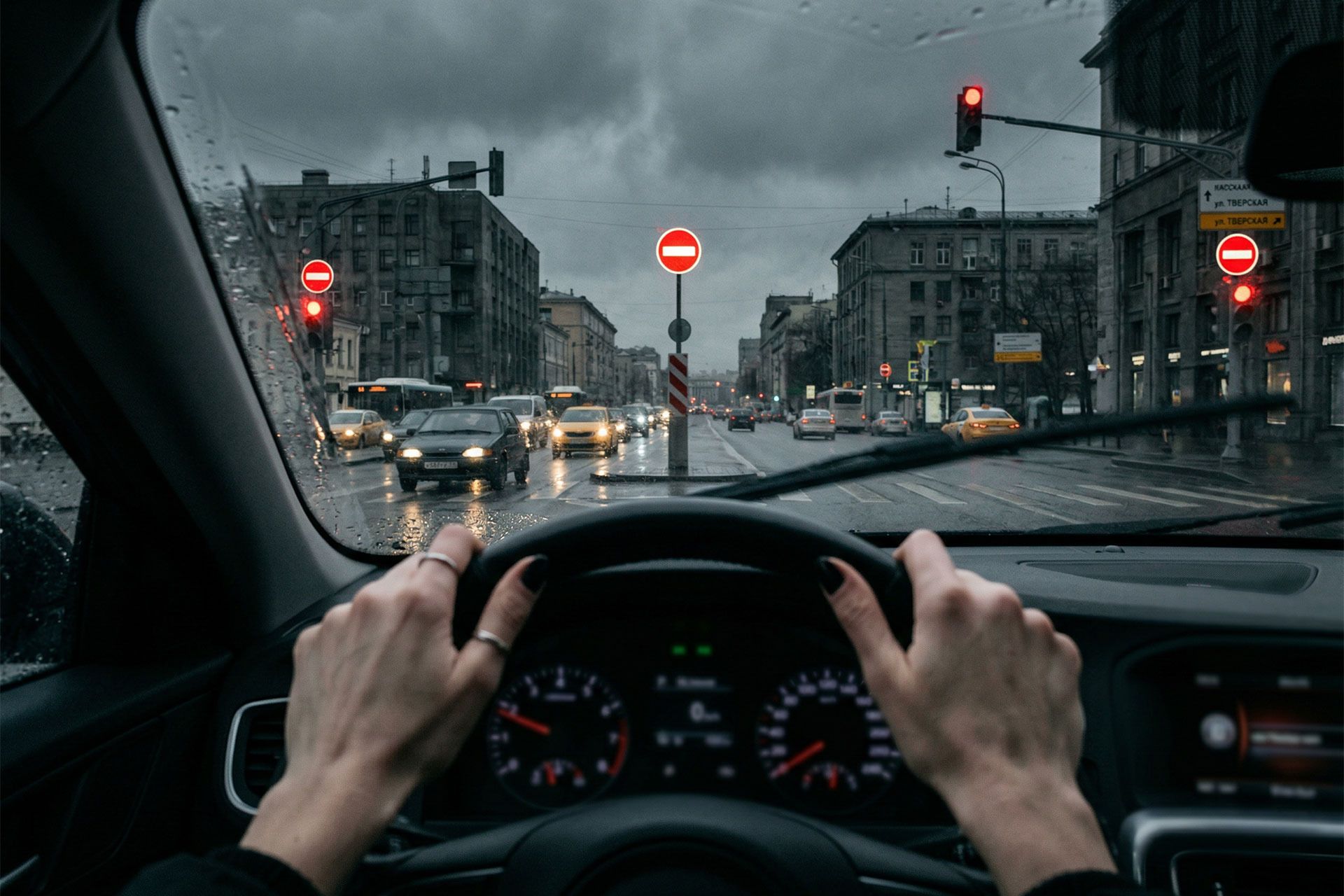
Illustration: Most.Media / Google Nano Banana
This article was prepared by the team of the project“Blue Capybaras”, where mentors work with aspiring journalists.
Elizaveta Vereshchagina runs a blog about neurodiversity and feminism. She studied at MGIMO, HSE, Shaninka, mastered 13 professions, founded the “School for the Multidimensional”—courses about science, art, and self-care—and also developed an app to help neurodiverse people accept their differences. She understands this topic well because two years ago she was diagnosed with ASD.
“That helped me tremendously, and a lot of people around me—mainly adults—who also learn about their diagnosis at the age of 30 or 40, are happy about it, because it really improves their quality of life. And now it turns out that what improves your life automatically becomes a possible source of your rights being violated,” the blogger shares.
In August 2025, Vereshchagina posted a reel about the fact that from September 1, people like her would be banned from driving a car.
Why is the ban absurd?
According to a scientific study comparing the driving risks of teens and young adults with and without autism, drivers with ASD were less likely to be involved in accidents, break traffic laws, or lose their licenses. Among drivers involved in accidents, those with autism were half as likely to be at fault due to speeding, but significantly more likely to get into accidents for not yielding to other vehicles or pedestrians, or when making left turns or U-turns.
Another study notes that people with ADHD tend to drive more riskily than people with ASD. There is no driving ban for people with ADHD in Russia.
“Autism is treated as a disease, but autism is just a type of nervous system. And banning all people with an autistic nervous system from driving is like saying, ‘we’re banning everyone with big noses from driving,’” says Elizaveta Vereshchagina.
The blogger believes that we need to look at the individual, their situation, workload, and their ability to adapt and regulate emotions on the road. She says that emotional regulation is one of the most important skills—and it’s a skill that can be trained. Neurotypical people without therapy may handle emotions worse than people who work with a psychologist and know what to do if a neighboring driver annoys them or they’re having a bad day and feel upset.
Natalya Zlobina, founder of the “Everyone is Special” foundation for people with mental disorders and mother of a child with autism, says that regardless of diagnoses, a person who wants to learn to drive must be able to learn, understand the rules, pass tests, and then pass the driving exam. “ASD is not a disease, but a developmental feature. To say that ASD is a reason to ban someone from driving is the wrong approach, because it is discriminatory: it restricts a person’s rights based on their diagnosis, without understanding what they’re actually capable of,” she summarizes.
When will the ban take effect?
In different countries, support organizations create guides for people with autism to help them navigate all the steps to getting a license. In the Czech Republic, where a law banning people with ASD from driving was in effect until 2025, there are now exceptions for mild forms of the condition. In Sweden and the Netherlands, as of last January, mandatory expensive psychiatric checks for future drivers with ADHD and ASD diagnoses have been abolished. Russia, however, has gone in the opposite direction.
According to Galina—a psychologist with ASD who consults adults with autism—in Russian state clinics, people with this diagnosis must be under as strict supervision as patients with any other chronic severe illness, like pyelonephritis or diabetes. To seek help without fear of being put on record, you can only go to a private clinic—currently, there is no unified database in the country where data from psychiatrists in private clinics is entered.
For now, restrictions on obtaining a driver’s license are not imposed just because a person has a diagnosis—in essence, the old rules still apply. “I have [the diagnosis] atypical autism, and under the old classification, that doesn’t mean that if I now decide to get a license, I won’t have a chance. For them to restrict me, I have to have health limitations: mental or physical,” says Galina.
So far, there are no regulatory acts for the list that came into force in September 2025 to clarify how it will work and address all the nuances. “The law will be discriminatory when we see how it’s enforced,” Galina continues. “If the additional instructions prescribe automatic license revocation for an ASD diagnosis, then it will be discrimination. For now, that’s not the case.”
Who might be affected
According to Rosstat data published by the “Anton’s Right Here” foundation, in 2024 there were 76,096 children with autism and 5,059 adults registered in Russia. At the same time, WHO statistics say autism affects 1% of the general population. That means the projected number of adults with ASD in Russia in 2024 is 1,162,812 people.
“There is very little coverage of mental health and mental disorders and differences in our country—it remains highly stigmatized,” says Elizaveta. “And many people, even those with nervous system differences who are highly functional, are sure that none of this concerns them.”
Introducing a driving ban may, in the long run, worsen autism diagnosis in the country, says “Everyone is Special” foundation founder Natalya Zlobina. In her opinion, people with ASD simply won’t seek quality diagnosis and will hide their diagnosis because of the new restrictions. And when there is underdiagnosis, on the one hand, the person does not get quality help, and on the other—the society doesn’t know how to support and accept such people.
Psychologist Galina has a theory about why the restrictions were introduced now: “Recently, autism diagnosis has increased, both among children and adults—that is, among people who are, for example, allowed to carry weapons and buy alcohol. And since psychiatric illnesses are stigmatized in general and this diagnosis has become more common, [the logic is]—something has to be done about it. Because of the stereotype that people with autism are strange, it turns out there needs to be some addition to the established scheme so that this condition is also subject to such restrictions.“
“Banning everyone from driving at once is, to me, a rather strange and sad story. Because we’re taking the approach: it’s easier to ban than to analyze what the consequences of these bans will be,” concludes Natalya Zlobina. “We just need to understand that if a person has the opportunity to live fully and, with partial support, contribute to the state, it is always more economically beneficial than to ban everything, restrict, and ignore.”
Most.Media has reached out to the Russian Ministry of Health with an official request for comment on the ban on driving for people with autism spectrum disorders.
If you enjoyed this article, consider making a donation — one-time or, even better, monthly. Your support helps us motivate our authors and become better with every article.
Our organization is recognized by the Internal Revenue Service (IRS) as a 501(c)(3) tax-exempt, charitable organization, which means that all contributions made to us are tax-deductible to the fullest extent permitted by U.S. law. Individuals may generally deduct charitable contributions of up to 60% of their Adjusted Gross Income (AGI) for cash donations made to qualifying 501(c)(3) organizations. For donations of appreciated assets (such as stocks or other long-term capital assets), the deduction is typically limited to 30% of AGI, based on the fair market value of the asset. C-corporations may deduct charitable contributions of up to 10% of their taxable income for donations made to eligible charitable organizations.
By submitting a donation, you confirm that you have read and accept the following documents: Privacy Policy and User Agreement, and also give consent to the processing of your personal data.
If you would like to unsubscribe from a monthly donation, please email us at: [email protected]