The events of May 2026 have shown a significant shift in the balance of power on the fronts of the Russian-Ukrainian war. In fact, the two sides have reached parity. Yet, at the start of the full-scale war in 2022, Vladimir Putin did not consider Ukraine a significant opponent at all.
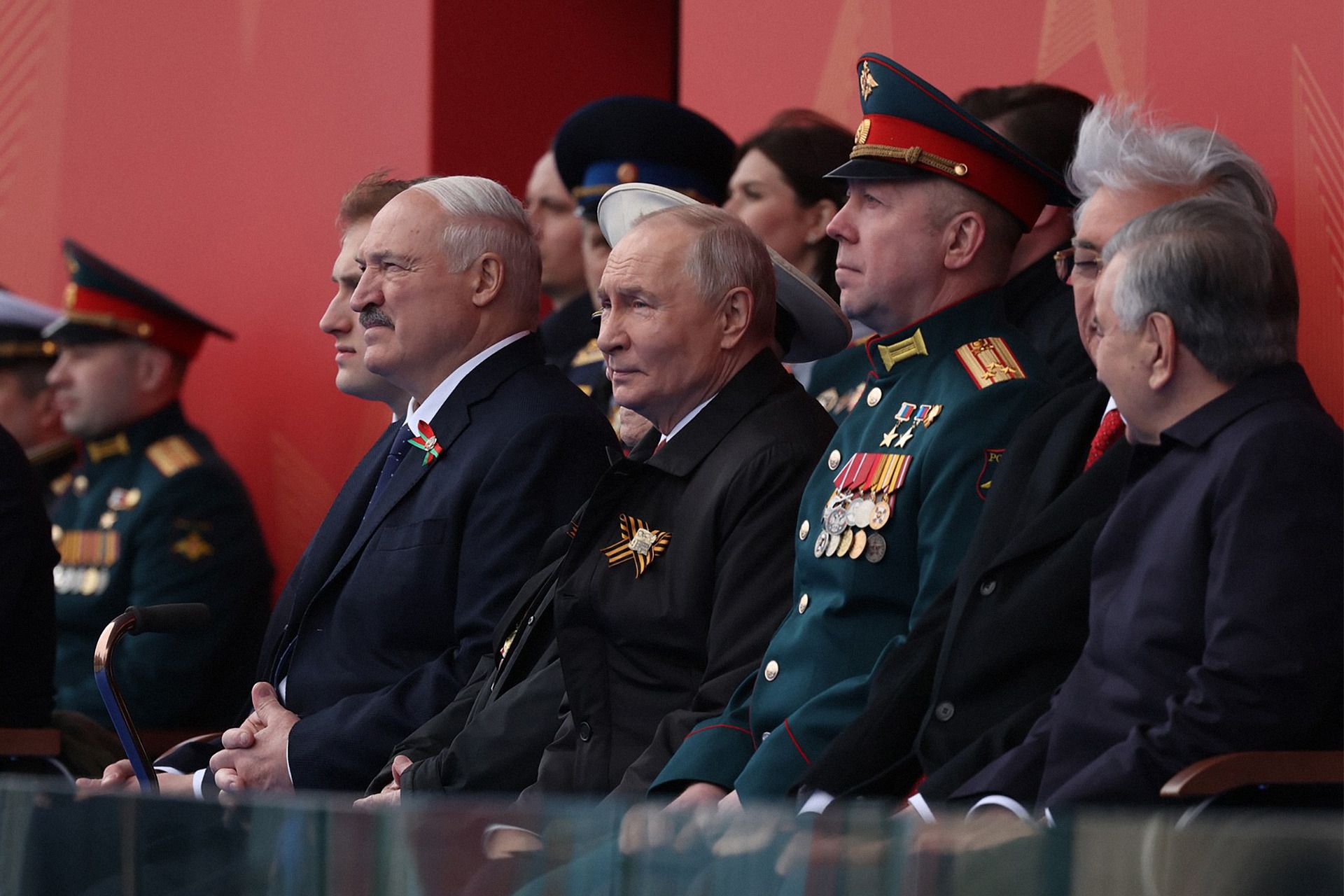
At the military parade on Red Square, May 9, 2026. Photo: kremlin.ru
Russia continues to fiercely shell Ukrainian cities, but today Moscow itself is becoming a target for retaliatory strikes. In May, Ukrainian drones hit several military and energy targets in the Russian capital, even though this city has traditionally, since Soviet times, been the most protected by air defense systems.
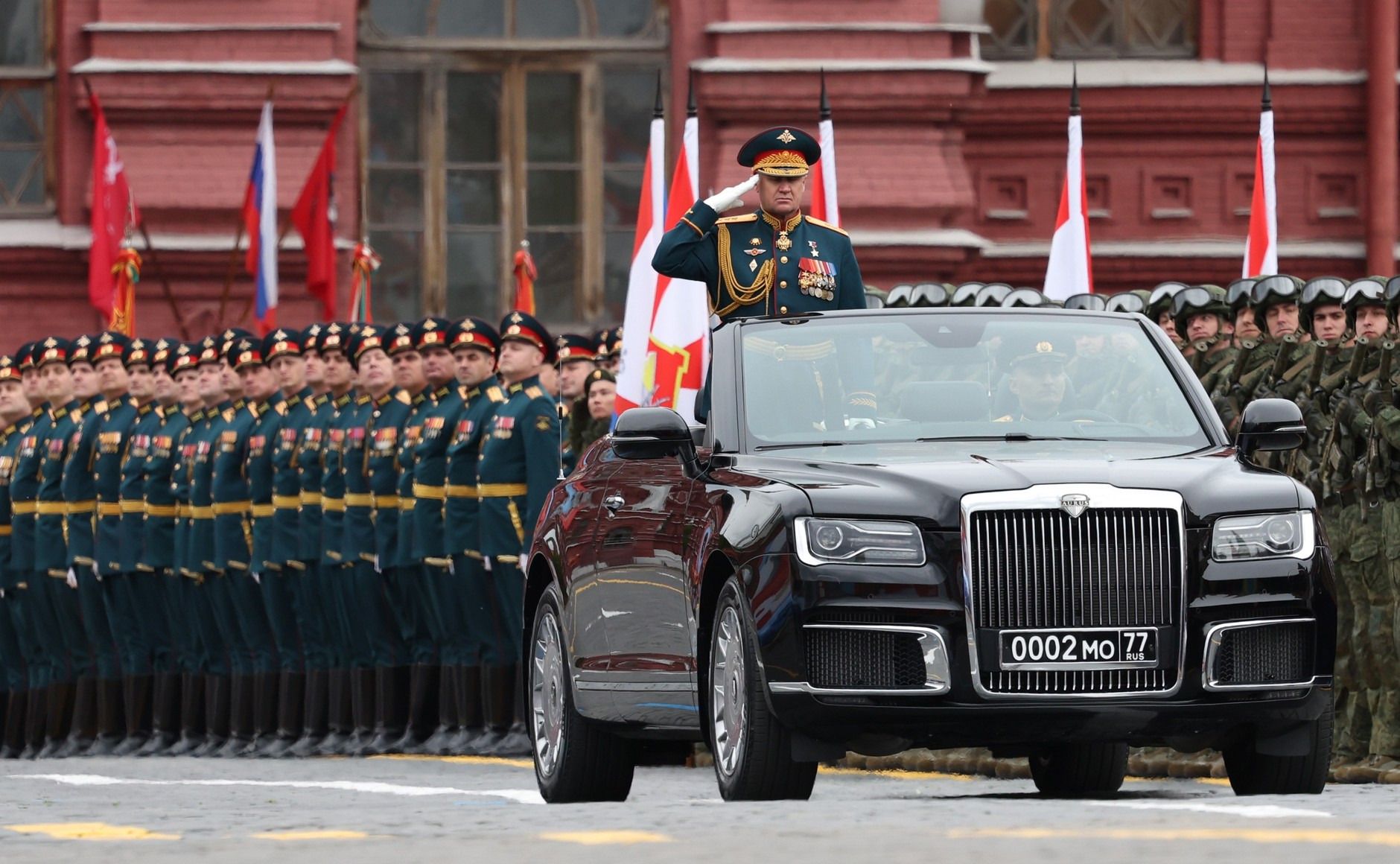
The regular May 9 parade, which has become the main symbolic event in Putin’s Russia, was held in 2026 in a reduced format, without military equipment. The authorities explained this by the “operational situation”—clearly meaning fears of incoming Ukrainian drones. According to Ukrainian President Volodymyr Zelensky, Russia can now only hold a parade if Ukraine allows it—he even officially signed an ironic “permit” for the event.
As Bloomberg analysts have calculated, about a quarter of Russia’s territory—where 70% of its population lives—is now within range of Ukrainian drones. This includes major military-industrial and heavy industry centers like Yekaterinburg, Chelyabinsk, and Perm, which are more than 1,500 kilometers from Ukraine and were previously considered the deep rear. But in the era of long-range drones, the concept of a “rear” is disappearing.
Victory Parade on Red Square, May 9, 2026. Photo: kremlin.ru
Russia is losing its strategic depth, which saved it in wars of previous eras (in military strategy, strategic depth refers to the advantages of a large territory and the distance of key sites from enemy borders—Most.Media). Neither Napoleon nor Hitler could hope to reach the Urals, but today, cities and factories in the Urals have become accessible targets. And it’s notable that this result was brought about by the aggressive war launched by Russia itself.
Today, oil refining in central Russia has practically ground to a halt due to attacks by Ukrainian drones. Among the major refineries in the European part of the country that have come under attack are plants in Kirishi, Moscow, Nizhny Novgorod, Ryazan, and Yaroslavl.Together, they produced over 30% of all gasoline in Russia and about 25% of diesel fuel, according to Reuters calculations.
But the Kremlin is not paying enough attention to defending against these attacks, shifting this responsibility to the companies and regions themselves.
Even in Siberia, they are preparing for Ukrainian drone strikes. Anti-drone systems are being installed at enterprises from Tyumen to Vladivostok and Sakhalin. And again, this is the responsibility of local authorities and local businesses.
Putin is not particularly concerned with these problems and his own country’s fears. His obsession has become the complete capture of Ukraine’s Donetsk region within its administrative borders. The Kremlin has long called this the main condition for any peace talks. However, Ukraine cannot agree to this—completely withdrawing its forces from the region would mean losing the fortified area in Sloviansk and Kramatorsk, which would open a direct path to Kyiv for Russian troops.
That is why Russia continues senseless “meat assaults” on Donetsk villages, suffering colossal losses—now more than in the millions. Meanwhile, Ukraine has managed to build an entire “drone wall” that strikes Russian units before they even reach the front line.
It’s interesting to recall here the doctrine of Soviet Marshal Nikolai Ogarkov, who argued that the winners in future wars would not be those who relied on mass ground offensives, but those who could deliver precision strikes on strategic targets in the enemy’s rear. The paradox is that today, it’s not Russia but Ukraine that is following his ideas, becoming one of the world’s leaders in the production of long-range drones. By the way, Ogarkov also spoke out against the Soviet invasion of Afghanistan, for which he eventually lost his position as chief of the general staff.
Russia’s loss of its “strategic depth” is not only militarily significant. This process disrupts the economic and logistical connections between regions, which are the basis of any country’s unity. Back in 2024, the head of Tatarstan, Rustam Minnikhanov, called on every enterprise in the republic to “defend itself independently.” But if the state is effectively shifting responsibility for defense to the regions themselves, this will inevitably lead them to draw political conclusions about greater autonomy. Thus, an imperial attempt to conquer another country could end up causing the collapse of its own.
If you enjoyed this article, consider making a donation — one-time or, even better, monthly. Your support helps us motivate our authors and become better with every article.
Our organization is recognized by the Internal Revenue Service (IRS) as a 501(c)(3) tax-exempt, charitable organization, which means that all contributions made to us are tax-deductible to the fullest extent permitted by U.S. law. Individuals may generally deduct charitable contributions of up to 60% of their Adjusted Gross Income (AGI) for cash donations made to qualifying 501(c)(3) organizations. For donations of appreciated assets (such as stocks or other long-term capital assets), the deduction is typically limited to 30% of AGI, based on the fair market value of the asset. C-corporations may deduct charitable contributions of up to 10% of their taxable income for donations made to eligible charitable organizations.
By submitting a donation, you confirm that you have read and accept the following documents: Privacy Policy and User Agreement, and also give consent to the processing of your personal data.
If you would like to unsubscribe from a monthly donation, please email us at: [email protected]