Growing out of tribal militias in one of the poorest countries in the world, the group is capable of harming international trade, artificially driving up oil prices, and imposing its agenda on key powers. And there are always buyers for these services among the Houthis.
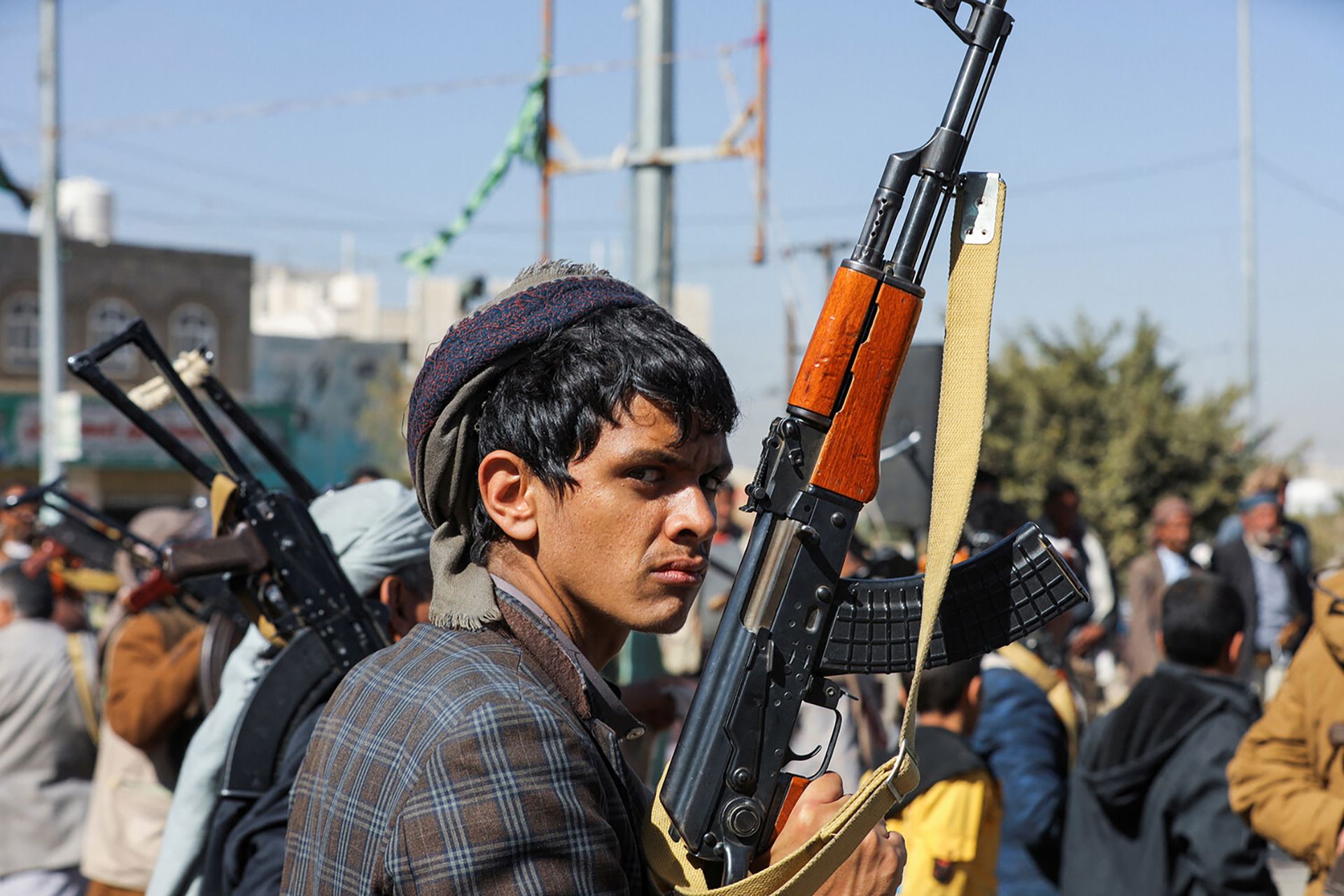
An ordinary Houthi militant in Yemen, 2020s. Photo: Reuters / Khaled Abdullah
At the beginning of autumn, one old sore spot in the Middle East stirred to life — chronically troubled Yemen, a poor, half-collapsed republic in the southwest of the Arabian Peninsula. The key local rival faction, the “Ansar Allah” movement, better known as the Houthis, took control of several ports and islands in the Bab el-Mandeb Strait and the Red Sea. In doing so, the Houthis seriously complicated maritime cargo transport near the Arabian Peninsula and, as a result, drove global oil prices up: Western analysts are already forecasting a rise in quotations to $150 per barrel.
After all, this is one of the key corridors for global trade. Bab el-Mandeb and the Red Sea, via the Suez Canal, connect the Mediterranean with the Indian Ocean, giving sailors the shortest route between Europe and eastern Asia. This route plays a critical role in transporting container cargo, liquefied natural gas, oil, and petroleum products. The route around Africa’s west coast accounts for about 15% of global maritime trade by value and about 30% of global container traffic.
But the route through the Red Sea is as important as it is vulnerable. Bab el-Mandeb, mentioned above, is a classic bottleneck only 30 kilometers wide. A medium-sized military force can disrupt traffic through it. And for the past several years, that force has been the Yemeni Houthis. The group’s new offensive could overshadow its previous exploits and seriously damage the entire global economy. So where did these militants come from, what do they believe in, what are they fighting for, and who stands behind them?
The angle of bad luck
The main thing to know about Yemen is that it is the black sheep of the Arabian Peninsula. Nothing here is like the neighbors. Instead of a monarchy — a republic, instead of futuristic skyscrapers — mud-brick huts, instead of luxury and gadgets — “African” economic indicators, old AKs, and the drug “qat”, which almost all local men chew from morning till night.
Houthi supporters: the men’s cheeks are bulging from balls of that very qat. Sana’a, 2022. Photo: MOHAMMED HUWAIS / AFP
Three or four generations ago, a similar picture could be seen in the other Arab countries as well. But the Gulf monarchies then surged ahead, while Yemen kept treading water, and an inevitable question arises: why? The other states in the region can be reduced to a conditional formula: unquestioned authority of the ruling dynasty, peaceful coexistence of different tribes and clans, a relatively small population with relatively large hydrocarbon reserves. Yemen is the opposite.
Let’s start with the monarchy: the country got rid of the kings from the Rassid line back in 1962. The republic was proclaimed then too, but the new form of government never acquired functioning institutions. National unity? That is even worse: historically, different communities on Yemeni territory existed separately from one another and were subject to different conquerors. Even in the 20th century, when dependence on the British and Ottoman empires ended, the north and south of the country became separate states. Only in 1990 did a unified Yemen first appear on the political map.
The two Yemeni states during the Cold War. Map: Wikipedia
Demographics and resources? Here again, everything is unlike the neighbors. Today about 35 million people live in Yemen — the same as in Saudi Arabia, or one and a half times more than in the other five Gulf monarchies. Yes, Yemenis also have their own oil and gas, but their reserves are modest by regional standards. Even at its own peak in the early 2000s, Yemen produced raw materials in quantities, by Arab petrostate standards, barely enough for a pharmacy.
Thus a vicious circle emerges. The lack of resources prevents the country from generating resource rents for an overpopulated state. Perhaps functioning political institutions could have fixed something, but even a “normal” autocracy in the style of Saddam’s Iraq cannot be built here because of the population’s pathological fragmentation. That is why political corruption and constant bargaining with local elites in Yemen served as the central authorities’ only way to survive.
“Most of the aid Yemen received from leading world powers was focused on ‘security’ and counterterrorism, rather than on solving the country’s very serious socio-economic and environmental problems. As a result, much of the support actually, albeit indirectly, contributed to instability in the country and the worsening of poverty”
In short, for decades Yemen developed fertile ground for a radical mass movement: poverty, illiteracy, corruption, weak central authority, and widespread access to firearms. In the end, it was from here that the Houthis made themselves known to the whole world.
The North remembers
At the end of the 20th century, the “Ansar Allah” (“Supporters of Allah”) group emerged in the mountainous governorate of Saada — the northernmost Yemeni region. Historically, the country’s north served as a stronghold of the Zaydis, the local branch of the Shiite version of Islam. The people of Saada were once considered the backbone of the aforementioned Rassid monarchy, but after the kings were overthrown they went from a privileged group to peripheral tribes.
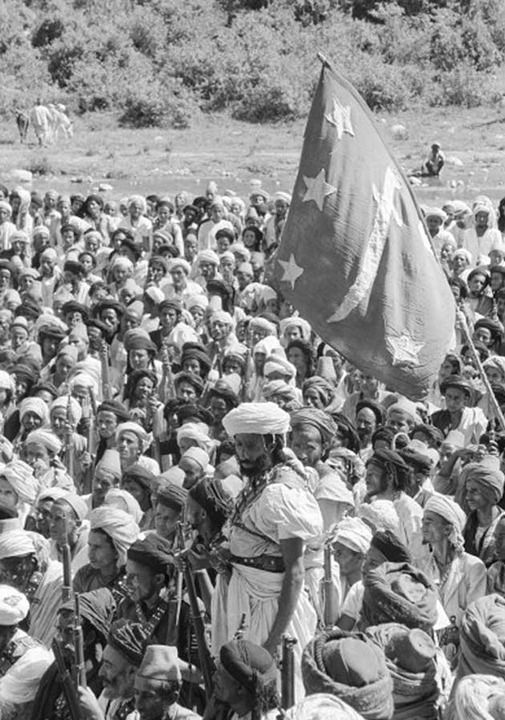
Pro-monarchist militia of northern Yemenis with the royal flag, 1962. Photo: Wikipedia
In the 1990s, Hussein al-Houthi, a member of the local clan elite, began preaching among his fellow townspeople. At one time, his family allowed the young man to study with Shiite co-religionists in Iran. After returning home, al-Houthi began preaching and, through intermediaries, built the movement “Ash-Shabab al-Mumin” (“The Believing Youth”).
At first, the leader did not call for armed jihad and did not organize any terrorist attacks. On the contrary, al-Houthi’s followers positioned themselves as defenders of Yemen from Salafism, the orthodox version of Sunni Islam traditionally associated with neighboring Saudi Arabia.
American Islamic scholar Bernard Haykel, discussing Houthism as a worldview, emphasized the vagueness and even contradiction of its principles. The movement has several ideological matrices that can appear in different combinations. This is very convenient for attracting potential supporters and allies. Broadly, they can be divided into three blocks:
Houthism is a regional movement for the rights of Yemen’s North;
Houthism is a nationwide movement against corruption, nepotism, and the incompetence of the authorities in the capital, Sana’a;
Houthism is the revolutionary vanguard of the Islamic world, uncompromising fighters against American imperialism and Israeli Zionism.
During the first ten years of its history, “Ash-Shabab” avoided conflicts with the central authorities, co-opted supporters, and accumulated resources for future struggle. Year by year, the growing Houthis became increasingly burdened by the policies of Yemen’s unchanging president, Ali Abdullah Saleh. On the one hand, the politician also came from the north and professed Zaydi Shiism. On the other hand, in domestic politics Saleh leaned more toward Yemen’s Sunni majority, while in international affairs he tended toward a pro-American and pro-Saudi orientation.
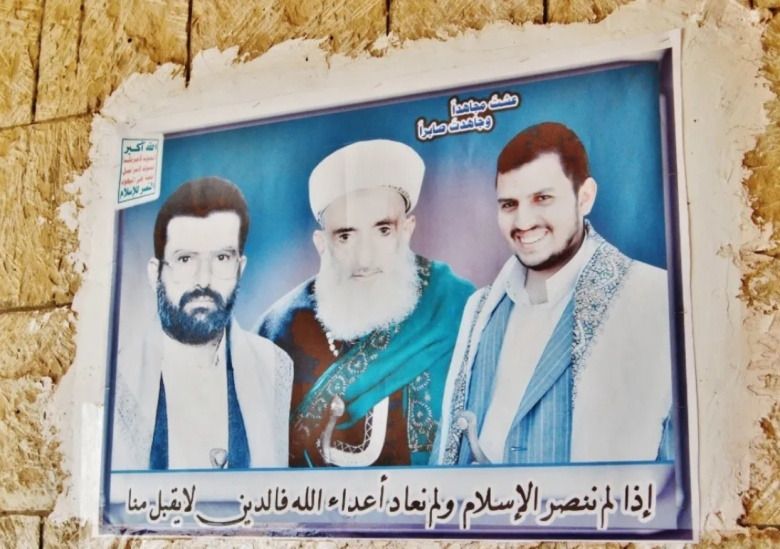
Poster with the movement’s leaders — the al-Houthi family, from left to right: founder of the group Hussein, his father Badruddin, and brother Abdul-Malik. Saada, Yemen, 2016
A conflict was brewing between the northern group and Sana’a. As early as 2003, the Houthis adopted a deliberately militant emblem, as if hinting that they did not want to sit forever in their gloomy mountains. It is a calligraphic inscription in Arabic: “Allah is great, death to America, death to Israel, curse the Jews, victory to Islam”. And a year later, thunder finally struck.
In the summer of 2004, attempts by the authorities to disarm the group and close its training camps led to an uprising by the northerners. During the three-month campaign, government forces inflicted a series of defeats on the rebels. On September 10, 2004, the Yemeni army eliminated al-Houthi along with a group of his closest associates.
Nevertheless, the movement’s stronghold — the northern province of Saada — remained outside Saleh’s control. The “Ash-Shabab” group itself also survived: leadership was inherited by the father and brother of the deceased, Badruddin and Abdul-Malik al-Houthi. Hussein himself was declared a martyr worthy of heroic struggle in his memory.
Spring awakening
In 2004-2010, there were five more local armed conflicts between the northerners and Sana’a. Al-Houthi’s successors accused the central authorities of a brutal reprisal against their leader, as well as of allegedly selling out simultaneously to Zionists, Saudis, and Americans. But all Houthi uprisings lasted no longer than 4-5 months and inevitably ended in truces.
In February 2010, the leaders of “Ash-Shabab” even concluded a full peace with the government, more like an honorable surrender. The rebels promised to hand over all weapons, release the hostages, return previously seized government facilities, and remove all planted mines themselves. Saleh’s supporters then celebrated victory; the speaker of the presidential party, the General People’s Congress, Sultan al-Burkani, even declared that “the rebels have returned to the right path”.
Ali Abdullah Saleh, president of North Yemen (1978-1990) and unified Yemen (1994-2011)
But the return was very short-lived. Just a year later, the Arab Spring swept through Yemen. And the Houthis found themselves the main force in the country capable of taking power. The movement temporarily set aside its pro-northern and pro-Shiite agenda, presenting itself simply as honest Yemenis who rose up with the people against Saleh and his henchmen, who had tired everyone out.
In 2011, the group renamed itself “Ansar Allah” (“Supporters of Allah”) and joined the National Dialogue Conference created with international mediation. It was supposed to help reconcile the authorities and their opponents. In practice, the Houthi delegates did everything to ensure that no reconciliation took place. For example, they rejected the idea of federalizing Yemen, since it would have left them with Saada, which was already under their control, while the group clearly wanted all of Yemen’s north with access to the Red Sea.
“We reject the [federalization] plan because it divides Yemen into poor and rich regions. Saada has stronger cultural, social, and geographical ties with the [coastal] Hajjah and Jawf”.
- Mohammed al-Bukhaiti, movement representative
While fruitless negotiations dragged on, Yemen was sinking into chaos. Other paramilitary groups with different agendas also appeared in the country. For example, in Aden and Hadhramaut, people began fighting to restore the separate southern republic that had existed until 1990. In the outskirts of the collapsing country, local al-Qaeda cells were taking power.
Residential building in Sana’a destroyed after an airstrike by the anti-Houthi coalition. October 9, 2015. Photo: Almigdad Mojalli / VOA
Against this backdrop, “Ansar Allah” easily expanded its influence. Its units, hardened by the 2004-2010 rebellions, won battle after battle. By the summer of 2012, the Houthis, in addition to their native Saada, already held several neighboring northern regions with access to the sea. By September 2014, their “republic” had reached the government districts of the capital, Sana’a.
By then, there was no functioning legitimate authority in Yemen. As early as the winter of 2012, President Saleh was forced to resign after 33 years in power, but he did not abandon his political ambitions — and that quickly came back to haunt him.
Hunger as a weapon
In 2017, Saleh decided to reconcile with the Houthis and return to Sana’a on their bayonets. Then the politician planned to get rid of his fellow townsmen with the help of the Saudis — after all, the neighbors were absolutely not fond of militant Shiites on their southern borders.
“Yemeni citizens have tried to endure the Houthis’ recklessness for two and a half years, but I have no strength left. I call on our brothers in neighboring countries [Saudi Arabia] to stop the aggression, lift the blockade. Let’s turn this page!”
- Ali Abdullah Saleh, December 2, 2017
“Ansar Allah” did not appreciate such a maneuver. On December 4, 2017, militants ambushed Saleh as he was leaving Sana’a. First, the former president’s car was hit by a grenade launcher, and then a Houthi sniper finished him off with a shot to the head.
The unpunished killing of Saleh became a symbolically important milestone for the group. It finally закрепed the fact that the Houthis in Yemen were no longer just rebels from the periphery, but a kind of ersatz state. By the end of 2017, they firmly controlled the entire northwest of the country: about one third of the state’s constitutional territory with more than 60% of its population.
Yemenis in line for humanitarian aid, 2022. Photo: Reuters
As early as July 28, 2016, the Houthis proclaimed their own “Supreme Political Council” in Sana’a, headed by the politician close to the al-Houthi clan, Mahdi al-Mashat. On the ground, the SPC set up a network of “popular committees” with the participation of representatives of Saleh’s old regime. The Houthis began to position themselves as patriotic technocrats. In other words, we did not start all this chaos, it was all the rotten old regime, while we are the ones keeping order and taking care of our compatriots.
In practice, that did not always work out. For example, territories controlled by the militants suffered from epidemics. In 2018-2019, the collapsed state faced a cholera outbreak. The death toll alone ran into the thousands, and the efforts of international organizations helped little, because Yemen’s healthcare system had long ceased to exist in any real sense. What is more, the Houthis used the ongoing humanitarian crisis to their advantage.
Back in 2018, UN officials caught “Ansar Allah” systematically appropriating humanitarian aid. Through shell organizations, the militants took food sent to Yemen for themselves. Some was used for their own needs, some was resold to fellow countrymen for money. They also actively recruited child soldiers into their ranks.
“They are practically taking food out of the mouths of the starving. And this at a time when children are dying in Yemen because they do not have enough food. This is outrageous, it is criminal, it must be stopped immediately”.
- David Beasley, Director of the World Food Programme
However, both the Arab-Sunni world and the international community as a whole remained indifferent to the problems of Yemenis under the rule of the al-Houthi clan and its militants. What became key to the world’s perception of “Ansar Allah” was another factor — the group firmly acquired the label of “Iranian proxies in the region”.
Talent and admirers
The connection with Tehran runs like a red thread through the entire history of the Houthis. It is enough to recall that their founder, Hussein al-Houthi, began preaching after returning from studies in Iran. And the slogans on the movement’s emblem — the same ones praising Islam and cursing the US and the Jews — are a condensed summary of what the Iranian political establishment has been putting out publicly since 1979.
Nevertheless, until the early 2010s, the authorities of the Islamic Republic were more likely just sizing up their Yemeni imitators. Systemic partnership began only after “Ansar Allah” had de facto seized power in the northwest of the Arab country. In the spring of 2015, the Houthis additionally demonstrated their value to Iran: the group supported separatist uprisings by tribes in southern Saudi Arabia, the ayatollahs’ main enemy in the region. By the end of the 2010s, the Saudi-Houthi conflict had entered a protracted phase, which fully suited Tehran’s interests.
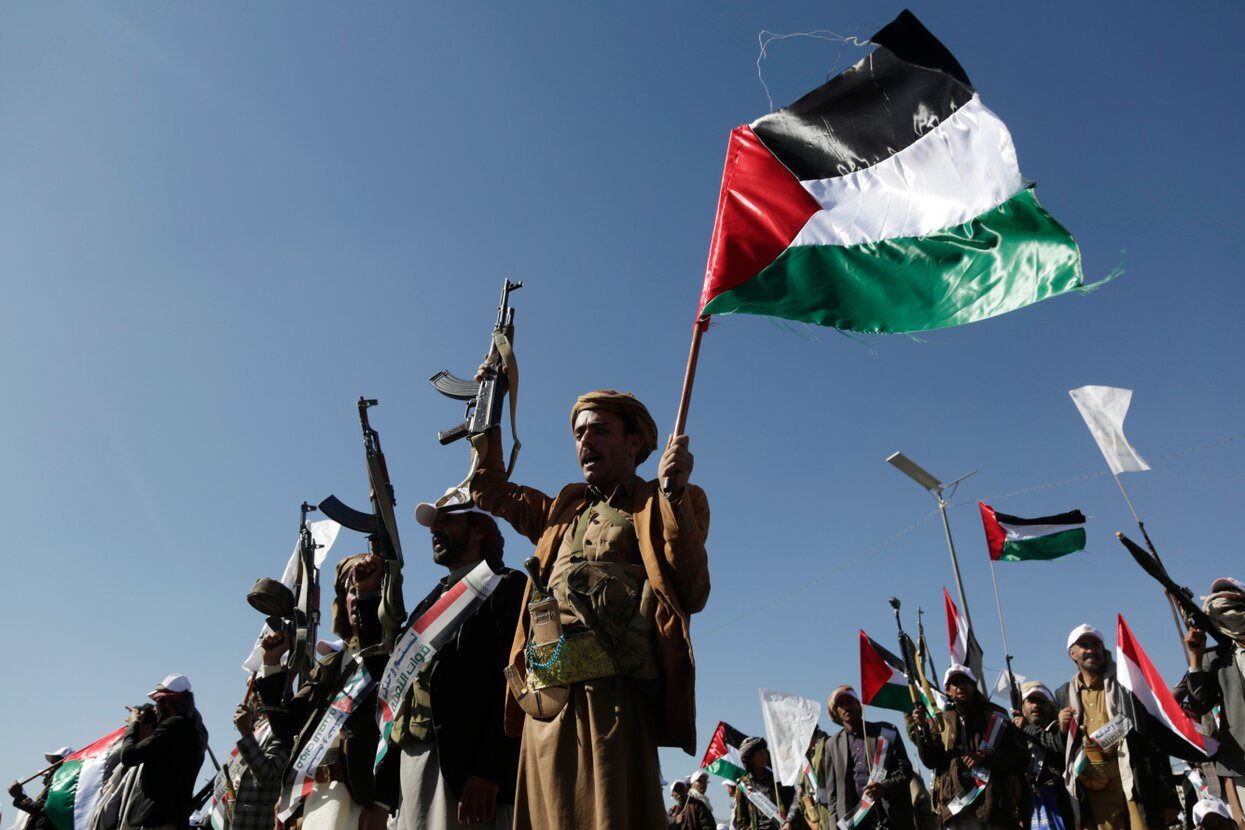
Houthi militants with Palestinian flags, 2023. Photo: Mohammed Hamoud / Getty Images
The alliance between “Ansar Allah” and the IRI took on an asymmetric character. The Persians began supplying their partners with weapons: including RPGs, surface-to-air missiles, multiple rocket launchers, and drones. Officers of the Islamic Revolutionary Guard Corps began training the Houthis and coordinating their actions. Finally, Tehran took on financial and economic support for the militants. In return, the ayatollahs received a relatively cheap and quite reliable tool of pressure in the strategically important south of the Arabian Peninsula — near the Red Sea and the Bab el-Mandeb Strait, both crucial to global trade.
The Houthis’ importance for world politics only grew after the attack by Palestinian terrorists on Israel on October 7, 2023. “Ansar Allah” expressed solidarity with another Iranian proxy, Hamas, and tried to help its comrades in practice. True, almost all attempts by the Yemenis to hit Israel with missiles and UAVs did not cause much damage. But when the Jewish state began its retaliatory operation “Extended Arm” in 2024, the results for the Houthis were unpleasant. The IDF destroyed power plants, military camps, port and other infrastructure in the part of Yemen controlled by the militants. Several top figures of the group were killed, including “Prime Minister” Ahmed Ghaleb al-Rahawi.
“Ansar Allah” proved far more effective not in the air, but at sea. In October 2023, the militants turned to piracy, attacking cargo ships on the pretext of their real or alleged links to Israel. In response, on December 18, the Joe Biden administration in the US, with the support of European and Arab partners, announced the creation of an international coalition. Coalition warships began patrolling the waters around Yemen.
U.S. Navy sailors escort a merchant vessel, 2024. Photo: mensnow.ru
After this decision, successful tanker seizures by the Houthis almost ceased. Their attacks on passing commercial ships became limited mostly to symbolic shelling. Nevertheless, the effect had already been achieved: business panicked, freight and insurance became more expensive. Sailors increasingly took the longer route around Africa, and as a result oil and other goods became more expensive. On May 6, 2025, the new U.S. president Donald Trump announced that the Houthis had allegedly stopped their attacks and halted the operation near Yemen — of course, the group immediately went back to its old ways.
“The Houthis’ latest attacks are best characterized as a classic escalation designed to demonstrate capabilities and aggressiveness with maximum effect. This time, the Houthis assessed the risk as low and assumed they were not facing real rapid-response forces, as in previous attacks. The threat to shipping has not gone away, and it was only a matter of time before the Houthis intensified their attacks, which are accompanied by a well-organized propaganda war”
- Farzin Nadimi and Noam Raydan, American orientalists
The maritime successes of “Ansar Allah” in 2023-2025 interested the Russian authorities. Moscow had not previously paid much attention to Yemeni affairs, but now it had become convinced of the Houthis’ effectiveness — with limited resources they drove up oil prices and complicated Western trade with East Asia. On January 25, 2024, the group’s representative Mohammed Abdulsalam was received with fanfare in the Kremlin, after which such contacts became regular.
Since then, Western media have repeatedly reported on Moscow’s multifaceted assistance to its new friends: weapons, food, and intelligence data. For a time, the Houthis even deceptively recruited compatriots from the occupied territories to fight in Ukraine.
***
For now, the international community still has not really decided what to do about the “Ansar Allah” problem. The group itself is adamantly unwilling either to disintegrate or to move toward peaceful coexistence with its neighbors. It is expanding its zone of control and opening new fronts of activity — both in its own interests and on behalf of external sponsors.
Yes, Saudi Arabia is once again trying to assemble an anti-Houthi alliance. But apparently, even if this initiative succeeds, the new coalition will again be limited to targeted strikes on infrastructure and the militants’ top leaders. Neither in Riyadh nor in other Arab capitals are they likely ready to launch a full-scale campaign involving the occupation of Yemen and the risk of a prolonged unpopular war.
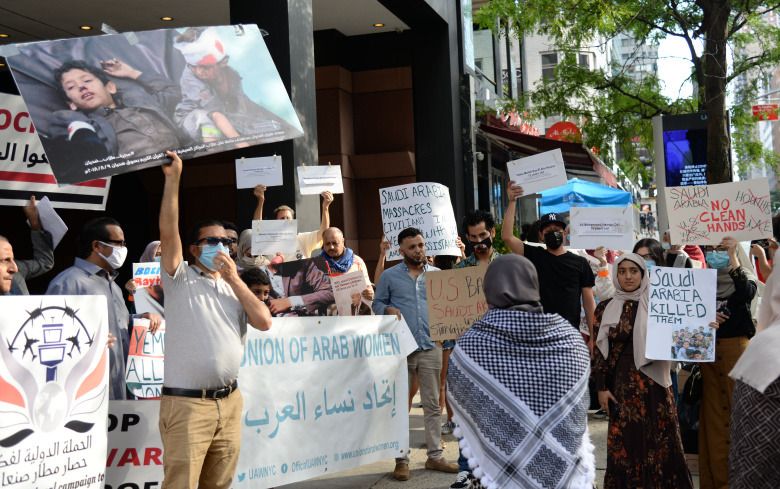
Pro-Houthi demonstration in New York: protesters condemn the blockade and intervention against the movement-controlled part of Yemen initiated by Saudi Arabia. August 14, 2020. Photo: Wikipedia / Felton Davis
So in the foreseeable future, the Houthis will continue to run Yemen — the utter poverty and total devastation around them here serve them as even better allies than Tehran and Moscow. And that is one more reason to reflect on how fragile the world order on the planet has become. A group that grew out of tribal militias in one of the poorest countries in the world is capable of harming international trade, artificially raising oil prices, and imposing its agenda on key powers. And, most importantly, there are always buyers for these services among the Houthis.
If you enjoyed this article, consider making a donation — one-time or, even better, monthly. Your support helps us motivate our authors and become better with every article.
Our organization is recognized by the Internal Revenue Service (IRS) as a 501(c)(3) tax-exempt, charitable organization, which means that all contributions made to us are tax-deductible to the fullest extent permitted by U.S. law. Individuals may generally deduct charitable contributions of up to 60% of their Adjusted Gross Income (AGI) for cash donations made to qualifying 501(c)(3) organizations. For donations of appreciated assets (such as stocks or other long-term capital assets), the deduction is typically limited to 30% of AGI, based on the fair market value of the asset. C-corporations may deduct charitable contributions of up to 10% of their taxable income for donations made to eligible charitable organizations.
By submitting a donation, you confirm that you have read and accept the following documents: Privacy Policy and User Agreement, and also give consent to the processing of your personal data.
If you would like to unsubscribe from a monthly donation, please email us at: [email protected]