On December 5, 1994, Ukraine signed the Budapest Memorandum with three nuclear powers who guaranteed its security and independence in exchange for giving up its stockpile of nuclear weapons. This agreement was supposed to prevent any conflict between Ukraine and Russia. But it turned out to be a useless piece of paper.
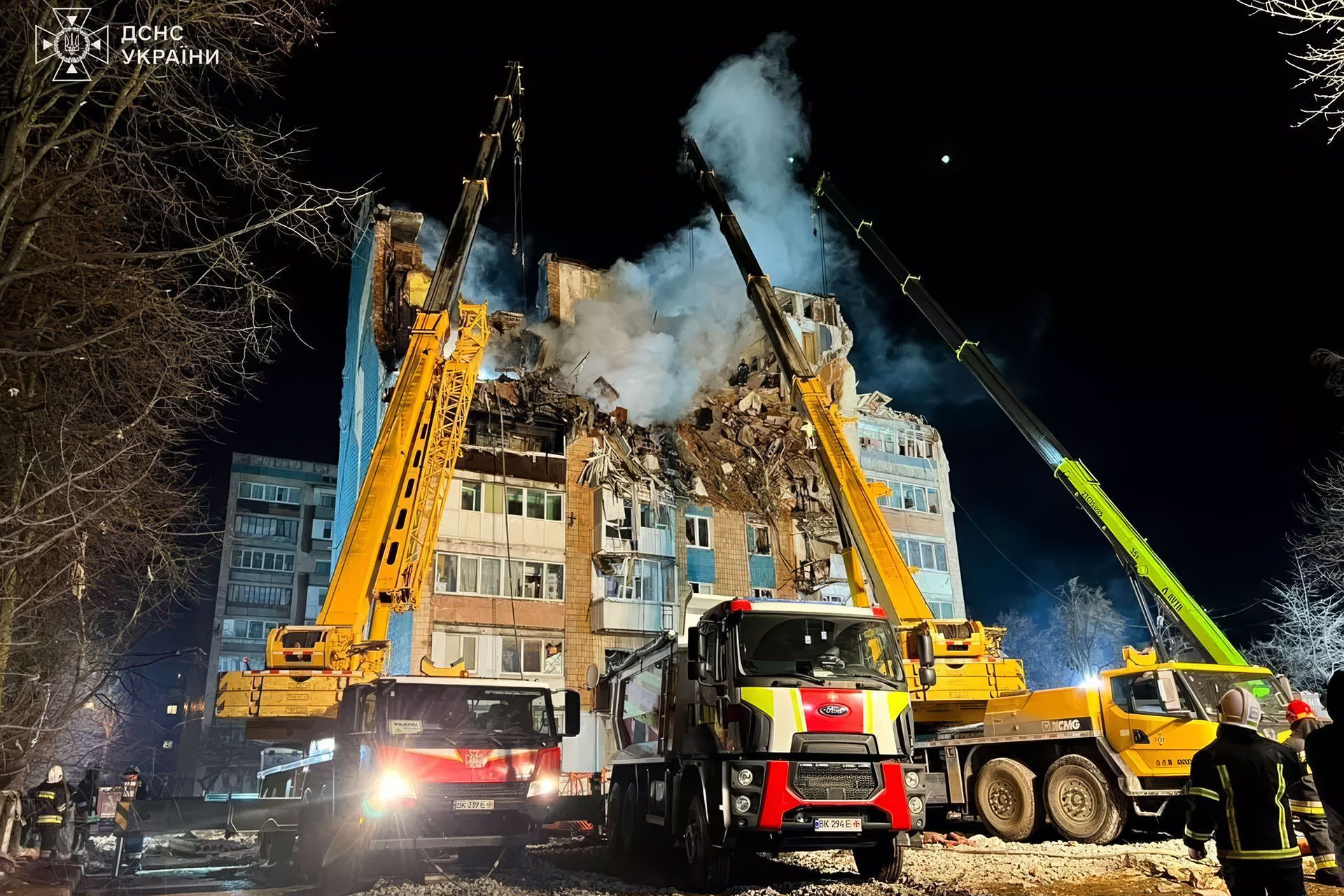
Residential building in Ternopil, Ukraine, destroyed after a missile strike by the Russian Armed Forces, night of November 19, 2025. 36 people died, including seven children. Photo: Wikipedia / State Emergency Service of Ukraine
This week, the saga around whether there are 28, 19, or 27 points in the peace plan for Ukraine ended in nothing (just as “Most” previously predicted). The meeting of delegations from the US and Russia at the Kremlin did not lead to any concrete results. In fact, the much-tormented act wasn't even discussed there. Instead, some four new documents from unknown Moscow authors surfaced, which the American guests dutifully took back across the ocean, thus successfully closing the loop. So to summarize: for yet another time in four years of war, the mountain hasn't even given birth to a mouse in the form of at least a New Year's truce.
On the calendar, this latest date of failed peace almost coincided with the anniversary of the Budapest Memorandum on December 5, 1994. An agreement from the not-so-distant past that seemed to make any conflict between Ukraine and Russia fundamentally impossible.
31 years ago, Kyiv pledged to transfer its share of the Soviet nuclear legacy to Moscow, and the Russian leadership promised not to lay claim to their neighbors’ territories.
As we know, the Ukrainians kept their word, but their partners conveniently forgot about their promises. They forgot, even though the then-leaders of the United States and the United Kingdom also signed in Budapest. Why did this happen?
From “cutlet” to independence
To understand the nature of the 1994 memorandum and how it was perceived by Western elites, it’s worth rewinding three years—to 1991, in the days of the USSR’s collapse. In modern Russia, there’s a myth that separatism in the Soviet republics was welcomed, if not directly managed, by the US. But reality was much more complicated—right up to the end of 1991, the US believed that a reformed Soviet Union should remain on the political map. Only the loss of the Baltic states and, at most, the South Caucasus was accepted.
Most of the union republics were considered too “Russian” to claim sovereignty. This included Ukraine.
A vivid confirmation of this is US President George H. W. Bush’s visit to still-Soviet Kyiv on August 1, 1991. The American leader spoke before the Supreme Soviet of the Ukrainian SSR and urged listeners to stay in the federation (at that time, the republic had declared sovereignty but was still part of the Union). Bush called the idea of Ukrainian secession “suicidal nationalism”. He insisted that reformers and democrats were now in power in Moscow, and through dialogue with them, Ukraine would become a full-fledged part of a renewed USSR. Apparently, the speaker genuinely believed in the possibility of restructuring the former Cold War adversary and thought the collapse of the Soviet empire would inevitably lead to a war of all against all.
Bush actually came here as Gorbachev’s mouthpiece. In many ways, he sounded less radical than our own communist politicians on the issue of Ukrainian sovereignty.
- Ivan Drach, leader of the national-democratic People’s Movement of Ukraine
But less than three weeks later, the GKChP coup broke out in Moscow, proclaiming a great power agenda.Authorities in various republics became equally disillusioned with the idea of a renewed federation, and Ukrainians were the pioneers here. On August 24, 1991, the Kyiv Supreme Soviet, chaired by Leonid Kravchuk, adopted a declaration of state independence. Most of the other “sisters” from the now-feuding family followed their example. A few months later came the memorable Belovezh Accords.
Prime Minister Vitold Fokin and President of Ukraine Leonid Kravchuk (left) at the signing of the Belovezh Accords on the dissolution of the USSR, December 8, 1991. Photo: Wikipedia / RIA Novosti archive
In this context, Bush’s speech in Kyiv began to look absurd. It turned out that a foreign politician was begging Kravchuk to stay in a state that Kravchuk himself would abolish with a stroke of his pen in a Belarusian nature reserve just four months later. No wonder that in the US, the speech was dismissively nicknamed “the chicken speech”, referencing Kyiv’s famous chicken cutlet. Many Americans were outraged: their president wanted to save a recently hostile empire and deny whole nations the right to self-determination, people who had suffered greatly under communism.
Bush and his advisor on Eastern European affairs, Condoleezza Rice, repeatedly defended the “Kyiv cutlet.” It can’t be said their arguments were entirely weak. After all, in the summer of 1991, the relatively peaceful dissolution of the USSR that we know today was far from obvious—meanwhile, another former socialist federation, Yugoslavia, was dying in blood and fire before the West’s eyes. So it was necessary to convince the leaderships of the union republics “to act sensibly, so as not to provoke the use of force”.
Demonstration in support of independence. Kyiv, summer 1991. Noteworthy is the slogan on the banner: protesters cite Russian Boris Yeltsin as an example to their own leader, Leonid Kravchuk. Image: forbes.ua
First and foremost, American leaders were dissatisfied that the collapse of the Soviet Union would mean the world would get four new nuclear states instead of just one (Russia, Ukraine, Kazakhstan, and Belarus). While Moscow’s right to nuclear weapons was not disputed in Washington, the White House found no place in the nuclear club for its former republics.
The “Crimea is ours” that never happened
Returning to the painful topic of the USSR’s collapse, we can’t ignore another persistent Russian narrative. It claims that the republics’ secession was caused by the intrigues of local elites hungry for wealth and unlimited power, not the will of ordinary people loyal to Soviet unity. Legally, this is not true—most former Soviet republics confirmed sovereignty in referendums, and everywhere the overwhelming majority of citizens voted “yes.”
The former Ukrainian SSR was no exception. On December 1, in the All-Ukrainian referendum, 90.32% of those who went to the polls supported independence, with turnout at 84.18%. Supporters of statehood won throughout Ukraine, but the “yes” votes were unevenly distributed on the map. Eight southeastern regions showed results below the national average. While Donetsk and Luhansk did not show strong pro-Soviet sentiment (about 84% “yes” in both), the figures for Sevastopol and the Republic of Crimea were much lower (57.07% and 54.19%, respectively). At the same time, the peninsula had Ukraine’s lowest turnout (below 68%)—likely, the most convinced opponents of independence simply refused to vote on principle.
Only an independent Ukraine can join any interstate community as an equal partner, first and foremost with our closest neighbor, Russia. Ukraine is developing and deepening ties with Russia, with other former USSR republics, and establishing interstate relations with countries around the world
- from the address of the Presidium of the Supreme Soviet of Ukraine to citizens before the December 1, 1991 referendum
The Crimean problem surfaced in the first months of Ukrainian independence, when the economy collapsed. Much of this was inevitable—under communism, the backbone of the Ukrainian SSR’s economy was the mining and metallurgical complex, which only seemed efficient under a command system. With its collapse, these illusions vanished—enterprises shut down in Crimea and almost everywhere in Ukraine, unemployment soared, and hyperinflation raged. Peninsula residents embraced the idea that their special republic status, granted at the very end of the Soviet era, gave them special rights—including in relations with Kyiv and Moscow.
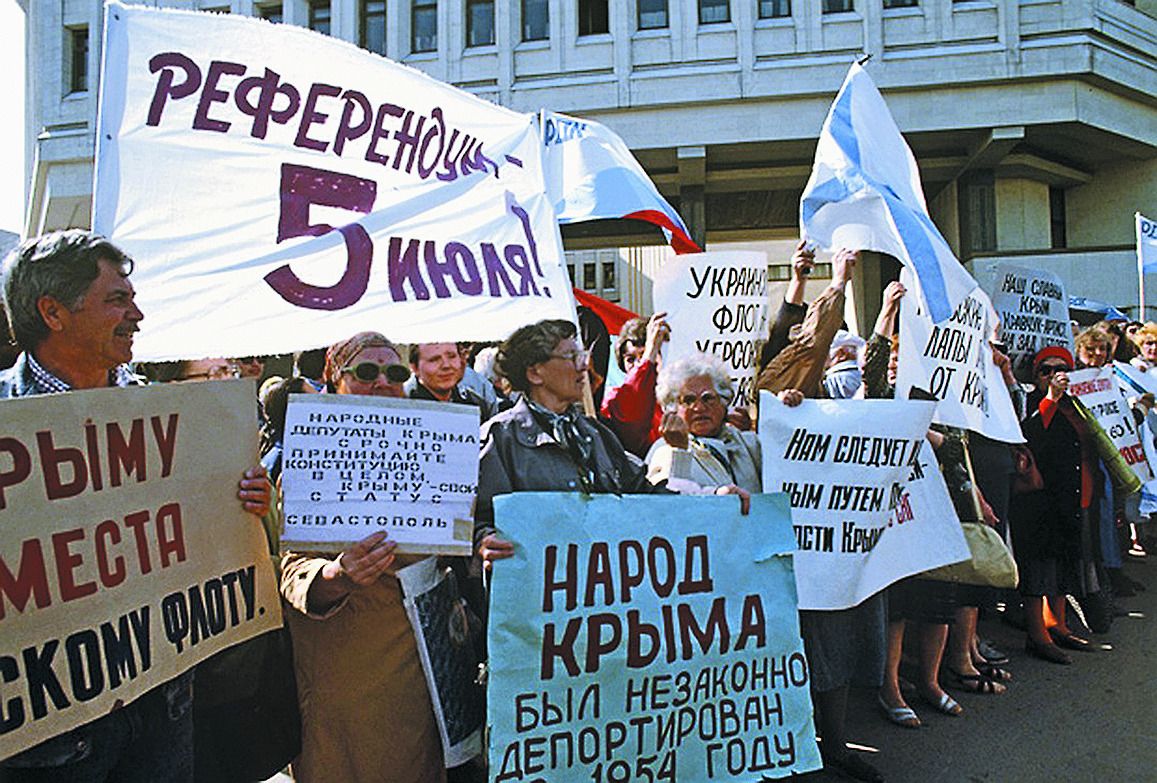
Pro-Russian rally in Crimea, presumably 1992. The sign held by the woman in the foreground is telling: the transfer of Crimea to the Ukrainian SSR in 1954 is equated to the forced deportation of Crimean Tatars to Central Asia in 1944. Image: istorik.rf
At the time, Crimea had its own constitution, declaring the territory a state in association with Ukraine. The central authorities didn’t like this, but were reluctant to use force on such a sensitive issue. And in January 1994, the peninsula elected its own separate president—former investigator Yuri Meshkov. The name of his party bloc, “Russia,” said it all. In the early 1990s, this bloc also controlled the republican parliament. At the time, Russian citizens held government posts in Crimea, people paid in rubles at stores, and even lived by Moscow time, not Kyiv time.
The “Crimea is ours” scenario in 1994, it seems, didn’t happen only due to circumstances. Meshkov, after falling out with his bloc allies, proved to be a weak and quarrelsome leader. This disappointed Russia itself, which at the time was more concerned with its own separatists than with those abroad. By autumn 1994, Meshkov’s bloc was mired in infighting and lost popularity; a year later, its leader lost power and was forced to move to Moscow. But the legacy of the Crimean events remained in Ukraine. If only because, soon after, pro-Russian movements calling for federalization appeared in the Donbas, which was catastrophically impoverished after the USSR’s collapse.
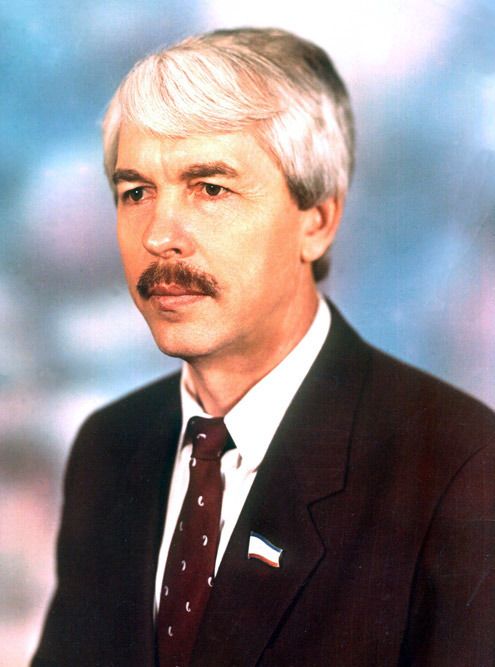
Unlucky president of Crimea in 1994-1995, Yuri Meshkov. The politician died in 2019, having witnessed the annexation of Crimea (he tried to return, but found no place in the peninsula’s new politics). Photo: Wikipedia / Mudrya
All this could not help but worry the Ukrainian authorities. They remembered the “Voschanov memorandum” from August 1991. Amid the secessions of the union republics, Yeltsin’s aide Pavel Voschanov said that the RSFSR could claim part of its neighbors’ territories. Ukraine was meant first and foremost: both because it led the “flight” from the Union, and because of its large Russian-speaking regions.
Now, it seems, that strange statement may have been a tactical move by Boris Yeltsin against his Kremlin rivals, but in Kyiv, the “memorandum” was perceived as a sword of Damocles. Their anxiety was compounded by another factor—the United States was also putting strong pressure on the Ukrainians.
One document against the US and Russia
As already mentioned, Washington didn’t like that the USSR’s collapse threatened to radically increase the number of nuclear states. And Ukraine was at the top of this agenda.
Immediately after regaining independence lost 70 years earlier, the country unexpectedly found itself the world’s third-largest nuclear power.
In the early 1990s, Kyiv possessed 176 intercontinental missiles, 1,500–2,100 strategic nuclear warheads, 2,800–4,200 tactical nuclear warheads, and 30–43 heavy bombers equipped with nuclear weapons. The range in estimates is explained by the fact that under the USSR, all strategic weapons were controlled from Moscow. Even senior officials in the republics barely knew how many warheads the center had placed on their territory.
Soviet nuclear complex “Pioneer” in the Ukrainian military museum. Vinnytsia, 2009. Photo: Wikipedia / George Chernilevsky
Of course, Americans didn’t think Ukraine would suddenly start a nuclear war in Europe. But they were worried that Soviet weapons of mass destruction from the former Ukrainian SSR could, after backroom deals, end up anywhere in the world. Then the missiles and warheads would serve not Kyiv, but someone like Muammar Gaddafi, the Taliban, or someone even more extreme. Finally, the newborn state, on the brink of economic disaster, might simply not have the funds to maintain this dangerous infrastructure—no one wanted another Chernobyl.
After the Chernobyl disaster, anti-nuclear sentiment in Ukraine was strong, even if it concerned “peaceful atom.” In fact, protests against nuclear energy were the start of Rukh [the Movement for Independence] and mobilization against the Soviet Union
- Serhii Plokhy, Ukrainian historian
Most Ukrainian politicians and the first president, Leonid Kravchuk, personally advocated immediate denuclearization. Back in 1990, the authors of the national Declaration of Sovereignty stated the state would not produce, use, or acquire nuclear weapons. After declaring independence, on October 24, 1991, the Verkhovna Rada announced that Ukraine’s possession of nuclear weapons was temporary and the state would get rid of them as soon as possible. Two months later, Ukrainian politicians confirmed these intentions when creating the CIS.
However, the US wanted action, not words. On January 12, 1994, during a personal meeting, US President Bill Clinton pressured President Kravchuk. Quick denuclearization—period, or else face the consequences. Kravchuk had no choice but to agree. At that point, his presidential seat was already shaky. A severe economic situation led to a political crisis: parliament turned against the president. Unlike similar events in Russia in 1993, the sides reached a compromise—early elections for the head of state and the Verkhovna Rada were set for spring-summer 1994.
Clinton and Kravchuk at a press conference after their January 12, 1994 meeting. Photo: Marcy Nighswander / AP
Initially, it was thought Kravchuk would win re-election thanks to administrative resources. But on July 10, 1994, the incumbent lost the second round to his namesake and former prime minister Leonid Kuchma (45.05% vs. 52.14%). Most citizens, facing a dire economic situation, preferred the more businesslike engineer from Dnipropetrovsk (now Dnipro) to the sly party bureaucrat from Volyn. It was important that the Russian-speaking Kuchma was fully supported by Moscow—he seemed an absolutely understandable and entirely pro-Russian “red director.” It was after the ex-premier’s victory that Yeltsin’s entourage stopped flirting with separatists in Crimea and Donbas.
At one time, Kuchma opposed a complete renunciation of nuclear weapons. He argued that, just in case, it was worth keeping at least the RT-23 “Molodets” intercontinental missiles (SS-24 Scalpel in NATO classification). But, as often happens in politics, Leonid Danylovych ultimately had to implement the very decision he had fought against. The temptation was too great to convince the US of his reliability and to get Russia’s official recognition of the 1991 borders with a single document.
What they should have remembered
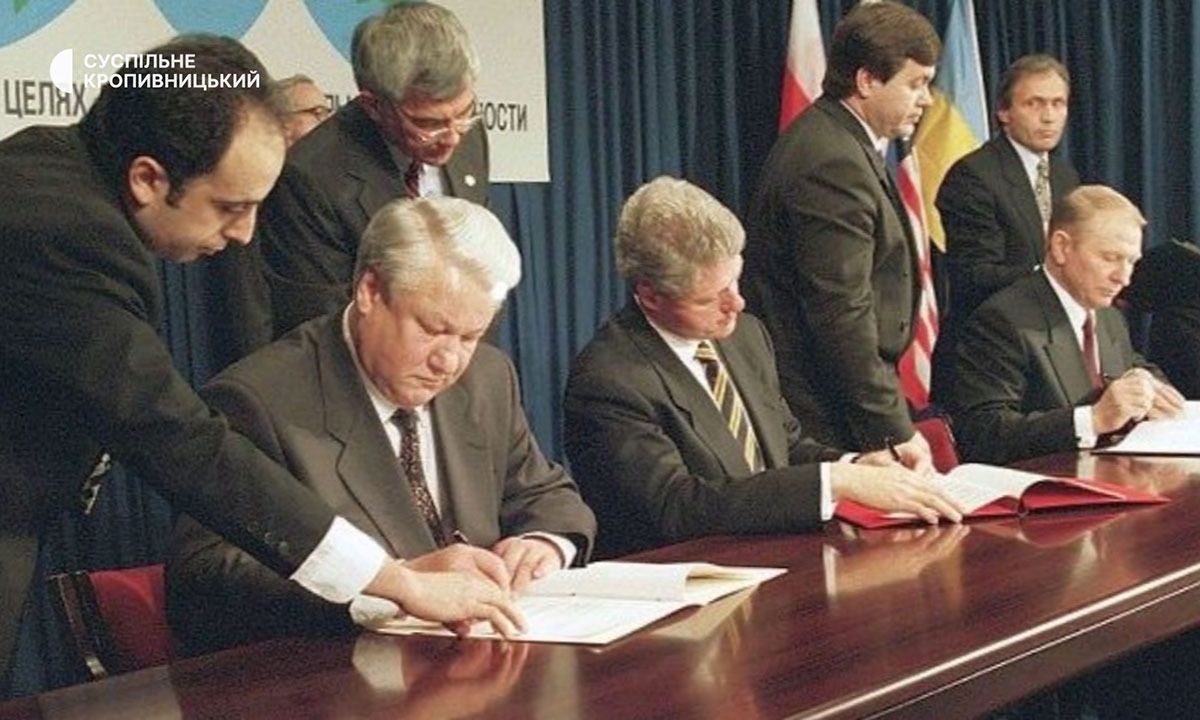
On December 5, 1994, Kuchma, Clinton, Yeltsin, and British Prime Minister John Major signed the Budapest Memorandum. The venue was partly accidental—a CSCE summit was being held in the Hungarian capital at the time. It was there that world leaders decided to conclude this landmark agreement.
The text consisted of just six short points. The US, Russia, and the UK, in exchange for Ukraine’s non-nuclear status, committed to::
respect its independence and state borders;
refrain from the threat or use of force;
avoid economic coercion to the detriment of national sovereignty;
seek immediate UN Security Council action in case of aggression against Ukraine;
not use nuclear weapons against it, except in exceptional circumstances (nuclear aggression by a third state with Ukrainian support);
consult with Kyiv in the event of any disputes.
At the time, signing this act was a major event in world politics—especially since identical memoranda were signed with two other would-be nuclear states, Belarus and Kazakhstan. Over time, this detail was forgotten, as was another important point:
by winter 1995, the brief honeymoon between post-Soviet Russia and the US and Europe was ending.
The first post-Soviet disagreements were emerging—primarily over the Nagorno-Karabakh conflict. Thus, the denuclearization agreements of three post-Soviet states played a significant tactical role. No return to the Cold War, new partners in a new world are united on key international issues.
Yeltsin, Clinton, Kuchma, and Major (left to right) sign the memorandum on Ukraine’s non-nuclear status. Budapest, December 5, 1994. Photo: suspilne.media
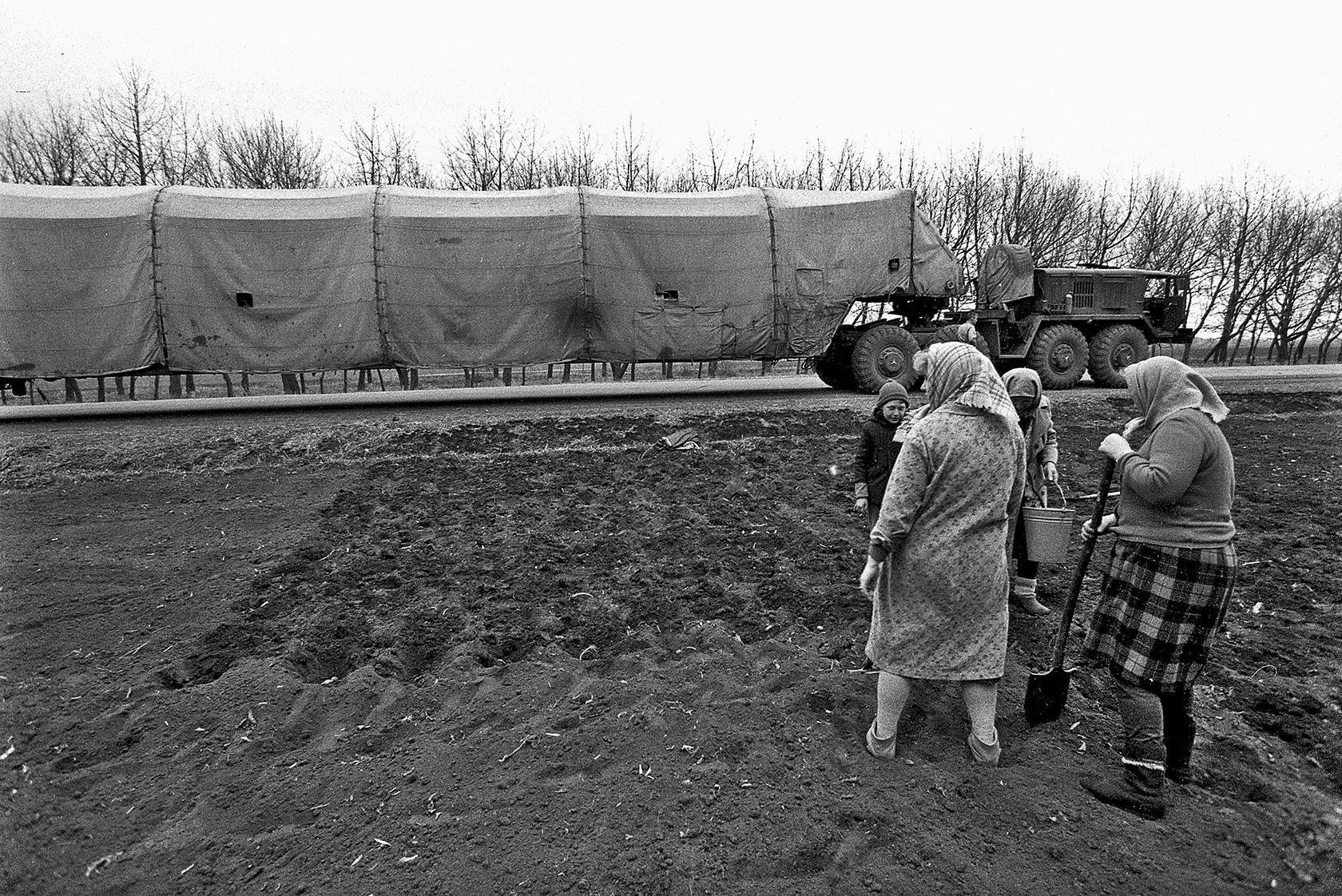
Over time, this aura faded, disagreements between Moscow and the “collective West” grew year by year, and the political paths of Ukraine, Belarus, and Kazakhstan diverged. Incidentally, at the turn of the millennium, all three republics honestly fulfilled their Budapest commitments—de facto handing over their nuclear stockpiles to Russia. For Kyiv, this required objectively more effort than for Minsk or Almaty/Astana, but by autumn 2001 the process was complete. On October 30, 2001, in Mykolaiv region, the last ICBM silo was ceremonially destroyed. The site was symbolically plowed and seeded.
In short, history took its course, but the Budapest Memorandum remained. And you don’t have to be an international lawyer to see the document’s weaknesses. It was too superficial, as indicated by its very classification—memorandum, “something to remember.” In law, such papers are usually interpreted as letters of intent, not real mutual obligations: with checks and balances, parliamentary ratification, specified terms, security guarantees, and more. So ideally, memoranda are just a foundation for stronger agreements.
A convoy with a dismantled SS-19 missile passes by farmers planting potatoes. Mykolaiv region, Ukraine, March 1994. Photo: Valery Miloserdov / pravda.com.ua
Ukrainian authorities never tried to fill this gap with the Western powers, but did so with Russia under Kuchma. On May 31, 1997, the two neighboring states signed a full-fledged Treaty of Friendship, Partnership, and Cooperation. Article 2 directly declared mutual respect for territorial integrity and the inviolability of existing borders. Legally, the treaty would remain in force until April 2019—Ukraine terminated it after losing Crimea and the first Donbas war.
“If Ukraine acts differently, economic sanctions will begin”
However, doubts about the usefulness of “Budapest” for Ukraine arose much earlier. The agreement was actively criticized by one of its own signatories—second president Leonid Kuchma. Four years before Euromaidan, he said the memorandum turned out to be a worthless piece of paper, and Kyiv did not receive real security guarantees from the guarantor countries.
In 1994, I signed the Budapest memorandum at the OSCE summit, guaranteeing Ukraine’s security from the “nuclear club.” The then-president of France, François Mitterrand, said: “Son, don’t trust this document—they will deceive you.”
- Leonid Kuchma, October 2009
That same year, sitting president Viktor Yushchenko considered a more advanced agreement based on the memorandum. Nothing came of it, and in 2010 Yushchenko lost the election to pro-Russian rival Viktor Yanukovych in a landslide. The country’s history was rapidly heading toward one of the main turning points in 21st-century world politics—the Revolution of Dignity in 2014–2015.
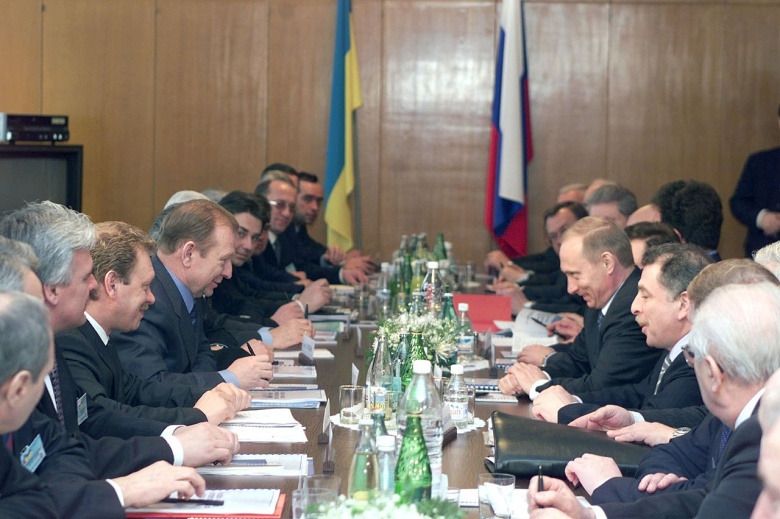
Presidents of Ukraine and Russia, Leonid Kuchma and (center, facing each other), at a meeting at Yuzhnoye Design Bureau. Dnipro (Dnipropetrovsk), February 2001. Photo: Wikipedia, Kremlin.ru
The “Budapest” topic resurfaced in Ukraine in the months before the full-scale invasion. In summer 2021, one of the leaders of the ruling Servant of the People party, Davyd Arakhamia, directly called the country’s nuclear-free status “Kravchuk’s fatal mistake.” On February 19, 2022, President Volodymyr Zelensky acknowledged the possibility of revisiting the Budapest Memorandum.
The new generation of Ukrainian politicians were countered posthumously by Leonid Kravchuk, who insisted that at the time, neither he nor Kuchma had a choice. The ex-president emphasized that a significant part of the arsenal was nearing the end of its service life, and Kyiv could not service the warheads on its own. Ukraine’s nominal status as the world’s third nuclear power was an illusion—the launch systems remained in Russia (though Ukrainian military disputed this).
Clinton [at the January 12, 1994 meeting] said that if Ukraine acted differently, economic sanctions would begin. Could Ukraine, just born, immediately start by becoming a threat to the world and to Europe?
- Leonid Kravchuk, August 2018
On the other side of the border (now also the front), the Budapest Memorandum was recalled much less often. Usually, the Kremlin and official media interpreted the 1994 agreement as a framework treaty under which Russia had no clear obligations. And even if it did, Ukraine was the first to violate it with the “coup” in February 2014. What documents can there be now, when a Banderite junta in Kyiv is destroying Russian people?
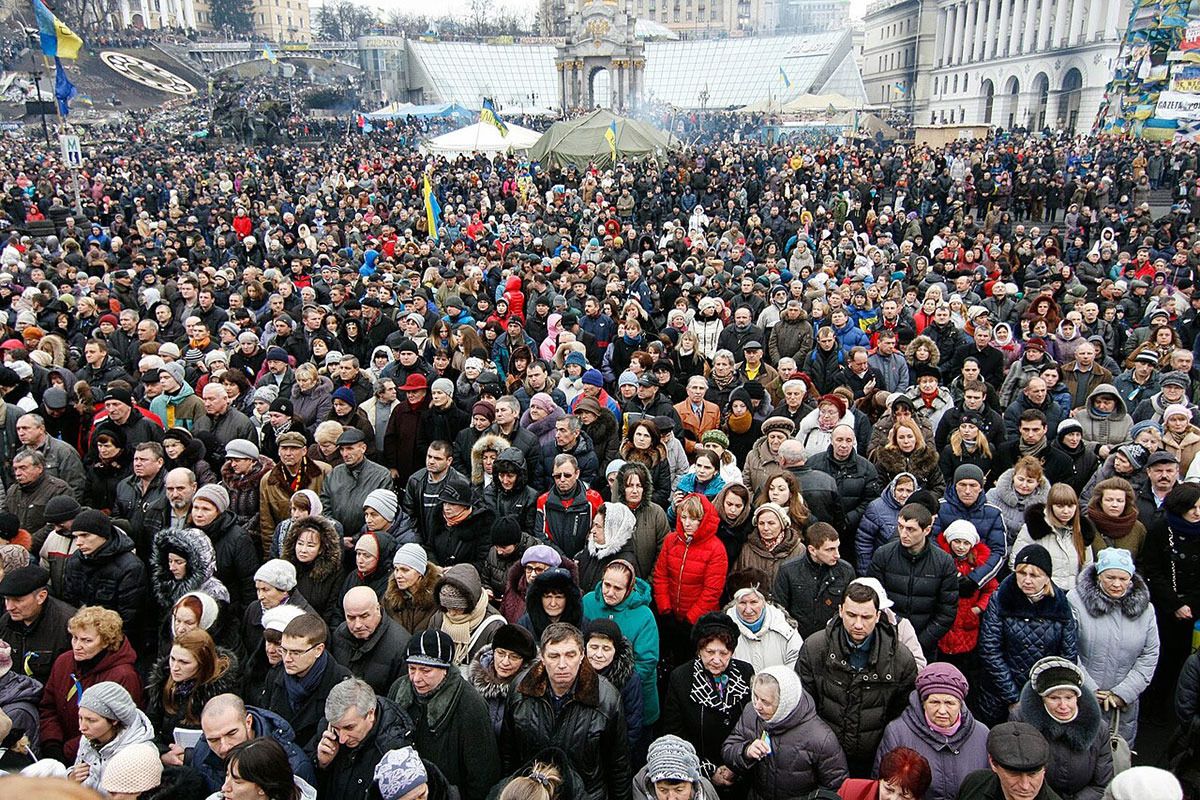
Participants in Kyiv’s Euromaidan the day after Viktor Yanukovych fled the country, February 23, 2014. Photo: Wikipedia
The second part of this crude dichotomy is, of course, disingenuous. There was no coup in Kyiv in 2014, and there was no “emergency brake” clause for a coup in either the memorandum or the 1997 friendship treaty. But it’s hard to argue with the first part of the Kremlin narrative. The infamous “agreement of intent,” lacking real guarantees for Ukrainians, freed Russia from any responsibility for violations.
***
The key reason for the failure of the Budapest Memorandum regarding Ukraine is obvious. Only one of the four parties—the Ukrainians themselves—ever regarded this document as significant. The other three signatories saw it as a symbolic act, concluded for tactical reasons, to show that all was well between former Cold War adversaries. The Kremlin recognized the new status of its former province, and the Americans and British seemed alert, but did not seriously challenge Russia’s special status in the post-Soviet space.
But this balance proved too unstable. As much as Moscow reserved the right to reverse course depending on circumstances, London and Washington were equally unwilling to ensure real compliance with the memorandum. Telling, at least, is the sardonic comment by American diplomats to their Ukrainian colleagues in June 2018: gentlemen, we gave you assurances, not guarantees. And if there are no guarantees—what can you ask of us? It’s naive to think that after February 24, the Western political establishment has changed this approach.
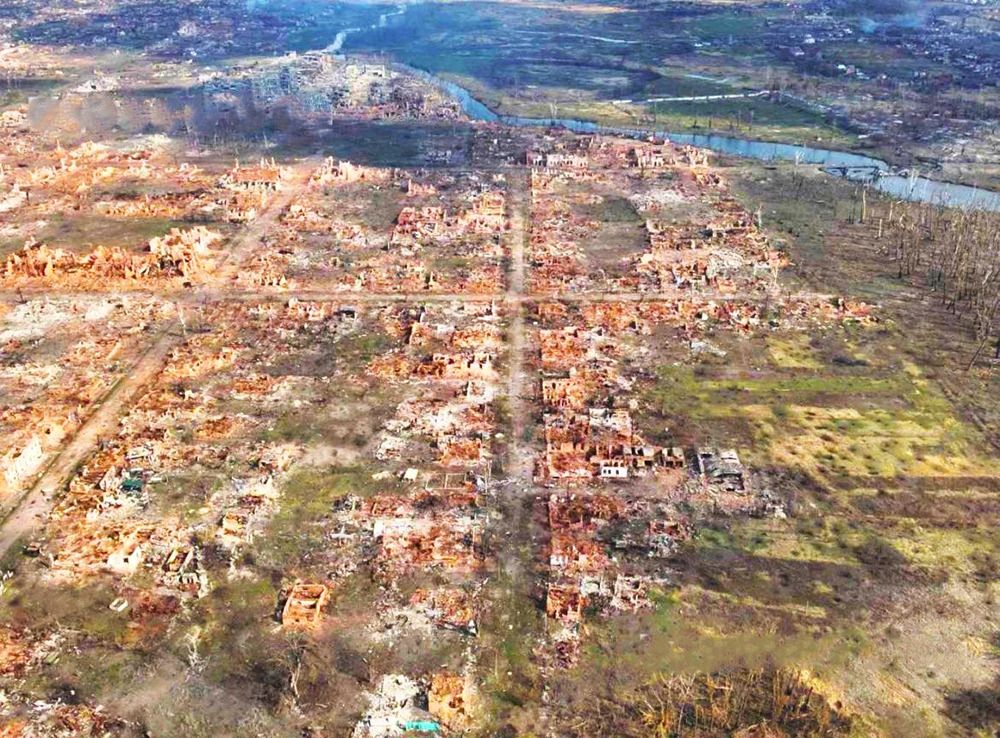
Neighborhoods of Vovchansk, Kharkiv region, Ukraine, destroyed by the Russian army, April 2025. Photo: dumka.media / WarArchive
In March 2025, Trump’s special envoy Richard Grenell publicly said something like: the US cannot owe Ukraine for denuclearization, because 30 years ago Ukrainians didn’t give up anything of their own—they just returned Russian military property. Most users were outraged by this clumsy framing. But there were also defenders of Grenell, including high-ranking ones. For example, Republican Senator Mike Lee reposted the controversial tweet and added that there is and never was any treaty obliging the US to honor the Budapest memorandum.
For a long time, the West saw Russia as the Russian Empire. It knew nothing about the other countries Russia once conquered. It knew nothing about the other former Soviet republics. It didn’t know and didn’t want to know. The imperial lens is a very convenient way to look at the world.In the West, the idea that Russia should have its own sphere of influence and that one shouldn’t interfere is still a very popular theory.
Of course, some of Grenell and Lee’s compatriots have experienced a kind of reflection about “Budapest.” One of the fathers of the failed memorandum, Bill Clinton, back in 2023 admitted he regretted his role in the process—if I’d acted differently, maybe war wouldn’t have come to Ukraine. However, Clinton’s remorse is a matter of his own conscience. For the world (in both senses), it’s much more important that a similar rethinking reaches today’s White House. And so far, there’s no sign of that.
If you enjoyed this article, consider making a donation — one-time or, even better, monthly. Your support helps us motivate our authors and become better with every article.
Our organization is recognized by the Internal Revenue Service (IRS) as a 501(c)(3) tax-exempt, charitable organization, which means that all contributions made to us are tax-deductible to the fullest extent permitted by U.S. law. Individuals may generally deduct charitable contributions of up to 60% of their Adjusted Gross Income (AGI) for cash donations made to qualifying 501(c)(3) organizations. For donations of appreciated assets (such as stocks or other long-term capital assets), the deduction is typically limited to 30% of AGI, based on the fair market value of the asset. C-corporations may deduct charitable contributions of up to 10% of their taxable income for donations made to eligible charitable organizations.
By submitting a donation, you confirm that you have read and accept the following documents: Privacy Policy and User Agreement, and also give consent to the processing of your personal data.
If you would like to unsubscribe from a monthly donation, please email us at: [email protected]