“Siberianization” reflects the Russian authorities’ anti-European course, in which they have chosen complete economic dependence on China instead of cooperation with the West. Meanwhile, in China, there have long been dreams of reclaiming Siberian territories, which are considered there to have been unjustly ceded to the Russian Empire.
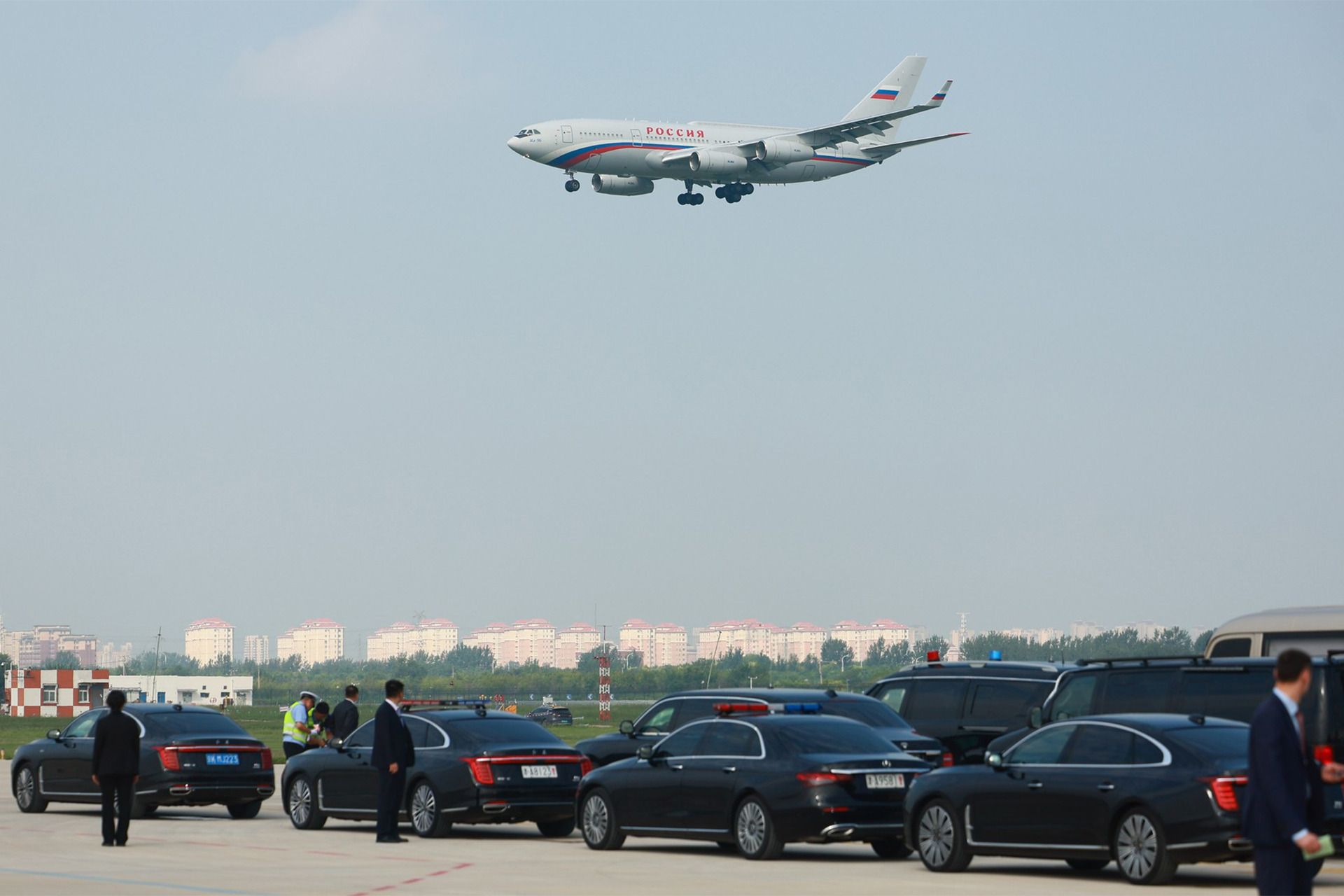
Waiting for the Russian delegation’s plane descending over Beijing Airport, September 3, 2025. Photo: kremlin.ru
Over the past year, Kremlin politicians and pro-Kremlin ideologists have been actively promoting the idea of “Siberianization” of Russia. This is the direct opposite of the idea of “Europeanization” of Russia, which was put forward back in the Perestroika era, when Mikhail Gorbachev spoke about the project of a “common European home.” The main proponents of “Siberianization” are Secretary of the Security Council of the Russian Federation Sergei Shoigu and pro-Kremlin ideologist Sergey Karaganov, who became “famous” for his proposal for nuclear strikes on European countries.
Karaganov states: “If Peter lived today, he would undoubtedly found a new capital in Siberia and greatly expand the window to Asia. Along with Moscow and St. Petersburg, Russia absolutely needs a third, Siberian capital. This is also required by the military-strategic situation that will develop over the coming decades.”
Another of his recent “geopolitical” revelations: “The country not only needs to victoriously end the war, but also its overly prolonged European journey of one and a half centuries. There is no future in western Eurasia.”
But despite the loud panegyrics to Siberia, the same imperial-centralist approach is evident here—Siberia is important not as a unique region, but as a new site for the Kremlin’s geostrategic ambitions. There is no talk of any real federalization—to give Siberians the right to develop their own regional and republican projects.
This idea is also supported by figures from the presidential administration. Deputy Head of the Presidential Administration Maxim Oreshkin claims that “Siberianization” is not an ideological construct, but an economic and geopolitical necessity dictated by objective factors: the shift of the world’s economic center to Asia, the need to ensure sovereignty over eastern territories, and the search for new growth drivers for the whole country.
But how exactly is such a large-scale project supposed to be implemented? Back in 2021, Sergei Shoigu proposed building five cities in Siberia with populations of up to a million people each, and even moving the capital there. However, against the backdrop of Siberia’s grim reality, this looks like pure fantasy.
One of the main problems in today’s Siberia is its rapid demographic decline. The entire population of Siberia today is about 16.5 million, whereas in Soviet 1989 it was more than 24 million. Currently, the annual outflow of Siberia’s population is 300,000 people.
Who will build these giant cities? Incidentally, the full-scale war against Ukraine launched in 2022, when Shoigu was Russia’s defense minister, has significantly accelerated Siberia’s demographic decline. It was under him that mass mobilization and recruitment for the war took place in Siberian regions, with local residents returning home as “Cargo 200.”
But officials pay no attention to such “details.” They come up with utterly fantastic projects like the “Angara-Yenisei Cluster”—a science and technology center in the Krasnoyarsk Krai, Irkutsk Oblast, Khakassia, and Tuva. The stated goal of this cluster is to turn Siberia’s resource potential into a source of sustainable innovative development for Russia. The project combines the extraction and processing of rare and rare-earth metals, the development of advanced materials, microelectronics, energy solutions, and artificial intelligence systems.
This project is supported personally by President Vladimir Putin, who encourages investors to invest in the “Angara-Yenisei Cluster.”
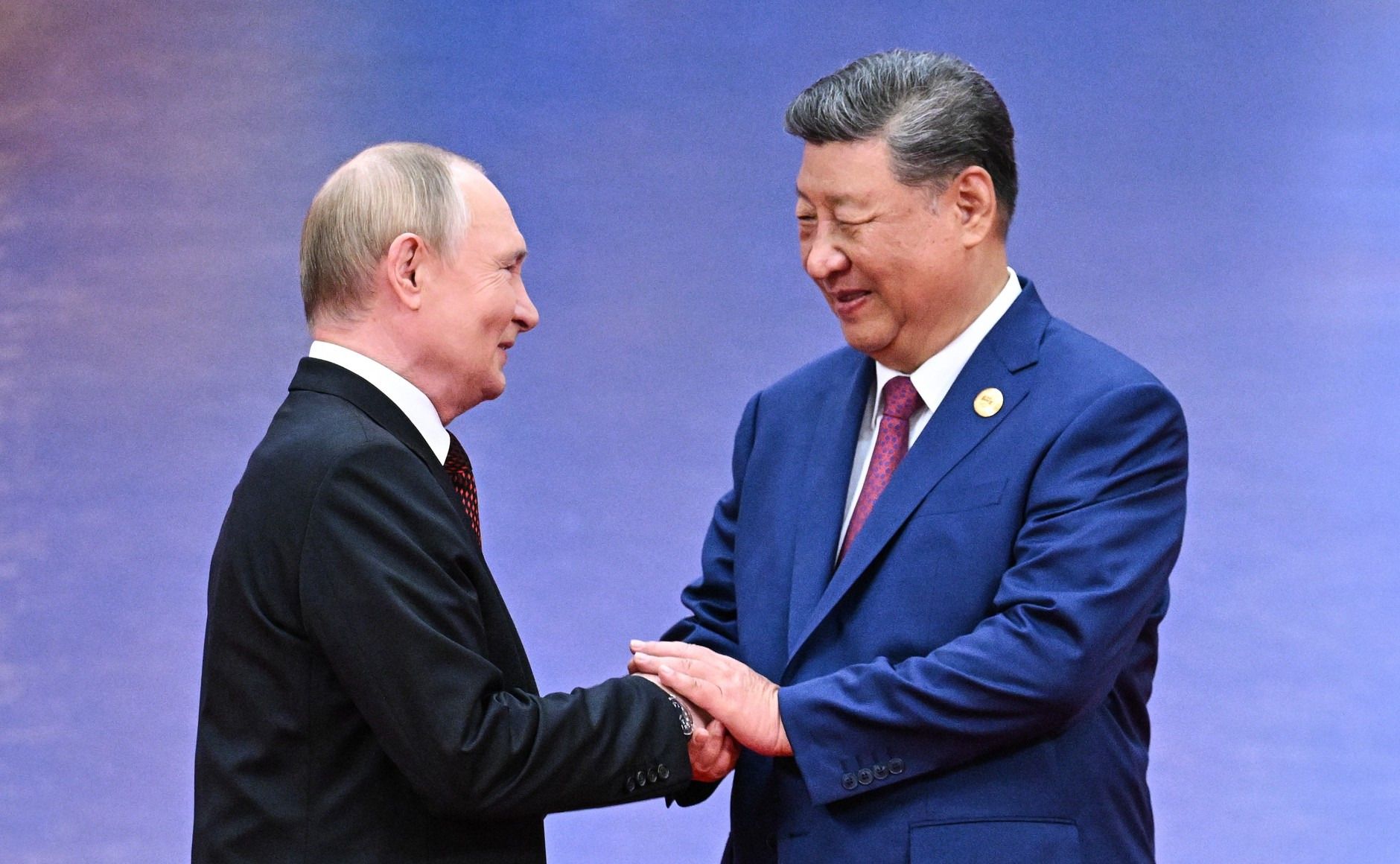
With President Xi Jinping of China at the welcoming ceremony for the heads of delegations attending the Shanghai Cooperation Organization summit, September 3, 2025. Photo: kremlin.ru
But where will the money come from to create this cluster, when the entire Russian economy is now militarized and focused on the war with Ukraine? There are simply no free funds available (and the cost is more than 700 billion rubles).
For example, in Krasnoyarsk, a city of over a million people, the authorities have long promised to build a metro. But all the money goes to the war. Economists have calculated that the cost of this construction (about 90 billion rubles) is equal to the amount Russia spends on about four days of war. Likewise, just four days of war “cost” as much as the never-built bridge over the Lena River in Yakutia, which the authorities have been promising to build since Soviet times. And in five days of this war, the entire annual budget of Novosibirsk (100 billion rubles)—the capital of the Siberian Federal District—is spent.
Another no less fantastic project is proposed for the territories of the Far East. In Primorsky and Khabarovsk Krais, the authorities plan to build three microelectronics plants. Currently, there are no such facilities in the region at all, but officials promise “special support measures.”
The presidential envoy to the Far Eastern Federal District, Yuri Trutnev, states: “Today our country continues its special military operation and needs us to learn how to produce a component base.”
Indeed, it is impossible to wage modern war without microelectronics. And given that all ties with Western countries that used to supply Russia with these products have been severed, it is necessary to invent something “of our own.” However, microelectronics is not something that can appear out of nowhere, from scratch. Experience and existing developments are absolutely necessary as a starting point.
According to the results of 2025, the Russian microelectronics market collapsed by 25%, and the share of domestic components barely exceeds a quarter. Therefore, imports of high-tech components from China are increasing. And the authors of this project do not hide—they are counting on close cooperation with Chinese partners. Using logistical proximity to China, they intend to purchase equipment for new plants there.
But how interested are Chinese companies themselves in such cooperation? It is unlikely that they are eager to create competitors to their own microelectronics industry in Russia. Therefore, they will likely try to secure a significant share in managing these plants, and only under such conditions will they be ready to invest. Furthermore, given the already mentioned critical demographic situation in Siberia and the Far East, it is likely that most of the workers in these plants will be citizens of China with the necessary technological experience.
Thus, without any war, China will gently and gradually “reclaim” the Far Eastern territories, which it considers to have been unjustly ceded to the Russian Empire in the 19th and early 20th centuries. Even official Russian media periodically report that China is already publishing maps with the historical names of these regions. This will become an unexpected but very symbolic response to Russia’s annexation of Crimea and other Ukrainian regions. And instead of the “Siberianization” of Russia that Moscow ideologists dream of, they will get its final Sinicization.
If you enjoyed this article, consider making a donation — one-time or, even better, monthly. Your support helps us motivate our authors and become better with every article.
Our organization is recognized by the Internal Revenue Service (IRS) as a 501(c)(3) tax-exempt, charitable organization, which means that all contributions made to us are tax-deductible to the fullest extent permitted by U.S. law. Individuals may generally deduct charitable contributions of up to 60% of their Adjusted Gross Income (AGI) for cash donations made to qualifying 501(c)(3) organizations. For donations of appreciated assets (such as stocks or other long-term capital assets), the deduction is typically limited to 30% of AGI, based on the fair market value of the asset. C-corporations may deduct charitable contributions of up to 10% of their taxable income for donations made to eligible charitable organizations.
By submitting a donation, you confirm that you have read and accept the following documents: Privacy Policy and User Agreement, and also give consent to the processing of your personal data.
If you would like to unsubscribe from a monthly donation, please email us at: [email protected]