Former Florida deputy sheriff John Mark Dougan fled the US to Russia in 2016 to escape criminal charges when he was 43. Since then, he has given interviews to Russian propagandists as a disillusioned American, claimed to have interfered in US presidential elections, and even allegedly handed “Epstein files” to Russian authorities. He has also created over a hundred websites through which he spreads pro-Russian disinformation to Western audiences. Journalists from The Washington Post have established that Dougan is overseen by the GRU and the Center for Geopolitical Expertise—a think tank linked to philosopher Alexander Dugin. We spoke with Dougan and tell the true biography of a man who made fakes his profession.
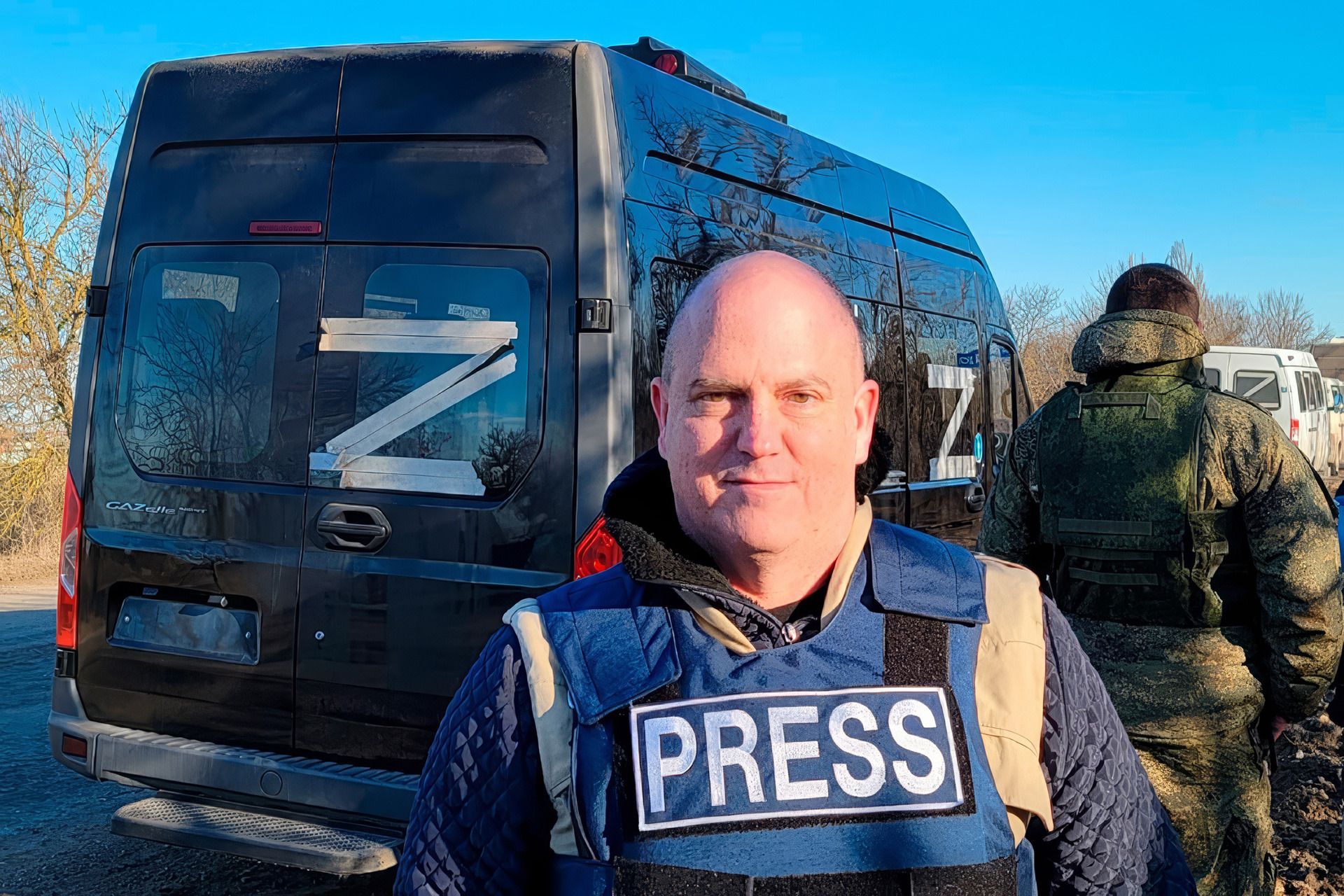
John Dougan. Photo: Dougan's VKontakte page
This material was prepared in collaboration with the team from the project“Blue Capybaras”, where mentors work with aspiring journalists.
Early in the morning on February 24, 2023, a stranger called the home number of Steven Brill, co-founder of the disinformation-fighting company NewsGuard, introducing himself as an FBI employee. He said he was investigating reports of Russian videos on YouTube. The day before, at NewsGuard's request, the platform removed several videos containing anti-Ukrainian disinformation. The half-asleep journalist asked him to send an email to his work account.
Four days later, the stranger left Brill a voicemail. He said Brill had “sold out his country,” mentioned the journalist's daughter, and said he “knew everything” about him. The anonymous caller ended with a direct threat: “When you die, […] people will finally understand who you really were.”
Soon, the FBI identified the stranger. It was John Mark Dougan calling from Moscow—a former deputy sheriff who had fled the US, and the creator of the fake videos Brill was fighting against. NewsGuard researchers would soon uncover more sophisticated propaganda structures run by Dougan and dub him “the Kremlin's disinformation impresario,” while pro-Russian media would compare the American to Snowden and Assange.
“Mind-blowing”
John Dougan was born in Delaware on the US East Coast but grew up with three sisters and three brothers in Palm Beach, a prestigious city in southern Florida. His father, a Vietnam War veteran, raised the boys according to his values:
“At five, I got my first motorcycle. By eight, I had my own horse and even a small .22 caliber rifle,” John recalls in a conversation with “Most”.
At eight, he also became interested in programming, and by age 16, according to his account, he knew a dozen computer languages.
As a teenager, Dougan met a girl named Kelly, whom he married in 1997. The couple had a daughter, Aurelia, and later a son, Kelton.
John earned a tech degree from Florida Atlantic University, served two years in the Marine Corps, and moved into business—holding IT director positions at small companies and launching startups. His company Combat Coat applied camouflage coatings to firearms, and GeoNavigational Solutions installed navigation electronics on marine vessels. Dougan sold some of his companies to investors.
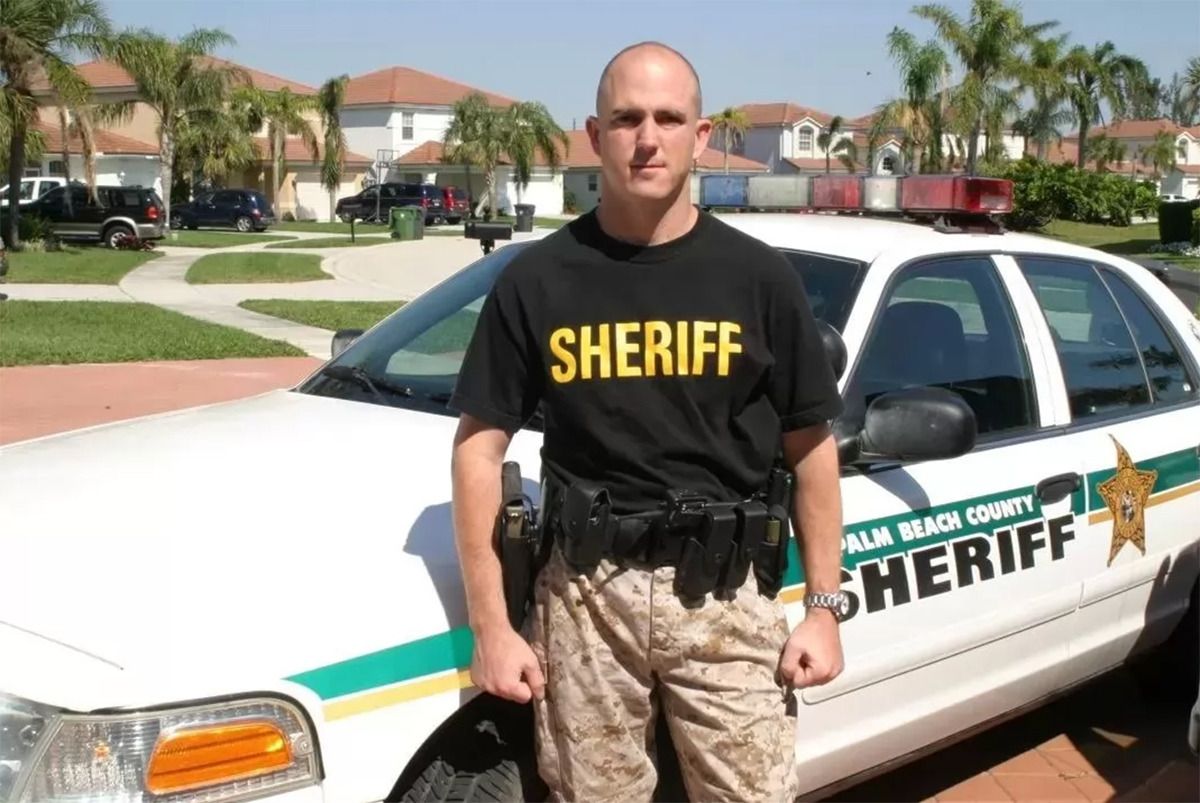
In 2002, John switched from entrepreneur to police officer. Later, he explained the career change by saying he was bored with his old jobs. According to The Daily Beast, in the town of Mangonia Park, Dougan apprehended dangerous criminals and wrote more traffic tickets than the other 11 officers combined. His bosses praised him. But not everything went smoothly. Once, Dougan sprayed pepper spray in a colleague's face, resulting in a civil lawsuit that cost the county $275,000.
Dougan during his police work. Photo: nationmagazine.ru
Over time, Dougan rose to deputy sheriff. He says he repeatedly reported to his superiors about colleagues abusing citizens—and often thought the punishments for these offenses were insufficient. For example, a police officer who abused detainees and posted recordings online was only demoted. Two other staff were fired, supposedly for watching movies and using social media at work.
The last straw, according to John, was the killing of a young man by Miami Beach police over a parking violation. John handed over evidence to internal affairs, after which Sheriff Ric Bradshaw suggested he resign.
After being fired in 2009, John got a job at the police department in Windham, Maine, but didn't last long—he was accused of sexual harassment. Officer Nelson claimed that John “stared at women's chests, licked his lips, and said 'ummmmm'.”
The Maine Human Rights Commission confirmed the harassment, and Dougan was fired. However, the city paid him $10,000 in compensation, finding the dismissal unlawful.
John returned to Florida and wrote a children's book about a trip to Maine, naming the characters after his children. He also created the website WindhamTalk.com, promising to publish “real facts” about corruption in Windham. He started by posting a photo of Nelson labeled “Liar.” According to John, he was actually fired for whistleblowing.
That same year, Dougan created two websites—PBSOtalk.com, to collect reports of corruption and other crimes inside the Palm Beach police department, and SheriffBradshaw.com, dedicated to personal dirt on Sheriff Ric Bradshaw.
There, Dougan posted genuine insider information about corruption mixed with scandalous fabrications about local officials. For example, he published evidence that Sheriff Bradshaw spent nearly $1,000 of public funds on treats for his campaign donors. The Florida Ethics Commission found the expenses improper but closed the case: they decided Bradshaw was following office policy and didn't know it violated state law. Another time, Dougan posted a senior police officer's confession to pedophilia. It turned out to be fake.
“A fake news site is nothing without real news. The front page needs real stories with real photos so the fake story blends in and becomes convincing,” Dougan told The Daily Beast.
According to John, his wife filed for divorce after learning about the dirt-digging websites.
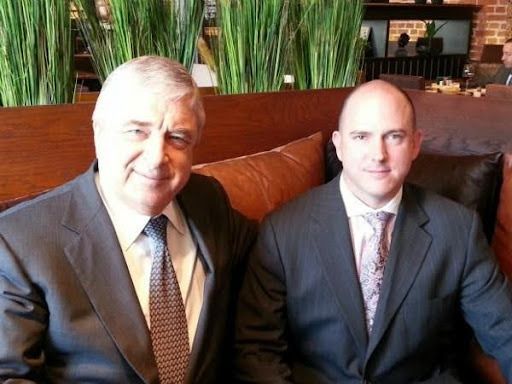
In 2012, Bradshaw's office opened a criminal investigation against him. And in 2013, John visited Moscow for the first time and met with Pavel Borodin, former state secretary of the Union State of Russia and Belarus.
According to a press release from Dougan's company MD International Holdings, they discussed facilitating American investment in the Russian business environment and assisting Russian charities.
Dougan and Borodin. Photo: MD International Holdings
In 2015, Dougan called retired detective Mark Lewis, who Sheriff Bradshaw had tasked with surveilling him. Using a voice changer, John pretended to be “Jessica,” a woman in love with Mark. Flirting with Lewis over the phone, he got him to confess to persecuting the sheriff's opponents, including Dougan himself. The detective said John would be sent to prison, where he would be sexually assaulted and later killed.
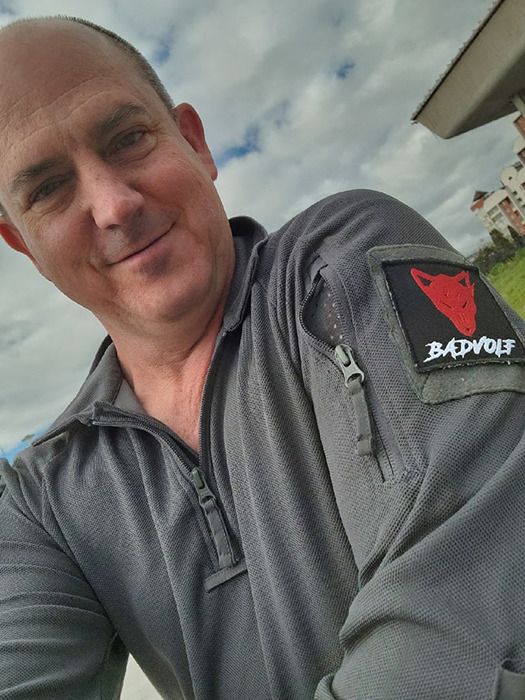
To publish this recording, Dougan created a website in the .ru domain and posted it as a Moscow hacker under the pseudonym BadVolf. In the caption, he promised his former colleagues a “mind-blowing” experience.
The impact was considerable—Lewis's revelations to “Jessica” were quoted in local newspapers and aired on the evening news, and an investigation found that Lewis had violated department rules by disclosing work details.
The “Moscow hacker” didn't stop there. Dougan hacked a database and as BadVolf, on February 13, 2016, posted on PBSOtalk personal data of 4,000 Palm Beach homeowners, including federal agents, prosecutors, police, and judges—supposedly to punish them for not stopping the sheriff's campaign against him. Soon, Dougan released about 10,000 more protected addresses from other Florida counties. He would later both deny and confirm his involvement in this leak.
A month later, FBI agents and local police searched Dougan's home and seized equipment. Fearing arrest, he fled to Russia.
In an interview with Argumenty i Fakty, John described it in the style of a James Bond adventure: supposedly, he chartered a private plane, introduced himself as a geologist, and asked the pilot to fly over Canadian territory to film the terrain. After crossing the border, he faked a heart attack. As soon as the plane landed at the nearest Canadian airfield, Dougan left, made his way to Turkey, and from there to Russia.
With his signature patch
One thing is certain—in the following year, Dougan was charged with serious crimes in Florida.
“Turning Point”
In Russia, Dougan applied for political asylum, and in 2016 received it. In his new country, John, according to his account, started making a living by writing English-language papers for students—a strange job for a businessman who had met one of Russia's most influential officials just three years earlier. Soon Dougan began designing furniture and started making expensive computer desks. He named the company BadVolf.
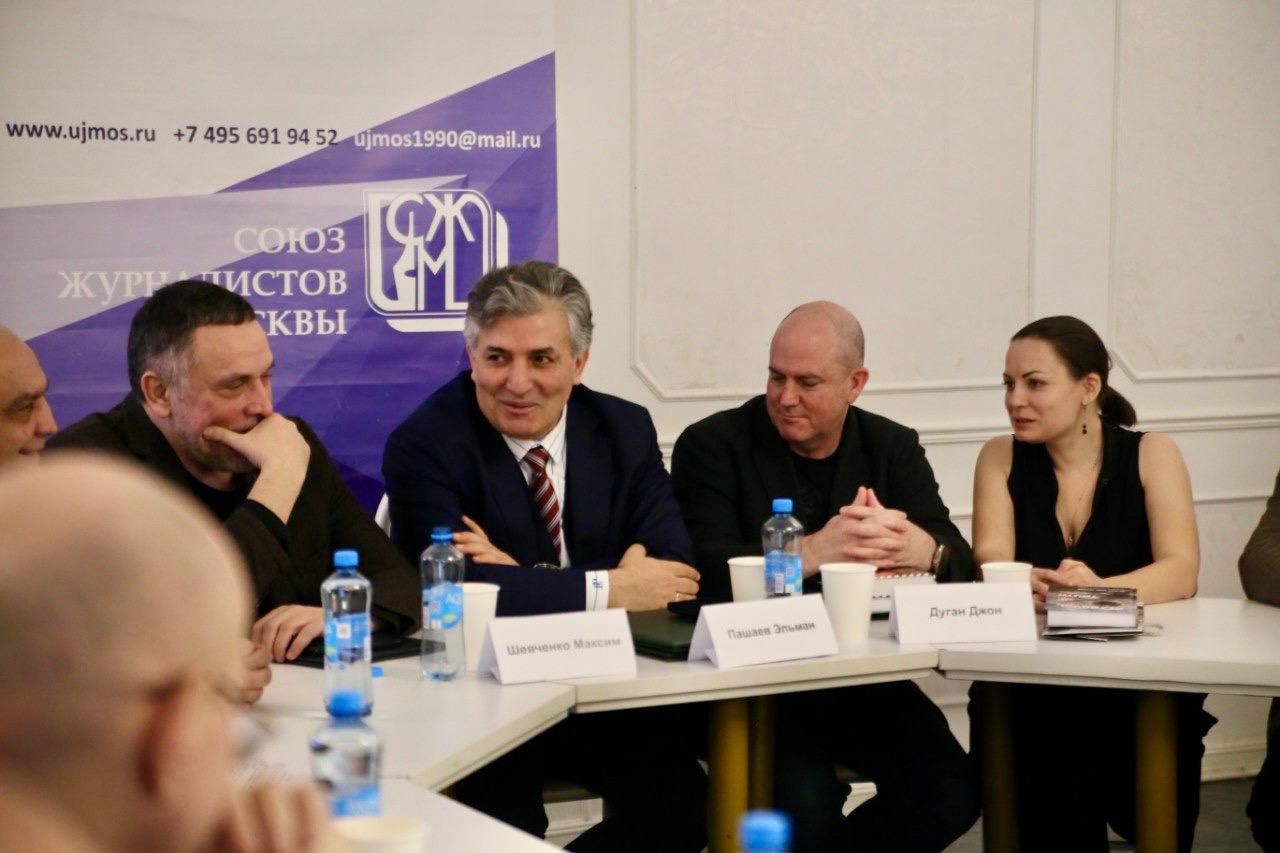
The Russian press published stories about his charity work. For example, arranging a beach and entertainment for people with disabilities in Voronezh. Later, Dougan was a member of the charity fund of the controversial lawyer Elman Pashayev. Pashayev, allegedly, laundered money through this fund by selling drones to the Russian army.
Dougan with Pashayev and Shevchenko. Photo: Pashayev's Telegram
In 2018, Dougan published his memoirs titled “BadVolf.” In the book, he claimed credit for leaking Democratic Party emails before the 2016 US presidential election via the DCLeaks website and the better-known WikiLeaks. Dougan said DCLeaks belonged to him, and the source was Seth Rich, a Democratic Party member shot dead in July that year. Journalists from The Daily Beast proved DCLeaks was not connected to Dougan. Seth Rich's involvement in the leak is just a well-known conspiracy theory Dougan tried to “revive.” According to the FBI, the leak was organized by hackers linked to the GRU.
Dougan started giving interviews to state media, criticizing US authorities and praising Russian ones. He claimed that American police “sell drugs, rob, rape women” with impunity, while Russian police are “very nice people.”
“Of course, I miss my family,” he said. “But overall, everything here is much better.”
The image he built in these stories did not match reality. Dougan emphasized that, unlike his former colleagues, he was not a racist. However, among his Telegram comments were posts like: “Fucking black people. It's almoѕt always them. Gοd damned animals” (the original chat was deleted, but the message remains in a public Telegram comment aggregator and is available via search bots).
In 2019, Dougan claimed to have files related to the Epstein case. He said detective Joe Recarey, who searched the financier's mansion and feared the case would be buried, gave them to him in 2010. “At that time, I was known among colleagues as someone you could trust to keep confidential materials,” Dougan told Most. The last part of the published “Epstein files” contains correspondence, apparently between intelligence officers, one of whom claims Dougan has “a copy of a sex video related to Epstein from the 90s.”
For years, Dougan denied giving these materials to Russian intelligence and claimed he never viewed them himself. According to his account, keys to the encrypted documents are held by several people around the world, and if anything happens to Dougan, a mechanism will connect these people and the files will be decrypted.
In correspondence with a Most journalist, Dougan insisted that Russian intelligence was not even interested in these files. But on February 19, 2026, he sent this message:
“Yesterday, a government acquaintance contacted me. Said he wanted to investigate the Epstein case and asked for the drive. I agreed. They took the drive last night. Well, I hope they can do more than the US government.”
In Russia, Dougan started a YouTube channel and published conspiracy videos. Three months before the war began, he released a video supposedly exposing US biological weapons labs in Ukraine.
After the war began, Dougan started visiting frontline areas and filming videos—according to his account, to show the world the truth hidden by Western media. In Mariupol, he made a report from the destroyed Azovstal steel plant. He visited it with Graham Phillips, a British pro-Russian blogger covering the Donbas conflict since 2014, and conservative political scientist Darya Dugina. In the 2024 book “Betrayal of the Truth” with conspiracy theories about Ukraine and the US, John called Alexander Dugin's daughter “a close friend” and “ally.”
Dougan in the war zone. Photo: Dougan's Telegram
In 2023, after a request from NewsGuard, YouTube administration removed several videos from John's channel, and later that year blocked the American's channel. Dougan told Most that the removals were a “turning point” for him, after which he began “looking for alternative ways to communicate.”
“Russia is good, Biden is bad”
In winter 2024, the website of The Chicago Chronicle reported the deaths of 40 Ukrainian children as a result of clinical trials conducted by the Kyiv branch of the pharmaceutical company Pfizer. “The veil of secrecy over these trials is so extensive that only a select few, including certain Ministry of Health officials and Pfizer employees, know of their existence,” the article said.
The newspaper cited a TikTok video recorded by Pfizer employee Anna Sakhno—a girl in a mask and medical goggles revealing details of inhumane experiments. The publication quickly spread on social media, and a month later it was discussed on Channel One. However, they did not mention that the Chicago Chronicle hasn't been published since 1908. Nor was Anna Sakhno found among Pfizer employees. Bots and influencers previously caught spreading fakes promoted this news on social media. The influence network spreading this and other fakes was named Storm-1516 by Microsoft's Threat Analysis Center (MTAC) called Storm-1516. Experts from Recorded Future* use another name—CopyCop.
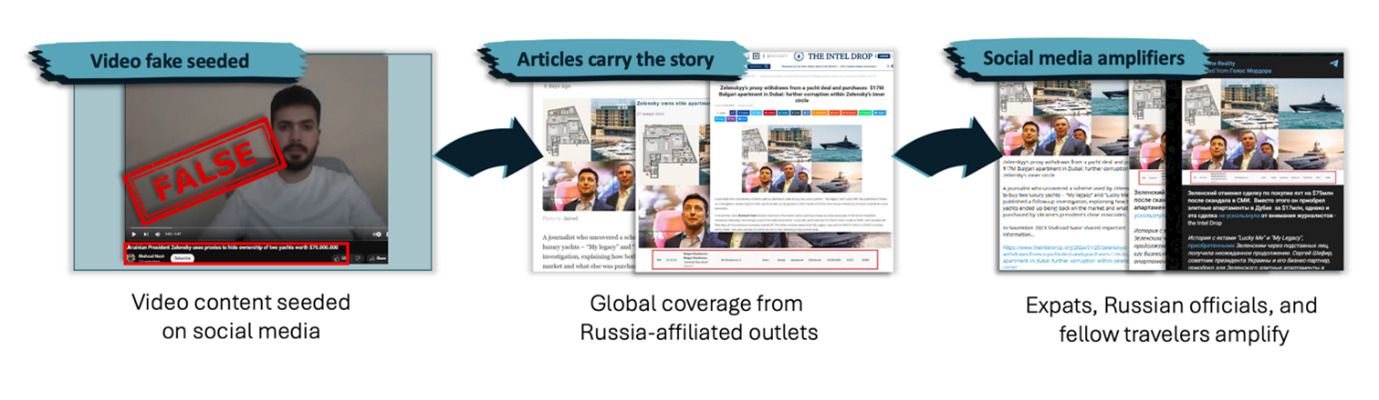
Storm-1516 is one of the pro-Russian online influence networks spreading anti-Western disinformation by “laundering narratives”—the process of injecting dubious ideas into public discourse. First, a video is posted online, supposedly by a journalist or whistleblower. It's picked up by a network of fake news sites. Then, the news, citing these sites, is posted on social media by the same group of users—pro-Russian Western microbloggers, little-known news aggregators, bot accounts, Z-channels.
Fake news sites pose as regional Western publications. They use typical names (like Boston Times or DC Weekly), and most of their news is real, just rewritten with an anti-Western slant using AI. Wired journalists found a technical prompt for AI that the site's creators forgot to delete:
“Here's what to remember for context. Republicans, Trump, DeSantis, and Russia are good, while Democrats, Biden, the war in Ukraine, big business, and the pharmaceutical industry are bad. Feel free to add additional information on this topic if needed.”
Such content is needed to make the sites look like real, trustworthy information platforms. Among dozens of accurate, albeit slanted, news stories, the deliberately planted fakes appear convincing.
Storm-1516 campaigns often target Volodymyr Zelensky, Western election campaigns (especially the 2024 US presidential election), and other major events like that year's Paris Olympics.
Storm-1516 coordinates with similar influence networks known by codenames Doppelganger and Pravda. Its narratives are regularly “laundered“ by bots previously linked to Prigozhin's ”Internet Research Agency,“ better known as the ”troll factory.“
However, in March 2024, Storm-1516 “exposed“ Doppelganger—the sites spread a fake that claimed the US State Department and FBK** activist Dmitry Nizovtsev*** were behind the campaign, not Russia.
How Storm-1516 works. Image: blogs.microsoft.com
After analyzing Storm-1516's methods and participants in 2024, MTAC researchers suggested that the “whistleblower” videos are created by former “troll factory” employees, with foreigners living in Russia hired as actors. Since 2024, actors are increasingly replaced by deepfakes. It's impossible to identify everyone involved in Storm-1516. However, numerous clues—IP addresses, Cloudflare DNS identifiers, site registration data—point to John Dougan playing a key role in this influence network.
“Large-scale digital influence campaigns”
Dougan told Most that he became interested in AI after watching the “Deep Learning” episode of South Park, released in March 2023. In it, teens use ChatGPT to reply to love messages and write school essays, while their teacher uses it to grade assignments. The plot was co-written by South Park creator Trey Parker and ChatGPT.
Dougan was amazed by AI's potential: “It could analyze large volumes of text, rework complex ideas, and draft articles faster than any newsroom I had seen.”
In November 2023, NewsGuard employee Mackenzie Sadeghi, who was studying Storm-1516 sites, requested comments from Dougan himself. He started playing cat-and-mouse: denying involvement with the influence network while trying to “demonstrate his ability for global online provocation, without admitting anything directly.”
Sadeghi insisted on the obvious similarities between the fake sites, and Dougan replied: “Coincidence, I'm sure... Keep at it. If you find anything, write. If not, maybe I'll give you a hint.”
“This style of communication—a subtle half-admission followed by denial—became our usual 'dance',” Sadeghi wrote.
One evening, when Mackenzie opened several fake sites, she found herself listed as their creator. Ten minutes later, her name was gone.
Sadeghi believes “Dougan is creative and energetic, but also careless and perhaps seeks more playfulness in his work than his Kremlin colleagues would like.” She is convinced he is motivated by revenge on the US government.
When researchers at Clemson University paid attention to fakes spread by the fictitious journalist Jessica Devlin, a fake obituary for her appeared on the DC Weekly site.
“It's a pity journalist Jessica Devlin died... Maybe the deep state killed her (the secret government from a widespread American conspiracy theory—Most.Media),“ Dougan wrote to Sadeghi in a private message. A month later, the site continued publishing articles under her name. “She must be like Jesus,” joked the fugitive cop.
Trying to pass off fake authors as real journalists is also a feature of Storm-1516's strategy. However, over time, real authors appeared on its sites. For example, Russian journalist Edward Chesnokov wrote for DC Weekly.
Dougan's sites infected popular AI chatbots with disinformation. According to NewsGuard, ten tested AI models—including ChatGPT, Gemini, and Claude—repeated false claims promoted by Storm-1516 in 35% of cases.
In January 2025, at the round table “International Cooperation of Russia and Other Countries in the Information Field,” organized by the Public Chamber of the Eurasian Economic Union countries and the International Union of Free Journalists, Dougan confirmed managing Storm-1516 sites and NewsGuard's findings about popular chatbots being infected with its narratives.
“[NewsGuard] found more than 150 websites owned by me. <...> I took real news and used artificial intelligence to amplify certain topics. <...> Maybe journalists, especially in the West, don't want to hear this, but one server in my house writes almost 90,000 articles every month. No human can do that“, - said Dougan.
“There's no point denying what anyone can check,” Dougan told Most when asked why he decided to confirm his involvement in Storm-1516.
Now, his Russian-language resume proudly states: “Coordinated large-scale digital influence campaigns styled as organic, independent journalism. The work became the subject of serious research and received widespread coverage in major global media.”
“Most” also found the resume of Dougan's assistant, 24-year-old Kazakhstani Demid Vakhitov—a young man who graduated from 12th grade in the US, later worked as an assistant at the Arizona Department of Child Safety, but moved to Russia. Vakhitov helped John at public events and appeared with him in reports, and, according to his own words, worked with “ChatGPT, voice and video generators.”
In a conversation with Most, John insisted he does not publish fakes. “Must be something in the automated system,” he said when asked to comment on the debunking of the Pfizer experiments on Ukrainian children. Dougan said he “doesn't trust fact-checkers much” and advised to stay away from them.
“The idea that [my sites] - are part of a large-scale 'influence campaign' is absurd, - he insisted in correspondence with Most. — People seem to have a hard time accepting a simple explanation: one person can be creative, technically competent, and able to write code that uses AI to rewrite and republish news. Honestly, it wasn't hard. What they call 'Storm-1516' is really just a playful American who likes to troll.“.
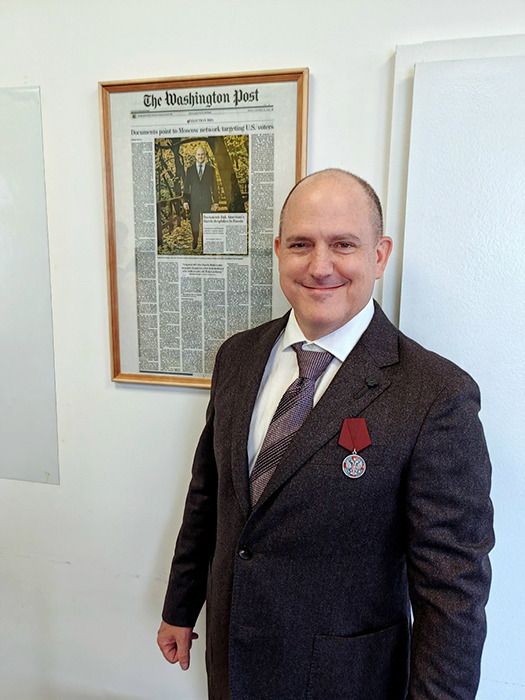
But The Washington Post claims Storm-1516 is linked to the GRU. In 2024, citing over 150 documents, it reported that the network is funded by intelligence, and Dougan works with GRU officer Yuri Khoroshevsky from unit 29155, which oversees sabotage, political interference, and cyberattacks against the West. According to WP, the former police officer began receiving transfers from Khoroshevsky in April 2022. In addition, the paper says Dougan is directed personally by Valery Korovin, director of the “Center for Geopolitical Expertise”—an analytical organization founded by right-wing philosopher Alexander Dugin.
Dougan and Korovin. Photo: oprf.ru
“I don't know anyone who works at the GRU and never have,” -Dougan told Most.
He has commented on similar accusations before. As for the “Center for Geopolitical Expertise,” John says his involvement was limited to setting up “one harmless website” for the organization a few years ago. However, in August 2025, Dougan posted on VK a recent photo of himself next to a framed clipping from the WP article, which hangs in the CGE office.
“Enlightening the West”
At the end of 2025, Dougan was included in the EU sanctions lists. He became the first US citizen to be targeted by such measures.
“They accuse me of participating in 'Kremlin information operations to influence elections, discredit politicians, and manipulate public opinion in Western countries.' I admit all of this is true”, — Dougan commented in an interview with TASS about the personal sanctions. However, he clarified that by “manipulation” he meant his “investigations.” Neither the ex-Marine nor the propagandists who interviewed him mentioned Storm-1516. Additionally, Dougan said the US “canceled” his passport and he is now only a Russian citizen.
John told Most that the sanctions had virtually no effect on him: “I had to change a couple of service providers—and that's it. If I want European cheese, I go to the store and buy it. No one asks if I'm on a sanctions list. And if they did—maybe they'd laugh and give me the cheese for free.”
In Moscow, Dougan says, his daughter Anastasia was born; she is now eight. He does not mention her mother publicly. In 2019, they separated—according to John, because his former fiancée temporarily moved to China. She returned to Moscow, and the father now often sees his daughter. Later, Dougan got engaged to another woman, but that relationship also ended.
Dougan with a clipping from The Washington Post article. Photo: Dougan's VKontakte page
Dougan's son Kelton has visited Russia several times. In July 2025, he appeared in a segment on Channel Five about “religious Americans who feel like exiles at home.” The 16-year-old says that in Russia “you can become a real man,” while in America, for “manly” behavior, “they'll stare, ignore you, or be rude for no reason.”
In summer 2025, John Dougan moved to a private house on the edge of Shchyolkovo, near Moscow. He saw it as “returning to his roots,” to the world of his childhood at the foot of the Rocky Mountains in Colorado: “People here are sincere, hardworking, and hospitable. There's real pride in the community.” John really fell in love with local eateries—especially liking pancakes from a cafe in the city center.
In his house, John has a large living room, a shelf with alcohol, and a photo of his daughter Anastasia. He has a cat named Barsik. In a video from January 1, 2026, Dougan, holding a bottle of beer, pours snow on his chest: “We're doing banya.”
At the end of February, in correspondence with a Most journalist, John claimed that for safety reasons, after handing the “Epstein files” to Russian authorities, he had to leave Shchyolkovo for southern Russia for a few weeks. In March, he posted publicly available photos from the Lipetsk region with an enthusiastic review of the local nature: “I've traveled a lot in the United States, but was completely unprepared for the pure beauty and magic of Oleniy Nature Park. It's, without exaggeration, one of the most breathtaking places I've ever visited.“.
Certificate of Dougan's award of the Order “For Merit to the Fatherland” II degree. Photo: Dougan's VKontakte page
In August 2025, Dougan was awarded the Order “For Merit to the Fatherland” II degree. On his VK page, he wrote: “I can only assume it's for my work in the information sphere, for enlightening the West about what's really happening here, and for my fight in the information war.”
And in April 2026, Dougan released his own messenger app called Disapp, designed for confidential communication. Registration does not require a phone number, the app supposedly uses end-to-end encryption and post-quantum cryptography. At the same time, John claims it's more convenient than well-known secure messengers like Signal. Dougan emphasizes that Disapp “is not blocked in any jurisdiction—yet.”
On the app's website, it says it “appeared where two problems met: the quiet collapse of all messengers you were advised to trust, and one person's desire to say goodnight to his children across the ocean.” According to John, his app is “much better than anything in Russia, especially that garbage from MAX.”
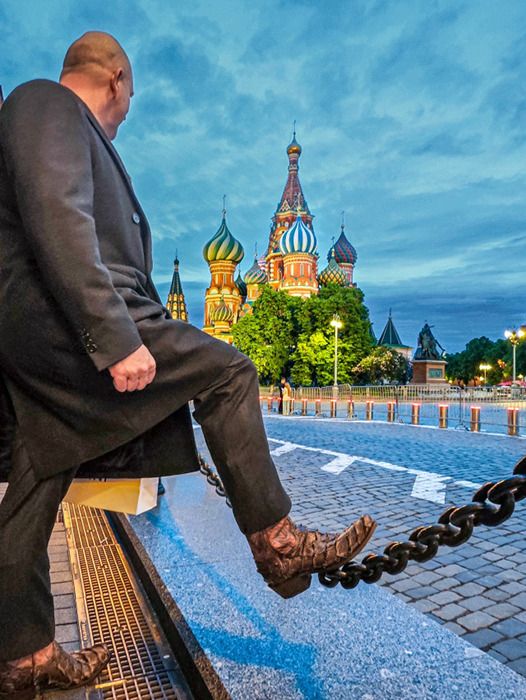
Photo: Dougan's VKontakte page
*recognized as an undesirable organization, banned in the Russian Federation
**recognized as an extremist organization and banned in the Russian Federation, declared undesirable and liquidated, included in the register of foreign agents
If you enjoyed this article, consider making a donation — one-time or, even better, monthly. Your support helps us motivate our authors and become better with every article.
Our organization is recognized by the Internal Revenue Service (IRS) as a 501(c)(3) tax-exempt, charitable organization, which means that all contributions made to us are tax-deductible to the fullest extent permitted by U.S. law. Individuals may generally deduct charitable contributions of up to 60% of their Adjusted Gross Income (AGI) for cash donations made to qualifying 501(c)(3) organizations. For donations of appreciated assets (such as stocks or other long-term capital assets), the deduction is typically limited to 30% of AGI, based on the fair market value of the asset. C-corporations may deduct charitable contributions of up to 10% of their taxable income for donations made to eligible charitable organizations.
By submitting a donation, you confirm that you have read and accept the following documents: Privacy Policy and User Agreement, and also give consent to the processing of your personal data.
If you would like to unsubscribe from a monthly donation, please email us at: [email protected]