During the discussion in the Duma of the new repressive law, Speaker Vyacheslav Volodin stated: “Those who left abroad and harm the country are not the opposition, they are traitors, they are criminals”. A little earlier, he branded political emigrants with an even harsher word in the now-familiar style of Russian politics, calling the initiative “a law against degenerates”. But apparently he was very nervous, so he accidentally inserted an extra word — “against”.
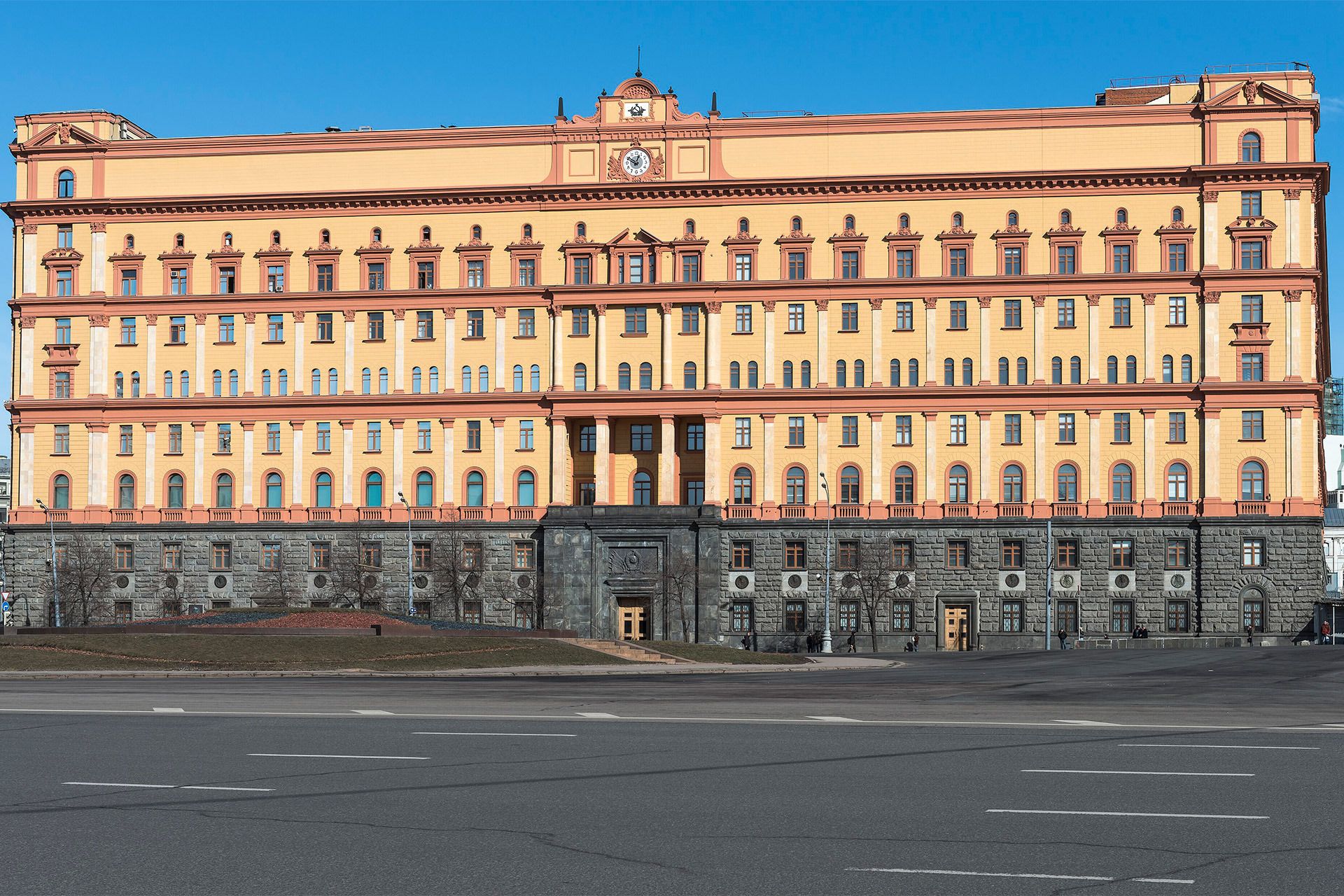
The FSB building on Lubyanka. Photo: Wikipedia / Sachkv / CC BY-SA 4.0
Last week, the Duma adopted in the third reading “On temporary restrictive measures in relation to persons located outside the Russian Federation and evading the serving of punishment (in terms of improving the procedure for the execution of criminal and administrative punishments)” — that is how long lawmakers dubbed yet another repressive law, continuing repression against the unwanted.
This law can only be called “civil execution”.
It includes deprivation of access to bank accounts, a ban on any transactions with real estate, including gifting apartments, and a ban on consulates, as well as Russian notaries, from dealing with those covered by the law.
Well, we, foreign agents and criminals who lied about the Russian army and received decent prison terms for it, have long since been deprived of rights anyway, so we’re used to it. We muddle through however we can. But do you know what is most shocking about this law? No, not the de facto seizure of property, not the rabid repressive nature.
What is most shocking is the clause according to which we, enemies of the people, can now no longer, at our own discretion, help poor or entirely destitute relatives.
For example, before, if you were not a foreign agent but simply an honest criminal convicted in absentia — that is, someone who had the right to use their bank account — you could help elderly parents or any other relative. Many people in Russia still have parents. But now — drumroll — you will not be the one disposing of your money, but a special commission. It will decide who can receive how much of your funds. This is now called a “special humanitarian allowance”.
Say, for instance, your parents are left in Russia. Before, you could give them all your income if you wanted. Now, wait — it’s not your business to decide how to help them. First we’ll look at their financial situation. Maybe they have good pensions, and they don’t need to receive money from you at all; they’ll manage just fine. So what if they don’t buy meat, fruit, or vegetables. Never mind — under Soviet rule none of that was in the stores at all, and voilà, they gave birth to you healthy and strong. So they can live on pasta and potatoes too. Medicine? Why would old people need medicine — they’re going to die soon anyway. They raised an enemy of the people, and now they want a comfortable old age. Not happening! We’ll decide ourselves, without you.
In fact, until now the subjects of criminal and administrative cases were the disloyal outcasts themselves; now, in veiled form, their families become the subjects. We know it, we’ve been through it. “Mother of an enemy of the people”, “father of an enemy of the people”, “son of an enemy of the people”.
But there is also an unprecedented innovation: if relatives do not have enough to live on from the state’s “special humanitarian allowance”, under the new law they can file a civil claim against their outcast. And the court may satisfy this claim using the arrested funds of the enemy of the people (or it may not, depending on luck).
I wonder, if they officially renounce their wayward criminal children — maybe they’ll get some leniency? Renounce a son, for example — fine, we’ll preserve his financial support for you. Although, on the other hand, if you renounce him, what kind of son is he to you then? No, it doesn’t add up at all.
Older people remember Soviet times and its repression against the disloyal. “Stole — drank — to prison”, as one of the characters in “The Diamond Arm” said. A person was seized, tried, given a sentence, or even stripped of citizenship altogether and shoved abroad with no possibility of returning even for a parent’s funeral. And everyone understood everything — crime and punishment, although everyone also knew perfectly well that the main crime was criticism of the Soviet system. It was a kind of social contract. And however fabricated the crimes of the Soviet repressive system may have been, there was still a court between the person and the state. Of course, it was also a puppet court, with all verdicts handed down from above in advance. But it existed.
Times change, and so do social contracts. In principle, the contract is one: I stay silent — you leave me alone. But today a person can leave. They can even end up abroad. The person disappears, ends up where, it would seem, the state’s arms are too short to reach. But Russian state thinking has discovered a new law of universal gravitation, this time legal: you cannot escape the state, because no matter how far away you are, the state’s hands will reach you everywhere — through registries, banks, real estate. Soviet power once thoroughly mastered Aesopian language and spread it among the flock. Putin’s power improved it, managing to embed it even in legal and juridical vocabulary. It began with “claps” and “negative advancement”, taken up by the pro-government press. Then it grew. Not repression, but “temporary restrictive measures”. Not layoffs, but “optimization”. Not censorship, but “regulation of the information sphere”. Not a ban, but a “restrictive measure”.
It is a kind of new philosophy of legislation and punishment. Before, the state told a person: “You committed a crime. We punished you”. Now it says: “You are in a certain registry because of your incorrect legal status. We will create so many inconveniences for you that you will yourself want to return to the correct one”. In other words, it is not even punishment — it is educational work at a distance. “Repent, Ivanych, and you’ll get a discount”, as one Bulgakov character said.
The state has taken on the role of demiurge in its relations with a single individual. You may be sitting in Tibet, crossing the Atlantic, drinking coffee in Paris, diving into the Mariana Trench, but your life will be under the control of the state from which, as you thought, you had escaped forever.
“No, all of you won’t leave”, says Leviathan, “your square meters stay with us”. And if before you feared going to prison, now you fear ending up in a registry, because the main question of legal law has changed. Instead of “what did the person do, what is he guilty of?” — “in which registry is the person entered, by whom has he been recognized?” The key thing is that there is no need to look for evidence, prove anything, or involve prosecutors. You are entered in the registry — and that’s it. You are already guilty. Getting onto the list is easy; getting off it is practically impossible. For example, for foreign agents, accounts are frozen until they are removed from the foreign-agents list. All their money is with the state, although it is called a “special foreign-agent account”, but you have no access to it, and who controls it is clear as day. And why on earth should your foreign-agent status be removed?
And there is no need to prove anything, no need to look for evidence or involve the prosecutor’s office. You are already in the registry. Say thank you that you’re not in prison.
Of course, almost every country has a system of pressure on criminals who have fled abroad. But in Russia, the mechanism of this system has blurred the line between serving a sentence and political pressure to the point of invisibility.
Naturally, the ability to get one’s hands on the property and money of an opposition figure who has left is the most important reason for adopting this new law. But there is another aspect that does not fit within the framework of material self-interest. This aspect is simply banal, stupid revenge for disobedience; it is the desire to make life miserable. To make life miserable because there is such an opportunity and there is no one to be ashamed before. Simply because if you are not with us, then you are against you.
Yes, we — foreign agents and those convicted in absentia for “fakes about the army”, that is, “people from the registry” — are not with you. We are against you. But we are free, while you are bound by crimes and meanness.
During the discussion in the Duma of the forthcoming law, one of the most odious, aggressive, and stupid Russian politicians, Speaker Volodin, stated: “Those who left abroad and harm the country are not the opposition, they are traitors, they are criminals”. A little earlier, he branded political emigrants with an even harsher word in the now-familiar style of Russian politics, calling the initiative “a law against degenerates”. Remember how the law banning the adoption of children abroad was popularly dubbed the “law of scoundrels”? Volodin, apparently very nervous, accidentally inserted an extra word into the phrase “law against degenerates” — “against”.
If you enjoyed this article, consider making a donation — one-time or, even better, monthly. Your support helps us motivate our authors and become better with every article.
Our organization is recognized by the Internal Revenue Service (IRS) as a 501(c)(3) tax-exempt, charitable organization, which means that all contributions made to us are tax-deductible to the fullest extent permitted by U.S. law. Individuals may generally deduct charitable contributions of up to 60% of their Adjusted Gross Income (AGI) for cash donations made to qualifying 501(c)(3) organizations. For donations of appreciated assets (such as stocks or other long-term capital assets), the deduction is typically limited to 30% of AGI, based on the fair market value of the asset. C-corporations may deduct charitable contributions of up to 10% of their taxable income for donations made to eligible charitable organizations.
By submitting a donation, you confirm that you have read and accept the following documents: Privacy Policy and User Agreement, and also give consent to the processing of your personal data.
If you would like to unsubscribe from a monthly donation, please email us at: [email protected]