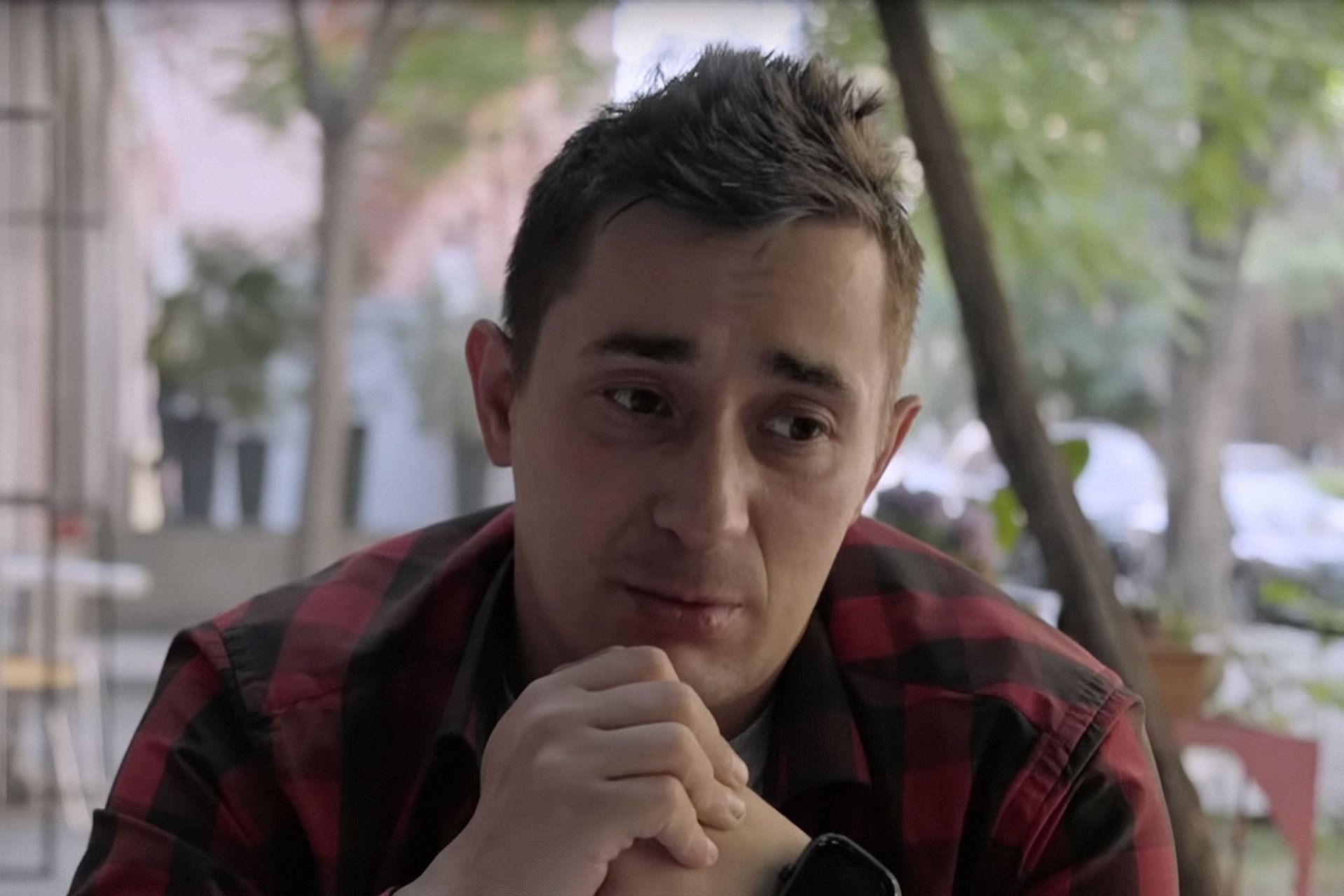
Thirty-four-year-old teacher Ilya Yolokhin from the Perm region was not supposed to be at war due to medical reasons – yet he was sent to the occupied Donetsk region. He managed to escape from service, got out of Russia, and now shares what he went through.
In his hometown Kungur, Ilya Yolokhin worked as an elementary school teacher and led a dance ensemble. Having heart and kidney problems, as well as suffering from bronchial asthma, he was confident he wouldn’t be sent to the front. However, while in 2022 he managed to avoid mobilization, in spring 2024 Ilya was forced by intimidation and pressure to appear at the military enlistment office, from where he was sent to the front. He insists that he did not sign a contract with the Ministry of Defense and that the signature on the contract is forged (the editorial team has a photocopy of the contract and a complaint about procedural violations in concluding the contract).
Despite all medical examinations and reports requesting his exemption from service (these are also available to the editorial team), the only result Ilya achieved was being kept at the headquarters instead of being sent to the front line—as the soldiers themselves put it, serving as a “clerk” or “errand boy.” He ended up in the notoriously infamous military unit No. 71443.
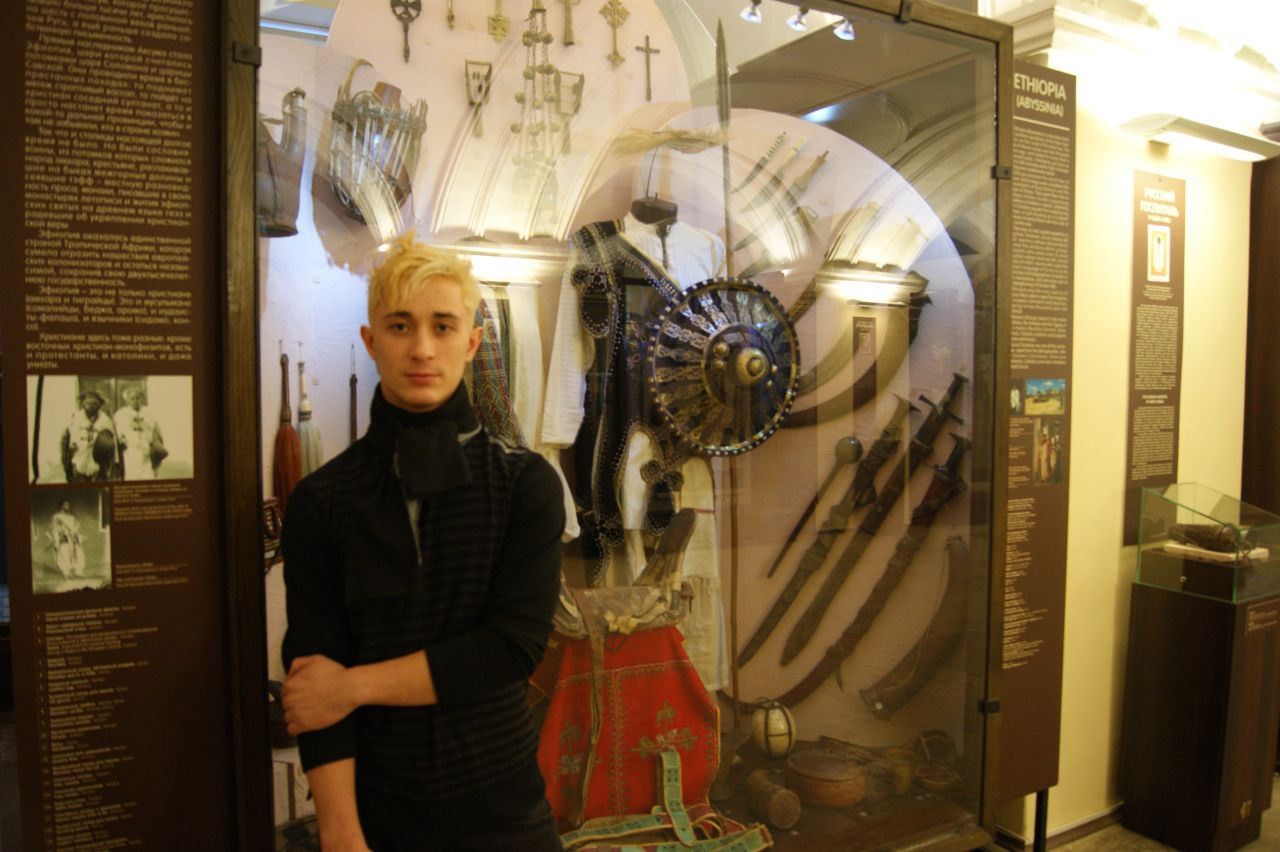
Photo from Ilya’s personal archive
A year ago, a petition titled “Lawlessness of the Command of Military Unit 71443” appeared on Change.org, created by relatives and close ones of servicemen. To date, it has been signed by more than one and a half thousand people. The petition’s authors complain about “untimely payment of monetary allowances, lack of medical assistance, extortion of money, withdrawal of cash from cards of the dead and missing, confiscation of civilian documents and personal belongings,” beatings, torture, and humiliation. According to Ilya, he had to witness and personally experience most of the abuses listed in the petition.
War and Money
According to Ilya, most of his comrades were contract soldiers sent to the front hoping to earn money, as well as former prisoners. However, most of them did not survive long enough to receive payments. Ilya claims that almost no one returned alive from the “meat assaults.”
“Sometimes they brought back wounded soldiers, but without proper treatment, they would be taken from hospitals and sent back to the assault,” he recalls.
During the nine months that the former teacher was in the unit, about 1,500–1,600 people died or went missing, according to him. Considering the unit’s size is no more than 350 people, it means that during Ilya’s service, the entire unit’s personnel was repeatedly “reset.”
“The situation is worsened by the fact that evacuation of the wounded from the battlefield is practically not conducted. When I was at headquarters, I personally saw this on monitors showing footage from drones flying over the battlefield. You could see people lying there, calling for help, but no one helped them,” Ilya says.
His work at headquarters was also connected with death—Private Yolokhin literally had to “dig through intestines” of bodies brought from the battlefield to search for army dog tags and other identification marks. Then he photographed the bodies and passed all findings to the command. However, his work was not always useful—according to Ilya, even those deceased who could be identified were often declared missing or deserters to avoid paying the notorious “coffin money” to their relatives.
“Company commander Sergey Mashtakov often said outright: ‘What am I going to do without war? I have loans, I need money.’ Sometimes he repeated that ‘if necessary, we’ll take Germany and France.’ On one hand, he wanted to earn money; on the other, it seemed he feared that if defeated, he would have to answer for his crimes, so he was ready to go all the way,” Ilya recalls.
Executions and Abuse
Following his wife’s advice, Ilya “played the fool,” constantly whining and complaining about illnesses just to avoid being sent to the front. This strategy, he says, truly saved his life, but it also made him a constant target for abuse at headquarters. He was beaten, dressed in women’s clothes, and publicly humiliated while the abuses were filmed on phone.
However, a much more serious ordeal for the recruit was the attempt to involve him in a collective “mutual responsibility” pact. To become “one of them,” he was ordered by Mashtakov to shoot a captured Ukrainian prisoner.
“During my entire time in the unit, not a single Ukrainian prisoner was left alive,” Ilya admits. “Sometimes they brought them to the unit, and some of our men were forced to shoot them. If they tried to refuse, they were told directly: ‘Either you shoot, or we will reset you.’ Almost all agreed to shoot after that.”
This choice was also offered to Ilya, but he flatly refused to kill the prisoner.
“I understood that the commander might kill me for this refusal. At first, I was scared, but then for some reason I wasn’t. I only thought about getting it over with as soon as possible,” he shares.
Photo from Ilya’s personal archive
Ilya himself doesn’t understand why he survived. After that, he was severely beaten, and the abuse became regular.
“Some used me as an example, saying that if they refused to shoot prisoners, they would be treated like me,” the interlocutor of “Most” recalls.
Prisoners were indeed killed, and then their bodies were presented as if brought from the front line. However, Ilya insists he could not be mistaken—they were the same Ukrainians he had literally seen alive shortly before. The bodies were also subjected to abuse—even to the extent that heads could be torn off and used as a soccer ball.
Those who tried to escape faced no less abuse. Ilya saw with his own eyes how they were put into the infamous “pit”: “In Panteleymonovka, where the unit was located, there was a cell with an iron door. People were either locked in or hung there. I saw two deserters who tried to escape being put there. They were beaten with batons, had electric wires attached to their fingers, and were shocked with electricity. After torture, they were offered a choice: go to the front or be reset. Many chose the front—it was better for them than dying in the pit.”
Moreover, even at the front, their own were executed. If commanders saw that a soldier was trying to flee or wanted to surrender, an order to reset was immediately broadcast over the radio. Then the unfortunate soldier was simply shot in the back.
“Once, when the chief commander Yevgeny Beletsky came, he personally spoke with the refusniks sitting in the pit, threatening to reset them if they didn’t go on the assault. They refused to return to the front, and then they were shot. I saw their bodies myself,” says Ilya.
Extortion
According to Ilya, being in an atmosphere of constant death and violence was unbearable. He tried to call his wife, but conversations were fragmented because commanders and political officers constantly checked his phone. Once, when several people from their unit tried to rebel and filed a complaint with the Donetsk military prosecutor’s office, they were severely beaten, sent to the assault, and their phones were confiscated.
There was another reason for confiscating phones—commanders gained access to their soldiers’ bank accounts. Soldiers were strictly required to provide PIN codes and passwords for their banking apps. Sometimes even that was not necessary.
“Once I saw them invite a bank employee to the unit. He issued military cards and installed the banking app on the phones right in front of the commanders, so they knew all the data from the start. When soldiers went on the assault, their phones stayed with the commanders, who could then withdraw all the money from their accounts after their deaths,” Ilya explains.
Besides that, Ilya recalls constant extortion for body armor or military equipment. Later, the extortion became more blatant—for example, soldiers were asked to pay money to avoid going on the assault.
“They paid, but usually within two weeks they were sent there anyway, and they never returned,” he admits. According to him, independent journalists’ information that almost all earnings from the “special military operation” stay there is entirely accurate.
Escape
Ilya also paid to avoid being sent to the front—until he realized his “reset” was inevitable. Despite all restrictions, he managed to contact representatives of the “Go Away” organization and develop an escape plan with their help. A stroke of luck also helped—he got hold of someone else’s leave slip and forged the document in Photoshop, rewriting it in his name. All that remained was to find a way to leave the unit.
Meanwhile, Ilya was clearly being prepared for “reset.” It got to the point where commanders ordered him to divorce his wife and marry another woman—apparently so she could later receive the coveted “coffin money.” Interestingly, even Kremlin-loyal media periodically write about the phenomenon of “black widows” hunting for posthumous payments to contract soldiers. However, they discreetly omit that such widows may be connected to unit commanders and work directly for them.
Ilya pretended to agree, and he was granted a three-day leave—but only on the condition that he meet a girl and make love to her (the pass permitting movement is also held by the editorial team). At the same time, the commander demanded that he send a video proving the romantic encounter. Instead, Ilya took a taxi to Rostov and ran away. Miraculously, he passed the checkpoint and returned to Russia, from where he eventually left for Armenia.
Photo: TV2-media / YouTube
Now Ilya hopes to obtain political asylum in one of the Western countries and is trying to recover from what he experienced. According to him, most Russian soldiers lose the last remnants of their humanity when they reach the front, but even brutal cruelty does not help them survive or earn what they make from blood.
Main photo – Ilya Yolokhin. Source: TV2media / YouTube
If you enjoyed this article, consider making a donation — one-time or, even better, monthly. Your support helps us motivate our authors and become better with every article.
Our organization is recognized by the Internal Revenue Service (IRS) as a 501(c)(3) tax-exempt, charitable organization, which means that all contributions made to us are tax-deductible to the fullest extent permitted by U.S. law. Individuals may generally deduct charitable contributions of up to 60% of their Adjusted Gross Income (AGI) for cash donations made to qualifying 501(c)(3) organizations. For donations of appreciated assets (such as stocks or other long-term capital assets), the deduction is typically limited to 30% of AGI, based on the fair market value of the asset. C-corporations may deduct charitable contributions of up to 10% of their taxable income for donations made to eligible charitable organizations.
By submitting a donation, you confirm that you have read and accept the following documents: Privacy Policy and User Agreement, and also give consent to the processing of your personal data.
If you would like to unsubscribe from a monthly donation, please email us at: [email protected]