“It's not like I'm hiding — if the immigration court wants to find me, they can do it anywhere, if they want to,” Vladislav Krasnov told “Most” in an interview at the end of last year. A US federal court denied the active supporter of Alexei Navalny political asylum in March 2025, after he had already spent 444 days in American immigration detention centers in conditions close to torture. Now Vladislav is set to be deported to Russia, where he faces arrest.
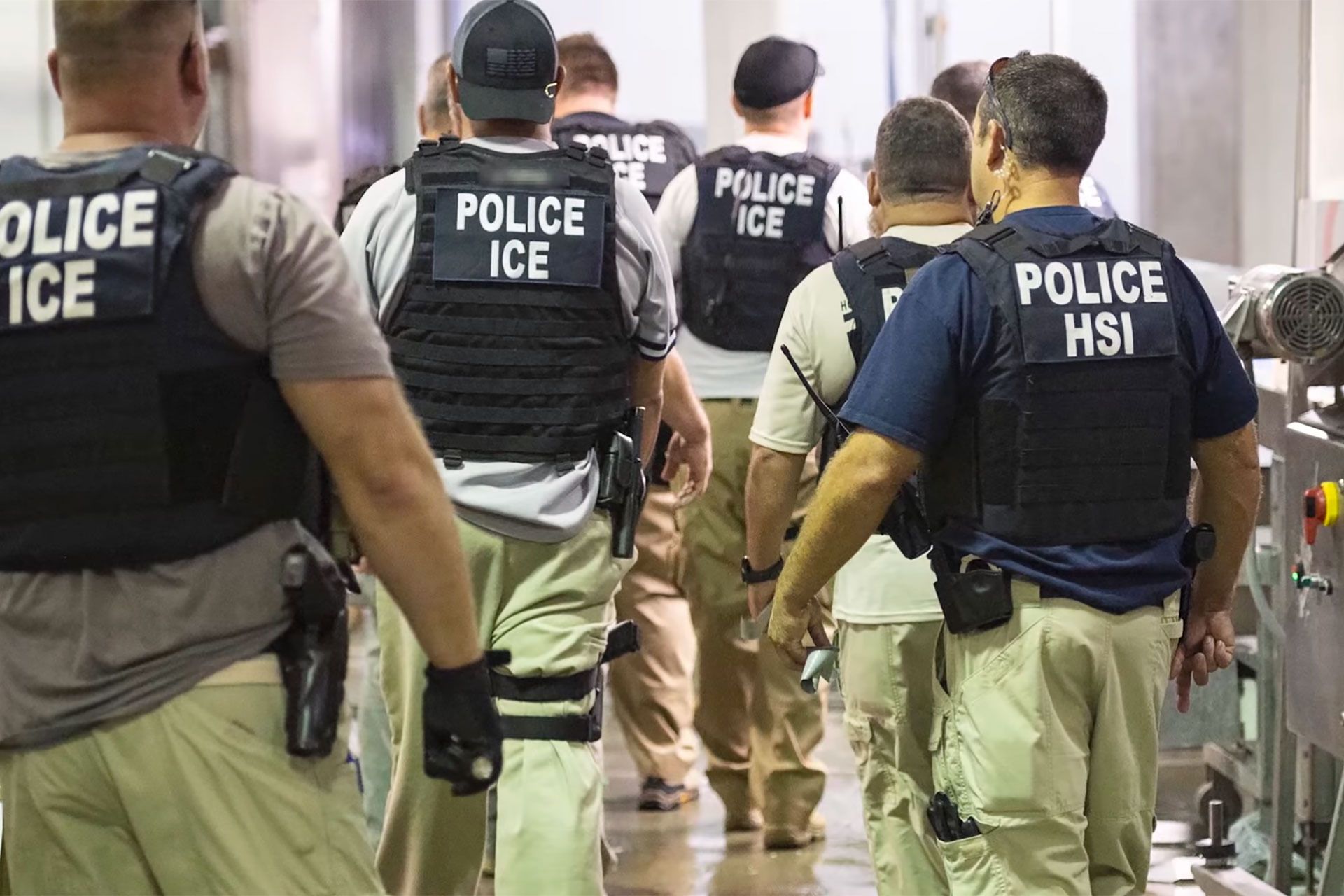
Frame from video: U.S. Immigration and Customs Enforcement via YouTube
A supporter of Alexei Navalny and FBK, Krasnov flew to Mexico on May 30, 2023, to apply for political asylum in the US. He needed protection after the head of his rural settlement, where Vladislav lived, filed reports against him with the Ministry of Internal Affairs and the FSB. The activist spent two months in Mexico, waiting for an official invitation to the US, which at that time could be arranged through the government app CBP.One.
Until August 3, 2023, many US asylum seekers used this procedure: after a few hours of processing at the border, they were released. But then the immigration service changed the rules and required asylum seekers to wait for their cases to be reviewed in immigration detention. Krasnov crossed the US border on the appointed day—August 8—was immediately detained, and spent a week in a holding cell at the Mexican border.
“The holding cell is a room about 20-25 square meters, where there are 25 people sleeping on yoga mats on the floor,” he said. “In that same room, there are two toilet bowls. There are no windows, you can't go outside, the light and air conditioning are always on. If you end up there in shorts and a T-shirt, you can catch a chill easily.Meals are minimal, three times a day. You never know what time it is. Occasionally [ICE officers] come in and do a head count. Several times we heard phrases like 'fucking Russian' and 'dirty Russian'.
After a week, Krasnov was taken out of the holding cell, handcuffed, shackled, chained at the waist, and transferred from California to Mississippi.The bus and plane transport lasted from about four in the morning until eight in the evening, and during all this time the detainees remained in handcuffs and chains.
“In detention in Mississippi, there were two types of cells: in one block there were many two-person rooms and a common hall, in the other, there was a barracks for 140 people. I was placed in the barracks, and it was total chaos,” Vladislav continues. “There I passed the fear interview. They were supposed to release me, because I already had a court date in Los Angeles. But, for example, people from Latin America were released after passing the fear interview, while we [Russian citizens] were transferred to Louisiana.”
In September 2023, Vlad learned that his court hearing was also moved from California to Louisiana without any reason. So he was left to wait for the hearing in the local detention center.
Vladislav Krasnov was taken to his court hearing on March 1, 2024, the day of Alexei Navalny's funeral. This event was broadcast even on American TV channels, and Vlad had letters of support from FBK, human rights defender Lev Ponomarev, the TV channel “Rain”, articles about his detentions at protests in Moscow, court decisions on fines, etc. “So I more than explained my political position and why I am afraid to return to Russia. I hoped that Navalny's funeral, which was in all the news, would clarify the political situation in Russia,” the activist says. “But my judge had a 98.4% denial rate, and she stuck to her statistics.”.
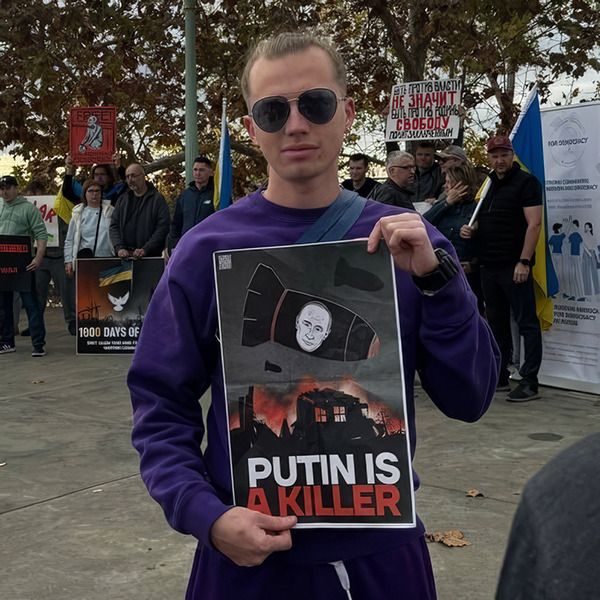
Vladislav Krasnov. Photo: Facebook of Vladislav Krasnov
Perhaps what worked against Krasnov was that his lawyer made a mistake in the asylum application form: she indicated that he had been arrested in Russia, although he had only been detained for administrative offenses: “There was a question, 'Have you ever been arrested for any crimes?' Of course, I answered no. But since the lawyer wrote that there were arrests, this came up in court. And the judge didn't believe me. Although, in fact, judges with such high denial rates simply don't review cases. They invent reasons to deny, and that's it.“
The next denial in immigration court came on appeal on June 26, 2024, on his birthday. “First birthday in jail, plus a denial—what a great combo,” he joked. And on August 2, 2024, he was set to be deported to Russia. An ICE officer tried to force Vlad to sign a consent to deportation by threats, but he refused. Then Krasnov was transferred to New Jersey. There he spent two days in detention, unable to legally notify friends and relatives about what had happened: ICE officers confiscated all his money, to be returned only at the end of deportation. “I managed to call friends and relatives only because I speak a little English and my cellmates were generous,” he said.
On August 5 at 4 a.m. he was taken to New York's JFK airport. When the ICE van arrived, Vlad refused to get out and said he would not fly anywhere, because returning to Russia was dangerous for him and he had a new appeal pending in America. ICE officers took turns playing 'bad cop' and 'good cop', but Krasnov stood his ground. He was then returned to local detention for a few days, and then transferred back to Louisiana.
Shortly before these events, Krasnov joined a class action lawsuit against the Department of Homeland Security. As part of a pretrial agreement, he was released on October 24, 2024. Since then, Vladislav lived with friends in Sacramento (their address was provided to immigration authorities) and regularly checked in with ICE. “They took away my Russian passport, military ID, foreign passport, and driver's license. For more than a year I've lived without any documents,” he said last fall.
And now—another arrest and a new threat of deportation. Krasnov was detained on February 11 in Los Angeles at a routine ICE check-in, which he attended with a new lawyer (the previous one lost their license due to mistakes made in Krasnov's case). The Russian consulate has already been notified of Vladislav's deportation by ICE officers. In Russia, he faces political repression by default: the authorities consider FBK an extremist organization, the American legal entity FBK Anti-Corruption Foundation is recognized in Russia as a terrorist organization and its activities are banned, and even two years after his death in prison, Alexei Navalny is not removed from the list of terrorists and extremists.
Vlad Krasnov's story was one of those that prompted Most.Media to openly oppose the deportation of Russian activists from the US back to Russia. Our petition in their defense has collected more than 30,000 signatures. You can sign it here. If you are in the US, please send the signed petition to your representative in Congress.
If you enjoyed this article, consider making a donation — one-time or, even better, monthly. Your support helps us motivate our authors and become better with every article.
Our organization is recognized by the Internal Revenue Service (IRS) as a 501(c)(3) tax-exempt, charitable organization, which means that all contributions made to us are tax-deductible to the fullest extent permitted by U.S. law. Individuals may generally deduct charitable contributions of up to 60% of their Adjusted Gross Income (AGI) for cash donations made to qualifying 501(c)(3) organizations. For donations of appreciated assets (such as stocks or other long-term capital assets), the deduction is typically limited to 30% of AGI, based on the fair market value of the asset. C-corporations may deduct charitable contributions of up to 10% of their taxable income for donations made to eligible charitable organizations.
By submitting a donation, you confirm that you have read and accept the following documents: Privacy Policy and User Agreement, and also give consent to the processing of your personal data.
If you would like to unsubscribe from a monthly donation, please email us at: [email protected]