There are women in the country ready to change politics and society. But mostly, only those who do not challenge the system make it into power. Dissenters are pushed out of politics or subjected to repression.
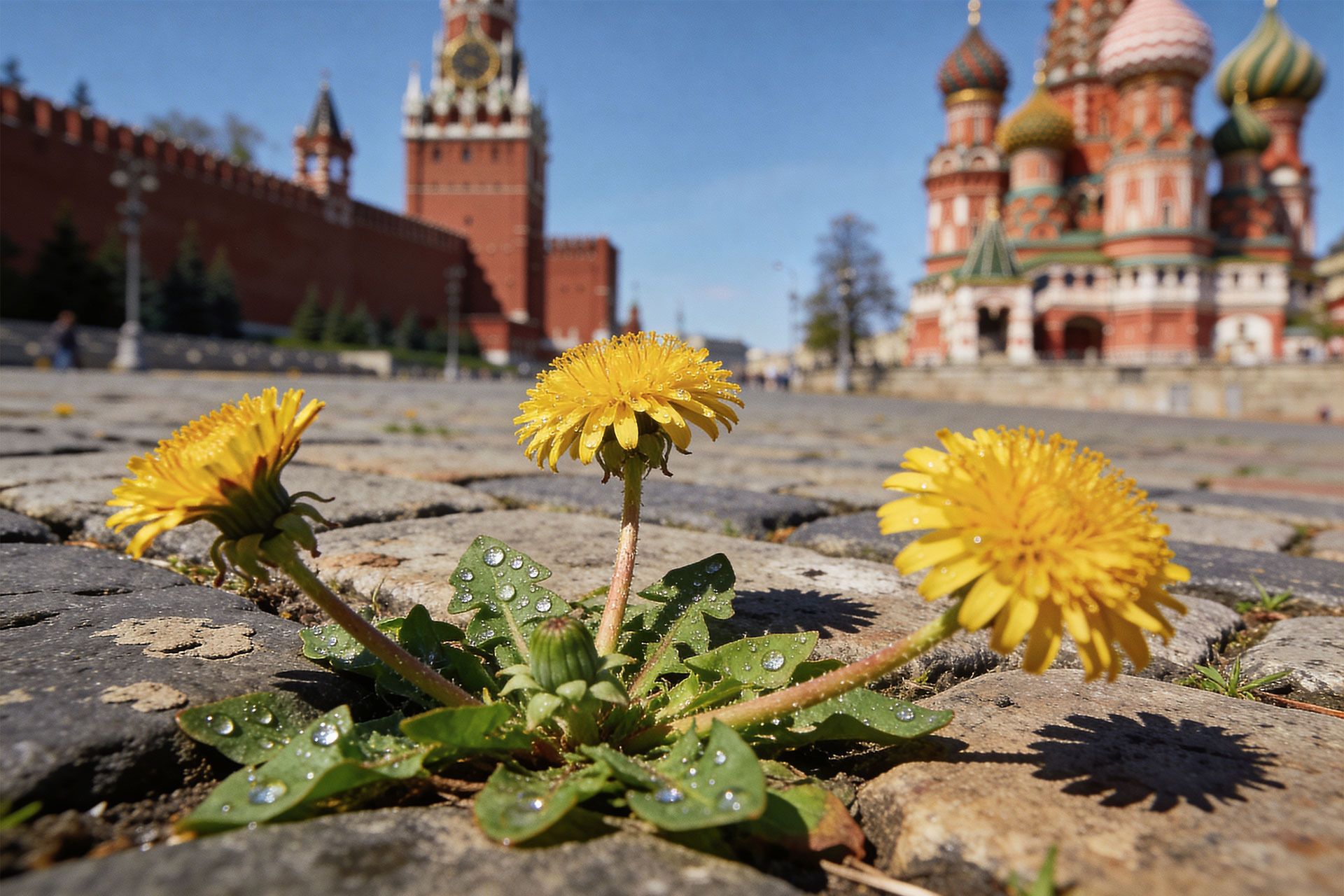
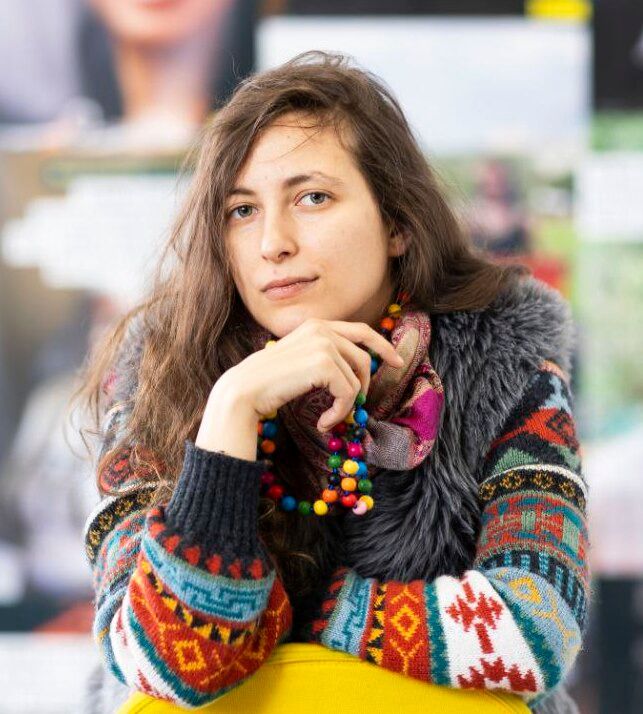
Illustration: Seedream
There were almost no female political prisoners in Russia before. In fact, there weren't many men either, but gradually they started to appear. And when there were many men, the authorities reached for the women too.
Everything here followed the classic rules of repression. First they came for some, then for others, it was subtle, creeping — and then it turned out that everyone was imprisoned, and there were no more rules or protections left.
Earlier, in the first Putin years, inconvenient women — for example, journalists — were dealt with without the help of judges or investigators.
Take the world-famous Anna Politkovskaya. She was shot — and, as in a classic Soviet film, it was done by “people not from our neighborhood.” Everything was blamed on Chechens. Who ordered it is another question, one the Russian Federation wisely decided not to ask, lest it lead back to itself.
Then the regime started to get a taste for it — and began imprisoning women who could be labeled as marginal activists in public opinion.
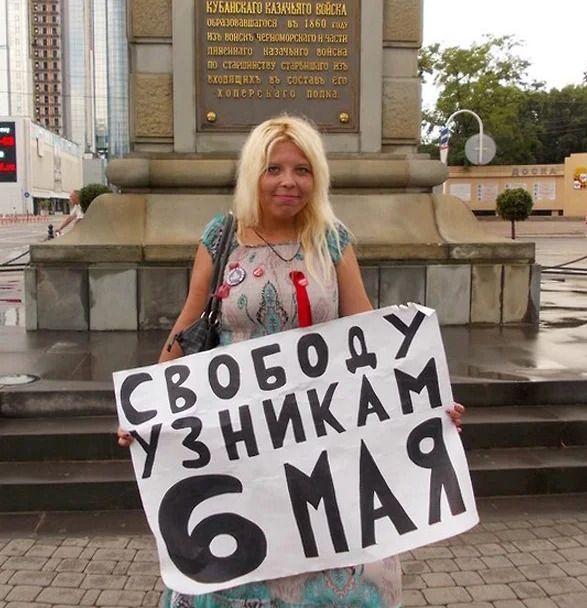
For example, Darya Polyudova, who went through every circle of Russia’s criminal-correctional system. She was accused of separatism, extremism, and all of it — just for words. The Kuban, regional “justice” ruined the young woman’s life like breaking an arm in several places at once.
Darya Polyudova at a solo picket in support of those imprisoned in the “Bolotnaya case” — connected to the May 6, 2012 protests. Photo: Wikipedia
But society swallowed it, because — where is that Kuban, who are those activists marching for its federalization, what is that anyway? It was unclear to society.
After this and similar trial runs, repression in full force began to affect many women in politics. I think a key moment was the persecution of Khodorkovsky’s “Open Russia.”
Women from Khodorkovsky’s structures — Yana Antonova and Anastasia Shevchenko — were tormented for participating in the activities of an “undesirable organization,” meaning simply for cooperating with a Putin critic. Shevchenko had a hidden camera installed in her bedroom and the Investigative Committee recorded home videos. She was not allowed to say goodbye to her own child, who died in the hospital. Now Shevchenko is in exile, but imagining what happened a few years ago is frightening. These women, however, were ultimately not imprisoned, limited to several years of harassment before sentencing.
But after everything had been tested, after society swallowed the repression again, the state realized: anything goes. Now they imprison everyone and for a long time. Old, young, from the capitals, from the provinces. It makes no difference.
I’ll give just a few examples.
Maria Ponomarenko, journalist, RusNews staff. Photo: posledneeslovo.com
Journalist Maria Ponomarenko was sentenced to six years in prison.
Her case is called “military fakes,” a common criminal charge added to the criminal code after the start of the military operation in Ukraine.
Ponomarenko was convicted for publications about the drama theater in Mariupol.
Before that, the journalist spent several months in pre-trial detention, and last year she slit her wrists due to the torturous conditions of her detention.
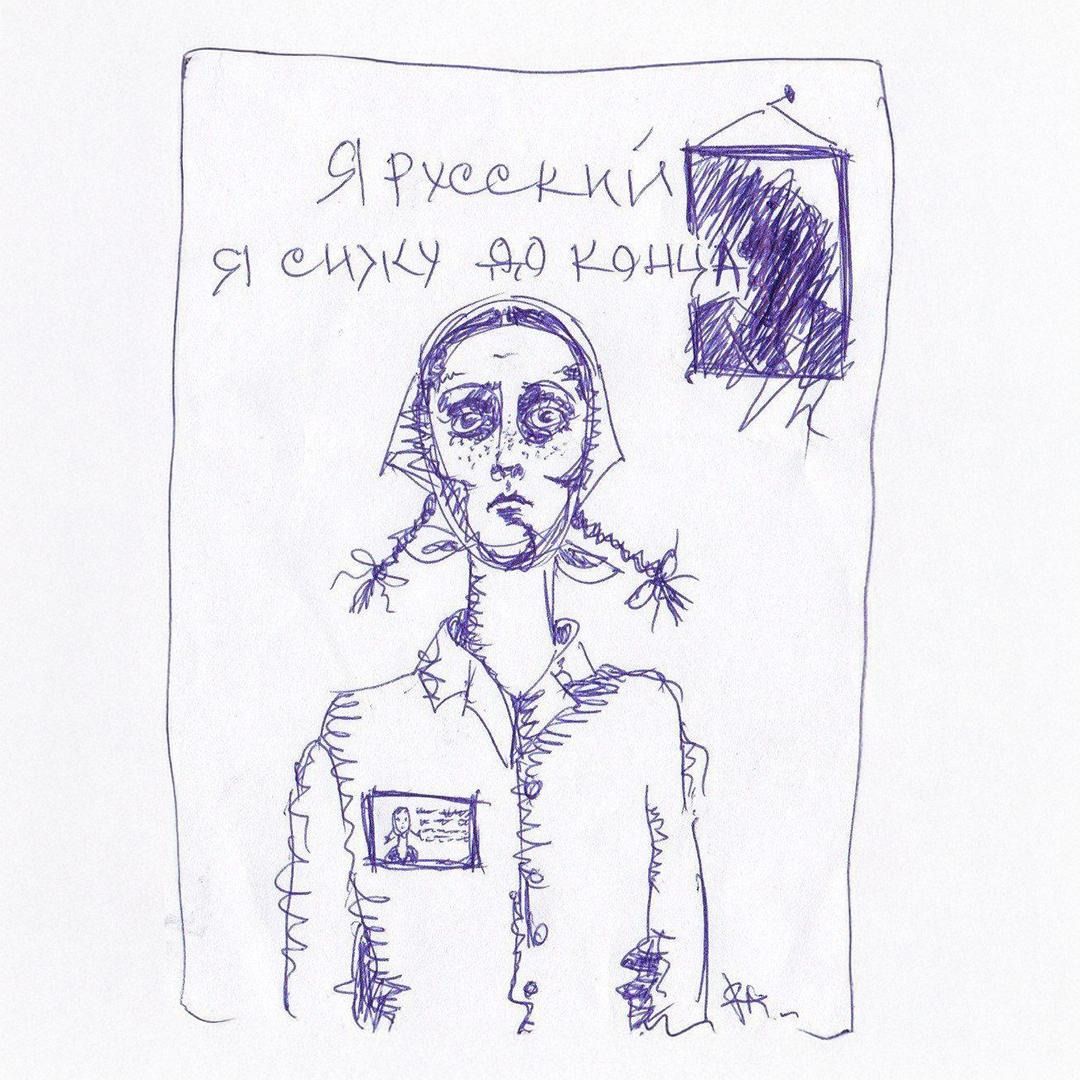
Drawing by Lyudmila Razumova
Seven years for artist Lyudmila Razumova.
Lyudmila and her husband were convicted for a series of social media posts criticizing Russian soldiers. In addition, they were charged with “vandalism” for pacifist graffiti.
Pacifist graffiti — “Peace to Ukraine” and “Ukraine, forgive us.”
Just think about it — seven years.
Long sentences for women are, without a doubt, a demonstrative political measure. The state is raising the stakes. Behind bars are those who dared to go against the interests of the Putin regime.
In an environment of obsessive traditionalism, a cult of family reinforced by demands to put off a career and give birth no later than age 20, women who go against this trend are not spared. The argument “I have the right to control my own body” is harshly suppressed.
The very desire to engage in political activity is the opposite of the patriarchal mindset. Activism is equated with extremism, with corresponding restrictions on freedom.
***
Now many names of Russian female political prisoners, some of whom have been pardoned, are known worldwide: Sasha Skoczylenko, Natalia Filonova, Alsu Kurmasheva, Lidia Chanysheva… The list could go on: each case is remembered for its particular cruelty.
Skoczylenko — was not allowed to eat during court, and when she was, it was inedible food.
Kurmasheva — was taken hostage because of her husband, who runs the publication “Current Time.”
Chanysheva — was punished for collaborating with murdered Putin critic Alexei Navalny, despite her pregnancy, and then her sentence was made even harsher.
What did these and many other women — politicians, journalists, activists — do? A lot of good for society, and nothing dangerous for the state.
The political prisoner exchange that took place on August 1, 2024, the largest since World War II, during which four women were saved from among hundreds of political prisoners, did not change the situation.
Sasha Skoczylenko. Photo: Wikipedia / Karen Veldkamp / CC BY-SA 4.0
Of course, we in Russia are glad that Sasha Skoczylenko, Alsu Kurmasheva, Lilia Chanysheva, and Ksenia Fadeeva will no longer languish in Putin’s dungeons — but how many other women remain there? How many can we not even write about here in Russia, so as not to end up prosecuted ourselves for “justifying terrorism”?
They say that media attention and belonging to a public organization can save you — even if the chance is tiny. But what if no one is interested in you except your loved ones, as is the case for many in Russian prisons? What if you’re just an ordinary grain of sand in the prison archipelago?
The history of Russian repression will undoubtedly include Moscow teacher Evgenia Kholodova, who demanded at a protest that a police officer release her friend and hit a security officer with her bag. He bit his lip, which was considered an injury and led to a criminal case with a suspended sentence.
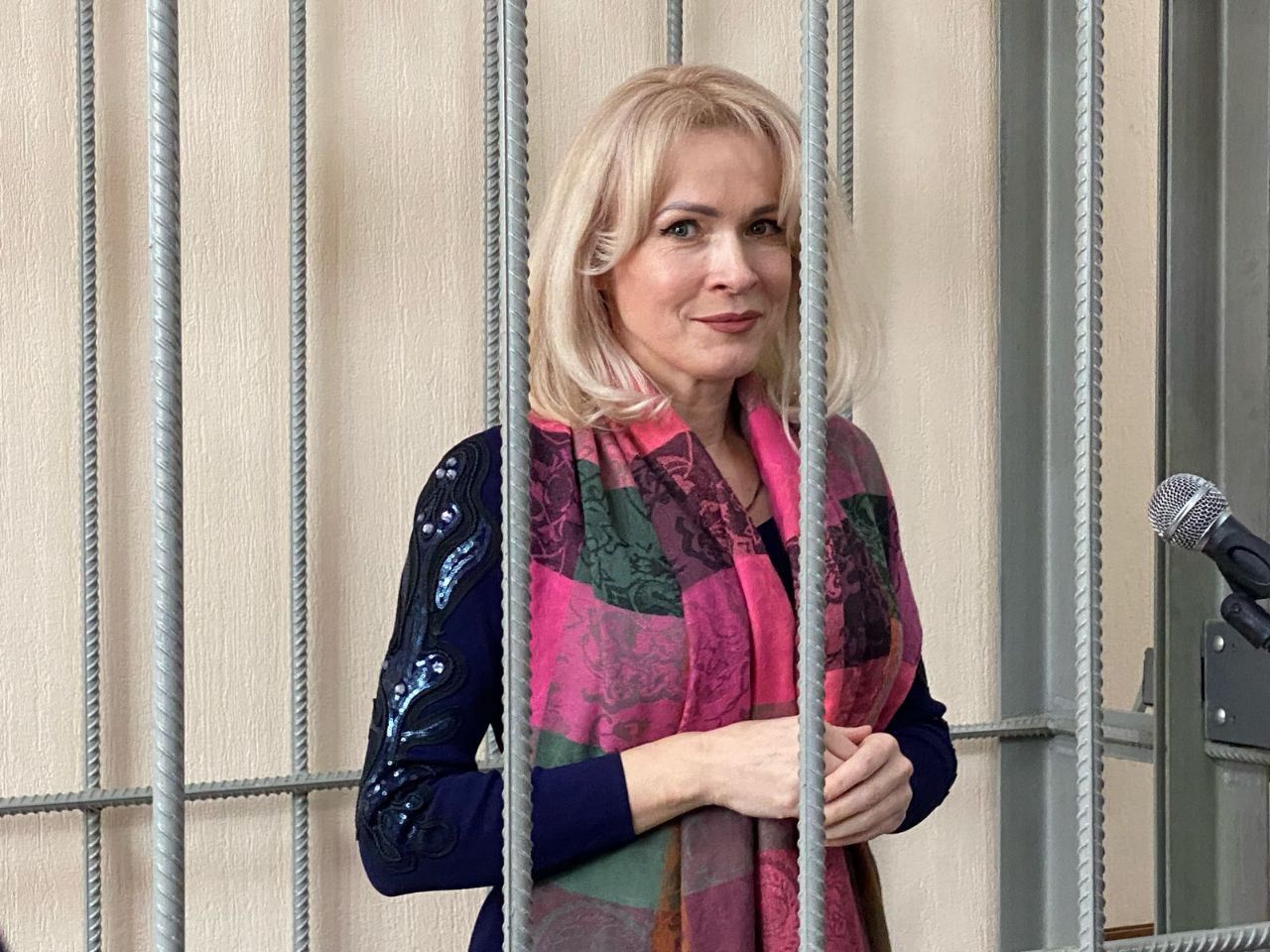
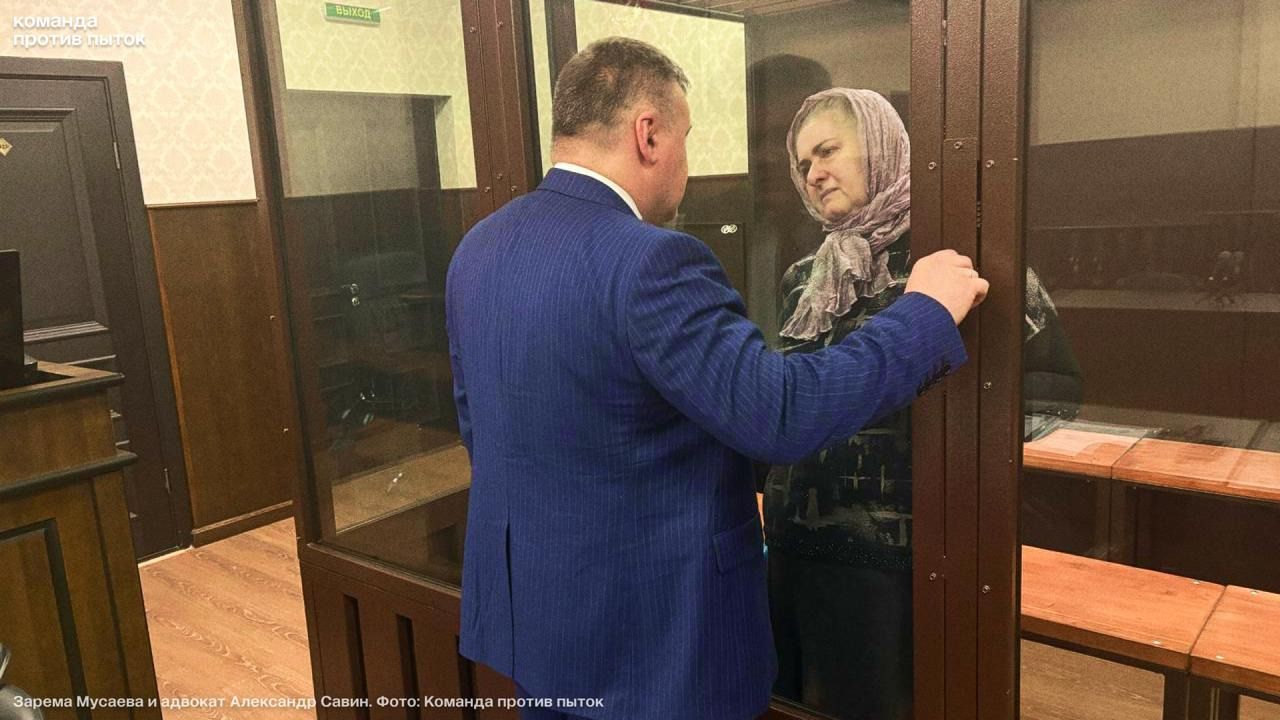
Zarema Musaeva in the courtroom. Photo: Team Against Torture
Or the case of Zarema Musaeva — mother of the Yangulbaev brothers, who are critical of the head of the Chechen Republic, Ramzan Kadyrov. She was kidnapped at night from Nizhny Novgorod, dragged barefoot through snow and frost, and taken to Chechnya. There, in court, she fainted — and during that time she was accused of attacking a police officer. Allegedly, a razor cut on the security officer’s face was evidence of the attack.
The European Court of Human Rights awarded Musaeva more than 50,000 euros — but she will not receive the money [in September 2022 Russia withdrew from the European Convention on Human Rights and has not complied with ECHR decisions since — Most. Media]. The main thing is for her to get out of the colony alive.
The Russian state is merciless to the enemies of the Reich. And it hasn’t mattered for a long time whether they are men or women. In the eyes of the state, Putin’s enemy has no gender or age.
But women continue to pursue politics with dedication.
***
It has always been harder for women to break through in society — that’s no secret. In the entire 20th century, Russia never had a woman as head of state. There’s a connection here.
Women’s politics means a lower chance of war, because women give birth to and raise children not to send them to be shot. Women generally prefer not to fight, but to negotiate. We solve problems not with force, but with words and diplomacy.
Long-term planning, butter instead of guns, human rights — these are all features of women’s politics. But for now, while it doesn’t exist in Russia, we spend year after year witnessing horrors on the front lines.
If there were women’s politics in Russia, there wouldn’t be such a budget skew in favor of the security forces.
Someone looking at the makeup of the State Duma of the Russian Federation might reasonably say: “What more do you want? Look how many women are in power!”
The thing is, there are two types of women in Russian politics.
The first — those sitting in prison on politically motivated charges. Those I mentioned at the start of this article, who have served and are serving time in inhumane conditions. If Russia had real, competitive politics, they would be MPs and party leaders. But in Russia, there is only terror, directed both at the “domestic audience” and abroad.
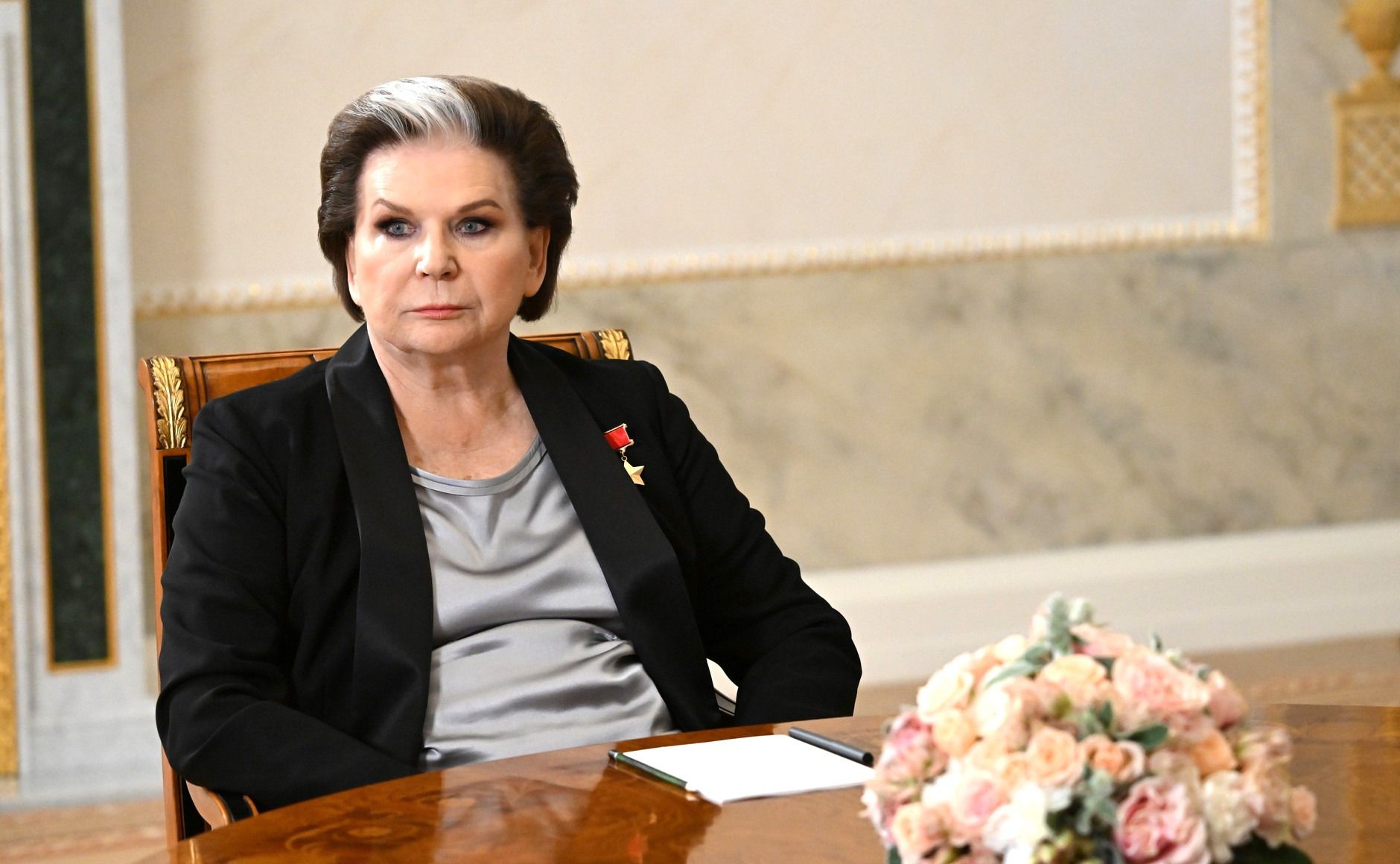
The second type — those in power right now. One of them is Valentina Tereshkova. The very first woman in space. Years go by, the country’s leaders change, the Constitution and even the country itself change. But Valentina Tereshkova continues to faithfully serve any regime. And the authorities treat Valentina Vladimirovna like a trophy — polishing her before important dates and putting her on display when needed.
State Duma Deputy Valentina Tereshkova meeting with Vladimir Putin, June 16, 2023. Photo: kremlin.ru
Tereshkova could have remained a symbol, a moral guide for generations to come, but instead she chose to support the most controversial bills of the Russian authorities, ultimately tarnishing her reputation. She was the one who signed off on “resetting” Vladimir Putin’s terms and helped prolong his hold on power.
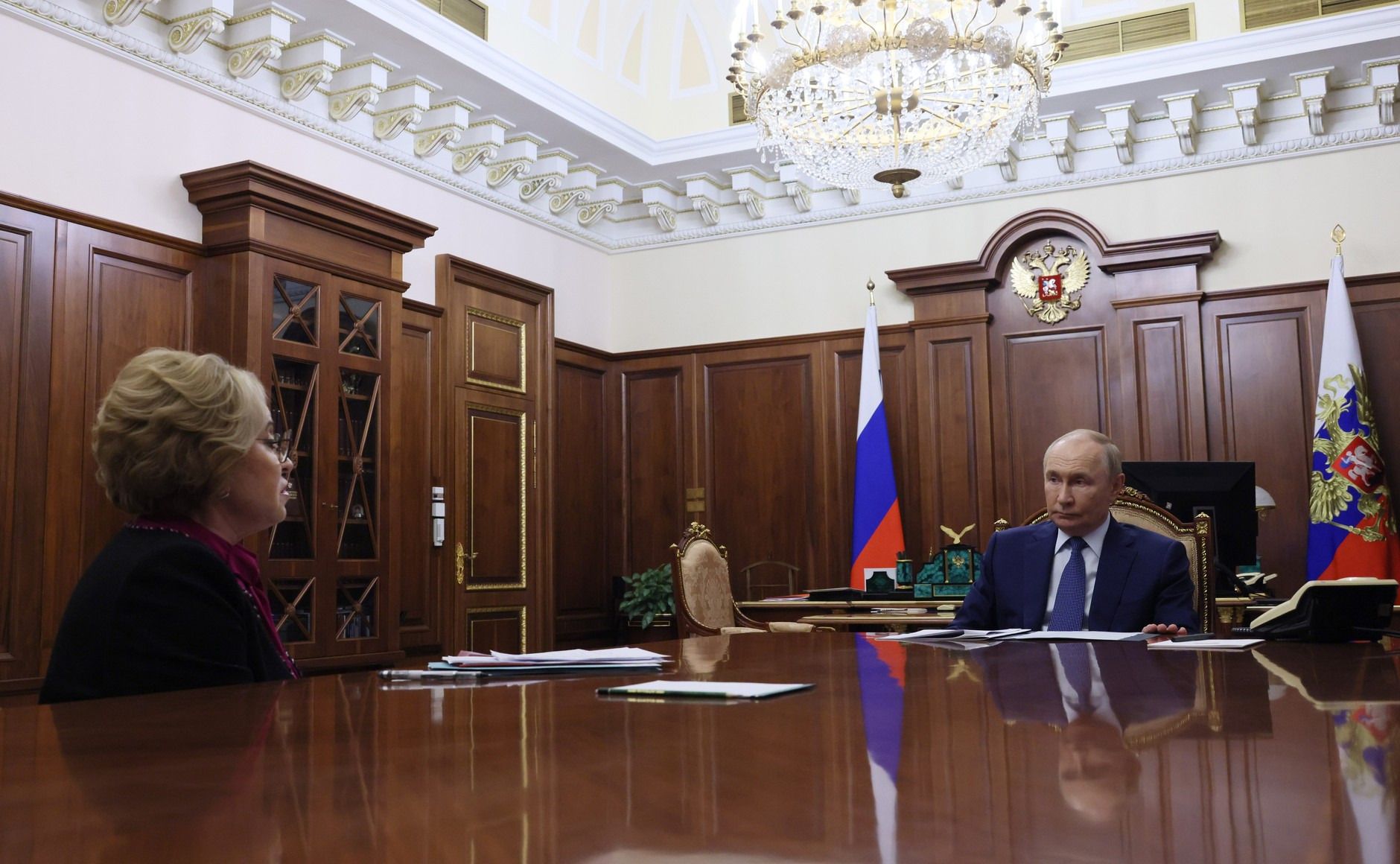
Another well-known woman in Russian politics is Valentina Matvienko. Chairwoman of the Federation Council — former governor of St. Petersburg, experienced Komsomol member, loyal servant of Vladimir Putin.
Do you know what distinguishes women in Russian power? Nothing. They’re all the same. It might seem their names are different and they don’t look alike. But swap the words and actions of one for another — and nothing changes.
Could Matvienko have signed off on resetting Putin’s presidential terms? She could.
And can you imagine Tereshkova as head of the Federation Council instead of Matvienko? Easily! There’s no difference.
Federation Council Chairwoman Valentina Matvienko with Vladimir Putin, July 25, 2025. Photo: kremlin.ru
There are plenty of women in power fawning over Putin. But these aren’t really politicians — they’re functionaries appointed to serve Putin. It’s a kind of creepy harem.
Now look at the women being tormented in prisons, and remember their actions. Many of them have proven by deed that they stand for social policy, for supporting the oppressed, for everything we in Russia call European, democratic values.
These women are not alike. They are authentic and honest. They are not willing to side with dictators for an extra penny in their pocket. They see the country’s future differently, but even without an official mandate, they are true politicians and patriots because they speak their minds openly and talk about Russia’s problems as honestly as possible, without censorship.
Parliament should be made up of different people so they can argue about whose Crimea it is — not in tanks at the border.
And many women in Russia, overcoming fear and risking arrest, are ready to argue.
That’s the difference.
Matvienko, Tereshkova, and many other Putin supporters are not ready to argue with anyone; they just follow orders from the Kremlin boss.
There are many women in Russia ready to change the country. We have all the ideas being actively discussed in Europe. But we’re not allowed to implement them — or even to discuss them.
Putin is afraid of such women, and everyone in the Kremlin is afraid, because they’ve forgotten how to talk. They only know how to be rude and solve problems with force or coercion. But you can’t tell us “like it or not — put up with it, my beauty,” you might get punched in the face for that.
The future of Russian politics belongs to women, and the authorities know it. But change isn’t for them, so instead of real women politicians, we get stand-ins.
Sooner or later, we’ll break through anyway. Like grass breaking through asphalt — and Russia, repenting before the world, will become a European country, where equality is real, not just words. Where there’s no war, because life is valued. Where people argue, not get thrown in jail.
Men! It’s time to make room. The world needs peace!
If you enjoyed this article, consider making a donation — one-time or, even better, monthly. Your support helps us motivate our authors and become better with every article.
Our organization is recognized by the Internal Revenue Service (IRS) as a 501(c)(3) tax-exempt, charitable organization, which means that all contributions made to us are tax-deductible to the fullest extent permitted by U.S. law. Individuals may generally deduct charitable contributions of up to 60% of their Adjusted Gross Income (AGI) for cash donations made to qualifying 501(c)(3) organizations. For donations of appreciated assets (such as stocks or other long-term capital assets), the deduction is typically limited to 30% of AGI, based on the fair market value of the asset. C-corporations may deduct charitable contributions of up to 10% of their taxable income for donations made to eligible charitable organizations.
By submitting a donation, you confirm that you have read and accept the following documents: Privacy Policy and User Agreement, and also give consent to the processing of your personal data.
If you would like to unsubscribe from a monthly donation, please email us at: [email protected]