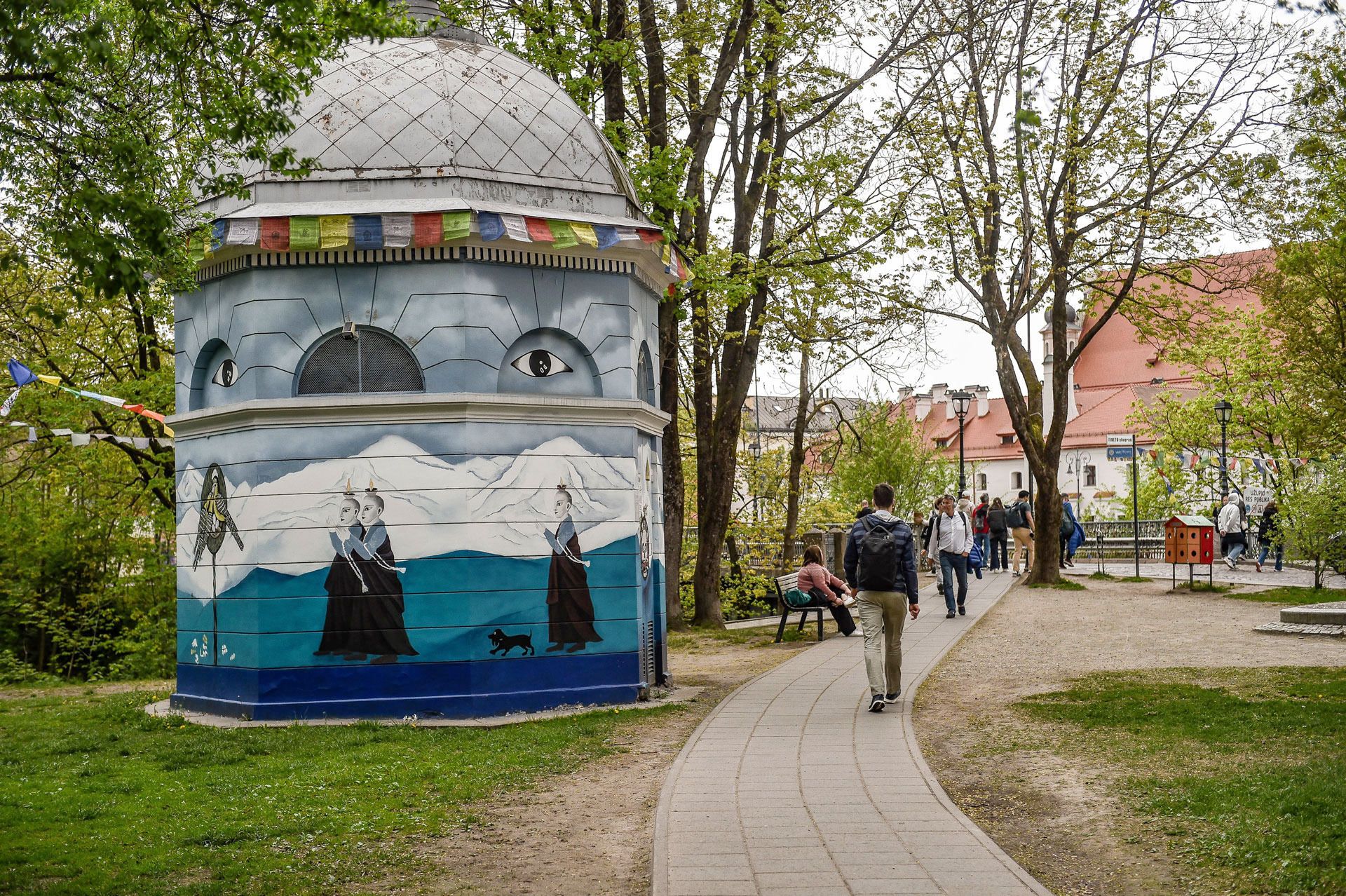
Užupis is one of the strangest places in Europe. This city district has its own Constitution, president, ministry of foreign affairs, currency, anthem, and more than five hundred ambassadors around the world. All of this is not entirely serious—it's a game, an art performance, a collective joke that has become part of the city’s identity. But it’s not just a joke, either.
Photo by Anna Gavrilova
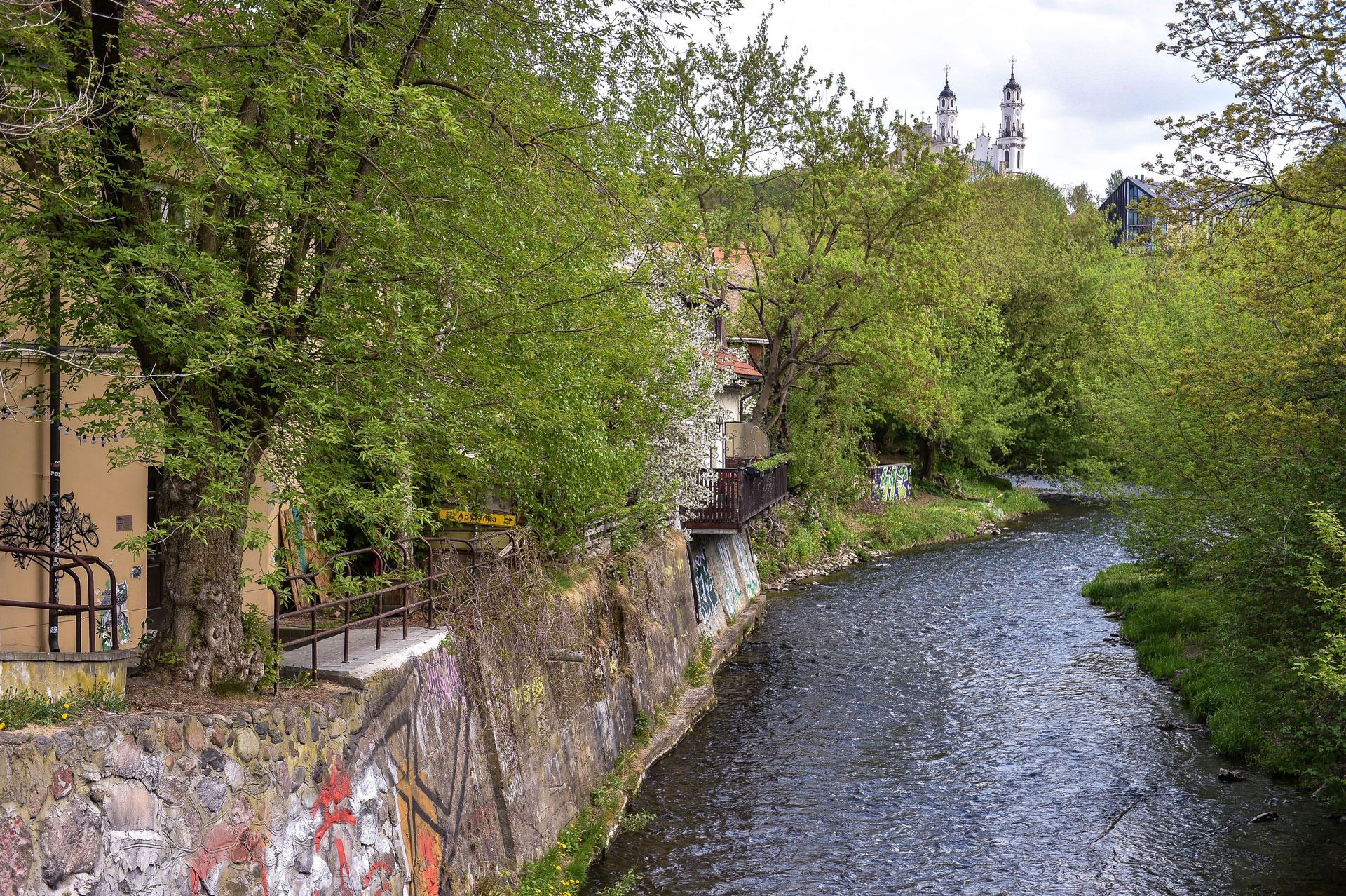
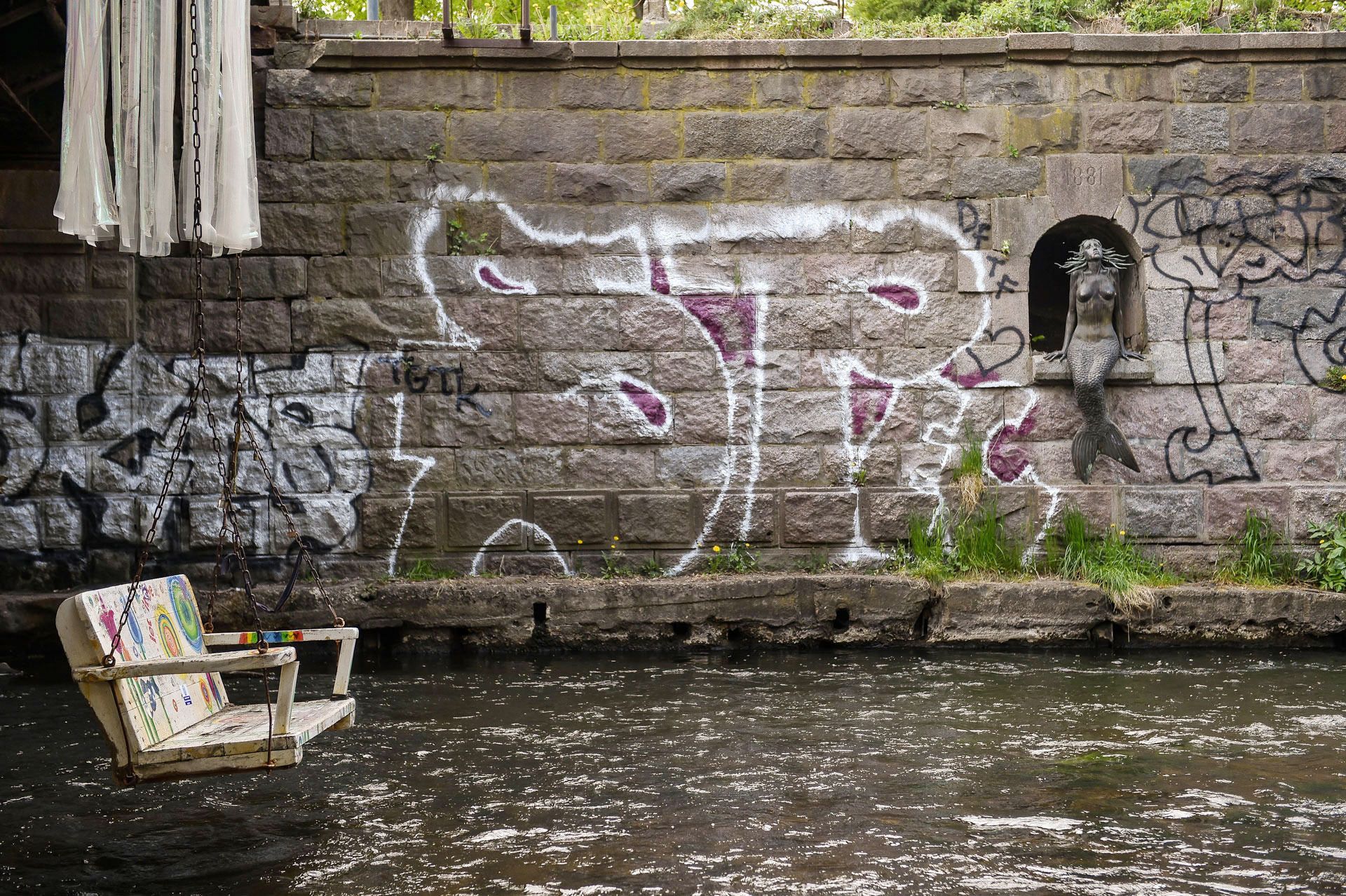
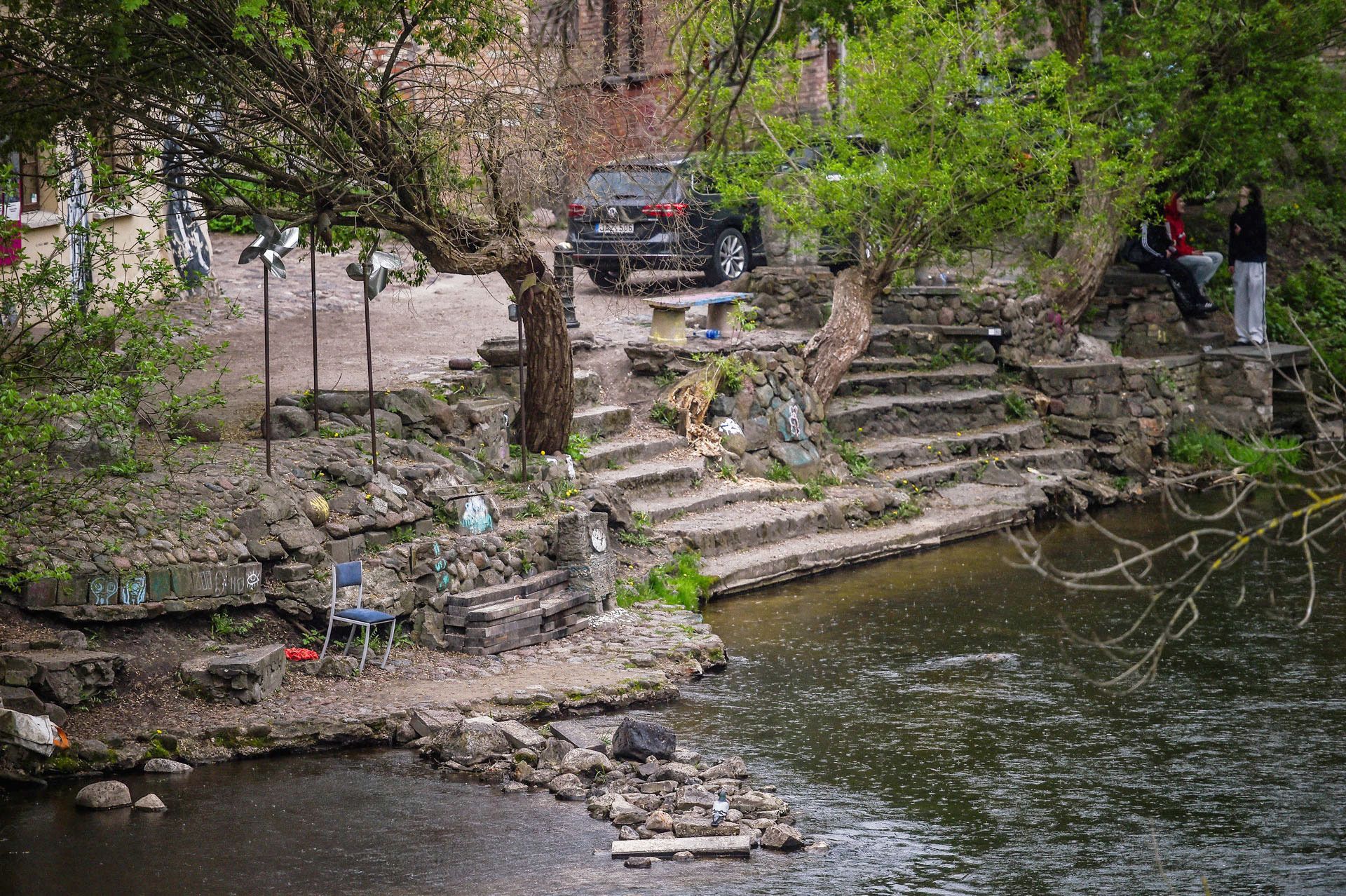
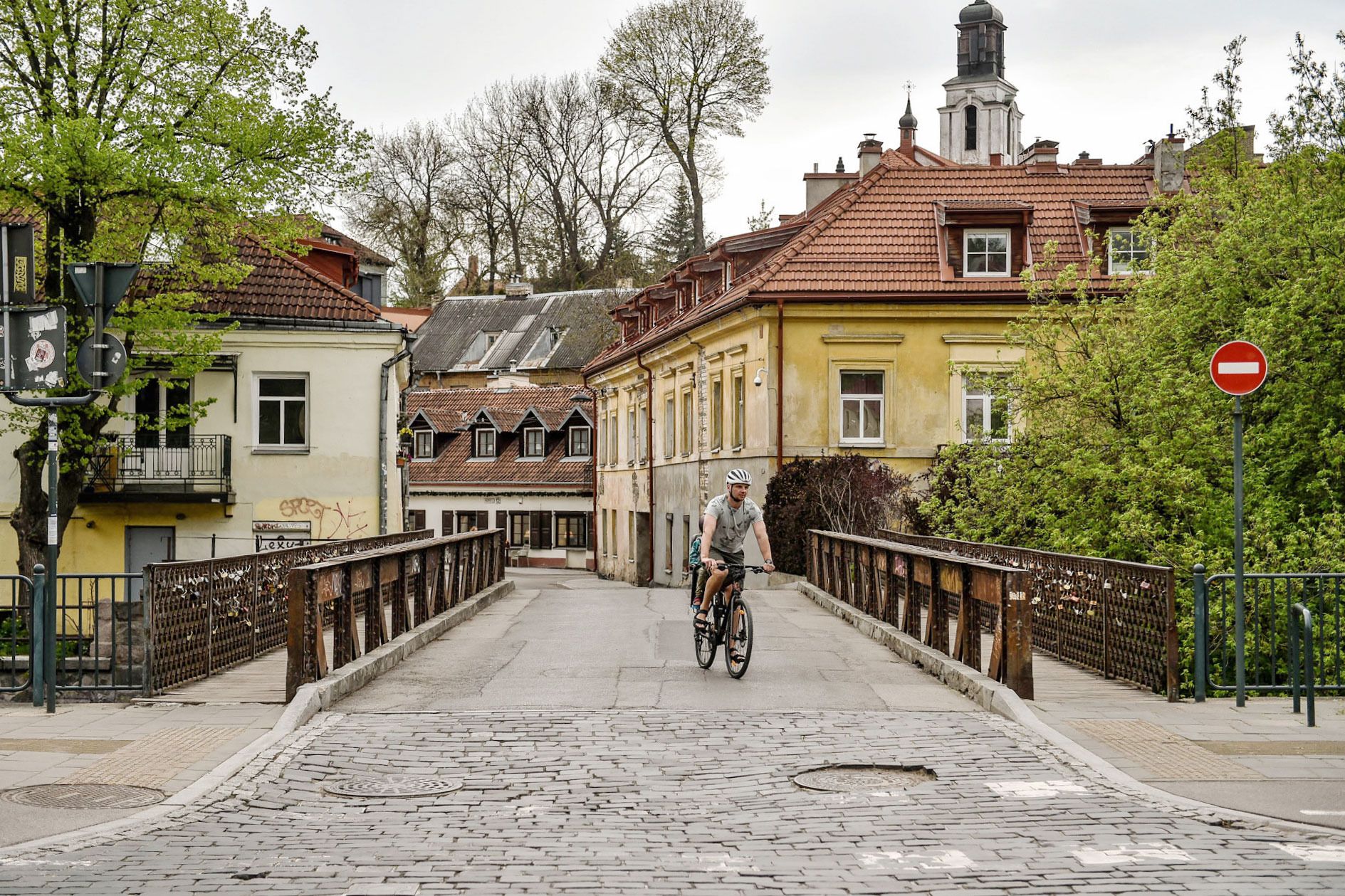
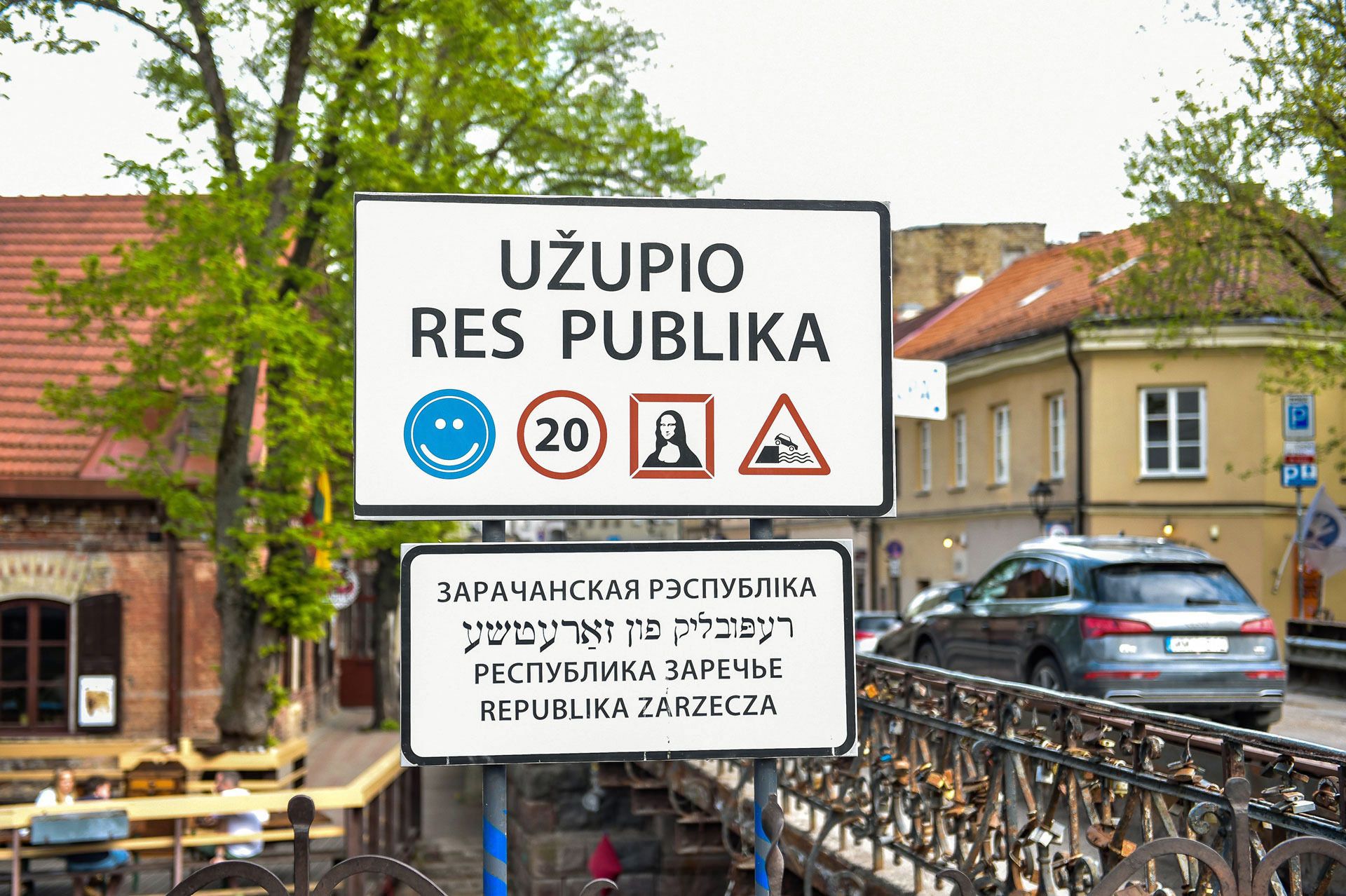
You can cross the bridge over the Vilnelė River in half a minute. On the metal railings are locks left by couples in love. Under the bridge, in a stone niche, sits a bronze mermaid. Swings hang from the edge of the bridge—you can sway on them and dangle your feet over the water. At the entrance stands a road sign with a smiley face, the Mona Lisa, and the number “20.” Here, the sign looks less like a speed limit and more like an invitation not to rush anywhere. Cross the bridge and, formally, you’re still in Vilnius, but in fact, you’re already in Užupis.
The name translates literally from Lithuanian: “beyond the river.” Užupis means the other side, across the river. The district has been mentioned in written sources since the 15th century and throughout its history has remained what its name suggests: a place on the edge, beyond the line, away from the main streets and events.
The Republic of Užupis. Area—60 hectares. Population—about seven thousand people, of whom nearly a thousand are artists. But it all started very differently.
Workshops Beyond the City Wall
In the 16th century, Užupis was home to workshops, mills on the Vilnelė River, and craftspeople. Vilnius developed as a fortified city, its walls running along the riverbank. Užupis remained outside. Those who couldn’t find space inside the city walls or were looking for cheaper housing settled here: craftsmen, merchants, migrants from the east. Many of them were of Russian and Jewish origin.
The Jewish history of Užupis is an important part of its past. For centuries, Vilnius was called the “Jerusalem of Lithuania.” The city was a major center of Eastern European Jewry—with rabbis, scholars, printing houses, theaters, and dozens of synagogues. Užupis also had a synagogue—the building at Užupio 36 still exists, though from the outside it looks much too new for its age. The community prayed here from 1841 to 1941—exactly one hundred years.
On the hills beyond the river was Vilnius’ second Jewish cemetery—huge, founded in 1828. By 1937, there were about 70,000 graves here. Merchants, doctors, teachers, philanthropists, publishers—among the headstones were the names of people who made up the city’s intellectual and cultural elite for more than a century. The road from the Old Town through Užupis to the cemetery was called the “road of death”—for over a hundred years, funeral processions moved along it, until the Soviet authorities closed the cemetery in the late 1940s.
In June 1941, the Nazis occupied Vilnius. At that time, about 60,000 Jews lived in the city—almost a third of the population. By the end of the war, the vast majority had been killed. Mass shootings in what is now Vilnius’ Paneriai district, ghettos, deportations. Up to 195,000 Lithuanian Jews died in the Holocaust—about 95% of the pre-war community.
Užupis was left deserted. The houses where Jewish families once lived stood abandoned.
Empty Houses
During Soviet times, the Užupis cemetery was destroyed: in 1964, the authorities of the Lithuanian SSR ordered the gravestones to be removed. Many were used as building material—they became steps on Tauras Hill and at the Evangelical Reformed Church. A road was laid through the cemetery, and a Palace of Ritual Services was built. Formally, the site is still registered as a Jewish cemetery in Lithuania’s cultural heritage registry.
A memorial appeared in 2004: a concrete pillar with a dome, echoing the shape of the old gates, and a wall made of about 75 gravestones taken from the steps of Tauras Hill. About 70 more gravestones or their fragments were returned to the cemetery only in 2016.
After the war, the district, now deprived of its population, interested no one. The abandoned houses were occupied by the homeless, petty criminals, and sex workers. Užupis became Vilnius’ most troubled area. Many buildings had neither hot water nor heating nor basic amenities. Užupio Street became known as the “street of death”—both because of crime and as a reminder of those who no longer lived here. People from other parts of the city tried to avoid the area.
Yet it was during Soviet times that Užupis began to attract its first artists. The logic was simple: it was cheap, no one cared what you did, and the Vilnius Academy of Arts was just a stone’s throw away. The academy is literally on the district’s border, and for decades its students and graduates looked for studios nearby. Thus, on the city’s fringe, in crumbling riverside houses, an environment began to form that would later grow into a whole informal republic.
Squatters and Students
On March 11, 1990, Lithuania became the first Soviet republic to declare independence from the USSR. For Užupis, this was a turning point. The first years of freedom were hard for the whole country: economic crisis, unemployment, uncertainty. But for Užupis, the crisis was a kind of gift. Rents in an already abandoned district were laughably low. Artists, sculptors, musicians, poets began to move into the empty buildings en masse. Some were essentially squatters—occupying houses with no legal tenants.
In 1996, a group of students from the Vilnius Academy of Arts founded an art community in an abandoned house on the Vilnelė River. They set up studios there and started exhibiting their works right in the yard. The idea was supported by residents and, more importantly, by the Vilnius municipality. In 2002, the artists and the city officially established the Užupis Art Incubator—the first such institution in the Baltics. 1,500 square meters: 40 studios, an exhibition gallery, educational spaces.
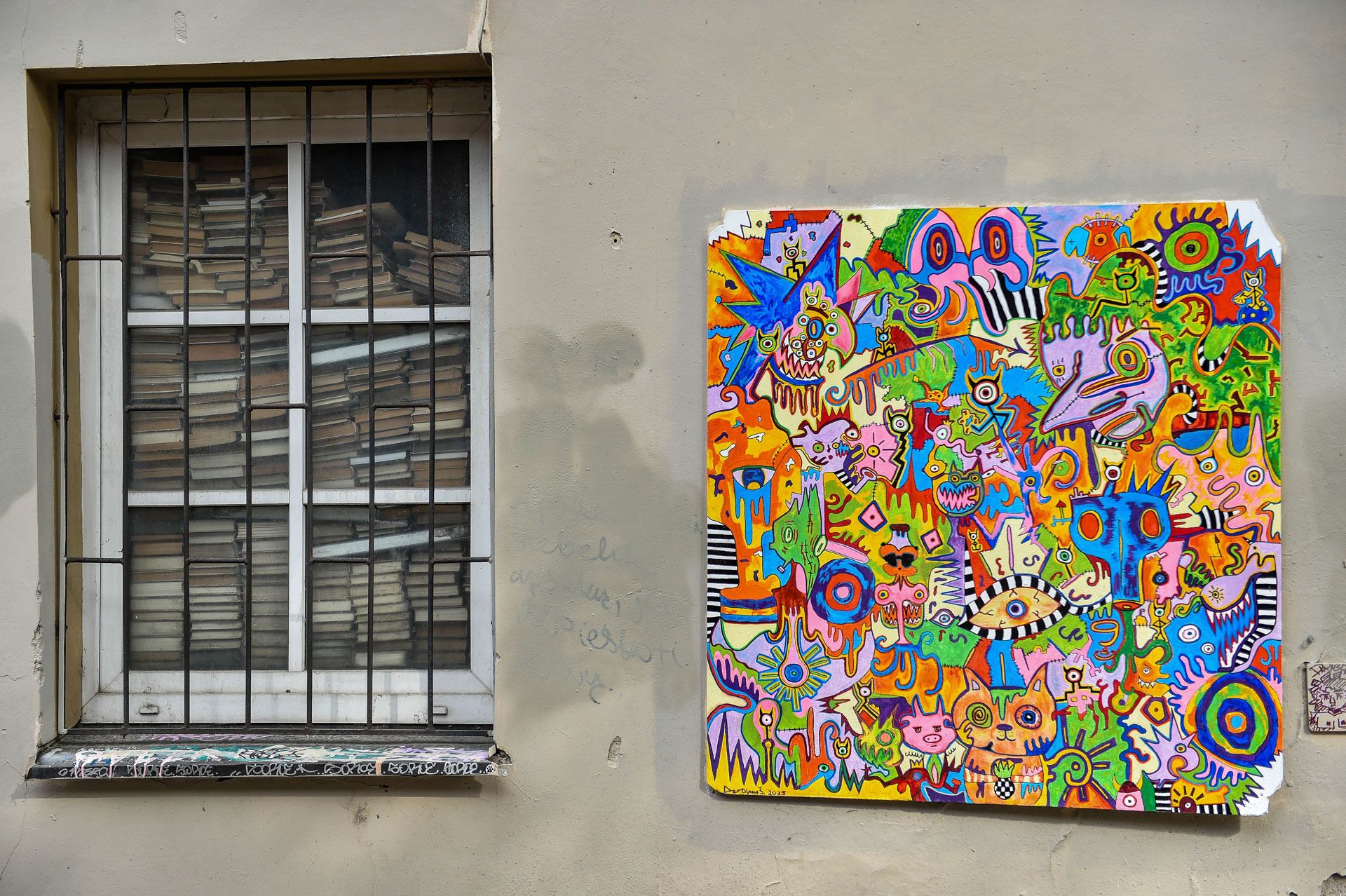
The incubator was conceived as a “springboard” for young artists: they got studios at very low rent and the chance to show their work. Art quickly spilled out from the incubator’s walls onto the streets. House walls became covered in murals, and sculptures appeared in the courtyards.
It’s worth mentioning two people without whom Užupis would have been just another former squat.Romas Lileikis—a poet, musician, and film director. Tomas Čepaitis—a librettist, translator, and, as he sometimes calls himself, sometimes a king. Two friends, two residents of Užupis, who decided to turn their district into a state.
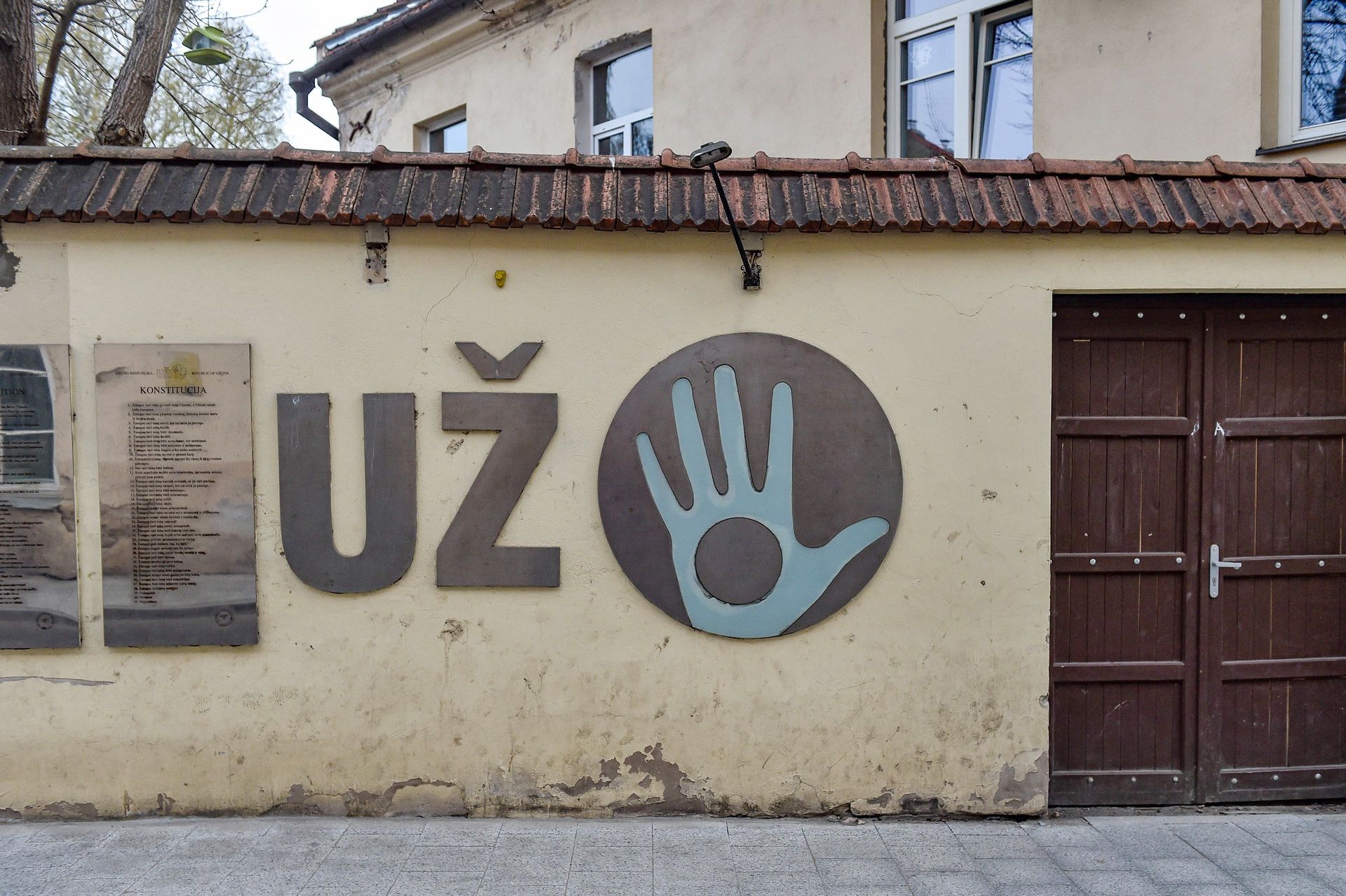
On April 1, 1997, they declared the creation of the Republic of Užupis. The date was not accidental: April Fool’s Day emphasized both the unseriousness of the idea and the belief that humor is more important than political solemnity. The new republic got a flag (with a hand whose color changes with the seasons), a president (Lileikis still holds the post), a government, an anthem, an army of about 11 people (later disbanded), and its own currency—the EuroUžas. The exchange rate has been stable for more than fifteen years: 1 EUZ equals 1 euro or one pint of beer.
The republic’s motto: “Don’t win. Don’t fight. Don’t give up.” But the main text became the Constitution.
“Everyone has the right to be unhappy”
In the summer of 1998, Lileikis and Čepaitis sat in the Užupis Café—a place on the riverbank that has since been considered the parliamentary headquarters—and in three hours wrote a Constitution of 38 articles.
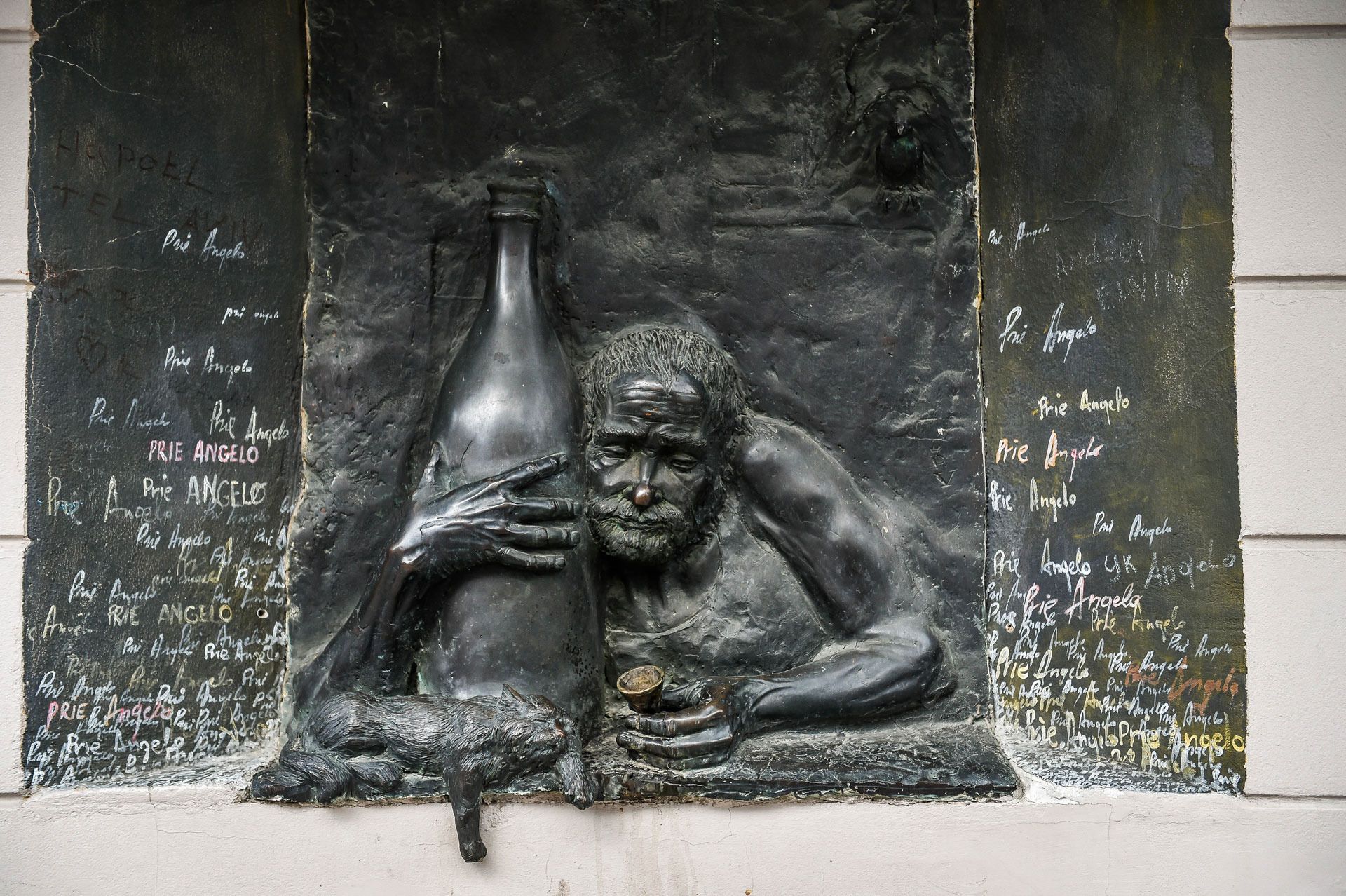
The Constitution begins by stating that everyone has the right to live by the Vilnelė River, and the river has the right to flow past everyone. Then comes a series of rights that sound both like poetry and quite serious philosophy. Everyone has the right to die, but this is not an obligation. A dog has the right to be a dog. A cat is not obliged to love its owner, but in a difficult moment must come to help. To this day, people say that one of the authors was a cat person and the other a dog person, and it’s the only ideological disagreement in the republic’s history.
Article 16: everyone has the right to be happy. Article 17: everyone has the right to be unhappy. These two lines go together. The right to unhappiness is a nontrivial thing. Especially in a world where forced positivity has become a separate form of pressure. The final article: everyone has the right to have no rights.
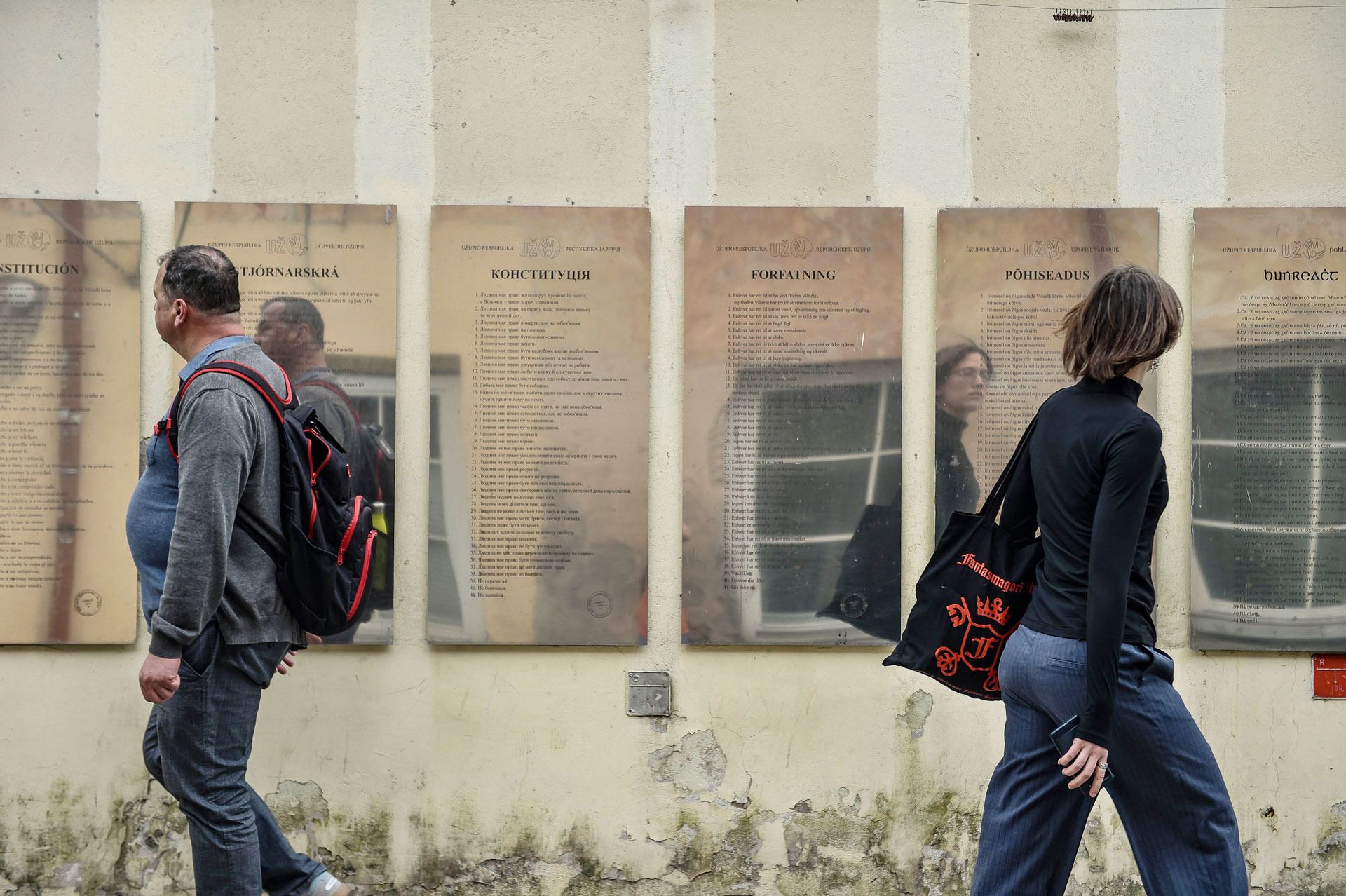
The Constitution was first published on a wall on Paupio Street—and this place is now called the Alley of Constitutions. Plaques with the text have been translated into more than 50 languages. The design was created by Eglė Varankaitė, then a student at the Vilnius Academy of Arts, who won a competition for the best concept. The plaque was ceremoniously hung on July 5, 2003.
In September 2018, during a visit to Vilnius, Pope Francis blessed the Latin version of the Constitution. And at the Užupis “embassy” in Munich, with Čepaitis’ participation, another article was added—on the right of artificial intelligence to believe in the goodwill of humanity. Thus, the Užupis Constitution became the first constitutional text in the world to mention AI.
An Angel That Hatched from an Egg
Every country needs symbols. The Republic of Užupis has several, each with its own story.
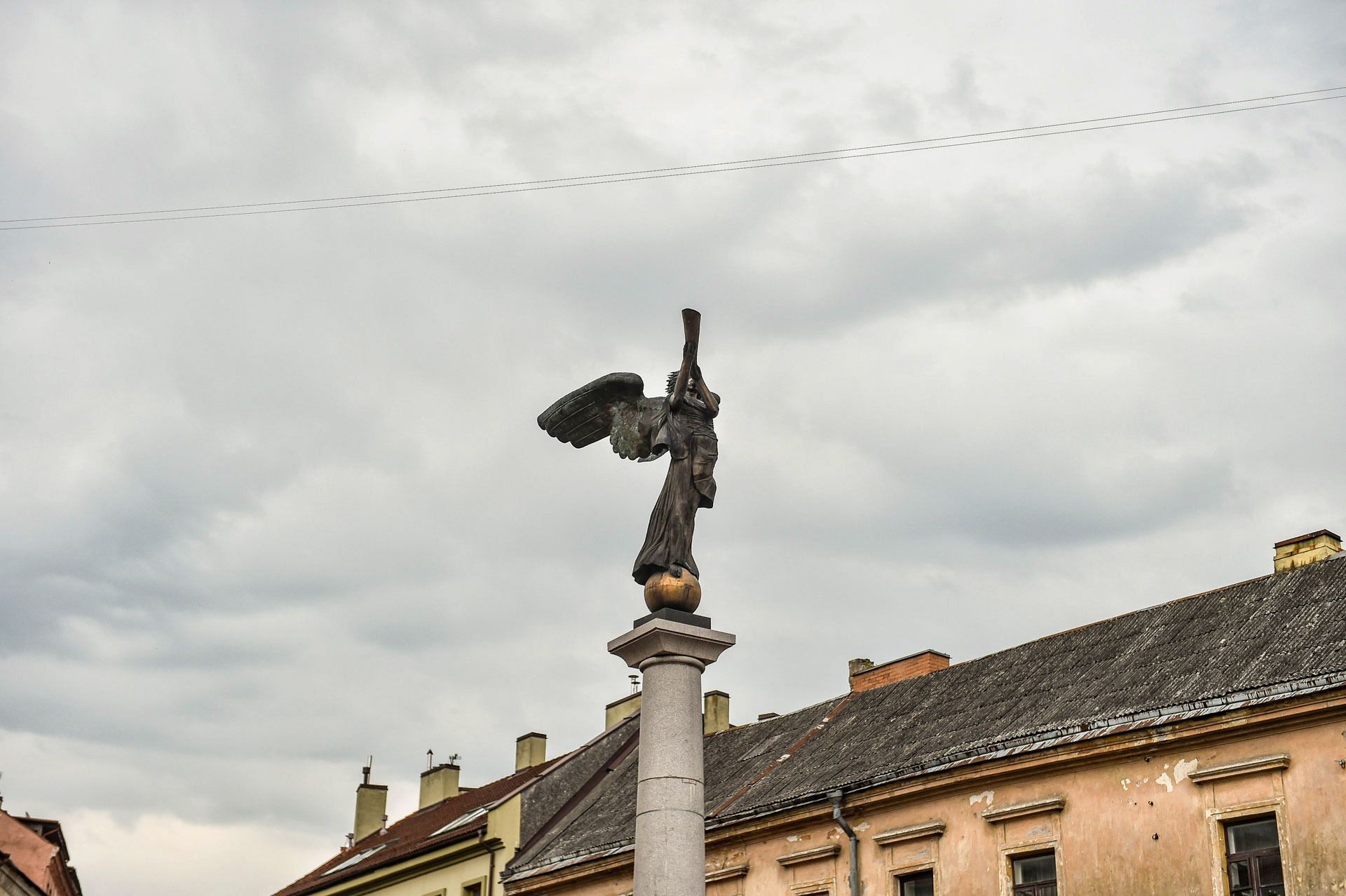
The main one is a bronze angel with a trumpet, standing on an 8.5-meter column in the center of the square. Sculptor Romas Vilčiauskas created it in memory of Zenonas Šteinys—a cartoonist and animator considered the unofficial patron of the district. It was Šteinys who gathered the first enthusiasts, persuaded people to move to Užupis, repaired facades, and organized neighbors. When he died, the community decided to erect a monument to him. Vilčiauskas suggested an angel. But by the appointed date—the first anniversary of independence—the sculpture was not ready. So, an egg was placed on the pedestal and it was announced: the angel will hatch soon. The egg remained for four years. On April 1, 2002, the angel finally took its place. The egg was sold at auction for 10,200 litas; now it stands on Pylimo Street.
There’s a city legend that the Dalai Lama advised placing the angel in this spot. That’s not true—the idea belonged to local residents. But the Dalai Lama really did visit Užupis. In 2013, the republic granted him honorary citizenship. In 2018, he returned to plant a tree on Tibet Square, marking the centenary of the restoration of the Lithuanian state.
Another work by Vilčiauskas is the bronze mermaid, installed in 2002 in a niche on the Vilnelė riverbank opposite the Užupis Café. Small, with long hair and a fish’s tail, she sits almost at water level. Legend says that anyone who looks at her too long will stay in Užupis forever. In 2004, the mermaid was washed away during a flood, but she was later returned to her place.
The Greatcoat on the Wall
There is another story connected to Užupis, quiet and tragic. On January 10, 2019, marking the centenary of the death of architect and sculptor Antanas Vivulskis, a bronze bas-relief appeared on the wall of one of Užupis’ houses. It’s a greatcoat. More precisely, a guard’s coat, a long woolen overcoat for standing guard.
Vivulskis was the man who built the Church of the Sacred Heart of Jesus on Vilniaus Street in Vilnius and many other buildings. In January 1919, he joined the Vilnius volunteer self-defense unit, which protected the city from advancing Bolsheviks. On a frosty night on January 3, standing guard by one of Užupis’ houses, Antanas gave his greatcoat to another volunteer who was freezing. This gesture cost him his life: he caught cold, fell ill with acute pneumonia, and died a week later. He was 41.
Užupis resident Alfredas Murashka initiated the creation of the monument and helped organize fundraising. Sculptor Vytautas Nalivaika created the bas-relief—a bronze greatcoat embedded in the wall of the house where the architect stood guard. The money was raised by local residents and private donors.
Mekas, Maciunas, Fluxus
Among the republic’s honorary citizens is experimental filmmaker Jonas Mekas. Mekas was born in Lithuania in 1922, fled the advancing Red Army to Germany in 1944, spent time in a displaced persons camp, and arrived in New York in 1949. There he borrowed money for his first Bolex camera and started filming. By the late 1950s, he was a columnist for the Village Voice, then co-founder of Anthology Film Archives. He is called the “godfather of American avant-garde cinema.” Mekas’ biography is intertwined with war and occupation; in recent years, his early publications have been debated, but there is no direct evidence of collaboration with the Nazis.
Mekas was part of the Fluxus art circle and a close friend of Jurgis Mačiūnas—the Lithuanian who founded the movement. Mačiūnas, an architect by training, in the 1960s turned abandoned industrial buildings in Lower Manhattan into art studios—essentially inventing SoHo as an art district.
In 2007, with the support of Vilnius mayor Artūras Zuokas (he himself lived in Užupis), the Jonas Mekas Visual Arts Center opened in the district. The city acquired a Fluxus collection—about 2,600 works, the third largest in the world after MoMA and the Stuttgart State Gallery. The collection includes works by Mačiūnas, Mekas, Nam June Paik, Yoko Ono, and many others. The center is located at Malūnų 8—this is Užupis. The connection between Lithuanian avant-garde, the New York art scene, and the small district on the Vilnelė River turned out to be direct and tangible.
Mekas died in 2019 in New York, aged 96. In Užupis, an alley connecting Užupio Street with the Academy of Arts is named after him. Nearby is the Fluxus Bridge, dedicated to Mačiūnas.
April First
Every year on April 1, Užupis celebrates its independence day. At noon, “border posts” are set up on all the bridges leading into the district. Students from the local gymnasium check “documents” and stamp your passport. You can come without a passport—a smile is considered sufficient proof of intent.
In the morning, republic officials traditionally bathe in the icy Vilnelė, joining the riverbanks with the Užupis flag. In the afternoon—a procession with horses and a brass band. In the evening—a concert on Angel Square. The most respected citizen of the year is given the honor of cutting a hole in the flag on the main flagpole—a symbol that Užupis cannot be claimed, that it is fundamentally open. Sometimes, instead of water, beer flows from the square’s public fountain.
By tradition, the republic’s “ambassadors” gather for the holiday—there are more than five hundred. Among them: the ambassador for hummingbirds, the ambassador for street whistling, and the ambassador for knowledge for humanity.
Dear Freedom
In thirty years, Užupis has completely transformed. The district, where in the early 1990s there was no hot water and people were afraid to enter, has become one of the most expensive places to live in Vilnius—second only to the Old Town.
It’s a familiar pattern: artists move into a cheap district, create an atmosphere, the atmosphere attracts cafes and galleries, cafes and galleries attract wealthy residents. Prices rise, and artists can no longer afford to live there. Užupis was no exception.
Next to the district, on the site of the former “Skytex” factory, the developer Darnu Group built the Paupys residential complex—one of the largest conversion projects in Lithuania. More than 800 apartments on seven hectares, investments of over 150 million euros. The project’s subsidiary is called “New Užupis.”
According to real estate analysts, by early 2026, Užupis and neighboring Paupys are among the Vilnius districts with the most short-term rental offers on Airbnb. Locals consider the central part of Užupis “overrated”: buyers pay for the “Republic” brand, though it’s more practical to live in neighboring areas.
The café where the Constitution was written is still in its place. But the context around it has changed.
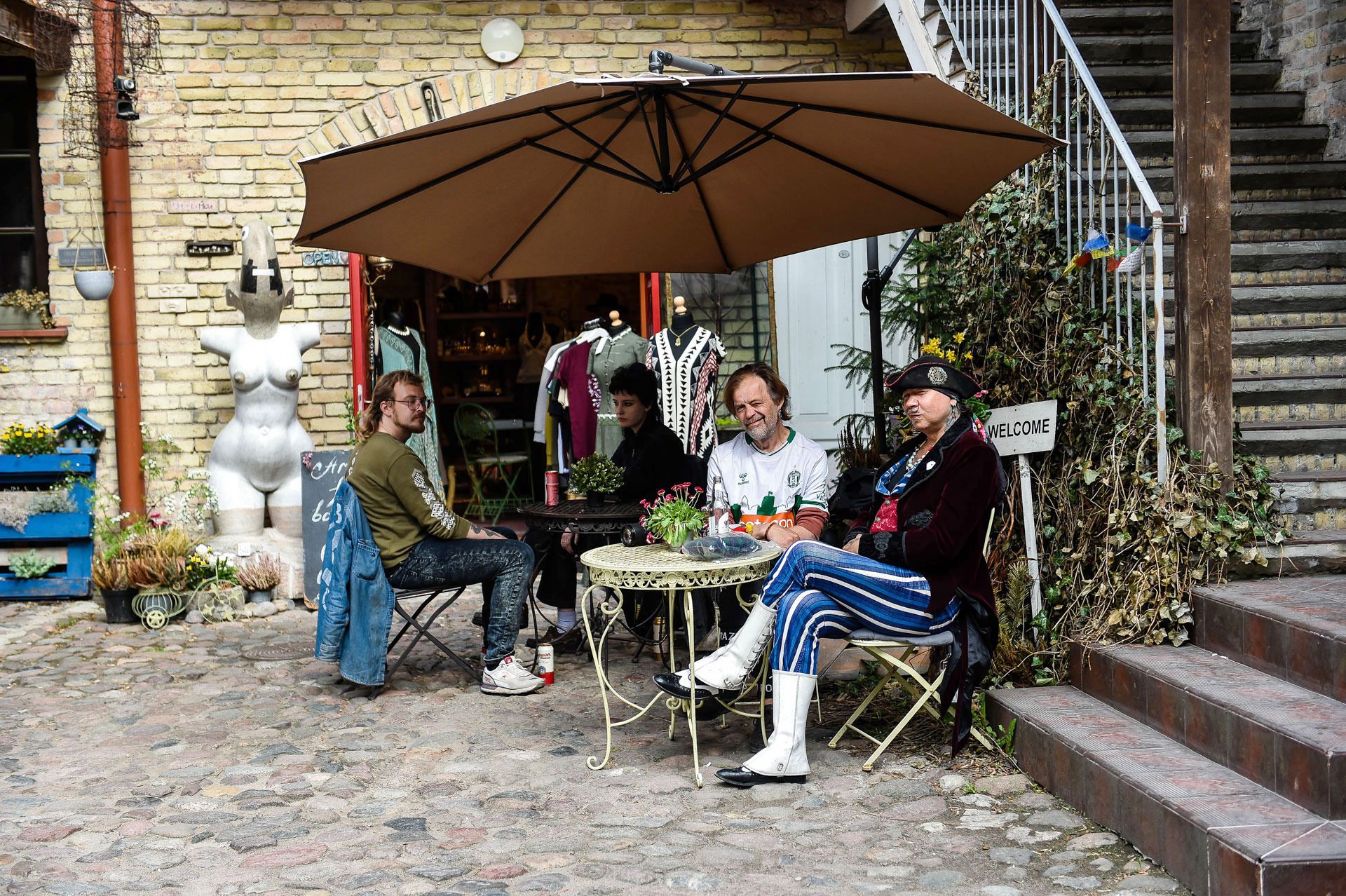
In spring 2026, Užupis is a place of several layers. On the surface—a tourist route: the mermaid, the bridge, Constitution plaques, Angel Square, an Instagram photo. A little deeper—a residential district with expensive apartments, restaurants, and bars.
But there’s still a living creative community. The Art Incubator is working: in early 2026 it announced an open call for artist residencies from abroad—two studios of 32 and 38 square meters, rent 360 euros a month. The Mekas Visual Arts Center continues its program of exhibitions and film screenings. On the streets—murals, installations, sculptures that change periodically.
The Užupis community—the oldest continuously active territorial community in Vilnius—brings together artists, writers, scholars, and students. President Romas Lileikis is still in office. Tomas Čepaitis still coordinates the ambassadors. In March 2026, Užupis hosted the annual St. Patrick’s Day celebration: the Irish brass band Los Paddys played on the bridge, Irish ambassador to Lithuania Shauna McHugh gave a welcome speech, and the Vilnelė River was dyed green.
Užupis is often compared to Montmartre, Kreuzberg, Kazimierz, or Christiania. The parallels are obvious. But here, the layers of history are felt especially keenly. At 22 Olandų Street, there’s a memorial on the site of the Jewish cemetery. On the wall of a house—a bronze greatcoat of a man who froze to death after giving his coat to a friend. And in the next block—the most humane Constitution.
Everyone who crosses the Užupis bridge makes a physically imperceptible but important transition. From the city—to a place the city once rejected, then found again. And where the rules are written on the wall and include the right to be unhappy. Thirty seconds—and you’re on the other side.
If you enjoyed this article, consider making a donation — one-time or, even better, monthly. Your support helps us motivate our authors and become better with every article.
Our organization is recognized by the Internal Revenue Service (IRS) as a 501(c)(3) tax-exempt, charitable organization, which means that all contributions made to us are tax-deductible to the fullest extent permitted by U.S. law. Individuals may generally deduct charitable contributions of up to 60% of their Adjusted Gross Income (AGI) for cash donations made to qualifying 501(c)(3) organizations. For donations of appreciated assets (such as stocks or other long-term capital assets), the deduction is typically limited to 30% of AGI, based on the fair market value of the asset. C-corporations may deduct charitable contributions of up to 10% of their taxable income for donations made to eligible charitable organizations.
By submitting a donation, you confirm that you have read and accept the following documents: Privacy Policy and User Agreement, and also give consent to the processing of your personal data.
If you would like to unsubscribe from a monthly donation, please email us at: [email protected]