Dictatorships have a tendency to completely distort the phenomenon of patriotism. Natural human sympathies for the nature and culture of their country are replaced by demands for unconditional loyalty to the ruling regime. Saltykov-Shchedrin already noted this, reflecting on those who confuse the concepts of “Fatherland” and “Your Excellency.” Later, a grim Soviet joke appeared: when the state needs something from its citizens, it calls itself the “Motherland.” And always with a capital letter. Under such conditions, patriotism turns into a form of Stockholm syndrome, where hostages begin to sympathize with their captors.
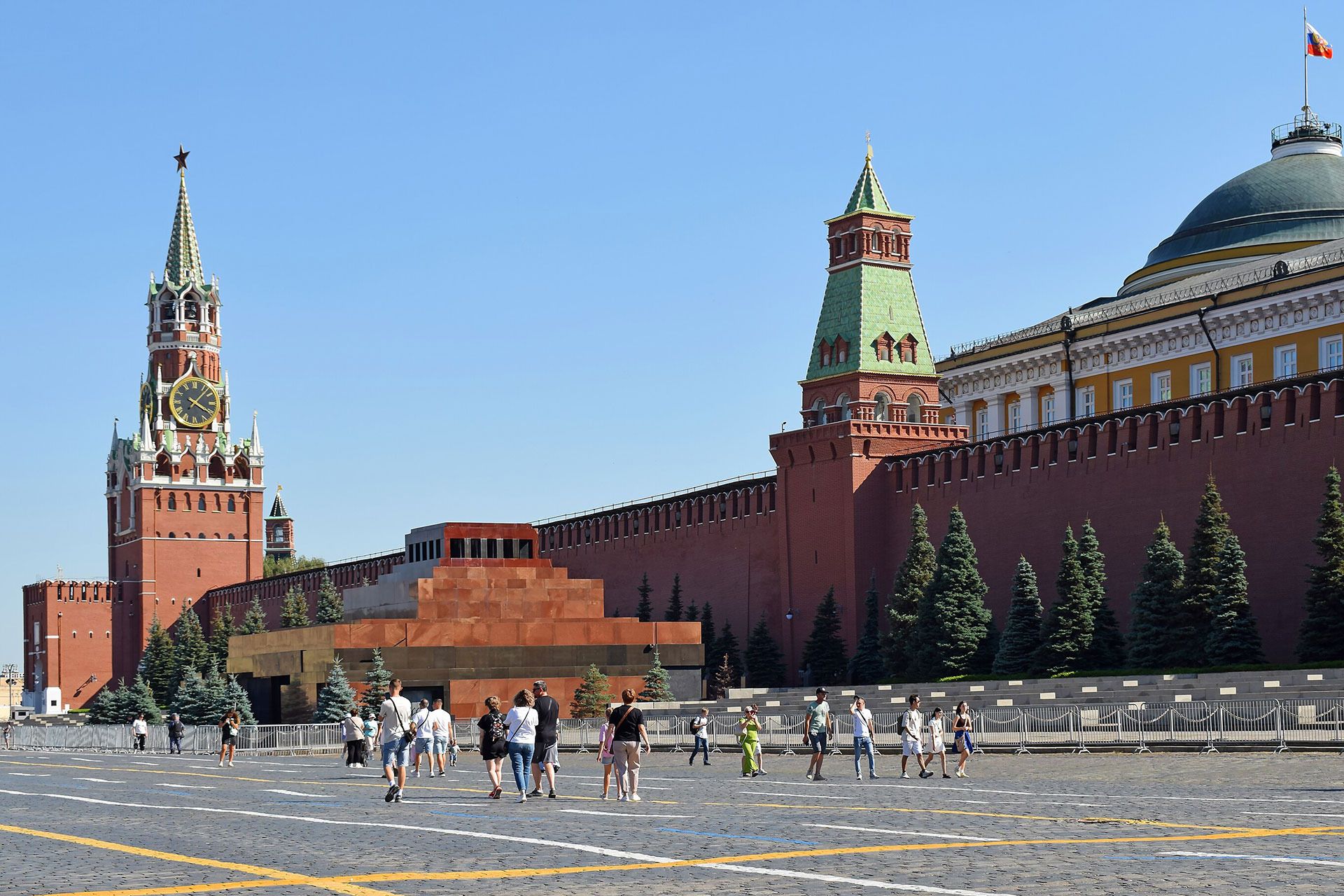
Red Square. Photo: Wikipedia / Yuri D.K. / CC BY 4.0
In September, the story of Belarusian politician Nikolai Statkevich, who was a political prisoner of the Lukashenko regime for more than 11 years, caused quite a stir. But when this regime, as a result of its behind-the-scenes negotiations with the Trump administration, decided to free him and deport him along with 52 other former political prisoners, an almost detective-like story unfolded.
According to eyewitnesses, at the border with Lithuania, “Statkevich practically broke down the door, jumped off the bus, and ran back into Belarus.” Attempts to persuade him otherwise by relatives and diplomats were unsuccessful. His exact whereabouts are currently unknown, but many assume he was returned to the very same colony from which he was freed. And his mood is conveyed — that he “wants to be with his people under any circumstances.” Presumably, Statkevich believes that his effectively indefinite imprisonment somehow contributes to the liberation of his people.
And this is just one example of the strange phenomenon of dissidents’ love for “their state.” Last year, there was a large-scale exchange of political prisoners between Russia and Western countries, during which politician Ilya Yashin was among those freed. However, at a press conference in Germany, it turned out that he was not at all thrilled about his release. “I consider this an illegal expulsion from Russia against my will,” Yashin stated. Would Yashin have considered serving his more than eight-year sentence in a Russian colony, to which he was sentenced in 2022, more “patriotic”?
Such a scenario is unimaginable compared to political prisoners exchanged in other eras. For example, Vladimir Bukovsky in 1976 mocked the Soviet authorities, who “effectively arranged his escape,” but never complained about his “expulsion” from the state of zones and psychiatric hospitals.
Today, Yashin is outraged that the Russian authorities have called him a “stateless person.” Indeed, according to the constitution, it is impossible to deprive a person of citizenship acquired at birth. But under current conditions, this could actually be an advantage if the regime’s opponent is outside the Russian Federation.
One can debate at length whether this is fair or not, but in many countries, the Russian passport has become very toxic. Some political emigrants would themselves like to get rid of it by applying for citizenship in another country. However, this is a very complicated procedure — many countries do not recognize dual citizenship, so such an application requires renouncing Russian citizenship. And this is where problems arise.
There is an interesting contradiction with the late Soviet era — back then, the Kremlin expelled “anti-Soviets” from the country by stripping them of USSR citizenship. This was, of course, a repressive measure, but in fact, it made it easier for them to obtain citizenship in other countries. Today, the policy is quite the opposite — Moscow does not strip opponents of Putinism who have left of their Russian citizenship but rather keeps them in it. It declares people “foreign agents,” or even “terrorists,” like the author of these lines, sentences them to prison terms in absentia, and imposes huge fines.
And these “sentences,” which cannot be challenged in court, become obstacles to applying for renunciation of Russian citizenship. According to the logic of Russian consulates: you must first return to Russia, serve your sentence, pay all fines that will go to the war effort, and only then might the authorities consider whether to release you from citizenship — if you are still alive by that time.
Patriotism stronger than reason: the tragedy of Alexei Navalny
In the book “Patriot,” Alexei Navalny describes his treatment in Germany after being poisoned with “Novichok” in 2020. But who cares about that now, when he voluntarily surrendered to his executioners? Although he could have done much more at liberty, patriotism proved stronger than reason...
His investigative videos from Germany, which Russian viewers would have watched en masse via VPN, would have been much more effective than letters from Russian colonies. Navalny was well-versed in modern media technologies, and in the current circumstances, this would have been real political activity. In normal countries, politics is determined by free elections, but under “late Putinism,” Navalny would not have been allowed to run anywhere.
His speeches would have been especially relevant with the start of Russia’s full-scale invasion of Ukraine — Navalny surely could have cleared the minds of many compatriots from the militaristic propaganda flooding them. Without him, unfortunately, the FBK has sunk into endless internal opposition quarrels.
By the way, Lenin, at the height of World War I, before the February Revolution, would not have thought of returning to Russia. He clearly understood that under the Tsar, at minimum, hard labor was guaranteed. Of course, once in power, he himself imposed even harsher conditions on the people. But in the revolutionary situation of the time, socialist ideas were more popular than the outdated “spiritual bonds” of the empire.
What prevents “loving Russia”?
It is not only the senseless war unleashed by its authorities, the largest in Europe since World War II. Russian history itself has proven through this war that it constantly returns to the imperial track. But is there a solution to this problem?
Today, Russian patriotism has finally transformed from cultural to state-ideological. Russian music of the last half-century, represented by its most iconic figures — Alla Pugacheva, Boris Grebenshchikov, Andrei Makarevich — has left Russia. Writer Boris Akunin was sentenced in absentia to 14 years in a colony. Although even in Brezhnev’s USSR, no one thought of prosecuting already exiled or voluntarily emigrated writers — Solzhenitsyn, Aksyonov, Brodsky, Voinovich…
And so, the “damned Soviet era” seemed to have collapsed. But no one could have imagined then that the 1991 democrats’ idol Boris Yeltsin would, just a few years later, shell the parliament from tanks — the very parliament that proclaimed the Declaration of Russia’s Sovereignty. Then he unleashed a colonial war against Chechnya and finally made a KGB lieutenant colonel his “successor.”
Historically speaking, there were no guarantees that the “good tsar” Navalny, if he had managed to defeat the “bad tsar” Putin, would not have ended up following the same path. Because the supreme ruler in Russia traditionally stands “above the laws.”
Russia, or rather — Muscovy — was originally built as a hyper-centralized state.
The imperial slogan of “gathering lands around Moscow” became fundamental for the Kremlin as early as Ivan III’s time, and through many epochs it has persisted to this day, making the war against Ukraine inevitable. However, many Russian opposition figures abroad continue to be Moscow-centric.
They vigorously debate about the “beautiful Russia of the future,” understanding it only as one or another liberalization of Kremlin power. But the thesis of “the capital in Moscow” is indisputable for them and even perceived as something self-evident. Although one can ironically note that even for the official founder of the Russian Empire, Peter I, this idea was not obvious.
On the other hand, political emigrants from various Russian republics insist on the self-purposeful “collapse of the empire.” But in their wishful thinking, they imagine not civil freedom for all, but the erection of borders between regions that are economically unnecessary for anyone, and some ethnic “privileges.” Well, the empire can indeed multiply by division, like an amoeba — but that does not mean that its derivatives will essentially differ from the vanished “progenitor.”
Mikhail Gorbachev’s confederative project ultimately boiled down to transforming Eurasian spaces into a voluntary and contractual analogue of the European Union. But unfortunately, neither Russian opposition figures nor “post-Russians” have matured to such ideas yet. Although both mostly live in Europe.
However, historically this is nothing new. The same paradox was demonstrated by Putin’s favorite philosopher Ivan Ilyin. He painted the future Russia as a “national dictatorship,” but himself preferred to live in the democratic and multinational Swiss Confederation.
If you enjoyed this article, consider making a donation — one-time or, even better, monthly. Your support helps us motivate our authors and become better with every article.
Our organization is recognized by the Internal Revenue Service (IRS) as a 501(c)(3) tax-exempt, charitable organization, which means that all contributions made to us are tax-deductible to the fullest extent permitted by U.S. law. Individuals may generally deduct charitable contributions of up to 60% of their Adjusted Gross Income (AGI) for cash donations made to qualifying 501(c)(3) organizations. For donations of appreciated assets (such as stocks or other long-term capital assets), the deduction is typically limited to 30% of AGI, based on the fair market value of the asset. C-corporations may deduct charitable contributions of up to 10% of their taxable income for donations made to eligible charitable organizations.
By submitting a donation, you confirm that you have read and accept the following documents: Privacy Policy and User Agreement, and also give consent to the processing of your personal data.
If you would like to unsubscribe from a monthly donation, please email us at: [email protected]