According to the most optimistic estimates, the total audience of popular science publications in Russia is only about 6 million people. That’s roughly 4% of the population. And this market in Russia today, it seems, is experiencing a crisis.
In 2023, the Russian online popular science publication Naked Science became the most cited popular science media outlet in the country. According to its editorial team, its monthly audience reaches several million users, with even higher total reach on social networks. Today’s leaders also include Nplus1.ru, the newspaper “Science in Siberia,” the magazine “Rodina,” Mel.fm, Techinsider.ru, and other major publications. The interest of the educated internet audience in them has remained stable for many years.
“Russian popular science entertains less and educates more,” says one industry representative. “Because of this, it has a smaller audience and less funding, which leads to somewhat smaller teams.” The Western market is significantly larger, and this leads to a greater number of highly specialized experts there—only in physics or only in oceanology, he explains.
Hence the first systemic problem of the Russian popular science media market: even authors of serious publications have to take on almost any topic—at least when covering current news.
The backgrounds of science journalists vary widely—from historians and physicists to psychologists and biologists. When trying to discuss and evaluate, some authors “psychologize” their texts, others look for and find historical parallels that seem forced, and still others resort to crude biologism.
Things are much better with the exact sciences—astronomy, physics, or mathematics. But the humanities—those that attract the main attention of readers, viewers, and listeners—are one of the weakest points of Russian popular science.
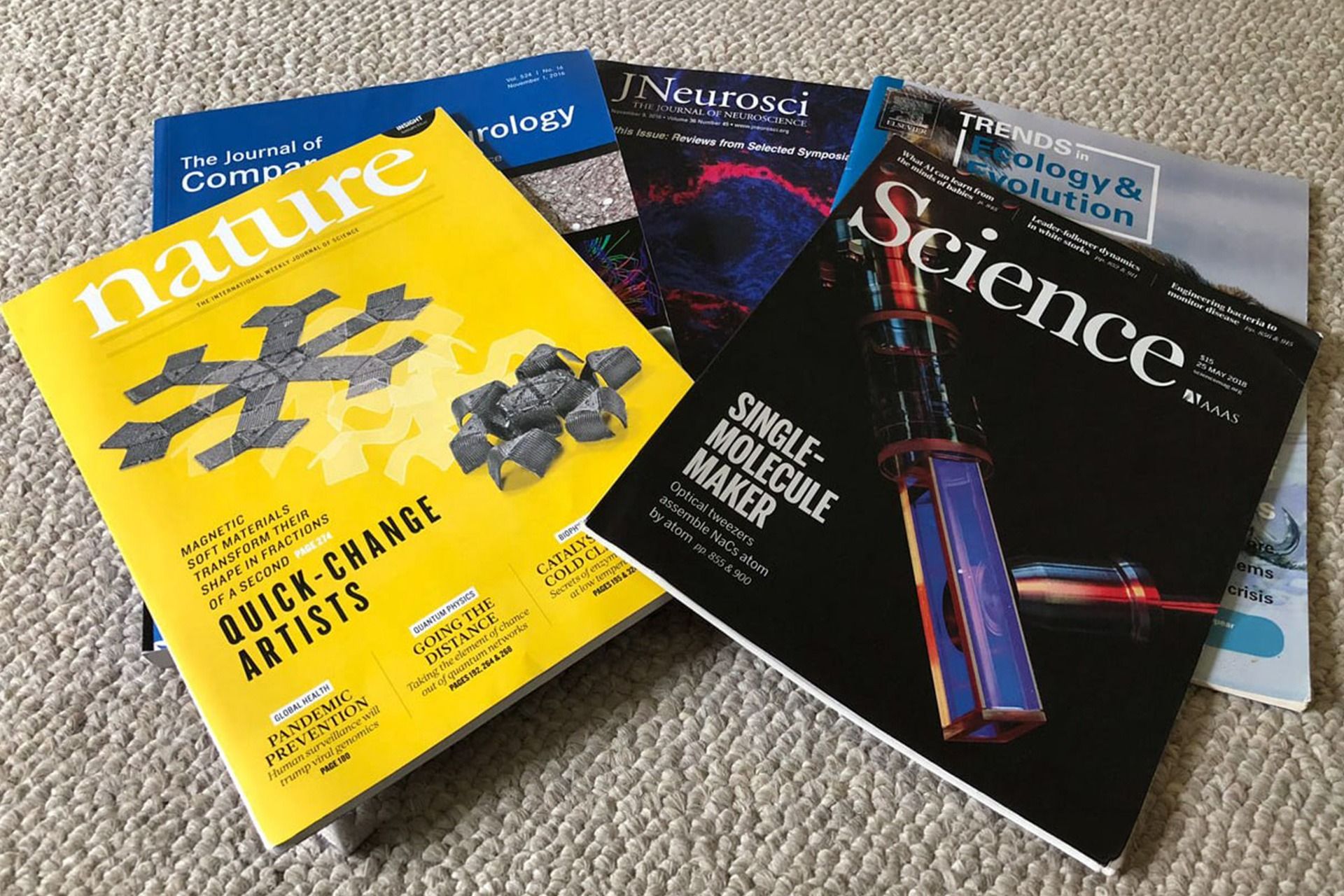
The situation is even worse for internet bloggers specializing in popular science content. Sooner or later, almost everyone faces a kind of genre crisis: there are relatively few topics that truly interest the public, and the high-quality research that bloggers usually rely on, such as those published in Nature, does not come out every day. Trying to keep their audience’s attention, they start discussing the most hyped topics, as platform algorithms demand.
As a result, popular science content about AI, for example, is built around speculative apocalyptic scenarios—“Skynet is coming,” “we’re no longer the only intelligent beings”—which have little to do with today’s technological reality.
Western popular science operates in a different economic and media reality. Its key feature is not only a much larger audience, but also a developed ecosystem of niche media.
Major brands like Scientific American, National Geographic, New Scientist, Wired, Vox, and The Atlantic (in their science and analysis sections) work in a system of high specialization: separate editorial teams or verticals cover very narrow topics—physics, climate, medicine, space, or technology.
As a result, the Western market often demonstrates a dual model: “mass” popular science (short news formats, science popularization through video) and “expert” science journalism with a high barrier to entry and, as a result, a developed system of niche media with stable editorial standards, a division of labor, and a focus on content prepared by a team of authors.
There is also a significant difference in audiences.
According to the Pew Research Center, interest in scientific information in the US is quite high (about 71% of Americans say they are at least moderately interested in science news), but only a minority regularly consumes science content. Only about 17% are “active consumers” of science—they both seek out science news and study it regularly. Interestingly, the main sources of information in the US are traditional media, and more than half of Americans get it this way.
In other words, popular science in the US exists within a broader news ecosystem, not as a separate isolated segment. At the same time, as noted in the latest report, “traditional news media are struggling to resonate with most people, facing declining audience engagement and low levels of trust.”
The United Kingdom is considered a market with high digital news engagement: according to the Digital News Report, about 70-75% of the population regularly consumes news online. At the same time, scientific content is not separated into a standalone segment but is integrated into news verticals (health, climate change, technology), which also significantly distinguishes the British model from the Russian one.Traditional brands (BBC, The Guardian, The Times) retain a dominant position in the market and are still considered highly authoritative and trustworthy.
In summary, the differences are not only in scale but also in market architecture: in Russia, popular science operates under conditions of limited demand and forced generalization of authors, which is due to limited editorial resources that do not allow for highly specialized teams.
In the West, the market supports specialization thanks to a larger audience and more stable monetization. This difference creates different “quality modes”: in the first case, quality depends on the basic stamina of authors, who earn little today; in the second, on the depth of specialization and clear division of labor.
However, the problems of the Russian popular science market are not limited to this.
“It’s sad to look at all this,” says one of my colleagues now. “I remember myself ten years ago—I was naive, tried to do something, believed... And now I just feel like giving up. Telegram—only accessible through VPN, global media—the same. And state media are talking about Iran. So I’m not just worried about popular science, I’m worried in general about where it’s all going to end up.”
If you enjoyed this article, consider making a donation — one-time or, even better, monthly. Your support helps us motivate our authors and become better with every article.
Our organization is recognized by the Internal Revenue Service (IRS) as a 501(c)(3) tax-exempt, charitable organization, which means that all contributions made to us are tax-deductible to the fullest extent permitted by U.S. law. Individuals may generally deduct charitable contributions of up to 60% of their Adjusted Gross Income (AGI) for cash donations made to qualifying 501(c)(3) organizations. For donations of appreciated assets (such as stocks or other long-term capital assets), the deduction is typically limited to 30% of AGI, based on the fair market value of the asset. C-corporations may deduct charitable contributions of up to 10% of their taxable income for donations made to eligible charitable organizations.
By submitting a donation, you confirm that you have read and accept the following documents: Privacy Policy and User Agreement, and also give consent to the processing of your personal data.
If you would like to unsubscribe from a monthly donation, please email us at: [email protected]