A week ago, Hungary’s ruling Fidesz party suffered a crushing defeat in parliamentary elections. Thus ended the Viktor Orbán era. For 16 years in power, he assumed that the benefits of close ties with Moscow would always outweigh the image costs. In reality, Hungarian voters wanted not only low prices for gasoline and gas, but also a European identity.
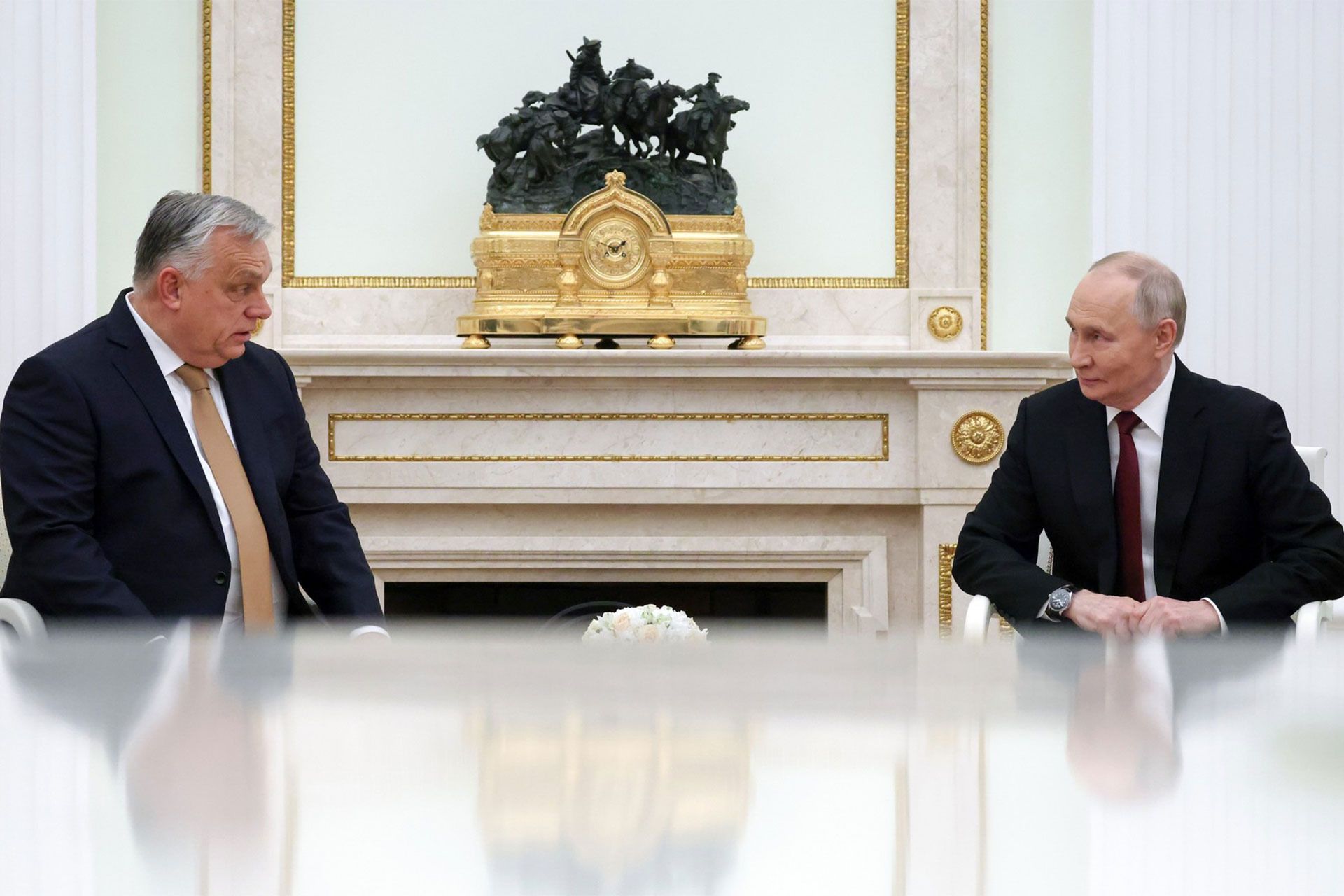
Viktor Orbán and Vladimir Putin. Moscow, Kremlin, November 28, 2025. Photo: kremlin.ru
Since 2010, the political course of the Hungarian government was built primarily on confrontation with Brussels. At the same time, Orbán’s challenger Péter Magyar and his Tisza party did not declare any significant programmatic differences with their opponent regarding immigration restrictions, conservative values, or the sanctity of sovereignty. Hungarian voters were hardly seeking radical changes in domestic policy—and it is unlikely the new government will offer them. The problem became Orbán himself, his flamboyant choice of allies and opponents, his deliberately provocative style of debate, as well as rumors of corruption and clientelism that followed him.
Disputes within the EU are commonplace. Not only Hungary, but also the Czech Republic, Poland, Slovakia, the Baltic states, and other representatives of the “new Europe” that joined the EU after the collapse of the USSR have often defended special positions on migration policy and disagreed with Brussels. Moreover, the right-conservative turn now taking place in many Western European countries follows much the same programmatic lines that have long been common in the East. The Fidesz party in the European Parliament belongs to the “Patriots for Europe” group (84 deputies, third largest) along with right-conservative allies from France, Italy, Spain, Austria, etc. That is, ideologically, Viktor Orbán did not feel isolated in Europe—he had like-minded partners.
The reasons for his crushing defeat, which was met with sighs of relief in all European capitals, should be sought in his attempt to “break conventions” with united Europe, not in his system of beliefs (if he had any at all).
No one before had threatened a veto right—so loudly and openly. No one had used the consensus mechanisms for decision-making within the EU as outright blackmail. Finally, no one had thought to simultaneously demand constant subsidies from Brussels while portraying Brussels as a threat to national identity.
Viktor Orbán went too far. However, his fall testifies not only to a personal failure, but also to the considerable resilience of united Europe. As one commentator noted with surprise, Kaja Kallas suddenly defeated both Putin and Trump.
Foreign Interference and Sovereignty Issues
On the eve of the election, recordings of conversations between Orbán himself and Putin and the Hungarian foreign minister Szijjártó with Lavrov, appeared very opportunely. What was striking was not so much their content—implying dubious services to Russian clients—but the servile tone. The memory of the brutal suppression of the 1956 uprising and its slogan “Russians, go home!” became part of the Hungarian national identity (or, if you like, national pride) that Viktor Orbán always claimed to defend. His opponent Péter Magyar easily found Orbán’s weak spot: “Russians, go home!” became one of the main pillars of his election campaign.
In his somewhat excessive self-confidence, Viktor Orbán assumed that the benefits of close ties with Moscow would always outweigh the image costs. In reality, Hungarian voters wanted not only low gasoline and gas prices—they also wanted to be on the right side of history (however they understood it), and to feel themselves just as much bearers of European values as their neighbors. Year after year, they watched their prime minister, extremely courteous with Putin, Trump, or Xi, suddenly become caustic and unyielding whenever meeting Ursula von der Leyen. The comparison of the EU with the Soviet Union, which Orbán liked to make, also seemed ill-chosen. Something felt off, even if one accepted his arguments about resisting excessive tolerance from Brussels.
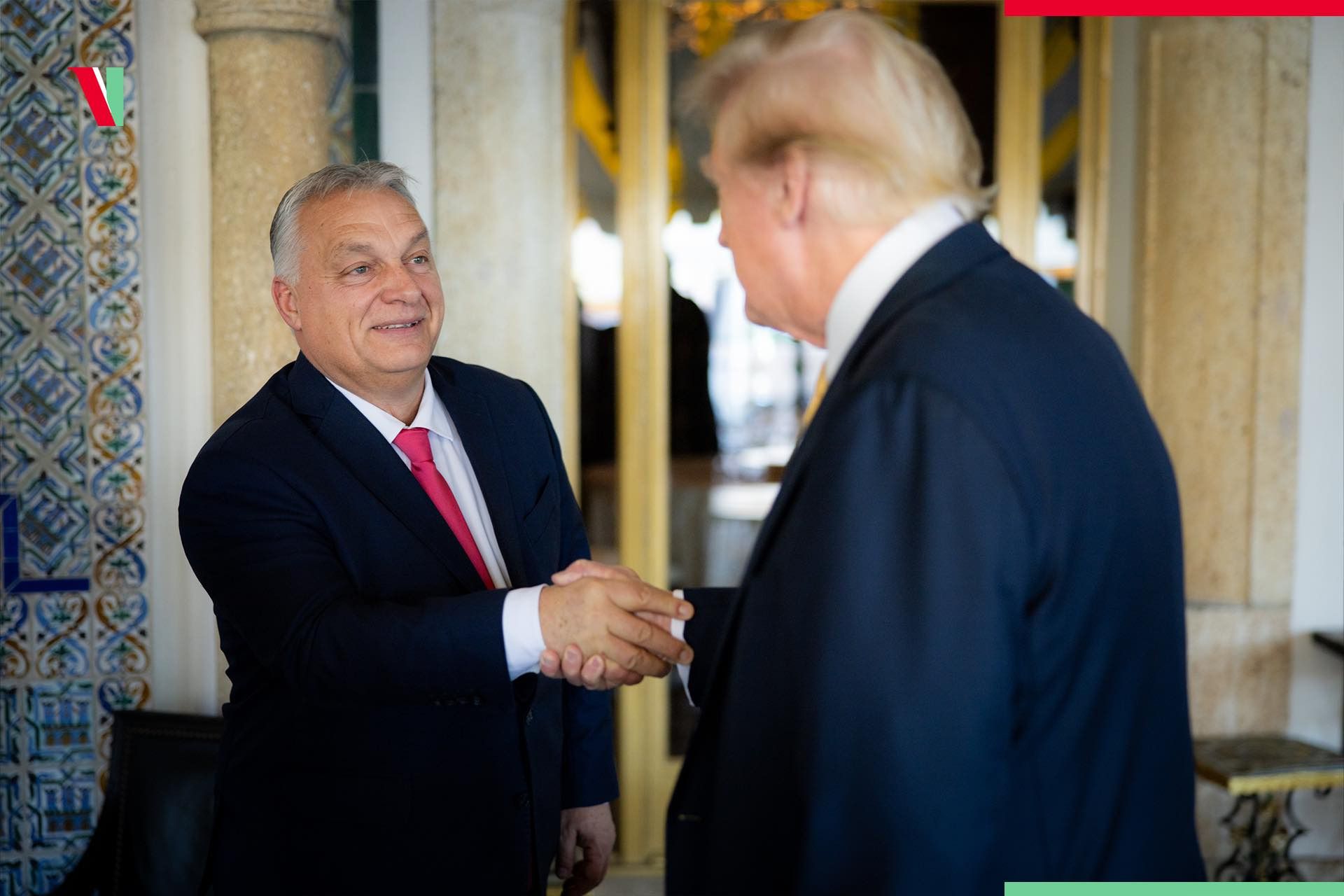
Viktor Orbán with Donald Trump, December 10, 2024. Photo: Viktor Orbán’s Facebook
Special relations with Russia, special prices for oil and gas, special partnership with China, including in sensitive areas and without regard for EU interests. Special attention to Donald Trump (as if ignoring his harsh criticism of the EU or even supporting it). Did this political course mean an assertion of Hungary’s sovereignty or, on the contrary, its loss under pressure from foreign powers? It seems Hungarian voters clearly preferred the European choice, even if they did not support every EU proposal for deeper integration or other reforms. They were used to intra-European procedures, in which negotiations are held to take into account all interests as much as possible. But no one reminds you of the veto option from the outset. And, generally, no one has the moral right to do so, since Hungary joined the EU on no better or worse terms than its neighbors. In fact, it has more reason to be grateful for the European program for the development of Eastern Europe than to reproach Brussels for excessive demands on particular issues.
A somewhat paradoxical situation developed: defending Hungarian sovereignty from Brussels’ encroachments, Orbán seemed completely unconcerned about it when it came to Russia, China, or the US, where he accepted becoming dependent—especially on Russian energy supplies. This demonstrative and cynical lack of principle made it easy to suspect that Orbán and his circle had additional interests.
Well-known journalistic investigations of his corrupt ties with Russia fit well with the hypothesis that he profited by selling to Moscow his ability to bargain with Brussels on any issue. It cannot be ruled out that investigations into these matters will not be long in coming.
US Vice President J.D. Vance flew to Budapest a few days before the election to publicly support Orbán, and in his speeches sharply criticized the EU for trying to influence Hungarian voters. Strangely, he did not realize he was doing exactly what he accused Brussels bureaucrats of. Most likely, this campaigning played into Magyar’s hands due to the toxic reputation of the current US administration among Europeans. But Orbán himself had maneuvered so much that, at the crucial moment, he could not present a single convincing ally to the public.
European Values as a Pole of the New World
Hungarian voters, as it turned out, imagine their country’s position a little differently than friendship with Trump and Putin. They should not be idealized, like any voters: obviously, everyday problems worry them more than foreign alliances, but even from a pragmatic perspective, they feel European and want a European future for their children, which implies loyalty to EU institutions, not testing them to the limit.
The fundamental basis for the existence of the EU is respect by all countries for the principles of democracy, rule of law, and human rights. Democracy means free elections and a change of power. For Russia and China, these options are closed and not up for discussion; the US has embarked on a special political path where loyalty is preferred to agreement on values, and the latter seem to have lost all importance. The EU appeared somewhat old-fashioned in this new world ruled by force, calling for compliance with the UN Charter and international conventions. Moreover, within the EU itself, it seemed that the calculating Orbán, a seasoned blackmailer, had settled in for good, with the only way to deal with him being ever greater concessions. The EU was increasingly described as an outdated model of a fading global order, unable to solve even simple internal governance problems.
But suddenly it turned out there is an answer, and it lies precisely in the realm of values, which had been hastily declared irrelevant.
The European Commission had no authority to dismiss Orbán—but Hungarian citizens did, demonstrating their determination to turn the political page for a regime that had become increasingly incompatible with the EU’s principles, by turning out to vote in record numbers. And everyone could see it.
There is much for right-conservative circles in other European countries to ponder ahead of future election campaigns. For example, anti-immigration rhetoric may fit the public mood and be perfect for criticizing the government, but excessive gestures toward Putin and Trump, dubious projects with corrupt overtones, and constant attacks on the EU are not as popular with citizens as they may have recently thought. Marine Le Pen spoke of Orbán with admiration as her “friend,” “visionary,” and “role model.” In a year, there will be presidential elections in France, and it’s hard to say whether she (or her shadow, Jordan Bardella) as a presidential candidate will repeat these words. Something suggests they will prefer to pretend Orbán never existed.
Helping Ukraine Without the “Hungary Problem”
Péter Magyar will not be an easy interlocutor for the European Commission, but these are not the kind of difficulties Brussels fears. Obviously, EU leaders care not only about European unity but also about national interests, and the new Hungarian prime minister will do the same. But what matters is proper discussion, a rejection of blackmail by veto, and agreement with the EU’s overall course toward strategic autonomy.
Countering Russian aggression against Ukraine is one of the central issues for Europe. Clearly, since the collapse of the Soviet Union, there has been no comparable threat to the security of the old continent as the one that has now arisen again on the EU’s eastern borders. No one knows if there will be another attack, when or in what form—but the level of danger is high, confirmed not only by the invasion of Ukraine and Moscow’s warlike rhetoric, but also by the reality of hybrid warfare that the Kremlin is waging almost openly against Europe. In these circumstances, EU support for Ukraine is a strategic necessity, not a whim of random politicians in Brussels.
Meanwhile, Orbán’s position after February 24, 2022, was always ambiguous. He could not fail to condemn Russian aggression because of its obvious illegality and lack of provocation—but at the same time, he seemed to justify it, criticizing Ukraine’s intransigence and personally attacking President Zelensky.
Relations with Russia, in Orbán’s view, were more important than the annoying episode of this messy war. By this logic, it would be better for everyone if Kyiv quickly made peace on Moscow’s terms—and it wasn’t so important what would be left of Ukraine as a result.
All EU sanctions packages against Russia faced Hungarian resistance. The last thing Orbán managed to do before leaving office was to block a European loan of 90 billion euros for Ukraine’s current needs, which the EU had successfully agreed upon in December 2025.
Based on the fundamental principles of international law and the core values of united Europe, Ukraine’s capitulation was unacceptable and posed a direct threat to Europe’s future. For Orbán, Ukraine’s capitulation seemed acceptable, and he saw no problem with it. It’s not surprising that there was no way to reconcile such different approaches. Either the EU had to find a way to deal with Orbán, or Orbán would undermine the EU from within. The Hungarian voters acted as arbiters.
Péter Magyar has already stated that he will lift the veto on the 90-billion-euro loan for Ukraine. This does not mean he will become Kyiv’s best friend and immediately resolve all the bilateral issues that accumulated under Orbán. But the “Hungary problem,” which required special and sometimes even exceptional efforts from the EU, has disappeared. This is good news for both Ukraine and Europe, which has gained the opportunity to pursue strategic autonomy.
If you enjoyed this article, consider making a donation — one-time or, even better, monthly. Your support helps us motivate our authors and become better with every article.
Our organization is recognized by the Internal Revenue Service (IRS) as a 501(c)(3) tax-exempt, charitable organization, which means that all contributions made to us are tax-deductible to the fullest extent permitted by U.S. law. Individuals may generally deduct charitable contributions of up to 60% of their Adjusted Gross Income (AGI) for cash donations made to qualifying 501(c)(3) organizations. For donations of appreciated assets (such as stocks or other long-term capital assets), the deduction is typically limited to 30% of AGI, based on the fair market value of the asset. C-corporations may deduct charitable contributions of up to 10% of their taxable income for donations made to eligible charitable organizations.
By submitting a donation, you confirm that you have read and accept the following documents: Privacy Policy and User Agreement, and also give consent to the processing of your personal data.
If you would like to unsubscribe from a monthly donation, please email us at: [email protected]