If you still retain Russian citizenship but are critical of its authorities, be careful using PayPal as a payment network. Be prepared for your account to be blocked overnight, with no chance to withdraw whatever funds you have left there.
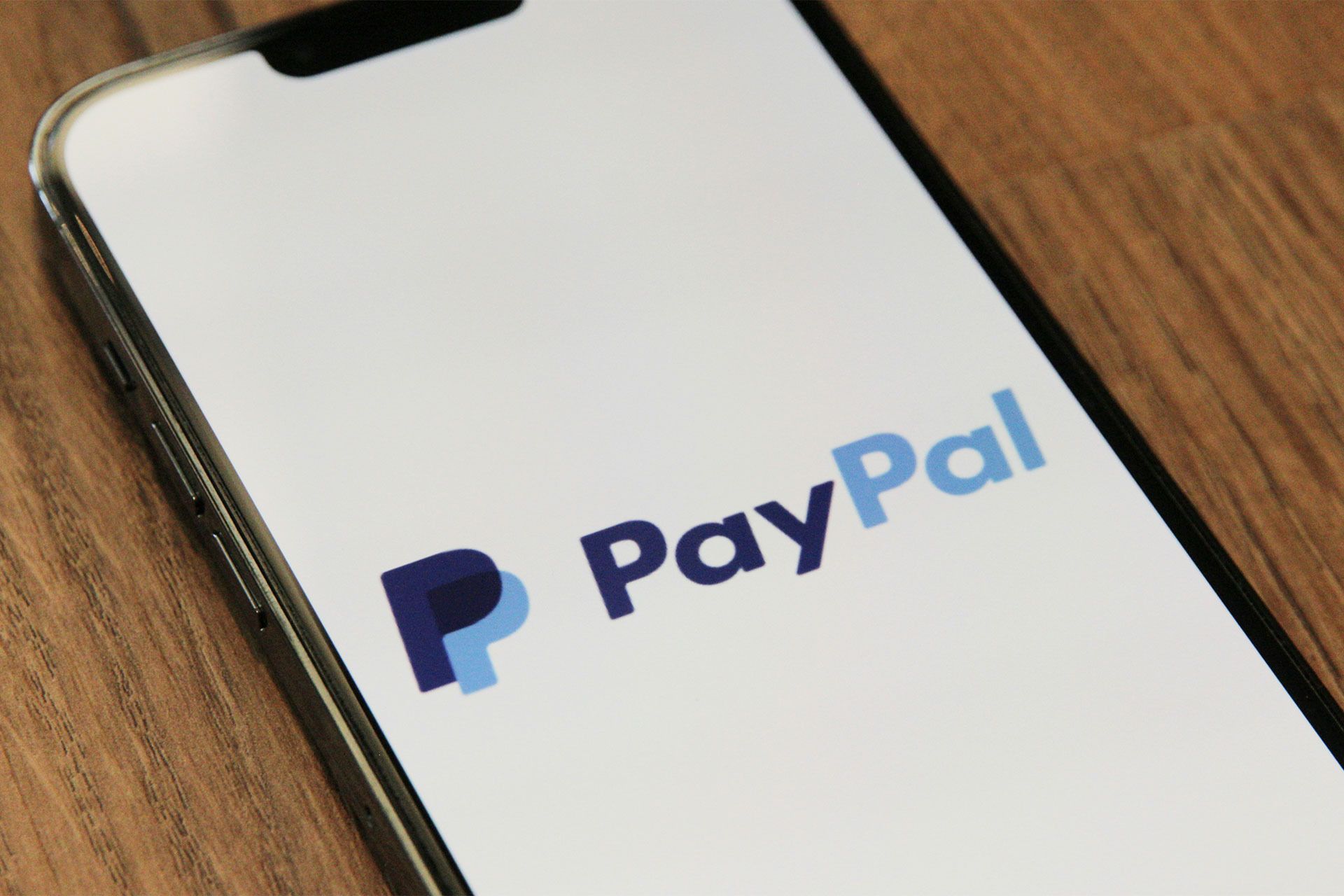
Photo: Unsplash
In April 2025, Rosfinmonitoring added me and a group of colleagues from regionalist movements to the registry of “terrorists and extremists.” This is already an absurd inversion in itself, when a state waging a terrorist war declares journalists and public figures as “terrorists.” And we immediately felt the consequences of this.
Those of us who had bank accounts in Russia found them immediately blocked. Fortunately, I only had a few rubles left in Sberbank from a long time ago, and I had no financial relations with Russian organizations since leaving in 2015. So there was no reason to worry about that.
But PayPal surprised me. It would seem that after the start of the full-scale war against Ukraine in 2022, this company announced the suspension of its operations in Russia. However, in April 2025 I received a notice from their Moscow branch about the closure of my account. The email was signed as follows:
This was the first oddity. It turns out that despite loud statements about “not cooperating” with the aggressor country, the American payment network PayPal still maintains an office in Moscow, which fully complies with the unlawful orders of Rosfinmonitoring.
I opened my PayPal account back in 2012, and I received fees there for my publications in various European and American media outlets I worked with. At that time, individuals were not yet labeled as “foreign agents,” and this international practice of independent journalism was considered normal. And PayPal was a very convenient tool for settling with editors in different countries. But it turned out that behind this convenience were some very unpleasant pitfalls.
After my account opened in Russia was blocked, in June 2025 I decided to open a new one, this time in Estonia. I managed to register it, and The Jamestown Foundation transferred my fee for another article there. However, when I tried to withdraw it to my bank account, I suddenly received a message from PayPal that my new account was “permanently blocked,” and in fact—all accounts I try to create will be blocked.
No attempts to find out the reason for this decision were successful. At best, they explain it as “increased risk,” although I had no “risky” activity in my account except for settlements with different editorial offices. And the logic here seems completely absurd from the point of view of international law. First, Rosfinmonitoring extrajudicially declares me a “terrorist,” the Moscow branch of PayPal blocks my account on this basis, and then the central office of this payment network starts blocking my attempts to create a new account in another country.
So it turns out that global PayPal dances to the tune of the Russian authorities with their dictatorial decisions.
And I am not the only one in this situation. Arkhangelsk journalist Olesya Krivtsova, now working in Norway, in the summer of 2025 conducted an investigation for The Barents Observer, where she established that similar blocking of PayPal accounts, even those opened outside Russia, affects many citizens living abroad who were added to the “terrorists and extremists” registry. As another person on the Rosfinmonitoring list, Maria Solenova, said in a comment for this investigation, an American public company essentially recognizes the legitimacy of the repressive practices of Putin's state and acts in its interests.
[Solenova is a former Moscow municipal deputy, whose German PayPal account was blocked at the end of May last year. After legal proceedings and complaintsher account was restored in August, and in September Solenova received explanations from European PayPal. The company called the blocking of the German account due to political persecution by Russian authorities a “mistake” — Most.Media]
It is quite difficult to contact PayPal admins and get a clear explanation. On their website you can only write to a “virtual assistant” created by artificial intelligence. But communicating with it makes you doubt that this technology “improves and simplifies communication,” as is sometimes beautifully claimed. This AI assistant does not answer anything specific to the point, only gives general phrases and links to the “service rules.”
Finally, after several requests to switch you to a real human consultant, the AI reluctantly seems to do so. And then you get several emails from different people, from different addresses—[email protected], [email protected], [email protected]. But they mostly write the same thing—“your account is permanently blocked,” send you back to the Message center to talk to the AI assistant, or suggest calling their office. However, it's impossible to get through—there are either short beeps or endless electronic music.
By the way, this payment network has another absurdity in the area of client identification. They usually reply to emails that “your email address is not verified,” so they suggest solving the problem by phone. But PayPal accounts are linked specifically to email addresses, and I am writing to them from mine, so where do these doubts come from? On the contrary, from the point of view of identity verification, phone calls are much more dubious—anyone can claim to be a client and demand something be done with “their” account.
In six months of such strange communication (from June to December), I received only one more or less sensible letter, and even that—with a promise that PayPal did not fulfill. In June, when they blocked my new account with my fee stuck on it, they wrote that I would be able to withdraw it to my bank account after 180 days, that is, on December 21, 2025.
December 21 arrived. I wrote to PayPal again and over the next few days went through the whole vicious circle again—from communicating with the AI assistant, to email responses and unsuccessful attempts to call. And I realized that I would not be able to withdraw my fee from the blocked account.
To call things by their proper names, PayPal is effectively appropriating money from its clients who, for some reason, are undesirable to the Russian authorities.
This “open and international” payment network under American jurisdiction paradoxically serves Rosfinmonitoring and its repressive arbitrariness.Or maybe this is no longer a paradox, considering that in the new US national security strategy, Russia is not considered a threat to international law at all, but on the contrary—there are calls to establish relations with it.
So be careful using PayPal as a payment network if you still have Russian citizenship but are critical of its authorities. If Rosfinmonitoring suddenly adds you to the thousands-strong registry of “terrorists and extremists,” which grows by 300 people per month, be prepared for your account to be immediately blocked, and everything you have left there will simply be donated to today's global absurdity.
If you enjoyed this article, consider making a donation — one-time or, even better, monthly. Your support helps us motivate our authors and become better with every article.
Our organization is recognized by the Internal Revenue Service (IRS) as a 501(c)(3) tax-exempt, charitable organization, which means that all contributions made to us are tax-deductible to the fullest extent permitted by U.S. law. Individuals may generally deduct charitable contributions of up to 60% of their Adjusted Gross Income (AGI) for cash donations made to qualifying 501(c)(3) organizations. For donations of appreciated assets (such as stocks or other long-term capital assets), the deduction is typically limited to 30% of AGI, based on the fair market value of the asset. C-corporations may deduct charitable contributions of up to 10% of their taxable income for donations made to eligible charitable organizations.
By submitting a donation, you confirm that you have read and accept the following documents: Privacy Policy and User Agreement, and also give consent to the processing of your personal data.
If you would like to unsubscribe from a monthly donation, please email us at: [email protected]