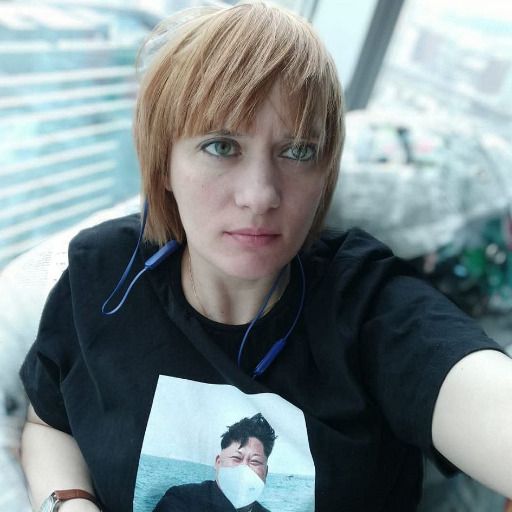
Kostya Pak is a 34-year-old marketer from Seoul. He has been living and working in South Korea for over five years, building a career in the beauty industry and observing the changes in the country he once decided to move to. In this interview, he honestly and in detail explains why young people in South Korea are in no hurry to have children, what life is like in the very heart of a metropolis, what the future holds for this country—and for himself.
I first came to Seoul in 2013, lived there for two years, and then returned to Moscow. About four years later, I ended up in Korea again, traveled a bit, and since 2020 I’ve been living here permanently. Will I stay here for a long time? That’s a difficult question for any immigrant. I feel a strong connection to Russia—I was born and raised in Moscow, I have a Russian background. Can I say I see my future specifically in Korea? I can’t. But honestly, I could say the same about any other country. Korea has its advantages. And I’m not planning to change countries anytime soon. And, to be honest, I won’t be surprised if I end up staying here for a long time—despite my inner doubts, this could become my permanent home.
I work as a marketer in a Korean company. The company manufactures cosmetic products—fillers, botox analogs, and other injectable beauty treatments. Managing marketing in this company is my area of responsibility.
By origin, I am Korean, though my family history is rather complicated. One branch of my family emigrated to the Russian Empire in the 19th century, during a large wave of Korean migration, mostly to the Far East. The other part of my family is also Korean, but with a different story.
My great-great-grandfather was part of the anti-Japanese movement during the occupation of Korea in the early 20th century. He led a partisan struggle against the Japanese and eventually ended up in Russia’s Far East. After World War II, he stayed in the Soviet Union.
I was born in Moscow. My great-great-grandfather, thanks to party connections, managed to avoid deportation in the 1930s, when large-scale repressions were taking place and ethnic Koreans were being massively sent to Central Asia. He and his wife stayed in Moscow—in fact, they were among the few Koreans who were not touched. But another part of my family did fall under these repressions and ended up in Uzbekistan. Later, my parents met in Moscow: my father is a Muscovite of Korean descent, and my mother came from Uzbekistan. That’s how I was born.
“We, as a people, became this ‘quiet minority’”
How do I feel about all this history? It’s definitely inherited trauma. My grandparents, my parents—they all lived with the awareness that being “different” could be dangerous. There’s a lot of pain and cruelty in this story. And, of course, all of this left its mark inside me, a trace I still feel today.
My grandmother was orphaned at age six. Her parents—both her father and mother—were taken to a concentration camp, and they never came back. Formally, there was no reason for this. The only thing we can guess is that they were rural teachers, meaning they were educated people. That made them potentially “dangerous” in the eyes of the authorities at the time.
Those times were very cruel and unpredictable. People were taken randomly, without explanation—sometimes released, sometimes not. We never found out exactly what happened to my grandmother’s parents. But for her, it was a huge trauma. Ever since then, she was terribly afraid of everything, especially politics, outspoken opinions, any display of independent thought. That fear, it seems, was passed down to many—we, as a people, became this “quiet minority.”
When I was growing up in Russia, of course I faced discrimination. In elementary school—I was lucky: I studied in a small, almost private school. This was the 1990s, and my parents could afford this “alternative” for a reasonable price. The atmosphere there was very warm, almost home-like—there were few of us, and everyone was friends. Plus, there were nine girls and only me as a boy, so there was no competition or aggression.
But later, in middle school, things changed. I ended up in a class where the kids had been together for five years. It was hard to fit into an established group. There wasn’t outright bullying from the students—more a sense of distance. But with the teachers it was harder. Some were prejudiced against me, made hurtful remarks. I told my parents about it, and they transferred me to another school.
After that, things got much easier. I studied at new schools with new classes, and it was easier for me to make friends. I think I even developed a kind of social flexibility—a skill that became a way to adapt. I actively participated in class life, in KVN (a Russian comedy competition). Back then, I thought it was just my personality, but later I realized: it was a form of social self-defense. Many comedians, by the way, say that humor became their way to survive—for me, it was probably something similar.
At the same time, I always felt a boundary—that invisible line that let me know: with my appearance and background, Russia wasn’t always safe. Especially on the street. This feeling has followed me my whole life. It’s still with me now.
“Getting citizenship in Korea is tough: you have to live legally for many years, prove your social value, pass exams”
In Korea, I’m here officially. The country has a program for people of Korean descent. If you can document your origins, you get an F-4 visa. It’s not exactly a residence permit, but basically gives you almost all the same rights: to live, work, and stay in the country as long as you want. The visa is easy to renew.
I first came to Korea on the F-4. The visa is valid for three years, but during that time you must enter the country. Then you get an ID card here, which needs to be regularly renewed—at first for one or two years, later you can get the F-5 visa, a full permanent residence permit, which doesn’t need to be renewed and can’t be canceled without a good reason.
The first time, I couldn’t adapt: I went back to Russia. Then I returned again—with a different mindset, different experience. In 2015, the Korean embassy contacted me. They said: “You know, your great-grandfather is a national hero of Korea.” I actually knew this. Even during his lifetime, Korean officials visited him, and after his death, he was awarded a medal for bravery and a certificate from the president at the time. In Korea, he’s known as Kim Gyumen.
He’s buried at Novodevichy Cemetery—usually reserved for people significant to Soviet history. My grandmother and I often went there, especially on memorial dates. Korean TV would come, ceremonies were held, and my grandmother and I were always invited—as relatives.
There was also a special program: descendants of such heroic figures can get Korean citizenship by a simplified process. Normally, getting citizenship in Korea is tough: you have to live legally for many years, prove your social value, pass exams. I didn’t need to do any of that—I got citizenship as a descendant of a national hero. That happened in 2017. But I only moved to live in Korea in 2020.
Before that, I had a rather unusual career. Since 2014, I started making videos on YouTube, and from 2015 that became my main job. YouTube in Russia was just gaining momentum then. We had a real community: all the bloggers knew each other, lived in Moscow or St. Petersburg, took part in events, worked with brands. I was active in this world until 2019.
Then I met my future wife. We started traveling together. She really liked Korea, and I already had citizenship—so we decided to give it a try. We weren’t married yet, but she was offered a job at a modeling agency, got a work visa, and we lived in Korea together for two years. Later we got married and stayed here.
I started learning Korean back in 2013, when I first moved. I enrolled in language courses and studied for a year and a half. I reached a good enough level, which is still enough for me now. Actually, Korean isn’t a difficult language, especially compared to Russian. It’s logical, grammatically simple, without tons of exceptions. There’s an alphabet—not hieroglyphs, as many think. The alphabet can be learned in a day, and you can already read. The main thing is to know the words and put them in the right order.
“‘Parasite’ is a very accurate film: it shows the real social divide that exists in Korea”
As for the image of Korea shown in movies and on TV—yes, it’s a very interesting question. Since 2014, I’ve personally felt the rise of the “Korean wave.” It all started with K-pop groups like SHINee, Big Bang. Then there was Gangnam Style—that was the first global breakthrough. Since then, interest in Korea has skyrocketed. Against this backdrop, I started a YouTube channel about Korea—one of the first in Russian. It quickly became popular because there were no competitors. People were interested in everything: culture, food, daily life, life in the country.
How realistic are the images of Korea in series and films like “Parasite” or “Squid Game”? I think it’s a matter of balance. On one hand, TV dramas and K-pop really showcase beauty, success, glamor. That’s the visual aesthetic, the glossy surface. But “Parasite” is a very accurate film: it shows the real social divide that exists in Korea.
If you come to Seoul as a tourist, everything really is clean, safe, bright, modern. But when you start living here, your perception changes. Korea is a very comfortable country with a high standard of living. Everything works, everywhere is orderly, you feel safe. But there are challenges: cultural differences, a tough pace, competition, social pressure.
So yes, the Korean wave is not a myth. But as with any mass art, the focus is on the bright sides. The real Korea is a complex, but vibrant and interesting country.
“Korea is following the path of Japan—once there was an economic boom, technology, and then the country hit a ‘plateau’”
Right now, Korea, like many other countries, is at a turning point. Society, culture, and the state as a whole need transformation. Financial indicators are growing, technology and business are developing—but there are worrying signs too.
First, Korea has been among the world leaders in suicide rates for many years. Second—and perhaps just as serious—we have the lowest birth rate in the world. This isn’t just statistics: there are already dying villages, entire districts are emptying out. If the trend doesn’t change, by 2050 the country’s population could be cut in half.
At the same time, Korea is a rather closed country. For a foreigner, it’s not easy to come, get a job, and stay here. And unlike Japan, Korea is not yet as open to the world. All these are macro factors that personally worry me a bit.
In 10 years, I don’t think there will be major changes. Most likely, things will be about the same as now: stable, decent, but without a dramatic leap. I think Korea is following the path of Japan—there was once an economic boom, technology, and then the country hit a “plateau”: comfort, but without rapid growth. There’s nothing wrong with that. It’s just a stage.
We have a strong industry—both heavy and light. Maybe our “wow factor” is diplomatic flexibility. Korea knows how to maneuver between the US, China, Russia, working with everyone. Maybe that’s what will let us keep living calmly and with dignity.
“It’s worrying that North Korea could take part in military conflicts on Russia’s side”
Isn’t it scary that North Korea might attack? I’ve been asked this for the last 20 years. But living here, you realize: it’s more of a hypothetical threat. South Korea has a strong army, every man serves two years. Plus, there are many American bases here—entire mini-cities with military personnel. All this makes an attack from North Korea basically a suicidal move.
North Korea, of course, has nuclear weapons. But it’s hard to imagine they’d actually use them—just a few dozen kilometers from the border. It goes against their own interests. They have an autocratic regime; internal stability is more important than external aggression.
Personally, I’m more worried that North Korea could take part in military conflicts on Russia’s side—maybe there’s technology exchange, military training. But globally, it’s unlikely to have much impact, given how closely South Korea is tied to American intelligence and security systems.
I think the bigger problem will be the low birth rate. I once discussed this with Ilya Varlamov. He suggested we go up to some women at the next table in a restaurant and ask them why they’re not having kids. That conversation was very revealing. They all said that children are a huge responsibility and a big financial burden. In Korea, a child is a luxury. Only very wealthy people, or those who don’t worry about money at all, can afford to have children.
I think there’s also a collective memory of poverty. Families used to have five or six children, and it was always hard. And now, when people can finally live for themselves, they don’t want to give that up. Maybe it’s part of a global trend—the so-called second or third demographic transition, when birth rates fall as living standards rise. But with Korea, it’s especially sharp: we’re not that rich a country to be the absolute leader in this regard.
We are a wealthy country, but why is it that Korea, among other developed countries, has such low birth rates? This question doesn’t leave me. My wife and I want children, but every time we seriously think about it, we run into a mass of risks—financial, household, social. Society here simply isn’t set up for you to have kids. Even one child is already a serious challenge.
The government seems to be trying. On paper, there’s strong support for birth rates. There are financial payments, compensation for medical expenses, and bonuses for having children. These are updated every year, and the amounts are significant. But in reality, it’s much more complicated.
For example, there’s an unusual rental system here—jeonse. You pay a huge deposit (without monthly rent), and you can live in an apartment for two years. As newlyweds, we even got a government subsidy—$250,000 for such a deposit. But in reality, it’s impossible to find an apartment in Seoul for that money. All decent options start at $500,000–700,000. And if you’re not ready to live in the countryside, these benefits just don’t work.
It’s the same with parental support: you get about $1,000 a month, but my wife and I spend about $4,000–5,000 now. And with a child, expenses will only go up. Another critical point—women often just can’t afford to drop out of work for several years. Taking maternity leave means losing income, a career, and possibly stability.
“Seoul will be even more high-tech in 10 years”
I think Seoul will be even more high-tech in 10 years. New skyscrapers, excellent roads, fast and convenient public transport. Traffic jams aren’t as bad here as in other big cities. All this will likely remain and even get better. But fewer people will be able to afford to live in Seoul.
Probably, apartments will get even smaller. Already, many people live in cramped “ant hills,” and in 10 years that could become the norm. About 40% of Korea’s population lives in Seoul and its suburbs—that’s about 20 million people. And the population density here is colossal.
I live in Gangnam myself. Yes, that Gangnam from the song. It’s the center, a business district, convenient for work, but in terms of quality of life—it’s debatable. It’s all concrete, skyscrapers, and almost no good places to walk. My wife and I live in an old apartment building called a “villa.” It’s one of the most affordable housing options in Seoul. The apartment is 59 square meters, and by local standards that’s considered spacious.
Villages will probably die out, as in Japan. People leave, and mostly only the elderly and poor remain. Maybe in the future such places will be privatized and turned into farms or agrotourism zones. But as full-fledged settlements, they’re disappearing.
I’ve been to such Korean villages where only 17 old people live. I saw a woman who, according to her, was 104 years old. She didn’t know who the president was, didn’t remember basic historical facts. It all leaves a rather frightening impression—a sense of complete isolation and oblivion.
“Many politicians here really do think about the country’s future, about what kind of country their children will live in”
I think Korea will remain a democratic country. It’s already been through a lot—military dictatorships, protests, presidential impeachments. Here, society is used to taking to the streets and standing up for their rights.
Right now, the president has limited powers and only one five-year term. On one hand, that’s good, but there are already voices saying the system isn’t the most effective. Maybe in the future, Korea will become a parliamentary republic.
Politics here has an interesting balance—kind of like in the US. In almost every election, the winner wins by just 1–2%. In my view, that’s a sign of a mature democracy. Power is constantly balancing between different positions, and decisions are made more by centrists than radicals. And what I like is that many politicians here really do think about the country’s future, about what kind of country their children will live in.
How do I see my own future in 10 years? Honestly, that’s a bit of a scary question. At 44… living in Korea? I’m not sure. The work culture here is very tough. To be successful, you have to be a workaholic, live for your job. That’s not exactly my ideal.
I see myself more as someone running my own business—a small or medium-sized company, aimed at the global market. That’s actually one of Korea’s strengths—there are lots of factories, businesses that work not only for the domestic market. Korean cosmetics, for example, are sold all over the world. I work in a cosmetic company myself, and our clients are mostly Americans, Europeans, and other Asian countries.
So in 10 years, I see two possible scenarios: either I grow within my current company to an even higher position, or I start my own business. I hope for the second option.
If you enjoyed this article, consider making a donation — one-time or, even better, monthly. Your support helps us motivate our authors and become better with every article.
Our organization is recognized by the Internal Revenue Service (IRS) as a 501(c)(3) tax-exempt, charitable organization, which means that all contributions made to us are tax-deductible to the fullest extent permitted by U.S. law. Individuals may generally deduct charitable contributions of up to 60% of their Adjusted Gross Income (AGI) for cash donations made to qualifying 501(c)(3) organizations. For donations of appreciated assets (such as stocks or other long-term capital assets), the deduction is typically limited to 30% of AGI, based on the fair market value of the asset. C-corporations may deduct charitable contributions of up to 10% of their taxable income for donations made to eligible charitable organizations.
By submitting a donation, you confirm that you have read and accept the following documents: Privacy Policy and User Agreement, and also give consent to the processing of your personal data.
If you would like to unsubscribe from a monthly donation, please email us at: [email protected]