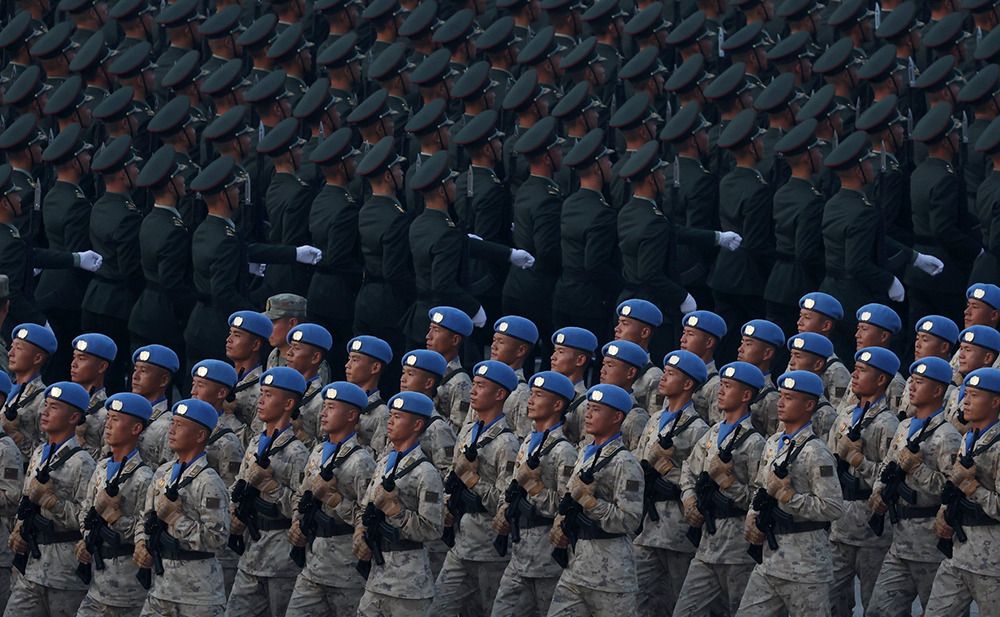
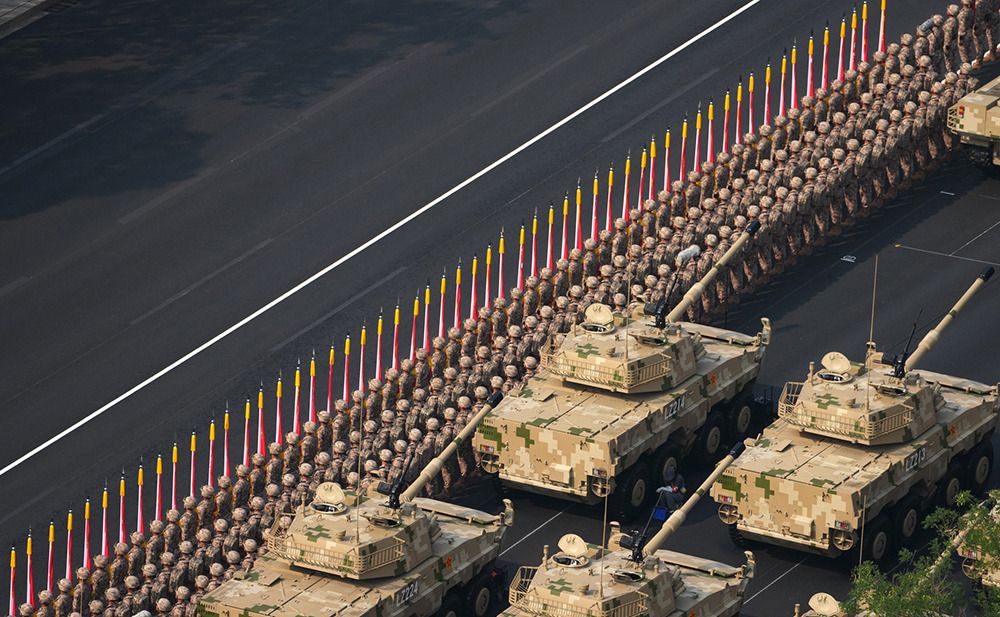
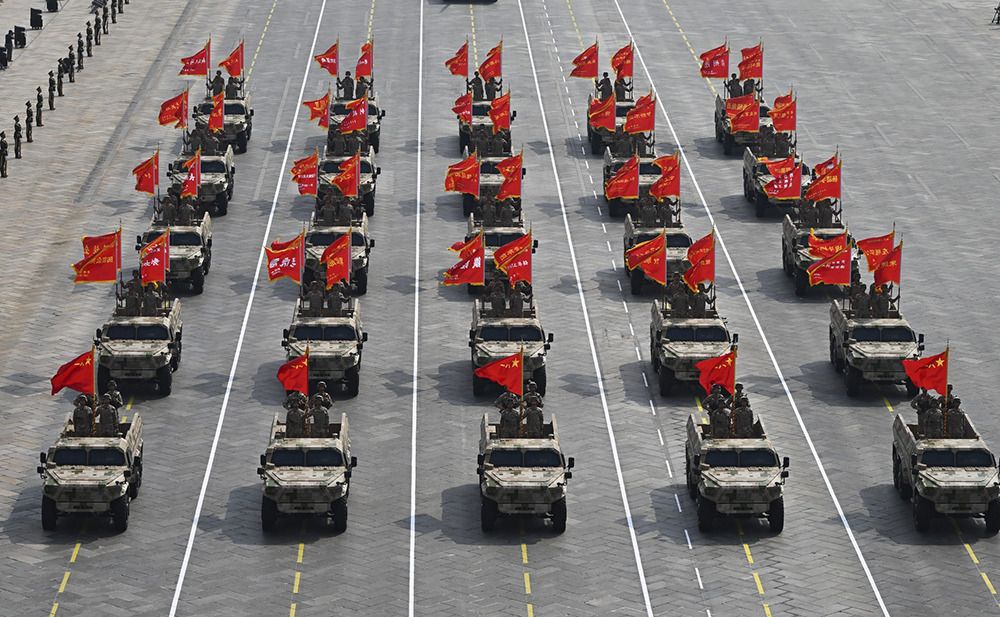
China used the celebrations marking the 80th anniversary of the end of World War II to showcase high-tech weaponry and assert its claims to global leadership
Photo: kremlin.ru
The parade dedicated to the 80th anniversary of the end of World War II was intended by its organizers to astonish the whole world with its scale. Intensive preparations had been underway for the past several months. Over 200,000 flags were hung throughout Beijing, flower arrangements planted, and new lighting installed in the city's business district. A portrait of the founder of the Communist Party of China, Mao Zedong, on the Tiananmen Gate was surrounded by eight giant Chinese flags.
In the lead-up to the celebration, authorities tightened security measures: all drone flights over the city were banned, and police and military personnel were on duty around the clock on the streets.
Shops, offices, hotels, and schools along the route taken by the military equipment were closed for several days. During rehearsals, local residents were asked not to go out onto balconies or record the events on video, to keep all details secret.
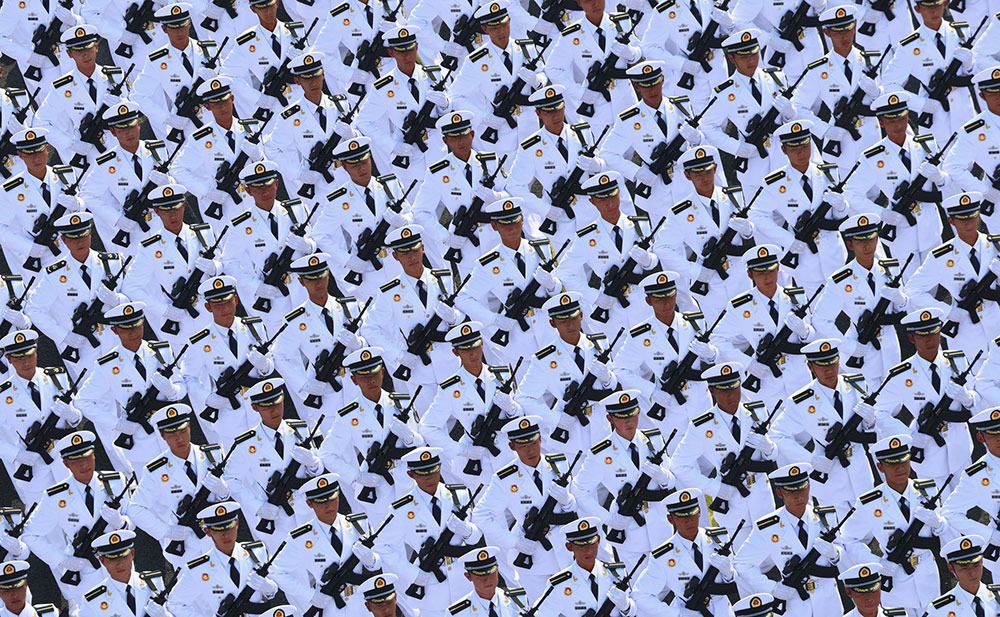
The solemn event began at 9 a.m. Beijing time on Tiananmen Square, the largest square in the world. In the presence of 26 world leaders and 50,000 spectators seated in the stands, Chinese President Xi Jinping, dressed in a gray tunic, rode in an open-top limousine to inspect the troops and military equipment.
Photo: kremlin.ru
“He wore a suit similar to the one Mao Zedong wore, who led the Communist Party of China (CPC) to victory in the civil war after World War II,” commented Al Jazeera.
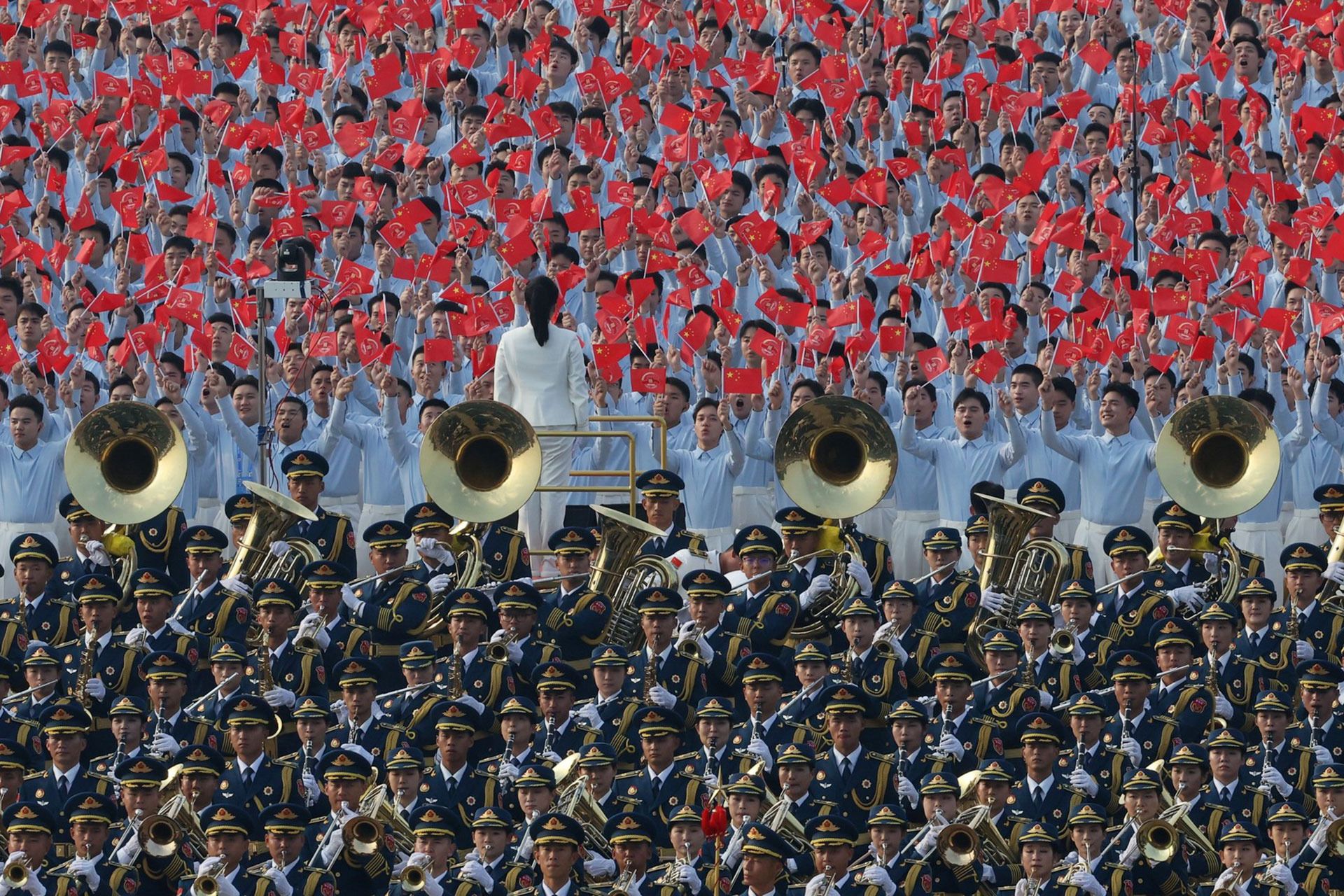
Everything at the parade, as is customary in China, was filled with symbolism: in honor of the 80th anniversary of victory over imperial Japan, 80 buglers performed, over 1,000 musicians sat in 14 rows, symbolizing each year of China’s resistance to Japan’s invasion of Manchuria in 1931.
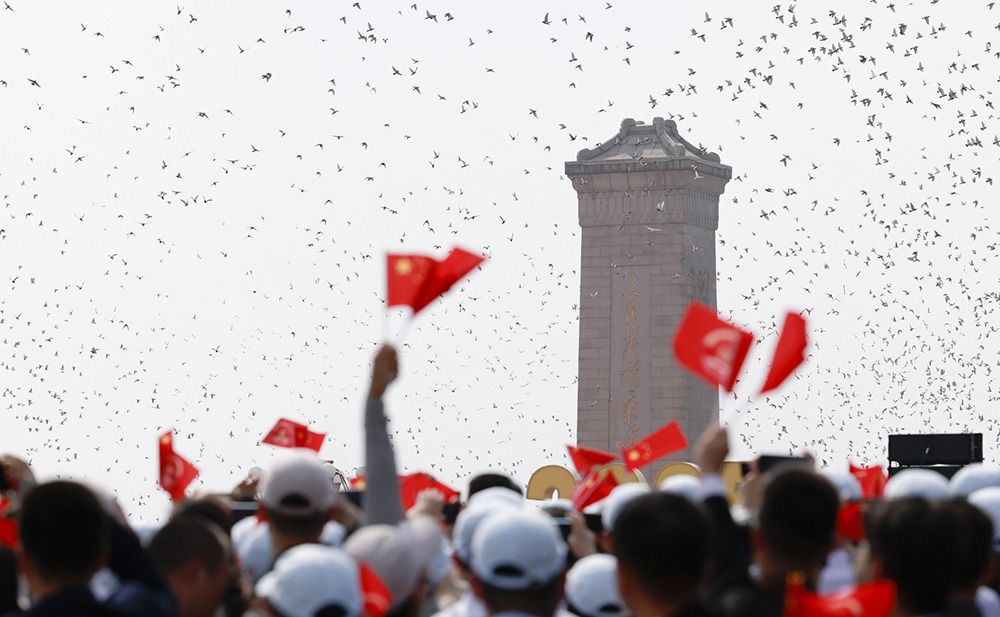
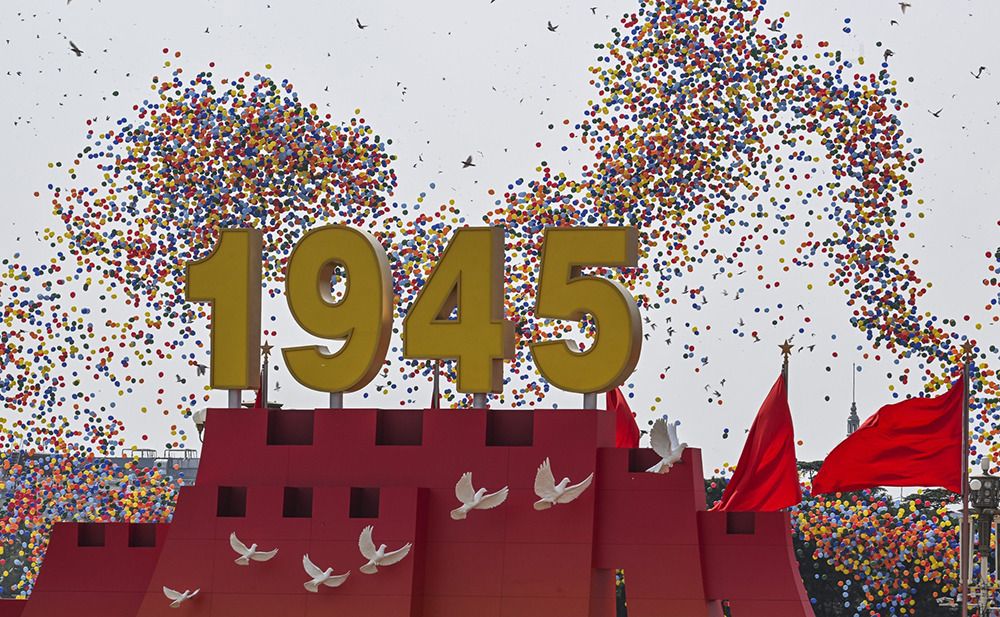
According to Chinese state media, the chairs for spectators were green, red, and gold, symbolizing fertile land, the sacrifices of the people, and peace, respectively. At the end of the parade, 80,000 doves of peace and the same number of balloons were released into the sky.
Photo: Xinhua via kremlin.ru
In his speech, Xi Jinping tried to soften China’s formidable militant image by demonstrating the country’s peaceful intentions. The Chinese leader stated that in times when humanity faces the choice between war or peace, dialogue or confrontation, mutual gain or zero-sum games, the Chinese people “firmly stand on the right side of history,” meaning they choose peace.
Xi Jinping criticized the “intimidating behavior” of some countries, clearly hinting at the United States, warning that China “cannot be stopped.” Over the next 70 minutes, the country demonstrated its military power, vividly confirming this statement.
Photo: Xinhua via kremlin.ru
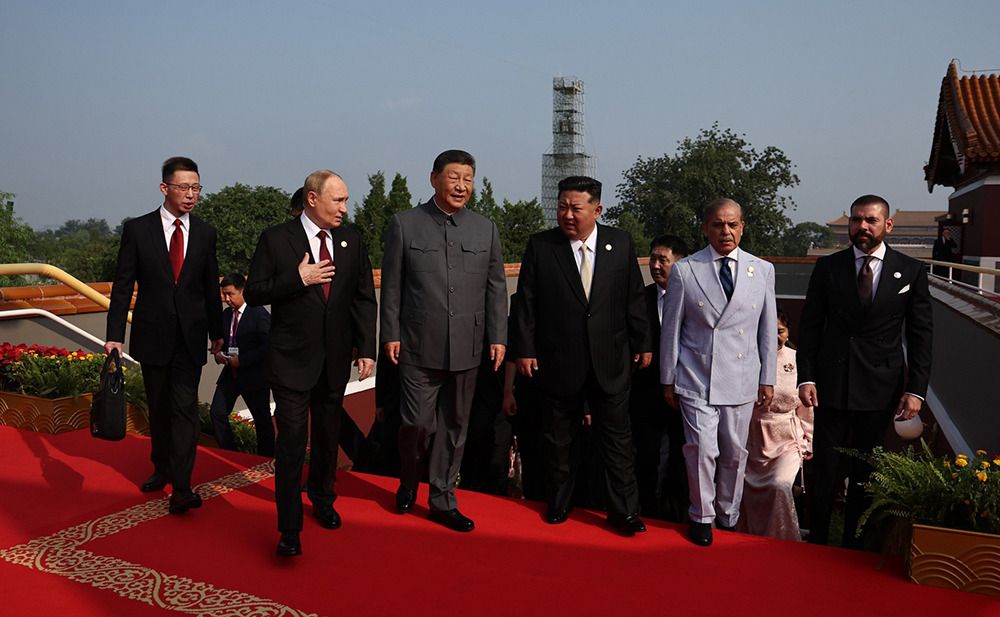
The main trio at the parade attracted heightened attention from Western media — Xi Jinping, with Russian President seated to his right and North Korean leader Kim Jong Un to his left. Their presence intensified the event’s anti-Western atmosphere.
“The first-ever meeting of Xi, Putin, and Kim Jong Un was so symbolic that it threatened to overshadow the grand military parade,” writes The Guardian, speculating on what might lie “behind the staged image that could symbolize a shift in the global balance of power.”
What It’s All For
The solemn parade served two purposes: to demonstrate China’s diplomatic and military power to the world and to evoke pride and patriotism within the country.
“For the People’s Republic of China, the historical memory of World War II is of fundamental importance in terms of national identity, fostering patriotic sentiments, and legitimizing the Communist Party’s hold on power as the force capable of preventing the recurrence of such tragic events that threaten the very existence of a sovereign nation-state,” notes Ivan Zuenko, senior researcher at the MGIMO Institute of International Studies of the Russian Ministry of Foreign Affairs.
Photo: Xinhua via kremlin.ru
According to him, in the minds of the Chinese, World War II became a “people’s war of resistance against Japanese aggression,” a decisive moment in which “the very possibility of continued independent existence was determined.”
Beijing presented a full nuclear triad for the first time — ballistic missiles based on land, sea, and air. The “foot soldier” part of the parade included cyber, space, and information troops, which appeared last year.
Photo: kremlin.ru
China showcased several missiles strengthening its strategic nuclear forces. Among them is the new Dongfeng-61 solid-fuel ballistic missile on a mobile platform, also known as “East Wind,” Dongfeng-41 — the most powerful ICBM in China’s arsenal, which according to various expert estimates can carry up to ten warheads over a distance of up to 15,000 kilometers, as well as the Dongfeng-31 BJ, which has been in service with the People’s Liberation Army of China since 2006 and can deliver a single warhead with a yield of 200-300 kt over a distance of up to 7,200 kilometers.
Beijing clearly demonstrated heavy investment in modernizing its nuclear triad. The parade introduced the new JL-1 air-launched ballistic missile and JL-3, launched from submarines.
The public was also shown new anti-ship missiles of various classes — YJ-19, YJ-20, YJ-21, and YJ-17. Hypersonic missiles, in particular, have been developed to counter the United States at sea.
For the first time, the parade displayed the unmanned underwater vehicle AJX002 and an uncrewed maritime vehicle. Experts also paid special attention to the HQ-29 long-range surface-to-air missile system, which is called an anti-satellite system.
Photo: Xinhua via kremlin.ru
The Chinese also revealed a new, lighter tank, the ZTZ-201, weighing less than 40 tons. For comparison, the Russian T-14 “Armata” weighs 55 tons, and the latest M1 Abrams modification weighs over 65 tons. The ZTZ-201 is considered a more technologically advanced tank designed with new threats in mind.
Another military innovation is the mobile LY-1 laser, intended to combat large targets, including missiles. Laser air defense systems are seen as a promising direction in air defense because despite their costly development and production, these air defense systems are relatively inexpensive to operate.
Chinese authorities also introduced several new types of drones, including unmanned vehicles for escorting fighter jets and drones designed to achieve air superiority.
Flexing Muscles in Front of the U.S.
Western media got the impression that Beijing’s primary aim was to shake its military power in front of the Americans, show the White House how many non-Western countries support China, and assert its leadership role in the Global South in opposition to the unjust world order imposed by the West led by Washington.
As The Wall Street Journal writes, China demonstrates its growing military might and “sends a warning to Washington.”
Photo: Xinhua via kremlin.ru
“China also showcased strengthening ties with Washington’s adversaries by staging a lavish parade where leader Xi Jinping appeared as the standard-bearer of a new world order,” the publication says. The article’s author believes that
this spectacle “reflected the vision of a great power Xi Jinping wants to present to the world and served as a warning to the U.S. and Europe not to challenge it.”
At first, it seemed that U.S. President Donald Trump was paying no attention to either the SCO leaders’ summit in Tianjin or the Beijing military parade. In talks with journalists, the American leader said he had “very good relations” with Chinese President Xi Jinping, and the presence of Putin and Kim Jong Un at the parade “should not be seen as a challenge to the United States of America.”
However, after some time, the American leader could not resist sharp remarks. On his social network Truth Social, he reminded China of the U.S. role in fighting Japan. “Many Americans died fighting for China’s victory and glory. I hope they will be rightfully honored and remembered for their bravery and sacrifice!” the president wrote. After that, Trump asked to send “the warmest wishes to and Kim Jong Un as the conspiracy against the United States of America is being built.”
Photo: kremlin.ru
The Kremlin was quick to assure that the words about the conspiracy were spoken “with irony,” and the three leaders have no intentions of any actions against Washington, “understanding the role of the United States in modern international relations.”
The rapid pace of China’s nuclear modernization has long been a concern for the U.S. Last year, the Federation of American Scientists (FAS) released a report stating that among all nuclear powers, China is the most actively expanding and modernizing its nuclear forces.
The Pentagon estimated that in five years China will have 1,000 warheads, and in ten years — 1,500 warheads. Most of these, U.S. military officials believe, will be deployed on delivery systems capable of reaching the continental United States.
Alexander Ermakov, junior researcher at the Strategic Analysis and Forecasting Sector of IMEMO RAS, told Most.Media that the parade held in Beijing was the largest not only in China but worldwide. “Its goal, like that of the accompanying events, including international meetings, was to showcase China’s achievements and its claims to the status of a leading superpower, the leader of a world pole opposing the U.S. China’s actions only reinforce the concerns and expectations of American alarmists,” the expert is confident.
If you enjoyed this article, consider making a donation — one-time or, even better, monthly. Your support helps us motivate our authors and become better with every article.
Our organization is recognized by the Internal Revenue Service (IRS) as a 501(c)(3) tax-exempt, charitable organization, which means that all contributions made to us are tax-deductible to the fullest extent permitted by U.S. law. Individuals may generally deduct charitable contributions of up to 60% of their Adjusted Gross Income (AGI) for cash donations made to qualifying 501(c)(3) organizations. For donations of appreciated assets (such as stocks or other long-term capital assets), the deduction is typically limited to 30% of AGI, based on the fair market value of the asset. C-corporations may deduct charitable contributions of up to 10% of their taxable income for donations made to eligible charitable organizations.
By submitting a donation, you confirm that you have read and accept the following documents: Privacy Policy and User Agreement, and also give consent to the processing of your personal data.
If you would like to unsubscribe from a monthly donation, please email us at: [email protected]