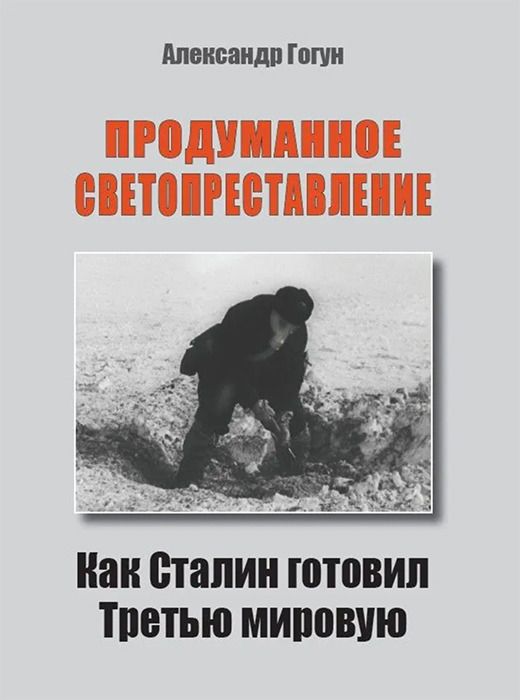
Reading Gogun’s major historical study, I kept recalling our family chronicles. The author tells how, in 1946–1947, during preparations for a new world war, army authorities, while freely demobilizing high-ranking officers, sought at the same time to retain combat officers of the lower or middle ranks — with the main emphasis, first and foremost, on field artillery. So it was with my father as well. In 1937, when he was a 14-year-old boy, he was sent off to the camps. Five years later, having miraculously survived, he volunteered for the front and spent the entire war on the front line, commanding an anti-tank 45-mm gun. He was wounded three times. A decorated veteran. In 1947, after a decade of state-imposed captivity, he tried in vain to be demobilized — but they would not release him: “We need officers with front-line experience”. He was let go only after, in one of his countless applications, he dared to mention his sentence under Article 58 of the Criminal Code for “counterrevolutionary activity”, which he had concealed in army forms (“At the time I considered it necessary to keep that hidden”).
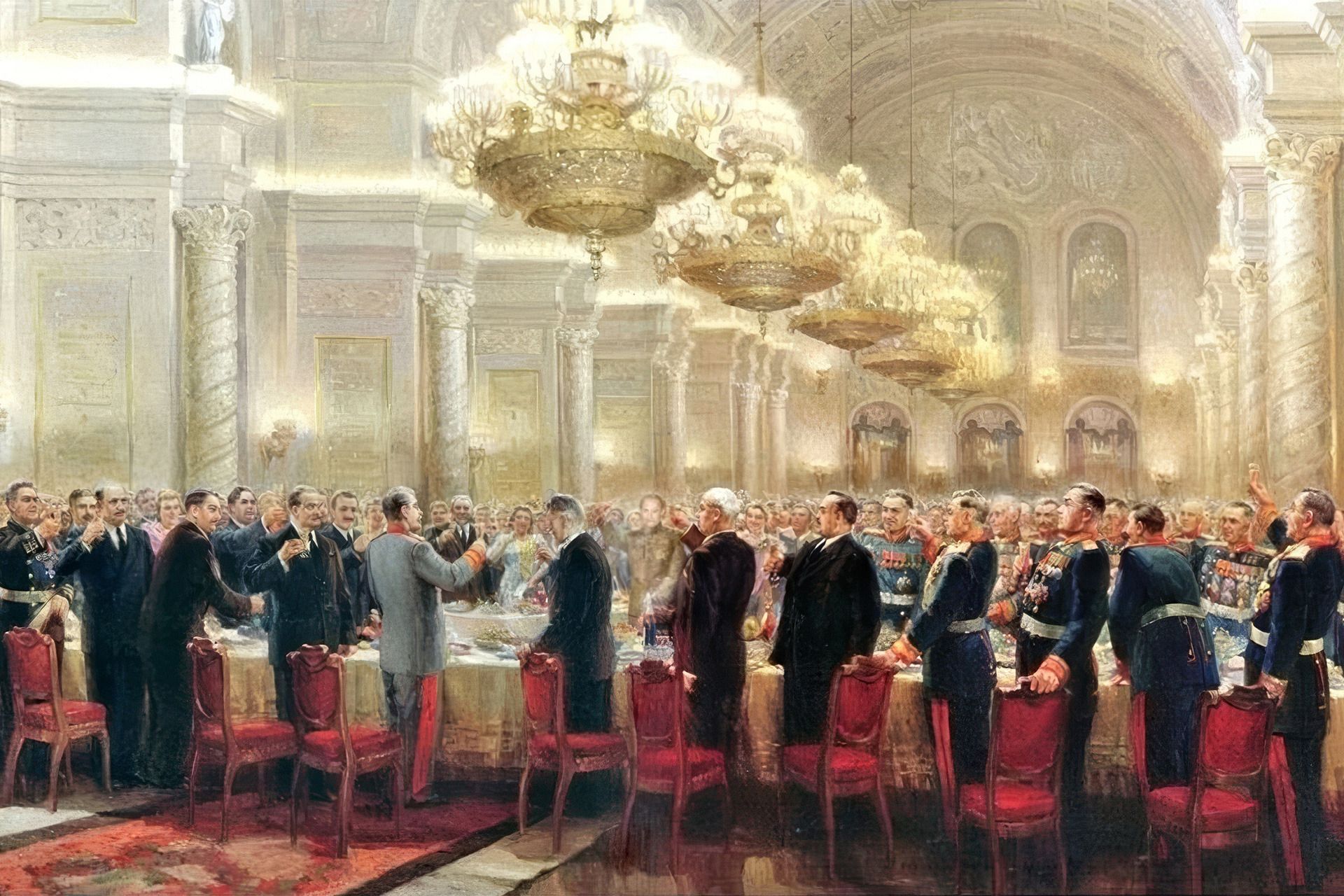
M. Khmelko, “A Toast to the Great Russian People” (fragment), 1947. Image: Wikipedia
Let me make one thing clear right away: I regard the least successful part of the book to be its opening chapter, devoted to the 1920s–1930s. In my view, the author somewhat oversimplifies the situation when he takes Stalin’s exile experience in Turukhansk as the starting point for the Soviet movement in the Arctic. In the researcher’s opinion, Soviet development of the Arctic from the outset primarily testified to the anti-American vector of Stalin’s policy — despite the fact that in those same years the anti-American position was carefully downplayed in propaganda. After all, it was the United States, replacing German specialists after 1933, that most productively helped with the militarization of the Soviet Union.
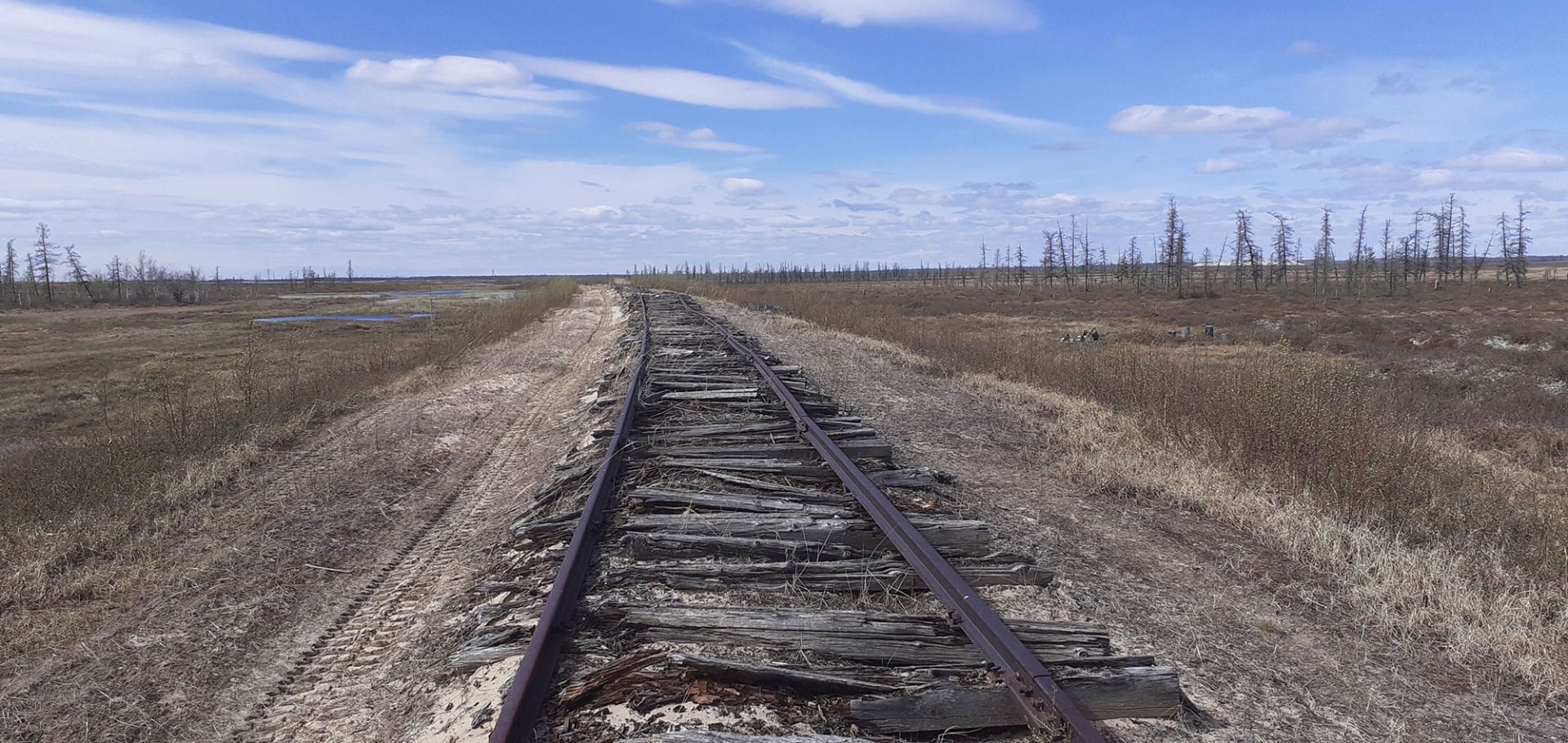
But America would become Stalin’s main target, albeit in every sense a distant one, immediately after the Second World War. He prepared an offensive against Alaska both from the Arctic Ocean and from northeastern Asia. By the end of 1947, the 14th Shock Army of General Oleshev was being transferred to Chukotka and the Kurils. To supply it and for the invasion of Alaska in general, prisoners were building the tragically famous “dead road”: Inta–Salekhard–Igarka. In May 1950, exercises called “North-5” were held, landing operations and battles on ice were rehearsed, and enormous attention was given to Arctic aviation. Greenland was in the sights.
The Transpolar Main Line in 2021. Salekhard–Nadym stretch. Photo: Wikipedia / Vershinin Mikhail / CC BY-SA 4.0
In the spring of 1948, tests of chemical (and apparently bacteriological) weapons were organized. From the summer on, detailed topographic maps of Alaska, Canada, and even the Pacific coast of America were compiled. That same year, Marshal Golovanov — the leader’s trusted man and creature — initiated the creation of long-range strategic aviation. The Navy was expanded as well (including icebreakers), as was the Air Force, which became stronger than the American one. In 1953 alone, the author emphasizes, goods delivered to the Arctic were 11 times greater than what had been transported through the Northern Sea Route over the previous two decades.
At the same time, the USSR was involved in political intrigues in the East — what Gogun defines as Drang nach Osten. In China, the Soviet Union successively supported the Kuomintang and the Maoists — with an emphasis on aid to the communists. In the late 1940s, and especially from the early 1950s, Stalin, through Mao’s mediation, stimulated insurgent activity in Indochina, Indonesia, and India itself: the domination of Britain and the Netherlands was being undermined, and in Vietnam that of France. It is curious that during and after India’s conflict with Pakistan he advocated “the integrity” of India, demanding that Bangladesh also remain part of it, together with Ceylon. Here, it seems to me, the contrasting heterogeneity of Stalin’s political strategy deserves further attention: for at the very same time in the Balkans, which he occupied, he was, on the contrary, energetically splitting countries apart — let us recall the history of the Balkan Federation, which he decisively rejected.
The second stage of the Cold War in the Far East was linked to preparations for the Korean War and the strengthening of Communist China. Everything that happened in those late Stalin years served as a rehearsal for World War III, including, naturally, the Korean War itself of 1950–1952. At the same time, Soviet power in the western direction was increasing at an incredible pace — despite the fact that
Stalin successfully extracted various concessions for his regime from future adversaries, including the veto power in the future UN Security Council, which he had obtained in advance as early as 1945.
Incidentally, he also managed to include in its composition, in addition to the USSR as a whole, Ukraine and Belarus (which Gogun somehow does not mention).
In May 1945, Stalin denounced the Soviet-Turkish Treaty of Friendship and Neutrality — a year before its expiration date (and six months earlier he had expelled the Meskhetian Turks from Georgia). Stalin would energetically prepare for an attack on Turkey — and then on Tito’s Yugoslavia — in Bulgaria, using a puppet local army.
And once again, the military-political epic laid out by Gogun is confirmed for me by personal memories. Here is one of them. Yuri Chikarleev, now deceased, a member of the editorial board of Posev and a frequent visitor to Israel in the 1970s, told me how he fled, sometime in August 1945, from the Soviet army stationed in Bulgaria to neighboring Greece, where the local communists were searching for him on Moscow’s orders (the fugitive was hidden by White émigrés, and then he made his way to Marseille and enlisted in the Foreign Legion, fighting in Vietnam). Chikarleev told me that despite the end of the war, formerly neutral Bulgaria was clogged with Soviet troops.
In the very first postwar years, the Sovietization of conquered Eastern Europe was accelerated. But this was only preparation for the planned apocalypse. In 1950–1951, Stalin approved the seizure of Tibet by the Chinese Communist Army — the road to India was opening. And on April 8, 1950, a Soviet fighter shot down an American naval patrol plane over the Baltic with impunity — ten people were killed. It was precisely then, in April 1950, that rumors spread through Moscow about an imminent and inevitable war with America. The Soviet press was inflaming anti-American psychosis.
But where, one asks, did a war-ravaged power find the colossal resources required for its relentless and all-encompassing rearmament — from Long-Range Strategic Aviation to the gigantic Navy? They were squeezed out of both enslaved countries and the population at home.
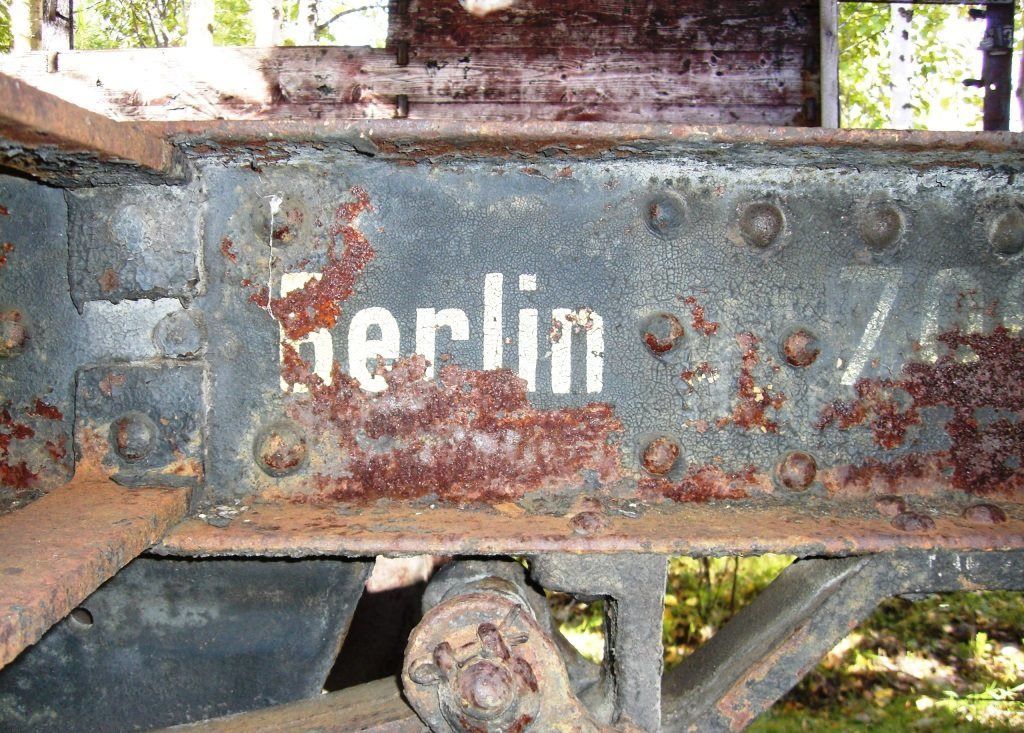
The cost of factory equipment and valuable property removed by the Soviets from Germany and Eastern Europe was, in monetary terms, equal to the aid provided to Western Europe under the Marshall Plan.
Direct looting of the local population was also strongly encouraged — not only in Germany, but across the entire territory liberated from the Germans. The author cites a Polish curse: “May the Germans capture you and the Russians liberate you!” To this wish, and to the Polish joke he quotes about “heavy” — tower — clocks that a Soviet soldier drags with difficulty, I can add a German joke from the postwar period. A Soviet soldier walks into a German watchmaker’s shop, takes an alarm clock out of his pocket: “Make me ten small ones out of these big clocks!” And here is a riddle from those years: “What mistakes did Stalin make during the war? — Only two: he showed Ivan Europe and showed Europe Ivan”.
Detail of a railway car taken from Germany to the USSR after the war. Photo: Wikipedia / Charly1234 / CC BY-SA 4.0
Among the most horrifying sections of the book is its third chapter: “Manechka Was Eaten — Let’s Salt Vanechka”, with the subtitle “Red Cannibal-Economics”, which recounts the new and deliberate Holodomor organized by Stalin in 1946–1947 — also for the sake of accumulating resources for the coming war. The number of people who died from the famine itself and from the diseases associated with it then amounted to two million (in total, the famine affected about one hundred million people).
Grain was exported, as before, during the Holodomor, and on June 4, 1947, a decree was issued on criminal liability “for theft of public and personal property”. Naturally, among the people memories of the famous “law of the ears of grain” (the “seven-eighths” law), adopted 15 years earlier, were instantly revived. As a boy I was friendly with a former prisoner named Alexei Momot, and he told me how, in 1947, for stealing a spool of thread, his friend — a front-line soldier and senior sergeant who had spent the entire war in the infantry — was sentenced to 25 years. The prosecutor wrote: “Stole 300 meters of tailoring material”. The authorities diligently plied the population with relatively cheap vodka, poisoned it with nicotine — all this was a consolation, an escape from abysmal, unimaginable poverty. All the valuables that surviving Soviet citizens had brought back as trophies were extracted from them at specially organized buyback points.
But the state also took money through all kinds of levies, a predatory monetary reform, and two rounds of “state loans”. In these two steps, the supreme vampire sucked 40 billion rubles out of his subjects. A joke of the time: “No signs of violence were found on the deceased body, apart from State Loan bonds”.
Meanwhile, the wealth of the cannibalistic state kept growing — on the bones of prisoners and the dying population: “We had an enormous gold reserve”, pensioner Vyacheslav Molotov proudly testified, “and there was so much metal that it was not sold on the world market for fear of devaluation”. So why, one asks, did the Kremlin’s Kashchei keep hoarding it tirelessly? After all, Britain spent its entire reserve during the Second World War precisely to feed its population.
Instead of the term “starving people”, the delicate euphemism “dystrophics” was used. I think this is where the sadistic jokes about dystrophics that survived into the 1960s and 1970s came from. When the authorities introduced some easing in the countryside in 1951–52, the peasants were saddled with the monstrous “Zverev” tax, unthinkable under any serfdom: there were taxes on chickens, on trees, and so on. Wheat was bought from the population for 1 kopeck per kilogram, and sold back to them for 31 kopecks.
In all free countries, Gogun notes, the postwar economic level rose — in the USSR it was artificially reduced. In other words, the enormous strengthening of the state came at the expense of the impoverishment and further enslavement of its subjects.
When, according to Stalin’s plan, was World War III supposed to break out? In the book the dates vary: sometimes 1954, sometimes 1955. The latter date is also confirmed by some testimonies I know. There are, however, also data suggesting that the aging Stalin decided to move the date of his total aggression to an earlier time — to 1953.
Signs of Moscow’s future anti-Western policy emerged soon after Stalingrad — in 1943, when the struggle against “servility” began in censorship and partly in the press. After the war, and especially from the second half of the 1940s, it was destined to blossom violently in Soviet propaganda.
As before the war, Stalin was preparing purges and mass repressions, only this time he resorted to techniques and methods that almost directly coincided with Hitler’s. I must note that the rather transparent Hitlerization of Soviet antisemitism is a separate topic, still awaiting its researcher.
The main stages on this path, as I see it, were the campaign against “cosmopolitanism”, launched in early 1949 — a campaign whose rhetoric and a number of details betrayed a direct dependence on defeated National Socialism; then the shooting of the Jewish Anti-Fascist Committee in August 1952, the Prague trial of “Zionists” in November 1952 (eleven people hanged for aiding Israel, assistance that had previously been carried out on Stalin’s own instructions), and finally the Doctors’ Plot, begun on January 13, 1953.
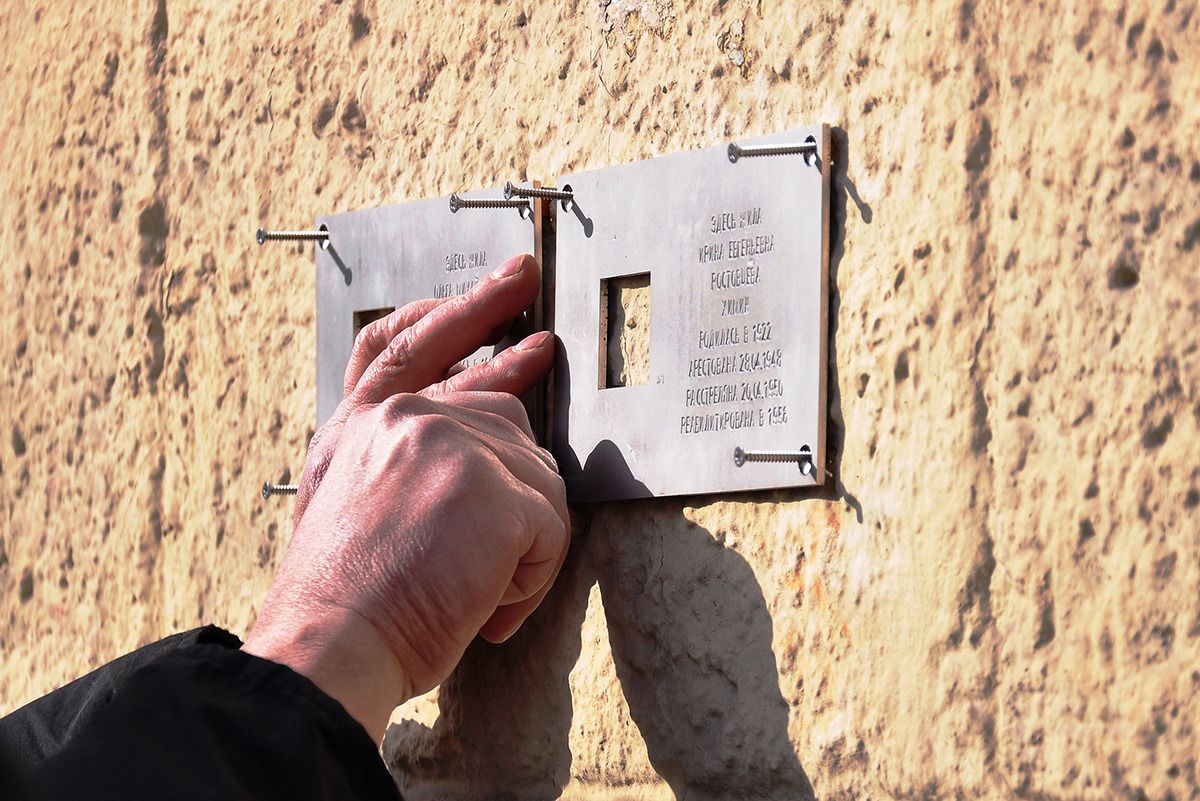
Placement of a “last address” in memory of physician Olga Mikhailovna Rostovtseva and her daughter Irina Yevgenyevna Rostovtseva, shot in 1950 on charges of “espionage” because the mother worked in the Kremlin Medical and Sanitary Administration, which had been subjected to a “purge”. Photo: Wikipedia / David Krikheli / CC BY-SA 4.0
One of the obvious shortcomings of Gogun’s otherwise monumental study is precisely the fact that he carefully avoids this, in my view the most important, aspect of the matter (although a similar tendency is visible in his earlier works as well). Moreover, at the very beginning of the book he categorically calls Stalin’s preparation for the deportation of Soviet Jews a “myth” — here following the well-known negative position of Gennady Kostyrchenko. Oddly enough, neither researcher is at all disturbed by the fact that all meetings of Stalin’s Politburo, and then the Presidium, on this issue remain completely classified to this day. Yes, Kostyrchenko agrees, we have never seen a written Stalin order for this mass deportation. But no one has ever seen a written Hitler order for the extermination of the Jews either. When I raised this objection at a readers’ meeting with Kostyrchenko, he evaded an answer.
Gogun’s firm denial of a new Holocaust somehow does not fit with Stalin’s practice of semi-genocidal deportations of other peoples, begun even before the Second World War and during its height — not only in the Caucasus, but also in Crimea. (Incidentally, in the latter case Gogun, contrary to tradition, calls the indigenous population not “Crimean Tatars” but “Crimean Turks” — apparently in keeping with Erdogan’s pan-Turkist tendencies.) Moreover, from Khrushchev’s memoirs we knew that Stalin was also planning the mass deportation of Ukrainians, enormous in scale, but did not dare carry it out because of silent resistance from his henchmen within the Politburo itself. One may ask why Jews could not have been one of such peoples — except with the prospect of their complete extermination? The author himself rightly points out that “all Stalinist deportations of the peoples of the USSR, beginning in 1943, were caused by preparations for a new war”. As applied to the Jews, judging by a number of direct or indirect testimonies of this kind, the issue was not even deportation, but destruction — partly en route to the place of exile, partly directly on the spot.
Here I will allow myself, however briefly, to refer to testimonies about the planned deportation, including those published in the early 2000s in the Israeli newspaper Vesti by people who lived through that era. The family of the future doctor Anna Kozlovskaya (Grossman) lived after the war in Vilnius, where her father-lawyer enjoyed the favor of Suslov — the very same man who, among other things, carried out the purge of the Baltic states. Soon after the start of the Doctors’ Plot (announced, as already mentioned, on January 13, 1953), Suslov summoned him and suggested that he quickly hide his daughter in some remote Lithuanian village: “Understand, all Jews are facing deportation”. Others recalled how a local militiaman would visit their Moscow apartments and explain: “Soon my family will move in here, and you Jews will be thrown out of Moscow”. Another good acquaintance of mine, the well-known dissident Anatoly Yakobson, who knew about these police plans, told how he and a friend, another boy, got hold of a Schmeisser submachine gun and a pistol (that was still possible then) and built a fort in the attic, barricading themselves with sandbags: “They won’t take us alive!”
With a high degree of confidence one can state: the planned public executions of the “killer doctors” and the subsequent deportation of Jews to their deaths in Siberia were meant to be a prelude to an attack on the free world.
The pogrom campaign itself began openly to unfold in the autumn of 1948, after the scandalous incident involving Golda Meir’s visit to Moscow’s Chorale Synagogue for the celebration of the Jewish New Year. Since then, Soviet policy had consistently been aimed, if not at outright destruction, then at the gradual strangulation of the Jewish state. Nevertheless, when, during the Korean campaign, Western communists, as Gogun reminds us, proclaimed that if a “war of the peoples” broke out they would fight on the Soviet side, the same declaration was made not only by the Israeli Communist Party, but also by the left wing of the United Workers Party (MAPAM): “The Israeli proletariat will fight against world imperialism on the side of the Soviet Union”. But that is already, so to speak, a tragicomic postscript to the review.
In the year since its first publication, Gogun’s monograph has appeared in four languages and has already acquired international resonance: last December the author presented it in the Estonian parliament, and in May this year — in the Lithuanian parliament. One can only be glad that the book, not included on any lists of sedition or extremism, has literally just become safely accessible to those who may need it more than others — the residents of Russia.
If you enjoyed this article, consider making a donation — one-time or, even better, monthly. Your support helps us motivate our authors and become better with every article.
Our organization is recognized by the Internal Revenue Service (IRS) as a 501(c)(3) tax-exempt, charitable organization, which means that all contributions made to us are tax-deductible to the fullest extent permitted by U.S. law. Individuals may generally deduct charitable contributions of up to 60% of their Adjusted Gross Income (AGI) for cash donations made to qualifying 501(c)(3) organizations. For donations of appreciated assets (such as stocks or other long-term capital assets), the deduction is typically limited to 30% of AGI, based on the fair market value of the asset. C-corporations may deduct charitable contributions of up to 10% of their taxable income for donations made to eligible charitable organizations.
By submitting a donation, you confirm that you have read and accept the following documents: Privacy Policy and User Agreement, and also give consent to the processing of your personal data.
If you would like to unsubscribe from a monthly donation, please email us at: [email protected]