This Sunday, June 7, Armenia is holding parliamentary elections-and the campaign there is unfolding according to a logic reminiscent of Moldova’s 2025 campaign. Nikol Pashinyan’s party is building its campaign around theses similar to those used in Moldova by Maia Sandu’s party: European integration and resistance to Russian threats. However, this is driven not only by the desire to protect themselves from Moscow. Both Armenian and Moldovan societies have become disillusioned with Russia as a partner that promised support but failed to provide it at key moments. For Armenia, this resulted in the loss of Karabakh; in Moldova, residents of Transnistria nearly ran out of gas in winter. The European course is seen as an alternative and a way to escape pressure, economic restrictions, and political ultimatums from Moscow. This distancing from Russia will apparently continue as long as Vladimir Putin remains in power in the Kremlin.
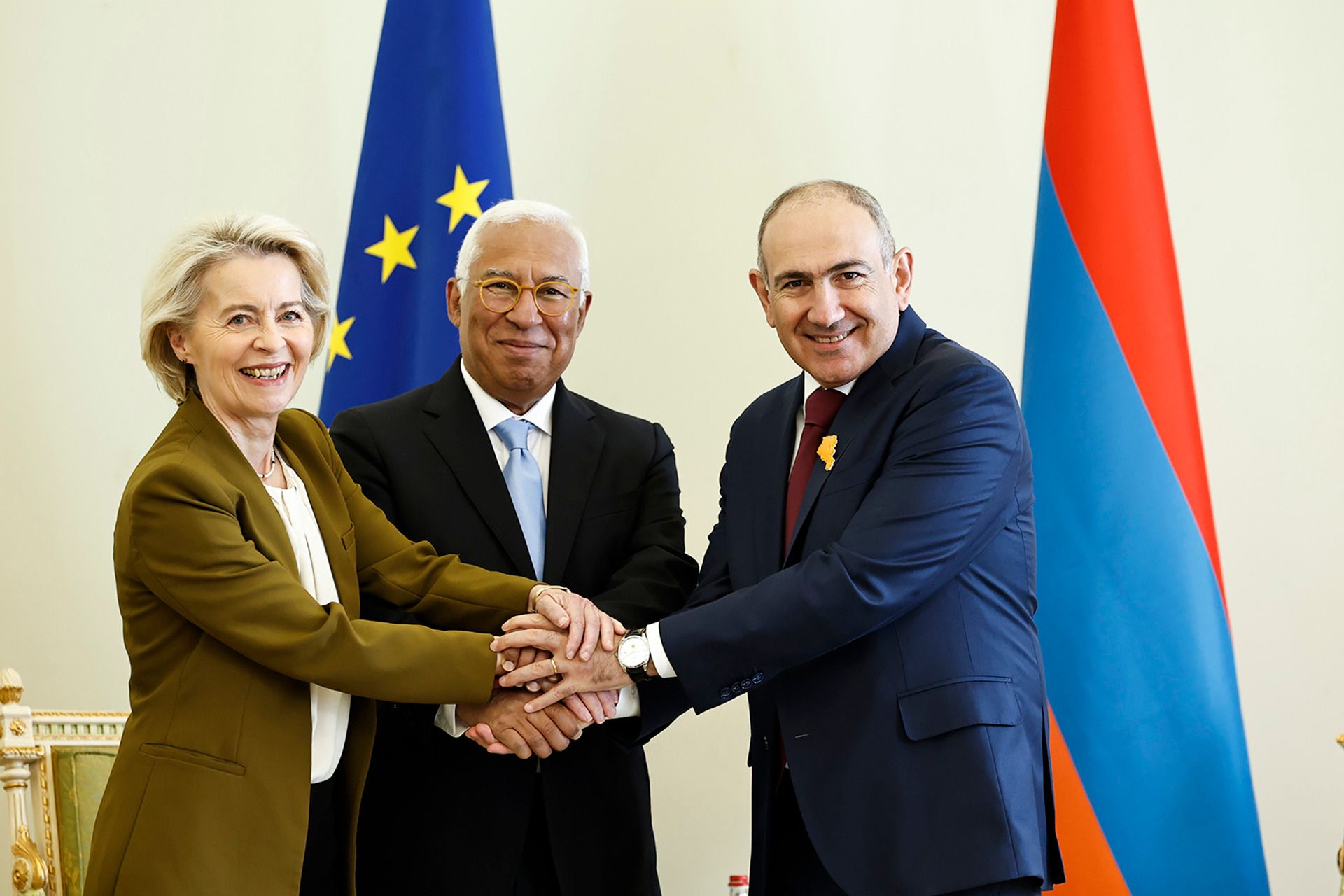
The first Armenia–EU summit, May 5, 2026. Photo: website of the Prime Minister of the Republic of Armenia
In Armenia, the rulingparty “Civil Contract”, like a year earlier the party “Action and Solidarity” in Moldova, approached the elections with a high negative rating and has noticeably lost electoral support. The reasons are largely similar: fatigue with the current politicians, a demand for renewal, unfulfilled promises, and inflation.
Both political forces have failed to resolve territorial conflicts in their countries’ favor. Under Pashinyan, Armenia lost control of Nagorno-Karabakh. In Moldova, under Sandu, the situation around Transnistria remained unchanged, although after 2022 a window of opportunity opened up, since the region was cut off from Russia and Kyiv was open to forcibly returning it under Chișinău’s control.
However, no strong alternative has emerged either in Armenia or in Moldova.
In both countries, the opposition is represented by politicians with pro-Russian views who have already been in power and are remembered for ineffective governance.
In Armenia, they include former president Robert Kocharyan, who is trying to return to politics at the head of the “Armenia” bloc. His rule is often associated with corruption, which, critics say, weakened state institutions and the army and later became one of the reasons for the defeats in Karabakh. Kocharyan is also known for his personal friendship with Vladimir Putin.
In Moldova, a similar role in the elections was played by former president Igor Dodon-a pro-Russian politician who led the “Patriotic Electoral Bloc”. He consistently advocated restoring relations with Moscow, and the full-scale war in Ukraine did not change his views. The Kremlin patronized him, including financially.
In addition to these traditional pro-Russian forces that voters have grown tired of, new political projects linked to Moscow emerged during the current campaigns in both countries. In Moldova, this is the “Victory” bloc of fugitive oligarch Ilan Shor. In Armenia, it is “Strong Armenia”, backed by Russian businessman of Armenian origin Samvel Karapetyan. Both forces had significant resources and ran aggressive campaigns against the current government. The authorities responded with administrative pressure-sometimes justified, sometimes not.
In Moldova, sidelining Shor’s bloc looked reasonable: evidence of fraud and vote-buying had been documented for a long time. However, the pressure on the “Heart of Moldova” party and the “Alternative” bloc-political groups that after 2022 distanced themselves from Russia or, at least, had no proven ties to Moscow-is hard to explain other than as an attempt to clear the political field. In Armenia, Karapetyan was placed under house arrest. Formally, he was accused of calling for a violent seizure of power, but the arrest followed his public criticism of Pashinyan.
This is understandable logic, but it entrenches another problem-the lack of a real political alternative to the ruling parties. As long as none emerges, elections in Armenia and Moldova will largely be shaped by external pressure. As a result, the political systems of both countries will remain vulnerable.
A Balance on the Edge
The similarity between Armenia and Moldova also lies in the fact that both countries are comparable in territory, population, and economic size. At the same time, neither borders Russia, although its influence remains palpable. In both countries, a generation of politicians formed in the post-Soviet period is currently in power. Pashinyan and Sandu are roughly the same age. In their views, they are oriented toward a broader international agenda and, unlike many of their predecessors, do not feel political reverence for Moscow.
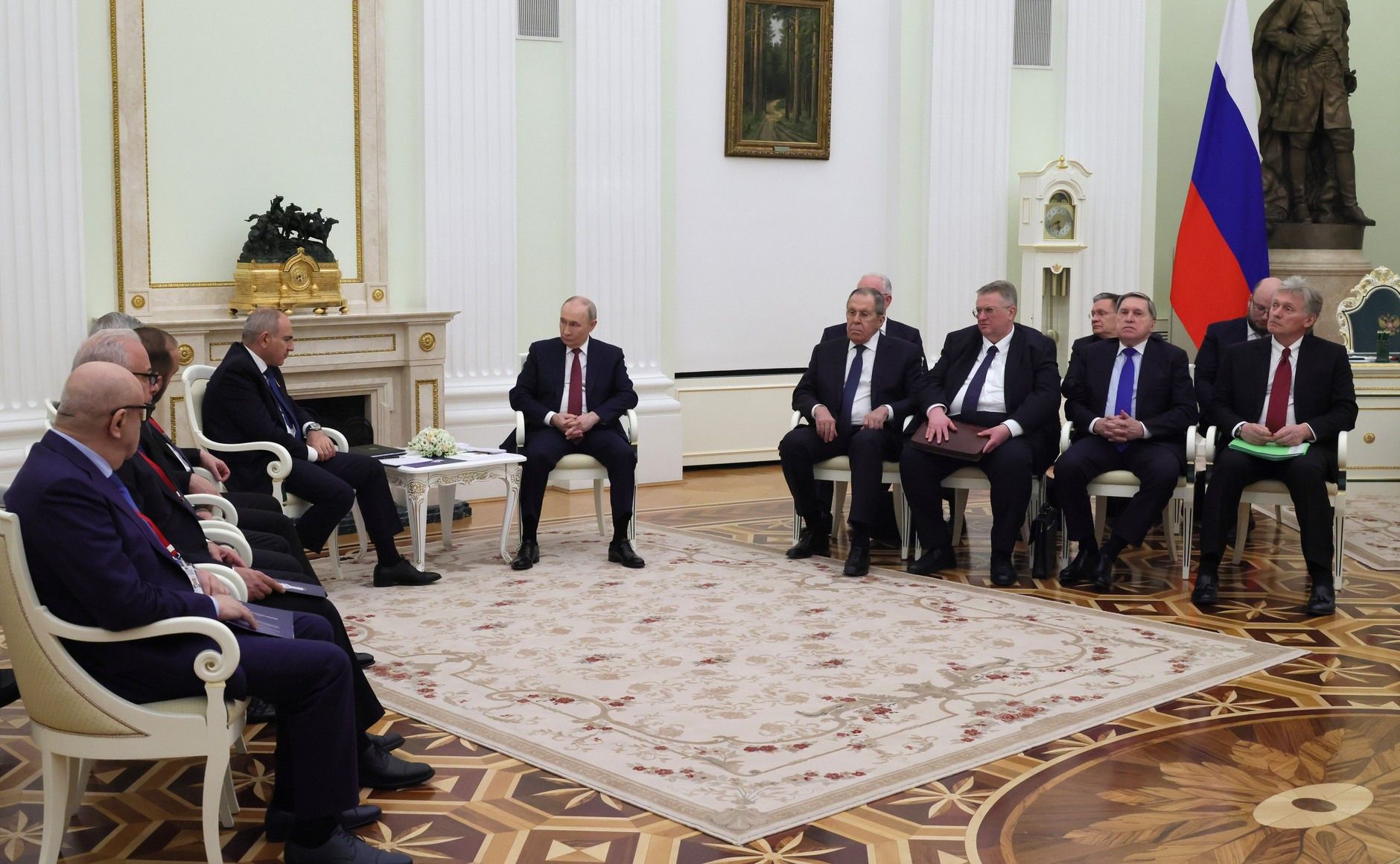
Russian–Armenian talks at the Kremlin, April 1, 2026. Photo: kremlin.ru
In both countries, there has always been a confrontation between supporters of Russia and the West, but it manifested differently. Armenia traditionally gravitated toward Russia, although it periodically attempted rapprochement with the EU. For example, in 2013, together with Moldova, Georgia, and Ukraine, the country was preparing to sign an association agreement with the EU. However, under pressure from Russia, Yerevan abandoned these plans and chose closer ties with the Eurasian Economic Union.
Pashinyan came to power in 2018 on slogans of rapprochement with the West, but later still tried to maintain partnership relations with Russia. Armenia remained a member of the EAEU, the CSTO, and the CIS, and Moscow continued to be seen as a key security guarantor amid the conflict with Azerbaijan and the closed border with Turkey.
A significant part of Armenia’s strategic infrastructure remained under the control of Russian companies. Gazprom dominated gas supply and distribution, Russian Railways managed the railway under a long-term concession, and Russian entities participated in the management of power grids and a number of banks. Under Pashinyan, this status quo persisted, and the question of nationalization was not raised.
In the first years of her presidency, Sandu was also inclined toward dialogue with Moscow. In 2021, a contract for the supply of Russian gas was renegotiated at very high prices, since Chișinău then had no alternative. Talks on the status of Transnistria were also planned. The turning point came after 2022. The war in Ukraine and statements by Russian officials about a possible advance to Moldova’s borders made the former balancing policy between Russia and the West impossible. Chișinău set a course toward European integration.
Russia responded with its usual pressure. It cut gas supplies, threatening the country’s energy security. A significant share of electricity came from the Moldavskaya GRES power plant in Transnistria, which ran on Russian gas. Even earlier, Moscow closed its market to Moldovan wine and agricultural products. In parallel, a network of pro-Russian media was deployed in the country, engaged in smearing Sandu and her party. In addition, a controlling stake in Moldovagaz still belongs to Gazprom, and Russia’s Inter RAO retains management over the Moldavskaya GRES.
Nevertheless, with EU support, Moldova began purchasing gas from various sources, increased electricity imports from Romania and other European countries, and started integrating into the regional energy market. Dependence has not disappeared entirely, but Chișinău has shown it can withstand Russian energy pressure. There was no blackout. In parallel, last year Moldova began withdrawing from the CIS-another step toward distancing itself from the post-Soviet space.
During the current campaign, Armenia faced similar methods of pressure from Russia. Moscow restricted imports of Armenian agricultural products, mineral water, and cognac from a number of producers. In addition, Russian authorities made it clear that closer ties between Yerevan and Europe could lead to a review of gas supply terms. Armenia does not yet have alternative infrastructure, so if Moscow moves from blackmail to action, it will hurt the country.
And yet Armenia today has more room to maneuver than it did a few years ago. Iran is already serving as an alternative gas supplier. The expected signing of a peace treaty with Azerbaijan will allow the development of new transport corridors and energy cooperation. Opening the border with Turkey would also expand markets and logistical possibilities.
Of course, none of these scenarios is guaranteed yet, but the very fact that such options exist strengthens Yerevan’s negotiating position. It seems Moscow is aware of this too.
The Road to Europe
In the current election campaign, Pashinyan is speaking ever more confidently about closer ties with Europe. The culmination was the summit of the European Political Community in Yerevan, held for the first time in the South Caucasus. So far, the most tangible practical result of this process may be visa-free entry to the EU for Armenian citizens. Even if it takes several years, for Armenian society this will become one of the most visible benefits.
The pivot toward the EU is also supported by Armenian society: 69% of citizens trust the European Union, and EU membership is supported by 45% of respondents. At the same time, trust in Russia over the past five years has fallen from 87% to 31%.
These figures are largely explained by events of recent years. In 2020, Russia did not provide Armenia with support in the war over Karabakh. The war in Ukraine initially gave Armenia an unexpected economic boost: parallel imports and an influx of Russian investors temporarily revived the economy. However, it also heightened anxiety in Armenian society.
Later, Moscow began tightening migration policy, including toward EAEU member states, despite the declared freedom of movement within the union. In parallel, new rules were introduced for importing goods into Russia. In times of crisis, Moscow introduces restrictions on exports of fuel, sugar, and wheat without coordination. All of this increases doubts about the stable and predictable value of relations with Russia.
Of course, unlike Moldova, Armenia will find it harder to reorient itself toward European markets. Russia will remain the key export destination for a long time, and leaving the EAEU would mean serious economic costs.
Moreover, although Moscow demands that Yerevan decide on its foreign-policy course-between the EAEU and the EU-it itself would most likely oppose a sharp turn toward Europe. At the same time, harsh pressure has the opposite effect: the more insistently Moscow demands that Pashinyan make a final choice on foreign policy, the more it repels part of Armenian society and pushes the country toward closer ties with Europe. As a result, with such methods of pressure Russia risks being left in the South Caucasus without allies. And that would become yet another weakness for it-one it will probably try to avoid.
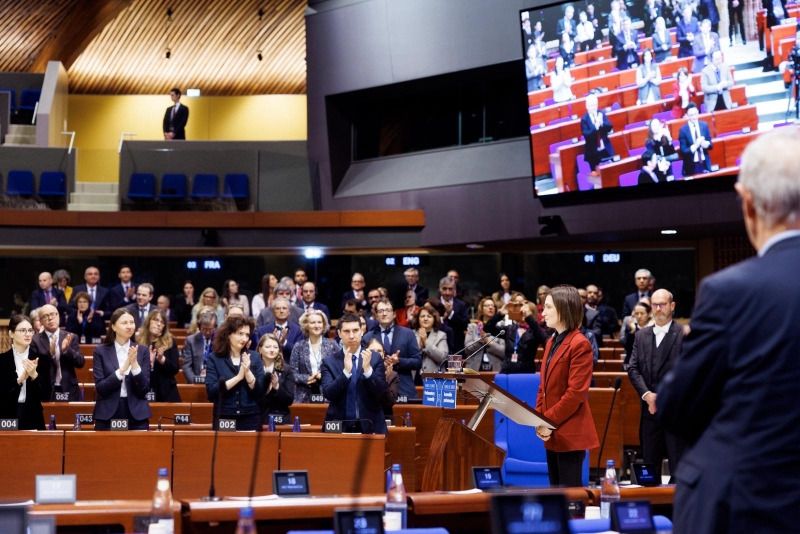
Moldovan President Maia Sandu speaks at a plenary session of the Parliamentary Assembly of the Council of Europe, January 27, 2026. Photo: website of the President of the Republic of Moldova
Moldova is a telling example of how such pressure ends. Russia there also raised gas prices, cut supplies, and organized special flights to bring Moldovan voters to polling stations in third countries. The result: most Moldovans supported the European course. And as long as the war in Ukraine continues, Russia has no ability to substantially change this vector.
Moldova’s surroundings supported its movement toward the EU, which also accelerated this process. As for Armenia’s neighbors, they are more restrained about its rapprochement with Europe. Azerbaijan and Georgia themselves, in the context of the war in Ukraine, are trying to balance between Russia and the EU to avoid escalation following the Ukrainian scenario. Therefore, Pashinyan’s demonstrative rapprochement with Europe may irritate them. For example, when Armenia began buying weapons from France, Azerbaijan already hinted that this could become a security threat not only to it but to the entire region. This means Yerevan will have to develop relations with Europe while taking into account the position of its neighbors.
Nevertheless, even if Armenia seeks to expand ties with the EU, it is hard to expect rapid rapprochement from Brussels. In this respect, Moldova’s example is telling. It seems the EU supports Chișinău’s political course in everything, yet full membership is rather a matter of the distant future. As long as the war in Ukraine continues, this uncertainty will persist.
If, in relation to geographically close Moldova, the EU assesses all risks, then it is unlikely to rush into enlargement-especially into the unstable South Caucasus. However, such an approach most likely suits Yerevan as well.
In any case, Armenia cannot sever ties with Moscow overnight. After the elections, the sharpness of the rhetoric will likely subside-both in Yerevan and in Moscow. But the прежних отношений already will not return, as has already happened in Moldova.
If you enjoyed this article, consider making a donation — one-time or, even better, monthly. Your support helps us motivate our authors and become better with every article.
Our organization is recognized by the Internal Revenue Service (IRS) as a 501(c)(3) tax-exempt, charitable organization, which means that all contributions made to us are tax-deductible to the fullest extent permitted by U.S. law. Individuals may generally deduct charitable contributions of up to 60% of their Adjusted Gross Income (AGI) for cash donations made to qualifying 501(c)(3) organizations. For donations of appreciated assets (such as stocks or other long-term capital assets), the deduction is typically limited to 30% of AGI, based on the fair market value of the asset. C-corporations may deduct charitable contributions of up to 10% of their taxable income for donations made to eligible charitable organizations.
By submitting a donation, you confirm that you have read and accept the following documents: Privacy Policy and User Agreement, and also give consent to the processing of your personal data.
If you would like to unsubscribe from a monthly donation, please email us at: [email protected]