When PSG's plane landed in Paris after their Champions League victory, all the cameras of the welcoming journalists captured the huge inscription QATAR in large letters on its side. No one really hides that the football club is an important part of the “soft power” of the small but wealthy and ambitious Arab state.
On Saturday, May 31, a historic evening took place for French football. The capital club Paris Saint-Germain (PSG) won the Champions League final for the first time, defeating Inter Milan with a crushing score of 5:0. As often happens in France, the joy of some fans was expressed in nighttime riots and clashes with police, primarily in Paris but not only there. The unfortunate outcome of the celebration includes two deaths, hundreds of arrests and injured people, as well as significant material damage, including car arsons.
It so happened that the historic victory coincided exactly with the fourteenth anniversary of the completion of the purchase of 70% of the shares of the Paris club by the Qatari state investment fund Qatar Sports Investments (QSI) in 2011. Later, QSI acquired the remaining 30%, and its head Nasser Al-Khelaifi, becoming PSG president, made huge efforts to bring the club to the highest European level. Massive investments allowed attracting stars and winning the French championship 10 times, but the Champions League victory remained unattainable all these years. Now that height has been reached too.
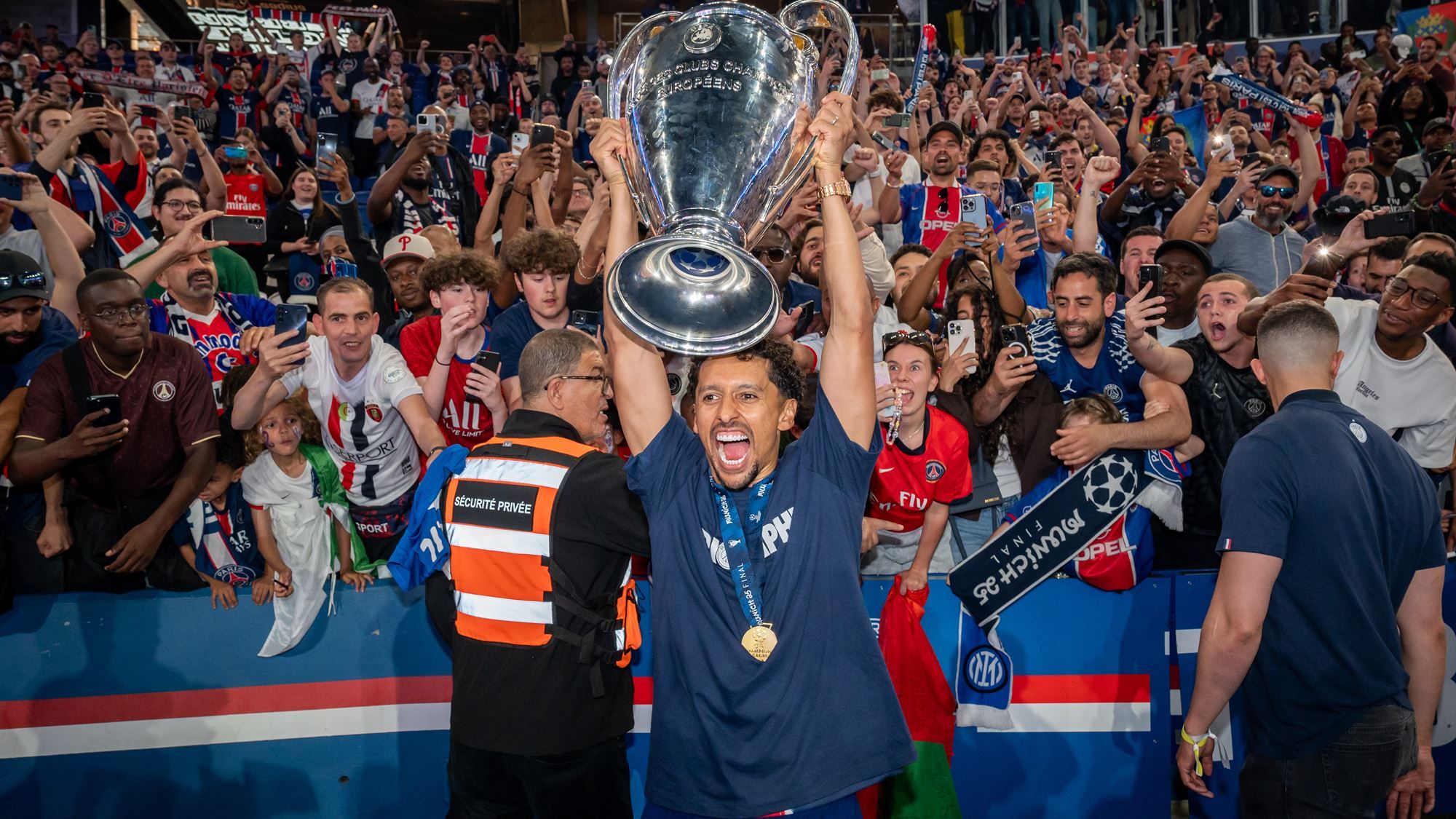
Team captain Marquinhos with the UEFA Champions League trophy. Photo: www.psg.fr
It must be said that French football has always been in the shadow of its neighbors from England, Spain, Italy, and Germany, and even the bright play of the national team did not lead to the emergence of stable and wealthy clubs. Marseille’s victory in the Champions League in 1993 looked like a beautiful and somewhat accidental episode. French clubs lacked investments; the best players, such as Platini, Zidane, or Henry, left to play in stronger leagues where they firmly established their status as global stars, while France had a reputation on the football map as a country that knows how to grow talents but does not know how to sell its championship as an attractive spectacle or how to increase club capitalization. The acquisition of PSG by investors from Qatar immediately changed this situation. If at the time of purchase in 2011 the Paris club’s value was estimated between 50 and 70 million euros, now its capitalization has exceeded 4 billion euros and continues to grow. PSG fan clubs have spread worldwide, its brand has become as recognizable as Real Madrid’s or Bayern Munich’s, but all this has benefited not only the new club owners and its fans but also French football as a whole. Television rights for the French championship sell better, new investors come to smaller clubs, and this trend is undoubtedly linked to PSG’s success.
At the same time, the question “why does Qatar actually need this?” is rarely asked but is legitimate. Love of sport alone cannot explain the multi-billion expenditures. When Roman Abramovich bought Chelsea, his motivation, based on rational considerations, was easy to guess: it was about a Russian influential businessman’s desire to gain higher personal status combined with relatively low risks of investing in England’s high-yield football infrastructure. But remembering the problems of French clubs, one must admit that Qatar did not seek easy paths. For some reason, they chose the rather problematic PSG, the problematic championship… to achieve what goals?
Qatar’s Soft Power
There are several obvious reasons explaining the choice of the Emir of Qatar and his entourage. As is known, in 2010 the international football federation FIFA decided to entrust the 2018 World Cup to Russia and the 2022 World Cup to Qatar. If Russia’s candidacy at that time was not as toxic as today and could be considered questionable but generally acceptable, the appearance of Qatar on the list of organizers of the world’s main football tournament held every four years caused at least bewilderment. A very small and very rich country without sporting achievements or experience in hosting major international competitions suddenly received this right, usually claimed by countries with a more established football reputation. Oddities were accompanied by serious inconveniences. Traditional calendars of all national championships had to be revised to hold the tournament in winter since playing football in Qatar in summer is impossible due to the heat. Obviously, Qatar’s representatives had to find very convincing arguments to ensure the decision in their favor.
France’s president at the time was Nicolas Sarkozy, who, by coincidence, became one of Qatar’s main lobbyists in both sports and economic affairs. In 2019, the National Financial Prosecutor’s Office (PNF) launched an investigation on suspicion of corruption involving Sarkozy and his circle’s relations with Qatari authorities. No charges have been brought so far, but it is clear that some “big deal” took place (possibly entirely legal, possibly involving questionable arrangements). Qatar was building its new image as an influential country with great capabilities and needed to organize a significant international event like the World Cup. Without securing major European lobbyists on their side, that would have been impossible. Under these circumstances, Qatar’s representatives managed to find common ground with the French president, and the purchase of PSG became part of the agreement.
At the same time, it is important not to lose sight of Doha’s global and systematic approach to constructing its new image. PSG president Nasser Al-Khelaifi also heads the media corporation beIN Media Group, which broadcasts sports in 43 countries worldwide, including 5 European ones (among them, of course, France). Positive signals coming from Qatar spread in different directions: excellent organization of the World Cup, PSG’s successes, and a network of sports broadcasts. Naturally, this activity in itself carries no harm. The problematic aspect of Qatari “soft power” begins to show in Europe when it becomes clear that Doha has no intention of making concessions regarding its identity and plans to expand its influence. Qatar is a strictly Muslim country, living according to Sharia law and not recognizing European human rights standards. Undoubtedly, this choice is an internal matter for Qatar and its citizens—but only as long as it is not exported.
Scandal in the European Parliament
At the end of 2022, a huge shock occurred in the European Parliament. On Friday, December 9, Vice-President of the European Parliament Eva Kaili was detained by Belgian police along with five other suspects in a case of receiving bribes from Qatari representatives. A former Greek television star and a Socialist Party deputy, Eva Kaili was one of 14 vice-presidents of the European Parliament responsible for relations with Middle Eastern and North African countries. The seriousness of the charges was so great that Eva Kaili spent several months in pre-trial detention.
Belgian police conducted extensive work and prepared the suspects’ arrest so that the evidence against them seemed irrefutable, including huge sums of cash seized during a search. Qatar was immediately named as the client of Eva Kaili and her circle’s services. Doha’s representatives predictably denied involvement in the scandal, but in Brussels the Qatari trace was spoken of as an established fact. Probably, the police informed the European Parliament and EU leadership about the collected evidence, which appeared so convincing that sanctions against Eva Kaili were adopted immediately and almost unanimously. The investigation is ongoing, and the trial date has not yet been set.
But what exactly services could Eva Kaili have provided to Qatar? Here it is worth recalling that preparations for the World Cup were strongly criticized in Europe on two fronts. On the one hand, there were concerns about human rights and, in particular, the possibility for LGBT+ fans to visit Qatar freely and safely. On the other hand, there were many reports about terrible working conditions on construction sites in Qatar, where the entire infrastructure for the championship, including all eight new stadiums, had to be built almost from scratch. Indeed, Eva Kaili made several public statements denying all accusations against Doha.
Lobbying itself is not a crime. There is nothing wrong if representatives of metallurgists or cheesemakers meet with European Parliament deputies and explain the specifics of their profession. The problem begins when illegal rewards arise, and no one understands what they are about. Similarly, in Qatar’s case, no one understands where the line lies between personal fortunes and political budgets, and how far the desire to influence public opinion in EU countries can go.
The Muslim Brotherhood
When PSG’s plane landed in Paris after the Champions League victory, all the cameras of the welcoming journalists captured the huge inscription QATAR in large letters on its side. No one really hides that the football club is an important part of the “soft power” of the small but wealthy and ambitious Arab state.
Marquinhos in PSG club jersey with QATAR AIRWAYS inscription. Photo: www.psg.fr
Politically, Qatar has always tried to appear as a respectable mediator in international affairs, primarily related to the Muslim world. Negotiations between the Taliban and the US administration on the withdrawal of American troops from Afghanistan took place in Doha. Hamas leaders lived in Qatar for a long time, allowing Middle Eastern issues to be discussed in Doha in a semi-secret manner. In North African countries, mostly or entirely Muslim, particularly Sudan and Libya, conflicts between competing factions continue—and Qatar is almost always involved in this struggle, supporting one side or offering mediation services. Al Jazeera channel, founded in Qatar in 1996, is one of the most influential in Muslim countries. Doha also does not forget Europe.
In May 2025, the French Ministry of the Interior published a report on the activity of the Muslim Brotherhood movement in the country. It noted that despite the relatively small number of mosques and supporters of this Islamic current, it poses a threat as a bearer of a political project to Islamize part of French society, incompatible with the constitutional principles of the Fifth Republic. In particular, it concerns the promotion of alternative education among youth and the spread of political Islam ideas among French Muslims. Qatar is mentioned in the report as the main source of funding for the Muslim Brotherhood. At the same time, there is no single management center, and all activity is carried out by a network structure method.
Historically, the Muslim Brotherhood movement has existed for about 100 years but is not universally recognized in the Islamic world. Qatar has never officially confirmed close ties with this current, but in fact, Muslim Brotherhood preachers have access to all emirate resources, including Al Jazeera. The danger of the movement is not in its extreme radicalism—there are much more uncompromising directions in modern Islam—but in the political strategy of gradually creating centers of Islamic fundamentalism. EU residents may one day find that tens of thousands of people live nearby who fundamentally do not share European views on civil society and human rights values.
There were rumors, not yet confirmed, that PSG plans to open its MMA martial arts section with none other than Khabib Nurmagomedov as the headliner. Qatar’s soft power, skilled at acting through sport, does not intend to stop.
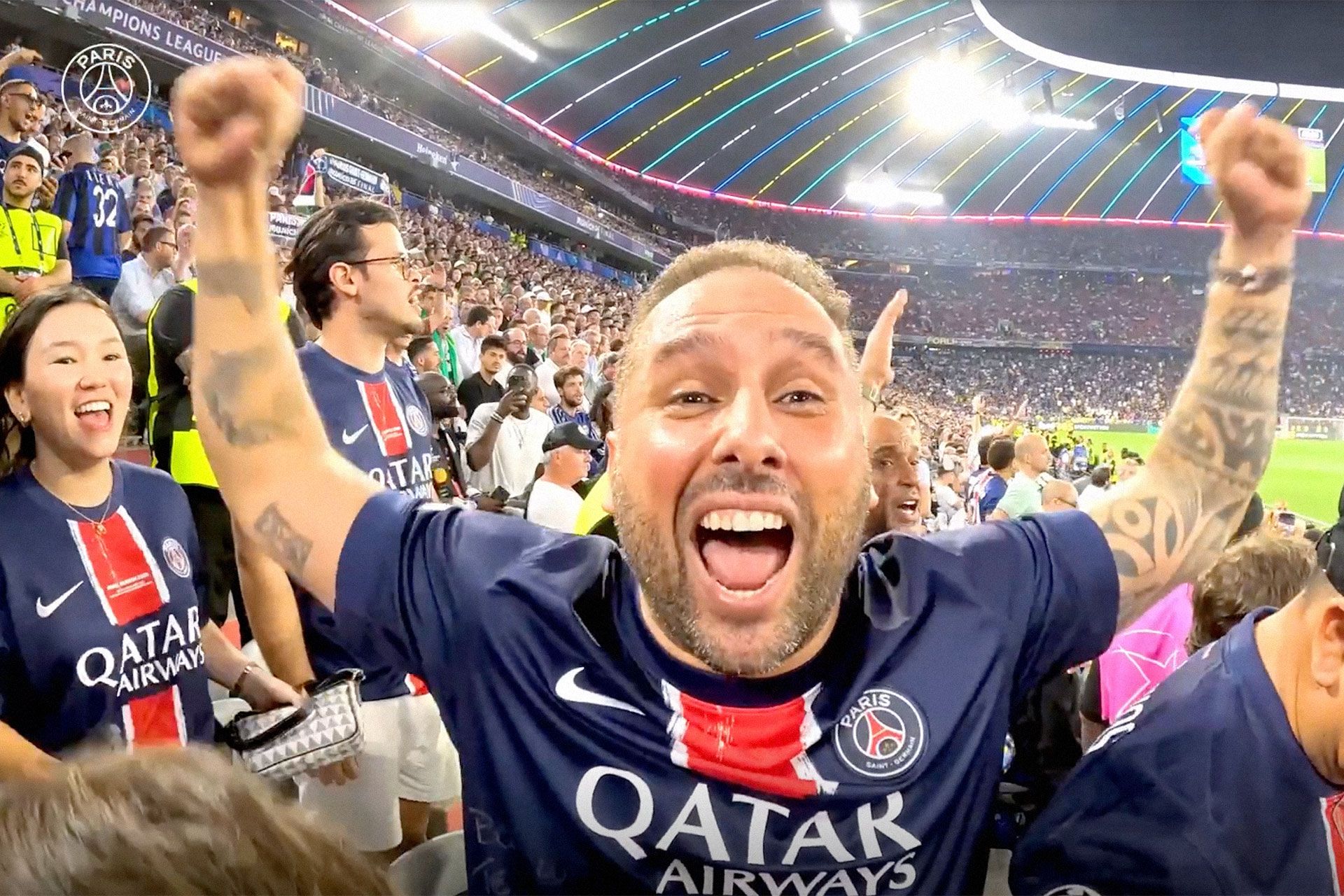
In the main photo – PSG fans in Munich; a frame from a video published on the club’s website.
If you enjoyed this article, consider making a donation — one-time or, even better, monthly. Your support helps us motivate our authors and become better with every article.
Our organization is recognized by the Internal Revenue Service (IRS) as a 501(c)(3) tax-exempt, charitable organization, which means that all contributions made to us are tax-deductible to the fullest extent permitted by U.S. law. Individuals may generally deduct charitable contributions of up to 60% of their Adjusted Gross Income (AGI) for cash donations made to qualifying 501(c)(3) organizations. For donations of appreciated assets (such as stocks or other long-term capital assets), the deduction is typically limited to 30% of AGI, based on the fair market value of the asset. C-corporations may deduct charitable contributions of up to 10% of their taxable income for donations made to eligible charitable organizations.
By submitting a donation, you confirm that you have read and accept the following documents: Privacy Policy and User Agreement, and also give consent to the processing of your personal data.
If you would like to unsubscribe from a monthly donation, please email us at: [email protected]