In September 2025, protesters from Nepal unexpectedly became the heroes of the global media. The ruling coalition of Marxist-Leninists, social democrats, and their allies attempted to block social networks, which sparked the “Generation Z Revolution.” Within days, the cabinet fell, and the interim prime minister — former Supreme Court judge Sushila Karki, the first woman in her position — was elected by protest activists in a Discord chat group.
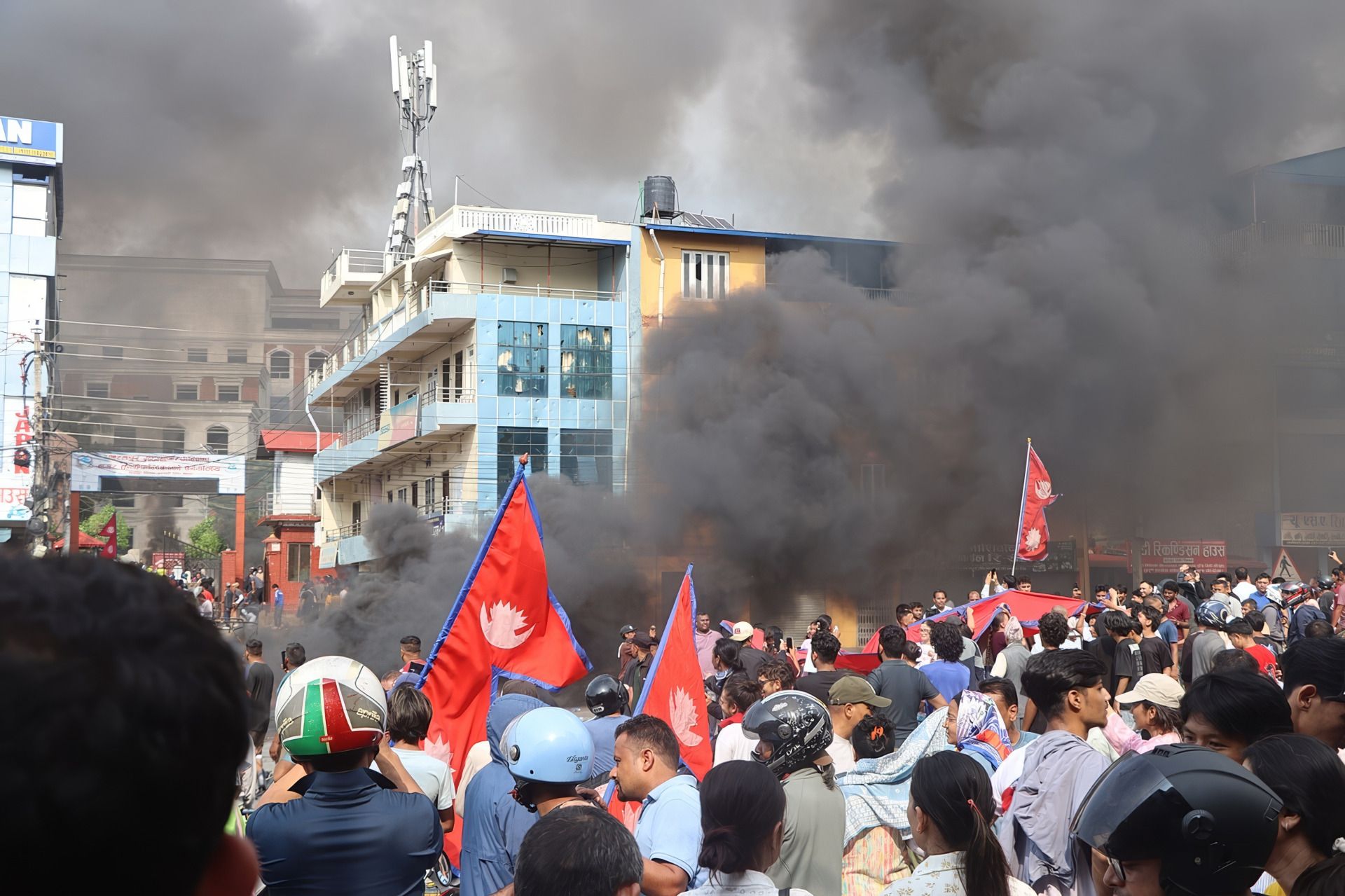
Nepali protesters near a government building set on fire. Kathmandu, September 9, 2025. Photo: Wikipedia / Khimal Subedi
The Himalayan country is usually considered a quiet patriarchal place, notable mainly for Everest (Jomolungma) and the world’s only pentagonal flag shaped like a fir tree. But in reality, political life here exists and can sometimes be very turbulent. The “Generation Z Revolution” is just the latest example.
If you dig deeper into the local past, many other interesting events emerge. In the 19th century, Nepal became one of the few powers in all of Asia to avoid European colonial domination. At that time, the country was ruled by something akin to a Japanese shogunate, but eventually, loyal subjects of the king restored “ordinary” power. Later, after experimenting with both constitutional and absolute monarchies, the Nepalese proclaimed a republic — only 17 years ago, making them among the last on the planet to do so.
However, as recent events have shown, the young republic has not truly become a common cause for its citizens. Many still see it merely as a rehash of old despotisms. Should Nepal expect the return of a king? Let’s try to understand.
The Sins of the Fathers and the Crime of the Son
If you sketch this story as a plot for a film or play, it would delight many directors. Masters would surely exclaim: what a wonderful postmodern tale! Three classic Shakespearean plots — “Romeo and Juliet,” “Richard III,” and “Hamlet” — all wrapped into one package, transplanted from tedious Europe to a distant exotic land.
However, the scriptwriter of the Nepalese tragedy on June 1, 2001, was life itself. That night, first the capital Kathmandu, then the entire world was shocked by sad news: a mass killing occurred at the Narayanhiti Palace. The head of state, 55-year-old King Birendra, his 51-year-old wife, Queen Consort Aishwarya, their daughter and youngest son, five other relatives, and one member of the guard were shot dead.
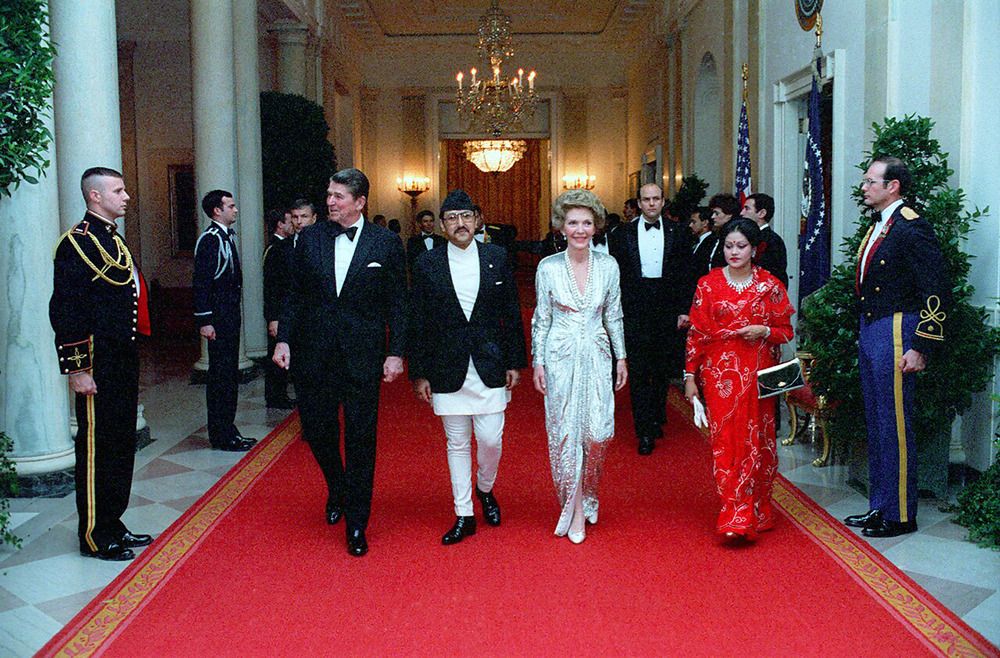
King Birendra and Queen Aishwarya with the Reagans during a visit to the USA, 1981. Photo: Wikipedia / White House Photographic Collection
At that time, a civil war had been raging for several years on the country’s outskirts between government forces and Maoist rebels. But all evidence pointed not to the guerrillas but to another member of the royal family, 29-year-old Crown Prince Dipendra, son of Birendra and Aishwarya. The heir to the throne — found alive but with a head wound — was also discovered in the palace. It appeared that Dipendra himself had killed his relatives with an M-16 rifle and an MP-5 submachine gun before unsuccessfully attempting to take his own life. Three days later, still unconscious, the prince died in hospital.
Subjects explained Dipendra’s monstrous act as a tragic passion. Everyone knew that back in the 1990s, while studying in England, he fell in love with a peer and fellow countrywoman, Devyani Rana, daughter of a prominent Nepalese politician. The feeling was mutual, and the prince wished to marry her, but his august parents disapproved. No, Devyani was not of low birth — quite the opposite, her family’s nobility was impeccable. In the 19th and 20th centuries, the Rana clan effectively ruled Nepal as hereditary chancellors, reducing legitimate Shah dynasty kings (ancestors of Dipendra and Birendra) to ceremonial puppets. The unpleasant memory of the Rana regime seemed to have made the king and queen oppose the potential bride, and the prince could not bear his parents’ refusal.
Moreover, gossip insisted that the decisive opposition came not from the monarch but from his wife. Many Nepalese saw Queen Aishwarya as the real head of the family, dominating her husband and other relatives. Rumor had it the powerful beauty saw Devyani as her alter ego and therefore denied Dipendra permission to marry. For appearances, Aishwarya found a flaw in the girl’s lineage: allegedly one of her great-grandmothers was not a lawful wife but merely a concubine of a Shah. The implication was: how dare such a woman claim to be a princess?
The obedient king supported his wife’s will and gave his son an unpleasant ultimatum: either Devyani or the crown. Apparently, Birendra and Aishwarya hoped their son would act pragmatically. In spring 2001, after long quarrels, the ruling couple invited their son to a reconciliation dinner. He came to Narayanhiti under the influence of a potent cocktail of whiskey, cocaine, and deep resentment. Dipendra was put to bed but quickly returned to his family with weapons and started a massacre. However, it remains unclear where the guards were at that moment, how right-handed Dipendra managed to shoot himself twice in the left temple while attempting suicide, and why Nepalese authorities essentially refused to investigate the tragedy.
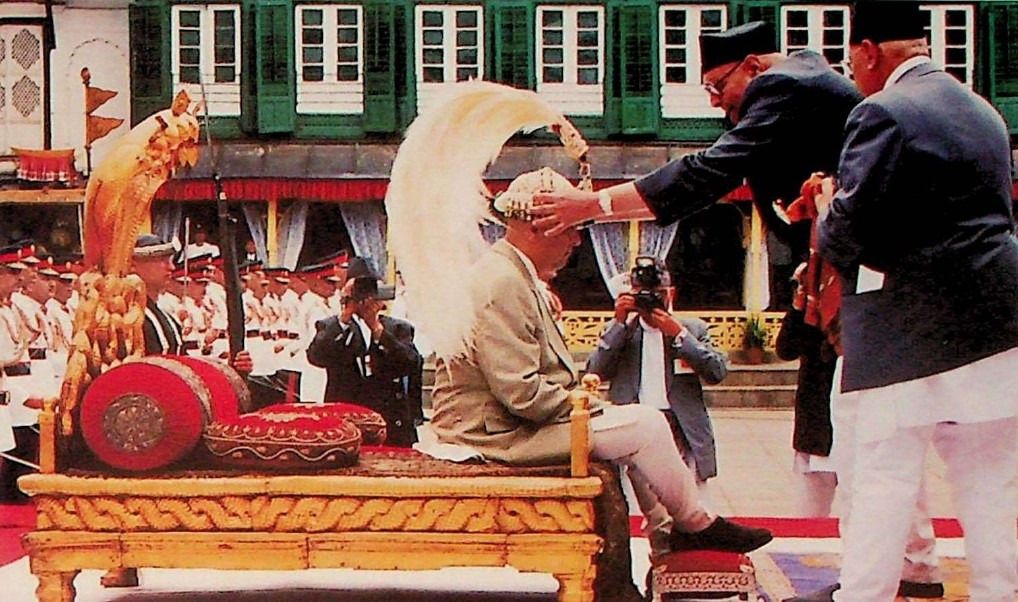
Coronation ceremony of Gyanendra — the last Nepalese king, June 4, 2001. Photo: Wikipedia / Bishaldev100
In summer 2001, these and many other details of the horrific crime plunged the Nepalese monarchy into a severe crisis. Only a truly “people’s king” could resolve it. But by law, the throne passed to the late king’s younger brother, 54-year-old Gyanendra — a man many subjects suspected of involvement in the murder.
On the day of the tragedy, he by chance missed the family event and was outside Kathmandu. Gyanendra’s wife [Komal] and his son Paras were present in the palace but somehow survived with non-life-threatening injuries. Moreover, public opinion was shaped by Gyanendra’s very specific appearance, which in all photos looks like a villain from a low-budget Bollywood action movie
- Ilya Spector, Russian South Asia expert (“The Cork Helmet”)
After Gyanendra’s coronation, a whole trove of specific folklore emerged in Nepal. Conspiracy theorists claimed the new king orchestrated the Narayanhiti massacre from the start: even suggesting that hapless Dipendra killed no one, but disguised assassins hired by a treacherous uncle were responsible. Astrologers (a powerful force in Hindu Nepal, stronger than many ministers or generals) declared the stars clearly showed the monarch succeeding Birendra would be the country’s last.
Years later, this prophecy came true for the former kingdom. But it is not certain it is irreversible. Kings in Nepal, like Tolkien’s Gondor, tend to leave and return.
Nepal Is One, Nepalese Are Diverse
What is Nepal? It’s a country squeezed between India and China in the Himalayas; from Sanskrit, “Nepal” translates as “the place at the foot of the mountains.” The country is not very large in area: about 147,000 square kilometers, slightly bigger than the Vologda or Murmansk regions. Around 80% of Nepal’s territory is mountains and hills, which historically limited the development of settled agriculture and, consequently, the entire economy.
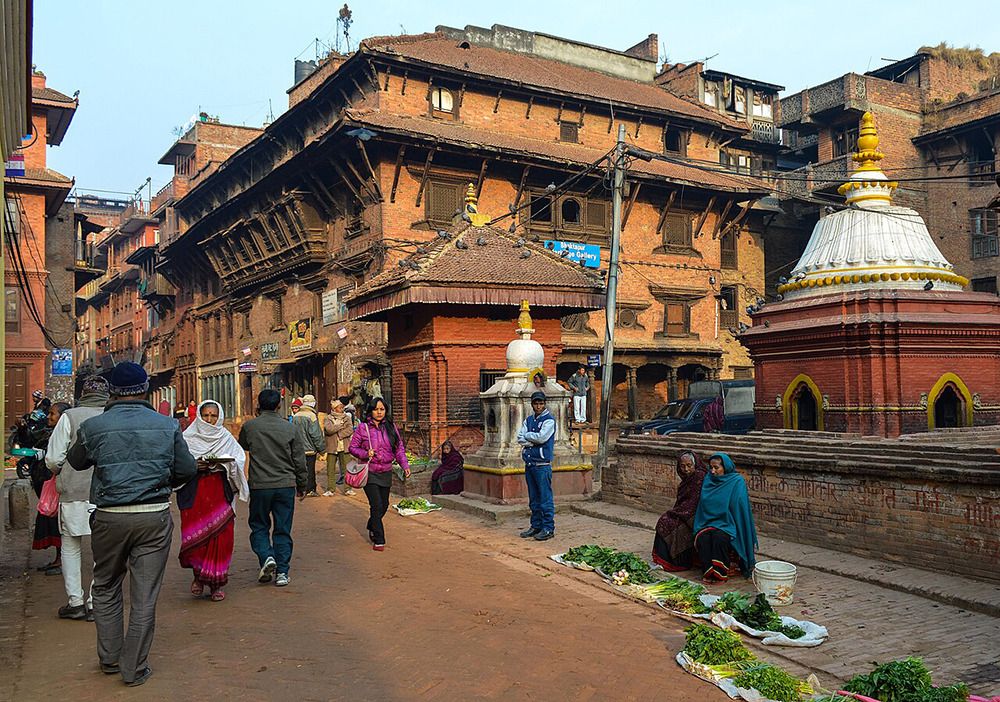
Streets of the Nepalese city Bhaktapur, 2010s. Photo: Wikipedia / Francisco Anzola
Ethnographically, Nepal is a nightmare for any scholar. The local population (about 29 million by 2025) is almost impossible to classify strictly by ethnicity or language. The number of dialects and ethnic groups runs into many dozens, and ethnic self-awareness among Nepalese is very peculiar. First, it is often weaker than caste identity; second, it is fluid. For example, one of the country’s hallmarks is the “export” Gurkha soldiers. Strictly speaking, these are not true Gurkhas, but people from Mongoloid groups once conquered by the Indo-Aryan Kingdom of Gorkha. Accepting the new rule, they created a new identity for themselves.
The peoples of Nepal can be roughly divided into Indo-Aryan (about 60%), Tibeto-Burman (about 30%), and others. De facto, the titular nation in Nepal is the Indo-Aryan castes of Kshetri and Bahun, related to all-India Kshatriyas and Brahmins — warriors and priest-scholars respectively. Together, they make up over 28% of Nepal’s population and hold leading positions in government, business, and security forces. Accordingly, there are “untouchables” in the country, though caste discrimination has been officially abolished long ago.
Here’s how they treat their own — just a nightmare. Do you remember Bidurdaya, the goatherd? He’s from the untouchable caste. Last week, we were all invited to a Nepalese home, but he wasn’t allowed past the doorstep. It was sad to see him sitting there alone, even in the pouring rain… They didn’t even hand him cigarettes but threw them like to a dog. It’s hard for us to understand, but those are the rules here
- Anastasia Martynova, traveler (“What Nepalese Think: 1768 Facts. From Kathmandu to Dal Bhat”)
But Nepal’s ethnic amorphousness is not a bug but a feature. Thanks to this, the country — an exception in South Asia — lacks pronounced interethnic hostility and regional separatism. The unity of the Nepalese nation is ensured by the namesake state language, related to Hindi, and Hindu religion; more precisely, its local variant with strong Buddhist and local cult influences (until 2008, Nepal was officially the world’s only Hindu theocracy).
One of many attempts to at least somewhat systematize Nepal’s ethnic diversity. “Pahari” refers to descendants of settlers from India, including both Kshetri and Bahun. Map: Wikipedia / Francisco Anzola
Until the 17th-18th centuries, future Nepal was a fragile alliance of two dozen self-sufficient principalities. Only in the 1600s did the Kingdom of Gorkha, under the Shah dynasty from northern India, strengthen in the Himalayan center. They began gradually absorbing neighboring polities into a single state. The process was very slow. The Shahs waged a hybrid war, relying more on persuasion, bribery, and targeted assassinations than open battles.
The conventional endpoint of Nepal’s centralization is 1768, when King Prithvi Narayan captured the Kathmandu valley and moved his capital there. Legend says that near this sacred place for both Hindus and Buddhists, Gautama Buddha himself was born.
The Shahs and Their Rana
At that time, the entire “Greater India” was a large playground for aggressive states of various scales. Empires and principalities rose to greatness and disappeared from the political map within a generation or two. It seemed the newborn Gorkha-Nepal would inevitably repeat this simple cycle.
However, the state did not fall. On one hand, Prithvi Narayan and other Shahs did not risk expanding into culturally and geographically distant lands. On the other, they found a balance between centralization and regional autonomy. Subjects of the Shahs lived under a unified legal code, had a permanent army and professional bureaucracy. Meanwhile, local elites retained traditional rights and partial autonomy, though most landowners held land under the jagir system: the king granted them land with peasants in exchange for military or administrative service.
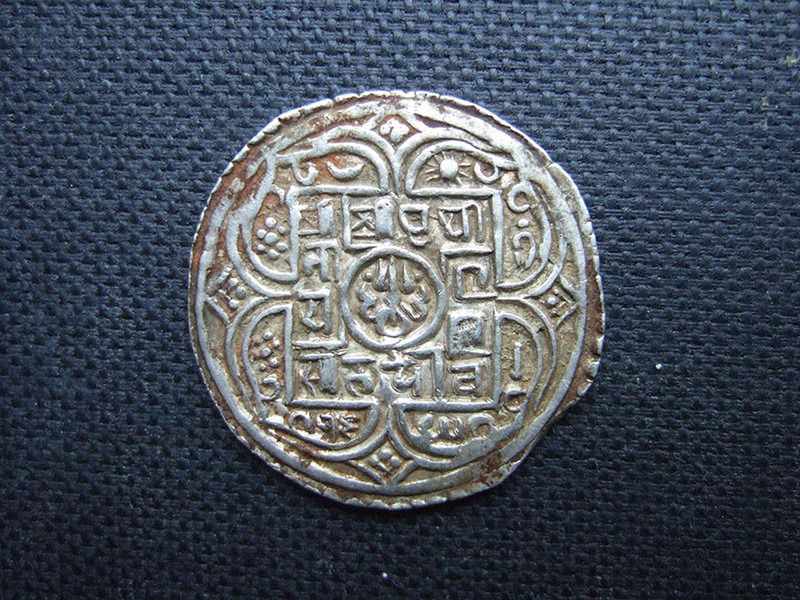
Nepalese coin (mohar) from the time of King Prithvi Narayan. Photo: Wikipedia / Clemensmarabu
At the turn of the 18th and 19th centuries, the kingdom faced two serious tests. From 1788 to 1792, Nepal effectively won a war against its northern neighbor, the Chinese vassal Tibet. The Shahs retained all disputed territories, conceding only formal vassalage and a light tribute to the Qing dynasty. Between 1814 and 1816, Nepal withstood war against the British East India Company. This was tougher: by treaty, colonizers “cut” the kingdom’s edges and forced its rulers to abandon southern expansion.
However, the British never again questioned Nepal’s sovereignty or borders. After the 1814-1816 war, British representatives began recruiting legendary Gurkhas into their forces. Soon, these hardy highlanders significantly aided their new commanders in conquering Hindu principalities in the 1820s, fighting Sikhs in the 1840s, and suppressing the Sepoy Rebellion in the 1850s. By then, unrest brewed inside Nepal itself. The royal court lost its grip, and while senior officials schemed against each other, regimental officers decided to act.
On September 15, 1846, military leader Jung Bahadur led a successful coup. The putschists showed no mercy, killing a hundred old regime figures in Kathmandu’s palace square. Jung could have done the same to the Shahs to take their place but chose to play the protector of tradition, limiting himself to prime ministership. After all, Nepalese kings are avatars (earthly incarnations) of god Vishnu; their persons are absolutely sacred — how could an unworthy man like him sit on their throne?
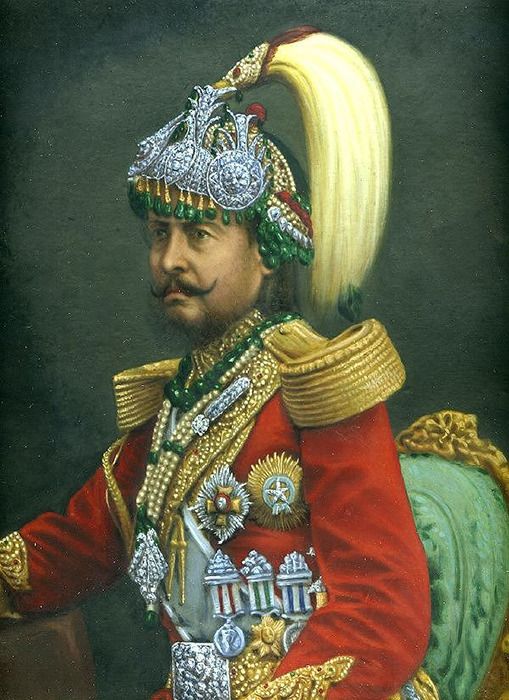
Founder of the Rana clan, Jung Bahadur — clearly no longer in traditional clothing but in a British-style uniform. Image: Wikipedia
By incredible coincidence, it soon emerged that Jung Bahadur was not from low-born small landowners. People suddenly discovered his wealthy lineage, supposedly tracing back to Indian Rajputs. The former conspirator had no choice but to adopt his “true” surname, Rana, and humbly declare that Nepal’s government would henceforth be led by his noble descendants.
Jung Bahadur probably never heard of the Tokugawa shogunate in distant Japan. But he achieved roughly the same: a clan of masculine warriors seized real power in the country, leaving nominal rulers only religious ceremonies and palace feasts.
The Overly Iron Chancellor
The Rana “shogunate” lasted almost a century. It was during this time that Nepal finally secured its place on the world map and became one of the few Asian states to avoid European colonization. In 1860, a new compromise treaty on the Nepal-India border effectively recognized Kathmandu’s sovereignty by Britain itself (formally confirmed by the British in 1923).
The Rana clan ruled through strict social order conservation, semi-isolation, and merging political power with economic control. All land in the kingdom was considered “Rana’s”; private property as such did not exist, and even traditional noble titles could no longer be inherited. Each year, a new “shogun” governed Nepal like a military camp.
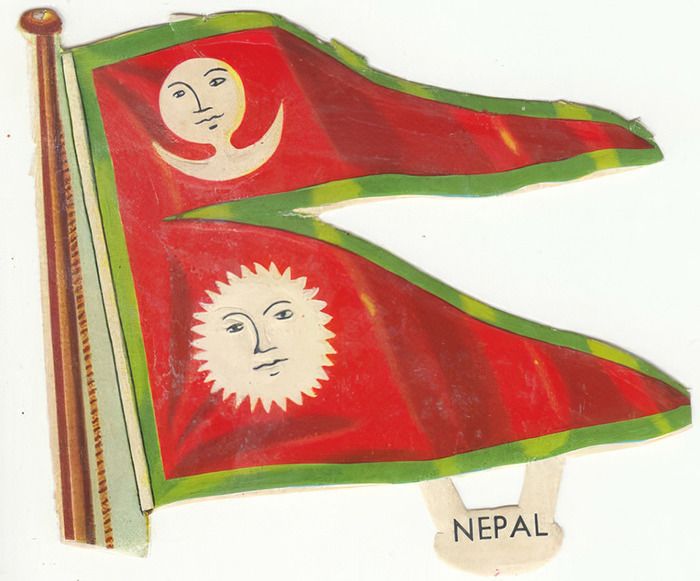
It was under the Ranas that Nepal gained its characteristic flag of two pennants: with stylistic changes, it survived all the country’s turmoil and coups. Image: Wikipedia
However, discipline within the ruling family was clearly lacking. Jung Bahadur left behind — naturally from different wives and concubines — dozens of legitimate and illegitimate children, complicating inheritance issues. In 1885, his nephew Bir Shamsher cut the Gordian knot. He led a new coup, killed the most dangerous cousins, and took the coveted position. In the 1900s, Bir Shamsher’s heirs prudently divided themselves into three “classes.” Depending on their mothers’ origins, they had different rights and duties: only the highest-born “Class A” could inherit the throne.
Meanwhile, the country steadily stagnated and became a British semi-colony economically. It’s not that Bir Shamsher and his heirs were complete caricatures. Under them, Nepal got its first hydroelectric plants, railways, cinemas, newspapers, and some industry. But the scale of all this clearly did not meet the demands of the 20th century, so even compared to British India, its sovereign northern neighbor looked like a medieval preserve. Notably, Rana clan members did not invest their own money in Nepal’s economy but simply transferred wealth to banks in Bombay, Delhi, or Calcutta.
Year by year, more people in Nepal realized something rotten was in the Himalayan kingdom. Usually, these were members of a few wealthy Brahmin families working or studying in India. They called to overthrow the Rana usurpers, restore the Shah kings’ power, introduce a constitution, and immediately start progressive reforms. For a long time, it seemed these noble dreamers had no chance against the Rana regime.
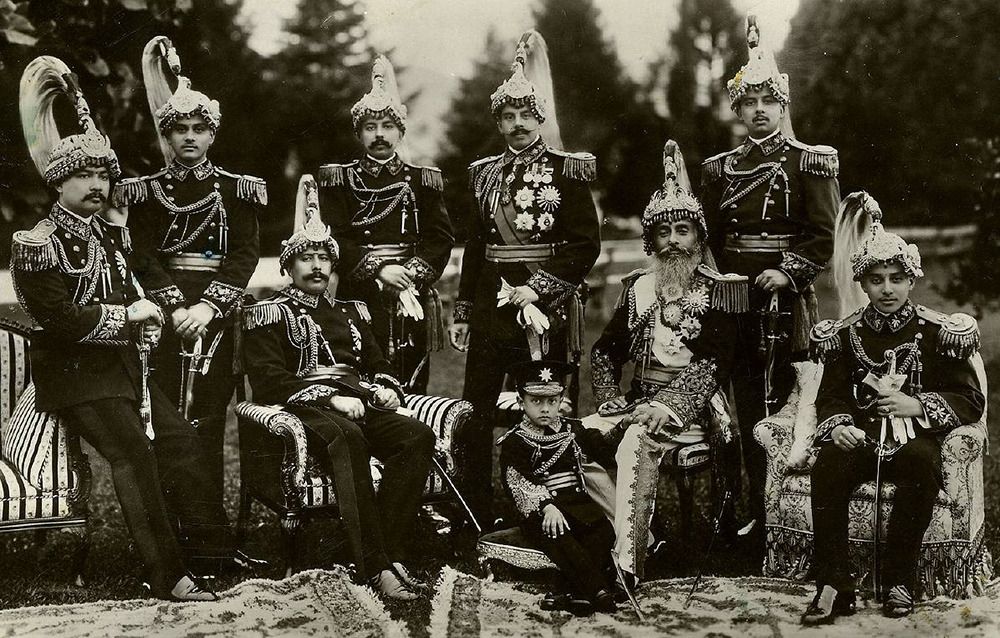
The fifth Rana chancellor, Chandra Shamsher (second from right seated) with his sons, 1920s. Considered the most progressive of his dynasty: he banned slavery and ritual widow self-immolation. Photo: Wikipedia
Whenever these fighters for a better Nepal tried to move from newspaper articles in Calcutta to action in Kathmandu, they were immediately caught by the “shogunate” police with British support. Then followed swift trials and harsh punishments; low-caste members could be executed. In 1940, the first major opposition party — secretly linked to the royal court, the “Nepalese People’s Assembly” — suffered this fate. But the Rana regime’s time was running out.
Between 1945 and 1947, tens of thousands of demobilized Gurkha soldiers returned to the country — fairly Westernized and unwilling to bow to old landlords. Most importantly, the old despotism lost its external protector: the British left India.
Return in Royal Style
The Rana regime might have lasted a bit longer, but a tragicomic episode doomed it. In autumn 1950, police uncovered another poorly planned conspiracy of exiles allied with King Tribhuvan’s court. Such things had happened before, always without consequences for the powerless monarch — after all, how can you punish the avatar of Vishnu himself?
But in November 1950, Tribhuvan suddenly panicked. The king and family first took refuge in the Indian embassy, then flew to the southern neighbor. This de facto flight put the enemies in an awkward position. For the first time in 104 years, the Rana clan lost its main source of legitimacy: the lawful king abandoned them. The “shogunate,” trying to save face, quickly crowned three-year-old Gyanendra, Tribhuvan’s youngest grandson — the grandfather forgot to take the child with him to New Delhi in haste.
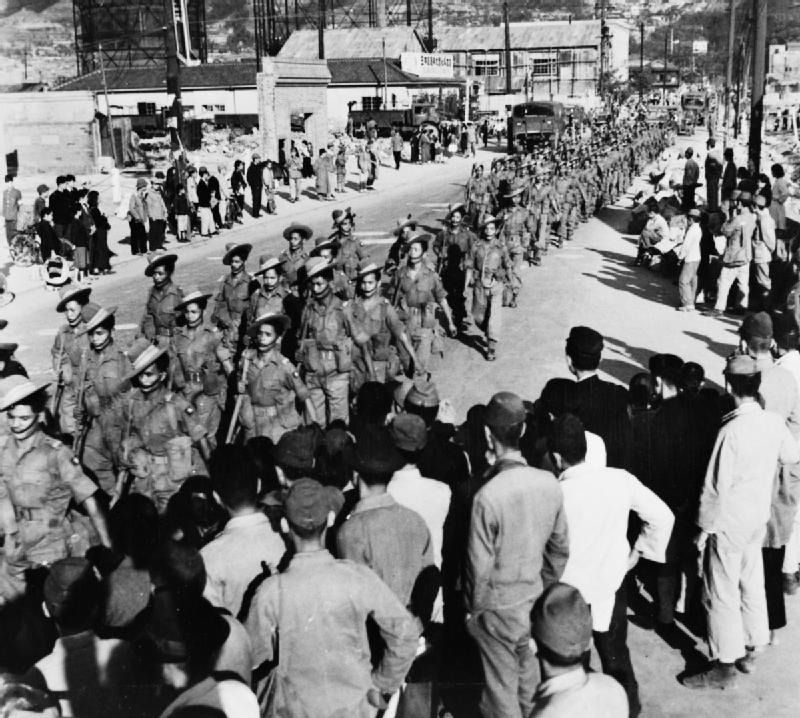
Gurkhas serving in British forces participate in the occupation of Japan, 1946. Over 250,000 Nepalese fought in WWII (with a then population of 5.5 million). Photo: Wikipedia / No 9 Army Film & Photographic Unit
In the Indian capital, decisions were made about Nepal’s future regime. Other countries at the time lacked the means or desire to influence the Rana clan. A silent nod from India’s first prime minister Jawaharlal Nehru might have prolonged the neighboring regime’s agony, but he took a stand. Nehru publicly declared the child’s coronation illegitimate and urged Nepalese authorities to negotiate with the lawful king and his supporting opposition.
By then, “Ranakratiya” had rotted from within. In the late 1940s, younger branches of the ruling family had established contact with the key opposition party, the “Nepalese Congress.” Leaders Bishweshwar and Matrika Koirala welcomed the new allies. Indeed, the Congress had fresh ideas and popular support, while the Rana dissidents had administrative experience, finances, and force. From 1950, the old Congress members and junior Ranas formed a single party called “Nepalese Congress.” But the party’s left wing branded the deal with defectors as betrayal. Dissident leader Pushpa Lal Shrestha declared himself and supporters the new Communist Party of Nepal.
This split had huge significance for local politics. In 2025, the Nepalese Congress and the Communist Party remain the country’s two main parties. However, while the former directly descends from the Koirala brothers’ party, today’s Communist Party of Nepal (Unified Marxist-Leninist) is a side branch of Shrestha’s creation, the product ofcountless splits, mergers, dissolutions, and revivals of the old brand.
Returning to 1950, the Koirala brothers’ bet on moderate monarchism and cooperation with the old regime generally worked. Yes, in winter 1951 Nepal experienced something like a civil war but with minimal violence. After minor skirmishes and voluntary troop defections to the opposition, the old regime capitulated. On February 18, 1951, King Tribhuvan returned to Kathmandu; a temporary constitution was adopted, parliamentarism announced, and human rights legally recognized.
King Tribhuvan (center) with leaders of the Nepalese Congress, 1951. Photo: Wikipedia
Nepal emerged from self-isolation, established diplomatic relations with most world powers, and seemed to embark on a path of progressive reforms. But this imperfect democracy lasted only nine years. By the late 1950s, the initially bright hopes of fighters against the Rana regime turned into corruption scandals, reform sabotage, and factional strife.
Even the Koirala brothers quarreled, each having unsuccessfully led the government.
On December 15, 1960, young King Mahendra restored order his way. On newly launched television, the monarch declared that all these European-style parliaments, parties, and constitutions were alien to Nepalese, so henceforth he would rule by the truly national system of Panchayat.
The Kingdom of Republic Fighters
Panchayat (“five assemblies”) was a complex structure designed to create the illusion of genuine popular rule in Nepal. A tangled pyramid of thousands of nonpartisan councils topped by a quasi-parliament with no leverage over the king and government.
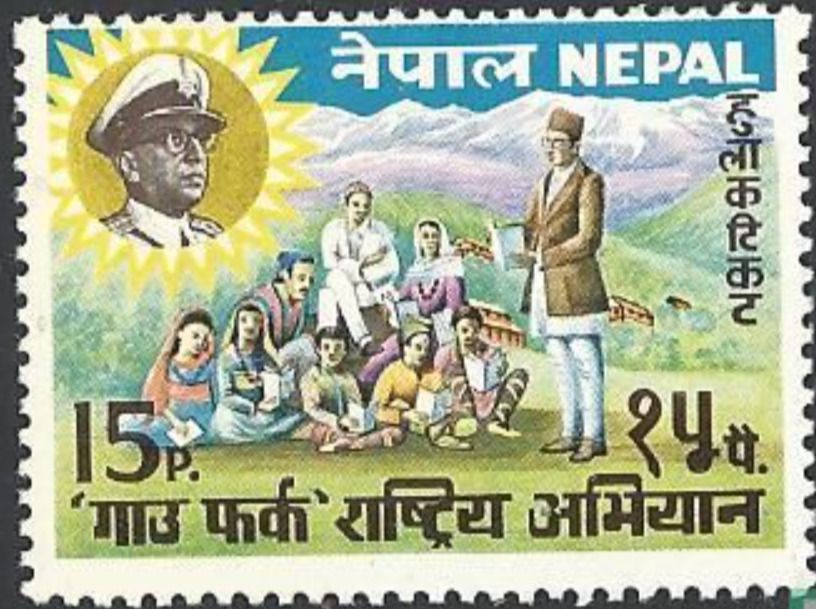
Picturesque idyll on a postage stamp from the Panchayat era: King Mahendra explaining something to his loving subjects, 1967. Image: Wikipedia / Nepal Government
Nonetheless, the 1960 coup gave Nepal’s economy a boost. Through administrative means, the monarchy carried out land reform, launched successful social campaigns like major infrastructure projects and malaria control. However, by the late 1970s, the initial zeal of “people’s monarchism” faded, and everything reverted to nepotism and widespread corruption. Mahendra’s successor, Birendra, himself offered to abolish Panchayat, but people hesitated at the crucial moment.
In a May 2, 1980 referendum, 54.8% of Nepalese voted against constitutional reforms. The authorities considered the votes fair. The opposition won in Kathmandu and economically developed South, but mountain regions ensured monarchists’ victory. Still, in 1990, after mass protests, Birendra had to abolish the sham councils and return to parliamentarism.
[In Nepal] GDP growth rates in the 1980s exceeded 3%, and industrial production 9%. However, inflation and subsidy cuts severely worsened the population’s conditions, most of whom lived below the poverty line. The number of marginalized and lumpen populations sharply increased. Absolute monarchy increasingly failed to match society’s structure
- Alexander Ledkov and Sergey Lunev, Russian historians
By the century’s end, it became clear that the “deep mountain people” — those who had pulled the 1980 referendum — no longer believed in a benevolent king. Worse, even the established “official” Marxist-Leninist Communist Party no longer satisfied them. The impoverished periphery rallied behind the charismatic Maoist “Comrade Prachanda” (Pushpa Kamal Dahal), who declared guerrilla war on the monarchy. Ironically, official Beijing remained cold toward its Nepalese imitators. China and the Shah kingdom had excellent relations from the start and did not want to replace old partners with ragtag Maoists holding Mao portraits in the Middle Kingdom.
Peasant family in one of the Maoist-controlled areas, 2005. Photo: Wikipedia
But Chinese aid could not solve all the Nepalese monarchy’s problems, culminating in the horrific tragedy of June 1, 2001. Then, a series of errors by the new king Gyanendra worsened the situation. Over several years, the inconsistent and unpopular ruler lost allies both inside and outside the country. By the mid-2000s, the last Shah found himself in a political vacuum, and the system decided to sacrifice him to end the war. On November 21, 2006, the government signed peace with the rebels, and on May 28, 2008, the Constituent Assembly officially proclaimed Nepal a federal parliamentary republic.
But the new order, where leftist parties play key roles, grew tiresome to Nepalese in less than 20 years. Politics in the republic quickly turned into a squabble among the Congress, Maoists, and Marxist-Leninists. For example, the recently ousted communist prime minister Khadga Oli held office three times between 2015 and 2025. And such “stability” brought no economic breakthrough. The country stilllags behind Asian economies with per capita GDP under $1,500, urbanization below 25%, and youth unemployment over 20%.
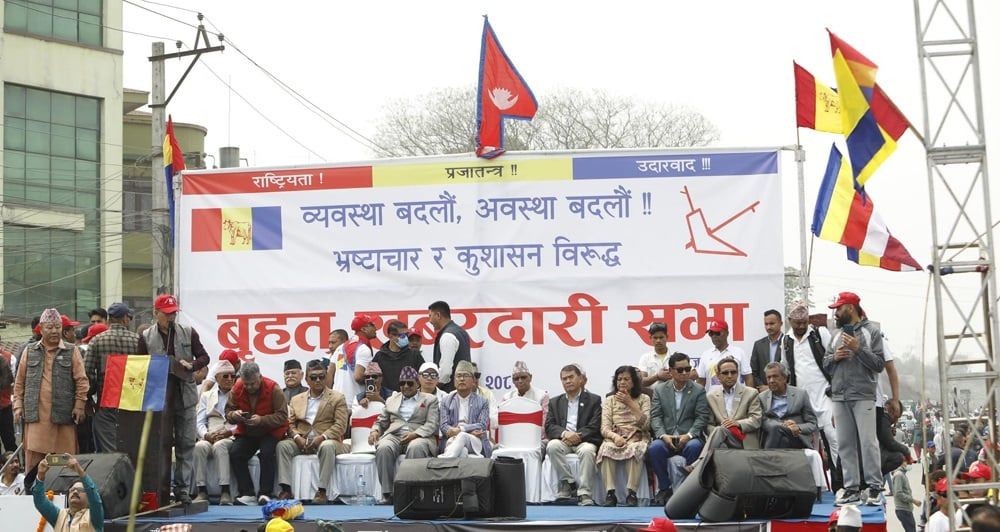
Rally of the parliamentary National Democratic Party, openly advocating return to monarchy and theocracy, April 2025. Photo: english.nepalnews.com
Against this backdrop, in summer 2025, a series of TikTok videosabout the lavish lives of Nepo Kids — sons and daughters of the new republican Nepal’s rulers — found an audience. It appeared their fathers fought the Shahs only to secure a Shah-like life for their offspring. Incidentally, the monarchy no longer repels Nepalese, and the ousted Gyanendra (who remained in the country as a private citizen) has long gathered thousands of supporters.
Once a disliked despot, he has become for the people a benevolent king whose return would end all woes. Knowing Nepal’s history, such a turn is not unimaginable.
If you enjoyed this article, consider making a donation — one-time or, even better, monthly. Your support helps us motivate our authors and become better with every article.
Our organization is recognized by the Internal Revenue Service (IRS) as a 501(c)(3) tax-exempt, charitable organization, which means that all contributions made to us are tax-deductible to the fullest extent permitted by U.S. law. Individuals may generally deduct charitable contributions of up to 60% of their Adjusted Gross Income (AGI) for cash donations made to qualifying 501(c)(3) organizations. For donations of appreciated assets (such as stocks or other long-term capital assets), the deduction is typically limited to 30% of AGI, based on the fair market value of the asset. C-corporations may deduct charitable contributions of up to 10% of their taxable income for donations made to eligible charitable organizations.
By submitting a donation, you confirm that you have read and accept the following documents: Privacy Policy and User Agreement, and also give consent to the processing of your personal data.
If you would like to unsubscribe from a monthly donation, please email us at: [email protected]