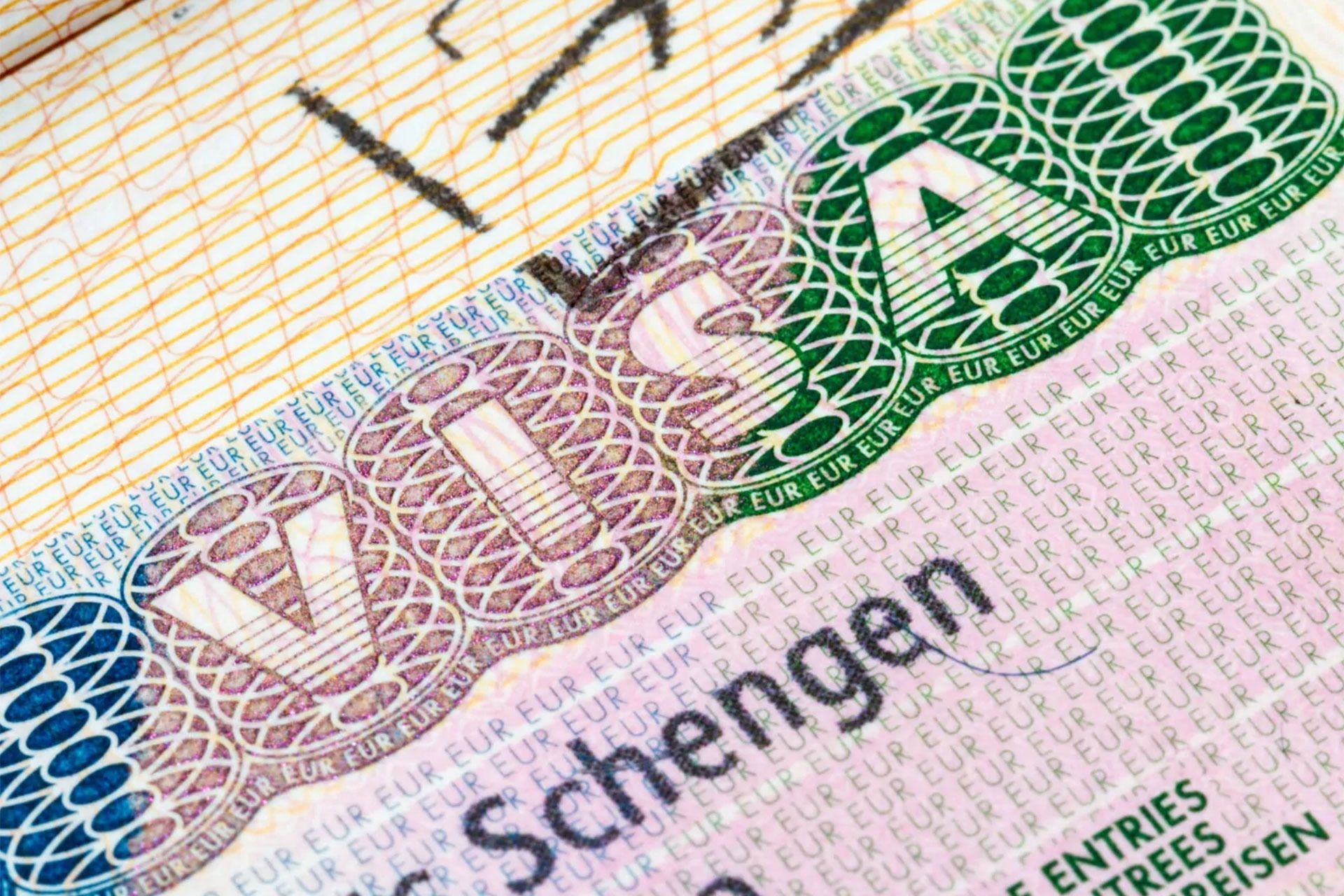
The European Commission's decision to stop issuing Schengen multiple-entry visas to Russian citizens caused a lot of noise and once again divided the opposition. It would be good to calmly look at what happened and why. And the main question is — what happens next. Even a complete ban on Russians visiting Europe will not stop the war in Ukraine
First of all, I want to note: the European Commission’s recommendations are exactly that — recommendations. Individual EU countries can very well choose not to follow them. And most likely, countries such as Greece, Italy, Spain, France, and Hungary, where there is a significant flow of Russian tourists, will act accordingly. At the same time, there is no doubt that even these countries will now scrutinize applications more closely and visa refusals will increase.
The second point — the ban applies to Russian citizens who submit documents at consulates on Russian territory. Those who have residence permits in other countries are not affected by the ban. However, in other countries, there are often neither visa centers nor a practice of issuing long-term multiple-entry visas by Schengen consulates. Moreover, the refusal rate in many countries may be higher than in Russia. For example, I have been living in Serbia since 2014, and only two countries issued visas normally here — Slovenia and Hungary, the first Schengen countries when leaving Serbia (now Croatia is first — and it also issues visas rather sparingly). When I needed to travel to Italy, the Italian consulate directly advised me to apply to the Slovenian colleagues — and this was long before the war. In all pre-war years, the longest multiple-entry visa I was issued was by Hungary — for a whole year. In Moscow at that time, I was getting an Italian visa for five years.
The third point: exceptions have been made for close relatives of EU citizens and Russians legally residing in the EU, sailors, international route drivers, and international train employees, as well as — on an individual basis — independent journalists, human rights defenders, representatives of civil organizations, and vulnerable categories of citizens, whatever that means.
Yes, punishing all citizens living in Russia is applying the very principle of collective responsibility, which is not only unfair but also harmful, as was proven with regard to Nazi Germany. Yes, the decision to issue multiple-entry visas to opposition-minded citizens looks more like turning them into targets than an act of mercy. Yes, I absolutely agree with the opinion of economist Maxim Mironov — who, by the way, has done a lot in analyzing the most effective sanctions and investigating ways to circumvent imposed sanctions.
At the same time, the daily bombings of Ukrainian cities really do not evoke such strong emotions among the Russian public as the cancellation of Schengen multiple-entry visas. It really looks ugly, no matter how you look at it.
Now I would like to put emotions aside and talk about the essence.
Once in childhood, I injured my eye. Three children lived next door — two brothers and their younger sister. One day they upset the little sister, who ran after her brothers for a long time with a stone in her hand — and, unable to catch up, threw the stone at the first person who came along. Unfortunately, that happened to be me. Several decades have passed, but I still remember that episode. How I stood looking into the eyes of an angry three-year-old girl holding a stone and thought: surely she won’t throw the stone at me! And how much it hurt me, not physically but emotionally, from the injustice when she did throw the stone.
A similar situation happens with Russian citizens.
In 2022, when the EU and the US were feverishly thinking about what sanctions to impose, Ukrainian President Volodymyr Zelensky said that Russians should be banned from traveling to Europe — let them fight Putin in their own country. You can understand the feelings of a person whose country was being devastated by Russian tanks at that moment:
the sight of carefree Russian tourists on the streets of European cities, where at that time confused Ukrainian refugees who had recently looked death in the face were being received, was indeed unbearable.
The problem is that European bureaucrats decided to follow Zelensky’s advice instead of introducing truly effective sanctions against the Russian regime — and not just alongside such sanctions.
You can also understand the Euro-bureaucrats: over the past decades, Russia and Europe have become so intertwined in economic, business, and personal ties that breaking these links meant causing pain to themselves as well. And post-COVID Europe was already suffering from economic problems and voter dissatisfaction with quarantine measures. In fact, even the acceptance of pipeline gas from Russia stopped only because Putin banned supplies through old pipelines, and the Nord Stream 2 was blown up by Ukrainian saboteurs. Without that, Europe might still be heating itself with Russian gas today, insisting it couldn’t do without it.
So Zelensky’s words fell on fertile ground: indeed, a gesture that was both bold and cost almost nothing. Especially since only countries bordering Russia stopped issuing visas, while others tightened policies but not drastically.
Why did the European commissioners remember Zelensky’s call now? It seems Trump is to blame.
While the American leader was practically confessing his love to Putin, European politicians could easily appear as better defenders of Ukraine by comparison. But then Trump got tired of persuading Putin — and introduced the first sanctions. And immediately much tougher than all 19 EU packages combined: a complete ban on cooperation with Rosneft and Lukoil, with the threat of secondary sanctions for violators.
After that, the EU’s 19th sanctions package looked rather pale (though I wouldn’t say harmless), and it was only adopted after Trump admonished the stubborn Hungarian Prime Minister Viktor Orbán.
Politics is a thankless job. Just yesterday your voters were happy that sanctions didn’t cause them much harm, and today those same voters are outraged: how come Trump turned out to be much tougher than our weaklings! And the voter doesn’t care that the US, unlike the EU, never had especially close economic ties with Russia, that a ban on all Russian oil for the US only benefits its own oil producers, and that oil prices can be raised considerably by negotiating with Saudi Arabia. While Europe struggles without Russian gas, diesel, and even fuel oil. The voter wants both to avoid suffering and to feel like a citizen of a country fighting Russian aggression. You could of course recall the saying about “eating the fish,” but honestly, that’s how voters are everywhere. So the old concept of depriving Russians of visas was pulled out. Such a fight against Russian aggression according to Saltykov-Shchedrin — applied to meanness.
The main question is what happens next. After all, even a complete ban on Russian citizens visiting Europe will not stop the war.
After all, both Russian gas and oil still flow to Europe. And goods banned for export to Russia also quietly cross the borders, including components needed for the military complex and even high-precision machine tools. Continuing to adopt the 20th and subsequent sanction packages while trying to minimize one’s own losses will be difficult. Especially if Trump gets into the swing of things and slams secondary sanctions on violators of his bans, introduces new ones, and demands Europe impose similar prohibitions. Before next year’s midterm elections, he might need something heroic.
Of course, those living in Russia will not find much joy in this — they realistically face increased repression and a second mobilization by Putin, from whom there is now nowhere to run. I have no comforting advice here. Except perhaps to really think about the fact that the people of Ukraine also did not choose to live without heat and light and to die under Russian shelling. Especially since they have won their freedom.
If you enjoyed this article, consider making a donation — one-time or, even better, monthly. Your support helps us motivate our authors and become better with every article.
Our organization is recognized by the Internal Revenue Service (IRS) as a 501(c)(3) tax-exempt, charitable organization, which means that all contributions made to us are tax-deductible to the fullest extent permitted by U.S. law. Individuals may generally deduct charitable contributions of up to 60% of their Adjusted Gross Income (AGI) for cash donations made to qualifying 501(c)(3) organizations. For donations of appreciated assets (such as stocks or other long-term capital assets), the deduction is typically limited to 30% of AGI, based on the fair market value of the asset. C-corporations may deduct charitable contributions of up to 10% of their taxable income for donations made to eligible charitable organizations.
By submitting a donation, you confirm that you have read and accept the following documents: Privacy Policy and User Agreement, and also give consent to the processing of your personal data.
If you would like to unsubscribe from a monthly donation, please email us at: [email protected]