On Monday, the Montenegrin government approved amendments to the law on foreigners. The innovations not only significantly tighten the conditions for obtaining a residence permit but also apply even to those who have long lived in the country. In other words, the law has retroactive effect. Now the only hope is that the country's parliament will fix this.
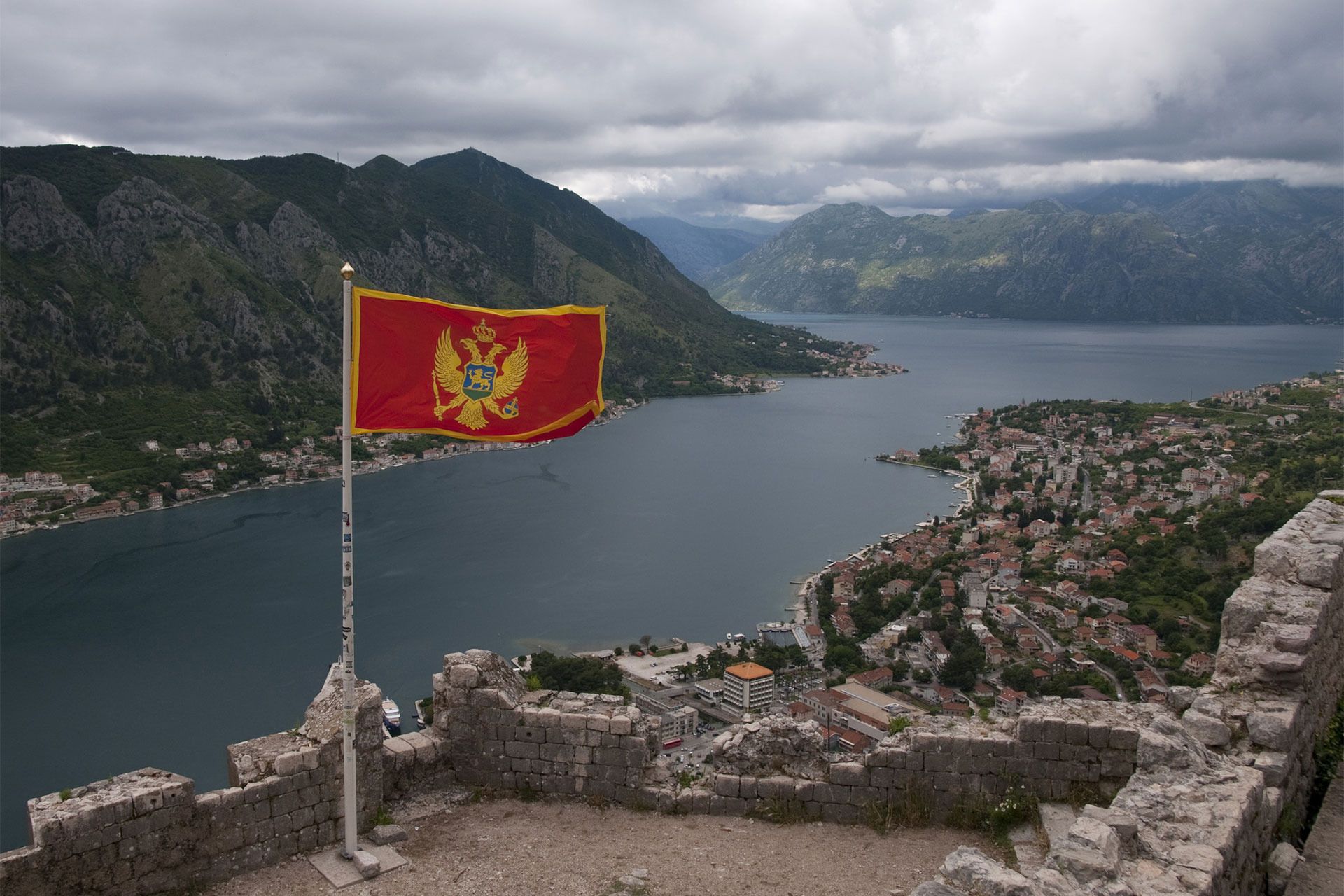
View of the Bay of Kotor. Photo: Wikipedia.org / FAUSTMEPHISTOPHELES / CC BY-SA 4.0
According to the amendments to the law on foreigners, holders of residence permits based on business establishment must now employ at least three full-time staff in their company, two of whom must be Montenegrin citizens. For obtaining a residence permit based on property purchase, a minimum price for the property has been introduced — 200,000 euros (previously there was no minimum threshold). The price is determined based on the property’s value for tax purposes.
All these requirements have sparked criticism.
Opponents of the amendments point out that over 13,000 companies in Montenegro are owned by foreigners. Finding 26,000 available workers in a country with a population of 600,000 is already an impossible task. But there are other issues as well. For example, what about the many artisans, artists, craftsmen, accountants, and lawyers who basically do not need employees? Can micro-businesses afford to hire three full-time employees, especially considering that salary requirements are about to rise? Finally, foreigners who obtained entrepreneurial residence permits have only 180 days to bring the staffing of existing companies into compliance with the new rules.
There are no fewer questions regarding the property ownership amendments.
First of all, what does it mean to determine the property value based on the tax decision? The tax is calculated based on two criteria: the valuation of the square meter of property by district plus adjustments for wear and aging of the building. That is, the cadastral value of the house decreases annually. So, at some point, property owners might fall below the 200,000-euro threshold due to the declining cadastral value and lose their right to reside in the country? And what if the market value also drops? It certainly will with such changes. What should foreigners do then — sell their apartment or house at a bargain price?
Finally, according to experts, about 60% of real estate in the country is not legalized. Recently, the government decided that all buildings must be legalized by February 14, 2026 — those who fail to comply will have only themselves to blame. However, it turned out that municipal administrations responsible for legalization are technically not ready to accept documents. This issue affects not only foreigners but also Montenegrins themselves — and, according to a Montenegrin lawyer who asked to remain anonymous, it could lead to a social explosion.
The most important thing is that the government violated one of the fundamental principles of jurisprudence: the law should not have retroactive effect. In this case, however, the new rules apply even to those who have lived in the country for decades.
By the way, obtaining permanent residence in Montenegro is difficult even after 10 years. And citizenship is practically unthinkable. However, skeptics believe that if this legal loophole is corrected, the authorities issuing residence permits will more often resort to what is called here “residence permit interruption”: when, for one reason or another, the residence permit term is reset and the person is issued a primary residence permit, from which a new period for obtaining permanent residence begins. In that case, any holder of a Montenegrin residence permit still risks falling under the new law.
The saddest thing is that if these amendments are adopted, owners of residence permits based on property will often not even be able to sell their homes because they are not legalized. And this is not about old village houses: a common situation in Montenegro is when a new building stands for several years without an address because the developer did not get an occupancy permit. Meanwhile, all apartments are sold, people live there and receive residence and permanent residence permits.
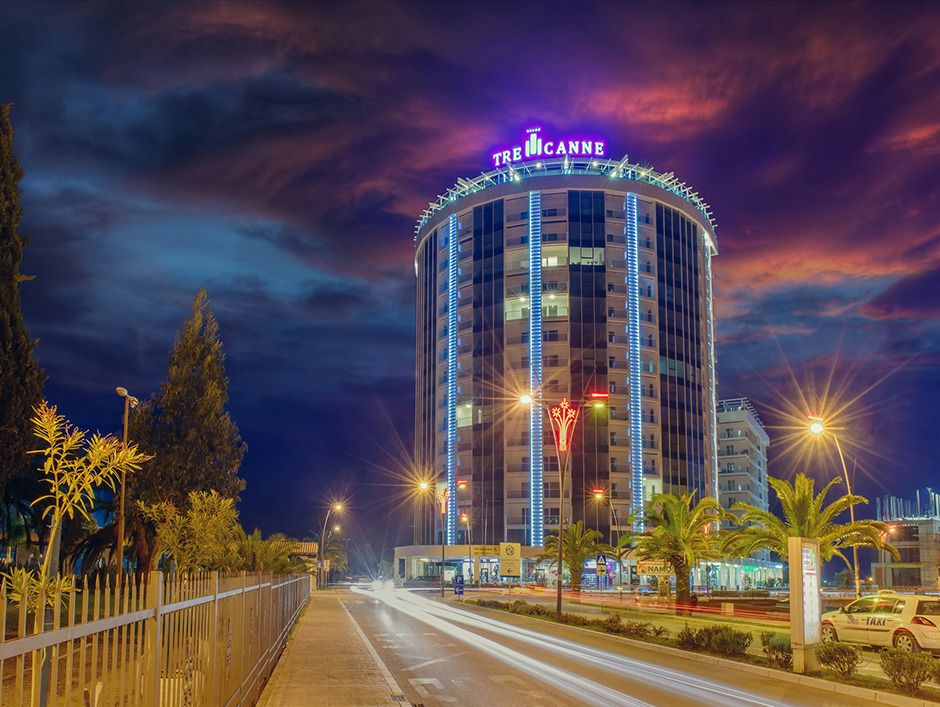
There are even more outrageous cases: for example, after the legalization process began, it turned out that apartments in the luxury residential complex “Tre Canne” on the Budva waterfront were built as apartments — and therefore are not considered housing and cannot be issued residence permits. The complex in the unofficial capital of the Montenegrin Riviera was built more than ten years ago with funds from Russian investors connected to the Russian Ministry of Internal Affairs, who appear in the Panama Papers. Most of the apartments in this building were bought by foreigners, including Russian speakers.
According to a Montenegrin lawyer, the mentioned amendments were adopted in a terrible rush last Monday. The government did not even convene a meeting — everything was done via video conference. The next day, November 11, was a public holiday commemorating the end of World War I hostilities. As a result, the public only learned about the amendments on Wednesday, and the final text of the decision was approved this Monday, November 17.
It should be noted that the amendments aimed to complicate life not for the Russian-speaking diaspora, but for the Turkish one.
Turks in Montenegro rank second after citizens of Russia, Ukraine, and Belarus in the number of residence permits issued. In recent years, they have been involved in large-scale construction of hotels, casinos, and residential complexes, opening shops and cafes. But at the end of October, in Podgorica, during a conflict between groups of Turkish citizens and Montenegrins, one Montenegrin was stabbed. After that, Turkish pogroms began in the country, and the government hurriedly canceled the visa-free regime for Turkish citizens. However, it later turned out that one of the attackers was Azerbaijani, but this did not stop the anti-Turkish actions.
On the other hand, some Montenegrin politicians have already voiced in the local press that the country has too liberal requirements for residence permit applicants. They say people buy some shacks or open “zero turnover” companies, as a result, prices rise, real estate becomes inaccessible to local citizens, and the budget gains nothing from such “newcomers.” Although, in fact, even zero-turnover companies must pay taxes, so Montenegro’s budget does benefit from newcomers — judging by how budget revenues have grown in recent years, quite significantly.
By the way, they also decided to deal with “zero turnover” companies — at a National Security Council meeting, it was decided to check and revoke residence rights of owners of inactive companies with foreign participation. In addition, it was decided to reduce visa-free stays from 90 to 30 days for citizens of countries with visa-free regimes not aligned with the EU’s visa policy. Russia, in this case, has a separate agreement with Montenegro for 30-day visa-free stays.
The official explanation for the amendments is precisely the harmonization of local laws with EU legislation, as the country promised to join the EU no later than 2030. The EU actually does not oppose tightening the rules for legalizing foreigners in candidate countries.
Moreover, the EU recently expressed concern about Serbia’s too liberal citizenship acquisition. Although this criticism is likely due to the rushed granting of citizenship “for special merits” to Russian oligarchs, Gazprom managers, and even FSB agents, the statement is worded so that the Russian diaspora in Serbia fears measures may be applied to ordinary citizenship applicants.
Meanwhile, since the start of the war in Ukraine, the issuance of Serbian citizenship by law (residence permit, then permanent residence, then citizenship — all this takes at least six years plus another one or two years for application review) to Russian emigrants has been suspended. So abruptly, that about thirty people (including the author of these lines) became stateless: having received citizenship application approval, they renounced Russian citizenship according to the law — but the final stage, receiving Serbian citizenship documents, has been indefinitely postponed without any explanation or legal grounds.
Before the government meeting this Monday, three petitions were submitted: one from the Turkish diaspora and two from the Russian-speaking one. The petitions were filed early in the morning before the meeting, but judging by the results, they had no effect. Now all hope is on the parliament — the Montenegrin Assembly. The amendments proposed by the government were not discussed at Monday’s session, nor are they on Tuesday’s agenda. “There is hope that the uproar will make parliamentarians postpone the issue and carefully read what the government has adopted,” believes a Montenegrin lawyer.
If you enjoyed this article, consider making a donation — one-time or, even better, monthly. Your support helps us motivate our authors and become better with every article.
Our organization is recognized by the Internal Revenue Service (IRS) as a 501(c)(3) tax-exempt, charitable organization, which means that all contributions made to us are tax-deductible to the fullest extent permitted by U.S. law. Individuals may generally deduct charitable contributions of up to 60% of their Adjusted Gross Income (AGI) for cash donations made to qualifying 501(c)(3) organizations. For donations of appreciated assets (such as stocks or other long-term capital assets), the deduction is typically limited to 30% of AGI, based on the fair market value of the asset. C-corporations may deduct charitable contributions of up to 10% of their taxable income for donations made to eligible charitable organizations.
By submitting a donation, you confirm that you have read and accept the following documents: Privacy Policy and User Agreement, and also give consent to the processing of your personal data.
If you would like to unsubscribe from a monthly donation, please email us at: [email protected]