Exactly 70 years ago, in October 1956, the USSR and Japan adopted a Joint Declaration under which the countries announced the end of the war, restored diplomatic relations, and officially recorded the USSR’s agreement to transfer the Habomai and Shikotan islands to Japan after the conclusion of a peace treaty. But the treaty was never signed. Now Russia and Japan have reached a critical peak in relations between the countries that, over all these years, were if not allies, then not enemies either — economic cooperation between them only grew. Even after the start of the Russian-Ukrainian war, Japan remained one of the largest importers of Russian LNG.
Detained Yuki Imai with FSB escorts
On October 20, 2026, the director of the European Department of Japan’s Ministry of Foreign Affairs, Kimitake Nakamura, personally flew to Moscow, came to Smolenskaya Square, and entered the building of the Russian Foreign Ministry. A meeting with the director of the Third Asia Department of the Russian Foreign Ministry, Lyudmila Vorobyova, was scheduled for the next morning. The Japanese diplomat demanded the immediate release of the Hokkaido Shimbun correspondent Yuki Imai, detained on October 13 on Sakhalin.A week earlier, while still in Tokyo, Nakamura summoned the Russian ambassador and delivered a demarche to him in connection with the arrest of the Japanese citizen. But there was also a second topic of the conversation: Nakamura was very outraged by the visit to Iturup by a delegation from China’s Heilongjiang province.
The island of Iturup administratively belongs to the Kuril City District of Sakhalin Oblast. De facto and de jure, according to the Yalta Agreement of February 11, 1945 and the San Francisco Peace Treaty of September 8, 1951, Iturup is under Russian sovereignty. Japan, with which Russia never signed a peace treaty, disputes the island’s ownership and considers it part of Nemuro District in Hokkaido Prefecture. The visit by the Chinese delegation to the island was seen in Tokyo as a political challenge.
Relations between Japan and China are now strained to the limit; their century-old territorial dispute remains unresolved. And so the sharp rapprochement between Moscow and Beijing is causing great concern in Tokyo — the Kremlin is too openly playing on the side of its new ally. True, Moscow’s role in this political ensemble is second fiddle.
The name of Iturup goes back to the word “etorop”, which in the Ainu language means “jellyfish”. The jellyfish, which unobtrusively intruded into relations between Moscow and Tokyo, quietly swam into the Yellow Sea from Beijing.
Version one: “Japanese spy”
On October 21, the official representative of Russia’s Foreign Ministry, Maria Zakharova, said that the ministry was in contact with the Japanese embassy in connection with the journalist’s detention. Only 13 days after the arrest, on October 26, were Japanese diplomats finally allowed to see the journalist.
According to the Russian FSB’s version, Hokkaido Shimbun journalist Yuki Imai was collecting information about the number of participants in the war in Ukraine from the Kuril Islands on behalf of Japanese intelligence services. Moscow’s Lefortovo Court remanded him in custody until December 12. He is currently in a pretrial detention center, and representatives of the Japanese embassy have still not been allowed to meet with him.The day after the journalist’s arrest, Kimitake Nakamura said that Moscow had not provided Tokyo with details of the case or any explanations. Since all the materials in Yuki Imai’s case are strictly classified, Japanese politicians and diplomats have to proceed from two logical versions.
The first version is that Imai really was collecting information about participants in the war on the Kurils, either in the interests of intelligence services or for journalistic material, which, incidentally, fits within the professional scope of his work. Even if one assumes that Imai was caught spying, his arrest goes beyond the established unwritten tradition. Today the actions of both Japanese and Russian authorities are very different from the 2019 story, when Russia last detained a Japanese journalist on espionage charges.
On December 25, 2019, a Kyodo correspondent was detained in Vladivostok. After a five-hour interrogation, Russian security services released him, but demanded that he leave Russia within 72 hours. The Russian Foreign Ministry publicly reported this incident only at the end of January 2020. The timing was not accidental:
the Foreign Ministry statement came two days after Japanese SoftBank announced the arrest of its former employee, who had been passing secret information to the Russian trade mission for money.
The Kyodo editorial office called the detention of its journalist in Russia “revenge for SoftBank”. Japan’s Foreign Ministry then stayed silent, diplomatically defusing the scandal at its very beginning.
Throughout all times, the USSR/Russia and Japan have tried to smooth over “spy misunderstandings”. In January 1980, Tokyo police detained retired Major General Yukihisa Miyanagi of Japan’s Ground Self-Defense Force and two serving officers through whom he received secret documents about the deployment and armament of units in Hokkaido and passed them to the military attaché of the Soviet embassy, Colonel Yuri Kozlov. Miyanagi established contact with Soviet military personnel back in 1973, when he asked them to help him find employment after retirement. Kozlov, whom the Japanese Foreign Ministry asked to appear for questioning, flew to Moscow with his wife on an Aeroflot flight the day after his “colleague’s” arrest. In the end, Miyanagi was tried not for espionage, but for violating official secrecy under the Self-Defense Forces law. By court verdict, he received only one year of actual imprisonment.
Today Yuki Imai, detained by the FSB, faces up to 20 years in prison in Russia.
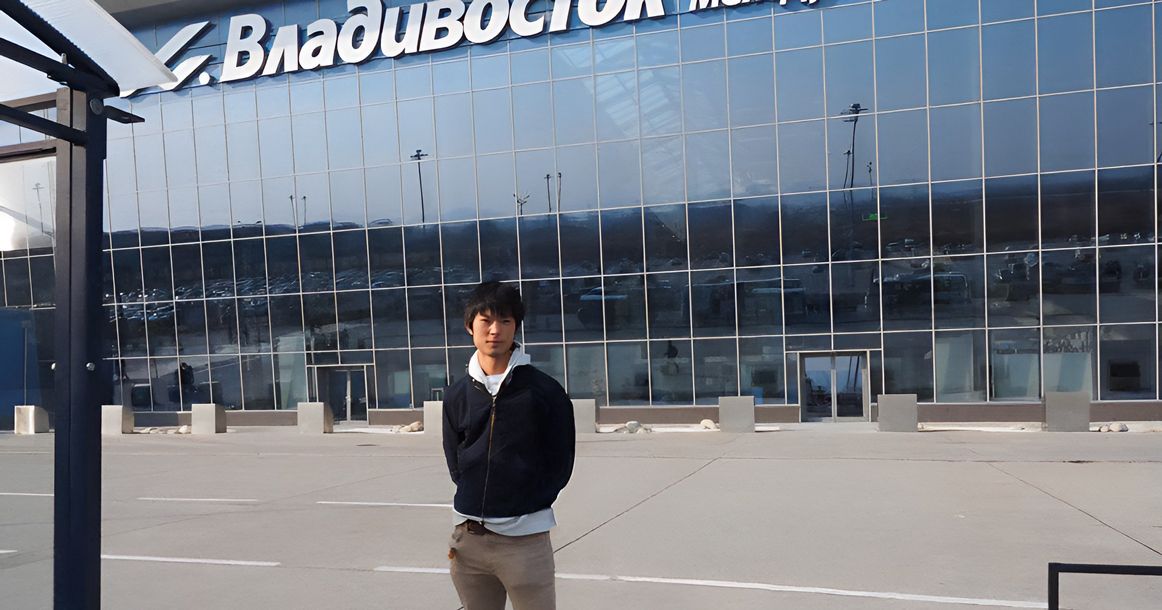
Yuki Imai at Vladivostok Airport. Photo: @ostorozhno_novosti
On September 7, 2000, immediately after Vladimir Putin’s visit to Tokyo, when, incidentally, he was then planning to return to concluding a peace treaty with Japan, Tokyo police arrested Maritime Self-Defense Force officer Shigehiro Hagasaki, who was passing secret documents to the naval attaché of the Russian embassy, Viktor Bogatenkov. Shigehiro Hagasaki’s son had leukemia, Bogatenkov gave him money “for treatment”, and after the boy’s death he offered condolences to the family. Shigehiro Hagasaki was sentenced by a Tokyo court to only 10 months in prison. Again: journalist Yuki Imai faces 20 years in prison in Russia.
After the start of the war with Ukraine, military toughness replaced spy delicacy.
The political affairs consul of Japan’s general consulate in Vladivostok, Tatsunori Motoki, was detained in Russia on September 22, 2022. According to the FSB, Motoki was “caught red-handed” when he received classified information about Russia’s cooperation with “one of the Asia-Pacific countries” and data on how Western sanctions affect the economy of the Far East. An archived video preserved a fragment of the interrogation: the interpreter asks Motoki whether he understands that he was collecting secret information for money, and he replies, “Now I understand”. Motoki was declared “persona non grata” in the Russian Federation and left the country. As then Foreign Minister Yoshimasa Hayashi stated, the consul was interrogated blindfolded, his hands were pressed to his head so that he could not move, and he was intimidated during the interrogation. Cabinet Secretary General Matsuno described the “FSB tactic” as a violation of the Vienna Convention on Consular Relations. On October 4, Japan in response expelled the Russian consul in Sapporo from the country. Moscow promised not to forget this.
Version two: “the Chinese trail”
September 9 in Japan is celebrated as Chrysanthemum Day, one of the five oldest sacred state holidays. On September 4, 2026, a monument to a Soviet soldier was erected in Khabarovsk, smashing with the butt of a rifle a Japanese border post bearing the image of a chrysanthemum, the main symbol of Japan’s imperial house. Moscow deliberately and demonstratively delivered a public insult to its neighbor, and this was the second such act in a month — in August, Vladimir Putin made his first-ever visit to the same southern Kuril island of Iturup. Why is the Kremlin behaving this way today?
In the first half of 2026, trade turnover between Japan and Russia grew to $4.1 billion — a full 15% increase compared with last year. Japan continues to buy coal and LNG from Russia; the Sakhalin-2 project has been exempted from sanctions. In June, Japan’s exports to Russia grew by 52.3%, imports by 50.2% (month over month compared with the previous year). Japan continues to export passenger cars and motorcycles to Russia, and buys palladium, nonferrous metals, iron, and steel. This summer, Japan’s Chief Cabinet Secretary Minoru Kihara diplomatically dodged a question about whether Tokyo plans to supply Ukraine with missile defense systems and Patriot missiles: “At this stage, we are not considering implementing such supplies”.
Russia is not in a position today to lose its last markets. So why insult a neighbor that has maintained neutrality on the war in Ukraine until the very end?
Changes began in the fall. On September 8, 2026, the armed forces of Japan, the United States, and Australia began joint exercises Orient Shield involving 3,700 service members. They took place on Japan’s northern island of Hokkaido, adjacent to Russia, where the country’s largest military training ground is located. During the exercises, American Typhon ground launchers were tested; they are designed to launch Tomahawk cruise missiles with a range of 1,600 km and SM-6 missiles capable of striking ships and ground targets at ranges of up to 500 km.
The maneuvers were closely watched by a formidable neighbor, which is also the largest power in the region — China. In the spring of last year, when Tokyo first began publicly discussing the creation of its own nuclear arsenal, Beijing realized that with U.S. support Japan could challenge China not only in the sphere of economics and finance. To create maximum inconvenience for its neighbor, Beijing decided first to draw Tokyo into a political conflict with its ally.
Russia in this story is only Beijing’s junior partner. It is not in the Kremlin’s interest to make a new enemy, but Moscow cannot refuse Beijing.
A hostage as a trump card in the Kremlin’s sleeve
A news peg for a new conflict was found quickly. On October 2, the Tokyo High Court decided to extradite a 28-year-old Russian citizen to Germany, whom Europe considers one of the key members of the Qilin group, one of the world’s most active cyber-extortion teams. German intelligence services were looking for him over an attack on a German logistics company, from which hackers stole data in September 2024 and demanded a ransom of about $165,000 in cryptocurrency. German investigators monitored the Qilin network covertly for several months and managed to infiltrate the computer of one of the main suspects, known by the nickname snake. From his correspondence it became known that the fraudster was planning to travel to Japan with his girlfriend. By that time, Tokyo had its own personal score to settle with Qilin: the group had claimed responsibility for attacks on Asahi and Nissan in 2025. Then the Tokyo, Osaka, and Kyoto police took over.
The criminal turned out to be a Russian citizen and was extradited to the German authorities on October 2. The first reports of this in the Japanese press appeared only on October 6. The National Police Agency officially confirmed the extradition on October 8, and already on October 13 the FSB detained Yuki Imai.
Any hostage, whoever he may be — a spy or an ordinary journalist who happened to be in the wrong place at the wrong time — is a tool in the hands of politicians for starting negotiations, whose agenda may include any issue, from lifting sanctions to new trade deals. People have become merchandise in the hands of intelligence services, replenishing their “exchange funds”. Whatever the outcome of Yuki Imai’s story, it has pushed a peace agreement between Moscow and Tokyo many years into the future. There is only one winner in this detective story. Any problem of the neighbors is a political victory for Beijing.
If you enjoyed this article, consider making a donation — one-time or, even better, monthly. Your support helps us motivate our authors and become better with every article.
Our organization is recognized by the Internal Revenue Service (IRS) as a 501(c)(3) tax-exempt, charitable organization, which means that all contributions made to us are tax-deductible to the fullest extent permitted by U.S. law. Individuals may generally deduct charitable contributions of up to 60% of their Adjusted Gross Income (AGI) for cash donations made to qualifying 501(c)(3) organizations. For donations of appreciated assets (such as stocks or other long-term capital assets), the deduction is typically limited to 30% of AGI, based on the fair market value of the asset. C-corporations may deduct charitable contributions of up to 10% of their taxable income for donations made to eligible charitable organizations.
By submitting a donation, you confirm that you have read and accept the following documents: Privacy Policy and User Agreement, and also give consent to the processing of your personal data.
If you would like to unsubscribe from a monthly donation, please email us at: [email protected]