Another round of conflict in the Middle East drags on: Israel is losing allies and facing new accusations. Can a new initiative from Donald Trump bring the country an honorable peace in this context? How justified are the criticisms leveled against the Jewish state—genocide, occupation, and colonization of Palestinian lands? And does the State of Palestine even exist, as Western countries have been recognizing it one after another recently? On the second anniversary of the Hamas terrorist attack on Israel and the start of the war in the Gaza Strip, we try to understand this with Marianna Belenkaya, a journalist and Middle East expert, author of the Telegram channel “Falafelnaya.”
Memorial in solidarity with hostages taken by Hamas in the first days after the militants’ attack on Israel. Tel Aviv, October 27, 2023. Photo: Wikipedia / Yossipik
- Lately, there’s been a lot of talk about Trump’s peace plan for the Middle East. Is it a working tool to end the fighting or just another attempt by the US president to play peacemaker?
- There are many real elements, but it’s unclear how they will be implemented. Hamas agreed to the plan but with very large reservations, and some points—like disarmament—were outright ignored. So far, only the start of negotiations about exchanging Israeli hostages for Palestinian prisoners has been planned. [On October 3, the organization announced its readiness “to immediately enter negotiations through intermediaries to discuss the details of this agreement.”]
The Israeli prime minister expects the hostages to be returned within the next two weeks. That would be good, but there are no guarantees. What happens with the negotiations afterward is unclear. The devil, as always, is in the details, because many aspects remain vague. There are no time limits for fulfilling any points except the release of all 48 Israeli hostages.
Marianna Belenkaya. Photo: Eduard Shtern
It’s also unclear which countries will be part of the mechanism to manage Gaza, and which will provide troops to oversee the sector. I have serious doubts that these countries will forcibly take weapons from Hamas. The document’s authors assume Hamas will voluntarily surrender weapons, but that looks doubtful.
- So there’s talk of a peacekeeping corps that will somehow force the terrorists to give up their arms?
- Yes, it’s assumed Hamas will hand over weapons to this corps, which will monitor the situation. That’s where things stand now; specific mechanisms haven’t been defined. So, we don’t have a deal yet—just a declaration, a vision. A list of principles on which an agreement might be built. All this could drown in endless detail negotiations.
For now, Hamas still refuses to disarm or discuss Palestine’s future. There’s also the question of amnesty. On the one hand, Hamas is allowed to survive: its members would be amnestied and the group’s leaders allowed to leave. But the conditions for amnesty require them to recognize Israel’s right to exist.
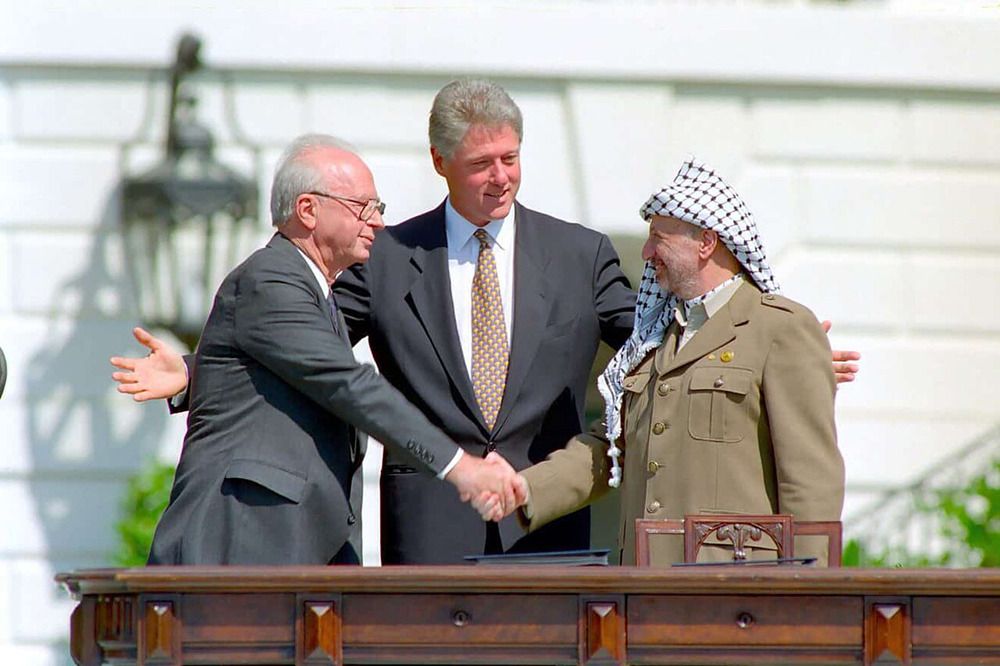
Israeli Prime Minister Yitzhak Rabin, US President Bill Clinton, and PLO leader Yasser Arafat (left to right) at the signing of “Oslo I,” 1993. Image: Wikipedia / Vince Musi / The White House
Roughly speaking, this is what the Palestine Liberation Organization did back in 1993–1995 under the Oslo I and Oslo II agreements: “We recognize Israel’s right to exist. We are ready to build peace and friendship.” But words diverged from deeds.
- So there might be an “Oslo III”—this time with Hamas.
- Yes, many things are troubling here. First, we remember the fate of the Oslo agreements and know how much the Palestinian side’s words are worth. Second, I can’t imagine how Hamas would recognize Israel’s right to exist. But if it does, it will certainly demand its own counterconditions.
Interestingly, the Trump plan does not include a clause about creating the State of Palestine. That’s important. Yet the plan still satisfied Europeans and key Arab powers.
So, no one is seriously demanding the immediate creation of the State of Palestine. Only steps toward that goal are being discussed. Netanyahu is fine with this: from experience, he knows that no Middle Eastern peace plan regarding Palestinians and Israelis has ever been fully realized.
Netanyahu remains calm because he feels Trump’s support and is preparing to place all responsibility for any breakdown in talks on Hamas. And if the group accepts the plan but later violates it, Netanyahu will have legal grounds to respond harshly.
Yes, the Trump plan includes unpleasant things for Israel. Amnesty for those involved in October 7 is a very difficult decision. Plus, releasing almost all terrorists with blood on their hands. Some could be high-ranking figures, which is a serious blow.
- If I recall correctly, many perpetrators of the October 7 attack were actually amnestied from Israeli prisons under previous deals, right?
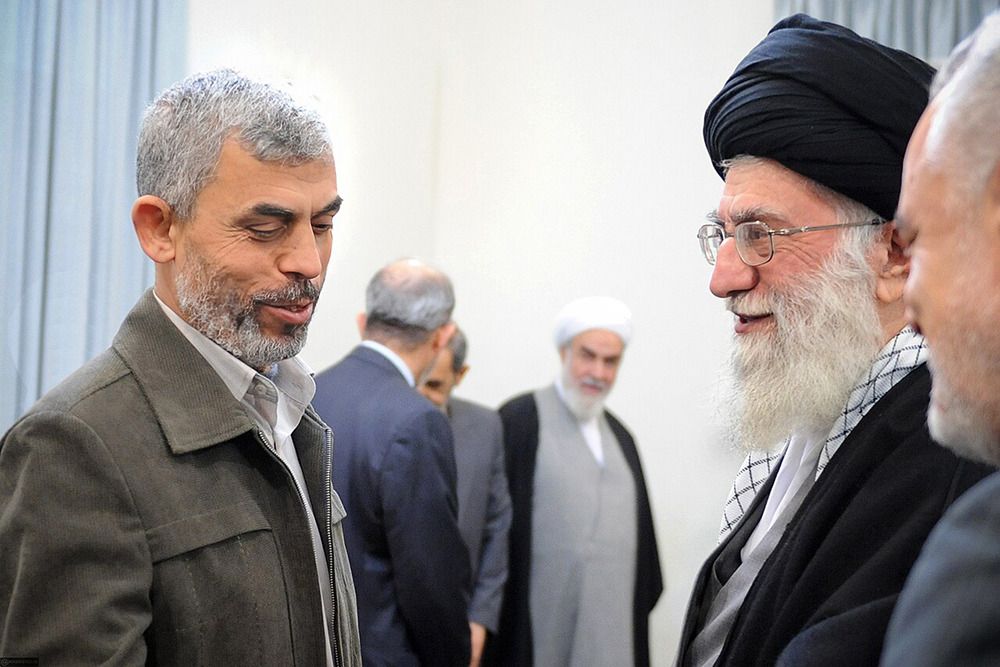
- Yes, starting with the late Yahya Sinwar [Hamas political leader]. Israelis have long learned that such deals and exchanges are not the end. Very few Palestinian radicals have ceased their struggle. Wherever they went, to whatever country they were deported, they could continue their activities. Hamas’ financial resources were never cut off, and their influence on Palestinian territory remained.
Yahya Sinwar meeting with Iran’s Supreme Leader Ali Khamenei, 2012. On October 16, 2024, Hamas’ leader was eliminated by Israeli forces. Image: Wikipedia / Khamenei.ir
In short, the Trump plan is just pretty words so far, except for the hostage exchange point. In reality, deradicalization in Gaza and major reforms of the Palestinian Authority are needed. But that requires huge efforts and consensus among many players! You see, everyone would have to come together and clearly say: we will no longer take any steps that will upset the other side. From Israel’s side, that might mean a promise not to annex Judea and Samaria [West Bank].
As for the Trump plan... everything could fall apart at any moment. For example, a new Israeli government with its own vision could come to power, and Trump himself is not eternal; a tougher administration toward Israel could replace him. The situation in the [Middle Eastern] region could also change. Anything could happen.
Basically, Netanyahu agrees because at best he gets hostages and loses little from this plan. What happens in a few months or years is a completely different story. Hamas understands this too, which explains the vagueness and reservations in its acceptance of Trump’s plan. In Israel, this response is called “yes, but…”
Clearly, there will still be bargaining, and we don’t know how long that will take or how it will end. You know, before they said, “We have a deal,” only to find out later that there was none.
- The Trump plan mentions a “technocratic government” for Gaza. Where would that come from in a region ruled by religious fanatics for nearly 20 years?
- That’s a difficult question as well. The idea of creating a temporary technocratic committee to govern Gaza has been around for a long time. Egypt proposed forming it, and Hamas even formally agreed.
It was assumed that each side—Egypt’s plan put it this way—would nominate its people for this committee, formally unconnected to either Fatah or Hamas. There are people in Gaza who are not Hamas members: municipal workers, clan leaders, other respected figures.
It was expected that from among them a committee acceptable to all sides would be formed to handle urgent civil issues: housing, clearing rubble, distributing humanitarian aid.
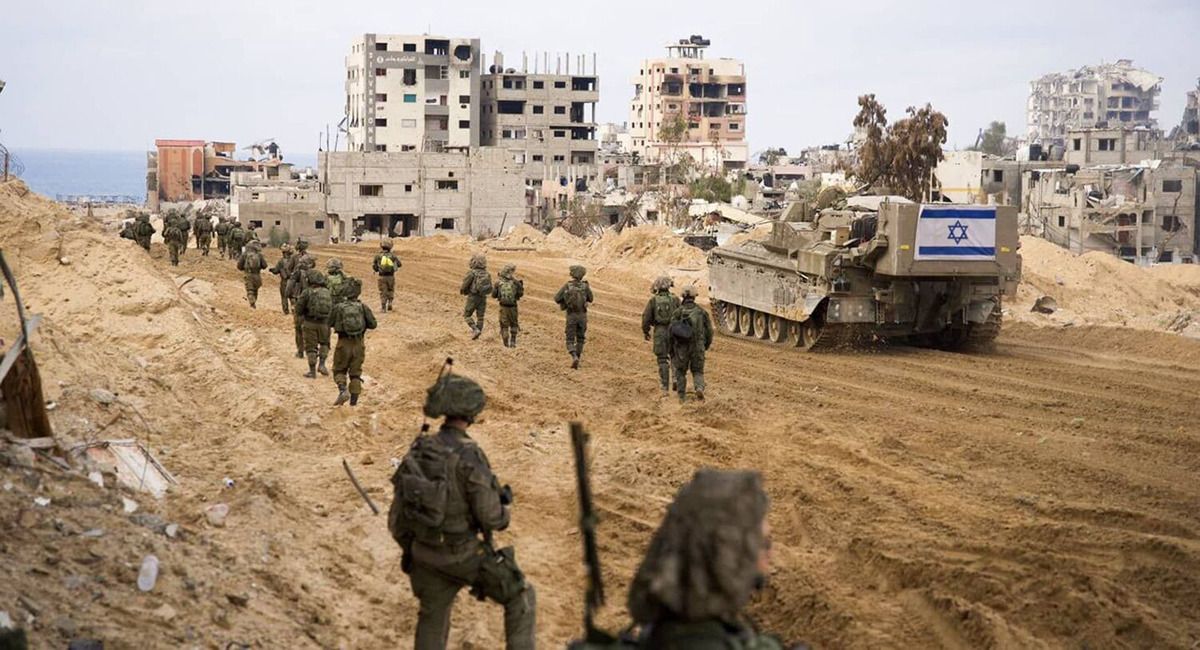
Israeli soldiers in the Gaza Strip. Image: vlast.kz / Reuters
The US has now returned to this idea. It’s unclear how the committee will be formed. It’s assumed it will be overseen by an external body formally led by Donald Trump, with Tony Blair [UK Prime Minister 1997–2007] likely playing a major role on the ground. He would supposedly allocate funds, oversee everything, and govern Gaza until the Palestinian Authority “completes its reforms.”
Again, what reforms, and what criteria define their completion, is unclear. How Trump and Blair will prevent Hamas agents from infiltrating the committee is also unclear. Meanwhile, Hamas opposes external governance of Gaza.
Many questions remain, and the mechanisms for elections and operations are unclear. In short, everything is very murky.
“We Have a War Between a State That Follows the Rules of War and Terrorists Who Never Do”
- But that’s high diplomacy. What’s happening on the ground in Gaza now?
- Operation “Gideon’s Chariots II” continues. After Hamas announced acceptance of Trump’s plan, the US president called on Israel to stop bombing Gaza. And on the night of October 4, it was announced that the IDF would cease offensive actions. However, strikes on Gaza continued, at least on Saturday.
Before that, the IDF was gradually advancing inside Gaza City, but very slowly.
- Why is it taking so long? Gaza is so small, and the Israeli army is known for being highly professional.
- First, the hostage factor plays a role. They try not to harm them as much as possible. Though Hamas and its ally, the “Islamic Jihad,” claim to have lost contact with some hostages. Second, civilians remain in Gaza. Israel tries—as much as possible, though not always successfully—to avoid harming civilians. The military allows evacuations: those who can and want to leave do so. It’s clear many don’t leave, so the army advances slowly, square by square.
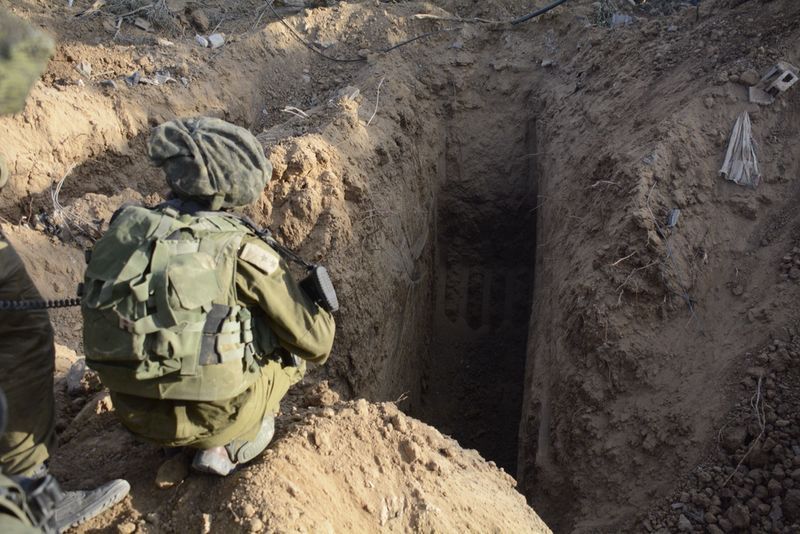
Israeli soldier inspects the entrance to a Hamas militant tunnel, 2014. Image: Wikipedia / Israel Defense Forces
Also, there’s a complex network of huge tunnels beneath Gaza. Basically, a second underground Gaza sector with fortifications, infrastructure, everything. All that must be destroyed. Many tunnels have already been eliminated, but far from all. That’s why the IDF advances kilometer by kilometer. The military understood that at some point they might have to stop if negotiations begin.
It’s clear that the fighting is deeply unpopular internationally, including among Israel’s traditional supporters like the US. Everyone would prefer the war to end. But we’ve already seen ceasefire agreements can be broken at any moment. And, it seems to me,
the US and the West have accepted that fighting will continue until Israel recovers its hostages. Nobody seriously demands the IDF’s withdrawal from Gaza—there’s no such point in Trump’s plan.
Recall that Hamas initially demanded Israel’s full withdrawal from the sector, saying negotiations would come later. But now the discussion is about a very gradual army withdrawal from Gaza, which could take a very long time in practice. I think there will be major bargaining here.
- Opponents of Israel’s actions call the Gaza operation a genocide of Palestinian Arabs. How valid are these accusations?
- Genocide means the deliberate destruction of a population based on a particular criterion. Like the extermination of Armenians in the Ottoman Empire, the Jews and Roma in the Third Reich, or Saddam Hussein’s killing of Iraqi Kurds.
Is Israel doing this? On one hand, there are civilian casualties in Gaza from Israeli actions. But this is war, and not between two armies that can be equally expected to follow international laws. This is a war between a state bound by conventions and several terrorist groups that observe no laws.
Ruins of Rafah city after Israeli army advance, January 2025. Image: Wikipedia / Ashraf Amra
Hamas and its allies use Gaza’s entire population as hostages and human shields. Their military infrastructure runs almost entirely beneath Gaza: under civilian buildings, homes, mosques, hospitals. This has been repeatedly proven—the groups use civilian objects for military purposes. Israel allows Palestinian civilians to leave and warns in advance where major operations will take place.
Of course, it’s still terrible and hard for the people. Palestinians have been displaced within Gaza for two years. Additionally, Israel periodically halts humanitarian shipments. But part of those shipments never reached the population because they were seized by gangs of looters. Trucks are attacked and food taken.
And Hamas members don’t even need to attack—they take everything from distribution centers, given their ties to UNRWA and similar organizations. The ordinary staff there are Palestinians who cannot say “no” to Hamas.
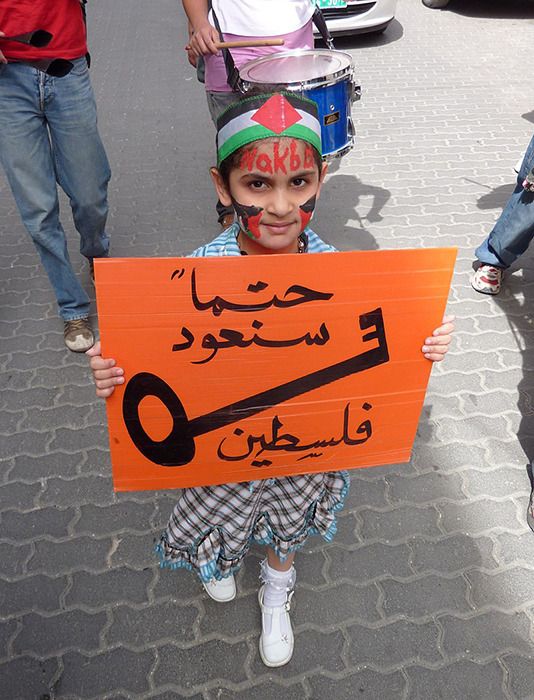
Palestinian girl at a demonstration holding a sign “No doubt we will return to Palestine,” 2010. Image: Wikipedia / Shy halatzi
Yes, there are isolated cases where Israeli soldiers violate the rules of war. But these are investigated, including by Israel itself, or will be investigated later. This is not deliberate extermination, not genocide, but the costs of a war unleashed by Hamas.
- Still, there is a lawsuit from South Africa accusing Israel of genocide.
- There are two lawsuits against Israel in different courts: the International Criminal Court (ICC) and the International Court of Justice (ICJ) in The Hague. [Also known as the World Court]. Recently, things have stalled there.
Last spring, prosecutor Karim Khan accused of rapes and many other crimes, but the process then halted. Many countries joined the lawsuit, and an arrest warrant for Netanyahu was issued—we saw how he flew to New York, avoiding many countries.
My opinion is that if a ceasefire is reached soon, Israel will maintain relations with most countries. Yes, lawsuits will remain, and some problems, but perhaps it won’t affect Israel too critically. We’ll see how the situation develops.
“The West Recognizes Palestine in Advance, but Advances Don’t Work in the Middle East”
- In September, several Western countries, including the UK and Canada, recognized Palestine as a state. How should this step be interpreted?
Those recognizing Palestine seem to view it as a form of support for Mahmoud Abbas’s Palestinian National Authority. They see it as a way to pressure Israel, a declaration that the conflict’s ultimate outcome should be the much-discussed two-state solution.
In Israel, this is seen very negatively—not as support for the PNA but as support for Hamas, since they organized the October 7 attack and raised the Palestinian issue globally. So all these international recognitions are their achievement, whether in quotes or not. And Hamas naturally welcomes the recognitions enthusiastically; it plays to their advantage.
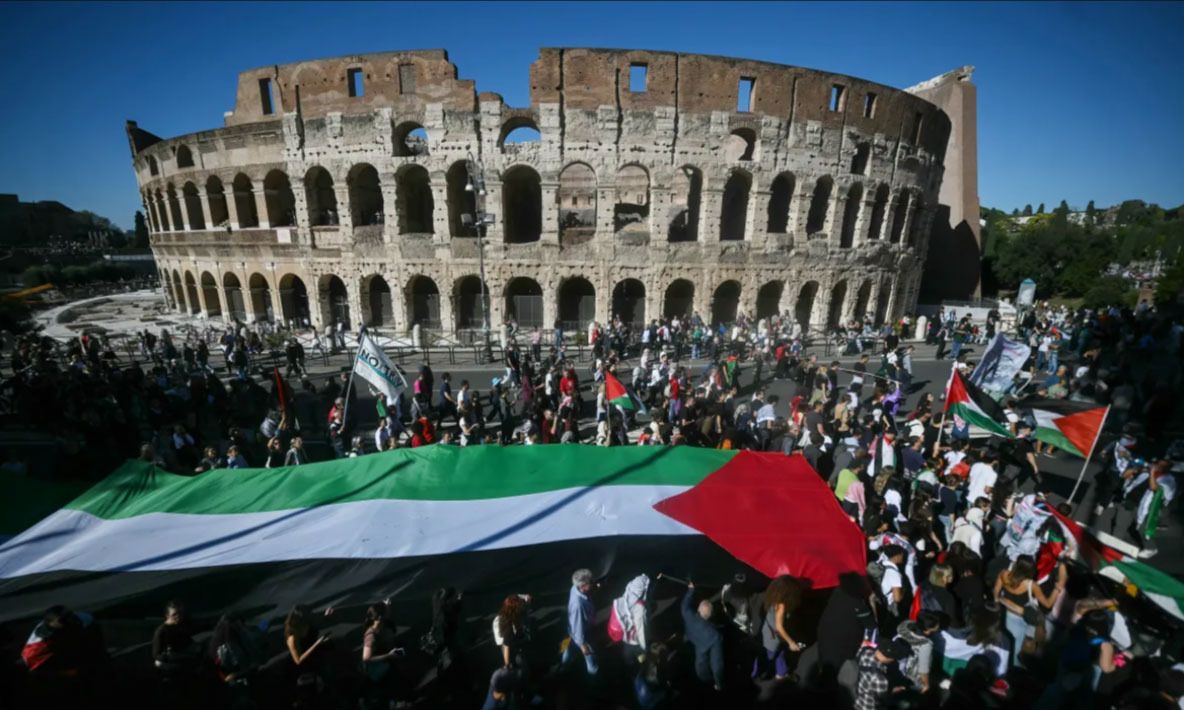
Pro-Palestinian demonstration outside the Colosseum, October 2025. Image: AFP
But here’s an interesting point: all these countries recognizing Palestine simultaneously state conditions that must be met. Hostages must be released, Hamas disarmed, and much more. So they recognize the Palestinian state somewhat in advance—and that’s very wrong, advances never work in the Middle East.
And here comes Trump’s similar plan: lots of beautiful words, few mechanisms for implementation. But European and Arab countries supported it. Perhaps they will continue pressuring Israel regarding Palestinian state recognition. Now Israel can wave this plan and say: let’s free the hostages first, stabilize Gaza, then we’ll see.
But that’s only possible if Israel acts smartly. If it says it’s following the plan. If it manages to rein in the far-right parties, who are unhappy with Trump’s plan. Finance Minister Bezalel Smotrich has already said it’s a catastrophe—that Netanyahu missed the chance to finally bury the Palestinian state question.
- Spanish Prime Minister Pedro Sánchez regrets that his country doesn’t have nuclear weapons to stop Israel. Such statements are becoming common in Western political and cultural establishments. Is this excessive solidarity with Palestinians or a revival of classic antisemitism?
- I believe it’s antisemitism in a new form. Though personal sympathies can’t be ruled out. Also political interests, attempts to gain electoral points—I understand Sánchez’s internal situation isn’t great. It’s like in France, where it became important to consider the Arab population’s opinion. Germany is similar but has so far restrained anti-Israel rhetoric.
British police outside a Manchester synagogue after an Islamist radical attack—two people died. October 2025. Image: AFP / Reuters
Look around: many wars, famines, and ethnic cleansings happen worldwide. But the West talks only about Israel and Palestine. Events in Sudan quickly dropped out of global news, as did many tragedies unnoticed by Westerners in other Third World countries. Even regarding Russia and Ukraine, Europe no longer shows the mass protests or unanimity of “Putin, hands off Ukraine” as in 2022.
I emphasize: I’m not saying everything in Gaza is fine. No, it’s really bad there. There are destruction, deaths—including children’s deaths—and much more. But why do all condemn only us?
I can’t explain this rationally.
- It seems Israel is used to this. In the 1970s, half the world boycotted the country, and even the UN General Assembly declared Zionism a form of racism. So, nothing new?
- On one hand, yes: Israel has always faced such situations. It’s just that this war has lasted longer than usual, so everything has grown. On the other hand, back then it was the Cold War, a completely different time: clear divisions between the Soviet bloc, pro-American bloc, and the “third world.”
Arab countries didn’t have such strong influence then. Yes, they could impose an oil embargo, but now they influence things more “smartly.” There are Arab media and powerful pro-Arab lobbies that even influence the US presidential administration.
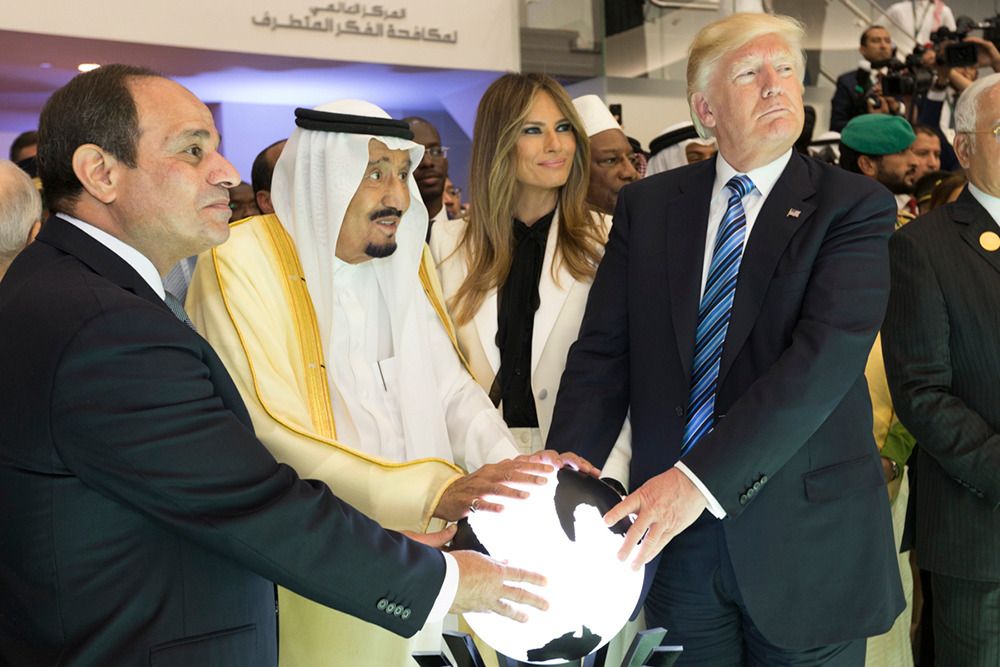
Donald Trump with his wife, Saudi King Salman, and Egyptian President Abdel Fattah el-Sisi, 2017. Image: Wikipedia / The White House
Remember how last week Netanyahu apologized to Qatar’s authorities for the death of their citizen during strikes on Hamas leaders in Doha. I’m convinced this happened under pressure from the Trump administration, since they depend on Qatar to some extent. The world has indeed changed.
“Two Peoples Fight for One Land, Each with Their Own Truth and Pain”
- You said earlier that Finance Minister Smotrich called Trump’s plan a “catastrophe.” How do Israel’s far-right want to solve the Palestinian problem?
Smotrich and his allies want to annex territories already occupied by Israel where settlers live. They want to expand settlement activities so that creating a Palestinian state becomes impossible. So that [Arab residents] remain but on fragmented territories with no connection. Right now, Judea and Samaria are separated from Gaza, and the far right wants to continue this process.
Occupation of Gaza is an ideal plan for such politicians. They don’t believe Hamas can be defeated otherwise. To control the situation, they think Israel must either have a constant presence there or enter regularly. There’s no confidence that international peacekeepers can ensure nothing happens. Syria and Lebanon are bitter examples.
- Why, in your view, can’t Palestine be considered a state?
Because it doesn’t exist. There is the PNA—the Palestinian National Authority—led by Mahmoud Abbas, Yasser Arafat’s successor. It’s often called the “Palestinian autonomy,” but autonomy implies being within a country. Here, autonomy from whom—Israel? That’s not quite the right way to put it.
This administration exists. It currently controls only part of the West Bank. And even then, its control is very conditional because radical groups have taken power in many Palestinian cities. The PNA tried to restore order, as in Jenin, but was then accused of fratricidal war and asked Israelis to finish the job. Yes, there are many brigades, radical groups, “mini-Hamas” factions. Some areas are pure anarchy.
Palestinians have many grievances against this administration. It enjoys no trust due to corruption, lack of elections [the only local Legislative Council elections were in 2006], and cooperation with Israel.
There’s a terrible split among Palestinians, and no elections can be held there in the current situation.
Earlier, elections were possible. But Abbas always refused, finding excuses and blaming Israel. Everyone understood why: with honest counting, Hamas would defeat Abbas’s people not only in Gaza but also in the West Bank.
- But Israel partly lost Gaza itself. In 2005, there was “Hitnatkut”—a unilateral disengagement with evacuation of Jewish settlements. Why was this done?
A tough question. Then there was a right-wing government under Ariel Sharon. After the Second Intifada, he thought: we’ll separate, ensure our citizens’ security, shed the Gaza problem, and let them do what they want there.
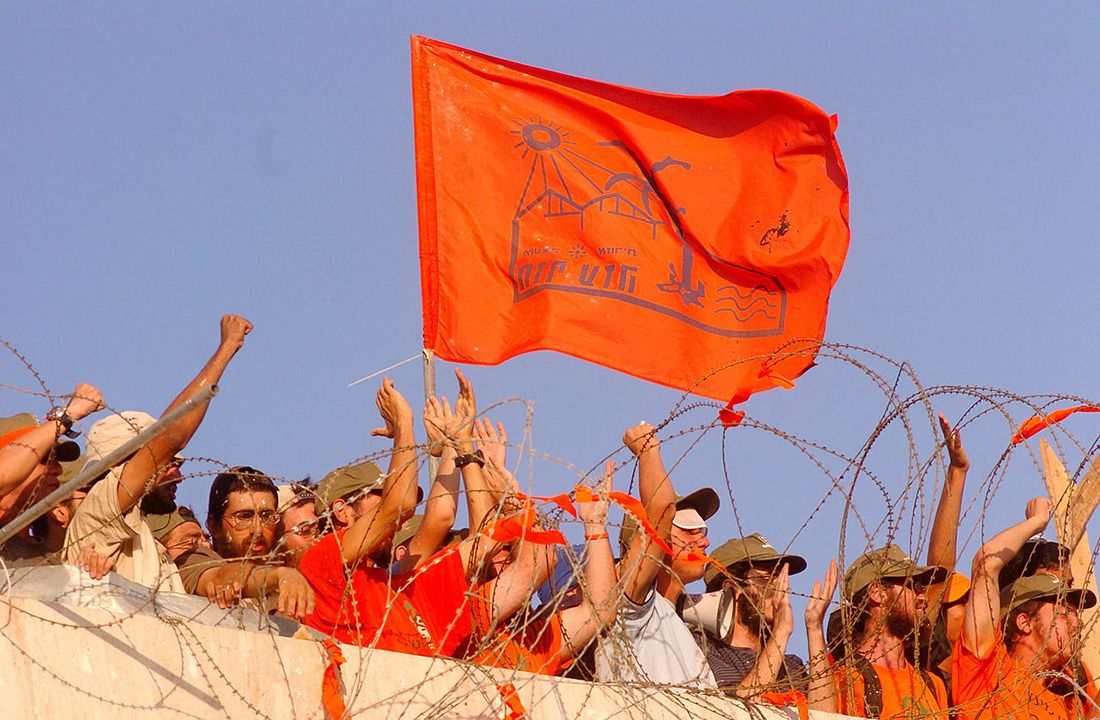
Israelis protest against the Gaza Strip withdrawal, 2005. Image: Wikipedia / Israel Defense Forces
It was a very bad decision. Hitnatkut was criticized by both right and left. A unilateral, poorly thought-out, and incompletely implemented initiative. Nobody controlled what was happening in Gaza. Essentially, the then authorities handed power to Hamas. And Netanyahu encouraged the division between Hamas and the PNA over the years, following “divide and rule.” Money flowed into Gaza thanks to Qatar—they hoped it would calm Hamas and make it leave Israel alone.
Yes, despite difficulties, Gaza residents had the chance to live peacefully, build, and not fire rockets at Israel. Then there might have been no blockades or military operations. But in the end, what happened happened [the October 7, 2023 attack], and it’s not certain it won’t happen again.
- So settlements in the West Bank aren’t evacuated to avoid a second Gaza?
To be honest, I live in a settlement myself. It wasn’t exactly my choice; family circumstances led me here. Still, I live here now.
Settlements in the West Bank are illegal under international law. But they are a reality that exists and can’t be denied. Some settlements—especially large clusters—give the Israeli army and General Security Service the ability to control the situation deep in Judea and Samaria. In other words, they prevent a repeat of what happened in Gaza: separation and not knowing what’s going on.
Settlements are being expanded and new ones created. For example, an illegal checkpoint is set up—and a settlement might grow around it, although the state often fights this. Settlement activity causes international scandals and conflicts between Palestinians and settlers. Violence exists on both sides, and there’s a lot of complexity. Still, it’s impossible to just evacuate all settlements. There are many people, not just villages but cities.
- Do Palestinian Arabs have access to the settlements?
Before the war, Arabs worked in settlements and in Israel itself. People freely came to villages around Gaza. They worked there when there were relaxations and no clashes. Palestinians were allowed to work in Israel.
And it turned out [after October 7, 2023] that not all but many cooperated with Hamas. When militants came to villages, they knew exactly where things were because people who worked there told them. Did Israeli intelligence miss this? Yes.
Of course, there are other Palestinians who justly resent losing money and jobs. They ask why settlements live better than they do. Why they must pass checkpoints daily. Why they endure humiliation daily. Why they don’t have their own state?
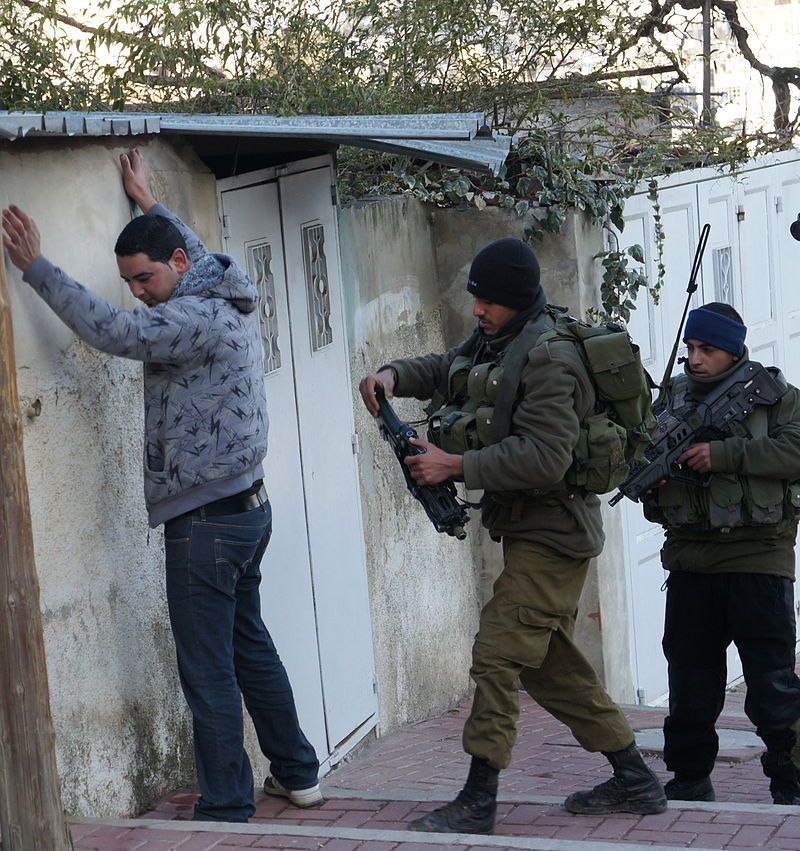
Israeli soldiers searching a Palestinian Arab near a settlement checkpoint. Image: Wikipedia / Friends123
Again, there’s a lot of complexity here. We’ve only scratched the surface. You could discuss this for hours: each side has its truth and pain. Essentially, two peoples fight for this land—their right to live here. That’s what’s happening now.
- We’re speaking on the eve of the second anniversary of Hamas’s attack on Israel. Can it be said this date divided the country’s history into “before” and “after”?
October 7, 2023 remains in every Israeli’s memory. It’s constantly recalled. For some Israelis, the issue isn’t closed because not all hostages have returned. For others, because Hamas hasn’t been defeated and Gaza hasn’t been fully cleared.
Israel is a small country. Everyone, in one way or another, knows someone who died either on the day of the attack or later in the war. Naturally, everyone remembers that day in detail.
I was living elsewhere then, near Tel Aviv, in Bat Yam. I woke up to sirens and didn’t understand what was happening. Usually, in Israel, you know when the next confrontation will start. This time, no one was prepared—no signs a war might begin. It was almost the same as nearly exactly 50 years earlier in 1973 [referring to the Yom Kippur War, October 6–25, 1973, when Egypt and Syria launched a surprise attack on Israel on the holiest Jewish day, observed with a strict fast].
In 2023, by the way, Yom Kippur had already passed on the Jewish calendar. People were awaiting Simchat Torah, a joyful holiday, gathering in synagogues. Then suddenly sirens, and chaos. You start following the news—and it’s chaos.
- What stuck with you most personally?
I was messaging a friend and reading Arabic social media when I saw: “Erez checkpoint has fallen.” This is the crossing point between Gaza and Israel, through which humanitarian aid constantly passed. It was heavily fortified—I’ve been there myself: walls upon walls, basically a fortress. I sent the news to my friend, and he replied: “Why are you spreading fake news? That can’t be true.” But it was true.
And that was just one checkpoint—Erez—fallen! At that moment, we didn’t grasp the full picture or the scale of what was happening. We didn’t yet know how many were kidnapped or killed—the numbers kept changing. Soon everyone feared they would advance further, that Palestinians from Judea and Samaria would join, that Hezbollah would join. Streets emptied. We were hit by a flood of terrible news and at the same time found it hard to believe such a failure of the army, intelligence, and the State of Israel had occurred. The message “Erez checkpoint has fallen” became a symbol for me.
Since then, we’ve lived with this trauma. October 7 led to war not only with Hamas and its allies in Gaza but also with Yemeni Houthis, Hezbollah, and Iran. With all the consequences: mass reserve call-ups, people abandoning their businesses, jobs, studies, deaths, injuries, many psychological disorders.
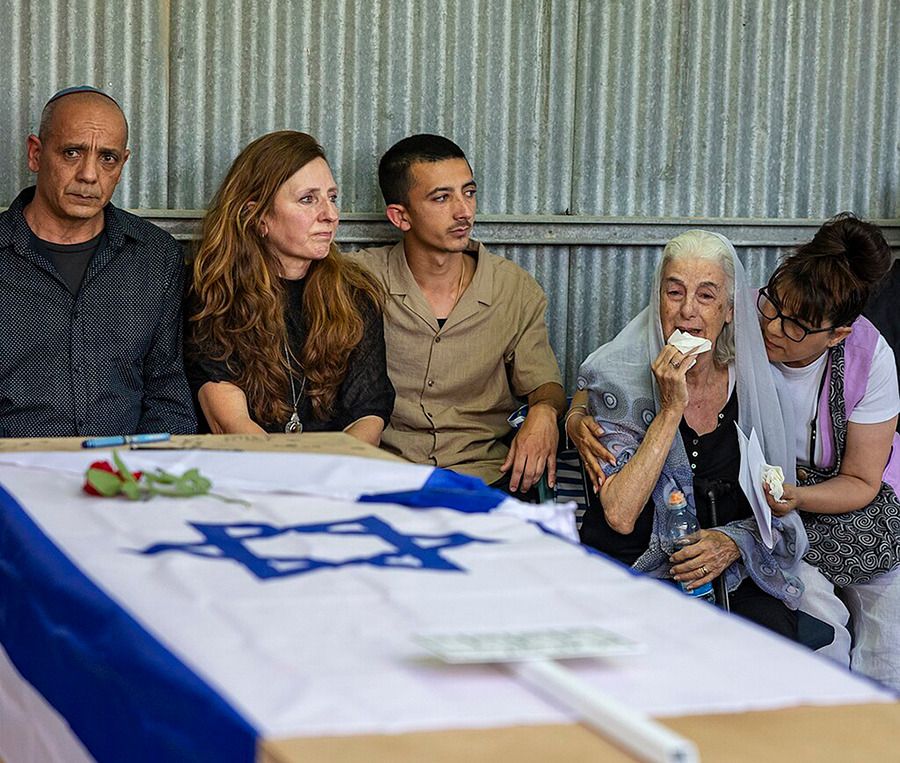
Relatives of Shani Luk, a 22-year-old Israeli woman brutally murdered in the Hamas attack on Israel. Shani was one of 1,200 Israelis killed on October 7, 2023. Image: Wikipedia / DedaSasha
- Two years later, do you think the IDF’s response operation was a mistake by political leadership?
Israel could not fail to respond. I have no doubt this is not Netanyahu trying to solve his internal political problems, as some in the West and Israeli left-wing media suggest. But I want to understand what the outcome will be. What’s the chance of the tragedy repeating? What lessons will the authorities draw? There still isn’t a state commission [to investigate Israeli intelligence failures in autumn 2023]. There’s debate about this—many say politicians are mired in corruption and incompetence.
Against this backdrop, parliamentary elections will be held in Israel next year. No one can predict the outcome: society is deeply divided. It was divided before October 7, and the war has worsened that. We need to come together, understand who we are and what we want. This is a very important period in Israel’s history—a rethinking of what our state is, what Zionism means, why we live here, and what kind of country we want. It’s a turning point for all of us.
If you enjoyed this article, consider making a donation — one-time or, even better, monthly. Your support helps us motivate our authors and become better with every article.
Our organization is recognized by the Internal Revenue Service (IRS) as a 501(c)(3) tax-exempt, charitable organization, which means that all contributions made to us are tax-deductible to the fullest extent permitted by U.S. law. Individuals may generally deduct charitable contributions of up to 60% of their Adjusted Gross Income (AGI) for cash donations made to qualifying 501(c)(3) organizations. For donations of appreciated assets (such as stocks or other long-term capital assets), the deduction is typically limited to 30% of AGI, based on the fair market value of the asset. C-corporations may deduct charitable contributions of up to 10% of their taxable income for donations made to eligible charitable organizations.
By submitting a donation, you confirm that you have read and accept the following documents: Privacy Policy and User Agreement, and also give consent to the processing of your personal data.
If you would like to unsubscribe from a monthly donation, please email us at: [email protected]