Unprecedented mass anti-government protests continue in Iran—something never before seen in the history of the Islamic Republic. While Donald Trump makes vague promises to help the protesters and progressive Western public opinion remains silent, the number of Iranians killed by the regime may already be in the hundreds. Reliable information about the situation in the country is scarce: in Iran, it’s “tradition” to shut down the internet in such cases. Iran expert, Telegram channel author, and writer of “All Iran” Nikita Smagin (the Russian Ministry of Justice considers him a foreign agent) explains why the Islamic Revolution has erupted in mass protest, what the ayatollahs fear, and what lessons the Kremlin might draw from the situation in this eastern country.
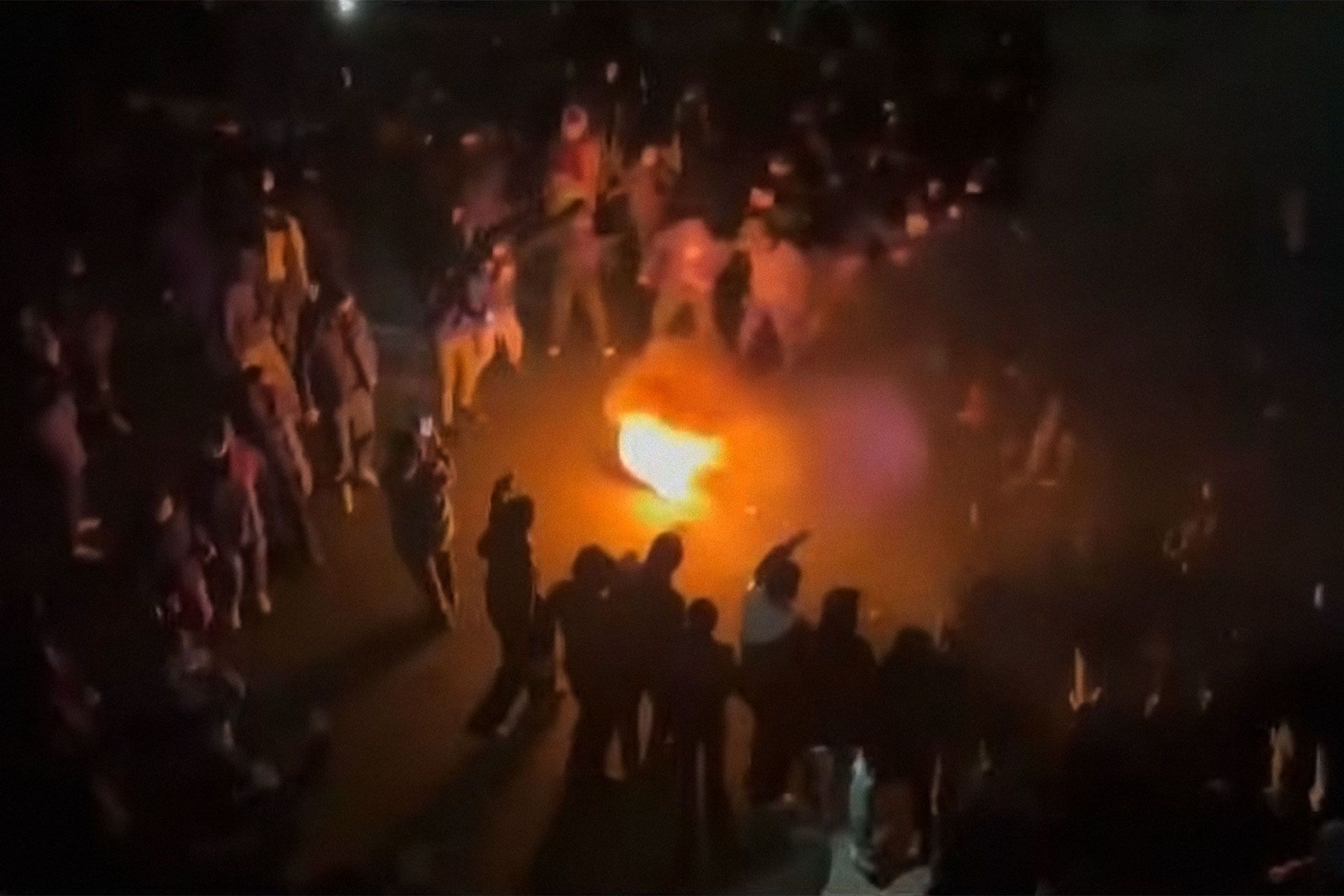
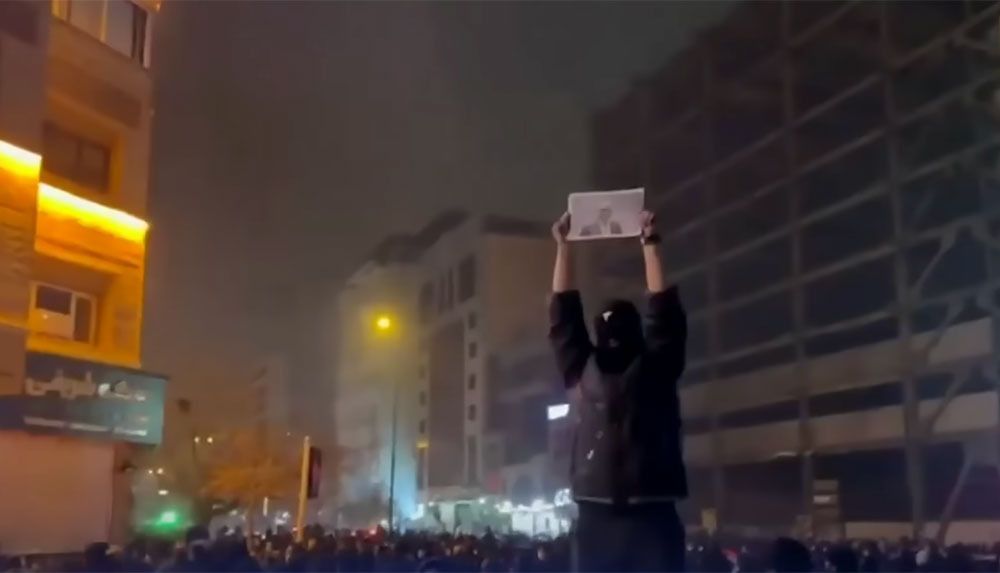
Protests in Tehran, January 2026. Video still: YouTube
- On Friday, January 9, it was reported that Ayatollah Khamenei made his first public appearance in several days with a public speech. There were already rumors he was about to flee to Moscow, but suddenly he appeared—and with a rather tough speech. Should this be considered a significant event?
- Generally, Khamenei rarely appears in public. And usually on Fridays after prayers he does speak, so there’s nothing surprising about that. And he’s already made some statements about the protests.
The leader’s words themselves are nothing unusual—I don’t see anything out of the ordinary there. The other issue is that the Iranian authorities are starting to get worried about what’s happening. You can see it in the internet shutdowns—even if it’s not completely cut off, there are significant disruptions. Or in their nervous reactions to Trump’s statements. As soon as he says something about Iran, Iranian politicians declare it all unacceptable and vow to respond. I’d say there are two swords of Damocles hanging over the authorities. On one hand, a crisis of legitimacy expressed in the protests; on the other, the threat of strikes from the US and Israel. These could converge at any moment.
As for Khamenei’s speech itself, it’s more of a routine event. I wouldn’t overestimate it. He appeared amid the protests, made some statements, calmed the public. He showed that the Islamic Republic still exists and is ready to resist—both the United States and internal enemies.
- There are also frequent rumors that Khamenei has little influence on real politics now because he’s supposedly near death…
- Listen, there have always been rumors about his health. Obviously, at 86, it’s hard for anyone to be completely healthy, and he could die at any moment. I don’t have detailed information, and I doubt any outside observers do either.
Has his authority in the elites declined after the Twelve-Day War against Israel and the US? I think among many, yes, it has weakened. The strategy Khamenei followed all these years didn’t just prove ineffective—it collapsed. For years, the leader tried to avoid direct confrontation with Americans and Israelis, always preferring to fight them through proxies: the Houthis, Hezbollah, Hamas, and others.
It was believed these radical movements would deter Israel. But when it mattered, the whole system collapsed, Iran was struck, and it couldn’t do anything in response. So yes, those at the top may be considering changes. But that doesn’t mean the elites are ready to abandon Khamenei. There’s a consolidation around him—not among the masses, but among loyalists. People who know that under any other order, they’d be much worse off.
There are quite a few such people. Take the Islamic Revolutionary Guard Corps (IRGC) for example. It’s not just military; there are many civilian bureaucrats. Under Khamenei, the Corps has expanded greatly, controls many foundations and businesses—altogether about 20% of Iran’s economy. And all of this is tied to the republic’s leader; he’s the system’s guarantor.
So the IRGC’s top leadership understands: regime change is dangerous for them. I think they’re ready to fight to keep Khamenei in power.
- There have been rumors this week that protesters are taking over entire cities and the police are joining their side. Can these reports be trusted?
- In my opinion, reports about cities being taken over are mostly disinformation. We don’t have verifiable information on this. What does “taking a city” mean? It means capturing all administrative and military facilities and other infrastructure. There’s no video or photo evidence confirming this. It’s all based on statements from opposition circles, like “we’ve taken this or that city”—most often Abdanan in the country’s west is mentioned. By the way, don’t confuse it with Abadan, which is a port on the Persian Gulf.
There have definitely been cases where crowds of protesters forced the police to retreat. They’re rare, but they happen. Security forces switching sides? No, I can’t confirm that. The only thing is, in the past day I received a message—not messages, just one—from a somewhat reliable source saying a few security officers were arrested for refusing to shoot at the crowd. Even if true, it’s a single case, and no city or province was named. It’s unclear if this will become widespread.
- And what about the rumors of mass shootings of demonstrators by security forces? There’s already a nightmarish figure circulating—2,000 killed during protest crackdowns.
- The number of people killed did increase sharply during January 9–11, right after the internet was shut down—that’s a fact. But we don’t know the exact numbers, so different figures are floating around. It’s very hard to verify anything in this situation. I think we won’t know the precise number for a while; restoring the internet won’t solve all the problems.
Overall, the figure of 2,000 [victims] isn’t entirely unbelievable. Remember, at the peak of the 2019 protests, 1,500 people were killed in a week. That’s still the record for Iran, but it may be broken now.
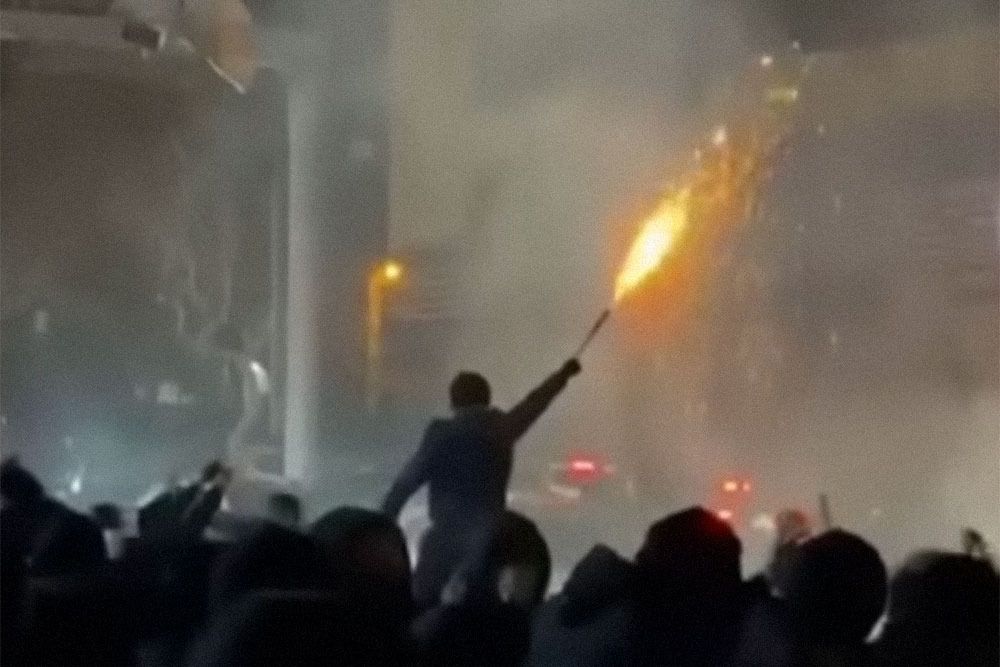
Protests in Iran, January 2026. Video still: YouTube
- You mentioned the power of the Revolutionary Guard under the ayatollahs. But Iran also has a “regular” army and police. Aren’t there any resentments or jealousy toward the IRGC that could drive them to turn against the regime?
- Of course, many in the army are unhappy with the funding and opportunities the IRGC gets. Understandable human grievances. But to go from that to overthrowing the whole regime? No, I’m not aware of such sentiments.
I think it’s more important that most of the rank and file in both the IRGC and the army are conscript soldiers—young people just serving out their duty for two or two and a half years. If these young people are sent to suppress protests, it’s unclear how they’ll behave. So far, unrest is being put down by others: police, special units, the Basij militia [affiliated with the Revolutionary Guard], and others. Special squads that have been suppressing protests for years, made up of specially selected, loyal, and motivated people.
If the old Iranian story continues—that these people can handle the job—then there’s little chance the elites will start maneuvering or splitting. But if the protests grow and the old forces aren’t enough, and conscripts have to be sent in, then things could get much more interesting.
- Well, Iran also has a sprawling secular bureaucracy led by President Masoud Pezeshkian. Could they start playing their own game?
- Maybe they’re wavering, but we haven’t seen any signs of this yet. We can’t read Pezeshkian’s mind, and he hasn’t shown anything like that in public. And it’s clear why: as soon as you show such hesitation, you end up in prison. The Islamic Republic, like other authoritarian states, understands how dangerous elite splits are for the system, and any waverings are suppressed.
But we can assume that secular bureaucrats and reformists in Iran understand where things are heading and want change. The demand for change permeates all of society—the bureaucracy is unlikely to be an exception, even if it doesn’t say so publicly.
“The most radical protest is in small towns and rural areas”
- And if you look at the situation through the eyes of an ordinary Iranian who wants to stay away from politics. Let’s say I’m such an apolitical resident. Can I keep living as before, or do I already have to pick a side?
- It all depends on what you do. There are strikes, and they’re widespread: at bazaars, in factories. In some places, commercial life stops. So you probably can’t go shopping at the bazaar.
Universities have been closed, so if you’re a student or teacher, you can’t go there either. There are many areas under restrictions. But cafes, shops, and restaurants are open—just not during active protests.
- In which parts of Iran is protest activity strongest right now?
- It’s about the same as before. The main protest city is the capital, Tehran. In the past 24 hours, there have been a huge number of demonstrations there—dozens across the city.
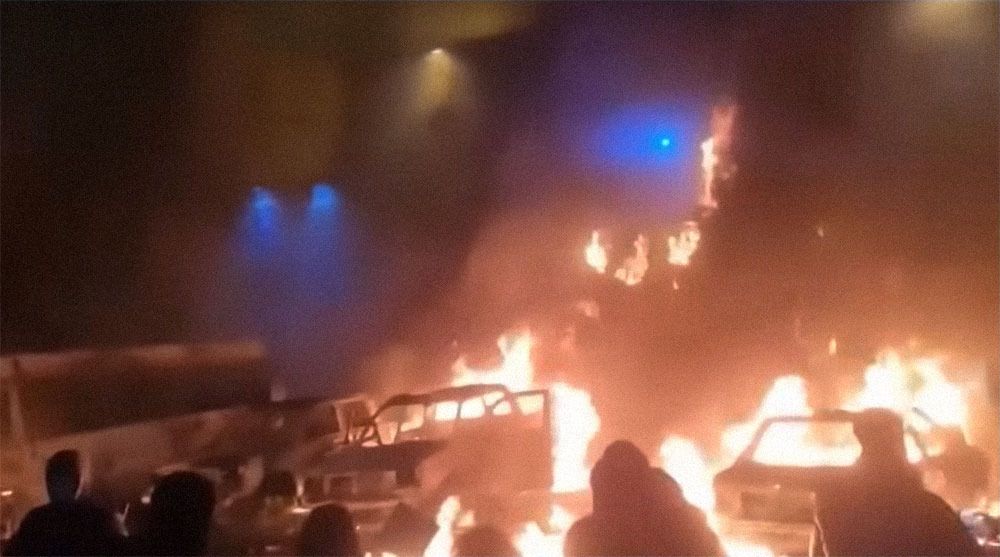
Burning cars in Tehran, January 2026. Video still: YouTube
But the most fierce resistance and the most radical protest are happening in small towns and rural areas—especially in provinces populated by Kurds. Kurdish regions, as before, are at the forefront of radical protest; there are clashes with security forces, and there are deaths, including among security personnel. Where do protesters get weapons? Again, there are few details. The Islamic Republic itself admitted the deaths of several security officers—not from the regular police, but from other agencies, I think.
There was an incident in Sistan and Baluchestan province [in the east, near the borders with Afghanistan and Pakistan], where armed men allegedly attacked a Basij base. Supposedly, some IRGC members were killed. But the Iranian authorities haven’t confirmed this yet.
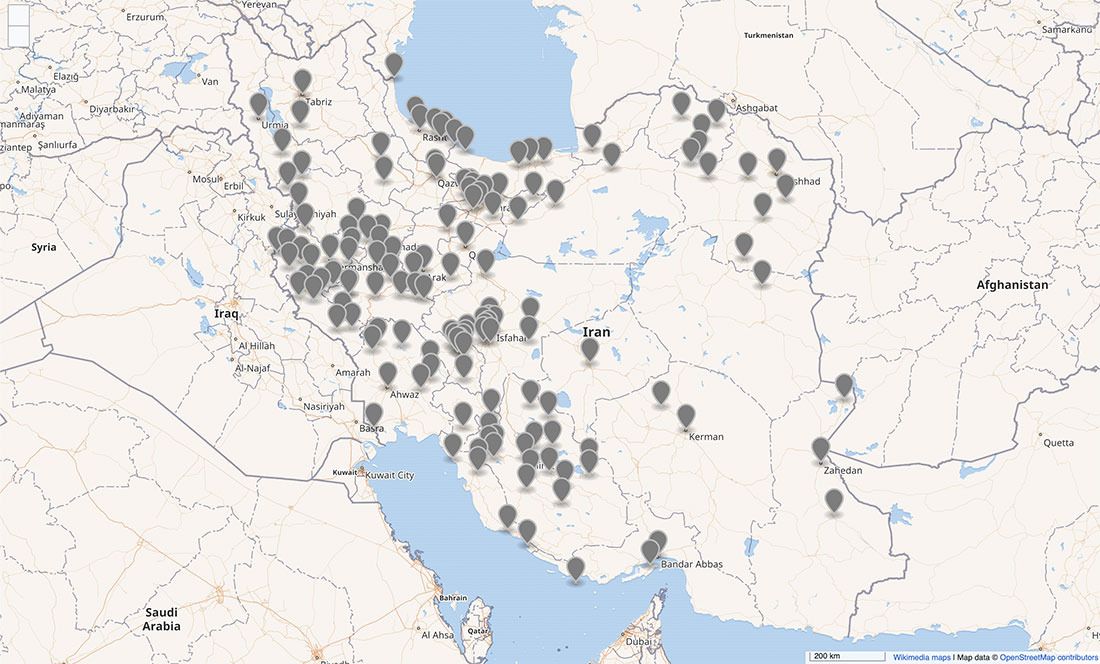
Overall, there are protests everywhere. I think there are literally only a couple of provinces where nothing happened at all. Geographically, the whole country is protesting, but Tehran and the Kurdish west stand out. And on the country’s fringes, there is armed resistance. People either kept weapons hidden or are getting them illegally from abroad. But for now, armed resistance is limited and only possible where Kurds or Baluchis live.
Map of protests in Iran, December '25 – January '26. Source: Wikipedia
- Still, what exactly angered Iranians so much this winter? Falling living standards? But life hasn’t been getting better for the past 10–15 years.
- Living standards haven’t been falling for the last 10–15 years, but specifically for the past eight years, since Trump withdrew from the nuclear deal [and reimposed sanctions on Iran]. So Iran is now feeling the accumulated effect of living in economic stagnation.
If you look at the 1990s, the economy was actually growing. In the 2000s too, though less—2–3% GDP per year. But in the 2010s, it was more erratic—new sanctions from Obama, then they were lifted, but the nuclear deal still fell apart. The result: 40% annual inflation and currency devaluation. In 2018, a dollar was worth about 45,000 Iranian rials; now it’s 1.4 million rials.
So people in Iran have accumulated fatigue, a sense of hopelessness. Life isn’t just getting worse—there’s no hope it will ever get better. This feeling is new for the Islamic Republic as a whole. In the 1990s or 2000s, it wasn’t there. Back then, there was cautious optimism, but now it’s gone? Yes, you could say that.
You see, the situation is unusual: for eight years in a row, things have only gotten worse. Usually, after any collapse, there’s a slow recovery, like in Russia in the 1990s. Even if things are bad for you personally, you can hope that in a year or two things will improve. But in Iran, that hope is gone—the average person’s grocery basket doubles in price every year. And it’s been like this since 2018. The lack of change breeds a sense of despair.
“Iranians’ goal is to overthrow the regime and restore the monarchy”
A protester holds up a photo of Crown Prince Reza Pahlavi. Video still: YouTube
- But that’s all about the economy—what about politics? Are things for the ayatollahs just as bad there as in finance and the economy?
- Yes, there’s a crisis of faith in the political system among Iranians. It didn’t start yesterday, but it took shape in the early 2020s. That’s when conservatives gained a majority in parliament, and a conservative [Ebrahim Raisi] became president. Reformists were pushed out: barred from elections, blamed for everything, accused of trusting the West under [reformist president Hassan Rouhani], only to be betrayed by the West.
Reformist voters really did lose faith in them, but they didn’t become conservative voters. And there have always been more reformist voters in the country. As a result, people stopped believing in the system, in elections, and in the possibility of change. Even the return of a notional reformist—Pezeshkian—to the presidency hasn’t changed anything. People still don’t believe in the system. And that’s a big problem.
But still, the main problem is the socio-economic crisis. After all, even if you don’t like your country’s political system, if your life is getting better, you’re much less likely to protest. Look at Saudi Arabia, which is just as authoritarian as Iran, but the economy is a different story.
- Before these protests, you often heard that Iranians are as divided as Russians, that mass action against the regime is impossible, that there are no recognized leaders or organizations. What has changed?
- Yes, in recent years there’s been a leadership crisis among Iran’s non-systemic opposition. If you’re an opposition politician, you’re either jailed, forced into exile, or killed—usually during protest crackdowns. Truly opposition leaders didn’t survive in this system, not even at the local level.
Today, the protests have a quality that sets them apart from previous ones: for the first time, there is a leader. He existed before, but few believed in him—Reza Pahlavi [son of the shah overthrown by the 1979 Islamic Revolution]. He has become a symbol of the possibility of change. This happened in a leadership crisis, with no alternatives.
Nevertheless, it has happened. Previously, Prince Reza was mainly supported by the diaspora; inside Iran, he was met with indifference. But now, things are changing before our eyes—people are taking to the streets at his call. Thanks to Reza, they’ve felt their strength and numbers. For the first time, they have a clear goal: to overthrow the Islamic Republic and restore the secular monarchy. It’s by no means certain this will happen, but for the first time, Iranian protesters have a clear political aim.
- Do you think Prince Reza has what it takes to be a leader?
- He definitely has political qualities. He has considerable experience, though of a special kind. For obvious reasons, Reza hasn’t lived in Iran since 1979, but he’s been in the public eye almost the whole time. He’s given interviews, appealed to Iranians inside the country, engaged with the diaspora, denounced the Islamic Republic.
Now, he’s managed to consolidate protest activity around himself. That’s a fact, and a real achievement. The other question is whether that’s enough to run a country. Leading a state is very different from coordinating a protest. Reza himself says he has a team of experts and is ready to reform Iran, that he’ll come and do it all.
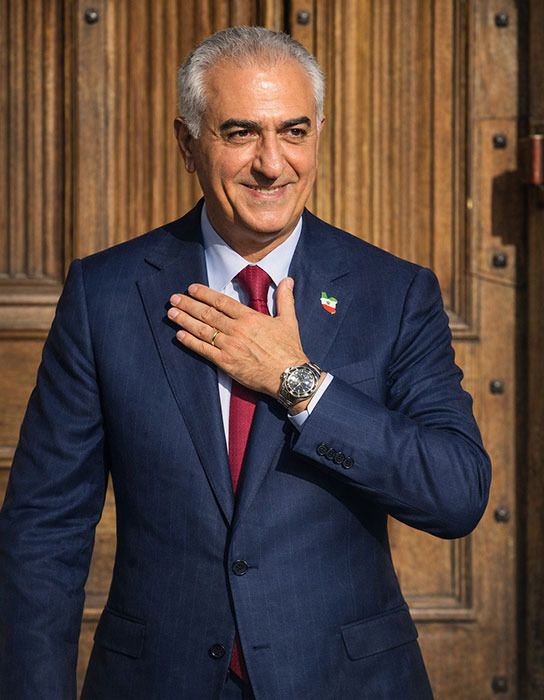
Reza Pahlavi. Photo: Facebook
There’s no way to avoid doubts here—the crown prince has never managed anything in his life. But Iranians don’t seem to care for now. Their goal is to overthrow the regime and restore the monarchy.
- Under the late shah, Iran had a strong leftist underground: People’s Mujahedin of Iran, OPFIN, Forqan and others. They fought both the monarchy and the ayatollahs. Do they exist anymore?
- Indeed, the leftist movement in Iran is nothing like it was in the late 1970s. And it’s not just that Khomeini’s regime suppressed and destroyed them. Moreover, the regime then co-opted many leftist ideas. The Islamic Republic still remains quite a leftist project—with subsidies, populism, talk about the oppressed people. There are many borrowings from Marxism, reinterpreted in an Islamic spirit. That’s why leftist ideas aren’t very popular among Iranian protesters.
There are individuals who share such views, but there’s no organized force with real capabilities. The People’s Mujahedin formally still exists, with some agents “on the ground,” some representatives. But back in the 1980s and 1990s, they badly discredited themselves by organizing terrorist attacks that killed many civilians. Their influence among the population has long since faded.
So the leftist movement in Iran is far from being an alternative to the monarchist option. The real alternative is liberation movements of national minorities. These exist in many regions, especially Kurdistan and Sistan-Baluchestan. If the Islamic Republic falls, is there a high risk of separatism? Absolutely, especially among the Kurds. Sistan-Baluchestan is more complicated—you can’t always tell where the drug-trafficking gangs end and real fighters for an idea begin. Among the Kurds, both identity and organizational structure, as well as readiness to fight, are stronger.
Another issue is that if you want real secession and your own state, you need more support—someone to recognize you in your new status. Recent global practice shows that states are reluctant to recognize changes to existing borders.
“In the Kremlin, they look at Iran and surely think the ayatollahs have gone soft”
- What scenarios for the development of events in Iran do you consider likely now?
- Let’s start with the basic scenario. If there’s no foreign intervention, if Trump doesn’t strike Iran, things could gradually die down.
But that won’t remove the question for the Islamic Republic: “What next?” The crisis of economy and political legitimacy is obvious, even to the authorities. Change in the future is inevitable. But then [if the protests are suppressed], it’ll be tied to the departure [from life] of the current supreme leader. Only then will deep transformation begin.
At the same time, I still see a high likelihood of a US or Israeli strike. And then several scenarios become possible.
- When you say “strike,” what do you mean? A missile somewhere, or paratroopers in the capital…
- No, a ground operation in Iran is almost out of the question. I mean airstrikes, of course. But even those can vary. One thing is if Trump just makes a symbolic attack—hits some security facility and says he’s kept his word. That wouldn’t lead to regime change.
Another thing is if Israel and the US use the situation to finish what they started [in the Twelve-Day War]. They destroy as much as possible of Iran’s missile infrastructure and nuclear facilities. That’s a more complex task, requiring strikes across the country. It’s unclear how things will develop, whether there will be civilian casualties, how the people will react.
There’s also a third scenario—Trump directly sets regime change as the goal. It’s not enough to destroy the Islamic Republic’s leadership; you’d have to seize power. You’d have to coordinate the protesters, organize and direct them so they become the new authorities. A very difficult task. But I wouldn’t rule out the possibility.
Iran is now at a difficult crossroads. The country is in a situation where, to survive, the Islamic Republic must either stand its ground to the end or go for radical transformation—not just reforms, but a total revision of all foundations: abandoning the “Death to Israel, Death to America!” slogan that leads to endless wars, and giving up all previous Islamist approaches. If that doesn’t happen, it could become like Venezuela before recent events: the [dictatorial] regime exists, but some territories are effectively outside its control.
If the US and Israel strike and truly support the protesters, many scenarios are possible: civil war, a period of instability, regime change by various means. Do I believe in a split among Iran’s elites? I can imagine Khamenei fleeing to Moscow, but for that something fundamentally new would have to happen—something that shakes the regime and makes it feel seriously threatened. So far, it doesn’t feel that. Maybe a Trump strike would push the Iranian elite in that direction.
- And what about Russia? As with Assad, is Moscow for Khamenei nothing more than a place to evacuate to if things go wrong?
- Russia can still help with weapons. It’s already supplying Iran with weapons. But openly intervening on the authorities’ side—no.
What lessons might Russian authorities draw from events in Iran? The Kremlin has always carefully watched Iran and learned a lot from it. For example, it’s learned about sanction evasion models and internet shutdowns. Internet restrictions in Russia are very similar to Iran’s, including the “white list” practice. In Iran, sometimes they cut off all external sources and you’re left in an extended local network. Even VPNs don’t help: you can order a taxi or use banking services, but you can’t access email or messengers.
But the thing is, politicians always interpret other countries’ experiences subjectively. They overestimate their own experience—they always bet on it. Russian dynamics show the authorities aren’t going to show any weakness to dissenters—none at all. And I think right now the Kremlin sees it this way: Iranian authorities have gotten too soft, lost the initiative, and allowed protests against themselves. Russian leaders surely believe they won’t allow anything like that, no matter the cost.
If you enjoyed this article, consider making a donation — one-time or, even better, monthly. Your support helps us motivate our authors and become better with every article.
Our organization is recognized by the Internal Revenue Service (IRS) as a 501(c)(3) tax-exempt, charitable organization, which means that all contributions made to us are tax-deductible to the fullest extent permitted by U.S. law. Individuals may generally deduct charitable contributions of up to 60% of their Adjusted Gross Income (AGI) for cash donations made to qualifying 501(c)(3) organizations. For donations of appreciated assets (such as stocks or other long-term capital assets), the deduction is typically limited to 30% of AGI, based on the fair market value of the asset. C-corporations may deduct charitable contributions of up to 10% of their taxable income for donations made to eligible charitable organizations.
By submitting a donation, you confirm that you have read and accept the following documents: Privacy Policy and User Agreement, and also give consent to the processing of your personal data.
If you would like to unsubscribe from a monthly donation, please email us at: [email protected]