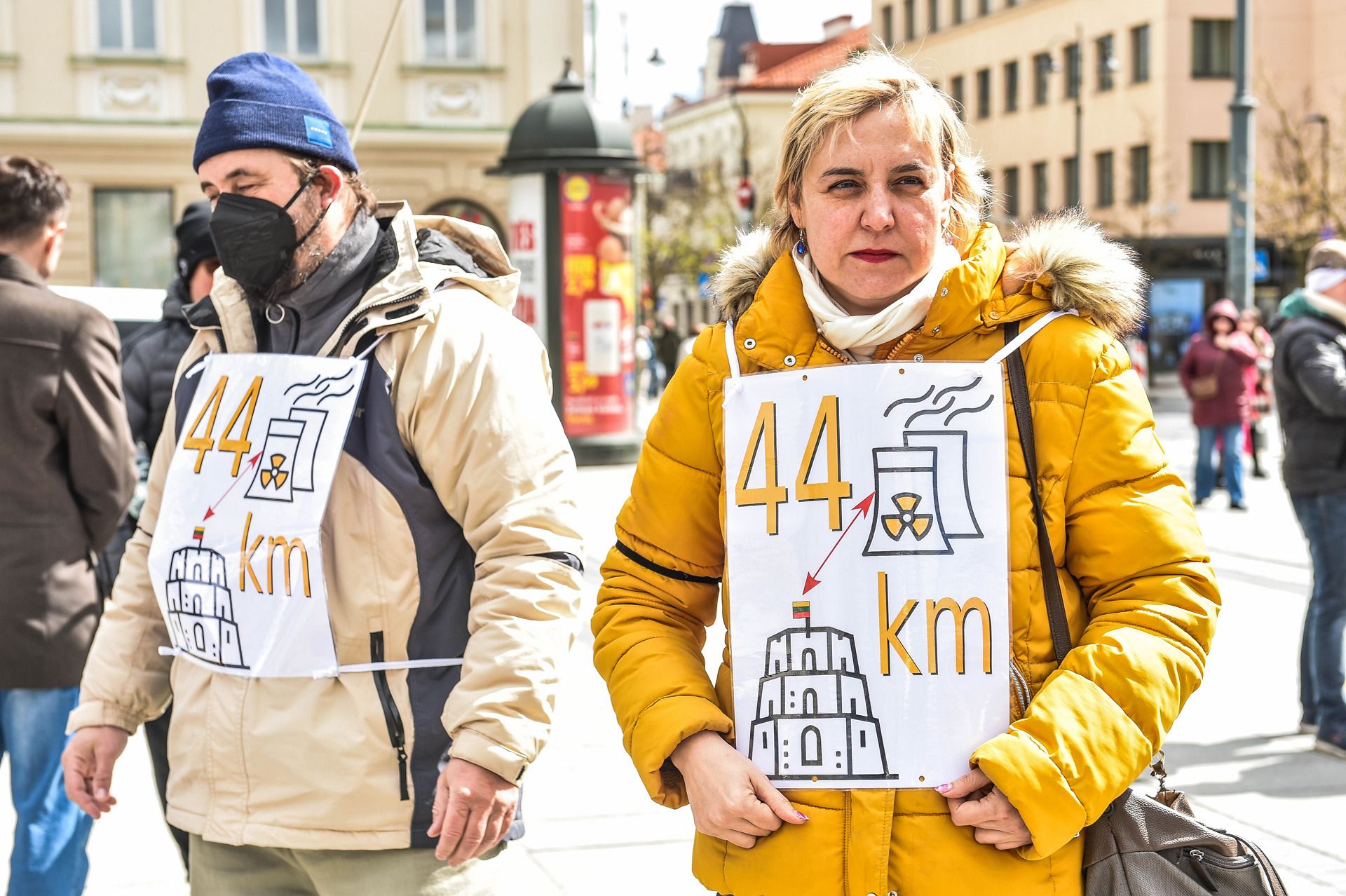
Forty years ago, the fourth reactor of the Chernobyl Nuclear Power Plant exploded. Belarus, which bore the brunt of the disaster, still lives with its consequences. Over the years, the annual “Chernobyl Way” rally has transformed from a mournful procession into a form of civic protest: first against the suppression of the truth, then against the construction of a new nuclear plant, and now — against a system where people's voices mean nothing.
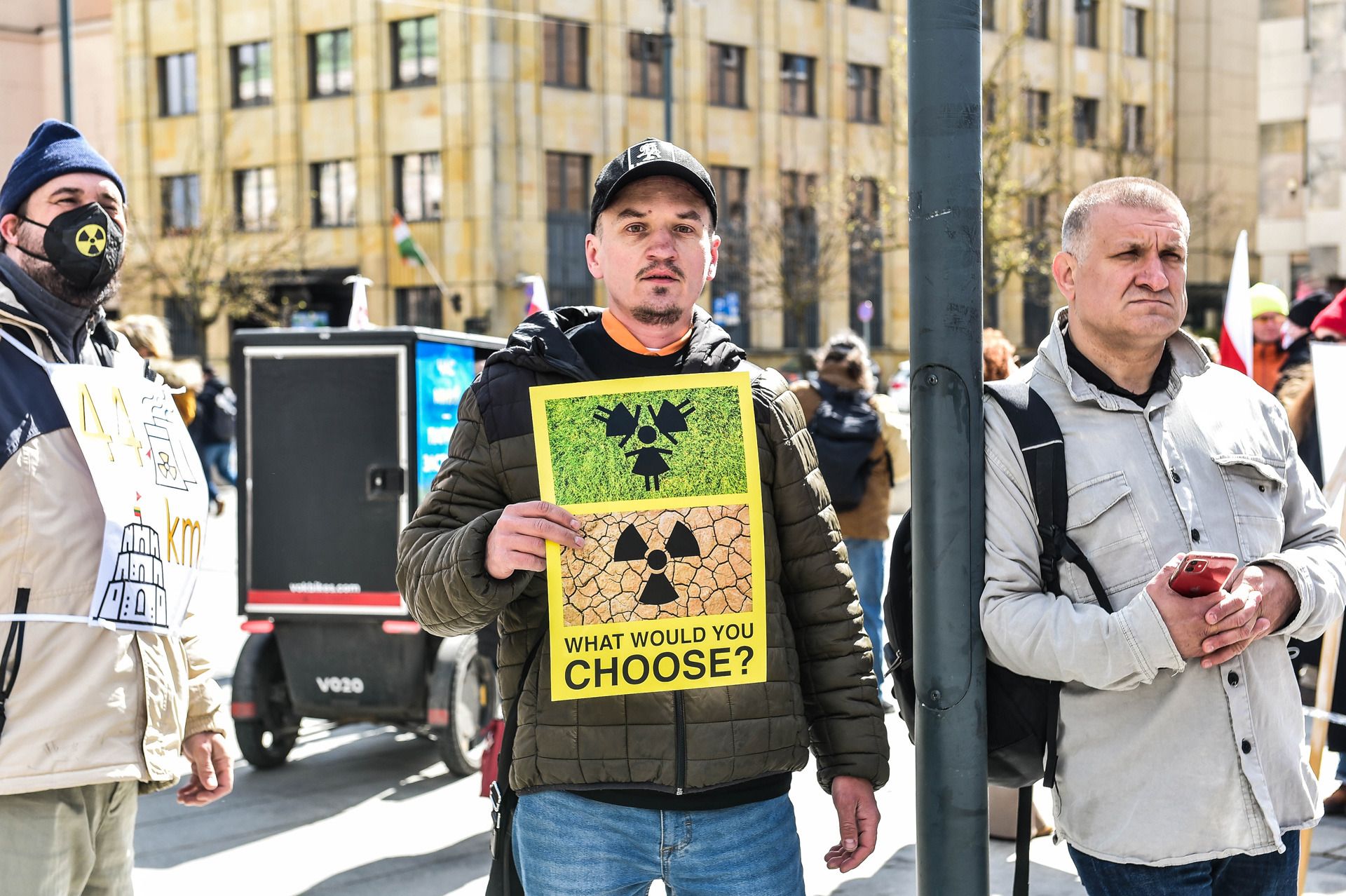
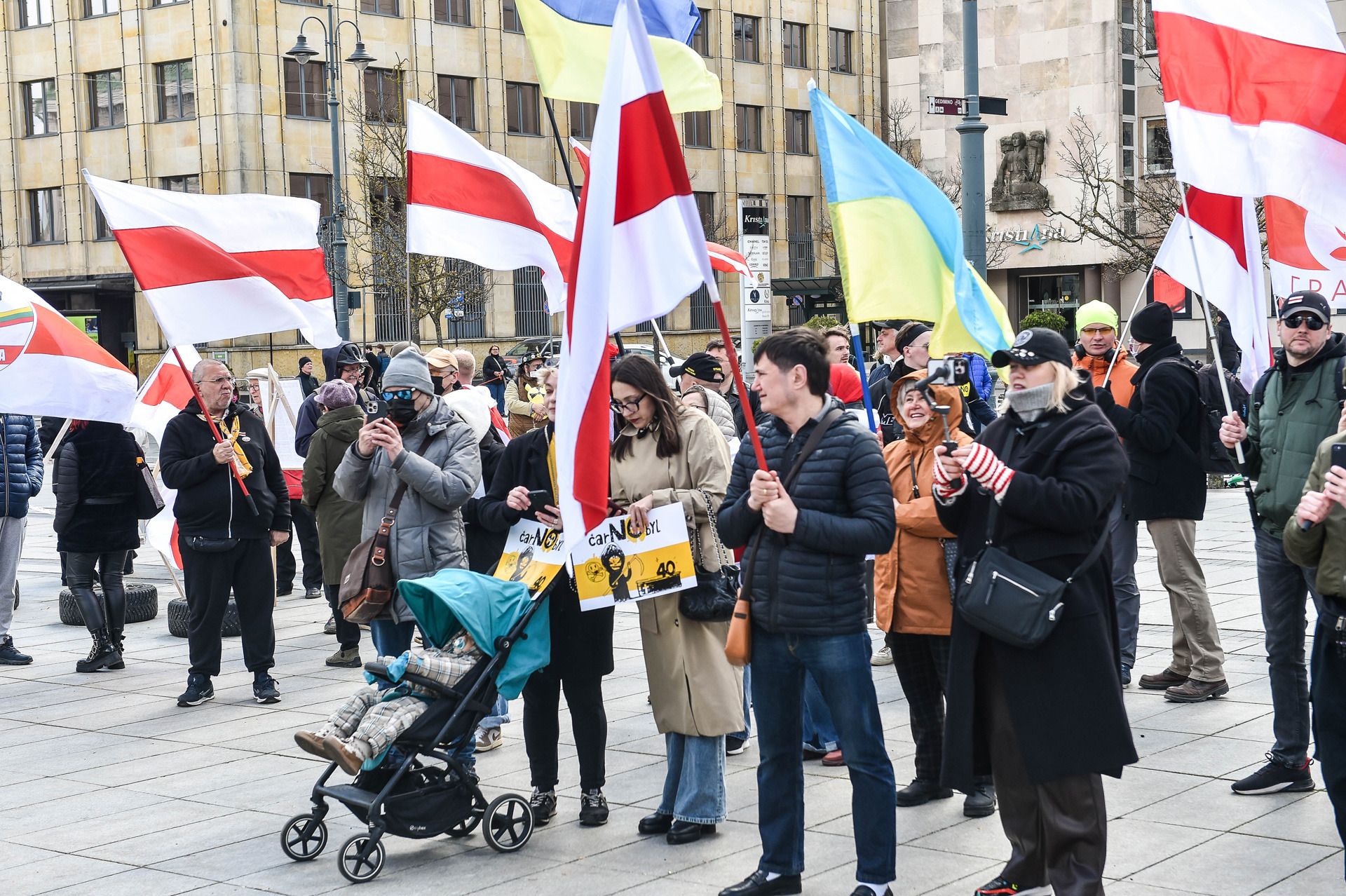
“Chernobyl Way” rally in Vilnius, April 26, 2026. Photo by Anna Gavrilova
April 26 is not just a date on the calendar for Belarus. On the day in 1986 when the fourth power unit of the Chernobyl Nuclear Power Plant exploded 16 km from the Belarusian border, the wind was blowing northwest — and about 70% of the radioactive fallout landed on Belarusian territory. Almost a quarter of the country ended up in the contaminated zone. Around four thousand settlements and two million residents were affected. 479 villages ceased to exist.
The scale of the disaster was not immediately clear. In the first days, Soviet authorities did not inform the population about the radiation. On May 1, there were festive parades in Minsk — people walked the streets, unaware they were breathing contaminated air. Later, when the truth began to leak out, this silence became a separate trauma for Belarusians, no less painful than the radiation itself. It was from this sense of betrayal that the “Chernobyl Way” was born.
1989: People demand the truth about radiation
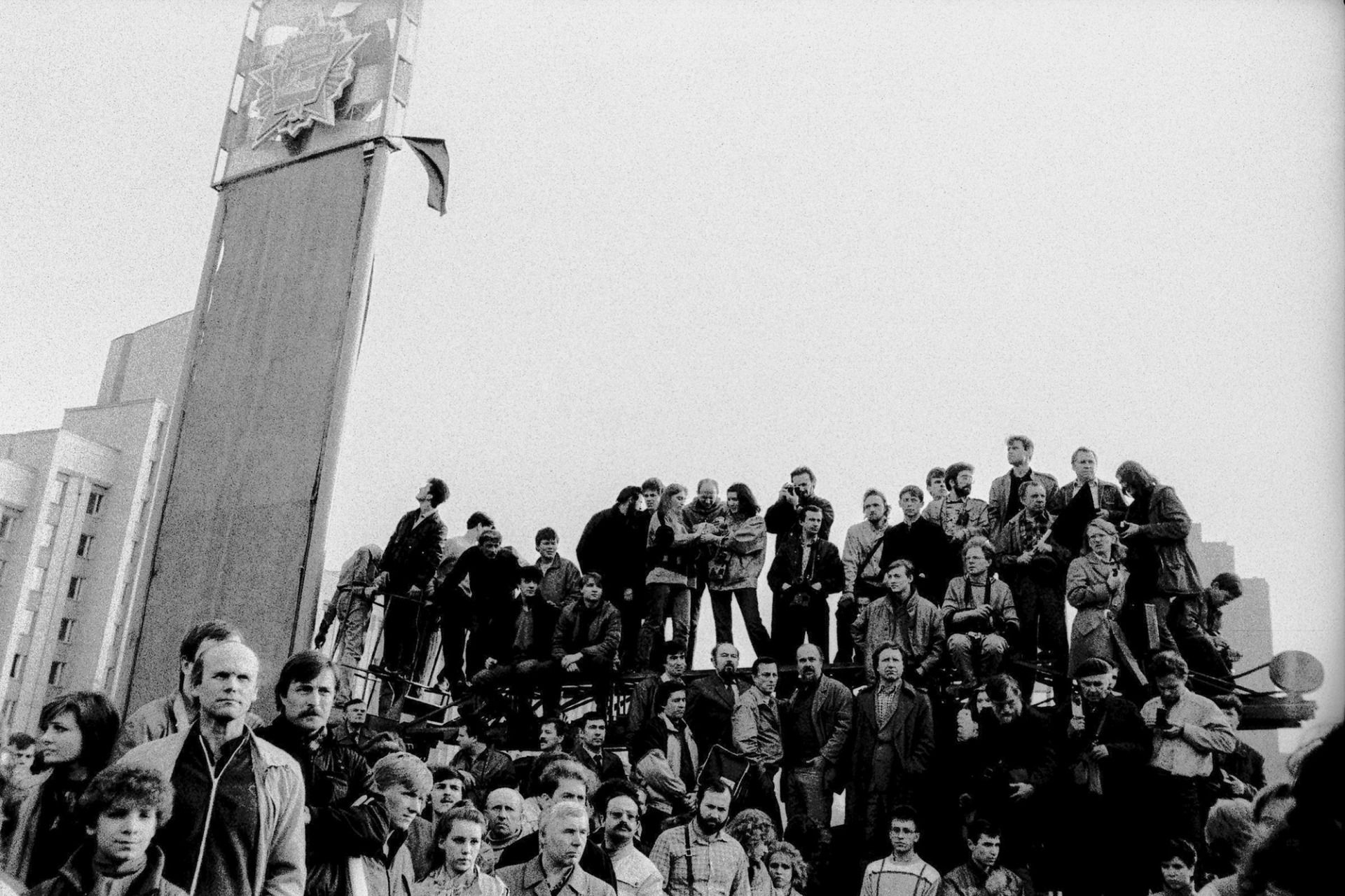
At the end of the Soviet era, the Belarusian Popular Front organized the first mass commemorative events. On April 26, 1989, an event called “An Hour of Sorrow and Silence” took place on Lenin Square in Minsk — an unauthorized silent vigil. In response, authorities brought in vehicles with loudspeakers and played cheerful music.
Hour of Sorrow and Silence. Photo by Vladimir Sapogov
And on September 30 of the same year, the first full-fledged march took place, named “Chernobyl Way.” The idea for the rally was proposed by Natalia Roslova. She was involved in creating the structure of the socio-political movement “Belarusian Popular Front” (BPF) in the Mogilev region — one of the hardest-hit areas. The name itself was coined by the front's leader, Zenon Poznyak.
The column marched from the “Luch” watch factory to Lenin Square. At the front, a bell was carried, struck by a boy — according to participants, its sound resembled the bells of Khatyn. Behind him walked thousands of people. Residents of Minsk and those who came from contaminated areas held signs with the names of their villages. Writers Vasil Bykov and Ales Adamovich led the march. About 30,000 people attended — despite the authorities scheduling a community cleanup on the same day.
Since then, “Chernobyl Way” has been held annually, and the date has become fixed as April 26.
1996: Integration with Russia and 50,000 on the avenue
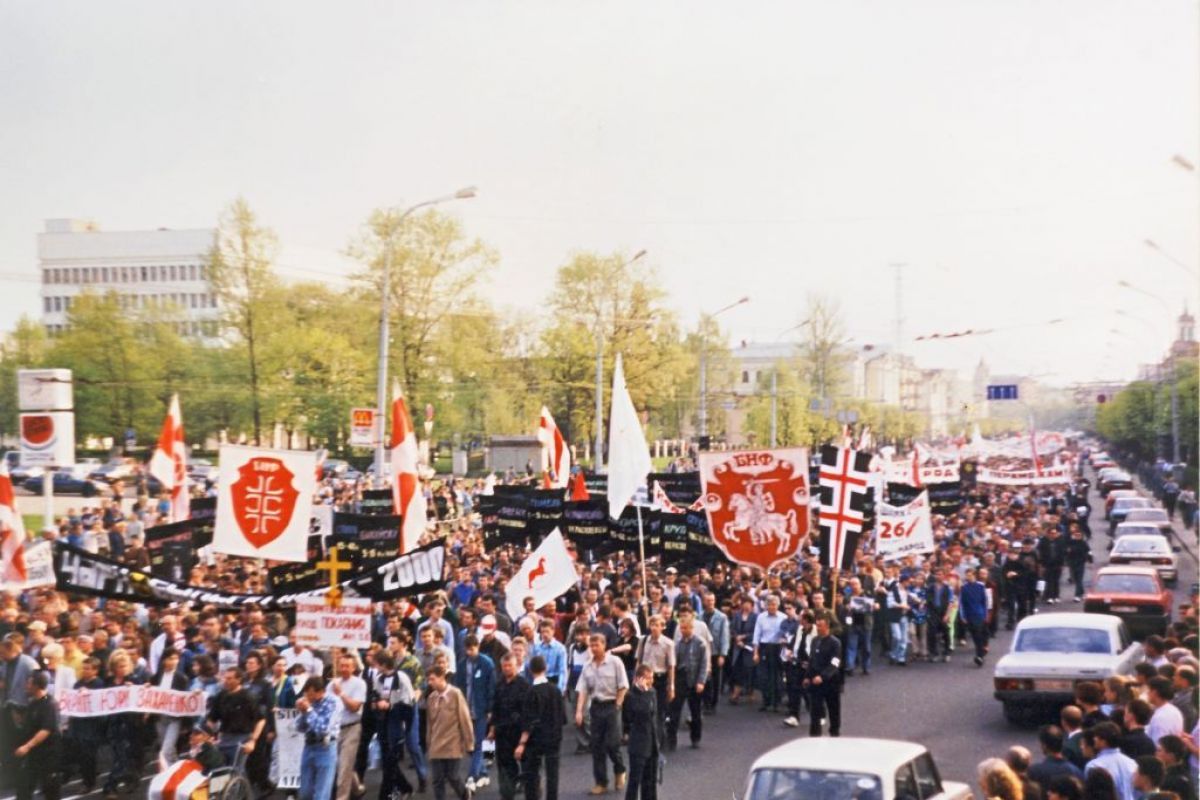
On the tenth anniversary of the accident, the march was the largest in its history. By that time, Alexander Lukashenko had been in power for two years, and serious tension had built up in society. The president was in conflict with parliament, issuing decrees that were repeatedly annulled by the Constitutional Court, and preparing a referendum to expand his powers. But the immediate trigger for the mass protests was the plan for integration with Russia: the terms of the agreements were unknown to both MPs and citizens, and the opposition warned that the country could lose its independence. Spring was turbulent: on March 24 there were rallies for Freedom Day, on April 2 — protests on the day the Belarus-Russia Community Treaty was signed. And on April 26, about 50,000 people took part in “Chernobyl Way.” Later, this chain of events was called the “Minsk Spring.”
“Chernobyl Way” in 2000. Source: vytoki.net“Chernobyl Way” in 1996. Source: vytoki.net
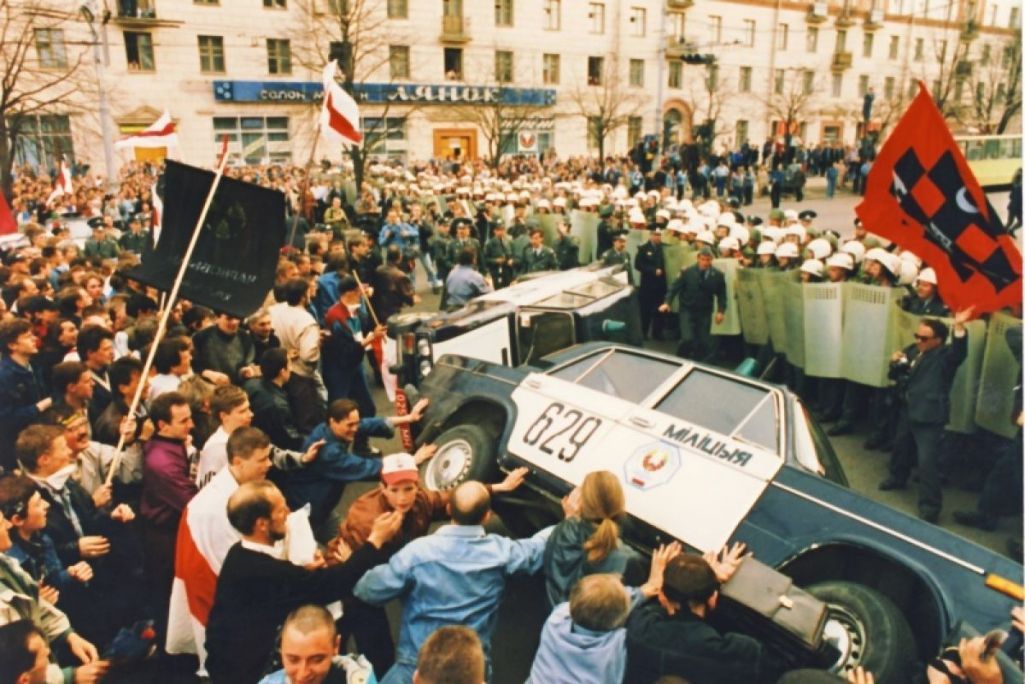
The column moved along Skaryna Avenue, when riot police blocked its path at Yakub Kolas Square. Clashes began: protesters overturned police cars, special forces and army units were deployed to suppress the crowd. About a hundred people were injured, dozens were detained.
From that moment, “Chernobyl Way” finally ceased to be just a mourning event. It became an annual act of civil disobedience.
The country most affected by Chernobyl builds its own nuclear plant
In the years after 1996, the number of participants fluctuated — from 25,000 in 1997 to several hundred in the mid-2000s. Authorities pushed the event to the remote Bangalore Square, far from the city center. The march continued, but remained the affair of a steadfast political core.
A new turn came in 2008, when the Belarusian leadership decided to build its own nuclear power plant. The site chosen was Ostrovets in the Grodno region. The general contractor was Russia's Rosatom, and the project was financed by a $10 billion Russian loan.
The idea of building a nuclear power plant itself is not unusual: dozens of countries operate nuclear plants, and the project had its economic arguments — above all, reducing dependence on Russian gas. But for Belarus, the issue had a special context. The country most affected by Chernobyl decided to build a nuclear plant, and this choice struck some in society not just as questionable, but as absurd.
The criticism was directed not so much against nuclear energy as such, but at how the decision was made and where the plant was being built. From the plant to the Lithuanian capital Vilnius is about 50 kilometers. Critics pointed out that after the Fukushima accident in 2011, the evacuation zone around the plant was 20-30 kilometers, meaning Vilnius would be in a potential danger zone.
Critics were concerned not only about the plant's proximity to a neighboring country's capital, but also about the lack of transparency in the process. The decision to build was made without public discussion. When environmental organizations tried to hold public hearings, according to ecologists, they were told that Belarusians had “radiophobia” and that the public's job was not to discuss, but to convince people of the need for the plant. Later, the oldest environmental organization, Ekodom, which tried to engage in dialogue with the authorities on this topic, was declared extremist.
Lithuania consistently opposed the construction. In 2017, the Lithuanian Seimas passed a law declaring the Belarusian nuclear plant a threat to national security and public health. The European Parliament also adopted resolutions criticizing the project. Official Minsk, in response, called Lithuania's position politicized and referred to IAEA inspections, which raised no objections to the site.
For participants in “Chernobyl Way,” the construction became further proof that the authorities were not learning from the past. As early as 2008, slogans like “The atom is never peaceful” and “We are against the nuclear reactor” appeared at the march. In 2012, the rally was entirely focused on opposing the Ostrovets plant — after which 40 people were detained. In 2016, protesters chanted “Ostrovets is the second Chernobyl.”
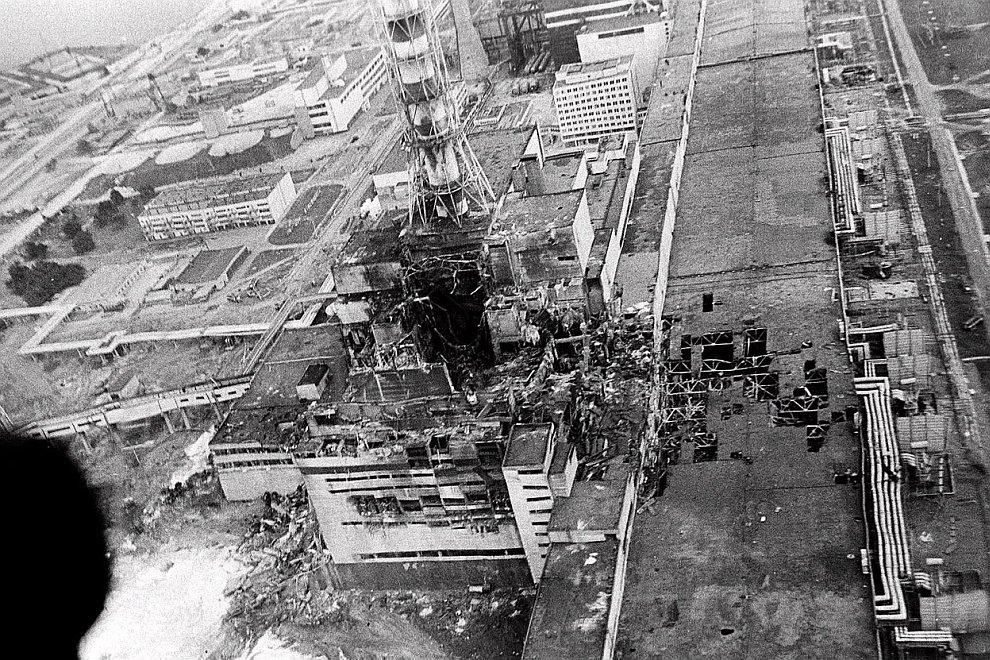
Destroyed power unit of the Chernobyl Nuclear Power Plant after the accident, 1986. Photo: AP Scanpix
In the summer of 2016, an incident occurred that strengthened the critics' position. During installation, the 330-ton reactor vessel for the first power unit was dropped from a height of about four meters. The reactor vessel is the main container where the nuclear reaction takes place. Asexplained by nuclear physicist Andrei Ozharovsky, despite its massive weight, the vessel is a fragile structure, and even a minor fall could worsen the strength of the metal and welds.
After analyzing the documents, experts concluded that it was impossible to confirm the vessel's safety, and the Belarusian side demanded a replacement. The dropped vessel wassent back to Russia, and it was decided to install the vessel made for the second unit on the first. But it too had an issue: during transportation, it struck a power line pole. Despite this, in April 2017, that very vessel wasinstalled on the first power unit. The incident with the fall became known only two weeks later — after a leak to the press.
Nevertheless, construction continued. On November 7, 2020, the first power unit was officially launched. The second was connected to the power grid in 2023.
After 2020: Repression inside, rallies abroad
The summer of 2020 was a turning point for Belarus. After the presidential election, mass protests swept the country, followed by equally massive repression. Thousands were detained, hundreds convicted, and many forced to leave.
Against this backdrop, “Chernobyl Way” inside the country effectively ceased. In 2020, the rally was canceled due to COVID. In 2021, authorities prevented people from gathering by bringing special equipment into the city center. In 2022, the Green Party applied to hold the rally with the slogan “No to war!” — organizers demanded that Belarusian troops not take part in the conflict and that Russian troops be withdrawn. The Minsk City Executive Committee refused.
But “Chernobyl Way” did not disappear, but moved abroad. Since 2022, rallies have been held in Vilnius and Warsaw — cities where a significant part of the Belarusian diaspora is concentrated. In 2023, Sviatlana Tsikhanouskaya called on Belarusians worldwide to take to the streets in their cities on April 26.
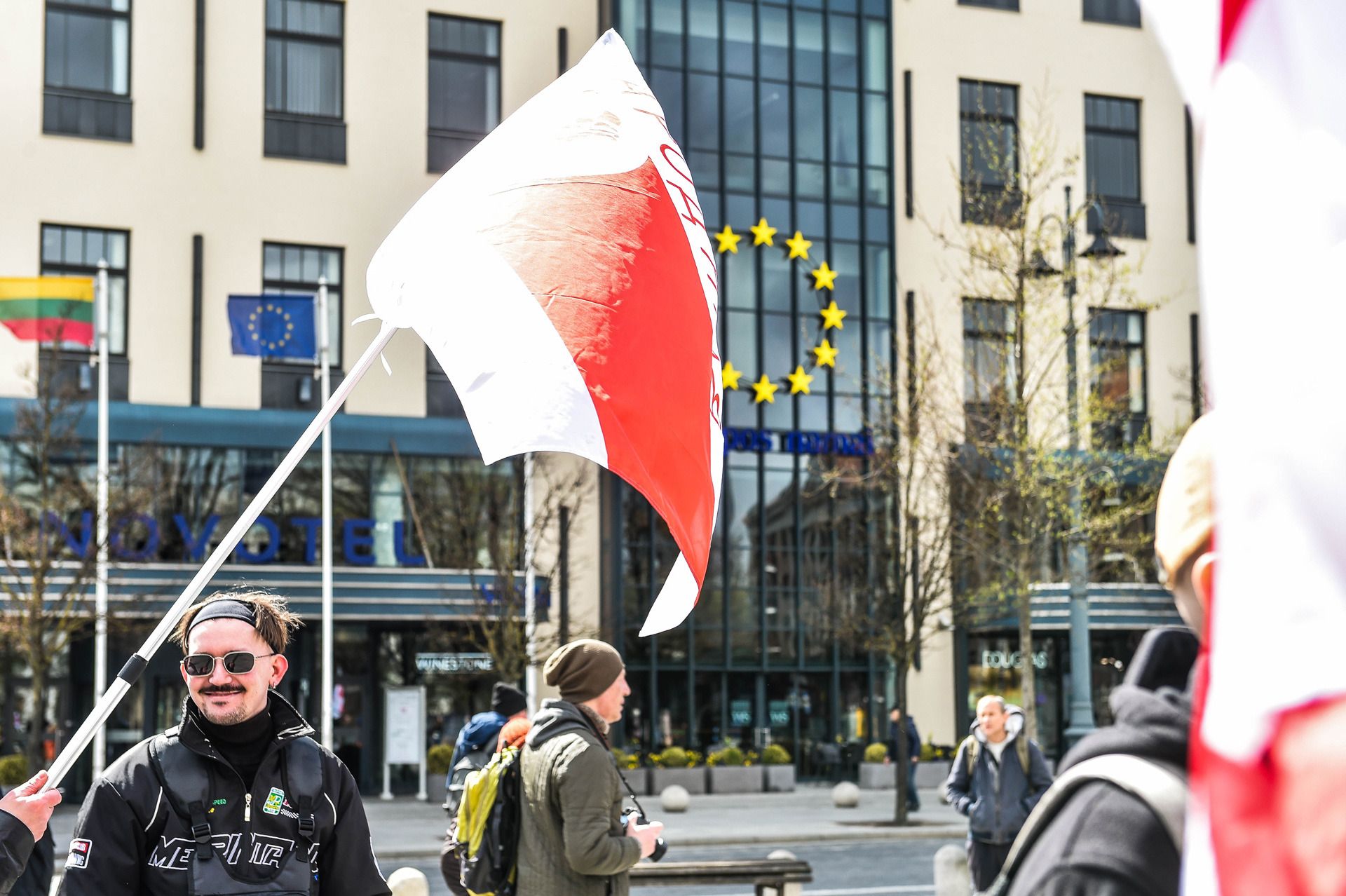
“Chernobyl Way” rally in Vilnius, April 26, 2026. Photo by Anna Gavrilova“Chernobyl Way” rally in Vilnius, April 26, 2026. Photo by Anna Gavrilova“Chernobyl Way” rally in Vilnius, April 26, 2026. Photo by Anna Gavrilova
The fact that Vilnius — a city itself just 50 kilometers from the Belarusian nuclear plant — became one of the centers of “Chernobyl Way” gave the rally new meaning. The issue of nuclear safety is no longer just a Belarusian topic; Lithuanians, Ukrainians, and representatives of international organizations now join the marches.
2026: 900,000 people still live in the contaminated zone
On the eve of the 40th anniversary of the Chernobyl disaster, in April 2026, the publication “Zerkalo” and the “Green Belarus” alliance asked prominent Belarusians how the catastrophe affected their lives. Among those who responded was Sviatlana Tsikhanouskaya, born in 1982 in Mikasevichy, Brest region, within the contaminated zone.
“When I was already in school, I remember doctors often came to examine us, especially our thyroid glands. And we were constantly given iodine. Maybe the fact that I'm now on thyroid hormones is a consequence of being born in a contaminated area,”she said. At age twelve, Tsikhanouskaya traveled to Ireland through the “Children of Chernobyl” program and later worked as an interpreter for the Irish charity Chernobyl Life Line, which helped victims of the disaster.
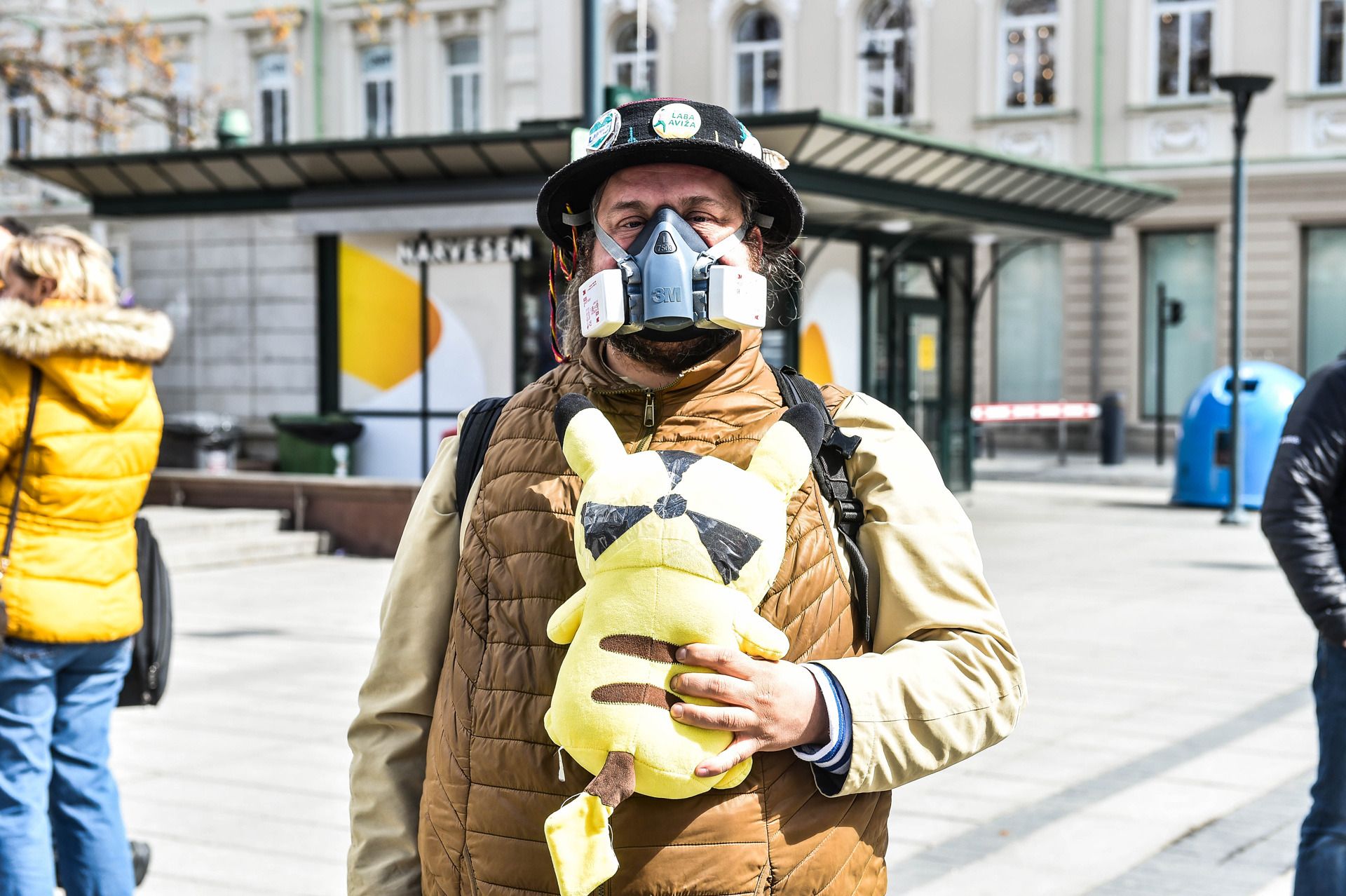
“Chernobyl Way” rally in Vilnius, April 26, 2026. Photo by Anna Gavrilova
In forty years, the contaminated zone in Belarus has shrunk — from almost a quarter of the country's territory to about 12 percent. The number of settlements in radioactive contamination zones hasdecreased from 3,678 to 2,013. But more than 900,000 people still live in them.
In February 2025, a drone pierced the protective arch over the fourth block of the Chernobyl Nuclear Power Plant. According to the IAEA, the hole in the roof was about six meters wide. Ukraine blames Russia, Russia denies it. The sarcophagus, built by more than 40 countries, lost its airtightness; full restoration, experts estimate, could take years and cost hundreds of millions of euros. Chernobyl is still not in the past — not for the 900,000 people who live on contaminated land in Belarus, nor for the residents of Vilnius just 50 kilometers from the new nuclear plant, nor for Ukrainians, on whose land the damaged sarcophagus still stands.
“Chernobyl Way” rally in Vilnius, April 26, 2026. Photo by Anna Gavrilova
If you enjoyed this article, consider making a donation — one-time or, even better, monthly. Your support helps us motivate our authors and become better with every article.
Our organization is recognized by the Internal Revenue Service (IRS) as a 501(c)(3) tax-exempt, charitable organization, which means that all contributions made to us are tax-deductible to the fullest extent permitted by U.S. law. Individuals may generally deduct charitable contributions of up to 60% of their Adjusted Gross Income (AGI) for cash donations made to qualifying 501(c)(3) organizations. For donations of appreciated assets (such as stocks or other long-term capital assets), the deduction is typically limited to 30% of AGI, based on the fair market value of the asset. C-corporations may deduct charitable contributions of up to 10% of their taxable income for donations made to eligible charitable organizations.
By submitting a donation, you confirm that you have read and accept the following documents: Privacy Policy and User Agreement, and also give consent to the processing of your personal data.
If you would like to unsubscribe from a monthly donation, please email us at: [email protected]