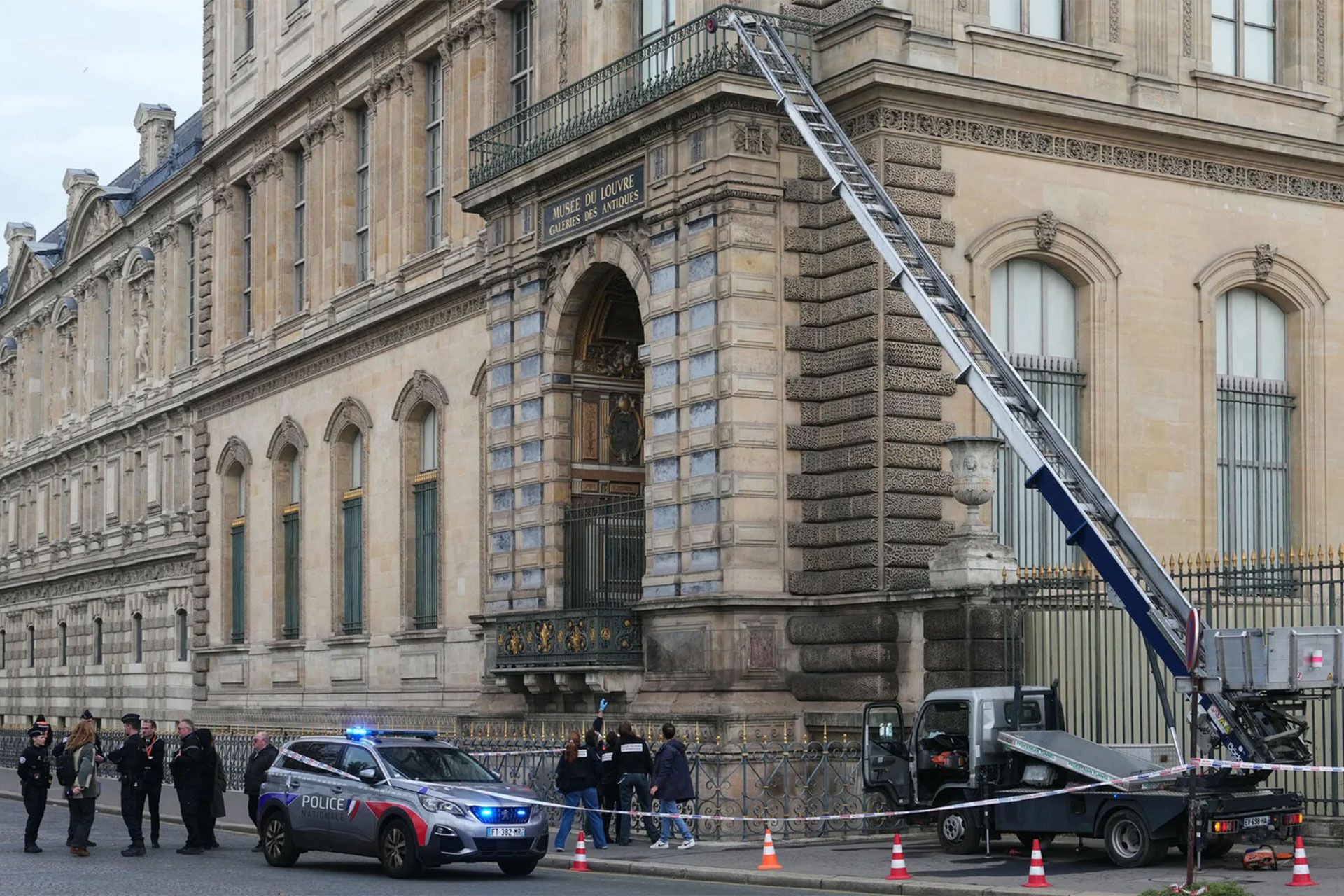
A week after the daring robbery of the Louvre, the Paris police arrested two suspects: as the newspaper Le Figaro found out, one was preparing to board a flight to Algeria, the other planned to flee to Mali. The Paris prosecutor stated that premature disclosure of information about the arrests could harm the interests of the investigation. After all, many thefts of exhibits from the Paris museum remained unsolved for a long time.
Photo: Getty Images
The robbers who broke into the Apollo Gallery a week ago and stole nine pieces of jewelry from the Napoleonic era valued at over 100 million euros have sparked many jokes. For example, in our age of progress, where video cameras are equipped with artificial intelligence, there are infrared sensors and sophisticated alarm systems, thieves have only one way to bypass it all: take a ladder and climb through the window.
But in the movies, criminals dig tunnels, gracefully dodge laser alarm beams, and rappel from the ceiling. In real life, the Louvre has been robbed in broad daylight and right before visitors' eyes more than once. The Apollo Gallery, from which the jewels were recently taken, was robbed half a century ago as well, also through a window. That time, the thieves didn’t even need a ladder.
The Avant-Garde Gang
In 1911, Pablo Picasso himself was accused of theft from the Louvre. And not without reason: he owned the heads of two ancient Iberian statues stolen from the museum four years earlier. But the artist managed to get away with just a scare.
Everything came to light by accident. French police were exhausted searching for the stolen “Mona Lisa” that year. Out of desperation, they suspected everyone who might have even the slightest motive. For example, avant-garde artists who shocked the public by declaring that classical painting was useless junk and that the Louvre should be burned down.
One of them, avant-garde poet, literary critic, and Picasso’s friend Guillaume Apollinaire, became very nervous. The fact was that his secretary, Joseph-Honoré Jérier Pierre, had stolen three heads of Iberian statues from the Louvre four years earlier. He kept one for himself and either gifted two to Picasso, whom he admired, or, as he later claimed, sold them for 50 francs each. It is believed that these heads served as prototypes for the faces in the painting “Les Demoiselles d'Avignon” (1907). Apollinaire, as Picasso’s friend, knew about this story. He was even more unsettled by an article in the Paris-Journal newspaper. Journalists publicly promised to pay 50,000 francs to buy the “Mona Lisa”.
Source: bnf.fr
The effect was unexpected. A letter arrived at the editorial office asking: if the “Mona Lisa” was gone but another stolen Louvre exhibit existed, wouldn’t they pay anything for it? “By the way, we didn’t sign up to buy everything stolen from the Louvre!” the newspaper protested in an article about the incident. But the editors agreed to meet the thief. It was Jérier Pierre. He explained that the theft was simple. The heads were not considered very valuable, kept without glass cases, there was no security in the halls, and the biggest difficulty was carrying them out: each weighed over five kilograms. He sold them to some artist.
After reading the editorial, Apollinaire and Picasso panicked. If the police caught them, the friends risked becoming the main suspects in the theft of the “Mona Lisa”.
They decided to get rid of the evidence, put the heads in a suitcase, and went out late at night to throw it into the Seine. But either they couldn’t bring themselves to destroy works of art, or they got too scared — after wandering for an hour, the friends returned home with the suitcase.
Eventually, they decided to give the heads to André Salmon, the chief editor of Paris-Journal, for whom Apollinaire wrote critical articles. Salmon was supposed to lie to the police, saying an unknown person had brought the heads to the editorial office. But during interrogation, Salmon cracked and betrayed his friends.
Picasso swore he didn’t know the heads were stolen. This is doubtful. Take, for example, the oddity that the artist loved to show off his art collection — but never showed the heads and kept them among clothes in a linen closet. There is a theory that Picasso actually commissioned Jérier Pierre to steal them and paid 100 francs. Incidentally, at the same hearing, he swore under oath that he didn’t know Apollinaire.
But considering their sincere remorse and the fact that the statues were returned intact, the court acquitted the artist friends. By that time, Jérier Pierre had fled abroad.
How the “Mona Lisa” Became Famous
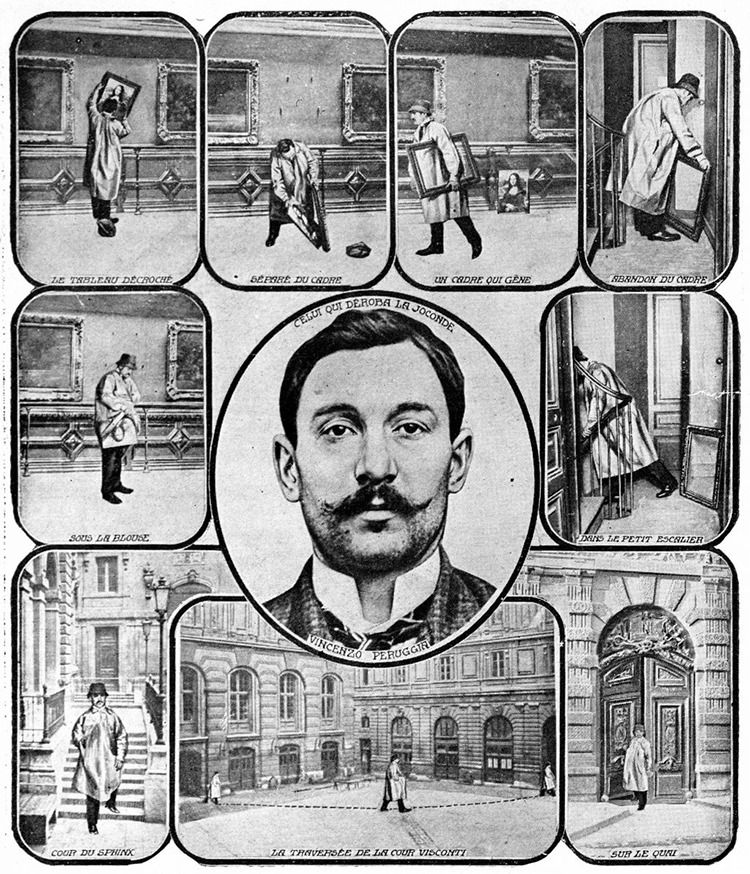
The Picasso case is just one episode in the story of the “Mona Lisa” theft. Italian decorator Vincenzo Peruggia worked at the Louvre as a handyman for eight months. On Monday, August 21, 1911, he entered the museum along with other workers. The Louvre was closed to visitors, there was less security than usual, and Peruggia knew, due to his duties, how the painting was secured. He took the “Mona Lisa” off the wall, left its frame on the stairs, wrapped the “Gioconda” in a smock, and calmly walked out.
This comic-style illustration, often seen, shows Peruggia stealing the painting. Image: DR
The disappearance was only discovered the next day by the artist who came daily to copy the painting. At first, they hoped it had been taken for restoration. Then an unprecedented search was launched. Investigators even worked on transatlantic liners that had sailed after the theft but hadn’t yet reached America, in case the thief tried to take the painting to the New World.
Everyone who was in the Louvre that day was questioned. The police crossed Peruggia off the list of suspects: he was calm and answered questions willingly. Meanwhile, the “Mona Lisa” lay in his trunk in his Paris apartment, wrapped in red silk and hidden under carpentry tools.
The “Mona Lisa” was a known painting, but not very famous. It was the theft that made it world-famous. Onlookers came to the Louvre to stare at the empty spot where it once hung.
Meanwhile, Peruggia returned to his native Italy and took the painting with him. Two years later, he decided to sell it to a local gallery owner, who immediately contacted the police. Peruggia was arrested, and the “Mona Lisa” went on a tour around Italy before returning to the Louvre.
At the trial, Peruggia claimed he stole the painting out of patriotism. Allegedly, he wanted to return what Napoleon had once stolen. In fact, Leonardo da Vinci himself brought the “Mona Lisa” to France some 250 years before Napoleon was born. Letters to his father, in which Peruggia promised he would soon become rich, contradicted the thief’s words. Moreover, Peruggia wanted to get a sum equivalent to $2 million today for the “Gioconda.” But the court liked the patriotic motive. Peruggia was sentenced to only one year and 15 days in prison. He was released early after seven months.
Theft for a Good Cause
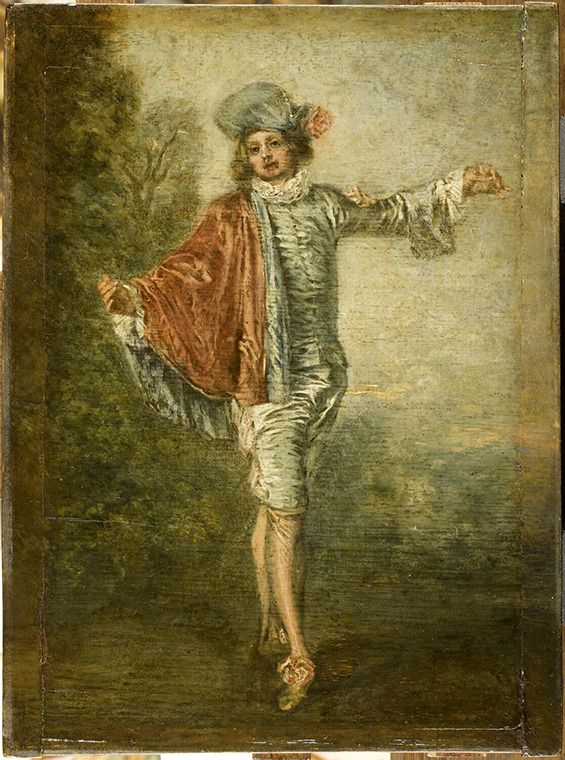
On June 11, 1939, a visitor approached Antoine Watteau’s painting “The Indifferent,” took it off the wall, and calmly left the museum, hiding the small canvas under his coat. The guide raised the alarm when she noticed one of the exhibits missing during the tour. The case became high-profile: it was the first theft since the “Mona Lisa.” The painting was valued at $100,000, which would be $2.3 million today.
Jean-Antoine Watteau. The Indifferent, 1716. Image: GrandPalaisRmn (musée du Louvre) / Stéphane Maréchalle
Investigators could not track down the brazen thief. However, two months later, the Louvre received a call from the Palace of Justice. Twenty-four-year-old artist Serge Boguslavsky brought “The Indifferent” back and confessed to removing it from the museum. But with a good purpose: to restore it.
Art experts did not appreciate his zeal. The court report stated the painting suffered significant damage: some brushstrokes disappeared, and the painting was covered with automotive lacquer... Boguslavsky was sentenced to two years in prison. He appealed, and the sentence was increased to four years on review.
Additionally, Boguslavsky had to pay a 300-franc fine and was banned from entering France for five years. He spent those years in Switzerland, where his son Julien was born. Julien grew up to be a well-known neurologist and, like his father, made headlines due to an art-related scandal. Julien had been passionate about collecting old books since childhood. In 2006, he was arrested for stealing 5.3 million francs from the Lausanne Hospital (CHUV) cash register, which he spent on buying folios. The hospital eventually recovered all the money. The books purchased with the stolen money were confiscated and sold at a Christie's auction for 3.8 million euros — that is, 5.7 million francs.
Masterpieces Moved Out of Town
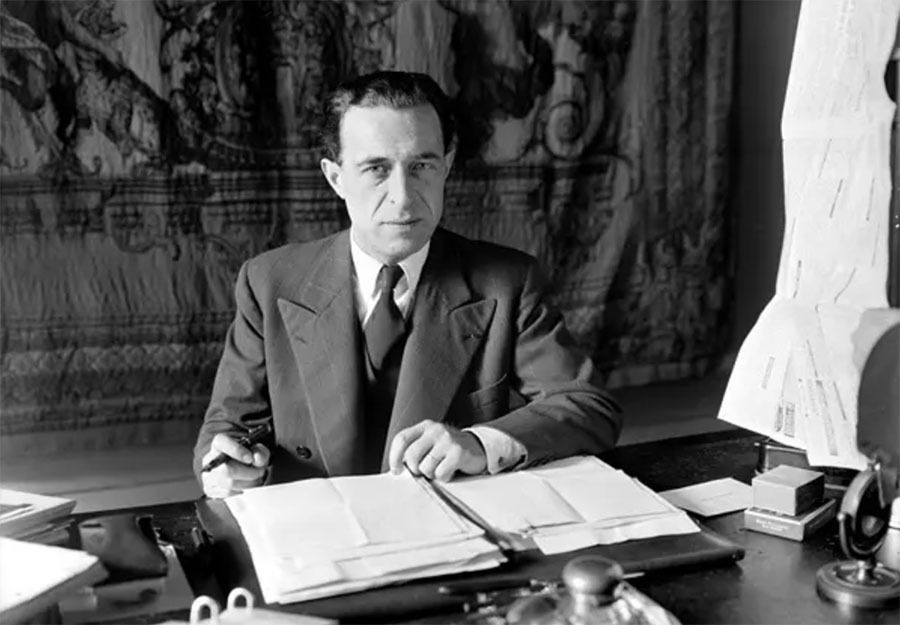
The Louvre was heavily looted by the Germans during World War II. Fortunately for the museum, Jacques Jaujard was in charge at that time. He was a volunteer in World War I, a journalist, secretary to politician Paul Painlevé, and later an official in the arts sector. In 1938, during the Spanish Civil War, he oversaw the evacuation of exhibits from the Prado Museum in Madrid to Switzerland. When it became clear that the Germans were advancing on France, Jaujard decided to act.
Photo: DR
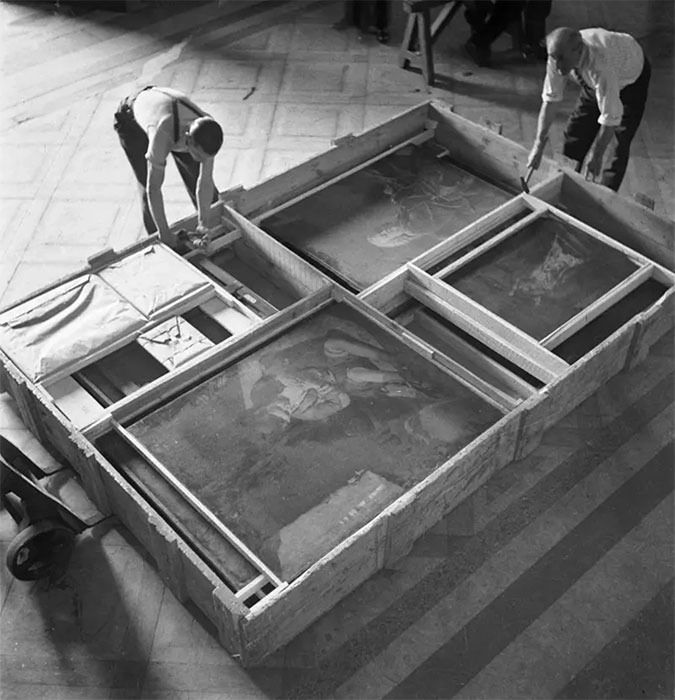
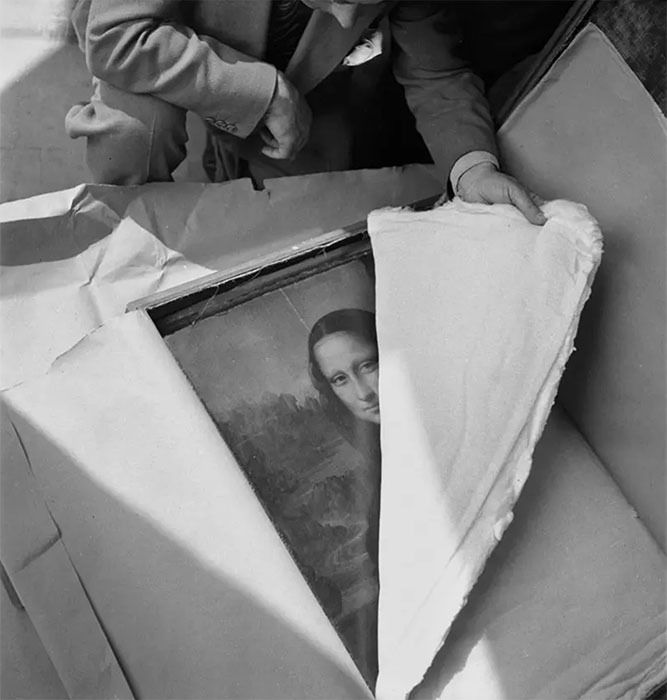
On August 25, 1939, he closed the Louvre supposedly for repairs for three days. During this time, staff, students, and even warehouse workers from city stores packed masterpieces into crates. Each crate was marked according to its cultural value: yellow, green, or red. The crate with the “Mona Lisa” bore three red dots.
Photo: DR
By trucks, private cars, and even ambulances, 1,862 crates were taken to the provinces. Many were hidden in French castles, such as Chambord. The last to leave the museum was the nearly four-meter-tall Nike of Samothrace: on September 1, when Germany invaded Poland.
On August 16, 1940, Count Franz Wolf-Metternich arrived at the Louvre. Hitler had assigned him to oversee French museum collections. He immediately realized many masterpieces had disappeared from the Louvre. It was easy to see: some halls were completely empty, with only picture frames lying on the floor. However, aristocrat Wolf-Metternich was not a member of the Nazi party and did not share Nazi ideology. He turned a blind eye to what was happening (after the war, Jaujard asked Charles de Gaulle to award Wolf-Metternich the Legion of Honor). This was very timely, as Jaujard’s efforts to evacuate were not over. He also had to ensure the collection’s safety: install hygrometers in new shelters, obtain heaters... But in 1942, Wolf-Metternich was recalled to Germany. Dark clouds gathered over Jaujard, and he had to flee the capital and hide in the Lozère department.
Jacques Jaujard. Photo: DR
Meanwhile, his colleague Rosa Valland, working as curator of the Jeu de Paume museum, kept detailed records of every item the Nazis took out of the country: this museum was used as a transit point. After the victory, Jaujard returned to the Louvre and began recovering masterpieces from hiding places, while Valland went to Germany to search for the taken exhibits. Her records allowed the return of 45,000 works of art. Yet some of the items taken from France have still not been found.
Through the Window Without a Ladder
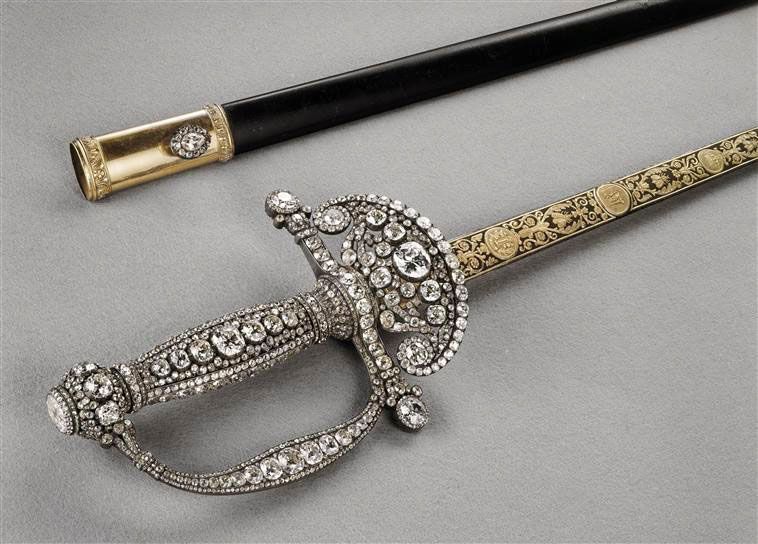
In December 1976, three armed masked robbers raided the Apollo Gallery — the very gallery from which treasures were stolen this year. They also broke into the museum by smashing a window. But they didn’t even need a ladder. Workers were cleaning the building’s facade, so the robbers calmly climbed the scaffolding. After subduing two guards, they smashed a display case and took King Charles X’s sword, inlaid with precious stones.
Photo: DR
It is believed that the triggered alarm scared off the thieves — otherwise, the museum would have lost at least a richly decorated saddle from the same display case.
The sword, made in 1824 for the monarch’s coronation, has still not been found.
The Louvre’s press secretary said such an exhibit is practically impossible to sell — but the precious stones could be extracted and sold.
The Journey of the Armor
On the night of May 31 to June 1, 1983, the helmet and breastplate of a 16th-century Italian armor, decorated with gold and silver, disappeared from the Louvre. At the same time, a Louis XV-style clock vanished. How the thieves managed it remains unclear. In the morning, museum staff discovered the smashed display case — that’s all the details available.
Photo: SEBASTIEN SORIANO/Le Figaro
The armor was unexpectedly found 38 years later. In January 2021, an antique weapon specialist was hired by a family from Bordeaux to appraise their inheritance. Two items aroused his suspicion. Checking them against the Treima stolen art registry, he contacted the police: these were the missing armor parts. The police never discovered how they ended up in Bordeaux. And by the way, the clock has still not been found…
The Mystery of the Halberd
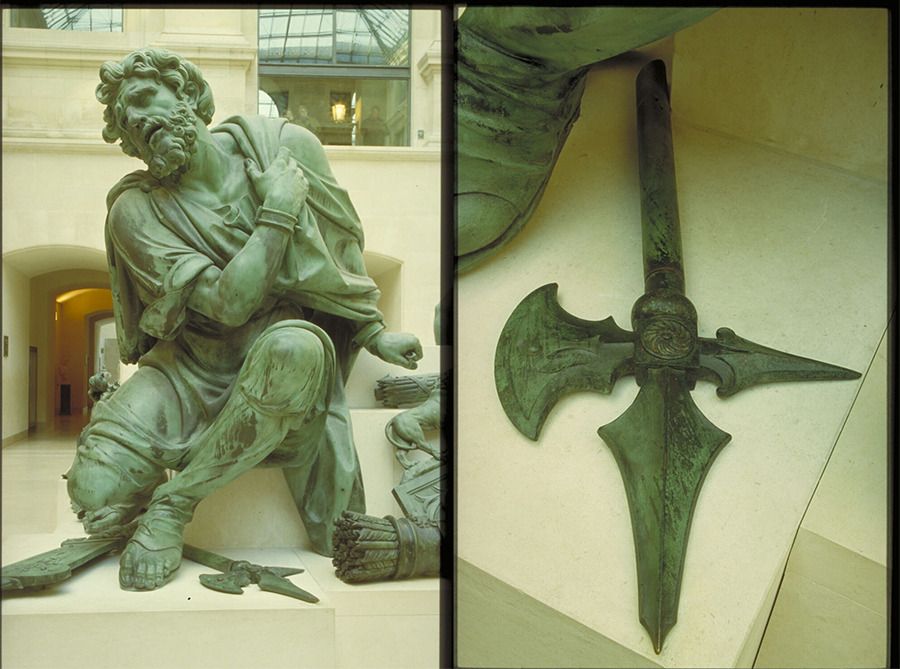
Late at night on January 18, 1995, the bronze Brandenburg by Martin Desjardins lost its halberd. The statue did not hold it in its hands — the broken weapon lay at its feet. Still, it was a surprising incident. The statue stood in the courtyard of the Puget Museum, covered by a glass ceiling, constantly guarded by four security staff. The halberd itself is not easy to carry off: it is 1.3 meters long and weighs 17 kg. Nevertheless, the weapon disappeared without a trace. On January 30, the halberd was found lying at the foot of the Louvre pyramid.
Photo: Musée du Louvre, Dist. GrandPalaisRmn / Pierre Philibert
Figurative Cutting
In 1990, in broad daylight, Renoir’s painting “Portrait of a Seated Woman” was stolen from the Louvre. The 35 by 27 cm painting was cut out of its frame right before visitors’ eyes. The alarm did not go off. That day was generally rich in thefts. Besides the Louvre, two other Paris museums lost paintings: the Carnavalet Museum lost a painting by Paul Huet, and the Ernst Eber Museum lost a portrait of a woman by the same artist. As a precaution, the museum directors closed the Delacroix, Gustave Moreau, and several other museums — just in case the thief decided to visit them too.
The museums were lucky. Shortly after, the thief sold the “Portrait of a Seated Woman” to an antique shop. He was so careless that he left a business card. The police quickly arrested a certain Richard E., a young native of Lyon. He confessed to thefts from all three museums, and all paintings were recovered. “I am an art lover. The thought of owning a Renoir painting in my early twenties fascinated me,” he explained at trial.
Photo: GrandPalaisRmn (musée du Louvre) / Hervé Lewandowski
For other criminals, the story did not go unnoticed. On July 10, 1994, someone at the Louvre cut Robert Nanteuil’s “Portrait of Jean Doré” from its frame and calmly left with the painting. Six months later, on January 11, 1995, the museum lost a landscape with a doe by Lancelot Théodore Turpin de Crissé in the same way. On May 3, 1998, the thief did not bother cutting the canvas: he simply took down the small painting “Road to Sèvres” by Camille Corot from the wall and walked out, blending with other visitors. None of these three paintings have ever been found.
Before the recent robbery of the Apollo Gallery, “Road to Sèvres” was the last masterpiece whose theft from the Louvre became widely known. However, in reality, there may be more.
As Erin Thompson, professor at John Jay College of Criminal Justice, explained in an interview with The New York Times, it is not unusual for museums to keep quiet about stolen works. Firstly, it might inspire other thieves to steal from the museum. Secondly, it could reveal vulnerabilities in the security system. Finally, the publicity might be a death sentence for the artwork. To avoid risk, thieves may destroy the pieces or melt them down to sell as precious metal.
If you enjoyed this article, consider making a donation — one-time or, even better, monthly. Your support helps us motivate our authors and become better with every article.
Our organization is recognized by the Internal Revenue Service (IRS) as a 501(c)(3) tax-exempt, charitable organization, which means that all contributions made to us are tax-deductible to the fullest extent permitted by U.S. law. Individuals may generally deduct charitable contributions of up to 60% of their Adjusted Gross Income (AGI) for cash donations made to qualifying 501(c)(3) organizations. For donations of appreciated assets (such as stocks or other long-term capital assets), the deduction is typically limited to 30% of AGI, based on the fair market value of the asset. C-corporations may deduct charitable contributions of up to 10% of their taxable income for donations made to eligible charitable organizations.
By submitting a donation, you confirm that you have read and accept the following documents: Privacy Policy and User Agreement, and also give consent to the processing of your personal data.
If you would like to unsubscribe from a monthly donation, please email us at: [email protected]