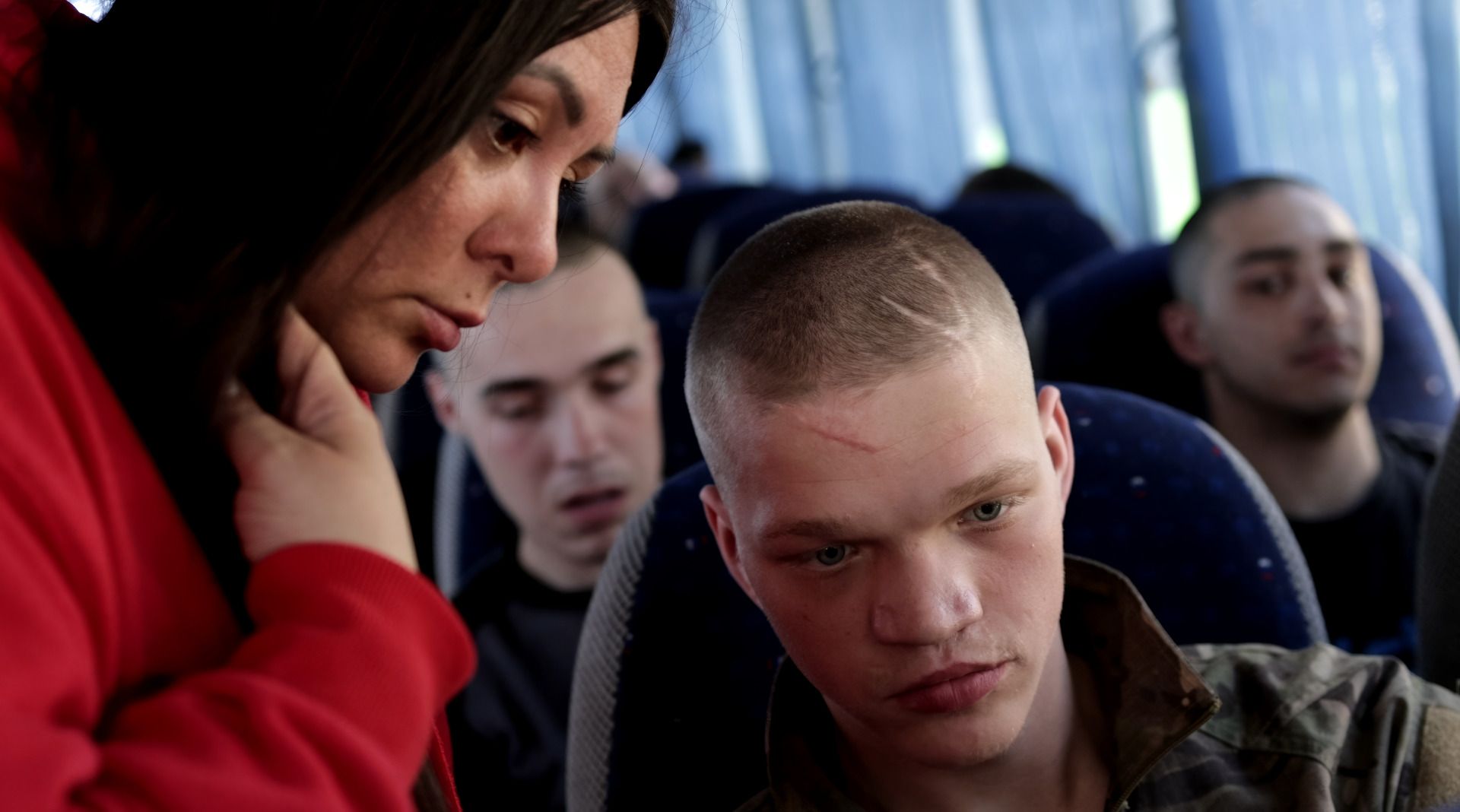
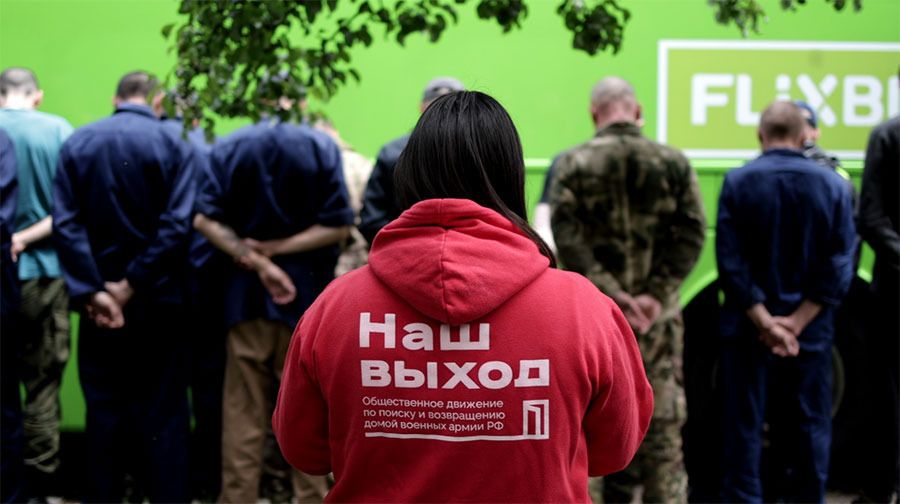
Irina Krynyina is the first wife of a Russian prisoner of war who came to Ukraine in the fall of 2023 to be with her civilian husband. Since then, not only her life but also her motivations have changed dramatically. Leaving behind a comfortable life in her native Krasnoyarsk, Krynyina, together with other Russian women living in Ukraine, founded the movement “Our Way Out” – and now helps relatives of Russian prisoners of war locate them in Ukrainian captivity. We spoke with Irina about how former captives can avoid being sent back to war.
Irina never supported the war, but she wasn’t very interested in its details—until her civilian husband, Evgeny, was mobilized.
“In the evening he received a summons, and in the morning he went to the military enlistment office, confident that he wouldn’t be sent to war. I tried everything to dissuade him, persuaded him it was better simply not to go, because after the mobilization was announced, everyone was being sent to the front indiscriminately. But he didn’t believe me, and by that evening he was already taken to Omsk,” recalls Irina.
After serving in the rear, Evgeny was sent to the front line in the Donetsk region, and in July 2023 he was captured. Tired of knocking on the doors of every possible authority in Russia, Irina took a desperate step: she came to Ukraine. The meeting with her husband was not very warm: although Evgeny was not a supporter of the war, he wholeheartedly wanted to return home—while for Irina, the very fact of her being in Ukraine meant that the way home was cut off under the current Russian regime. According to her, her beloved never accepted this act of hers.
While Evgeny is still awaiting exchange, Irina, together with photojournalist Victoria Ivleva and activist Olga Rakova, founded the movement “Our Way Out.” They help Russians find their loved ones in Ukrainian captivity and work to bring them home.
Irina Krynyina. Photo: “Our Way Out”
Under current circumstances, this is becoming more difficult. Recently, more and more evidence has emerged that Russians returning from captivity are being sent back to the front, often into so-called “meat grinder” assaults. Many are not even allowed to see their families.
Is it possible to avoid returning to the front?
Irina Krynyina insists that if relatives start fighting for their loved one in time, a former prisoner of war has a chance not to be sent immediately to the front after exchange.
“First of all, it’s important to hire good lawyers in advance. If the person, for example, was wounded, a lawyer can secure their discharge or at least a re-examination by medical authorities. It’s also possible to “negotiate” with the medical commission if there is strong will. Legally, you can achieve at least a short-term return home and then simply escape from there if no other options remain. I had a case when former prisoners of war were brought back to the unit after exchange, guarded by the military police. During a shift change of the convoy, two of them managed to escape,” shares Irina.
According to her, the main problem is that relatives let the process run on its own and come to her when it’s already too late—say, when their loved one is not only sent back to war but goes missing in action, which most often means death.
Irina also reminds that according to the Geneva Conventions, a prisoner of war has the right to refuse exchange. In this case, they remain in captivity until the end of hostilities.
Crime and remorse
Family problems, debts, and loans—these, according to Irina, are the main motivations for Russians to go to a neighboring country armed.
“I have been visiting prisoner of war camps since October 2023, and at first, most of the detainees were mobilized men. Last summer, conscripts from Kursk appeared, but they were exchanged relatively quickly. Now, most captives are contract soldiers, many of whom come from penal colonies. The main contingent consists of people who were under investigation and signed contracts from pre-trial detention centers or colonies,” Irina explains.
The Russian army also includes many foreigners, mostly migrants from Central Asia—but not only them. “Right now, for example, we are gathering a parcel for Egyptians,” Krynyina shares.
The founder of “Our Way Out” admits that not all Russian soldiers, even when captured, are able to rethink their decision to go to the front. Much depends on the circumstances under which they were captured.
“If a person was in the field for a long time without food and water, wounded, calling for help on the radio but no one came, if his own comrades betrayed and abandoned him, of course, his view of the war changes dramatically. But if he barely had a chance to fight and everything happened very quickly—for example, Ukrainians surrounded a dugout and captured those inside—he is less likely to reconsider,” Irina reflects.
There are cases when Ukrainians literally save the lives of dying Russian captives. Irina Krynyina recalls how one wounded man had to undergo a skin graft.
“Resurrected” prisoners
The first thing the “Our Way Out” project does is help the relatives of servicemen who contact them find out whether their loved one is really in captivity. Getting this information in Russia is often simply impossible.
“We have had high-profile cases. For example, a woman in Russia was told that her husband went missing on the border in the Kursk region and was most likely dead, but the body would not be evacuated yet because fighting was ongoing. She wrote to all authorities, but when she contacted the ‘I Want to Find’ project, they confirmed he was in captivity,” Irina recounts.
However, this confirmation was not enough for the Russian authorities, and the “resurrected” soldier could not obtain prisoner-of-war status at home. Irina managed to arrange a one-day visit for his wife to Ukraine, where she met her husband at the camp. After the video of this meeting was published, he was included in the very next exchange.
The mother of young conscript Yaroslav Mishchenko was also called by the unit and told that her son had died and that a DNA test was needed to identify the body.
“Meanwhile, a Ukrainian chatbot confirmed he was in captivity, but at the time we had not yet gone to the camp to record proof. In the end, the mother called me in tears, asking, ‘Irina, who should I believe?’ I contacted the camp administration and asked them to urgently record a video with her son. After it was published, we went to the camp and recorded an interview with the boy. After that, he was also included in the next exchange,” Irina says.
Confirming prisoner-of-war status is one of the movement’s most important tasks. Russia often declares such soldiers dead, missing, or AWOL to avoid paying their families due benefits. However, sometimes the opposite happens: the Russian Ministry of Defense sent a letter to one mother confirming her son was in captivity, while the Ukrainian side insists that person is not among the captured. Despite everything, the mother continues to believe her son is alive.
Money for the husband
Although Irina has repeatedly dealt with grieving relatives searching for loved ones missing at the front, she admits that those concerned not about prisoners but about the payments owed for their service are significantly more numerous.
“There are cases when, for instance, a wife knows for sure her husband is in captivity and even communicated with him by video call, but did not provide any proof in Russia. When he was declared dead, she processed a death certificate and received funeral benefits. Recently, a civilian wife wrote to me whose husband was exchanged, sent back to the front, and then went missing. But what worries her most is that they were not allowed to register their marriage, so she won’t receive any money,” the founder of “Our Way Out” gives as an example.
Krynyina notes that during her work in Ukraine, her motivations have also changed. If her very first goal was to save her beloved and then help other Russians return, now her main aim is to do everything possible to end the war and bring all men home.
She often encounters cases where Russian prisoners of war were conscripted against their will. For example, she has met many conscripts who were forced to sign contracts by force or under torture. Sometimes the contract signatures were simply forged. For many of these people, public interviews are the only way to get on exchange lists. And also to tell their compatriots what really happens in the war and why they shouldn’t go to it.
Photographs provided by the “Our Way Out” foundation
If you enjoyed this article, consider making a donation — one-time or, even better, monthly. Your support helps us motivate our authors and become better with every article.
Our organization is recognized by the Internal Revenue Service (IRS) as a 501(c)(3) tax-exempt, charitable organization, which means that all contributions made to us are tax-deductible to the fullest extent permitted by U.S. law. Individuals may generally deduct charitable contributions of up to 60% of their Adjusted Gross Income (AGI) for cash donations made to qualifying 501(c)(3) organizations. For donations of appreciated assets (such as stocks or other long-term capital assets), the deduction is typically limited to 30% of AGI, based on the fair market value of the asset. C-corporations may deduct charitable contributions of up to 10% of their taxable income for donations made to eligible charitable organizations.
By submitting a donation, you confirm that you have read and accept the following documents: Privacy Policy and User Agreement, and also give consent to the processing of your personal data.
If you would like to unsubscribe from a monthly donation, please email us at: [email protected]