The daughter of Uzbekistan’s first president, Islam Karimov, is once again in the spotlight of the world’s media. She has been summoned to a Swiss court in a corruption case. The conclusion of this case would make it possible to return about a billion dollars to the country’s state budget. But in Tashkent they refused even to temporarily release Karimova from prison. The reason may be not only money: many representatives of the current Uzbek elite began their careers under Islam Karimov and were in one way or another connected to his daughter. Her testimony is more dangerous for them than the loss of a billion.
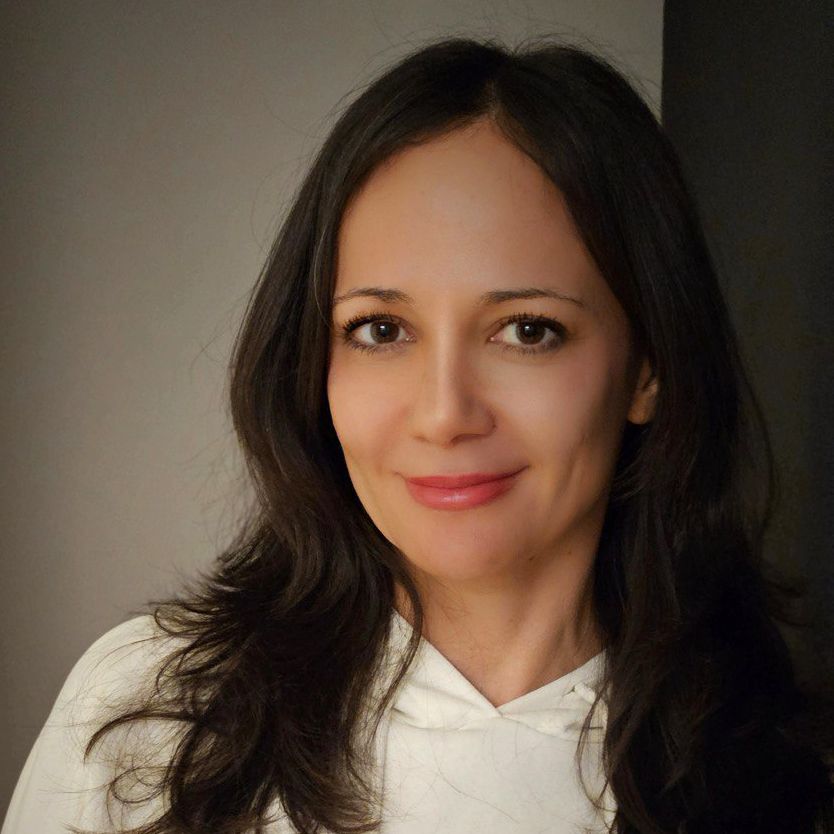
Gulnara Karimova. Photo: Instagram
According to the version of the Swiss prosecutor’s office, Gulnara Karimova, during the period of her greatest influence — from 2005 to 2013 — received multimillion-dollar kickbacks from international telecommunications companies for access to the Uzbek market. The mechanism was built in such a way that foreign businesses were made to understand: without the “right local partner”, it was impossible to work in Uzbekistan. That partner was her herself. The companies reluctantly agreed and transferred large sums to offshore accounts linked to Karimova. The money then ended up in her accounts in foreign banks, including Swiss ones.
Of course, she had no authority to lobby for the interests of foreign business. The posts of Foreign Ministry adviser, representative to the UN in Geneva, and ambassador to Spain, which the president’s daughter held at different times, were more representative in nature. In essence, the main asset she traded on was her family ties to the head of state.
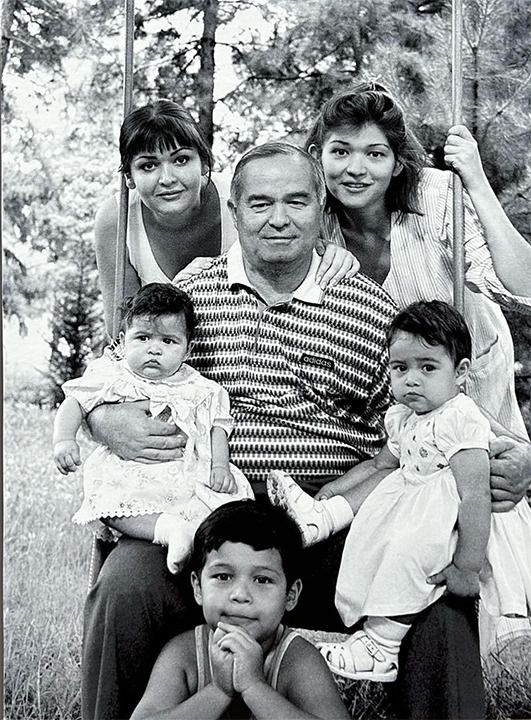
Islam Karimov with his children. Photo: Instagram
The total amount of funds frozen in foreign accounts in this case is estimated at between $800 million and $1.5 billion. Over the years of the investigation, Uzbek authorities managed to return only part of this money. However, the process required Gulnara Karimova’s personal participation, including her questioning in court. In April, when she was summoned again to give testimony, the Uzbek authorities refused even to let her leave the country temporarily. She will not be freed before 2028, and by then the statute of limitations in the Swiss case will already have expired. This effectively made any further proceedings hopeless.
The fate of the frozen funds also remains unclear. If the Swiss side has still not been able to conclusively prove their illegal origin, the prospect of the full return of the assets to Uzbekistan looks unlikely. However, the Uzbek authorities seem to have long since come to terms with this.
Ending the proceedings against Gulnara, even at the cost of not recovering the seized funds, apparently suits the authorities more than the risk of her public testimony in the West.
In Uzbekistan, she has been serving a prison sentence for more than ten years, and the longer her figure remains outside the public sphere, the fewer threats there are for the current authorities. Even her children’s ties to her are limited.
At the same time, in Uzbek society the sentence against Gulnara is seen as a restoration of justice, and so, despite the complaintsof relatives and lawyers about the secrecy of the case and the inability to defend her properly, no public demand for a full trial ever emerged. All that is known is that Gulnara has been found guilty in a case involving the creation of a criminal group, fraud, embezzlement, and money laundering. At the same time, it is unknown what sums of embezzlement are involved.
In addition to Swiss judges, international organizations, including the UN, are also seeking access to her and the opportunity to question her in the presence of witnesses. However, Tashkent consistently states that the punishment was handed down in accordance with Uzbek and international law, and that she is serving her sentence in a settlement colony in the Tashkent region under normal conditions.
After the Swiss case is closed, the Uzbek authorities probably expect her figure to disappear from the Western agenda entirely — at least until the sentence is over, unless new charges are brought. Gulnara’s release could have unpredictable consequences.
By Family Rules
Corruption is a key, but not the only reason Gulnara ended up in prison. The main threat to the system was that during the period of her power, she acted as an independent center of authority. At the same time, her influence was based solely on kinship with the president.
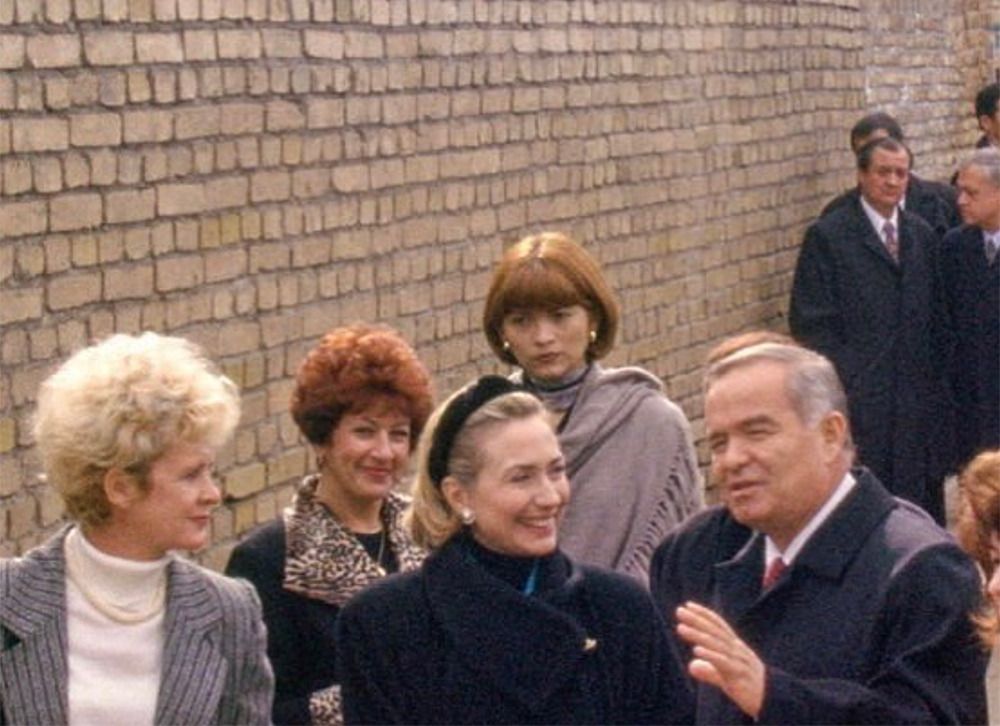
Islam Karimov (foreground right) and Gulnara (middle ground, center) in a 1997 photo. Source: Instagram
She built her system of influence through the Forum Foundation, as well as a network of offshore companies, foreign structures, and connections referred to in the materials of the Swiss investigation as the “Office”. Into this quasi-system she drew officials and formed alternative centers of influence in education, medicine, and culture. In this way, her structure in effect created a parallel state infrastructure.
Around this network of hers she formed a circle of loyal officials, luring them away from the state apparatus and redirecting their loyalty toward herself. At the same time, through the educational grants of the Forum Foundation and opportunities for young people to study abroad, she tried to grow a layer of young politicians and technocrats. Gradually, she also began to subjugate business. In doing so, Karimova failed to take into account that even a personalist regime, like her father’s, cannot rest on just one person. Its stability depends on loyal security structures, and in her parallel system they did not exist.
Judging by indirect signs, it was precisely the harsh confrontation with the state security structures, which did not recognize Gulnara as an independent player in the system, that ultimately led to her arrest and then to her imprisonment. Previously, the key levers of control over business and the redistribution of financial flows were in the hands of the National Security Service and its head Rustam Inoyatov — effectively the “gray cardinal” of Uzbek politics and one of Islam Karimov’s most trusted people. As Gulnara’s influence grew, a direct conflict of interests with the NSS emerged.
In addition, Gulnara’s strengthening position put many officials in a difficult situation. On the one hand, they were embedded in Karimov’s rigid vertical of power; on the other, they often carried out her instructions, believing they had been approved by the president. Supporting Gulnara became for many a way to keep their positions ahead of the transition of power, which, although not discussed openly, was seen as inevitable.
However, the parallel existence of two centers of influence — the president with his security apparatus and his daughter with her own system of influence — created competition within the regime, even though neither Karimov himself nor the security bloc, in all probability, regarded Gulnara as a possible successor.
Her activities gradually eroded state institutions. As a result, a campaign began to neutralize the president’s daughter, organized in such a way that the president himself would appear to be the initiator of the “exposure”.
According to one version, it was Inoyatov who told the president about the real scale of his daughter’s activities and schemes. In this reading, Gulnara’s arrest looks less like an anti-corruption measure than the result of an internal redistribution of control. In the end, she had no resource comparable to the security one. After Karimov’s death, her informal influence collapsed overnight, and no one within the system stood up for her. Other relatives — her mother and younger sister — also stayed on the sidelines.
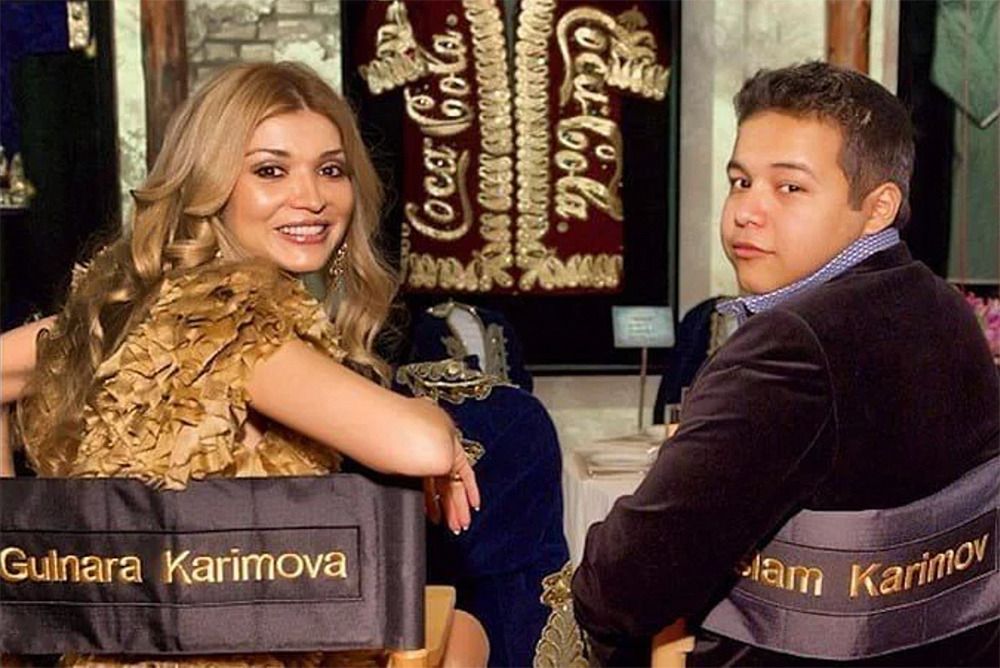
Gulnara Karimova with her son Islam. Photo: Instagram
Gulnara’s son, Islam Karimov Jr., lived abroad and tried to draw the attention of Western media to the fact that his mother’s case was being handled behind closed doors, without disclosing the substance of the charges. However, he never achieved any result. In the end, the system built on informal agreements, which Gulnara herself used, turned against her.
Changing the Signboard
The current President of Uzbekistan, Shavkat Mirziyoyev, inherited Gulnara’s case from the previous system. During her period of influence, he held the post of prime minister, and access by foreign business to the market could not have escaped his attention. Thus, Gulnara’s son mentioned in interviews with the media that his mother often invited Mirziyoyev to family events. All this raised questions about the nature of these contacts and whether he knew about Gulnara’s schemes or preferred not to notice them.
It would seem that an open investigation into Gulnara’s case — with witness questioning and the examination of corruption schemes — would demonstrate his non-involvement and lack of fear in conducting the case publicly. Such publicity would destroy Mirziyoyev’s image as a direct heir to the Karimov system. It would also show that there are no more untouchables and that the law is mandatory for all. This would strengthen the perception of him as a reformer and reinforce his legitimacy as an independent and autonomous politician in the eyes of society.
However, he did not plan to radically break the old system, so Gulnara’s case was made non-public, probably to avoid political risks. A significant part of Mirziyoyev’s team was formed back under Karimov, and many of these people who worked with Gulnara most likely knew about her corruption schemes. Public discussion of these ties could cast a shadow over the new government and undermine public trust — a key resource for Mirziyoyev in the first years after coming to power, when he had not yet established himself in the eyes of the elites.
An open trial of Gulnara could set a dangerous precedent, in which the participation of politicians’ relatives in power would be considered unacceptable. But Mirziyoyev did not plan to give up relying on family in governing the country.
All the more so in the first years of his presidency, when many influential people from Karimov’s circle remained in the system, his main support was the inner circle, mostly family members. Over time, casting aside any embarrassment, he began appointing relatives to key posts in state structures.
President of Uzbekistan Shavkat Mirziyoyev at a meeting with Vladimir Putin. St. Petersburg, June 4, 2026. Photo: kremlin.ru
The most notable was the elevation of the elder daughter — Saida. In 2019 she began working in communications in the presidential administration, and then quickly moved up the career ladder and headed her father’s administration. Saida was increasingly compared to Karimov’s elder daughter, although she never held such high official positions.
In addition to her work in the administration, Saida Mirziyoyeva takes part in cultural and social projects — in the sphere of art, education, fashion shows, and exhibitions, promotes Uzbekistan’s image abroad, meets with foreign officials and prominent figures. In effect, the president’s daughter is engaged in the same areas that Gulnara Karimova once handled. This similarity has prompted talk that Mirziyoyev may see his daughter as a future successor. In the same way, people once debated whether Gulnara would become her father’s successor.
And yet there is one important difference between Saida and Gulnara. Gulnara’s system was created as an alternative to state institutions and collapsed immediately after her arrest, whereas the state system remained stable. In Saida’s case, the situation may turn out to be more risky, since the resolution of many issues is tied not so much to her formal post as head of the presidential administration — a bureaucratic body by nature — as to her kinship with the president. This is about personalized, “manual” governance. Under such an approach, the role of institutions — the government, parliament, courts, and law enforcement agencies, already limited in personalist regimes — is reduced even further. The real centers of decision-making shift toward the president and his immediate family circle.
In the long term, the legacy of such a regime, centered on a single person — even its significant and progressive decisions for its time — disappears with it. Just as today few people discuss whether Karimov’s regime made any positive contribution to Uzbekistan’s development, the achievements of the current authorities may also be forgotten over time.
If you enjoyed this article, consider making a donation — one-time or, even better, monthly. Your support helps us motivate our authors and become better with every article.
Our organization is recognized by the Internal Revenue Service (IRS) as a 501(c)(3) tax-exempt, charitable organization, which means that all contributions made to us are tax-deductible to the fullest extent permitted by U.S. law. Individuals may generally deduct charitable contributions of up to 60% of their Adjusted Gross Income (AGI) for cash donations made to qualifying 501(c)(3) organizations. For donations of appreciated assets (such as stocks or other long-term capital assets), the deduction is typically limited to 30% of AGI, based on the fair market value of the asset. C-corporations may deduct charitable contributions of up to 10% of their taxable income for donations made to eligible charitable organizations.
By submitting a donation, you confirm that you have read and accept the following documents: Privacy Policy and User Agreement, and also give consent to the processing of your personal data.
If you would like to unsubscribe from a monthly donation, please email us at: [email protected]