Two years ago, the Supreme Court of the Russian Federation declared the “international LGBT social movement” an extremist organization. Since then, simply having a certain sexual orientation or gender identity can be used as grounds to accuse anyone who draws the state’s attention of extremism. LGBT people are afraid to go to the police or court, even if they themselves are the victims of crimes. Here are the stories of three people who have gone through such experiences.
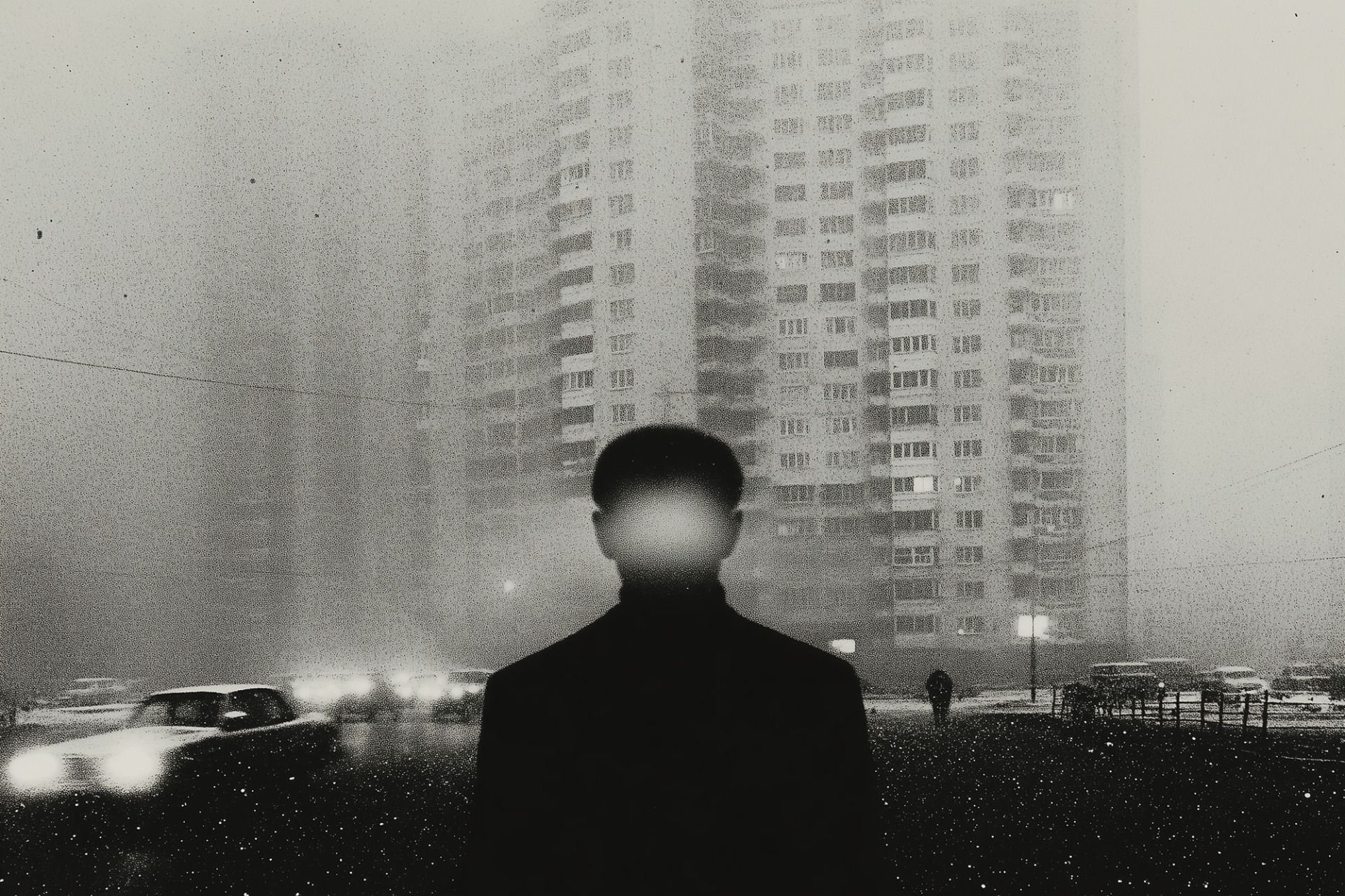
Image: Maria Pokrovskaya / Midjourney for Most.Media
All names have been changed for the safety of those involved. The text contains explicit language.
“The investigators will never believe you when you have that kind of stuff on your phone”
Andy, 18, gay
Andy lived in Pavlovsky Posad, near Moscow, and in January 2023 was in the ninth grade. At that time, he began openly expressing himself as gay, wore his long hair dyed white, and by the standards of a small town, looked, as he admits, “a little provocative.” His relationship with classmates had always been tense, and after the start of the war in Ukraine, things only got worse: Andy did not hide his Ukrainian roots and his opposition to the “special military operation.” “All of this together caused the hatred,” he sums up. He tells how he survived an organized attack at school.
There were eight attackers in total, one of whom filmed what happened. A student from another class lured Andy out of the cafeteria under the pretense of talking. With the words “you faggot” and “you’re showing off,” he hit Andy and pushed him towards a group of his friends, who grabbed Andy’s arms from behind. They held him so he couldn’t defend himself from a series of punches to the face delivered by another student. The teachers quickly broke up the fight, but in 30 seconds the boys managed to break Andy’s nose and make him bleed. He expected the school medical staff to help him or call an ambulance. Instead, one of the adults called the police. Andy was relieved: “I thought they were going to help me.”
A police major arrived and took all the attackers to the principal’s office. “Are you out of your minds? Do you want to end up in a juvenile detention center?” Andy heard, sitting by the office door. The conversation lasted about 15 minutes, and the boys were sent home. They laughed as they left. Then Andy himself went into the office—and didn’t come out for nearly two hours, in shock and in tears.
Without informing the beaten teenager’s parents, the school social worker locked the office, and the police officer said, “You’ve gone too far. Now you’re going to tell and show us everything.”
The social worker declared Andy an extremist, and the policewoman added that she worked on “extremist-terrorist cases.” Andy now finds this strange—at the time, the Supreme Court had not yet ruled to label the “international LGBT organization” as extremist.
“I was really scared,” he admits. Then the policewoman and social worker claimed they had video of Andy “running around the school with a flag.” When he asked what flag, the major replied, “You know, get it out.” Andy believes they made this up on the spot to intimidate him: he never had any flag. Then, under threat of arrest, the major demanded Andy unlock his phone and hand it over. He had to comply.
“I was 15, just starting to accept myself—my identity, my sexuality,” Andy says. On his phone were voice messages from a boy—“our first intimate chat, where we flirted with each other.” The major played them out loud and, together with the social worker, shamed Andy while he cried. “I was sitting there in tears, bleeding, with nothing—not even a cotton pad or tissue. It was just humiliating,” he recalls.
Andy was terrified that his family would be told. When the policewoman asked, “Do your parents know you’re gay?” and he said no, the major started using that to pressure him. She scrolled through his chats for a long time, took photos of his phone screen, and finally asked what had happened that day. When he told her about the attack, she smirked: “What, they just took and beat you up? You realize the investigators will never believe that, not when you’ve got all this stuff on your phone?”
Then the major found Andy’s closed Telegram channel with five subscribers where he posted LGBT and Ukraine memes, and declared it extremism and displaying banned symbols. First she threatened to show the evidence to Andy’s parents, then threatened to open a criminal case if he tried to file a complaint about his attackers. Andy remembers that he was shaking with fear the whole time: “She told me that if I stopped all this now, they wouldn’t open a criminal case against me.”
That ultimatum ended the conversation. Andy accepted the policewoman’s terms and didn’t file any complaints, but he did decide to tell his parents. When he came home in tears, he said he’d been attacked for supporting LGBT rights, but didn’t mention his own connection to the queer community. His parents believed him, but that same day his father beat him, saying, “Of course, you grew your hair out like a girl. Naturally, everyone thinks you’re a faggot. And they’re right.”
Image: Maria Pokrovskaya / Midjourney for Most.Media
About three weeks after the attack, there was a parent meeting in Andy’s class—and after it, 12 parents wrote a report to the police about Andy, arguing that “our fathers are at the front” (the editorial office has a copy of the document). Andy notes:
although the main motive for the attack was homophobia, not politics, the report said nothing about LGBT. The classmates’ parents called for an investigation under Article 282 of the Criminal Code (inciting hatred or enmity) for Andy’s anti-war stance.
After the report, Andy and his parents were summoned to the police, where the same officer who had threatened him was present. To her credit, in front of Andy’s parents, she did not mention the intimate chats found on his phone—she just said Andy supported LGBT in his posts. And she added, “We smoothed all this over, it’ll stay between us. And what was written in the report about Ukraine—that’s nonsense, it’s made up.” In front of his parents, the policewoman wrote a “refusal” to open a case due to lack of evidence. Andy recalls being glad that at the police station his parents defended him, saying, “He made a mistake. He just got confused. He’s actually a good kid.” But at home, they continued to blame Andy for what happened.
At school, the same students who attacked Andy tried to beat him up again and continued to insult him in person and on social media. He remembers a group of guys passing him on the street, shouting, “Did you like being beaten up? They should’ve fucked you in the ass too.” His parents also constantly reminded Andy about the incident, and the memories tormented him. After ninth grade, he transferred to another school. There, teachers and students already knew about the attack, but at least there was no open aggression.
At 18, Andy moved to Spain to seek asylum. Panic attacks and flashbacks haunted him until he left. He recalls that despite everything, he didn’t want to leave Russia. But three months after the attack, he felt it couldn’t go on. Especially after he met a boy and they developed feelings for each other: “He was an internalized homophobe, he was very, very afraid of all this. That finished me off, because on top of trauma and stress, you’re also hiding in stairwells. I realized you can’t live like that.”
That’s how Andy decided to leave Russia. He no longer communicates with his parents.
“What if I suffer more from law enforcement?”
Denis, 27, gay
In early August 2025, Denis was returning home to the Moscow suburbs after an evening movie screening in Moscow. At 3 a.m., as he approached his house, three men on electric scooters blocked his way. They introduced themselves as members of a neo-Nazi organization (the editorial office knows its name but does not disclose it for the hero’s safety), asked if Denis used drugs, and demanded to see his phone. Denis says he looked “conventionally masculine,” but the men didn’t like his voice or his t-shirt—a regular red shirt with a text print, nothing LGBT-related.
Denis told them they had no right to demand a stranger unlock his phone or interrogate him on the street. That’s when it became obvious to the men that Denis was “not very heterosexual,” and the insults began: “Why are you acting like a woman,” “Look at his t-shirt, only fags wear that,” “He’s definitely on meth.” When they started pushing Denis, he tried to run away, but they caught up, knocked him to the ground, twisted his arms, and took his phone from his pocket, “telling me all the things they’d do to me and in which holes.” In the end, the three sped off on their scooters with his phone.
Still in shock, Denis went home, grabbed his passport, and went to the nearest police station—just two minutes from where the attack happened. The investigator wasn’t there, and while waiting, Denis sketched portraits of his attackers from memory. He wondered: should he be honest with the police about the insults and emotional harm, or just report the theft?
Image: Maria Pokrovskaya / Midjourney for Most.Media
The investigator who arrived was younger than Denis and, in his opinion, “reasonable.” So Denis decided to tell the whole truth, and the statement about insults based on sexual orientation was included in the robbery report. A few days later, he was called to another station to view a security camera recording that partially captured the attack. The footage shows Denis being stopped and then running away, but the moment he was knocked down and had his phone stolen was out of frame. The next day, police showed him a photo of a suspect, and Denis identified one of the three attackers. Later, police found the others too.
When Denis was called in again, the same young officer said informally, “Look, their defense is that they just wanted to check you for drugs, your phone fell out of your pocket, and anyway, they were trying to protect themselves from your extremist influence, you know?” Denis found this absurd, and the investigator explained:
“Look, either we keep treating this as a robbery, or you could have problems. Because in our law, there aren’t any terms we can use to protect you. So we have two options: either you were just robbed, or you fall under terrorism, extremism, and all the good stuff they passed in 2023 about LGBT.”
After this, the investigator suggested classifying the crime as robbery and not submitting documents mentioning hate-based insults. Denis agreed, fearing the three attackers might make up something else. But the robbery case was closed too—“due to lack of evidence,” since the surveillance camera didn’t capture the actual theft and violence (the editorial office has copies of the refusal documents).
“According to those three wonderful guys, they were just out for a walk, picking flowers,” Denis laughs, “they saw me, politely asked if I had drugs, asked to see my phone. I didn’t show them my phone, dropped it, and everyone went their separate ways. And the case is closed!” Denis didn’t appeal or try to have the case reopened. He’s afraid that more attention will be drawn to him and the LGBT aspect, which was lost at various stages, will resurface. Then “the bosses” could charge him with extremism.
Denis accepted it and figured the money he would have spent on a lawyer was enough for a new phone. He feels he handled the stress relatively well because he was prepared for it. Denis recalls that as he approached the police station, he remembered activists being detained at protests against LGBT being labeled extremist—how police raided their homes and confiscated documents. Looking at the barbed wire around the police station, he thought: “Did I suffer more from those crazies on the street, or will I suffer more from law enforcement if I go there with a complaint?”
“Is gender transition even allowed in our country?”
Leonid, 45, transgender man
Last summer, Leonid and his boyfriend from Kaliningrad went swimming in Lake Pelavskoye. At the beach, a large, aggressive stranger noticed Leonid’s mastectomy scars. “Usually, very few people can identify trans men by mastectomy scars. But for some reason, this guy was pretty knowledgeable,” Leonid says. The stranger began aggressively asking, “Why do you have scars? Are you a woman who turned into a man?” and then openly threatened him: “Get out of Russia, I’ll kill you and nothing will happen to me. Because I served in Wagner PMC, and nothing happens to people like me. We’re considered heroes of Russia.”
Leonid managed to record part of the exchange—the editorial office has the audio. The PMC fighter then began insulting Leonid’s boyfriend, asking, “You must be a woman, why are you wearing men’s swim trunks?” The couple tried to leave, but the man blocked their way, demanding answers. Leonid said their appearance was their own business and nobody else’s. But saying that they weren’t bothering anyone and didn’t deserve harassment didn’t stop the stranger: “Then he described how he’d kill me, said there were children nearby, and that my scarred body was LGBT propaganda. As if kids know what that means!” Leonid says.
Trying to calm things down, Leonid pointed out that the children could also hear the PMC fighter’s swearing and threats. The stranger didn’t stop, and said he’d kill Leonid if he ever came to the village again. After another death threat, Leonid asked, “When you joined Wagner, did you get out of prison, uncle? Maybe you did time for murder, is that why you’re so cocky?” At that, the man stopped threatening them, and the couple was able to leave.
Leonid believes the aggressive man could be punished for making death threats—there’s enough evidence on the audio. But he’s afraid to go to the police. Leonid already has two official warnings—one for “LGBT propaganda” and one for “displaying Nazi symbols.”
He received both warnings in 2022 for statements on his Facebook page: the first for referring to himself in the masculine while having documents with a female gender marker, and the second for speaking out against the war.
Image: Maria Pokrovskaya / Midjourney for Most.Media
“Kids under 18, who you can’t track, could end up in your friends list, so make your Facebook page completely private,” Leonid recalls a policewoman saying. She then abruptly switched to the topic of anti-war comments left by Ukrainians under Leonid’s posts. The policewoman quoted from the report, which said “there’s discussion of Ukrainian politics on the page,” and started asking if Leonid supported’s policies. “I referred to Article 51 of the Constitution. And she was surprised I knew that. Apparently, she wasn’t used to people knowing their rights,” he recalls.
Leonid told the policewoman he would change his documents to male to avoid problems. She was surprised: “Is gender transition even allowed in our country?” At that time, there was still a year before the law banning gender transition came into force—it only took effect on July 24, 2023. In the end, Leonid successfully got male documents and even renewed them when it was time to change his passport at age 45.
Leonid never saw the aggressive stranger from the beach again—he didn’t go back to the area with the lake. But he’s scared that threats he used to encounter only from transphobic stalkers online are now happening in real life. Leonid and his boyfriend are more determined than ever to leave Russia—they are now preparing the necessary documents to emigrate.
“The impunity of the offender only confirms the victim’s helplessness”
The feeling of injustice undermines the basic belief that the world is generally fair and that good triumphs over evil, says Tonya, a psychologist at an organization helping queer people (Most.Media does not name the organization for its safety). That’s why experiencing violence that goes unpunished can lead to a loss of meaning in life, as well as problems with trust—both in people and in social institutions like the police and courts, which are supposed to restore justice but failed to do so.
Image: Maria Pokrovskaya / Midjourney for Most.Media
“The very fact of violence is an experience of helplessness. The subsequent impunity of the offender can lead to learned helplessness—a conviction that any action is pointless—or to difficulties in defending one’s boundaries,” Tonya explains. To ensure that psychological defense mechanisms work in a person’s favor, not against them, the psychologist suggests the following steps in situations where restoring justice is impossible.
“The first thing we do is take basic care of the body to calm the hormonal system a bit, if the danger is no longer immediate. Try to feel safe in different ways: it could be music, talking with friends, movies, TV shows, chatting with artificial intelligence,” Tonya suggests. If you can’t end the dangerous situation (for example, if a teenager has to go to a school where they are bullied), you can choose a “hermetic” strategy: minimize contact with dangerous people, and maximize time spent safely.
The second step after minimizing danger is to document evidence of violence. Even if you can’t go to the police, it’s worth photographing injuries—at least for yourself. But in an acute situation, Tonya advises focusing first on your mental state, even if that means you can’t document the evidence.
Next, Tonya suggests reaching out to friends, acquaintances, or support groups. Finding people with similar experiences can help relieve guilt. “Sometimes it’s easier to believe you’re to blame for something than to accept that terrible and unfair things just happen in the world. Shame in such cases comes from not being able to resist and fight back against injustice,” she explains.
The psychologist emphasizes that finding a solution and a way out of a difficult situation can take a long time. “But when a person finally manages to develop an individual escape plan from a dangerous situation, just the thought that a way out exists becomes a support in facing hardships and helps you not to break on the way to finding peace,” says Tonya.
If you enjoyed this article, consider making a donation — one-time or, even better, monthly. Your support helps us motivate our authors and become better with every article.
Our organization is recognized by the Internal Revenue Service (IRS) as a 501(c)(3) tax-exempt, charitable organization, which means that all contributions made to us are tax-deductible to the fullest extent permitted by U.S. law. Individuals may generally deduct charitable contributions of up to 60% of their Adjusted Gross Income (AGI) for cash donations made to qualifying 501(c)(3) organizations. For donations of appreciated assets (such as stocks or other long-term capital assets), the deduction is typically limited to 30% of AGI, based on the fair market value of the asset. C-corporations may deduct charitable contributions of up to 10% of their taxable income for donations made to eligible charitable organizations.
By submitting a donation, you confirm that you have read and accept the following documents: Privacy Policy and User Agreement, and also give consent to the processing of your personal data.
If you would like to unsubscribe from a monthly donation, please email us at: [email protected]