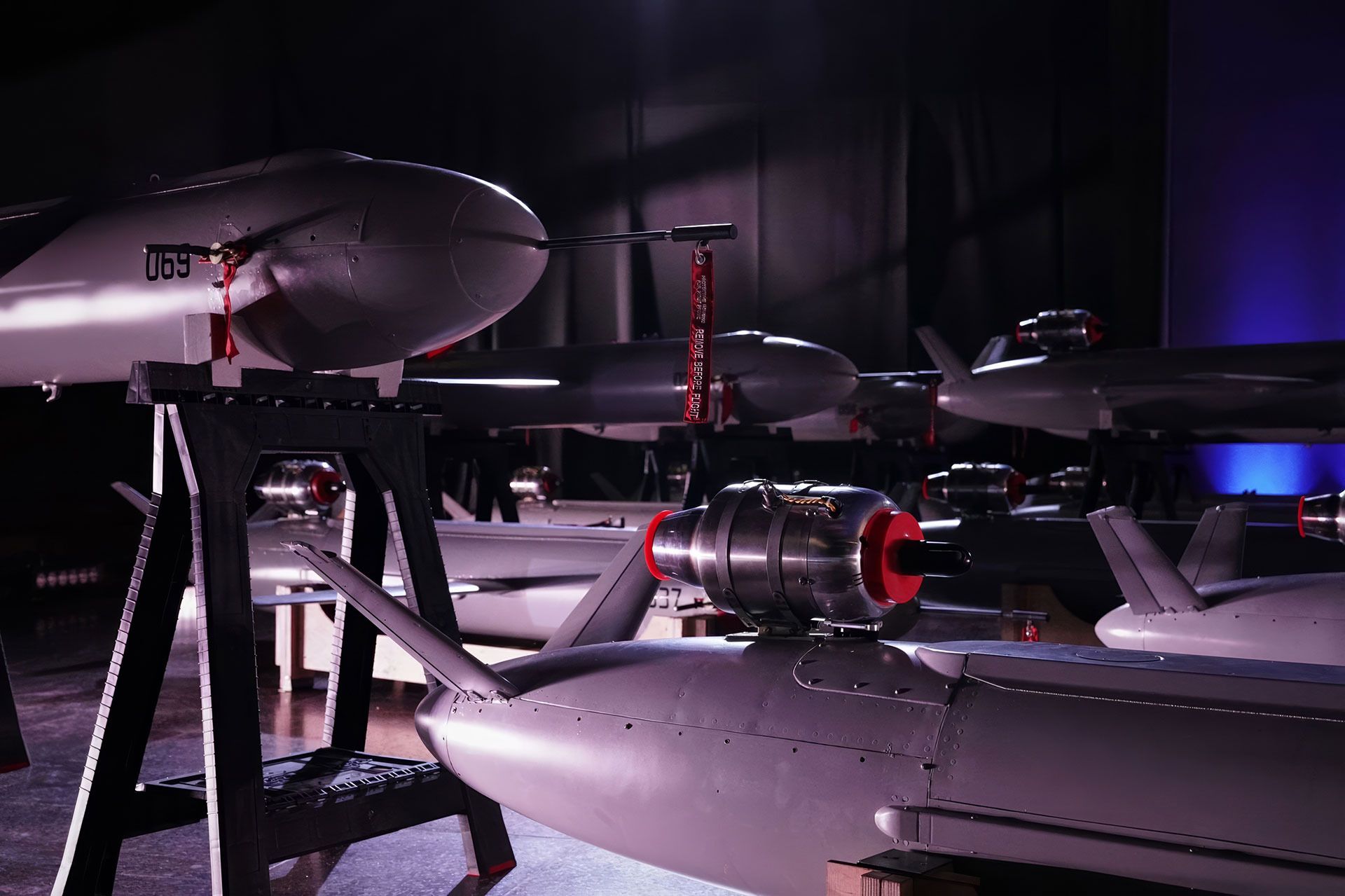
A fairly powerful and for many unexpected series of Ukrainian attacks on Russian refineries can intensify the energy crisis in Russia. And this, in turn, will force the Kremlin to shift from military expansion into other countries to addressing its own socio-economic problems.
Ukrainian missile-UAV “Peklo.” Photo: Wikipedia / Ministry of Strategic Industries of Ukraine
American Senator John McCain back in 2014 wittily called Russia “a gas station masquerading as a country.” And the Russian authorities themselves promoted the idea of Russia as an “energy superpower” for many years. It seemed that the giant oil and gas fields could ensure its economic prosperity.
But Putin’s Russia shot itself in the foot with the start of the invasion of Ukraine. The full-scale war led to international sanctions against Russian raw material exports – Europe practically stopped buying Russian oil and gas. Although the largest pipelines, built back in Soviet times, stretch from Western Siberia to Western Europe.
However, the counterstrike was not only sanction-based but literally military.
Ukraine, which the Kremlin planned to crush in three days, today is destroying Russian refineries itself with massive drone attacks.
According to BBC data, gasoline supply disruptions that began in August in the Far East have spread to at least 57 regions of Russia. Many gas stations are forced to close, and gasoline prices are rising faster and faster. The crisis unfolds amid a record level of attacks on Russian energy facilities by Ukrainian drones.
Moscow receives fuel from five refineries, and in this sense, it is unique: most regions are supplied by one or two, says Sergey Vakulenko, senior researcher at the Berlin Carnegie Center for Russian and Eurasian Studies. But the further from Moscow, the more acute the problems become. While Moscow and Saint Petersburg are mainly served by large oil companies with their established supply chains, in many regions a significant market share belongs to independent gas stations, which purchase fuel on the exchange or under contracts. Independent gas stations make up 60% of all gas stations in Russia, and continuation of the crisis threatens them with shutdowns.
And Ukraine is investing in this crisis in its own way. Although morally it is justified:
citizens of the aggressor country should not live in an atmosphere of “normal peaceful life” if their army has been occupying and bombing a neighboring country for almost four years.
But the philosophy of Ukraine’s response is quite different. Unlike Russian strikes on Ukraine, which are often aimed at residential buildings and civilian objects, Ukraine responds with strikes specifically on the aggressor’s fuel infrastructure. And for Russia, such attacks are very painful because they demonstrate that the aggressor is not omnipotent – and also disrupt military supply logistics. It is no coincidence that the authorities intend to involve army reservists in defending refineries from drones.
In 2025, Ukraine has ramped up attacks on Russian refineries to a record level, according to an analysis by the Russian Service of the BBC.
Since January, Ukrainian drones have hit 21 out of 38 large Russian refineries, which is 48% more than the entire 2024 year. Just in the fall, more than 60 strikes were carried out on Russian oil and gas infrastructure facilities.
As a result, according to an investigation by Re: Russia, Russian gasoline production in 2025 has decreased by almost a quarter.
The targets of the strikes are not only refineries but also oil transportation facilities. Ukrainian drones have already hit 12 pumping stations, as well as three maritime transshipment facilities – oil loading terminals in Novorossiysk and two tankers of the Russian “shadow fleet” in the port of Primorsk (Leningrad region). This causes a systemic crisis in the chains of oil delivery, processing, and storage. And the geography of these strikes is expanding significantly.
In the conditions of modern drone warfare, Russia’s “strategic depth” of its vast territories no longer saves it.
Ukrainian combat drones are now capable of reaching not only neighboring regions but also Bashkortostan, located 1500 km from Ukraine, where large Russian oil plants are situated, as well as the northern Komi Republic, which is over 1700 km from Ukraine in total.
Moreover, this strategy entails multiple strikes on the same plants, preventing them from fully restoring operations. For example, the Ryazan refinery was targeted for the sixth time since the beginning of the year in September. Also in September, two strikes were carried out on one of the largest gas chemical complexes – the Astrakhan gas processing plant with a capacity of 12 billion cubic meters of gas per year (it was first attacked back in February).
Although Russia is one of the world’s largest oil exporters, the economy needs not barrels of crude oil but its refined products, primarily gasoline and other fuels produced at refineries. But if refineries go offline one after another under drone attacks, a gasoline shortage inevitably arises in the country.
It is telling that the Russian Ministry of Energy, for reasons of “information security,” has stopped publishing statistics on the amount of gasoline produced in the country since 2024. And recently, its head Sergey Tsivilyov even blamed citizens themselves for panic buying and rising gasoline prices. Well, that is a typical manner of a Russian official for whom the state does not exist for the people, but the other way around.
It is interesting to note that in the current situation, authorities and official media do not particularly blame “enemy Ukrainian raids.” Firstly, this would mean an open admission of the vulnerability of all Russian infrastructure. Secondly, it would raise an uncomfortable question about the military reasons for this situation. Many might wonder: if Ukrainian drones are flying in, could this be proof that the “special military operation” has finally failed?
The Russian government has imposed a ban on gasoline exports until the end of 2025. Conversely, it is considering projects for gasoline imports from China.
There is some paradox here, as China itself is a major buyer of Russian oil. But forced downtime at Russian refineries compels the authorities to take such an unusual step to meet the fuel needs of Siberia and the Far East. Own gasoline production in these regions is insufficient, and refineries in the European part of Russia are already struggling to supply even large metropolitan capitals. In October, Ukrainian drones attacked plants supplying Moscow and Saint Petersburg.
Therefore, a similar cooperation model is also being considered with Belarus. Russia is ready to export oil there and import gasoline in return, as Belarusian refineries are not yet at risk of Ukrainian drone attacks.
A fairly powerful and for many unexpected series of Ukrainian attacks on Russian refineries can intensify the energy crisis in Russia, which will force the Kremlin to shift from military expansion into other countries to solving its own socio-economic problems.
Overall, from Ukraine’s side, this is a very effective type of warfare, allowing it to inflict disproportionate economic damage on the enemy, since producing drones is much cheaper than refinery products.
Moreover, Ukraine over the past years has become a leader in drone technologies and innovations. And recently, President Zelensky announced an expansion of drone strikes, calling them “long-range sanctions”: “Russian ‘oil refining’ is already paying a tangible price for the war and will pay even more“.
But Russia, judging by statements by its Foreign Minister Sergey Lavrov, has no intention to end this war. Therefore, forcing the Kremlin to peace will probably require a combination of Ukrainian drone attacks on Russian refineries with recently imposed major international sanctions against Russian oil companies.
If you enjoyed this article, consider making a donation — one-time or, even better, monthly. Your support helps us motivate our authors and become better with every article.
Our organization is recognized by the Internal Revenue Service (IRS) as a 501(c)(3) tax-exempt, charitable organization, which means that all contributions made to us are tax-deductible to the fullest extent permitted by U.S. law. Individuals may generally deduct charitable contributions of up to 60% of their Adjusted Gross Income (AGI) for cash donations made to qualifying 501(c)(3) organizations. For donations of appreciated assets (such as stocks or other long-term capital assets), the deduction is typically limited to 30% of AGI, based on the fair market value of the asset. C-corporations may deduct charitable contributions of up to 10% of their taxable income for donations made to eligible charitable organizations.
By submitting a donation, you confirm that you have read and accept the following documents: Privacy Policy and User Agreement, and also give consent to the processing of your personal data.
If you would like to unsubscribe from a monthly donation, please email us at: [email protected]