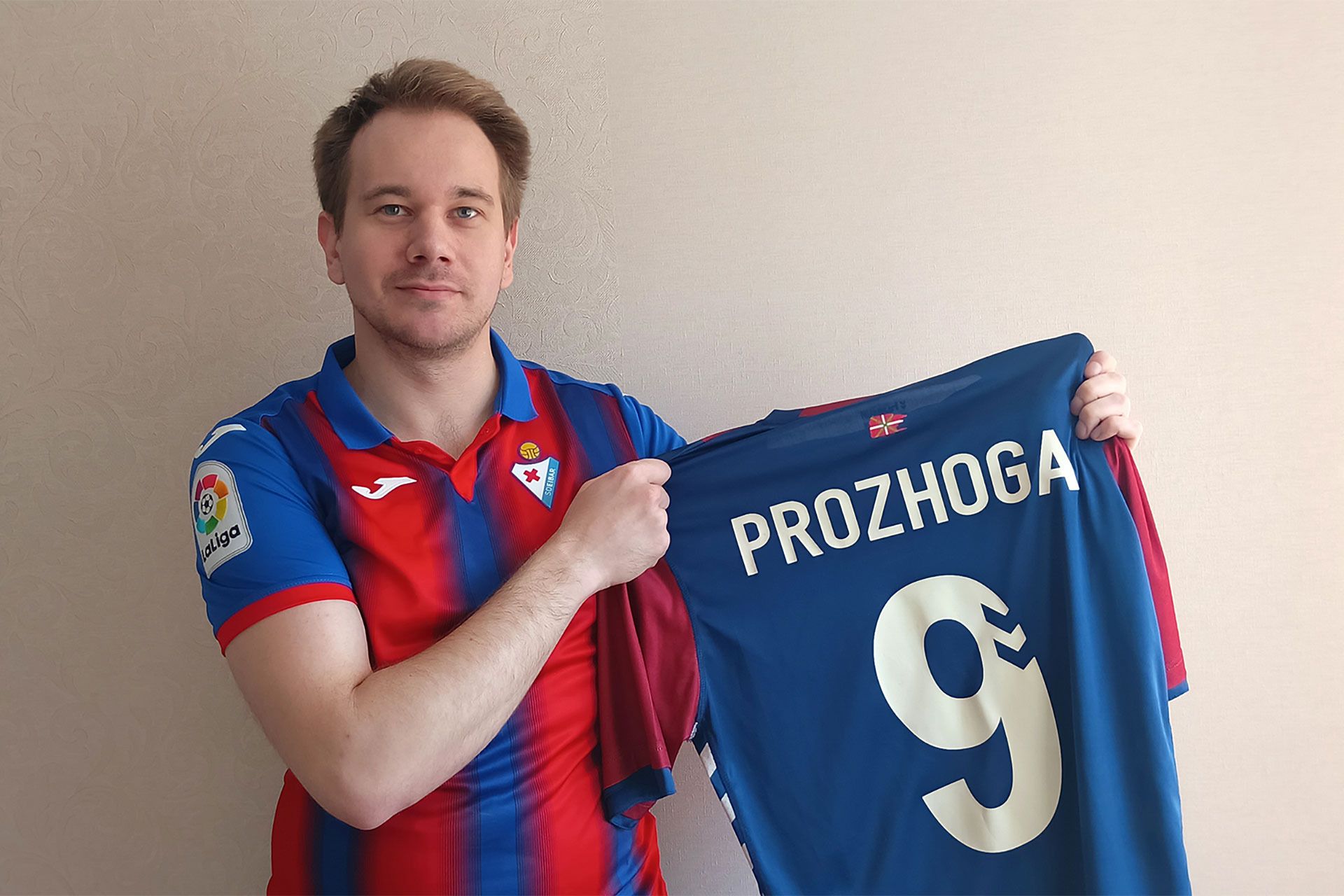
Artyom Prozhoga’s life followed a typical path: school, a prestigious university in Moscow, a translator’s diploma in English and Spanish. But then he suddenly founded an Eibar fan club, returned to his hometown of Kurgan—and found happiness.
Photo: personal archive of Artyom Prozhoga
This article was prepared by the team of the project“Blue Capybaras”, where mentors work with aspiring journalists.
It’s four in the morning, soon regular people with nine-to-five jobs will start waking up, and Artyom is still online in the messenger. Seven years of friendship tell me he’ll stay up for another hour or two. When we worked in the same newsroom, he often polished texts at night.
In Spanish time, his schedule makes perfect sense. Matches of his favorite team, Eibar, end around eleven at night, so it’s the perfect time to discuss the game with other fans and put together a summary post for the channel.
A few years ago, regional websites, Russian media, and Spanish newspapers all wrote about Artyom in a single burst. Now he’s surprised when I ask him to be the subject of this article, but he agrees out of old friendship. He just asks what I’m looking for. I answer: a cool regional story. “About me or about Eibar?” Apparently both—there’s too much overlap.
A Leap Beyond Expectations
In 2014, Eibar did what no fans demanded or even expected—they made it to Spain’s top division. It seemed the team had defied the odds: what were the chances that players from a town of just 27,000 people would end up among the football elite. You’ve heard of Real Madrid and Barcelona? But Eibar? Exactly.
Their quality play brought the club a heap of organizational problems. “There are certain rules,” Artyom explains. “They include stadium capacity and team capital.”
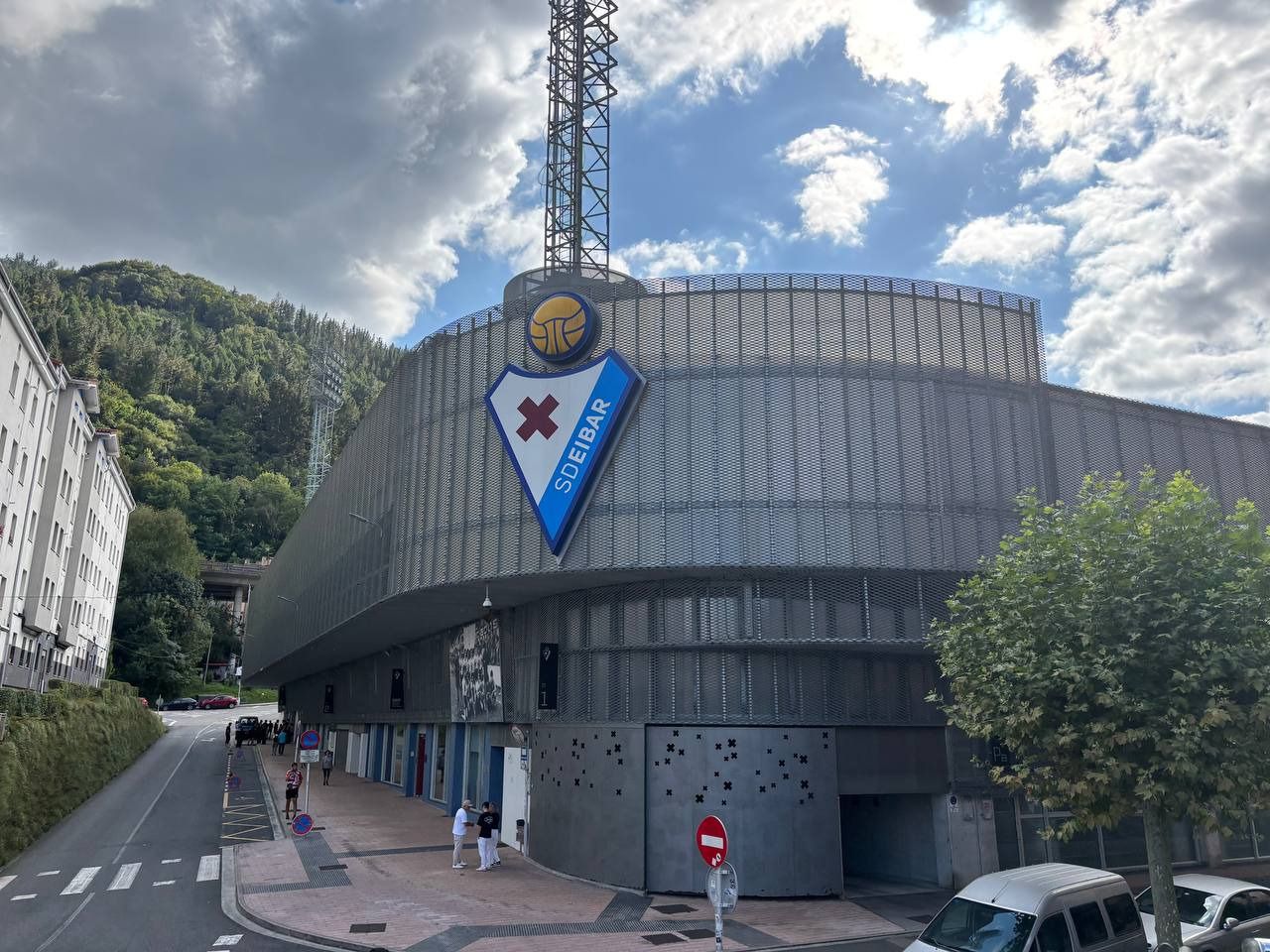
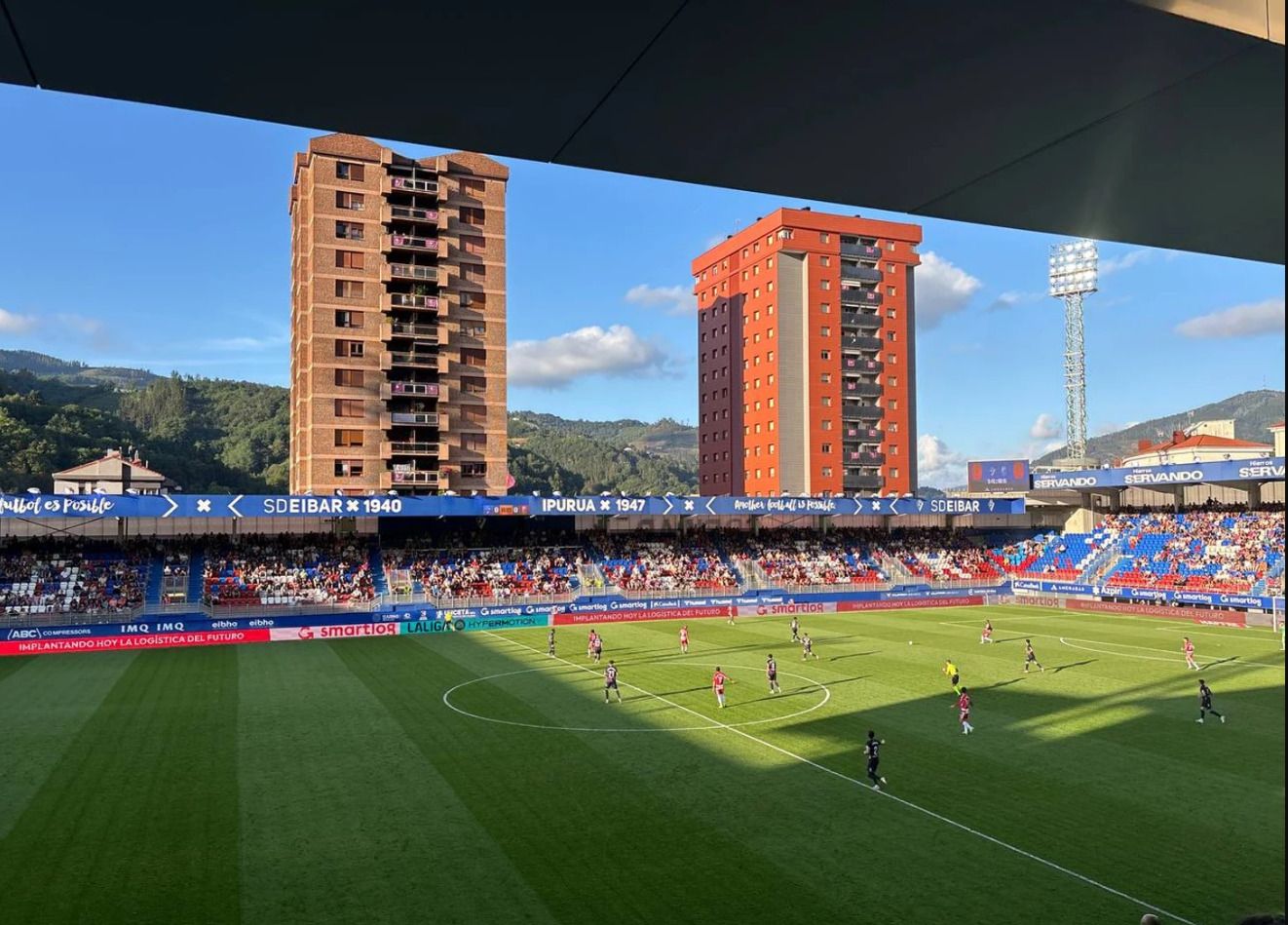
“Ipurua,” the home stadium, had to be renovated: they added two thousand seats, making it a 7,000-seater venue. It was supposed to be at least 15,000, but here La Liga—the organization in charge of Spain’s professional football divisions—made an exception for the micro-club.
Eibar still finished the stadium later: after the final reconstruction, it held 8,100. At one stage, they even had to involve the Pope—work stalled because of a small abandoned monastery. Without the pontiff’s blessing, they didn’t dare set foot on church land.
Ipurua Stadium. Photo: personal archive of Tim Bogdashev
The club also had money problems. Every year, the High Council for Sports sets the amount that must be in the account of every first division men’s team, and the formula takes into account each team’s previous expenses. Eibar, used to scraping by on minimal resources, was too poor for big-league football. Club management decided to try crowdfunding and launched a share sale. Within a few weeks, fans raised almost two million euros. Now the club belongs to them.
Artyom loves this story—it’s another example for him of how football brings people together. He didn’t buy any shares of his favorite club himself: “I was a student and sometimes literally went hungry. The minimum package of shares would have cost me about 2,000 rubles, so I decided it was better to spend that money on groceries at Auchan.” That’s what he did, but later he helped in another way.
He learned about Eibar because of all this buzz. The provincial underdogs who went above and beyond won his genuine sympathy—enough to start a blog about them on Twitter in March 2017. Prozhoga translated news about the team from Spanish and summarized it in Russian.
Eibar noticed Artyom quickly—the club’s official account followed the blog just six days in. The Spaniards immediately suggested he create an official fan club in Russia. Artyom agreed—and then they stopped replying.
At first, Prozhoga waited for any reaction, but eventually stopped tweeting about Eibar. No, he wasn’t offended (though he probably had a right to be). He just ran out of free time: a tough final year, working at the FIFA draw, plus an order to translate a book. So there was no time for hobbies.
He only caught his breath a year later. Returned to football and blogging—and then Eibar repeated their offer, this time by email. They’d finally made up their minds.
Artyom didn’t even take time to think, he agreed right away. He wanted to make Eibar more popular. The extra bonuses were interesting experience, language practice, and the nice feeling of being unique.
Eibar’s Theorist
Over the years of our friendship, Artyom and I have been to some pretty odd places: on the roof of the philharmonic, in a forensic lab, in the Kurgan regional administration’s cafeteria—for work or just out of curiosity. So when choosing a place to talk, I thought of the stadium. If you don’t count the courts and tracks with running lanes and exercise machines, there are two in Kurgan. The first—better and bigger, recently renovated—is in the city center. The second, more modest one, is on the outskirts, mainly used by a sports school.
But in the winter in Southern Trans-Urals, when Artyom agreed to be interviewed, the weather wasn’t really suitable for a leisurely chat outdoors: it was as cold as minus 36. So we met in a hipster coffee shop, where they make cappuccinos with almond milk and bake low-calorie desserts. Artyom fits right in, because he looks like the opposite of the stereotypical football fan: neatly parted hair, glasses, a colorful sweater. He looks like a remote translator, not so much the head of Eibar’s official fan club. And he doesn’t look thirty, either from afar or up close.
Artyom and his father Yuri Prozhoga. Photo from personal archive
Artyom started watching football as a child. His father—a Kurgan artist, designer, and one of the few creators of decent local souvenirs—infected his only son with one of his countless hobbies.
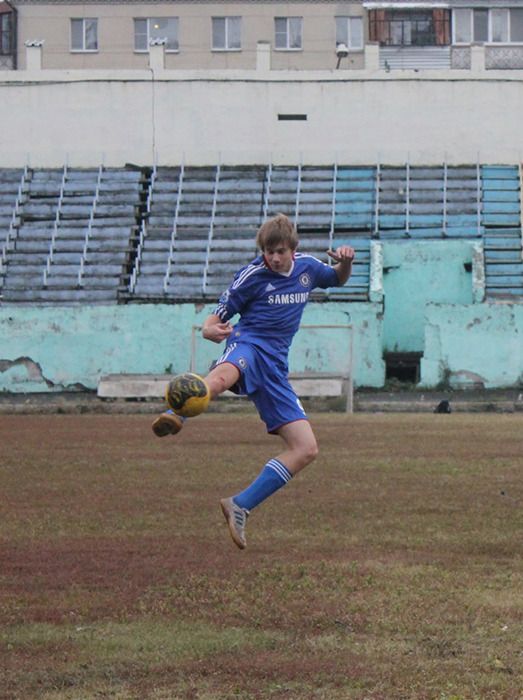
Young Prozhoga tried playing, too. He took part in Kurgan region’s street football championships, even dreamed of becoming a famous footballer. His peak enthusiasm was in 2011: “I was really fired up. We played all the time, especially in spring—preparing for summer and playing every day for two, three, four hours. If you pulled or knocked something, you didn’t even pay attention.”
But Artyom realized he wouldn’t make it pro—he started too late, and lacked skills. One time, the coach wrote in the post-match report: “Prozhoga—no rating. Makes good photos.”
Artyom in his youth. Photo from personal archive
When Artyom returned to Kurgan in 2018 after studying in Moscow, his old friends had long since moved away, and he finally switched to being a football theorist-expert. It seems that over the years of the fan club’s existence, he’s connected with all the commentators and sports journalists who might be interested in non-mainstream Spanish football in general, or Eibar in particular. He’s recorded commentary several times for the OKKO show “Big Segunda”, and they also commissioned a text about Eibar for the official blog on Sports.ru.
Prozhoga considers interesting acquaintances the main value of the whole Eibar story.
His Spanish is good thanks to constant practice, but he hasn’t been able to use it for work—publishers don’t offer books to translate, and he doesn’t collaborate with Spanish-language media: “I write fine in Russian, but Spanish isn’t my native language, and you can tell. Plus, you need talent.”
“They Gave Me a Smart Boy”
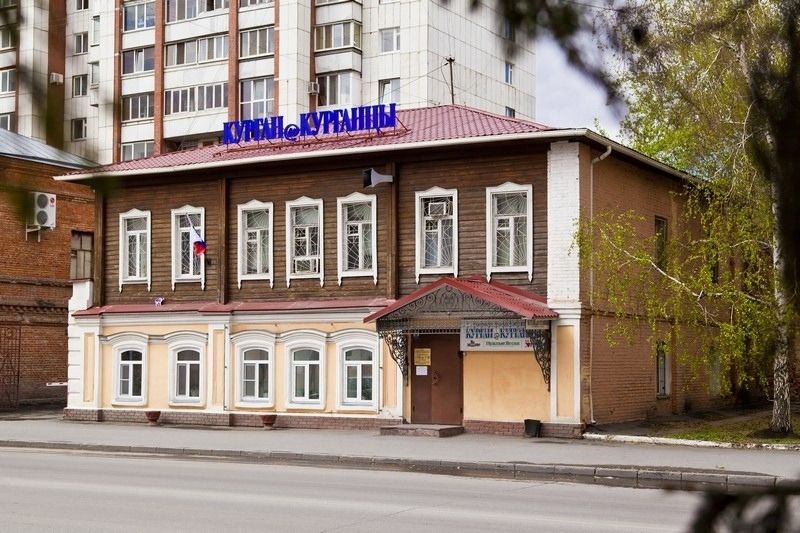
Artyom is being modest: he published in the newspaper Kurgan i kurgantsy for more than five years. He joined the newsroom in May 2019 on his father’s advice, who once worked there as an illustrator and suggested he apply for the vacancy: “Give it a try, it’s a good gig.” Maybe it used to be, but as a newbie he was offered just over the then-minimum wage—18,000 rubles. Prozhoga agreed: he wasn’t planning to stay long in Kurgan anyway.
Photo: Kurgan i kurgantsy newspaper
At first, he was hired as an assistant to the website editor. She, exhausted by the workload, shared her joy with colleagues: “They gave me a smart boy. Twenty-four years old, has worked with WordPress since he was twelve. He’ll post texts.”
The boy didn’t let them down, and gradually the assignments got tougher. Not “publish someone else’s news,” but “go to a biathlon competition and write a report.” Over time, Artyom started running the sports section solo. He also live-blogged events and took photos when he could. He even wrote a couple of pieces for Kurgan i kurgantsy about how he promotes Eibar in Russia.
It was around this time that Prozhoga realized he didn’t want to return to Moscow. He fully embraced the philosophy of a small but proud Eibar and similarly unique provincial clubs—you can build your own cool story wherever you are.
“Eibar doesn’t sit around thinking about how to move to Madrid one day,” says Artyom. “Besides, I didn’t move to the forest, I just came back to my hometown, a regional center, and I live here. Some would say I gave up the big outside world for my own bubble, went underground. To me, that kind of talk reeks of Moscow-centricity.”
In June 2025, Artyom’s journalism career ended with a resignation: “It had to happen sooner or later. I came here temporarily, and I ended up staying much longer. I’m not working less, just now I only do translations.”
Batman and Robins
When Artyom Prozhoga first registered the fan club, Eibar asked him to send a list of members and provide a headquarters address. The original line-up had three people: the founder himself, his university friend, and his father. That’s not even the smallest foreign Eibar fan club—there are clubs with two or even one member. Even in Spain, the team isn’t very popular, let alone abroad.
The official headquarters of the Russian fan club became Artyom’s grandmother’s apartment in the city center. He still lived in Moscow at the time, but missed home, so he decided to include his small homeland in Eibar’s story. The Kurgan address proudly appeared in the fan club’s profile on the official website.
Now the club has about ten members. Artyom’s girlfriend joined, as did football analyst Vadim Lukomsky, sports journalists who interviewed Prozhoga about Spanish football and unexpectedly started rooting for Eibar. There’s also a family friend—Kurgan journalist Vladimir Oleinik. “If the Prozhogas are interested, it must be something cool,” he says.
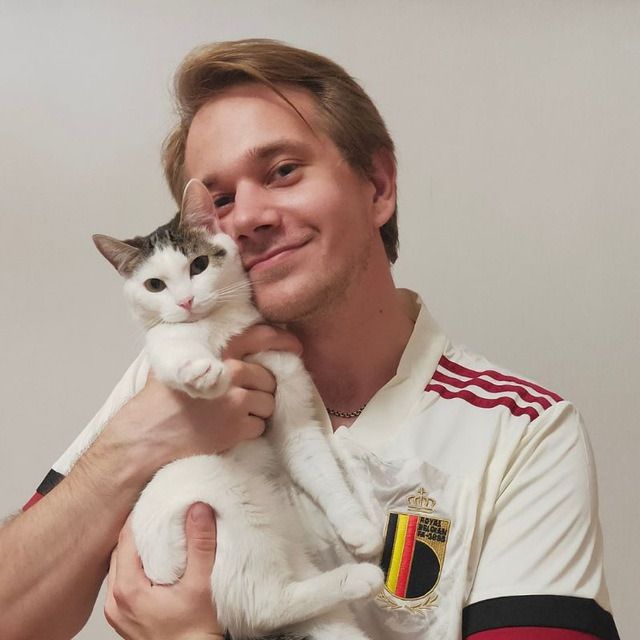
Tim Bogdashev and Eibar’s CEO. Photo: personal archive of Tim Bogdashev
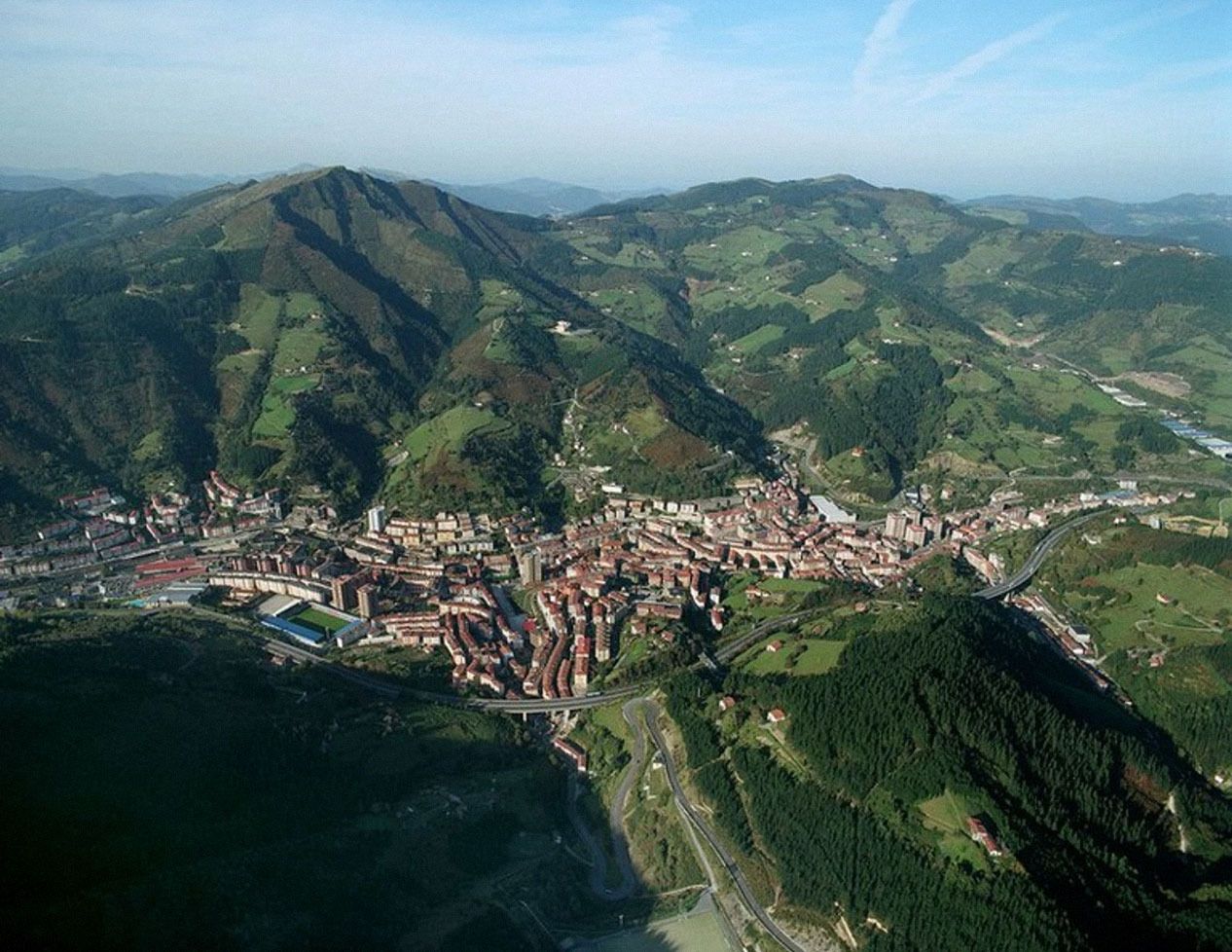
Partygoer, musician, and rock band member Tim Bogdashev also started following Eibar on his own initiative. He subscribed to the fan club account, liked posts, and then messaged Artyom directly—that’s how it all started. He’s the only one in the club who has seen Eibar and Ipurua with his own eyes: for fun, he flew to Spain from Canada, where he’s lived for the past 20 years. He says his hotel was 100 meters from the stadium, but it took him ten minutes to get there. Because in Eibar, you can’t walk in a straight line: it’s all hills, you’re constantly going up and down.
“There are two apartment buildings next to Ipurua,” Tim told Artyom. “During COVID, fans gathered on the balconies to support the team. It was very colorful and somehow very Eibar-like. Now there’s a flag with the team crest on almost every floor of those high-rises.”
Ipurua Stadium. Photo: personal archive of Tim Bogdashev
Artyom invited me to join the club too, so now there are eleven members. I honestly don’t even know how many people are on a football team, and I’ve never watched a match in my life.
There are no membership fees or group events where everyone calls in and watches football together. If you want to chat or discuss a match, you write in the fan club’s public chat or message Artyom directly. He works during the day and spends half the night watching matches, so he’s almost always available.
Sometimes his father joins him. According to Artyom, from the outside it looks like a comedy sketch, with two men yelling at the TV: “Where are you going?! What are you doing?!” The team gives them reasons: several times they’ve conceded a goal in the first minute of the game.
“An introvert’s fan club,” I joke, and Artyom nods: “Leader Artyom Prozhoga—that’s an oxymoron. I’m a closed person. I can take responsibility, I even like doing it, but only for myself and my loved ones. I don’t need followers, subordinates, or fans. I have zero desire for power.”
That’s why he’s happy with the current setup: “It’s great that in real life there’s no club to manage. I like the Batman and Robin model—I’m the leader, there’s one or two sidekicks, but no more. At 22 or 23, when the fan club started, I still had some youthful nonsense. I wanted big fame, to be liked by everyone, to control a lot, if not everything. That wasn’t healthy.”
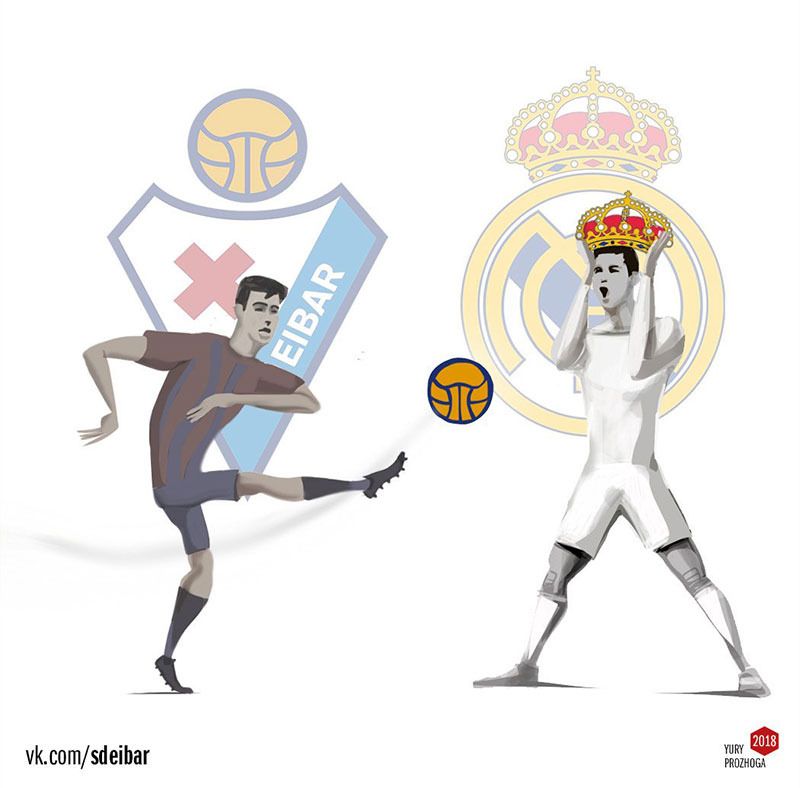
Football cartoon by Yuri Prozhoga
When asked if he often faces negative reactions, Artyom just shrugs in bewilderment: “It’s weird to be negative about a fan club for an obscure team. In such cases, I want to ask what happened and how I can help. If your life is good, you clearly won’t waste time on nasty comments. For example, in 2019, a fan of another Spanish team lashed out at me. His complaint: I really go to matches, and you sit in Russia and think you’re important. Later a friend told me his wife had died, he was in a bad way and drowning his grief in alcohol. I wouldn’t wish anyone to lose a loved one.”
Still, there are people whose lives Artyom’s Eibar promotion has accidentally caused pain, suffering, and even financial losses. We’re talking about gamblers.
They learned about the team that had crushed Real Madrid. Confidently predicted a win in the next game—but sometimes were bitterly disappointed. Artyom says unpredictability is Eibar’s trademark. The team either dominates on the field or plays like they’ve never seen a ball—losing even to bottom-table outsiders. Prozhoga honestly wrote about all the defeats in his blog.
But apparently, they didn’t read those posts. Their bets lost, and the only official Eibar representative in Russia got undeserved hate in his DMs. Artyom took it calmly: “I was even glad they vented that way. I didn’t care, and maybe they calmed down and didn’t cut someone off on the road, yell at a child, or worse, hit someone.”
Then Eibar dropped back to the second division, and the gamblers disappeared. In the past year, Artyom says, they’ve stopped writing altogether.
A Fan from Afar
When Prozhoga’s fan club first appeared, stories about his friendship with an unpopular team 5,000 km from Kurgan were published by media at all levels: local Kurgan, Russian, and Spanish outlets. Plus, in 2018, Russia hosted the World Cup—so it was topical.
Artyom especially fondly remembers talking to a journalist from the Spanish daily El País: “When I was in college, we translated their articles in class, and now they wrote about me. Isn’t that cool? It’s cool.“
Photo: personal archive of Artyom Prozhoga
Then Radio Euskadi invited him for an interview. Artyom went on air from home and asked his parents to leave him alone in the room so he could concentrate. And 15 seconds after the start, Eibar’s CEO joined the broadcast. Artyom told how he became a fan and why he loves Eibar. It turned into a several-minute monologue.
The Spaniards definitely didn’t expect that. It seems the CEO was genuinely moved: “It’s amazing. Truly, listening to Artyom and talking to fans like him is a pleasure and an honor. He does a lot for the club, it’s a vivid display of altruism. We’re proud to have a fan from afar who loves the club so much. Many forget how long and hard our journey has been, but when you hear Artyom’s story—you’re speechless. His dedication is impressive. Honestly, I have no words.” The full transcript is in Artyom’s blog. He kept it as a souvenir.
Now, of course, the hype has died down. When I ask how all those articles and broadcasts affected his life, Artyom jokes: “I can’t even go to the local grocery in peace. You can see for yourself how many people came up for a photo and an autograph. I wouldn’t overestimate the impact of those publications, and they were seven or eight years ago. I’m just a strange guy from Kurgan who picked an unpopular team and writes about it.”
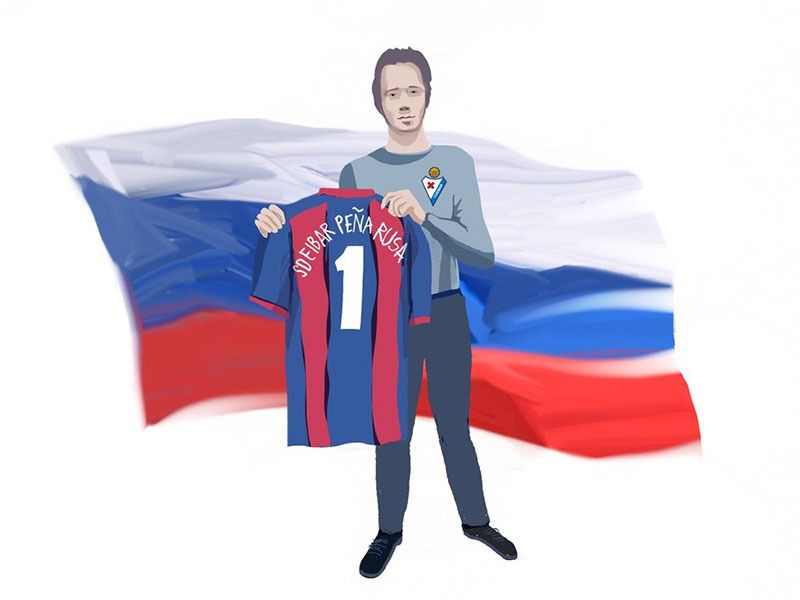
Drawing by Yuri Prozhoga for the fan club’s anniversary
Eibar has also cooled off toward its Russian fan club—their communication ended back in 2020. Previously, Prozhoga kept in touch with the management through PR specialist Arrate Fernandez. She used to reply with delays, but now she’s disappeared entirely.
Artyom tried to understand: “Maybe they just didn’t have time. The pandemic had just started, and no one knew what would happen to football. In 2021, Eibar was relegated from the top division. And then came 2022—politics and all that. Although it probably wasn’t that hard to write an email, but whatever. The team didn’t get worse, I still love them.“
Artyom wasn’t removed from the general mailing list, so about once a year he still gets emails: for example, once they reminded him that fan club members get a discount in the official merch store, and match tickets are also cheaper. “For an offer like that, you could even fly to Spain,” Prozhoga snorts sarcastically.
Another message came quite recently, at the end of 2025. Eibar asked him to update the list of members—apparently, some Spanish law now requires fresh data every year. Artyom was going to, but never did: he accidentally discovered that his fan club had disappeared from the team’s official website.
Closed for Renovation
During the interview, Artyom went to Eibar’s website to show the list of foreign fan clubs and couldn’t find his: “The whole section looks different now, but there’s definitely no Russian club. Apparently, personal sanctions have started.”
At first, Artyom wasn’t going to write to Eibar—he didn’t believe they’d reply, since the club had ignored his messages for years. But then he decided to clarify what was going on. It seems it was more for this article than out of personal interest—can’t leave the intrigue unresolved.
Contrary to expectations, Eibar replied a couple of weeks later. A team representative wrote that the website was being renovated and fan clubs might have disappeared from the section due to a glitch.
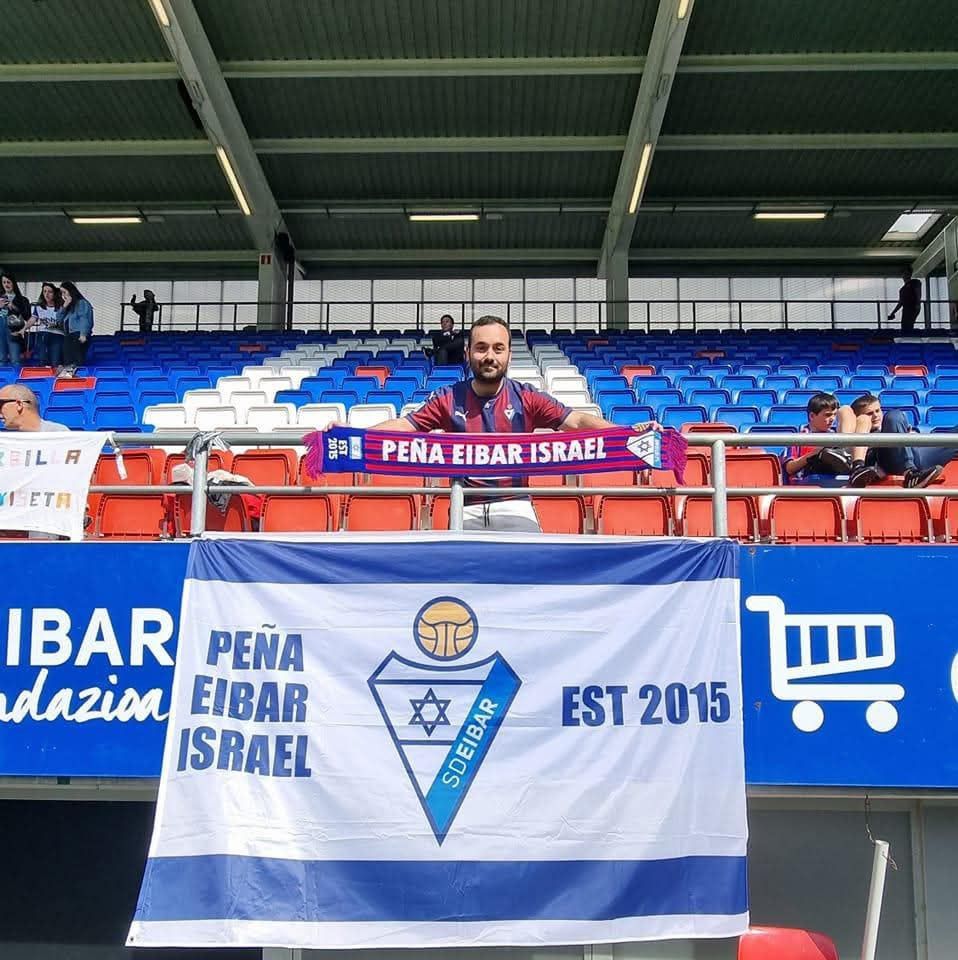
Clubs—because along with the Russian one, the Israeli club vanished too. Artyom met its head, Tal, back in 2017, when in a wave of enthusiasm he followed every foreign Eibar fan on Twitter. He decided to tell him—just in case he didn’t know. Or maybe, on the contrary, he knew something and could clarify things.
Tal didn’t know either. When he found out, he wasn’t surprised. And he didn’t really believe the official version of a technical error. “I don’t think it’s a coincidence. They never once asked how I was doing when my country is at war. It’s a shame that politics affected Eibar, and I’m not sure I want my club back on their site,” he wrote to Artyom.
Tal with the flag of the Israeli Eibar fan club. Photo: Tal’s personal archive
“The Basque Country actively supports Palestine and identifies with it—the Basques also see themselves as an oppressed group. Judging by broadcasts, Eibar fans come to matches with Palestinian flags,” Prozhoga muses. “And there used to be an Israeli flag at the stadium, Tal sent it. I wanted to send a Russian one, but never got around to it: shipping is complicated and expensive. Apparently, I don’t have to worry about it anymore.”
Now, a couple of months after our interview with Artyom, Eibar’s website page for foreign fan clubs looks exactly as it did then: the Israeli and Russian clubs are still missing. Apparently, the renovation is dragging on.
Hoping to Stay in Kurgan, Dreaming of Seeing Eibar
Now Artyom lives in Kurgan with his girlfriend Lika and lots of cats. One is named Pur after the Ipurua stadium. During the day, the head of Russia’s Eibar fan club is translating a new book (he won’t reveal the title yet), and at night he follows matches in Spain: “We’re in a really inconvenient time zone for football. The interesting games I want to watch start at midnight or one in the morning, and end at three. Maybe someday I’ll work less, but I’ll definitely keep staying up all night.”
Artyom Prozhoga. Photo from personal archive
Artyom rarely goes further than the nearest grocery store. His work, hobbies, and friends are all online: “Yes, I’m a homebody, a hermit, an anchorite, and so on. And I like it. I’ve spent years building my peace of mind brick by brick, figuring out my priorities, choosing a life in my hometown with my beloved and the cats—and I’ve never felt happier.”
“Are you happy now?” I ask.
“On a fundamental level, everything is the way I want it. Maybe I’d improve some details, like my income, but that’s normal—you always want to afford more. My life is exactly what I decided to make it. It’s definitely not ‘I gave up and settled for what I have.’ I’m over 30, I’ve started a family and take care of them, and I make a living doing what I love.
So Prozhoga isn’t planning any radical changes. At least not for the next ten years. And he’s not afraid of stagnation at all: “That’s a word from the hustle culture vocabulary. Now I’m afraid of where the world is going, but I’m not afraid of still living in Kurgan and rooting for Eibar at forty. In fact, I hope for it. I want to live in Kurgan with my cats and Lika, I want my parents to be alive.”
So if Artyom goes anywhere, it’ll only be one place—Eibar. That’s his long-held dream: to see the Ipurua stadium and the surrounding hills with his own eyes, to have a drink in the bar on the ground floor of those high-rises with veteran Eibar fans who have supported the club for decades. “I could even talk to them. Tim went before, but he doesn’t know the language, and my Spanish is pretty good. Imagine what happens if I say I’m the head of the Russian fan club? I think the whole bar would buy me a drink,” says Artyom. And he smiles.
View of Eibar from an airplane window. Photo: personal archive of Tim Bogdashev
If you enjoyed this article, consider making a donation — one-time or, even better, monthly. Your support helps us motivate our authors and become better with every article.
Our organization is recognized by the Internal Revenue Service (IRS) as a 501(c)(3) tax-exempt, charitable organization, which means that all contributions made to us are tax-deductible to the fullest extent permitted by U.S. law. Individuals may generally deduct charitable contributions of up to 60% of their Adjusted Gross Income (AGI) for cash donations made to qualifying 501(c)(3) organizations. For donations of appreciated assets (such as stocks or other long-term capital assets), the deduction is typically limited to 30% of AGI, based on the fair market value of the asset. C-corporations may deduct charitable contributions of up to 10% of their taxable income for donations made to eligible charitable organizations.
By submitting a donation, you confirm that you have read and accept the following documents: Privacy Policy and User Agreement, and also give consent to the processing of your personal data.
If you would like to unsubscribe from a monthly donation, please email us at: [email protected]